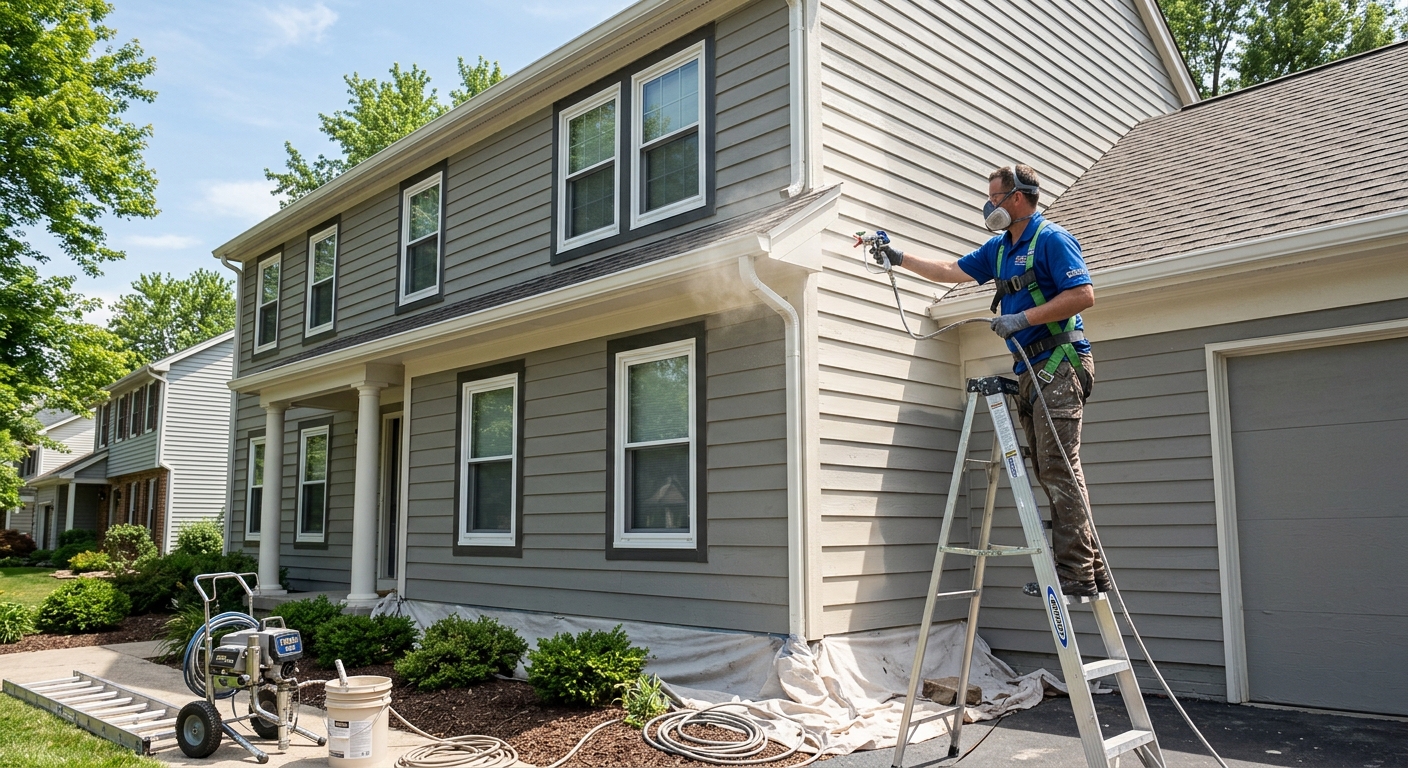
Painting options and costs in East Cambie
Painting in East Cambie is where practical planning matters as much as picking the right colour. With a population of 10,780 (Statistics Canada, 2021 Census), the demand here is steady because many homes are part of the mid‑century to 1990s housing stock typical of the Lower Mainland–Southwest. That age range often means more surface prep than homeowners expect—scraping failing coatings, patching settlement cracks, and spot-priming for nicotine or wood tannins. On pre‑1978 buildings, contractors may also use lead‑paint–safe work practices if conditions call for sanding or scraping, which adds time for containment, cleanup, and disposal.
In the Lower Mainland–Southwest, exterior costs are shaped by rain and humidity rather than deep cold. We schedule around dry stretches, use mildew‑resistant, high‑adhesion coatings, and build in re‑mobilizing time when weather interrupts application. Interior work is less weather-dependent, so crews often shift indoors through fall and winter to keep schedules moving.
As an example of where painters are especially busy, services are frequently in demand around East Cambie near the Fraser Highway corridor where many older homes are being refreshed for resale. All of that planning complexity is reflected in the pricing below—especially prep and primer decisions—so it helps to compare like-for-like scopes when you’re getting quotes. Use the table as your starting point for estimating your budget, then we’ll break down the main cost drivers afterward.
| Service |
What's Included |
Typical Duration |
Price Range |
| Interior — whole home (walls, ceilings, trim) |
Move minor furniture, protect floors, fill/spot-sand, prime as needed, caulk trim gaps, paint with 2-coat system, cleanup and touch-ups |
5–10 days |
$3,000–$8,000 |
| Interior — per room (standard bedroom or living room) |
Protect floors and fixtures, patch/sand small repairs, prime stained/patch areas as needed, paint 2 coats, basic cleanup |
1–3 days |
$800–$2,500 |
| Exterior — full house (siding, trim, soffits) |
Pressure washing (as required), scraping loose paint, caulking, primer on bare/spot areas, paint system for siding/trim, weather-window scheduling and touch-ups |
7–20 days |
$4,500–$15,000 |
| Exterior — trim and accent colours only |
Surface prep for trim, sanding/spot prime, paint trim and accents, mask carefully, cleanup, minor patching if required |
3–10 days |
$1,500–$5,500 |
| Kitchen cabinet painting (doors, frames, spray finish) |
Degrease, remove/label where needed, sand, prime with adhesion system, spray finish on doors/drawer fronts, hardware prep, reinstall and final polish |
5–14 days |
$2,000–$6,500 |
| Specialty / faux finish (accent wall, texture) |
Design/colour prep, specialty basecoat and texture layers, protective topcoat as required, masking and detailing |
2–7 days |
$800–$4,500 |
Prices are estimates only and vary by project scope, site access and material selection.
What affects the price of painting in East Cambie
In the Lower Mainland–Southwest, quotes for the “same” painting project can vary by 30–50% because the scope is rarely identical—especially when it comes to prep, primer choice, and how weather impacts exterior scheduling. Compare two contractors and you’ll often find one is budgeting only the topcoats, while the other includes extended scraping, more sanding time, mildew management, and re-coat windows that protect adhesion and durability. Across British Columbia, labour mix and material availability can also shift estimates, but the biggest swing is usually surface preparation and risk handling on older finishes.
Exterior work is tightly weather-bound in this region. Coastal BC has a longer season than interior provinces, but high humidity and rain can slow drying and increase the risk of mildew or poor bonding. That means painters either wait for dry stretches or adjust products and process steps so paint cures properly. Shorter effective weather windows concentrate demand in summer, which can push rates toward the upper end of the bands (for example, $1,200–$15,000 for exterior depending on scope and access). On pre‑repaint homes—common across the Lower Mainland–Southwest—scraping, caulking, and priming can take 50–70% of labour on a repaint job, and that’s why the same exterior can land far closer to the mid-range than the low-range.
Two practical East Cambie examples: a three-storey home needing scaffolding and careful masking for soffits often moves costs upward because of height and access time; meanwhile, a two-level home with intact trim paint may stay closer to lower exterior trim bands. Interior work may cost less than you expect if ceilings and trim are already in good condition, but once you add patching and priming, interior budgets can climb toward the higher end of interior ranges (from roughly $300–$8,000 depending on rooms and prep).
| Price Factor |
Why It Matters |
Cost Impact |
| Surface prep — scraping, sanding, patching drywall or wood |
Determines adhesion and finish smoothness; older coatings often require aggressive prep |
+15% to +45% |
| Number of coats — 2-coat system over primer vs. 1 coat over existing |
Hides repairs and prevents flashing; missing coats leads to premature failure |
+10% to +30% |
| Paint quality tier — contractor-grade vs. premium (Benjamin Moore, Sherwin) |
Premium coatings can improve coverage, scrub resistance, and colour stability |
+5% to +25% |
| Ceilings and trim — adds significant time vs. walls-only |
Detail work requires additional masking, cutting-in, and drying time |
+10% to +35% |
| Exterior season window — short season raises summer rates |
Rain delays require re-scheduling and repeat site mobilization |
+10% to +40% |
| Lead-safe precautions — required for pre-1978 homes with lead paint |
Containment, HEPA cleanup, and disposal add labour and compliance steps |
+15% to +60% |
| Surface material — drywall vs. plaster vs. wood vs. stucco |
Each substrate needs the right primer and prep method for bond and texture control |
+10% to +35% |
| Height and access — multi-storey exterior requires scaffolding or lifts |
Time and safety requirements increase per day on site |
+10% to +45% |
Permits & regulations in British Columbia
In British Columbia, painting typically does not require a permit for either interior or exterior work. However, for homes built before 1978, health guidelines strongly recommend treating the risk of lead paint seriously. That usually means testing (or assuming lead risk) before sanding or scraping, and using lead-safe work practices if lead is present—for example: wet methods to reduce dust, HEPA vacuuming, containment/coverings, and proper disposal of debris. This isn’t generally mandated in the way a municipal permit is, but it is standard practice for professional crews working in older housing stock.
What does require permits? For painting itself, usually nothing. But permits may come into play if your project triggers other scopes—like structural repairs, window replacements, or permitted exterior renovations—so the paint quote should still confirm whether any related permits are included or not.
For East Cambie homeowners, verify eligibility before any work starts:
- Confirm the contractor’s provincial licence status via the relevant BC registry and confirm the business name matches the quote.
- Request a current certificate of insurance (liability) showing your project address or at least general coverage.
- Confirm workers’ compensation coverage (WSBC/WCB) by asking for proof of active account coverage.
- Get a written contract specifying paint brand and sheen, number of coats, and the exact prep inclusions (scrape/prime/caulk/patch), plus waste and disposal responsibility.
A simple, reliable approach: compare quotes that specify the same scope of prep and lead-safe process where applicable, then you’re comparing apples to apples.
Interior vs exterior painting — getting the best result in East Cambie
Long-lasting paint in East Cambie comes down to two things: prep quality and correct product use for moisture and wear. In interiors, surface prep matters more than brand selection. Filling, sanding, and priming—especially over repairs, stains, or glossy patches—prevents peeling and flashing. Choose sheen by room function: flat/eggshell for low-touch walls and ceilings, satin or semi-gloss on trim and high-touch areas. A proven rule we use on site is that two coats over a properly primed surface outlast a “thick one-coat” approach, because it develops a uniform film thickness and hides repairs consistently.
For exteriors in British Columbia’s coastal climate, the paint must bond through cycles of humidity, rain, and damp shoulder seasons. That’s why caulking before painting is critical—gaps that let moisture in can undermine adhesion even if the topcoat looks good initially. Primer type also matters: different substrates (bare wood, previously painted metal trim, fibre cement, stucco) need the right adhesion system to prevent early blistering or peeling. We also build in mildew-resistant, high-adhesion products suited to Lower Mainland–Southwest siding and trim, and we plan around dry windows so the paint cures properly rather than just “drying on the surface.”
Cabinet painting is often the best budget alternative to replacement, but it demands strict degreasing and a proper bonding primer system; otherwise, oils can cause fisheyes or peeling. For pre‑1978 homes, lead-safe precautions may be needed if scraping or sanding is required, adding time but protecting your household.
Where the price difference is justified: if your exterior has peeling areas, spending toward a full scrape + prime scope may move you toward the middle of the exterior band (often closer to the upper portion than “trim-only” pricing), but it’s what stops the problem from returning next season. If the surface is still sound, you may be able to stay closer to smaller trim and accent work without paying for full-house prep.
| Project Type |
Key Prep Step |
Recommended Coats |
Price Band |
| Interior — fresh drywall (new construction) |
Seal/prime drywall to prevent suction and flashing; tape and sand flush |
Prime + 2 topcoats |
$1,200–$5,500 |
| Interior — repaint (good condition, no repairs) |
Clean/degloss light sheen; patch only if needed |
1–2 topcoats (typically 2 for best uniformity) |
$800–$3,200 |
| Interior — repaint (patching and priming needed) |
Spot prime repairs and stained areas; feather sand transitions |
Prime patches + 2 topcoats |
$1,400–$6,200 |
| Exterior siding (wood or fibre cement) |
Scrape loose paint, caulk, spot prime bare areas; mildew control where required |
Primer + 2 topcoats (system-dependent) |
$4,500–$15,000 |
| Exterior trim and accents only |
Mask and prep trim thoroughly; prime exposed edges and bare spots |
Prime spots + 2 topcoats |
$1,500–$5,500 |
| Kitchen cabinets (spray finish) |
Degrease, sand to profile, adhesion primer, sand between coats for smoothness |
Primer + 2 finish coats (or equivalent spray system) |
$2,000–$6,500 |
How to choose a painting contractor in East Cambie
Start by verifying insurance and coverage. In British Columbia, you want proof of liability insurance (ask for a certificate of insurance), and proof that the contractor has active WSBC/WCB coverage for their workers. Then confirm licensing or registration status where applicable for the business and the specific trade scope they’re performing. Don’t rely on verbal assurances—ask for documents and keep copies.
Next, get 2–3 itemised written quotes. The best quotes separate labour and materials so you can compare prep inclusions (scraping/patching/priming) and the paint system (primer type, number of coats, and sheen). A lump-sum quote with vague wording is where surprises come from—especially on older Lower Mainland homes where prep can be extensive.
Read exclusions carefully: is permit support required (rare for painting, but related work might need it), is debris removal and disposal included, and what surfaces are counted (including ceilings, closets, garage walls, soffits, and trim)? Make sure the scope states whether caulking is included and whether stained surfaces get stain-blocking primer.
For warranty, ask for the workmanship warranty length in writing and whether the product warranty is manufacturer-backed. Confirm if the warranty is transferable if you sell your home.
Payment schedule matters. Never pay more than 10–15% upfront; hold back a portion until the final walkthrough and completion list are satisfied. Also insist on a start date and realistic completion timeline in writing—weather can affect exteriors in East Cambie, and your schedule should reflect dry-window planning.
- Ask for a written, itemised scope (prep, caulk, prime, coats, and cleanup).
- Confirm liability insurance and WSBC/WCB proof before work starts.
- Match quote scopes: if one includes scraping and priming, the others must too.
- Check whether disposal of paint waste and scraped debris is included.
- Ask what they do if rain/humidity disrupts exterior drying (re-schedule plan).
- Request paint brand names and sheen levels (not “paint of our choice”).
- Confirm whether ceilings and trim are included in “whole home” pricing.
- Ask if stained areas get stain-blocking primer (not just colour primer).
- Clarify how they protect floors, stairs, and landscaping.
- Verify how they handle hardware: removal/labeling and masking quality.
- Get a colour consultation method (or written colour selections) to avoid rework.
- Ensure warranty details are in the contract, including start date and coverage limits.
Common red flags in East Cambie: “too cheap” quotes that skip scraping/priming, no written scope or no paint system details, avoidance of insurance/WSBC documentation, pressure to pay most of the job upfront, and vague promises like “we’ll handle any repairs” without listing what’s included.
Frequently asked questions — painting in East Cambie
Should I paint or wallpaper my East Cambie home?
For most homeowners in East Cambie and across the Lower Mainland–Southwest, painting is the safer, more predictable choice—especially where humidity and occasional dampness can affect adhesion. Wallpaper can look fantastic, but it requires a very smooth, clean substrate; any drywall imperfections, patched cracks, or old paint texture can telegraph through. Painting also lets you use the right primer and sheen per room, which helps kitchens, hallways, and bathrooms stand up to routine cleaning. If your walls are already patched or textured, paint with a proper primer is usually faster to prep and less labour-intensive to correct. Budget-wise, painting often fits a wide range, from around $800–$2,500 per room depending on prep, while wallpaper projects can escalate quickly when walls need extra smoothing.
How do I fix peeling exterior paint in East Cambie?
Peeling exterior paint in East Cambie usually isn’t fixed by painting over it—those loose edges will keep failing. The correct approach is: scrape back to sound, clean surfaces, sand feathered edges, then caulk gaps where needed before priming. If you’re dealing with bare wood or fibre cement, a proper exterior primer system is essential for adhesion. In coastal BC conditions, mildew and humidity also matter, so contractors use mildew-resistant products and schedule around dry weather windows to ensure curing. If your home is pre‑1978 and sanding/scraping may disturb lead paint, lead-safe work practices are standard for professionals (containment, HEPA cleanup, and safe disposal). Your quote should reflect this prep; otherwise, the peeling often returns within a season.
What colours add the most resale value in East Cambie?
In East Cambie, the most resale-friendly colours are typically bright, neutral, and light-reflective—think warm white, soft greige, and light taupe for walls, with crisp white or a subtle off-white for trim. These colours photograph well, feel clean in daylight, and help buyers visualize their furniture in your rooms. That’s especially important because coastal BC light can shift with cloud cover, and darker colours can accentuate wall imperfections or make rooms feel smaller. For durability, choose quality interior coatings and the right sheen: eggshell or satin on walls, and semi-gloss on trim. If you’re budgeting, keeping scope focused (for example, interior per-room repainting around $800–$2,500) can be a better return than redoing every finish at once with bolder colours that require more careful prep and multiple test samples.
How much does it cost to paint a house in East Cambie?
The total cost depends mostly on prep and whether you’re doing interior, exterior, or both. For a whole interior refresh (walls, ceilings, trim), homeowners commonly land within an interior range of about $3,000–$8,000 depending on number of rooms and repair needs. Exterior costs swing more because of coastal weather timing and older-coating prep—full house exteriors commonly fall within $4,500–$15,000 for siding, trim, and soffits, especially when scraping, caulking, and priming are extensive. Kitchen cabinet painting is often quoted separately because it has different prep and finish requirements; it commonly falls in the $2,000–$6,500 range for many professional spray-finish projects. If your quote seems far below these bands, ask what prep is excluded—most “savings” come from skipping primer or reducing surface prep.
How much does interior painting cost per room in East Cambie?
Per-room interior painting in East Cambie often falls around $800–$2,500 for a standard bedroom or living room, assuming reasonable access and typical patching. The range changes based on prep: if you’re just repainting in good condition, the job is usually faster; if you have patching, stains, or a need for stain-blocking primer, the quote climbs. Ceilings and trim also matter—rooms with lots of trim work can increase labour because of masking and cutting-in time. Sheen choice and paint tier can shift materials cost as well, but the largest variable is prep scope. If you want the best value, ask the contractor to describe exactly what’s included (scrape/patch/prime and how many coats) rather than comparing only a single bottom-line number.
When is the best time for exterior painting in East Cambie?
For East Cambie and the Lower Mainland–Southwest, the best time for exterior painting is during stretches of dry weather when humidity is manageable and surfaces can dry/cure properly between coats. While coastal BC can offer a longer window than colder provinces, rain and damp shoulder seasons still create delays, so crews plan around weather forecasts and confirm they’ll meet recoat timing. If you’re comparing seasonal timing with Ontario and Alberta, remember that those regions typically require a narrower window (often roughly late May to early October when temperatures are above 10°C and rising), while BC’s challenge is more about humidity and rainfall than extreme cold. The takeaway: book when your contractor can lock in a dry schedule, and ensure the quote includes weather-window planning. For older homes, schedule early enough to handle extra prep like scraping and caulking without rushing.