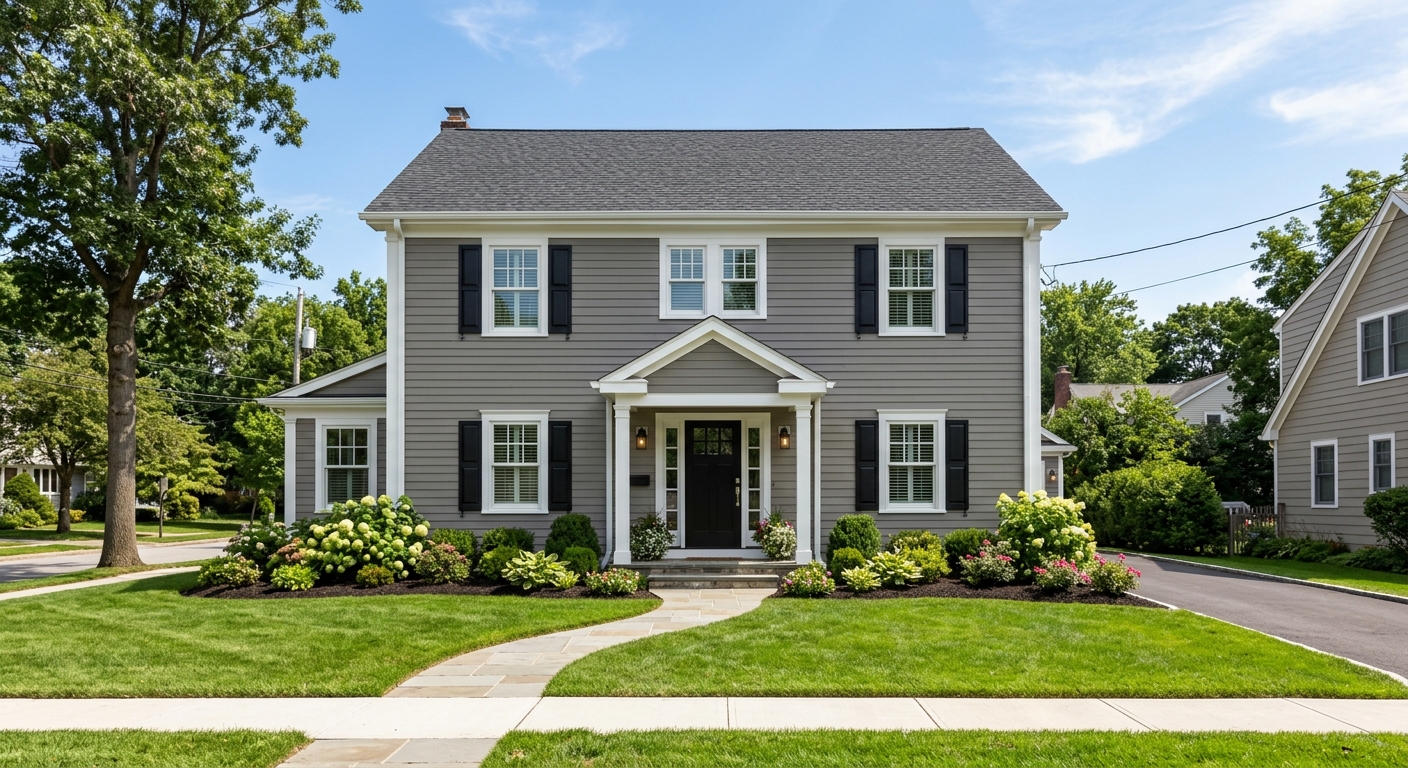
Painting options and costs in Lions Bay
Lions Bay homeowners often ask for “one price” for painting, but the realistic cost depends on how much prep the job needs and how the coastal Lower Mainland–Southwest climate behaves during the work window. With 65.3% of homes built before 1981, many properties carry older coatings, tougher stains, and more caulking and patch repairs than newer builds—so surface prep can quickly become the largest portion of the quote. If your home dates to the pre-1978 era, contractors will typically plan lead-safe work practices (testing, containment, and clean-up methods) even though the rules for homeowners differ from contractor obligations.
In the Lions Bay area, exterior painting pricing is shaped by rain, humidity, and mildew risk rather than deep-freeze temperatures. That means painters schedule around dry stretches, build in longer drying times, and use high-adhesion, mildew-resistant products suited to coastal siding and trim. Demand can also be concentrated through the summer “weather windows,” so crews may re-mobilize between properties to keep quality and coverage consistent.
Because most housing is single-detached (95.0% of dwellings), a full-house repaint is a common need and can be especially in demand along the village/near-shore pockets where access and visibility are tricky—think tight driveways, mature landscaping, and frequent touch-ups from salt-air exposure. Below are typical local price bands you can use to compare proposals, then we’ll break down what moves the numbers up or down.
| Service |
What's Included |
Typical Duration |
Price Range |
| Interior — whole home (walls, ceilings, trim) |
Protect floors, prep/patch, prime where needed, paint walls & ceilings, finish trim/doors (2-coat system where required) |
5–12 days |
$2,500–$8,000 |
| Interior — per room (standard bedroom or living room) |
Prep, caulk, patch/sand, prime as needed, paint walls + trim (typical ceilings included if standard height) |
1–3 days |
$600–$2,500 |
| Exterior — full house (siding, trim, soffits) |
Power wash (as required), scrape/sand, caulk repairs, spot- and full-priming, 2-coat exterior paint system |
7–20 days (weather-dependent) |
$4,500–$14,000 |
| Exterior — trim and accent colours only |
Surface cleaning, scrape/sand, prime trim as required, paint trim/accent areas (mildew-resistant products) |
3–8 days (weather-dependent) |
$1,200–$6,500 |
| Kitchen cabinet painting (doors, frames, spray finish) |
Remove/label doors, degrease, scuff/sand, prime (bonding/adhesion primer), spray finish, hardware masking, re-install |
5–12 days (dry/cure time) |
$2,400–$7,500 |
| Specialty / faux finish (accent wall, texture) |
Surface sealing, application of texture/faux technique, topcoat protection, cleanup & detailing |
2–7 days |
$900–$6,000 |
Prices are estimates only and vary by project scope, site access and material selection.
What affects the price of painting in Lions Bay
It’s common to see quotes for the same “paint the house” request vary by 30–50% across the Lower Mainland–Southwest and the rest of British Columbia. The difference usually isn’t the bucket of paint—it’s the prep and risk management: older coatings, how much repair is needed, and how the painter can safely work around weather and surface conditions. In coastal BC, the exterior work window is longer than Ontario’s, but it’s still tightly governed by rain and humidity. Dry stretches are needed for application and for proper cure, and high humidity can slow drying and raise the chance of soft films or mildew if products aren’t matched to the substrate.
By comparison, interior painting is less season-dependent, so contractors can often level their year by shifting crews indoors in fall and winter. When exterior prep becomes heavy—scraping failing coatings, patching settlement cracks, sanding chalky surfaces, and priming tannin-bleed or staining—prep can reach a point where it drives the job into the upper end of the exterior band (for example, roughly $4,500–$14,000 for a full house). If you only need trim accents, the same property might fall closer to the $1,200–$6,500 range.
Two local examples that commonly raise costs in Lions Bay: (1) homes built before 1981 often need more caulking replacement and stain-blocking primers, and (2) coastal mildew risk means choosing mildew-resistant, high-adhesion products and spending extra care on surface cleaning before coating. On the flip side, easy access and fewer repairs can pull labour toward the low end of interior rooms (often starting around a few hundred dollars) and keep exterior jobs closer to mid-range pricing.
| Price Factor |
Why It Matters |
Cost Impact |
| Surface prep — scraping, sanding, patching drywall or wood |
Determines how well paint bonds and how long it lasts; older coatings can fail if prep is rushed |
Can add 20–60% of labour |
| Number of coats — 2-coat system over primer vs. 1 coat over existing |
Coverage and uniform sheen depend on correct layering; “one coat” often leads to patchiness and early wear |
Typical shift of 10–25% depending on condition |
| Paint quality tier — contractor-grade vs. premium (Benjamin Moore, Sherwin) |
Premium lines can improve durability and hide, but prep still drives performance |
Often 5–15% materials/labour total impact |
| Ceilings and trim — adds significant time vs. walls-only |
Ceilings require more cutting-in, protection, and careful edging; trim needs detail work |
Can increase interior scope by 10–35% |
| Exterior season window — short season raises summer rates |
Weather scheduling and crew re-mobilization can add cost when dry days are limited |
Often 5–20% higher in peak windows |
| Lead-safe precautions — required for pre-1978 homes with lead paint |
Containment, HEPA methods, and disposal add time; reduces risk during scraping/sanding |
Can add 15–50% on affected areas |
| Surface material — drywall vs. plaster vs. wood vs. stucco |
Different substrates need different primers, bonding systems, and sanding/leveling intensity |
Often 10–30% depending on material mix |
| Height and access — multi-storey exterior requires scaffolding or lifts |
More setup time, labour, and protection for elevated work zones |
Can add 10–40% |
Permits & regulations in British Columbia
In British Columbia, painting generally does not require a building permit. For homes built before 1978, health guidelines recommend testing for lead paint before sanding or scraping, and if lead is present, using lead-safe work practices such as wet methods to reduce dust, HEPA vacuuming during prep, and proper disposal of contaminated debris. This isn’t typically “homeowner-permit” work, but it is standard for professional contractors because coastal BC properties often include older trim and façade coatings where lead risk is more plausible.
What DOES require permitting is rare for painting alone; however, permits can be relevant if your project includes building alterations (for example, structural changes, window replacement, or other regulated construction work). If the work is strictly surface coating—scraping, sanding, priming, caulking, and applying paint—permits are not the normal requirement.
For Lions Bay homeowners, verifying a contractor is practical and should be done step-by-step:
- Confirm licensing/credentials using the appropriate BC contractor directory tools online (where applicable to their trade category).
- Ask for a current certificate of liability insurance showing limits appropriate for residential work.
- Request proof of workers’ compensation coverage (WCB) for employees; the contractor should be able to provide documentation.
- Get a written contract that specifies paint brand/line, sheen, number of coats, and the exact prep/disposal scope.
- Request written start/completion dates and a workmanship warranty.
These checks protect you and help prevent “scope surprises” when older coatings or weather-driven rework shows up mid-job.
Interior vs exterior painting — getting the best result in Lions Bay
In Lions Bay, the difference between a long-lasting paint job and a premature failure is usually prep quality, correct product choice, and correct curing conditions—not just paint brand. For interiors, surface preparation matters most: filling, sanding, and priming are what prevent flashes, peeling, and staining bleed-through. Pick the right sheen for the room’s use—flat/eggshell for many low-touch ceilings and walls, satin for family areas that need easier cleaning, and semi-gloss for trim and doors where scuffs matter. Two coats over a properly primed surface almost always outlast one “heavy” coat, especially over patched drywall.
For exteriors in Lower Mainland–Southwest, the biggest failure point is water management after application. Prioritize scraping and sanding, remove loose failing coatings, and use caulking before painting to seal gaps so rain doesn’t work behind the film. Primer selection depends on substrate; wood and fibre cement often need adhesion-focused primers, while problem areas like staining or tannin bleed may need stain-blocking primers. Coastal BC also rewards mildew-resistant, high-adhesion products and patience with drying time during humid stretches.
Cabinet painting can be a smart budget alternative to replacement because it concentrates cost on surfaces only; the trade-off is that doors and frames must be properly prepped and finished with a durable system. For pre-1978 homes, lead-safe precautions should be built into prep of trim and exterior components where scraping/sanding is required.
As an example, if a full exterior repaint is quoted around the upper exterior band (up to about $14,000), it may be justified when extensive scraping and caulking are required. If the same home only needs trim refresh, staying closer to the trim band (often around $1,200–$6,500) is usually the better value—provided the underlying siding is sound.
| Project Type |
Key Prep Step |
Recommended Coats |
Price Band |
| Interior — fresh drywall (new construction) |
Prime drywall to uniform porosity, then caulk gaps and fastener spots |
Prime + 2 finish coats |
$2,000–$7,000 |
| Interior — repaint (good condition, no repairs) |
Light scuff/sand, clean and dust control, spot-prime as needed |
2 finish coats over proper primer spots |
$600–$3,500 |
| Interior — repaint (patching and priming needed) |
Patch/sand level, prime repairs thoroughly to prevent flashing |
Prime patches + 2 finish coats |
$1,000–$5,500 |
| Exterior siding (wood or fibre cement) |
Scrape failing coating, address caulking, wash and prime for adhesion |
Primer + 2 exterior coats |
$4,500–$14,000 |
| Exterior trim and accents only |
Surface clean, scrape/sand, prime exposed/blemished areas |
Spot-prime + 2 coats on trim |
$1,200–$6,500 |
| Kitchen cabinets (spray finish) |
Diorgase/degrease, scuff sand, prime for bonding, careful masking |
Prime + 2 finish coats (spray) |
$2,400–$7,500 |
How to choose a painting contractor in Lions Bay
Start with verification. In British Columbia, painting itself often doesn’t require a permit, but contractors should still be properly insured and accountable. To check coverage, ask for:
- Liability insurance: obtain the certificate and confirm it’s current and matches the work type (residential painting) and coverage limits.
- Workers’ compensation (WCB): request proof for the contractor’s workers; don’t accept verbal assurances.
- Any trade credentials that apply: confirm their professional status using the applicable online registry tools.
- A written quote with labour + materials clearly separated (not just one lump sum), including primer type and paint line.
- Scope clarity: what prep is included, which surfaces are included/excluded, and how disposal is handled.
- Warranty: workmanship warranty length and what it covers (peeling, bubbling, adhesion issues); ask if it’s transferable.
- Colour and sheen schedule: ensure it’s written down so there’s no “field change” cost later.
- Payment schedule: never pay more than 10–15% upfront; hold back a portion until key milestones are complete.
- Timeline in writing: start date and a realistic completion estimate that accounts for coastal weather windows.
- Site protection: floor protection, masking approach, and how landscaping/mature plants are protected.
- Product data: request the paint system details (primer + topcoats) appropriate to wood/fibre cement or drywall.
- Lead-safe approach if the home is pre-1978: how they handle testing, containment, cleanup, and disposal.
Red flags in Lions Bay include: a quote that skips surface prep details, refusing to itemise materials/labour, no proof of liability or WCB coverage, vague warranty terms, and pushing for large upfront payments. If they won’t put the scope in writing, expect change orders when conditions (old coatings, cracks, mildew, access) get discovered.
Frequently asked questions — painting in Lions Bay
How do I prep walls before painting?
If you’re doing light prep before a painter comes to Lions Bay, focus on cleanliness and minor repairs. Remove wall grime (grease marks in kitchens, dusty residue) with a proper cleaner and let it fully dry. Patch small holes or dings with spackle, then sand flush; the key is to avoid uneven “ridges” that telegraph through paint. Caulk noticeable gaps at baseboards or trim if they’re loose, but don’t over-caulk—uneven caulk lines can show once you roll/spray sheen. If your walls have stains (water, smoke/nicotine), don’t just paint over—use a stain-blocking primer or ask for it in the quote. In older homes (65.3% built before 1981), coatings and stains are more common, so prep is often the difference between a job lasting years or months.
Do I need to worry about lead paint in an older Lions Bay home?
Lead paint is most commonly a consideration for homes built before 1978, and many Lions Bay properties are older—65.3% were built before 1981, so it’s not unusual to encounter older trim and exterior coatings. For homeowners, lead-safe rules are not the same as contractor legal requirements, but professional best practice in British Columbia is to test before sanding or scraping. If lead is present, crews typically use containment, wet methods, HEPA vacuuming, and compliant disposal to reduce dust exposure. If your contractor’s plan involves aggressive dry scraping with no containment and no mention of testing for pre-1978 areas, that’s a quality and safety concern. Ask for their documented approach in the written contract, especially around exterior trim, window components, and any detailed mouldings.
How long does it take to paint a house?
Timing in Lions Bay depends on whether you’re painting indoors, outdoors, or both. Interior painting is usually more predictable and can move quickly because crews can work through fall and winter. A whole-home interior can take roughly 5–12 days depending on how many rooms, ceiling coverage, and how much patching and priming is needed. Exterior work is more weather-dependent in the Lower Mainland–Southwest: rain and humidity affect application and cure, so a full exterior repaint often lands around 7–20 days with scheduled interruptions. The start-to-finish time is also impacted by access (ladders vs. lifts/scaffolding) and prep volume—scraping failing coatings and caulking repairs can add days. When comparing quotes, ask for a written schedule and a breakdown of days for prep, coats, and cure/weather pauses.
What's the difference between paint quality tiers?
Paint quality tiers mainly affect hide, durability, and how smoothly the finish levels. Contractor-grade paints may cover well, but premium lines often provide better colour stability, scuff resistance, and easier touch-ups—especially in high-traffic areas. Still, the brand won’t rescue a job with inadequate prep. In coastal BC conditions, the right primer and correct system (primer + topcoats) is often more important than a premium topcoat alone. Premium products can make it easier to achieve uniform sheen and reduce the need for extra coats in areas like trim and previously stained drywall. When you see a quote difference, compare what changes: primer type, number of coats, and whether stain-blocking/mildew-resistant systems are included. For cabinet work, the finish approach matters too; many projects fall in the $2,400–$7,500 band depending on materials and the spray finish system.
How do I compare painting quotes?
Start by requiring itemised quotes that separate labour from materials and list the paint system—primer type, topcoat line, sheen, and the number of coats. Compare scope line-by-line: surface prep details (scrape/sand/patch extent), caulking included or not, and what’s excluded (furniture moving, minor carpentry, damage repairs beyond basic patching). Ask whether disposal is included—failed coating debris and masking waste can affect cost. Weather matters too: for exterior work in Lions Bay, ask how they handle rain/humidity windows and drying time between coats. A fair exterior repaint often sits in the $4,500–$14,000 range depending on prep; a trim-only refresh is usually closer to $1,200–$6,500. If one quote is dramatically lower, it’s often because prep, primer, or coats are reduced—watch for that.
What paint sheen should I use in different rooms?
Sheen choice is about cleanability and how light reflects off walls in your Lions Bay home. In general, ceilings are often flat or very low sheen to minimize visible roller marks. For most living rooms and bedrooms, eggshell or a soft satin is common because it balances washability with a low-glare look. Kitchens and high-touch areas typically do better with satin or eggshell with a washable finish. Bathrooms benefit from mildew-resistant systems and a sheen that can handle cleaning. For trim and doors, semi-gloss is popular because it resists scuffs and is easier to wipe down. If your home has older drywall or patched areas, using the correct sheen and full primer helps prevent patchy “flashing.” When you’re comparing quotes, ensure the sheen is written into the contract; sheen swaps can change both the look and the cost of making the finish consistent.