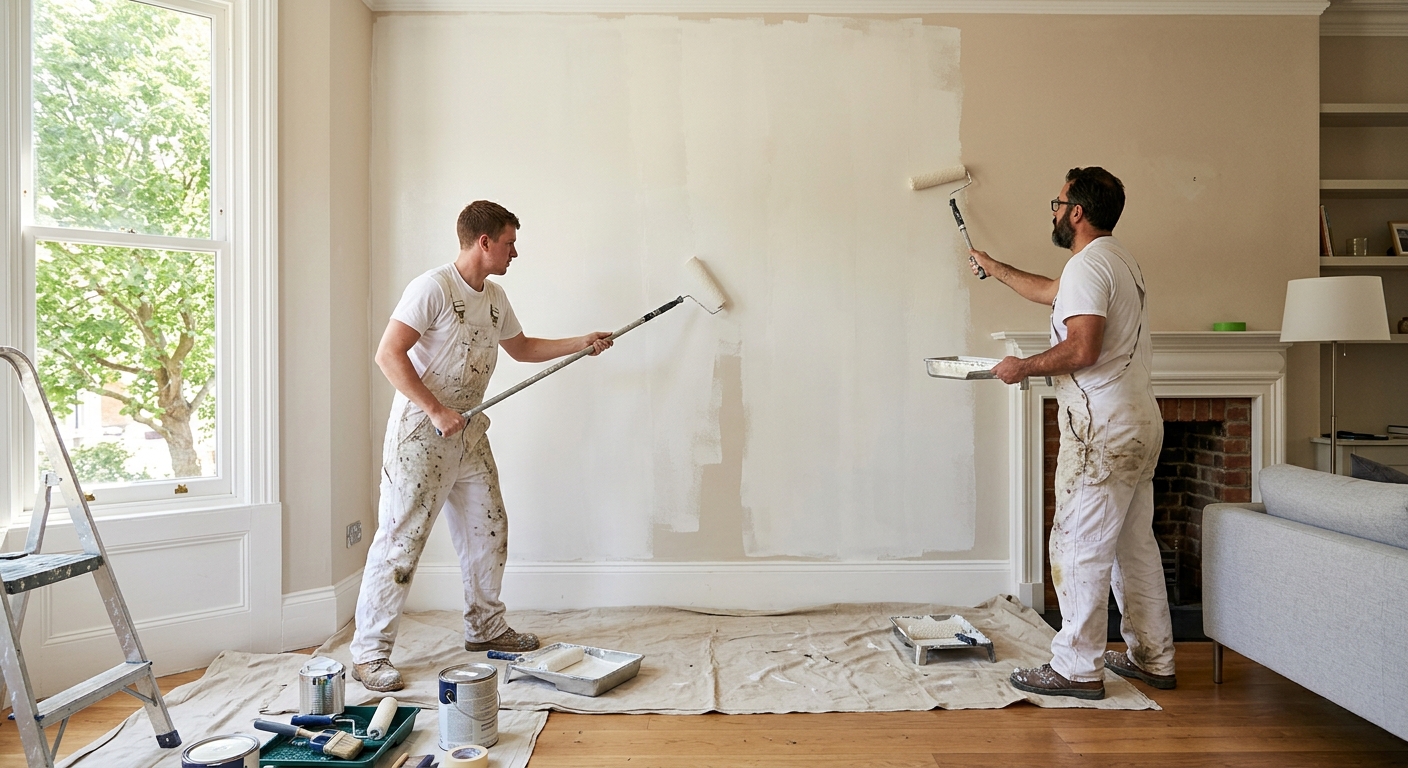
Painting options and costs in Brookswood
Brookswood in the Township of Langley is a neighbourhood where a fresh coat can dramatically lift curb appeal—but in practice, what you pay is driven as much by preparation as by the paint you choose. With a population of 13,336 (Statistics Canada, 2021 Census), the local housing stock is busy and crews can book up quickly when weather windows open. That matters because many homes in the Lower Mainland–Southwest were built and finished through mid-century to later decades, so repaints often uncover aged caulking, settlement cracks, and older stains that need stain-blocking primer. For homes built before 1978, contractors may also use lead-paint–safe practices, adding containment, cleanup, and disposal time to the estimate.
Lower Mainland–Southwest pricing is shaped by our coastal conditions: rain and humidity constrain outdoor work, and painters must schedule around dry stretches and slower drying times. Interior work is steadier through fall and winter, so many contractors shift capacity indoors, helping keep interior pricing more consistent than exterior.
In Brookswood, trade demand is especially noticeable around the older pockets near 200 Street and the Langley side roads where homeowners frequently update trim, siding, and interior living spaces before resale. Once you decide whether you’re doing one room or the full home, the next step is matching scope to a realistic budget—use the table below as your starting point for comparing quotes.
| Service |
What's Included |
Typical Duration |
Price Range |
| Interior — whole home (walls, ceilings, trim) |
Moveable prep, protection, patching minor defects, sand/prime as needed, 2-coat wall system, caulking, paint ceilings, prime/block stains, and coat trim with appropriate sheen |
5–12 days |
$2,500–$8,000 |
| Interior — per room (standard bedroom or living room) |
Protection and prep, patching small holes, prime where required, 2-coat walls, paint trim/door frames (basic coverage) |
1–3 days |
$650–$2,500 |
| Exterior — full house (siding, trim, soffits) |
Pressure wash/clean, scrape failing coatings, caulking, surface repairs, prime bare spots, mildew-resistant exterior system, and paint siding/trim/soffits |
1–3 weeks (weather dependent) |
$6,500–$15,000 |
| Exterior — trim and accent colours only |
Clean and prep localized areas, prime as needed, caulk, paint trim/doors/accents (not full siding replacement) |
3–7 days |
$1,200–$4,800 |
| Kitchen cabinet painting (doors, frames, spray finish) |
Removal/labeling, sanding/deglossing, repairs, bonding primer, spray topcoat/enamel, hardware masking, and reinstallation (clean finish) |
5–14 days |
$2,000–$6,500 |
| Specialty / faux finish (accent wall, texture) |
Surface build/patch, texture materials as required, multiple-step finish, protective topcoat, and cleanup |
2–10 days |
$500–$12,000 |
Prices are estimates only and vary by project scope, site access and material selection.
What affects the price of painting in Brookswood
It’s common to see the “same” painting job come back with a 30–50% gap between contractors across the Lower Mainland–Southwest and other parts of British Columbia, because labour-to-prep ratios, product tiers, and scheduling risk are priced differently. In Brookswood, exterior work is tightly climate-bound by rain and humidity. While coastal BC can often extend the season compared to colder regions, the practical result is more re-mobilizing between dry windows—and that risk is built into the estimate. By contrast, interior projects are less seasonal, so crews can keep production moving indoors, usually stabilizing rates.
Another major variable is older housing. On repaints, scraping failing coatings, caulking, patching drywall or wood, and priming stained or aged surfaces can account for 50–70% of total labour. That can be the difference between a “quick refresh” and a durable repaint. If a contractor has to treat patchwork plus stain blocking before applying your topcoat, your budget may shift from the lower end of interior bands (around $300–$2,500 for a single room) toward higher full-scope ranges (up to $8,000 for whole-home prep and coating). Exterior can swing even more: a trim-only project may start near $1,200, but full-house work can reach $15,000 once repairs, priming, and weather-sensitive scheduling are included.
Two concrete Brookswood examples: (1) fibre cement or wood trim with moisture staining typically needs aggressive cleaning and targeted primer bonding, which adds time; (2) multi-storey access near busier streets often requires lifts/scaffolding, increasing labour. A final detail: for pre-1978 homes, lead-paint–safe practices may be used, adding containment and HEPA-style cleanup steps that raise costs even before the first coat is sprayed.
| Price Factor |
Why It Matters |
Cost Impact |
| Surface prep — scraping, sanding, patching drywall or wood |
Prep determines adhesion and smoothness; skipping it is the #1 cause of peeling and flashing |
High; often the largest line item on repaints |
| Number of coats — 2-coat system over primer vs. 1 coat over existing |
True coverage and uniform sheen require consistent film build |
Medium to high; can change the job by thousands |
| Paint quality tier — contractor-grade vs. premium (Benjamin Moore, Sherwin) |
Premium coatings can cover better and resist scuffing, staining, and moisture more effectively |
Low to medium; depends on coverage and sheens |
| Ceilings and trim — adds significant time vs. walls-only |
Ceilings need careful edge work; trim requires detail sanding, caulking, and often multiple coats |
Medium; commonly adds days for whole-home scope |
| Exterior season window — short season raises summer rates |
Rainy humidity slows drying and can force rework between weather windows |
High in peak scheduling periods |
| Lead-safe precautions — required for pre-1978 homes with lead paint |
Containment, specialized cleanup, and disposal increase labour and material costs |
Medium to high; varies by how extensive sanding is |
| Surface material — drywall vs. plaster vs. wood vs. stucco |
Each substrate needs different primers, adhesion strategies, and prep intensity |
Medium; can alter primer and prep time |
| Height and access — multi-storey exterior requires scaffolding or lifts |
Access affects speed, safety, and staging/cleanup effort |
Medium to high; can swing exterior pricing significantly |
Permits & regulations in British Columbia
In British Columbia, painting generally does not require a permit for typical residential work. What can trigger additional requirements is not the permit side for most repainting—it’s safety handling for certain older materials and whether your work intersects with broader renovation rules. For homes built before 1978, health guidelines recommend testing for lead paint before sanding or scraping. If lead is present, professional lead-safe practices are standard: wet methods to reduce dust, HEPA vacuuming during cleanup, containment where appropriate, and proper disposal. This isn’t usually a homeowner “permit” requirement, but it is the expectation for contractors working responsibly.
Before you hire a painter in Brookswood, confirm three things: (1) liability insurance, so you’re protected if there’s accidental damage; (2) workers’ compensation coverage (WSIB/WCB), so labour is covered if a worker is injured; and (3) a written contract that clearly lists the paint brand/line (or equivalent), sheen schedule, number of coats, surface prep scope, and any exclusions. A well-written scope also states how they handle peeling coatings, caulking, disposal, and whether they do pressure washing and stain blocking.
What typically requires a permit: adding/altering plumbing or electrical, major structural work, or renovation permits beyond painting. What typically does NOT require a permit: repainting walls/ceilings, repainting trim/siding, staining a deck, and cabinet painting—provided you’re not changing building systems.
To verify, use these steps: check the contractor’s business licensing/registration details through available online registry listings; ask for a current certificate of insurance (COI) naming you as additional insured if requested; confirm workers’ compensation account coverage paperwork; and request a clearance letter or documentation only if lead-safe work is triggered and performed under their process. Always keep copies with your contract.
Interior vs exterior painting — getting the best result in Brookswood
In Brookswood’s coastal climate, the difference between a long-lasting paint job and premature failure is usually preparation discipline and the right product system—not the newest “miracle” brand. For interiors, start with repairs: filling, sanding, and priming are what prevent flashing, peeling, and uneven sheen. Choose sheen by room function: flat hides minor imperfections but scuffs more; eggshell and satin are common for living areas because they clean better; semi-gloss is often reserved for trim for crisp wipeability. Regardless of sheen, two coats over the proper primer generally outlast a single thick coat, because uniform coverage and film build reduce light variation and wear-through.
For exteriors, surface prep is even more critical in Lower Mainland–Southwest conditions where rain and humidity can linger. Successful exterior painting depends on cleaning, scraping failing coatings, caulking before the paint system goes on, and priming bare or stained areas. In BC, the right approach typically uses mildew-resistant, high-adhesion products and manages drying times around weather windows. Primer selection also matters: different substrates (wood, fibre cement, stucco) can require different bonding primers to prevent blistering or adhesion failure. If you’re comparing options, a “good enough” exterior prep can look cheaper short-term, but it’s often the reason you see early chalking, lifting, or spotting.
Cabinet painting is a practical budget alternative to replacement. A professionally executed spray finish often fits the cabinet/trim band—commonly around $2,000–$6,500—and the cost is justified when prep and bonding primer are included. For pre-1978 homes, lead-safe precautions may apply during scraping—this is part of why full-scope painting can move from entry pricing up toward higher bands.
Simple dollar example: If a trim-only refresh starts near $1,200–$4,800 but includes no caulking or bonding primer for stained edges, you may pay again sooner. A full prep-inclusive exterior plan, aligned with exterior pricing up to $6,500–$15,000, costs more up front because it addresses adhesion and water management where it’s most likely to fail.
| Project Type |
Key Prep Step |
Recommended Coats |
Price Band |
| Interior — fresh drywall (new construction) |
Prime properly for uniform absorption, then sand smooth for even finish |
1 primer + 2 colour coats |
$300–$8,000 |
| Interior — repaint (good condition, no repairs) |
Light deglossing/cleaning and spot-priming only where needed |
2 colour coats over proper spot-prime |
$300–$3,500 |
| Interior — repaint (patching and priming needed) |
Patch, sand, and prime to prevent flashing over new compound |
1 bonding primer + 2 colour coats (system-based) |
$900–$6,500 |
| Exterior siding (wood or fibre cement) |
Scrape failing coatings, clean, caulk, then prime bare/repair areas |
1 primer + 2 topcoats (or system-specified coats) |
$6,500–$15,000 |
| Exterior trim and accents only |
Clean and prepare edges, then spot-prime stained or weathered sections |
1 primer (spot) + 2 topcoats |
$1,200–$4,800 |
| Kitchen cabinets (spray finish) |
Degrease, sand/degloss, apply bonding primer, then spray finish for durability |
1 primer + 2 enamel coats (typically) |
$2,000–$6,500 |
How to choose a painting contractor in Brookswood
Choosing the right contractor in Brookswood starts with proof, not promises. In British Columbia, you should verify business details and request a certificate of insurance (liability) before work begins. Ask for evidence of workers’ compensation coverage (WCB/WSIB coverage appropriate to their workforce). For practical verification, look for: the certificate’s effective dates; the policy limits; and whether it covers subcontractors if they use them. Don’t accept a verbal statement—get documentation.
Next, collect 2–3 itemised written quotes instead of lump sums. You want labour and materials broken out, including prep tasks like scraping, caulking, pressure washing (if included), patching scope, stain-blocking/priming decisions, number of coats, and disposal. Check if permit pull is included—most painting doesn’t need permits, but your scope should still clarify any town/regional requirements if other trades are involved. Confirm whether moving furniture, covering floors, and protecting landscaping are included or treated as add-ons.
Warranty should be clear: workmanship warranty length (how long they stand behind adhesion/trim lines), manufacturer warranty coverage (paint/product), and whether any warranty is transferable to future owners. Payment schedule matters too: never pay more than 10–15% upfront. Use a holdback (often 10–20%) until the job is complete and cleaned up. Finally, get the start date and completion estimate in writing, especially for exterior projects where rain can delay drying and re-mobilization.
- Ask for liability insurance COI before signing
- Confirm workers’ compensation coverage paperwork for the crew
- Get a written contract that lists paint brand/line, sheen, and coat count
- Verify surface prep scope: scraping, sanding, patching, caulking, and priming
- Request the disposal plan for paint debris and any hazardous waste handling
- Check warranty terms for workmanship vs. product
- Confirm warranty duration and what triggers service (peeling, bubbling, cracking)
- Make sure ceilings/trim coverage is explicitly included
- For exteriors, confirm mildew-resistant product system and timing around weather windows
- Ask how they protect landscaping, patios, and siding edges
- Use an itemised labour/materials quote, not a single lump sum
- Keep payment to small milestones; hold back until punch list is complete
Red flags I commonly see in Brookswood: quotes that ignore surface prep and caulking, unclear coat counts (or “one coat” shortcuts), no insurance documents provided up front, payment schedules that ask for most money before starting, and promises of “guaranteed no-fade/peel” without referencing prep and product system requirements.
Frequently asked questions — painting in Brookswood
How many coats of paint do I need?
In most Brookswood interior repaint projects, you’ll get the best results with 2 colour coats over the right primer. If walls have patches, stains, or mismatched sheen/colour, contractors typically add a bonding or stain-blocking primer step so the topcoat flashes less and wears more evenly. Exterior work usually follows a system approach: prime where needed plus two topcoats, with the exact number depending on substrate condition and what’s being covered. If you’re budgeting, you’ll often see interior room projects land in the lower bands, but prep-heavy scopes move upward; for example, trim and rooms that need priming can align more with the mid-range rather than the lowest end. (Statistics Canada, 2021 Census)
What paint is best for Brookswood's climate?
For Brookswood and the Lower Mainland–Southwest, the “best” paint is the one paired with the right prep and a moisture-tolerant exterior system. Look for mildew-resistant, high-adhesion exterior coatings and primers designed for your siding/trim material. Coastal humidity and rain can slow drying, so contractors should plan application around dry stretches and select products that tolerate the humidity cycle. For interiors, choose sheens based on cleaning needs—eggshell or satin for living areas and semi-gloss for trim tends to hold up well in everyday use. When comparing quotes, pay attention to whether they’re using a proper primer/primer tier, because a cheaper topcoat over inadequate prep often fails sooner, especially on older repainted surfaces.
How long does exterior paint last here?
On well-prepared exterior work in Brookswood, a properly applied system can last many years, but real-world lifespan depends heavily on how peeling coatings, caulking, and water ingress points were handled. If contractors scraped and primed correctly, used appropriate caulking before painting, and selected a mildew-resistant system suitable for BC humidity, homeowners generally get the best longevity. Conversely, if paint goes on over failing edges without bonding primer or caulk correction, you’ll likely see early lifting or spotting in damp seasons. Weather scheduling is also a factor: rain windows can extend drying times and, if coats are forced too quickly, adhesion and uniformity can suffer.
Should I paint or replace my cabinets?
In many Brookswood homes, painting kitchen cabinets is the cost-effective option because it refreshes the look without the mess and disposal of replacement. A professional cabinet spray finish often sits in the cabinet/trim painting band—commonly around $2,000–$6,500 depending on number of doors/drawers, condition, and whether hardware and fine details require extra masking. Replacement makes sense if cabinets are structurally failing (sagging rails, swelling, widespread damage) or if you need to reconfigure layouts. If boxes are solid and doors/frames are in reasonable condition, painting with proper sanding/deglossing and bonding primer usually delivers a strong result for a fraction of replacement cost.
How do I prep walls before painting?
For homeowners, prep usually means clearing the space: remove or cover furniture, protect floors, and take down or mask fixtures as your contract allows. The contractor typically handles the detailed painting prep: cleaning/degreasing, patching holes, sanding edges, spot-priming stains, and caulking where needed. If you have noticeable stains (water marks, nicotine, or tannin bleed), those must be treated with stain-blocking primer before topcoat. Don’t sand heavily yourself if you suspect older coatings may contain hazardous materials. For pre-1978 homes in British Columbia, health guidelines recommend lead paint testing before sanding/scraping, and lead-safe practices (wet methods/HEPA cleanup and disposal) if lead is present.
Do I need to worry about lead paint in an older Brookswood home?
If your Brookswood home was built before 1978, it’s wise to plan for potential lead paint risk. Health guidelines recommend testing before sanding or scraping. If lead is present, lead-safe work practices—such as wet methods to reduce dust, HEPA-style cleanup, containment, and proper disposal—are standard for professional contractors. While this is not typically framed as a homeowner “permit” issue, it does affect how the job is performed and the time required, which can increase the estimate. A careful contractor should include lead-safe steps in the scope if testing or conditions indicate risk. Ask for documentation and ensure prep methods match the work they’re doing.