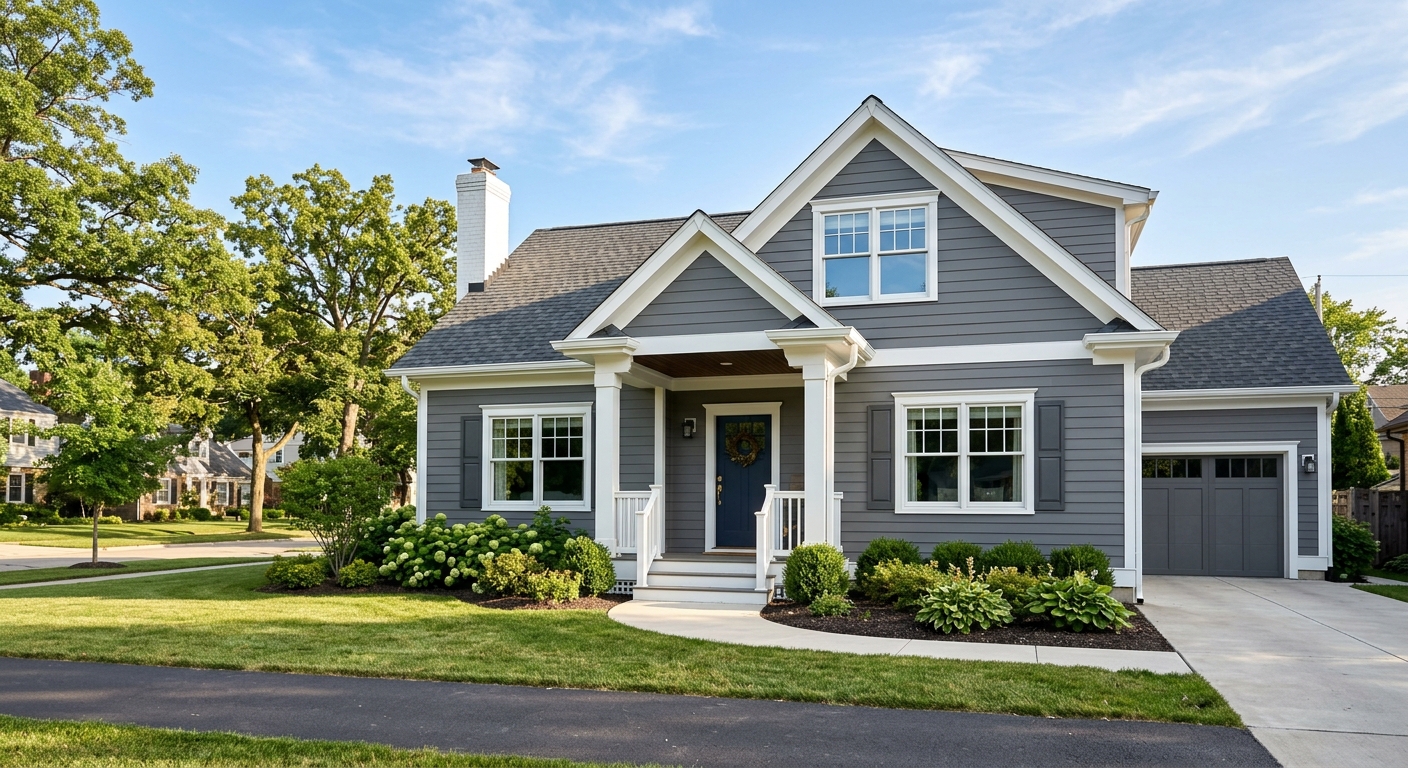
Painting options and costs in Roberts Creek
Roberts Creek is a beautiful place to live, and it comes with a very particular paint challenge: coastal humidity, salty-air exposure in some areas, and frequent rain that can slow drying between coats. With a population of 1,949 (Statistics Canada, 2021 Census), your local trades base is smaller than larger centres, so well-booked crews can be in demand—especially around dry weather windows. The housing stock also shapes prep needs; in Lower Mainland–Southwest, many homes date from mid-century onward, and pre-1978 properties may have older coatings that require lead-paint–safe practices during sanding or scraping. That means some of what looks like “just painting” in an estimate can include containment, HEPA cleanup, patching, and careful disposal.
In Roberts Creek, exterior costs tend to cluster around the Lower Mainland–Southwest value range because scheduling is weather-driven and crews may have to remobilize when a long dry stretch finally opens up. Interior work is more predictable for timelines, but extensive surface repairs—settlement cracking, water staining, and nicotine/wood-tannin bleed—can quickly move a job from a basic refresh into a full prep-and-prime project. One pocket where you’ll often see painting demand is around the core commercial strip and nearby residential areas along Seaview Road, where turnover and seasonal maintenance are common.
Below is a practical cost comparison to help you plan whether you’re considering walls-and-trim refreshes, full exterior repaints, or a cabinet upgrade. Use it as a starting point, then compare the scope line-by-line in your quotes.
| Service |
What's Included |
Typical Duration |
Price Range |
| Interior — whole home (walls, ceilings, trim) |
Move light furniture, prep/patch, caulk where needed, prime repaired areas, 2-coat finish for walls/ceilings, sand touch-ups, clean-up |
5–10 days |
$2,200–$7,500 |
| Interior — per room (standard bedroom or living room) |
Prep/patch, sand, prime repairs, 2-coat walls (and ceiling if requested), spot-prime stains/odours as needed |
2–4 days |
$600–$2,200 |
| Exterior — full house (siding, trim, soffits) |
Wash/decontaminate, scrape failing coating, patch, caulk gaps, prime bare spots, mildew-resistant system, 2-coat exterior finish |
8–16 days |
$4,500–$13,500 |
| Exterior — trim and accent colours only |
Prep existing finish, spot-prime, caulk where visible, 2-coat on trim and select accents |
3–7 days |
$1,200–$5,500 |
| Kitchen cabinet painting (doors, frames, spray finish) |
Remove/label doors where feasible, degrease & degloss, prime and spray for smooth finish, reinstall/adjust, caulk and touch-up |
5–10 days |
$2,400–$6,800 |
| Specialty / faux finish (accent wall, texture) |
Surface prep, base coat, specialized system (texture/faux), sealing, protected masking and clean-up |
2–6 days |
$750–$5,500 |
Prices are estimates only and vary by project scope, site access and material selection.
What affects the price of painting in Roberts Creek
It’s common to see the same “paint the house” request come back 30–50% apart in bids across the Lower Mainland–Southwest and other parts of British Columbia. The main driver isn’t just paint cost—it’s prep time, scheduling risk, and how thoroughly a contractor manages surface problems that show up in our coastal conditions. On exteriors, the season is tightly connected to workable rain-free stretches. Coastal BC’s long damp shoulders mean crews must use mildew-resistant, high-adhesion products and may need additional time between coats; if a dry window closes early, the project can pause and restart, which affects labour rates.
In Roberts Creek, older homes often mean more “hidden labour.” Scraping loose coating, sanding glossy surfaces for adhesion, patching settlement cracks, and priming stained areas can represent 50–70% of labour on a repainting job—especially when coatings are failing or when wood tannins and nicotine bleed through. For example, moving from a basic interior refresh (often near the lower end of $300–$8,000 depending on the number of rooms) to a job with stain-blocking primer and ceiling repairs can push the total toward the upper range. On the exterior side, a trim-only scope can sit near the $1,200–$15,000 band at the low end if prep is light, but full siding-and-soffit work climbs quickly when scraping and priming are extensive.
Two concrete Roberts Creek examples that change cost fast: (1) a house with widespread peeling paint usually needs more containment and spot-priming to stop recurrence; (2) a home with lots of patching from previous leaks can require additional primer systems and longer drying time before final coats. Those add up in dollars even when the “visible” work looks similar.
| Price Factor |
Why It Matters |
Cost Impact |
| Surface prep — scraping, sanding, patching drywall or wood |
Adhesion failures almost always begin with inadequate prep and poor surface profile |
High (often 50–70% of labour on repaints) |
| Number of coats — 2-coat system over primer vs. 1 coat over existing |
Coverage and durability depend on proper build and full film thickness |
Medium to high (+10–30% depending on condition) |
| Paint quality tier — contractor-grade vs. premium (Benjamin Moore, Sherwin) |
Better solids, pigments, and film build can reduce number of passes and improve washability |
Low to medium (materials may change total 5–15%) |
| Ceilings and trim — adds significant time vs. walls-only |
Trim masking, cutting-in precision, and overhead work take longer |
Medium (+10–25% vs walls-only) |
| Exterior season window — short season raises summer rates |
Waiting for dry weather and remobilizing crews increases overhead and labour time |
Medium to high (+15–35% for weather-complicated schedules) |
| Lead-safe precautions — required for pre-1978 homes with lead paint |
Containment, HEPA cleanup, and disposal add time and specialized procedures |
Medium to high (+10–40% depending on coating condition) |
| Surface material — drywall vs. plaster vs. wood vs. stucco |
Each substrate needs the right primer system for adhesion and moisture tolerance |
Medium (+5–25%) |
| Height and access — multi-storey exterior requires scaffolding or lifts |
Set-up time, safety procedures, and protected work areas add labour |
High (+20–60% on difficult access) |
Permits & regulations in British Columbia
In British Columbia, painting typically does not require a municipal permit for standard residential interior or exterior repainting. Where the rules become important is around health and safety—especially for homes built before 1978. Health guidelines recommend testing for lead paint before sanding or scraping if you suspect older coatings, and if lead is present, using lead-safe work practices such as wet methods (to reduce dust), HEPA vacuuming, proper containment, and correct disposal. This isn’t something a homeowner must personally do legally in the way a regulated trade would, but it’s standard practice for professional contractors because the risk is real.
What usually DOES require a permit or approvals is not “painting” itself, but related work such as structural changes, major renovations, or permit-triggered building-envelope alterations (for example, when you’re replacing siding systems or doing significant exterior modifications). For straightforward repainting—cleaning, patching, priming, and applying finish coatings—permits are typically not required.
Step-by-step, homeowners in Roberts Creek can verify a contractor before signing: (1) confirm contractor registration/licensing details via the appropriate BC registry resources listed on the company’s paperwork or through official provincial lookup pages; (2) ask for a current Certificate of Insurance showing liability coverage; (3) confirm workers’ compensation coverage (WSBC/WCB) so you aren’t exposed if a worker is injured; and (4) request a signed written contract that specifies the paint brand/lines, sheen, number of coats, and the exact prep/patch scope. If lead is suspected, ask how they’ll handle containment and cleanup and whether they can provide documentation of their lead-safe procedures and materials disposal practices.
Interior vs exterior painting — getting the best result in Roberts Creek
The difference between a long-lasting paint job and a premature failure in Roberts Creek is almost always prep plus product choice for our moisture profile. For interiors, the surface condition matters more than the brand. A proper job fills and sands, primes any repairs, and blocks troublesome stains before topcoats. Sheen choice is also practical: flat or matte can hide wall imperfections in low-traffic rooms, while eggshell or satin on living areas balances cleanability with a soft look. Most importantly, two coats over the correct primer generally outlast one thick coat—especially where you’re changing colours or correcting uneven substrate porosity.
On exteriors, coastal BC punishes mistakes. Caulking first—after surface preparation and before finish—helps prevent water ingress behind trim and at joints. Primer type matters: wood and bare spots need a system designed to bond and manage moisture; drywall-like patches and stucco areas need adhesion and moisture-tolerance tailored to the substrate. We also prioritize mildew-resistant, high-adhesion products suited to Lower Mainland–Southwest’s rain-and-humidity cycles. If you’re considering lead-safe work on pre-1978 homes, it must be planned before scraping begins so containment and cleanup are baked into the timeline and cost.
Cabinet painting can be a smart budget alternative to replacement when the boxes are solid and doors/drawers are worth refinishing. A typical professional cabinet spray finish often lands in the $2,400–$6,800 range, which can be far less than full kitchen replacement when the layout stays the same. For a dollar perspective: if your exterior scrape-and-prime repairs are extensive, a “paint-only” approach usually fails faster—so paying for proper prep within the exterior $1,200–$15,000 band is where durability is actually purchased.
| Project Type |
Key Prep Step |
Recommended Coats |
Price Band |
| Interior — fresh drywall (new construction) |
Skim/fill defects, sand smooth, prime entire surface to control suction |
1 primer + 2 finish coats |
$300–$1,800 |
| Interior — repaint (good condition, no repairs) |
Light scuff-sand, spot-prime minor stains, caulk if needed |
1–2 finish coats depending on sheen/colour change |
$350–$2,600 |
| Interior — repaint (patching and priming needed) |
Patch/level, sand edges feathered, stain-block and prime repairs before topcoat |
1 primer + 2 finish coats |
$800–$5,500 |
| Exterior siding (wood or fibre cement) |
Scrape failing paint, caulk joints, prime bare spots, prep for adhesion |
2 finish coats over primer where required |
$4,500–$13,500 |
| Exterior trim and accents only |
Clean, spot-scrape, prime unprotected areas, correct prep at edges and joints |
2 finish coats |
$1,200–$5,500 |
| Kitchen cabinets (spray finish) |
Degrease/degloss, prime for adhesion, controlled spray for smooth film build |
2 finish coats over primer (plus touch-up/clear as specified) |
$2,400–$6,800 |
How to choose a painting contractor in Roberts Creek
Choosing the right painter in Roberts Creek starts with verification, not promises. First, confirm British Columbia licensing/registration details (where applicable for the contractor’s trade category) and ask for proof. Second, request a current Certificate of Insurance for liability coverage; it should match the work you’re hiring them to do. Third, ensure workers’ compensation coverage is in place so there’s no risk to you if a worker is injured on-site—your contractor should provide documentation that they’re covered under WSBC/WCB. If they can’t provide paperwork quickly, that’s a red flag.
Next, get 2–3 itemised written quotes, ideally not a single lump-sum number. The best quotes break down labour and materials by line item (prep, primer, paint, caulking, masking, cleanup/disposal) and specify the product lines and sheen levels. Read the scope carefully: ask what’s excluded (for example, rot repairs, carpentry, deck staining, lead-safe handling, or furniture moving beyond light items), whether a permit is included (painting usually doesn’t need one in BC, but related exterior work might), and whether disposal and site cleanup are part of the offer.
Warranty also matters. Ask for the workmanship warranty length, whether it covers peeling or adhesion failures tied to prep, and whether product/manufacturer warranties apply and what conditions are required. Payment schedules should be conservative: never pay more than about 10–15% upfront for materials and scheduling, and hold back a portion until the job is complete and you’ve done a walkthrough.
Finally, make sure the timeline is in writing. A real start date and a completion estimate are especially important in coastal BC where crews may need to pause between rain windows.
- Ask for proof of liability insurance (certificate) and keep it current for your start date.
- Confirm WSBC/WCB workers’ compensation coverage documentation.
- Request a written contract with exact prep steps: scraping level, patching, caulking, and priming scope.
- Get paint brand/line and sheen specified (flat/eggshell/satin/semi-gloss), not just “paint of same quality.”
- Ensure number of coats is stated for each surface (walls, ceilings, trim, exterior siding).
- Confirm disposal and cleanup are included (scrape debris, masking waste, and any hazardous material handling if applicable).
- Ask whether they test for lead paint or have a lead-safe protocol for pre-1978 homes.
- Check whether they protect floors, landscaping, and outdoor fixtures during exterior work.
- Ask for a realistic drying-time approach in wet/humid conditions and how delays are handled.
- Verify warranty terms: what’s covered, duration, and how claims are handled.
- Review payment schedule—limit upfront to 10–15% and hold back until after walkthrough completion.
- Request a start/completion date in writing, including what happens if weather delays exterior work.
Red flags I see in Roberts Creek: (1) they quote “paint-only” without describing scraping/priming or caulking; (2) they avoid putting paint brand, sheen, and coat counts in the contract; (3) they ask for large upfront payments (well above 10–15%); (4) they won’t provide insurance/WSBC documentation on request; and (5) they dismiss lead-safe concerns on pre-1978 homes without a clear protocol.
Frequently asked questions — painting in Roberts Creek
How many coats does an exterior repaint need in Roberts Creek?
Most exterior repaints in Roberts Creek end up with 2 finish coats over a primer system where bare spots or failing coatings are removed. If the existing paint is chalky, peeling, or has been exposed to moisture long enough to reduce adhesion, a contractor will typically scrape and spot-prime first, then apply two colour coats to achieve consistent coverage. In coastal BC humidity, the schedule matters too: crews may need to wait for rain-free, dry conditions so the first finish coat can cure properly. Where a home has significant prep work, you’ll often see costs move into the exterior $4,500–$13,500 range because prep and priming take time.
What is the best primer for older Roberts Creek homes?
For older Roberts Creek homes, the “best” primer depends on what you’re priming over: bare wood, patched drywall, previously painted surfaces, or areas stained by water. In practice, professional prep usually includes sealing stains and using an adhesion-focused primer after scraping and sanding. For pre-1978 homes where lead may be a concern, the decision is also procedural—contractors typically use lead-safe practices when sanding/scraping and then choose primers that block bleed-through (nicotine/wood tannin) so your finish coats don’t fail early. A good contractor should specify primer type in writing and explain why—don’t accept “one-size-fits-all,” especially in Lower Mainland–Southwest’s damp shoulder seasons.
Should I paint or wallpaper my Roberts Creek home?
In Roberts Creek, painting is usually the safer, more durable choice for most homeowners because it seals and can handle minor substrate movement when properly prepped. Wallpaper can look great, but it adds complexity: seams, pattern matching, and removal issues later—plus any moisture or patching problems in walls can show through if the wall prep isn’t excellent. If you have older walls with settlement cracks or prior repairs, painting with spot-priming and a quality primer/finish system often performs better for everyday wear and touch-ups. If you’re budgeting, interior refresh jobs typically fall within the broader interior band (from as low as $300–$8,000 depending on rooms and prep), whereas wallpaper adds materials and installation labour that can push the total quickly.
How do I fix peeling exterior paint in Roberts Creek?
Peeling exterior paint isn’t fixed by just skimming and repainting. In Roberts Creek, the correct approach is to identify and remove loose, failing paint back to sound edges, then sand/stabilize the surface for adhesion. Next comes caulking and patching any failed joints or openings so water can’t get behind the new system. Then the contractor applies the right primer (often after cleaning and addressing mildew) before colour coats. Weather and timing matter: spraying or rolling when rain/humidity is too high can trap moisture and reduce bond strength. If lead is suspected on a pre-1978 home, a lead-safe protocol must be included before scraping begins. Proper repair work often moves projects toward the higher end of exterior pricing because prep is labour-intensive.
What colours add the most resale value in Roberts Creek?
For resale in Roberts Creek and the broader Lower Mainland–Southwest, the safest value choices tend to be timeless, light-reflective neutrals and balanced warm/cool whites that don’t look dated. Think warm greiges, soft creams, and muted greys paired with crisp trim (rather than very saturated colours on the full exterior). On interiors, eggshell or satin in light neutrals usually appeals to a wide range of buyers because it makes rooms feel cleaner and brighter—especially useful in homes that may have shadier exposures. Your actual “best” colour still depends on siding tone, roof colour, and how much natural light your rooms get. A professional quote won’t change based on colour alone, but premium colour matches and additional touch-up can influence the total within typical interior ranges like $600–$2,200 per room.
How much does it cost to paint a house in Roberts Creek?
The cost to paint a house in Roberts Creek depends on whether you’re doing an interior refresh, a full exterior repaint, or a specialty project like cabinets. As a realistic planning range, interior painting can fall anywhere from about $300–$8,000 based on number of rooms, ceiling work, and how much patching or stain-blocking is required. For exteriors, full-house work typically lands in the higher band (commonly $4,500–$13,500) because of scraping, priming, mildew-resistant systems, and rain-humidity scheduling. Kitchen cabinet painting is often quoted in the mid-range, frequently around $2,400–$6,800, since spray finish and multiple coats add labour. For a firm number, your quotes should be itemised by prep, primer, coats, and disposal—don’t rely on a single “per-square-foot” line without the scope.