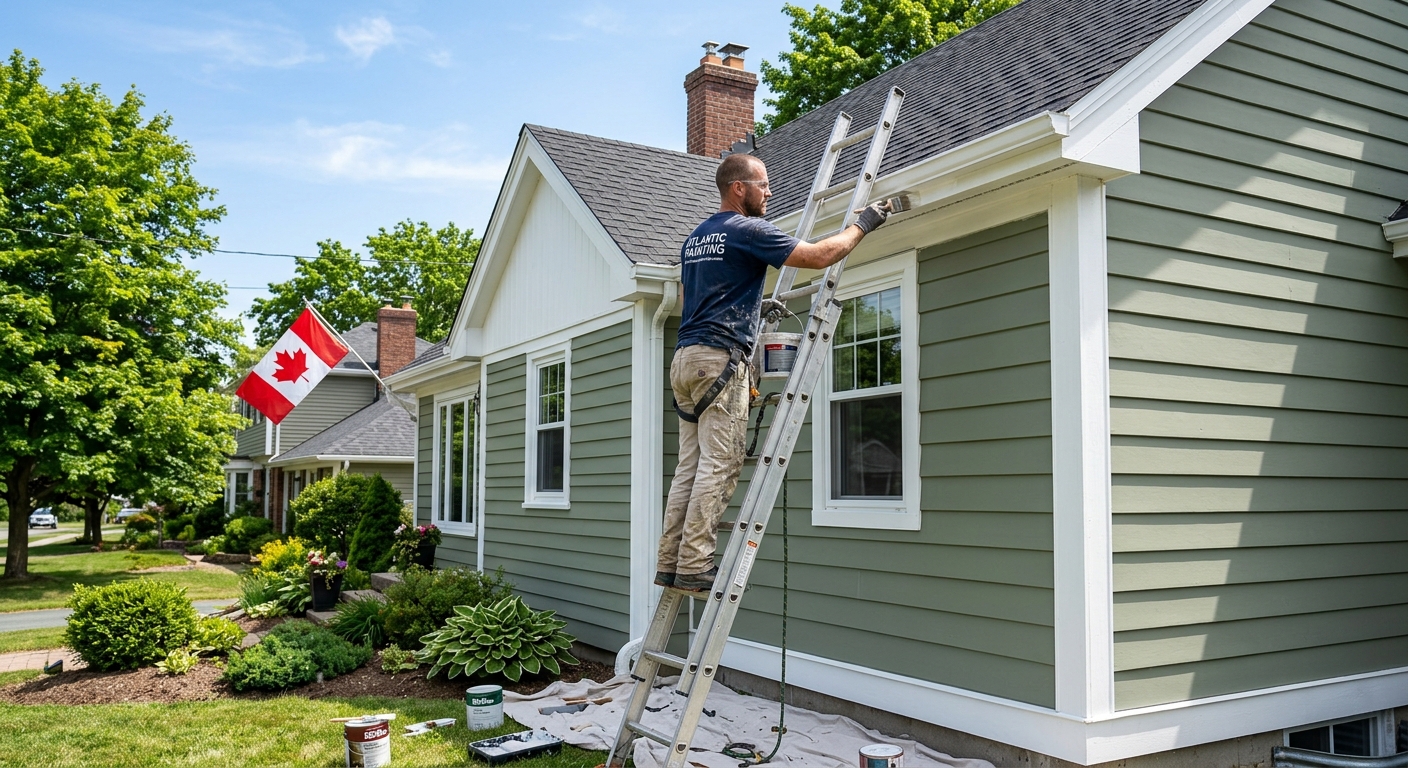
Painting options and costs in Murrayville
Murrayville homeowners can choose from straightforward refreshes to full, high-prep repaints—but the price changes fast once prep, product quality, and access come into play. With Murrayville’s population at 11,420 (Statistics Canada, 2021 Census), we see steady demand for both interior refreshes and exterior maintenance as more households stay put longer in their existing homes. In the Lower Mainland–Southwest, a big cost driver is housing age: many properties date from the mid-century through the 1990s, so coatings often fail for reasons beyond simple “old paint,” including settlement cracking, nicotine/wood tannin bleed, and adhesion loss that needs removal and priming before colour. On pre-1978 homes, lead-paint–safe practices may be required when sanding or scraping is involved, and that containment/cleanup time is typically reflected in the estimate.
Lower Mainland–Southwest conditions also shape scheduling and drying. Interior work is less season-bound—crews often shift work indoors through fall and winter—while exterior painting has to be planned around rain, coastal humidity, and mildewing risk. That means contractors build in weather-window management and may slow drying times to avoid peeling or poor cure. You’ll especially notice contractor availability in areas with older housing stock and larger lots, such as around Murrayville’s central residential pockets near 8th Avenue and 216th Street. For many projects, the difference between a “good-looking” job and a durable one is hidden inside the scope: prep and primer selection. Use the table below to compare typical ranges, then we can narrow it to your walls, trim, siding, and finish preferences.
| Service |
What's Included |
Typical Duration |
Price Range |
| Interior — whole home (walls, ceilings, trim) |
Surface protection, patching/sanding, caulking (as needed), primer where required, 2 finish coats (walls/ceilings), prep and paint for trim/doors, cleanup |
5–10 working days |
$1,500–$6,500 |
| Interior — per room (standard bedroom or living room) |
Protection, prep/spot patching, primer where required, 2 finish coats on walls/trim, ceiling paint where included |
1–2 working days |
$500–$2,000 |
| Exterior — full house (siding, trim, soffits) |
Power wash (where suitable), scrape/sand of failing areas, patching and caulking, high-adhesion primer, 2 finish coats, trim/soffit work, weather-window scheduling |
2–4+ weeks (weather dependent) |
$4,500–$12,500 |
| Exterior — trim and accent colours only |
Surface prep focused on trim, primer on bare/spot areas, caulking/spot sealing, 2 finish coats on trim and specified accents |
3–7 working days |
$1,200–$4,800 |
| Kitchen cabinet painting (doors, frames, spray finish) |
Degreasing, sanding/scuffing, repairs, bonding primer, spray-applied finish (typically 2–3 coats total), hardware masking/coordination, in-cabinet protection |
7–15 working days (cure time included) |
$2,400–$7,000 |
| Specialty / faux finish (accent wall, texture) |
Surface prep, primer/bonding, application of specialty medium/texture, seal/finish coat as specified, protection/clean-up |
2–6 working days |
$750–$6,000 |
Prices are estimates only and vary by project scope, site access and material selection.
What affects the price of painting in Murrayville
Even when two quotes look like they cover the “same” rooms, the total price in the Lower Mainland–Southwest can swing by 30–50% due to preparation intensity, coating system choices, and how crews manage weather and drying times. In British Columbia, the exterior season is governed less by deep cold and more by coastal humidity, rainfall, and long shoulder-season dampness. That doesn’t always shorten the calendar, but it does increase the need for careful scheduling and mildew-resistant, high-adhesion products—especially on siding and trim where moisture can sit in microscopic pores. In Ontario and Alberta, the exterior window is typically late May to early October (temperature and rising conditions), which can push costs up in summer but keeps product curing more predictable. In Murrayville, you can get rain interruptions that mean crews return between weather windows, which is real labour time.
Prep drives cost in both interiors and exteriors. On a repaint, older homes across the Lower Mainland often require more than “wash and roll”: scraping failing coatings, caulking settlement cracks, patching drywall, and stain-blocking nicotine or wood tannins. For many jobs, surface prep can represent 50–70% of total labour—especially where paint is peeling or bubbling. A common example: an interior living-room repaint can stay in the $500–$2,000 band when the walls are sound and the scope is mostly 2-coat finish over primer spots. But if the same room needs extensive patching and priming, it can move toward the higher end of the interior painting band (and sometimes overlap whole-home pricing) because time increases, not just paint.
For exteriors, the difference between “trim accents only” and a full siding/trim repaint is usually justified. If your siding has adhesive failure or mildew staining, choosing a full system approach can protect your substrate far longer—often the reason a $1,200–$4,800 trim project doesn’t behave like a complete $4,500–$12,500 exterior repaint. If the house is pre-1978 and lead-safe precautions are needed for scraping/sanding, containment and cleanup can add cost even when the exterior paint area looks similar.
| Price Factor |
Why It Matters |
Cost Impact |
| Surface prep — scraping, sanding, patching drywall or wood |
Determines whether the new coating can bond; damaged substrates often require repairs before paint. |
Can be 50–70% of labour on repainting jobs |
| Number of coats — 2-coat system over primer vs. 1 coat over existing |
Colour change, stain-blocking, and coverage depend on film build and primer compatibility. |
Typically adds hundreds to multiple days |
| Paint quality tier — contractor-grade vs. premium (Benjamin Moore, Sherwin) |
Premium coatings often cover better, resist scuffing/mildew longer, and reduce rework. |
Materials premium can add ~5–20%+ |
| Ceilings and trim — adds significant time vs. walls-only |
Ceilings require cutting/edge work and careful leveling; trim needs precision and extra masking. |
Often shifts projects by 10–30%+ |
| Exterior season window — short season raises summer rates |
Shorter dry/curing windows concentrate demand and can increase crew costs. |
May raise scheduling and mobilization costs |
| Lead-safe precautions — required for pre-1978 homes with lead paint |
Safe containment, HEPA vacuuming, and proper disposal add steps beyond normal prep. |
Can add measurable labour and disposal time |
| Surface material — drywall vs. plaster vs. wood vs. stucco |
Different substrates demand different primers and adhesion systems. |
Primer choice can change labour and material costs |
| Height and access — multi-storey exterior requires scaffolding or lifts |
Access equipment adds setup time and safety requirements. |
Often adds thousands on larger/multi-storey homes |
Permits & regulations in British Columbia
In British Columbia, painting does not typically require a permit for residential work, whether it’s interior refreshes or exterior repainting. Where regulation-style constraints come in is around health guidance—particularly for homes built before 1978. For those properties, health guidelines recommend testing for lead paint before sanding or scraping. If lead is present, lead-safe work practices are standard for professional contractors: wet methods to minimize dust, HEPA vacuuming, proper containment, and proper disposal of waste. This is not usually legally mandated for homeowners, but it is the approach we follow when the job involves disturbance of painted surfaces.
What usually DOES require a permit is not painting itself, but work that triggers other building approvals—e.g., structural changes, certain additions, or when you’re doing regulated remediation. Painting alone is generally considered a finish trade activity, so you’re typically planning for product selection, safe work procedures, and documentation rather than permits.
To verify your contractor in Murrayville, start by confirming they carry liability insurance (ask for a certificate of insurance), and that they have workers’ compensation coverage (WSIB or WCB coverage). Then request a written contract that specifies paint brand and sheen, number of coats, and exactly what surface prep is included. Step-by-step, you can: (1) ask for their insurance certificate and check the job-site coverage details, (2) confirm workers’ compensation coverage documentation, and (3) verify their credentials using the appropriate online provincial licensing/registry resource when applicable for their trade. For the scope, ensure the contract spells out prep and disposal—especially if scraping is required on older coatings.
Interior vs exterior painting — getting the best result in Murrayville
In Murrayville’s Lower Mainland–Southwest climate, durability comes down to preparation and the right coating system for moisture and wear, not just “nice colour.” For interiors, the most common reason paint fails early is surface condition, not brand. Filling and sanding are about getting a smooth, stable base; priming is what blocks stains and improves adhesion. Whether you use flat, eggshell, satin, or semi-gloss should match the room’s traffic: semi-gloss on trim and high-contact areas tends to clean easier, while eggshell is often a practical wall choice. Also, two coats over a proper primer almost always outlast one thick coat; coverage and film build matter. If your walls are sound, an interior living-room repaint often sits around the $500–$2,000 band. If you’re dealing with repairs, patching, or stain bleeding, you’re paying for time and primer system—so the range moves.
For exteriors, Murrayville’s coastal humidity and rain means prep has to be tied to moisture control. Scrape and feather failing paint, caulk gaps before coating (so water can’t work behind the system), and use primer matched to the substrate and existing coating. Oil vs. latex primer choices can matter depending on whether you’re bonding to wood, fibre cement, or other surfaces and on whether stain-blocking is needed. Exterior systems also need mildew resistance where the climate encourages surface growth. In lead-sensitive pre-1978 situations, safe containment and cleanup steps directly affect readiness for the next coating stage. If you’re comparing options, cabinet painting is a budget-friendly alternative to replacement: a properly sprayed finish with bonding primer and a multi-coat system can land in the $2,400–$7,000 band, which is often far cheaper than full cabinet replacement—provided you’re ready for a careful prep and cure schedule.
| Project Type |
Key Prep Step |
Recommended Coats |
Price Band |
| Interior — fresh drywall (new construction) |
Prime all drywall to seal and uniform absorbency, then sand lightly for smooth finish |
Primer + 2 finish coats |
$1,200–$4,500 |
| Interior — repaint (good condition, no repairs) |
Degrease/light scuff, caulk minor gaps, spot-prime if needed |
2 finish coats (with spot primer as required) |
$500–$3,000 |
| Interior — repaint (patching and priming needed) |
Patch drywall/woodwork, sand flush, prime repaired and stain-prone areas |
Primer on repairs + 2 finish coats |
$800–$5,500 |
| Exterior siding (wood or fibre cement) |
Scrape failing paint, patch and caulk, then prime with a high-adhesion system suited to the substrate |
Primer + 2 finish coats |
$4,500–$12,500 |
| Exterior trim and accents only |
Clean and spot prep around joints/previous failures, then prime bare areas for adhesion |
Spot primer + 2 finish coats |
$1,200–$4,800 |
| Kitchen cabinets (spray finish) |
Degrease, scuff/sand to remove finish, bonding primer, then careful masking/protection |
Primer + 2–3 finish coats (as system requires) |
$2,400–$7,000 |
How to choose a painting contractor in Murrayville
To pick the right painting contractor in Murrayville, start with proof. In British Columbia, ask for liability insurance documentation (certificate of insurance) and confirm they have workers’ compensation coverage (WSIB/WCB coverage as applicable for their workers). Don’t accept “we’re insured” verbally—ask to see the documents and ensure the coverage dates are current and the policy includes your type of work and address/location.
Next, get 2–3 itemised written quotes. I recommend a breakdown that shows labour and materials separately, with line items for prep (scraping, sanding, patching, caulking), priming, number of finish coats, and cleanup/disposal. Avoid lump-sum quotes that don’t say what prep is included. For exteriors in the Lower Mainland–Southwest, also ask whether weather-window scheduling, re-mobilization between dry periods, and mildew-resistant product choices are included in the price. For interiors, ensure the quote spells out ceilings/trim coverage, and whether patching and stain-blocking primer are included.
Warranty is another differentiator. Ask for a workmanship warranty length (and what it covers), whether product/manufacturer warranties apply, and whether any warranty is transferable to future owners. For payment, never pay more than 10–15% upfront; hold back a portion until completion and walkthrough. Finally, insist on a written timeline with a start date target and completion estimate, especially for cabinet painting where cure time affects your schedule.
- Request proof of liability insurance (certificate of insurance).
- Confirm workers’ compensation coverage documentation (WSIB/WCB).
- Use 2–3 itemised quotes: labour vs materials, not just totals.
- Confirm included prep: scraping, sanding, patching, caulking, and priming.
- Ask the paint brand, sheen level, and coating system details in writing.
- Clarify exclusions: moving furniture, lead-safe steps, repairs beyond patching.
- Check whether cleanup and disposal are included (especially scraped debris).
- Ask for the number of coats by surface type (walls, ceilings, trim, siding).
- Get a written schedule and weather contingency plan for exterior work.
- Confirm warranty terms for workmanship and how paint defects are handled.
- Agree on payment schedule—limit upfront payment and set a completion holdback.
- Require a site walkthrough and a colour/finish selection checklist before start.
Common red flags in Murrayville: quotes that skip primer details, unusually low prices that don’t account for scraping/patching, vague scopes that don’t mention caulking or mildew considerations for exteriors, no insurance or workers’ compensation proof, and contractors who won’t put the timeline and warranty terms in writing.
Frequently asked questions — painting in Murrayville
How do I choose a painting contractor in Murrayville?
Start by verifying documentation: ask for a certificate of liability insurance and proof of workers’ compensation coverage (WSIB/WCB). Then get 2–3 itemised written quotes with labour/materials breakdowns, including what prep is included. In Murrayville and the broader Lower Mainland–Southwest, pay close attention to exterior scope wording—rain and humidity mean prep and re-mobilization between weather windows can affect total cost. For older homes, ask how they handle stain-blocking and whether lead-safe practices are considered for pre-1978 coatings. A reputable contractor will list paint brand/sheens, number of coats, and disposal/cleanup. If your quote targets an exterior repaint, realistic ranges commonly land around $4,500–$12,500 for full-house work depending on siding condition and access.
How many coats does an exterior repaint need in Murrayville?
In most Murrayville exterior repaints, the standard durable system is primer (where needed) plus two finish coats. If there’s bare wood, adhesion failure, or stain/mildew concerns, primer becomes more than an “optional step,” because it helps adhesion and reduces bleed. Where existing coatings are sound, you may see less primer, but you still typically end up with two finish coats for uniform colour and proper film build. Coastal humidity and mildew risk in the Lower Mainland–Southwest also make it important to use mildew-resistant, high-adhesion products and to paint only when surfaces can properly dry/cure. If your scope is trim and accents only, pricing often sits around $1,200–$4,800, but the coats rule still applies: spot prime plus two finish coats on the corrected areas.
What is the best primer for older Murrayville homes?
There isn’t one single “best” primer for every older Murrayville home—because the correct choice depends on what your existing paint is doing (peeling, staining, chalking, or just fading). For repainting, the goal is a stable surface and good bonding. If your home has tannin bleed from wood, stain-blocking primer is usually required in affected spots. If you’re dealing with adhesion issues, you’ll want a bonding primer compatible with the existing coating system. In pre-1978 scenarios, lead-safe work practices are a health priority before coatings are disturbed. A contractor should identify your substrate (wood, fibre cement, stucco) and recommend primer accordingly in the written contract. For budgeting, primer strategy is one reason projects shift within the interior and exterior bands—when primer needs expand due to prep, costs move upward.
Should I paint or wallpaper my Murrayville home?
For most Murrayville homeowners, painting is the safer, more predictable choice—especially when walls have settlement micro-cracks or patchwork. Wallpaper can look great, but it’s unforgiving if drywall tape lines, texture irregularities, or moisture issues aren’t fully addressed. Painting can be tuned to your lifestyle with washable finishes (common in trim and higher-traffic areas), and it typically makes future updates easier. If you already have peeling paint or inconsistent surfaces, the right primer and smoothing prep for painting can outperform trying to “hide” issues under paper. If your priority is quick change with durability, painting usually wins on value. If wallpaper is still your preference, ask for a prep scope that matches moisture and adhesion realities, and treat it like a finish system (not a quick overtop option) in British Columbia’s humidity.
How do I fix peeling exterior paint in Murrayville?
Peeling exterior paint in Murrayville usually can’t be fixed by spot painting alone, because the root problem is typically adhesion failure or trapped moisture behind failing coatings. The correct approach is to scrape and remove all loose material to sound edges, then sand/feather the remaining surface. After that, patch where needed, caulk appropriate joints, and prime with a system that bonds to the corrected substrate. Only then do you apply two finish coats. Coastal humidity and rainfall mean you also have to work within a dry weather window so coatings can dry/cure properly—otherwise you can get premature failure. If the home is pre-1978, ask how the contractor tests or approaches lead-safe precautions for scraping/sanding. This prep-driven work is a big reason full exteriors commonly land in the $4,500–$12,500 range.
What colours add the most resale value in Murrayville?
For resale value in Murrayville and across the Lower Mainland–Southwest, neutral, light-reflective colours tend to perform best because they photograph well and give buyers flexibility. On interiors, think warm whites, soft greiges, or light taupes paired with clean trim (often eggshell/trim sheen differences depending on your room). On exteriors, siding-friendly colours that mask dirt and mildew staining better usually win—greys and muted earth tones often age well in coastal conditions. The “best” colour still depends on sunlight exposure and whether your existing materials (brick, roof shingles, siding texture) are cool or warm undertone. The biggest resale risk is choosing a trendy, high-chroma colour that limits the buyer pool. If you’re planning a cabinet refresh instead of replacement, a bright neutral cabinet colour can also boost perceived cleanliness and value; cabinet painting commonly ranges around $2,400–$7,000 depending on prep and finish system.