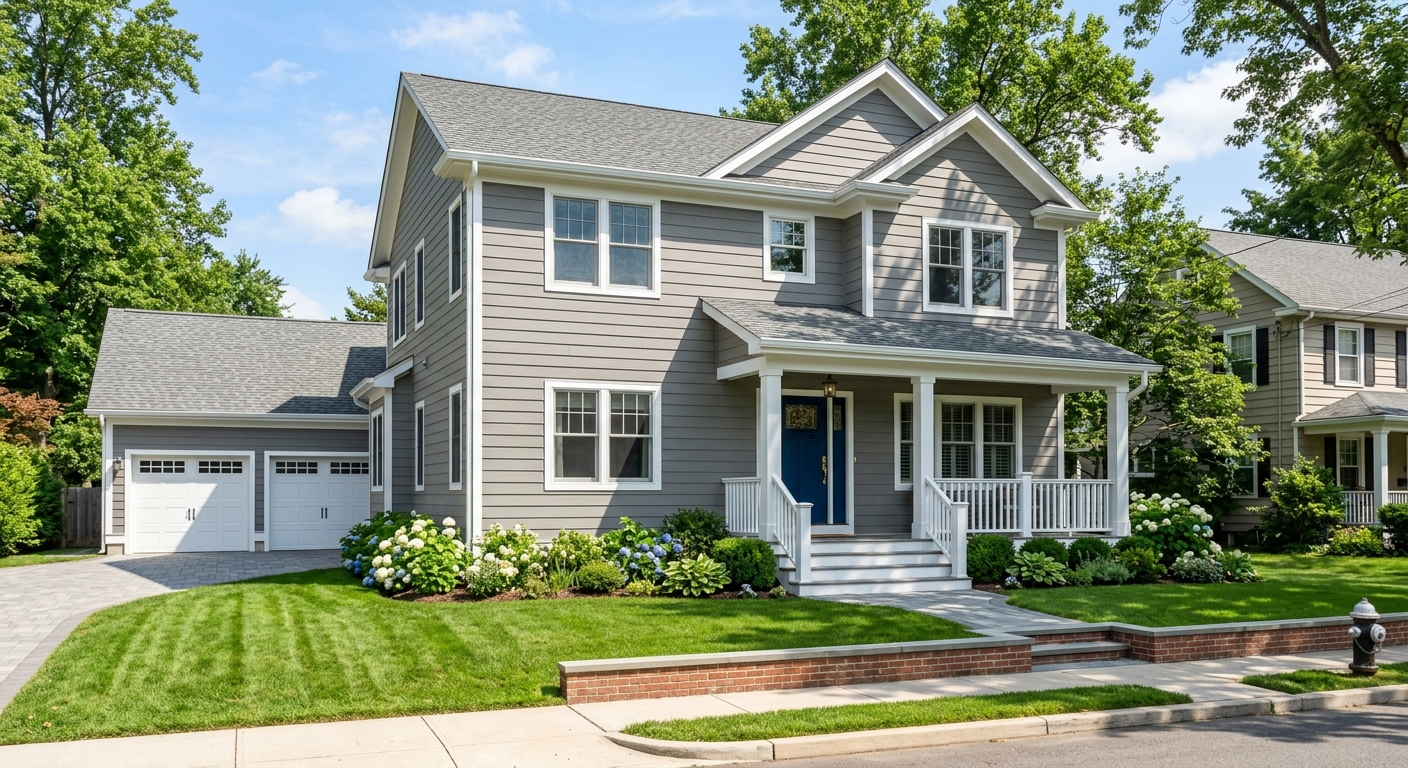
Painting options and costs in Roncesvalles
Roncesvalles is a neighbourhood where painting shows fast—bright storefront colours, tree-lined streets, and a lot of older housing stock make surfaces more exposed to sun fade, wind-driven rain and frequent touch-ups. In the Toronto economic region, Roncesvalles has a population of 14,974 (Statistics Canada, 2021 Census), and the housing blend here includes many pre-1980 builds that typically need extra preparation. When homes have multiple older paint layers, you usually see more scraping, sanding, caulking and spot-priming than you’d get on a newer property. For homes built before 1978, lead-safe work practices are standard for professionals even though homeowners aren’t typically required to test or file anything themselves.
In Toronto, exterior painting is priced around a short, climate-dependent season. Contractors commonly plan work from late May through June and again from September to mid-October—when temperatures stay above about 10°C and there’s enough dry time for adhesion and proper curing. That tight window can push labour rates higher in June to August, especially when humidity spikes cause rework. Interiors are less weather-sensitive, but preparation still drives cost: stairwells, high ceilings, masking, and trim detail can outweigh the topcoat price.
If you’re painting a home around Roncesvalles Avenue or near the park-adjacent streets, it’s especially common to book prep crews early because street access and permit-related logistics (for curbside protection and traffic control) can add time. Below are realistic ranges homeowners in Roncesvalles usually see, and they set up the comparisons in the next table.
| Service |
What's Included |
Typical Duration |
Price Range |
| Interior — whole home (walls, ceilings, trim) |
Move/cover items as needed, patch & sand, prime repairs, caulk where required, paint walls & ceilings, paint doors/trim (scope varies with home size), clean-up |
5–10 business days |
$2,200 – $6,000 |
| Interior — per room (standard bedroom or living room) |
Prep & protect floors/furnishings, patch & sand, spot prime, paint walls, paint ceiling, basic trim (door casing/baseboards) per room scope |
1–3 business days |
$600 – $2,000 |
| Exterior — full house (siding, trim, soffits) |
Surface inspection, scraping/sanding, caulking, priming bare areas, paint system for siding & trim, protect landscaping and site cleanup |
1–2+ weeks |
$3,500 – $8,000 |
| Exterior — trim and accent colours only |
Targeted scraping/sanding, caulking, spot-priming, prime & paint trim/accents; typically excludes full siding repaint unless specified |
3–7 business days |
$1,800 – $4,500 |
| Kitchen cabinet painting (doors, frames, spray finish) |
Degrease/clean, remove hardware (if requested), sand and prep, prime, spray finish, re-install hardware, interior/exterior protection and cleanup |
4–10 business days |
$1,200 – $4,000 |
| Specialty / faux finish (accent wall, texture) |
Surface level/prime for finish type, apply specialty coats/texture, protect edges and clean-up; design match depends on reference |
2–6 business days |
$700 – $3,500 |
Prices are estimates only and vary by project scope, site access and material selection.
What affects the price of painting in Roncesvalles
In Toronto (and across Ontario), quotes for the “same” paint job can easily swing by 30–50% because the hidden drivers aren’t the brand—they’re labour intensity and how much preparation the house truly needs. A fresh-looking wall can still require extra sanding, crack chasing, adhesion testing, moisture-mapping, and correct priming over different substrates. For older buildings—common around Roncesvalles—surface prep often becomes the main budget item: scraping loose paint, patching drywall or damaged woodwork, caulking gaps, and priming stains or repairs. In many repainting jobs, that prep can represent 50–70% of the total labour.
Exterior pricing is also shaped by the short season in the Greater Toronto Area. Contractors generally need workable conditions with temperatures above about 10°C for application and curing time. In Ontario and Alberta, frost, rain and humidity spikes are the main constraints; they’re not year-round like damp coastal climates. That short window concentrates demand late May–June and again September–mid October, so contractors can charge more in June–August—often 10–15% higher—when every good weather day gets booked.
Here are concrete Roncesvalles examples: (1) a pre-1980 exterior with multiple paint layers can add days of scraping and spot-priming versus a house that was previously maintained, shifting exterior work toward the $3,500 – $8,000 range rather than the low end; (2) a two-storey home with porch railings and detailed trim may require more time and protection than homeowners expect, pushing labour toward the mid band; and (3) interiors with ceiling peaks or heavy trim can move a per-room project from a basic refresh toward the upper $600 – $2,000 range if trim and repair work expands.
| Price Factor |
Why It Matters |
Cost Impact |
| Surface prep — scraping, sanding, patching drywall or wood |
Determines adhesion and finish longevity; older layers and damaged areas take longer |
Can add 20–60% of labour on repaints |
| Number of coats — 2-coat system over primer vs. 1 coat over existing |
Coverage changes with sheen, colour contrast, and primer necessity |
Often changes total cost by 10–25% |
| Paint quality tier — contractor-grade vs. premium (Benjamin Moore, Sherwin) |
Impacts hide, durability, washability and how evenly it lays on prep |
Materials may shift cost by ~5–15% |
| Ceilings and trim — adds significant time vs. walls-only |
Trim edges and ceiling cut-ins require more masking and brush/roller time |
Commonly +15–40% vs. walls-only scopes |
| Exterior season window — short season raises summer rates |
Weather windows and contractor scheduling drive hourly labour cost |
Typical +10–15% in June–August demand |
| Lead-safe precautions — required for pre-1978 homes with lead paint |
Extra controls: wet methods, HEPA vacuuming, disposal practices, containment |
Can add 5–20% depending on condition and extent |
| Surface material — drywall vs. plaster vs. wood vs. stucco |
Absorption and bond strength change what primer and prep are needed |
May add 10–30% for specialty substrates |
| Height and access — multi-storey exterior requires scaffolding or lifts |
Safety setup and time increase materially with access constraints |
Often adds 15–50% on complex exteriors |
Permits & regulations in Ontario
In Ontario, painting itself generally does not require a building permit for typical interior or exterior repainting. The rule of thumb: if you’re not changing a structural element, altering load-bearing systems, or doing regulated work that affects the building envelope in a way that triggers permits, you’re usually fine. Where homeowners need to be careful is with lead paint and safety practices on older homes.
For homes built before 1978, health guidelines recommend testing or taking a lead-safe approach before sanding, scraping, grinding or removing layers that may contain lead. Professional contractors typically use lead-safe work practices—wet methods to reduce dust, HEPA vacuuming, appropriate containment where needed, and proper disposal. This isn’t usually something a homeowner files with the city for a private repaint, but it is standard practice for insured contractors.
Also confirm your contractor carries liability insurance and has workers’ compensation coverage (WSIB/WCB) for workers who are on site. Ask for a written contract that clearly lists the paint brand/line, sheen, number of coats, surface preparation scope (including priming and caulking), and what’s excluded (such as window detailing, rot repairs, or power-washing).
To verify coverage step-by-step in Roncesvalles: (1) check Ontario business details/credentials through available provincial contractor information channels (contractor should be able to provide their documentation); (2) request a current certificate of insurance naming you as additional insured if applicable, and verify dates; (3) ask for proof of WSIB/WCB coverage; (4) request a clearance letter or coverage verification evidence where your contractor can supply it.
Interior vs exterior painting — getting the best result in Roncesvalles
In Roncesvalles, the difference between a long-lasting paint job and an early failure is usually not the paint “name”—it’s the prep sequence, correct primer, and realistic drying/curing time for our climate swings. For interiors, proper surface prep beats topcoat marketing. Filling nail pops and cracks, sanding for a smooth profile, and spot-priming repairs prevent flashing and peeling later. Finish sheen matters too: flat paints hide imperfections but scuff; eggshell and satin are commonly better for living spaces and hallways, while semi-gloss is often used on trim for cleanability. Two coats over the right primer system typically outlast one thick coat, even if it looks faster on day one.
For exteriors, Ontario weather makes preparation even more critical. Caulking must be done before painting to seal joints and reduce water ingress into trim edges and siding seams. Primer selection should match the substrate and condition—oil-based products are sometimes used as stain blockers or for certain surfaces depending on what’s present, while latex systems are common for updated assemblies. Unlike BC’s mildew pressure, Roncesvalles failure modes often include moisture trapped behind peeling layers, adhesion loss from poor prep, and reactivation of older coatings when rain arrives too soon.
Cabinet painting is a smart budget alternative to replacement if the surfaces are well-prepped and finished with a durable topcoat. But in pre-1978 homes, lead-safe precautions still apply if sanding or scraping is required on trim and railings.
Dollar example: choosing a basic “walls-only” interior refresh might land near the lower end of the per-room band (for example, around $600 – $2,000), but including trim and priming repairs can justify the step up because it prevents uneven sheen and future touch-up cycles—often making the project cost-effective over the next few years. Exterior work typically starts higher because prep and curing timing are the real cost drivers.
| Project Type |
Key Prep Step |
Recommended Coats |
Price Band |
| Interior — fresh drywall (new construction) |
Prime bare drywall and sand smooth; caulk joints and corners |
2 coats topcoat over primer |
$800 – $2,500 |
| Interior — repaint (good condition, no repairs) |
Degrease, light scuff-sand, clean and spot-prime if needed |
2 coats (often enough with proper prep) |
$600 – $2,000 |
| Interior — repaint (patching and priming needed) |
Patch, sand level, and prime repaired areas thoroughly |
2 coats over primer (repairs spot-primed first) |
$900 – $2,800 |
| Exterior siding (wood or fibre cement) |
Scrape/clean, sand edges, caulk, prime bare and problem areas |
2-coat system over primer |
$3,500 – $8,000 |
| Exterior trim and accents only |
Remove loose coating, sand feather edges, prime bare spots |
2 coats over primer where bare/patched |
$1,800 – $4,500 |
| Kitchen cabinets (spray finish) |
Degrease, sand for adhesion, proper primer system |
2–3 coats (primer + topcoats per product) |
$1,200 – $4,000 |
How to choose a painting contractor in Roncesvalles
Choosing the right contractor in Roncesvalles comes down to proof, clarity, and how they manage the boring parts: prep, protection, and schedules. Start by verifying Ontario coverage. Ask for (1) their liability insurance certificate—confirm it’s current, and that the policy covers your type of work; (2) proof of WSIB/WCB coverage for any workers on site; and (3) confirmation they can provide documentation of their business details. A reputable contractor won’t mind sending paperwork before you sign.
Next, request 2–3 itemised written quotes rather than a single lump sum. You want labour and materials broken out, including prep (scraping, sanding, patching, priming, caulking), number of coats, which areas are included/excluded, disposal, and whether power-washing is part of the plan. Confirm if permits are handled when needed for access setup or traffic/curb protection (painting usually doesn’t require a permit, but site protection logistics may).
Warranty matters for homeowners: ask for workmanship warranty length, whether it’s tied to surface prep steps, and whether product/manufacturer warranty applies only if application conditions and surface prep meet the manufacturer’s requirements. Also ask if warranties are transferable to future owners if you sell.
Payment schedule should be conservative: never pay more than 10–15% upfront. Use a holdback plan until completion and final walkthrough. Finally, get a written timeline with a start date window and completion estimate, because exterior work is weather-dependent in Toronto’s short season.
- Ask for proof of liability insurance and verify it’s current (certificate dates).
- Confirm WSIB/WCB coverage for workers—don’t accept “they’re independent” without documentation.
- Require itemised quotes: prep, coats, labour hours, and paint system line/brand.
- Check exactly what’s included in “surface prep” (scraping, sanding, patching, priming, caulking).
- Confirm disposal and cleanup responsibilities (waste bagging, debris removal, sweeping).
- Clarify whether power-washing is included and what happens if rain disrupts drying.
- Make sure caulking is listed as a line item for exteriors.
- Verify sheen and finish level by room (flat/eggshell/satin/semi-gloss) and where it’s used.
- Ask how they protect floors, stairs and furnishings (drop cloths, masking, corner guards).
- Confirm colour selection process and who handles matching if touch-ups are needed.
- Review warranty terms in writing: workmanship duration and what triggers it.
- Set payment milestones: small deposit, progress payments tied to completed steps, and holdback until final.
In Roncesvalles, common red flags include: (1) quotes that skip surface prep details but still promise “stain resistance” or “no primer”; (2) a contractor who won’t provide insurance/WSIB documentation; (3) asking for a large deposit (beyond 10–15%); (4) vague timelines with no weather plan for exterior season; and (5) no written scope for caulking, priming, or disposal—those are where most disputes start.
Frequently asked questions — painting in Roncesvalles
How do I fix peeling exterior paint in Roncesvalles?
Peeling exterior paint in Roncesvalles is usually a prep/adhesion problem, not just a “topcoat” issue. A reliable fix starts with scraping off all loose coating, sanding feather edges back to sound material, and then priming bare or failing areas before applying the full paint system. Caulking joints and checking where water collects (around trim, window casings and soffits) is critical because trapped moisture can cause new peeling even after fresh paint. If your home is pre-1978, lead-safe methods (wet techniques, HEPA vacuuming and proper disposal practices) should be considered if sanding or scraping disturbs old layers. For many exterior repaints, homeowners in this area commonly budget in the $3,500 – $8,000 range depending on prep severity and access. (Statistics Canada, 2021 Census)
What colours add the most resale value in Roncesvalles?
In Roncesvalles and across Toronto, the “best resale” approach is usually classic, light-reflective neutrals with trim contrast. Homes often do well with warm off-whites (for siding or main walls) paired with greys or slightly deeper tones for trim and accents. If you want character without limiting buyers, consider a consistent white/off-white for most surfaces and a muted accent for front doors, shutters or railings—this reads well in daylight and photographs consistently. Overly saturated colours can be beautiful, but they may require more coats for full coverage and can look dated faster. For trim-heavy pre-1980 houses, a strong but not extreme contrast helps mask imperfections and highlights architecture. Budget-wise, if you’re adjusting trim and accents only, many homeowners keep to the $1,800 – $4,500 band, but full exterior colour changes are more often closer to the upper exterior repaint range. (Statistics Canada, 2021 Census)
How much does it cost to paint a house in Roncesvalles?
The cost depends on whether you mean interior, exterior, or both, and how much prep the home needs. For interiors, a whole-home scope commonly lands in the $2,200 – $6,000 range in this Toronto market, with trim detail, ceiling height and repair scope doing most of the heavy lifting. For exteriors, a full house repaint (siding, trim, soffits) typically budgets in the $3,500 – $8,000 range because scraping, sanding, caulking and priming take time, and the job must fit within Toronto’s short late-May to June and early fall window. If you only want trim and accent colours, you can often reduce cost to the $1,800 – $4,500 range. For planning, ask for itemised prep and coat counts so you can compare apples to apples across quotes.
How much does interior painting cost per room in Roncesvalles?
Interior painting per room in Roncesvalles commonly falls around the $600 – $2,000 range depending on wall condition and what’s included. A good-condition living room with minimal prep typically costs toward the lower end, while rooms requiring patching, sanding and priming can land closer to the middle-to-upper end. Trim and ceiling coverage are often the swing factors: painting baseboards/door casing and dealing with ceiling cut-ins adds time and masking. Sheen choice can also matter because more scuff-resistant finishes may be preferred in kitchens and hallways. If your home has older plaster or frequent cracking, expect more prep. The best way to get an accurate per-room price is an itemised quote that lists prep, number of coats, and whether primer is included for repairs.
When is the best time for exterior painting in Roncesvalles?
In Roncesvalles (Toronto), the best exterior painting window is weather-driven. Contractors typically work from late May through June, and again from September to about mid-October, when temperatures stay above roughly 10°C for application and for paint to cure properly after rain or dew. June–August can be pricier because contractors compete for limited ideal weeks, and humidity spikes can slow drying or create adhesion issues if prep isn’t right. If you’re planning exterior repainting, aim for a start date that avoids forecast-heavy rainy stretches and still allows 24–48 hours of suitable conditions between coats. For older homes, don’t rush—peeling and failing caulk can be the real root cause. If lead-safe scraping is likely in pre-1978 homes, that also affects scheduling due to containment and cleaning steps. (Statistics Canada, 2021 Census)
How many coats of paint do I need?
For most projects in Ontario, the reliable standard is a 2-coat system over the correct primer. On interiors, repainting usually calls for 2 coats over cleaned/scuffed surfaces, with spot-priming for repairs. If you’re going from a very dark to a very light colour, or there are repairs, you may need more coverage planning, but the goal is still consistent hide rather than “one thick coat.” For exteriors, the same principle applies: prime bare or problem areas and apply 2 full coats for durability and even colour. If you’re painting cabinets, you’ll often see a primer plus 2–3 topcoat coats (product-dependent) because cabinet surfaces take more wear and require a smoother, tougher finish. Your contractor should specify coat counts in the contract so you can compare quotes—especially for older homes where prep and priming are what prevent early failure.