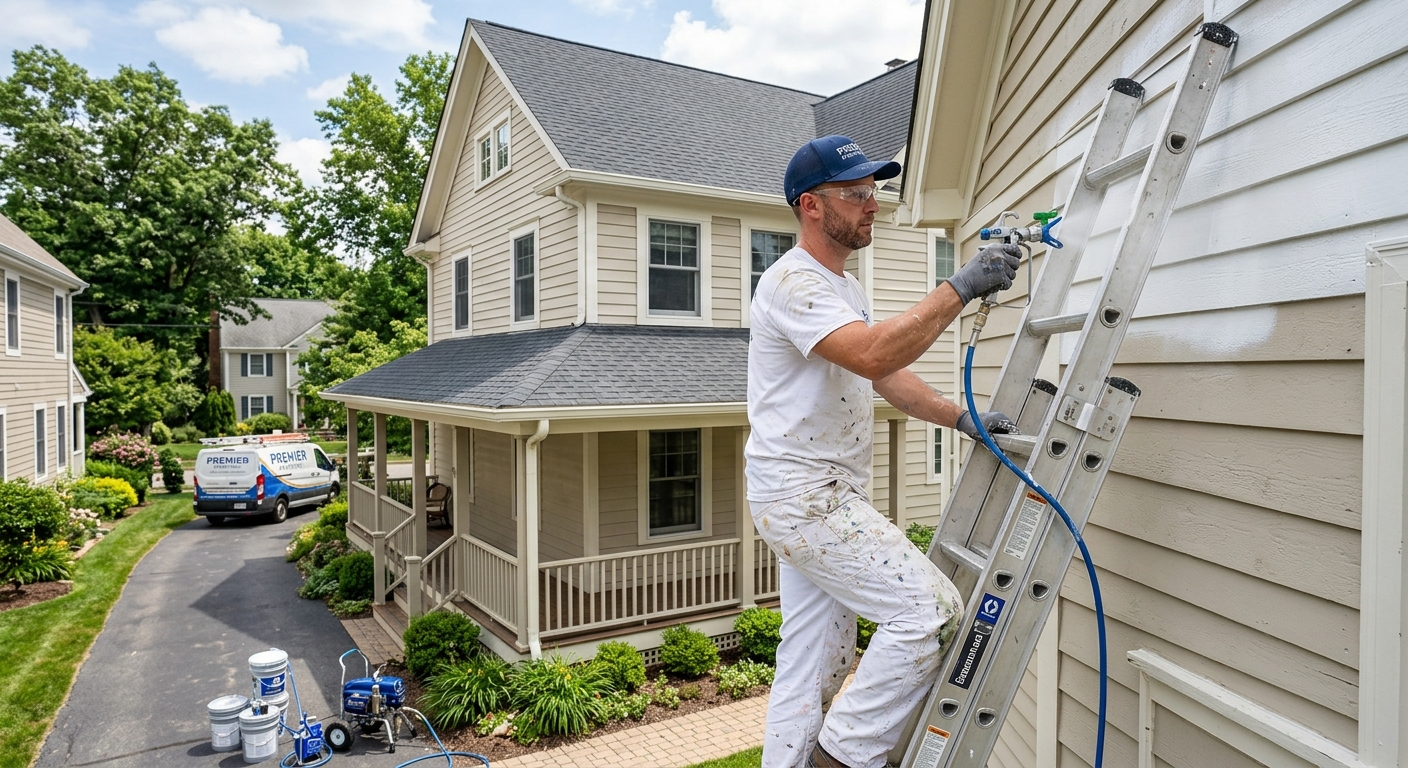
Painting options and costs in Cliffcrest
In Cliffcrest, homeowners usually make painting decisions by matching the look they want to the realities of prep time, material quality, and the short Ontario exterior season. With a population of 15,935 (Statistics Canada, 2021 Census), the local market tends to stay busy when temperatures stabilize, and that influences availability and scheduling. Just as important, Toronto-area housing stock includes many older properties—historically a lot of homes pre-1980—so repainting often means more scraping, sanding, caulking, and priming to get back to sound, paint-ready surfaces. If your home is in that older window, professionals also treat lead-safe practices as standard procedure when surfaces are disturbed.
In the GTA, exterior work is tightly climate-dependent. Contractors typically target late May through June and again September to mid-October, when it’s cool enough for controlled application but warm enough for proper curing. Demand spikes in June–August because “ideal weeks” are limited, which is one reason exterior estimates commonly land toward the higher end of the $1,500–$8,000 band. Interior painting is far less weather-sensitive, so pricing is driven more by labour intensity (ceiling height, masking, trim quantity) and finish level.
Below is a practical snapshot of the most common options Cliffcrest homeowners choose, so you can compare quotes apples-to-apples before you talk to a contractor.
| Service |
What's Included |
Typical Duration |
Price Range |
| Interior — whole home (walls, ceilings, trim) |
Protect flooring/furniture, patch & sand, caulk where needed, prime repaired areas, 2-coat finish, basic trim touch-ups, cleanup |
5–10 days |
$3,000 – $6,000 |
| Interior — per room (standard bedroom or living room) |
Protect areas, prep minor scuffs/patches, prime as required, 2-coat wall finish; option to include door trim handwork |
1–3 days |
$400 – $1,500 |
| Exterior — full house (siding, trim, soffits) |
Surface inspection, wash, scrape/sand loose paint, scrape & prep trim, caulk gaps, prime bare spots, 2-coat exterior system, detail cleanup |
1–3 weeks |
$4,000 – $8,000 |
| Exterior — trim and accent colours only |
Targeted prep on trim areas, spot prime, caulk, 2-coat trim finish; siding typically not refinished |
4–8 days |
$1,500 – $3,500 |
| Kitchen cabinet painting (doors, frames, spray finish) |
Removal/labeling, degrease, sanding, repairs, bonding primer, sprayed topcoat, hardware masking (or limited hardware prep), re-install |
5–12 days (includes curing time) |
$2,000 – $4,000 |
| Specialty / faux finish (accent wall, texture) |
Surface build-up where needed, texture/faux application, multiple coats/sealer, colour matching, protective finishing |
1–5 days |
$800 – $3,500 |
Prices are estimates only and vary by project scope, site access and material selection.
What affects the price of painting in Cliffcrest
In Toronto and across Ontario, quotes for the same “paint the house” idea can swing by 30–50% because preparation effort, access, material selection, and the number of coats aren’t consistent from one contractor to the next. Two crews may both say they’ll “do two coats,” but one may include thorough scraping, drywall patching, stain-blocking primer, and careful caulking—while the other prices only a lighter prep. That difference is usually where the money goes, and it’s especially noticeable in Cliffcrest’s older housing mix and curbside exposure.
Exterior pricing is also influenced by the short, climate-dependent season in this region. Contractors in the GTA typically rely on late May to early October conditions (temperatures above about 10°C for application and curing). When humidity spikes or rain interrupts a schedule, crews either lose ideal windows or accelerate later, and both can add cost. Peak summer demand pushes rates upward by roughly 10–15% in June–August, even if your scope hasn’t changed. In contrast, coastal BC has a longer workable period but high dampness—so mildew resistance and timing become the constraint. In the GTA, frost, rain, and humidity are the main practical hurdles.
For older homes around Cliffcrest (pre-1980 is common in the wider Toronto area), prep can become a majority of the labour. Scraping, sanding, and priming bare wood or failing layers often accounts for 50–70% of labour on a repaint. A full exterior repaint near the $4,000–$8,000 band can rise toward the upper end when that prep volume increases, plus scaffolding or more careful detailing is needed. Meanwhile, interior refreshes can still land in the $400–$1,500 per-room range when walls are already in good condition and only minor patching is required.
| Price Factor |
Why It Matters |
Cost Impact |
| Surface prep — scraping, sanding, patching drywall or wood |
Paint only sticks reliably to sound surfaces; loose paint and damaged caulk must be addressed first |
Often the biggest driver (can be 50–70% of exterior labour) |
| Number of coats — 2-coat system over primer vs. 1 coat over existing |
Coverage and durability rely on proper layering, especially over stains or different substrates |
Missing a coat can reduce life and increase rework risk |
| Paint quality tier — contractor-grade vs. premium (Benjamin Moore, Sherwin) |
Higher tiers usually offer better coverage, stain resistance, and washability |
Material price increase, sometimes offset by fewer coats |
| Ceilings and trim — adds significant time vs. walls-only |
Trim requires more masking, detail cutting, and drying control |
Commonly adds 10–30% to interior jobs |
| Exterior season window — short season raises summer rates |
Limited ideal-weather weeks concentrate demand and raise scheduling value |
Often 10–15% higher in June–August |
| Lead-safe precautions — required for pre-1978 homes with lead paint |
Professional controls reduce contamination risk when sanding/scraping disturbed surfaces |
Can add significant labour and disposal costs |
| Surface material — drywall vs. plaster vs. wood vs. stucco |
Different substrates need different primers, bonding methods, and sanding approach |
Varies; plaster and bare wood can increase prep |
| Height and access — multi-storey exterior requires scaffolding or lifts |
Access equipment and time increase labour and safety procedures |
Can add thousands on larger multi-storey homes |
Permits & regulations in Ontario
For most painting work in Ontario, you do not need a permit to paint a home’s interior or exterior. That said, a few conditions change how professionals approach the work—especially in older homes. For properties built before 1978, health guidance recommends assessing for potential lead paint hazards before sanding or scraping. If lead is present, standard professional lead-safe work practices include wet methods (to reduce dust), HEPA vacuuming, proper containment and disposal, and careful cleaning before surfaces are re-coated. This is not usually legally mandated for homeowners, but it’s widely expected from professional painters and is part of responsible jobsite controls.
Separately, what DOES require permitting or approvals is not typical “painting,” but rather related work like structural changes, major exterior alterations, or work that’s tied to broader building permits or heritage restrictions. Most straightforward painting—washing, prep, priming, and finishing—typically does not trigger permitting.
To verify a contractor is properly set up in Cliffcrest (Ontario): (1) confirm their Ontario licence/registration status using the appropriate online registry for their trade category; (2) ask for a current certificate of insurance (liability) naming your address if possible; (3) confirm they have WSIB/WCB workers’ compensation coverage for their workers. A good contractor should also provide a written contract listing paint brand/line, sheen levels, number of coats, preparation scope, and cleanup/disposal responsibilities, plus a workmanship warranty.
Interior vs exterior painting — getting the best result in Cliffcrest
In Cliffcrest, the biggest difference between a long-lasting paint job and a premature failure is how seriously the contractor treats prep—then how they choose coats and sheens for the conditions you actually live with. For interiors, failures usually show up as scuffs, flashing, peeling around trim, or uneven gloss. That’s why surface prep matters more than the topcoat label: filling and sanding, correct priming over patches, and proper caulking around joints set the foundation. Sheen selection is also practical. Flat looks great on low-traffic ceilings, but for hallways and family rooms, eggshell or satin tends to hold up better to cleaning and fingerprints.
For exteriors in the GTA climate, prep is even more non-negotiable because weather interrupts curing and the temperature range swings from frost risk to warm, humid spells. Start with thorough cleaning, scrape only what’s loose, sand edges, and caulk before coating so water doesn’t work into gaps. Primer choice depends on the substrate—wood, fibre cement, and previously coated surfaces each behave differently. In the GTA you’re balancing rain and humidity spikes rather than year-round dampness, so you still benefit from stable adhesion systems and mildew-resistant options where appropriate, especially around shaded areas.
Cabinet painting can be a smart alternative to replacement if surfaces are properly degreased and primed and the finish is sprayed for a durable film. For pre-1978 homes, lead-safe precautions during sanding are essential for a clean, safe result—not just for compliance, but for avoiding contamination that can ruin coating adhesion.
Where does the money difference make sense? If you’re deciding between a basic interior refresh and a higher-prep repaint, an extra few hundred dollars spent on patching/priming repaired spots can prevent rework later. Similarly, a trim-focused exterior refresh may cost less than a full exterior repaint (often within the $1,500–$3,500 range), but only if the main siding and soffits are still sound. If they’re failing, skipping prep will push you toward the $4,000–$8,000 full scope anyway.
| Project Type |
Key Prep Step |
Recommended Coats |
Price Band |
| Interior — fresh drywall (new construction) |
Prime bare drywall and joint compound; sand smooth and re-prime patches |
2-coat system (primer + 2 topcoats) |
$1,200 – $4,000 |
| Interior — repaint (good condition, no repairs) |
Wash/deglose lightly, spot prime only as needed, feather edges |
2 topcoats over proper primer where required |
$400 – $2,000 |
| Interior — repaint (patching and priming needed) |
Patch, sand, caulk, and stain-block/spot-prime repairs |
Prime + 2 topcoats on repaired areas (or full-wall primer if needed) |
$800 – $3,000 |
| Exterior siding (wood or fibre cement) |
Scrape/sand loose paint, prime bare spots, caulk joints before finish |
Primer + 2 exterior coats |
$4,000 – $8,000 |
| Exterior trim and accents only |
Targeted scraping/sanding, prime exposed areas, caulk gaps |
Spot prime + 2 trim coats |
$1,500 – $3,500 |
| Kitchen cabinets (spray finish) |
Degrease thoroughly, sand for bonding, bond prime, proper masking |
Bond primer + 2 sprayed topcoats |
$2,000 – $4,000 |
How to choose a painting contractor in Cliffcrest
Choosing the right painting contractor in Cliffcrest starts with proof, not promises. First, verify Ontario licensing/registration for the contractor or trade category they operate under (you can typically search their business name and individual info through Ontario’s online registry options). Next, ask for a certificate of liability insurance and confirm it’s current and covers work at your address. For workers, ensure they carry WSIB/WCB workers’ compensation—request documentation and confirm the coverage is active. If a contractor can’t provide these, that’s a serious warning because you’re the one who bears risk if there’s an accident.
Then get 2–3 itemised written quotes, not a single lump-sum number. The best quotes break labour and materials down and clearly list: paint brand/line, sheen, the number of coats, which surfaces are prepped (and to what degree), and whether a primer system is included. Scope review matters: ask what’s excluded (e.g., drywall patching beyond minor scuffs, rot repairs, window caulking replacement, specialty glazing removal, or disposal). Also confirm if permit pull is included—most painting itself doesn’t need a permit in Ontario, but related exterior changes might. Finally, check warranty terms: workmanship warranty length, product/manufacturer warranty coverage, and whether the warranty is transferable to future homeowners if you sell.
For payment, avoid large deposits: never pay more than 10–15% upfront, and hold a portion until the work is complete and cleaned. Get a start date and completion estimate in writing, including the weather-sensitive windows for exterior work.
- Request proof of liability insurance and WSIB/WCB coverage before signing.
- Use itemised quotes (labour + materials) so prep scope is comparable.
- Confirm paint brand and sheen (flat/eggshell/satin/semi-gloss) room-by-room.
- Ask exactly how many coats and whether primer is included on repairs.
- Confirm caulking plan (where it’s re-done before exterior coating).
- Make sure surface washing and scraping/sanding of loose paint are specified.
- Clarify lead-safe approach for pre-1978 homes if they’ll sand or scrape.
- Verify disposal is included (bagging, covering, and debris removal after prep).
- Confirm masking/protection includes floors, railings, and adjacent surfaces.
- Check jobsite cleanup expectations (vacuuming, wipe-down, final inspection).
- Read warranty details: workmanship duration and what it covers.
- Keep payment tied to milestones; don’t front-load more than 10–15%.
Red flags I see in the Cliffcrest market: (1) quotes that skip surface prep but still promise “two coats,” (2) no insurance/WSIB documentation or refusal to provide it, (3) vague product wording (“premium paint” with no brand/line), (4) no written scope or no timeline, and (5) demanding a large deposit before any materials are ordered or schedule is confirmed.
Frequently asked questions — painting in Cliffcrest
Should I paint or wallpaper my Cliffcrest home?
In Cliffcrest and the broader Toronto area, painting is often the practical choice because it’s faster to maintain and easier to touch up if you’re dealing with family-room wear, hallway scuffs, or furniture rub marks. Wallpaper can look fantastic, but it’s more sensitive to surface condition—cracks, uneven drywall finishing, or patchy repairs often show through unless properly prepared. If your home has multiple older paint layers or uneven substrates (common in the wider pre-1980 stock), painting with correct priming typically costs less to execute and is easier to refresh later. Budget-wise, interior painting for a typical room can land around $400 – $1,500 depending on trim and patching needs. Wallpaper installation can also be labour-intensive, especially around trim and corners, so the “cheap wall coverage” expectation can change quickly.
How do I fix peeling exterior paint in Cliffcrest?
Peeling exterior paint is usually a sign of failed adhesion—often because prep was incomplete, moisture got behind coatings, or paint bonds were weakened by cracking. The fix isn’t just “scrape and paint”; you need to remove all loose and flaking material back to sound edges, then sand feathered borders so the next coats lay flat. Next, caulk any failed joints before coating to prevent water ingress, and prime bare spots with a primer suitable for your substrate (wood vs. fibre cement vs. previously coated surfaces). In Cliffcrest’s GTA climate, timing matters: you want application and curing when temperatures are above about 10°C and not followed immediately by heavy rain. If the overall siding is failing, a full exterior scope is often closer to $4,000 – $8,000. If only trim is failing, a targeted trim refresh can fit the $1,500 – $3,500 band.
What colours add the most resale value in Cliffcrest?
For resale in Cliffcrest and the GTA, neutral, light-reflective palettes tend to win because they photograph well and appeal to a broader range of buyers. On exteriors, well-liked strategies include clean whites/creams, soft greys, and muted warm tones paired with crisp trim colours. On interiors, homeowners typically get the best mix of “lives well now” and “shows well later” with warm white walls, greige or light greys, and deeper accents only where you can control lighting (like a single feature wall). The resale advantage usually comes from reducing buyer “decision friction,” not from any single colour trend. Practically, if you’re repainting a whole home, interior costs commonly fall within $3,000 – $6,000 for whole-home work, so choosing a broadly appealing palette helps protect that investment. If your home is older, remember prep quality affects how true colours look once the primer and finish are uniform.
How much does it cost to paint a house in Cliffcrest?
The cost depends heavily on interior vs. exterior scope, the amount of surface prep, and whether you need scaffold or lots of detailed trim work. For an exterior full-house repaint in the GTA climate window (late May–June, then September–mid-October), homeowners often see estimates in the range of $4,000 – $8,000. If you’re doing trim and accent colours only—where siding and soffits are mostly sound—the budget can be closer to $1,500 – $3,500. Interiors can vary widely: whole-home interior work often lands in the $3,000 – $6,000 range depending on ceiling/trim quantity and repair scope. For context, Cliffcrest’s market is active enough that scheduling pressure in early summer can affect exterior pricing (Statistics Canada, 2021 Census notes the area population is 15,935, which helps explain steady baseline demand).
How much does interior painting cost per room in Cliffcrest?
Per-room pricing in Cliffcrest usually depends on whether the room needs only refreshing coats or significant patching and priming. For a standard bedroom or living room with minimal repairs, many homeowners land around $400 – $1,500. Expect the higher end when there’s more trim (baseboards, casing, doors), a lot of prep (texture removal, patching drywall, or stain blocking), or higher sheen requirements that emphasize wall imperfections. Ceilings and detailed cutting add time, even when the room size is similar. A good contractor will itemise what’s included—wall prep, sanding, caulking, primer on repairs, and the number of finish coats—so you can compare quotes accurately. If your home has older finishes or patchy areas typical of pre-1980 stock, budgeting for priming repairs is often the difference between a “looks good now” result and a finish that stays clean longer.
When is the best time for exterior painting in Cliffcrest?
In Cliffcrest (Ontario’s Toronto region), the best exterior painting window is usually late May through June, and again from September to mid-October. The key is workable weather: you want temperatures above about 10°C for application and for proper curing, with moderate humidity and a realistic 24–48 hour stretch that’s dry enough to avoid rain interruption. In June–August, demand rises because crews want those limited ideal weeks, and that’s when exterior estimates can trend toward the higher end of the $4,000 – $8,000 band for full repaints. If you’re scheduling fall work, make sure you’re not planning too late—frost risk can shorten the time paint needs to dry and cure. If you want to reduce risk of rework, ask your contractor how they monitor forecast conditions and how they handle delays during the GTA’s typical rain/humidity spikes.