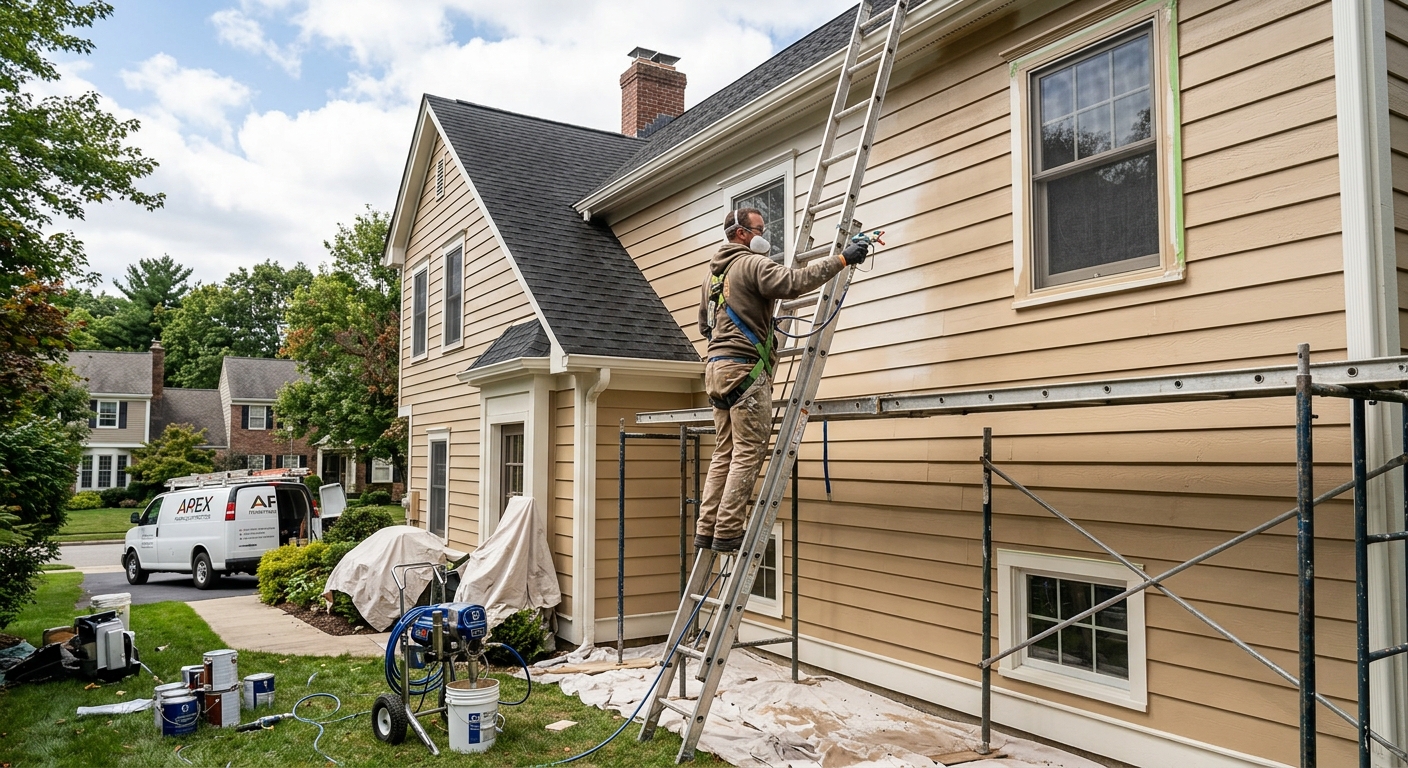
Painting options and costs in University Downs
University Downs, Ontario is a small community (population 4,036 per the Statistics Canada, 2021 Census) where many homeowners focus on keeping older finishes looking sharp without getting surprised by prep costs. One reason quotes can differ is that a large portion of the nearby Toronto housing stock is pre-1980, which usually means more scraping, patching, caulking, and priming to get adhesion and a uniform surface. In some pre-1978 homes, contractors also take lead-safe precautions when sanding or disturbing older trim and railings, which adds time but reduces risk.
In the Greater Toronto Area, exterior painting is tightly seasonal. Contractors typically work from late May through June and again from September to mid-October, when temperatures stay above about 10°C for proper curing and humidity is manageable. That short ideal window is why exterior work is often 10–15% higher during peak summer scheduling in June–August, even when the paint line and surface area are similar. Interior work is less weather-bound and can be scheduled more flexibly, but labour still drives most of the price: stairwells, ceiling height, masking, and how detailed you want the finish to be.
In University Downs, painting demand is especially common along the busy residential corridors and main streets (where turnover and curb-appeal projects are frequent), and that can affect availability. If you’re planning an exterior refresh before fall or an interior refresh for a busy household, the comparison below will help you anchor expectations before you request itemised quotes for your exact scope.
| Service |
What's Included |
Typical Duration |
Price Range |
| Interior — whole home (walls, ceilings, trim) |
Prep and patching, sanding, caulking, prime as required, 2-coat finish to walls/ceilings, trim coverage, protection/masking, cleanup |
5–10 days |
$3,200–$6,000 |
| Interior — per room (standard bedroom or living room) |
Prep and patching, prime as needed, 2-coat wall finish, optional ceiling coat, trim/door touch-ups (as scoped) |
1–3 days |
$400–$1,200 |
| Exterior — full house (siding, trim, soffits) |
Wash/degrease, scrape/sand, patch repairs, caulking, primer where required, 2-coat exterior system, surface protection, cleanup |
2–4 weeks |
$4,500–$8,000 |
| Exterior — trim and accent colours only |
Targeted prep, caulking, primer spot-treatment, 2-coat trim/accent finish, protection of adjacent surfaces |
5–12 days |
$1,500–$3,800 |
| Kitchen cabinet painting (doors, frames, spray finish) |
Degrease and de-hardware (as applicable), sanding/degloss, bonding primer, spray finish, reinstallation, multiple curing steps |
7–15 days |
$1,600–$4,000 |
| Specialty / faux finish (accent wall, texture) |
Surface prep to receive specialty system, base coat, texture/faux application (as selected), topcoat, cleanup |
2–6 days |
$900–$2,500 |
Prices are estimates only and vary by project scope, site access and material selection.
What affects the price of painting in University Downs
In University Downs and across the broader Toronto market, two homeowners can receive quotes that vary by 30–50% for what sounds like the “same” job, because painting cost is mostly labour and preparation—not just paint. A lightly scuffed interior may only need deglossing and two topcoats, while a repaint on older, prepped poorly, or badly failing surfaces may require more patching, primer locks, and additional coat control. Exterior work adds even more variability because adhesion and curing depend on weather windows and surface condition.
For exteriors, the GTA’s short, climate-dependent season is a major driver: contractors aim for late May to early October when temperatures are typically above 10°C for at least 24–48 hours to allow proper curing and good adhesion. That concentration of demand means scheduling pressure in June–August, so pricing can land toward the upper end of bands such as $4,500–$8,000 for a full house. In Ontario and Alberta you’re balancing frost risk and rain days; unlike coastal BC, the dominant issue usually isn’t year-round dampness, but sudden humidity spikes and unexpected showers still force delays.
Pre-1980 homes across the region often have more work: multiple paint layers, weathered caulk lines, and older drywall or wood that needs surface repair. In many repaint projects, surface prep can reach 50–70% of labour time. A concrete example: if your exterior trim has failed caulk and cracked edges, the fix can push your project from a trim-focused scope near $1,500–$3,800 closer to the higher end because caulking, sanding, and priming must be corrected before paint. Another example: a kitchen cabinet job looks “simple,” but prep for glossy or grease-exposed surfaces is meticulous; skipping bonding primer and adequate sanding is one of the fastest ways to create peeling—so quality preparation raises short-term cost to avoid rework later.
In short, the paint can cost less than the time it takes to make the surface ready for that paint to last.
| Price Factor |
Why It Matters |
Cost Impact |
| Surface prep — scraping, sanding, patching drywall or wood |
Old failures must be removed and patched for adhesion and a smooth finish |
High (often 40–70% of labour) |
| Number of coats — 2-coat system over primer vs. 1 coat over existing |
Coverage, colour uniformity, and durability depend on correct coat build |
Medium to high (+10–30%) |
| Paint quality tier — contractor-grade vs. premium (Benjamin Moore, Sherwin) |
Hides better, levels cleaner, and often resists scuffing and fading |
Low to medium (materials + labour consistency) |
| Ceilings and trim — adds significant time vs. walls-only |
Masking, edging, and detail work increase labour and job time |
Medium (+15–40% vs. walls-only) |
| Exterior season window — short season raises summer rates |
Limited ideal weeks increase demand and planning costs |
Medium (+10–15% in peak periods) |
| Lead-safe precautions — required for pre-1978 homes with lead paint |
Safe handling adds controls like HEPA vacuuming and containment |
Medium (can add measurable prep time) |
| Surface material — drywall vs. plaster vs. wood vs. stucco |
Different substrates need different primers and prep intensity |
Medium to high |
| Height and access — multi-storey exterior requires scaffolding or lifts |
Access equipment and safety time increase overall labour |
High on larger homes |
Permits & regulations in Ontario
In Ontario, painting generally does not require a permit. Where homeowners need to be careful is around older housing materials. For homes built before 1978, health guidelines recommend testing for lead paint before sanding or scraping, and contractors typically use lead-safe work practices if lead is confirmed (wet methods to reduce dust, HEPA vacuuming, proper containment, and compliant disposal). This isn’t legally mandated for homeowners, but it’s standard practice for professional contractors because it reduces airborne risk and cleanup burden.
Work that typically does NOT require a permit includes interior wall/ceiling painting, exterior painting over an existing coating, caulking and trim repainting, and repainting siding/soffits as part of a colour refresh. Work that can be regulated is usually outside “painting only,” such as if the project triggers broader building envelope changes, structural alterations, or other scope items—your contractor should confirm anything beyond standard painting tasks.
When verifying a contractor in University Downs, start with three checks: (1) Ontario licensing/registration where applicable for contractors, (2) liability insurance certificate naming you as an additional insured if required by contract, and (3) workers’ compensation coverage (WSIB or WCB coverage) so you’re not exposed if someone is injured on site. Ask for a certificate of insurance and coverage proof in writing before work begins. Finally, insist on a written contract that specifies paint brand and sheen, number of coats, and exactly which preparation tasks are included (pressure washing, scraping, sanding, patching, priming, caulking, and disposal).
Interior vs exterior painting — getting the best result in University Downs
In University Downs, the difference between a long-lasting paint job and premature failure usually comes down to prep discipline and coat systems, not “which brand is popular this year.” For interiors, surface prep is the foundation: filling nail holes and cracks, sanding glossy spots, prime stained areas, and caulking at transitions. Then select sheen based on room function. Flat or matte works best for low-touch ceilings, while eggshell or satin are common on living rooms and bedrooms for a balance of washability and low glare. In kitchens and hallways, a more washable sheen (often satin) helps handle frequent cleaning. Two coats over a properly prepared and primed surface will nearly always outperform a single heavy coat in appearance and durability.
For exteriors, Ontario climate makes prep even more critical. Caulking should be corrected before painting to prevent water ingress at joints and trim edges; painting over failing caulk is a common reason for early peeling. Primer type matters by substrate: different products are used for bare wood, previously painted metal, and masonry or fibre cement. With GTA weather, temperature-stable application and correct dry/cure times are essential; rain days and humidity spikes can slow curing, so contractors plan their sequence and schedule.
If you’re budget-conscious, cabinet painting is a solid alternative to replacement when the frames and box are sound. The most cost-effective projects still require full degreasing and bonding primer—skimping here can create bubbling or peeling. For pre-1978 homes, lead-safe precautions during trim sanding and scraping add labour, but they’re justified for safety and cleaner results.
Example: a full exterior paint project near $4,500–$8,000 can be worth it when you have widespread caulk failure and multiple layers breaking down; however, doing only trim accents near $1,500–$3,800 is often the best value when the siding coating is still stable and you’re simply refreshing contrast.
| Project Type |
Key Prep Step |
Recommended Coats |
Price Band |
| Interior — fresh drywall (new construction) |
Prime and seal drywall; sand nibs; caulk transitions |
1 coat primer + 2 coats finish |
$2,000–$5,500 |
| Interior — repaint (good condition, no repairs) |
Degloss/surface clean; spot prime any marks or stains |
2 coats finish (primer spots as needed) |
$400–$3,500 |
| Interior — repaint (patching and priming needed) |
Patch/skim repairs; sand smooth; spot prime repairs |
1 coat primer over repairs + 2 coats finish |
$800–$6,000 |
| Exterior siding (wood or fibre cement) |
Wash, scrape loose coating, repair cracks, prime bare/susceptible areas, caulk joints |
2-coat exterior system (primer + 2 finish as required) |
$4,500–$8,000 |
| Exterior trim and accents only |
Scrape failing edges, caulk accurately, prime spots for uniform adhesion |
Primer spots + 2 coats trim finish |
$1,500–$3,800 |
| Kitchen cabinets (spray finish) |
Degrease thoroughly; bonding primer; sand for adhesion |
Primer + 2 finish coats (system-dependent) |
$1,600–$4,000 |
How to choose a painting contractor in University Downs
Choosing the right contractor in University Downs is mostly about verification and clarity. First, confirm Ontario licensing/registration where applicable and ask for liability insurance proof before work begins. Get the workers’ compensation coverage confirmation as well (WSIB/WCB coverage certificate), so you’re protected if a worker is injured on your property. A professional contractor should provide these documents without hesitation, along with a certificate of insurance and coverage confirmation that matches the company name on the contract.
Next, request 2–3 itemised written quotes. You want line items that clearly separate labour, prep (scraping/sanding/patching/priming/caulking), coatings, and cleanup/disposal. Avoid “lump sum only” estimates with vague scope language like “prep included” without specifics. Read exclusions carefully: is furniture moving and re-masking included for interiors? Is pressure washing included for exteriors? Is lead-safe handling included or excluded for pre-1978 trim? Is protective staging and disposal included for exterior work?
For warranty, ask for workmanship warranty length and what it covers (peeling, cracking, adhesion failures under normal conditions) and whether it’s transferable to a new homeowner. Payment should be tied to milestones: never pay more than 10–15% upfront, and keep a holdback until the job is complete and cleaned. Also, get a written start date and a realistic completion estimate that accounts for dry/cure times in the GTA’s climate-dependent exterior season.
- Request proof of liability insurance (with policy effective dates) before signing
- Request WSIB/WCB coverage certificate for workers
- Ensure the quote lists the exact prep tasks (scrape, sand, patch, prime, caulk) and what’s “spot” vs “full coverage”
- Ask what paint brand and sheen are being used and for which surfaces
- Confirm the number of coats and whether primer is included where required
- Check whether pressure washing/degreasing is included for exterior and cabinet prep
- Verify disposal and jobsite protection are included (tarps, drop sheets, masking)
- Get details on access: ladder work vs scaffolding/lift for multi-storey exteriors
- Ask how rain delays and schedule changes are handled for exterior projects
- Review the warranty terms in writing, including limits and response timelines
- Agree on a payment schedule with a holdback until final walkthrough
- Confirm a colour/finish consultation process (especially for accent walls and trim)
Common red flags in University Downs: (1) they won’t provide insurance or WSIB/WCB proof, (2) their quote doesn’t spell out primer and caulking/surface prep scope, (3) they ask for large upfront payments (beyond 10–15%), (4) they promise “paint over anything” without discussing scraping/sanding and adhesion, and (5) they lack a written warranty or avoid putting paint brands/coats in the contract.
Frequently asked questions — painting in University Downs
What's the difference between paint quality tiers?
In University Downs (and throughout Ontario), “quality tier” usually refers to pigment concentration, binder performance, coverage/hide, and how smoothly the paint levels on walls and trim. Contractor-grade paints can look good initially, but premium lines (like Benjamin Moore or Sherwin options used by many pros) often provide better stain resistance, easier touch-ups, and more consistent sheen. That matters in high-touch areas where frequent cleaning is expected, such as hallways and kitchens. For interiors, the quality tier can affect how many coats you truly need for uniform colour—though a correct primer and prep usually matter more than the brand alone. For example, if a repaint is pushing toward the lower end (around $400–$1,200 per typical room scope), premium paint may prevent splotching and reduce callbacks when colours are changing.
How do I compare painting quotes?
To compare quotes in University Downs fairly, line up the scope details, not just the total price. Ask each contractor to list: surface prep tasks (scrape/sand/patch/prime), caulking coverage, number of coats for each surface, and the paint brand and sheen. Confirm whether materials like primer, caulk, and disposal are included, and whether pressure washing/degreasing is part of exterior prep. For interiors, check whether ceilings, trim, and doors are included and how masking and furniture moving are handled. For exteriors, compare how they handle the GTA weather reality—rain delays and dry/cure timing during the late-May-to-early-October exterior season. A quote that looks cheaper may skip primer or reduce prep; those shortcuts can turn into peeling and rework, especially on pre-1980 surfaces that need more preparation.
What paint sheen should I use in different rooms?
In Ontario homes, sheen selection should match daily use and how much you want to hide imperfections. Ceilings are commonly done in flat or matte to reduce glare. Bedrooms and living rooms often use eggshell (slightly more washable) or satin for better wipe-ability without a high shine. Kitchens, bathrooms (where moisture is present), and hallways usually benefit from a more washable finish—often satin or similar—because scuffs from everyday traffic are harder to clean on flatter sheens. Trim and doors are typically semi-gloss or satin for durability and cleanability. If you have patchwork, a higher sheen can reveal uneven texture—so you may need more sanding/priming, which affects labour. Choosing sheen is part of planning your total scope, and it can shift the final interior price within bands like $400–$6,000 depending on prep and surface coverage.
Can I paint my house exterior in spring or fall in University Downs?
Yes, you can often paint exterior in spring and fall in University Downs, but the GTA weather determines whether it’s a “good day” or a “redo later” situation. Pros usually aim for late May through June and again from September to mid-October, when temperatures remain above about 10°C for proper application and curing over the next 24–48 hours. Spring can be viable when the forecast is stable and the surface is dry; fall can be workable if humidity stays moderate and nights don’t drop too quickly right after coating. The risk isn’t just rain—it’s cold snaps that slow cure and reduce adhesion. Contractors adjust primer and product choices to help the coating system perform, but they still need the right weather window to build durability.
How do I choose a painting contractor in University Downs?
Start with proof: confirm the contractor can provide liability insurance and workers’ compensation coverage (WSIB/WCB) and that they will stand behind their work with a written warranty. Next, require an itemised quote showing labour and materials separately—especially prep steps like scraping, sanding, patching, priming, and caulking. In University Downs and nearby Toronto areas, pre-1980 homes often need more time for preparation, so a quote that doesn’t describe prep detail is a risk. Also, ask for the start date and completion estimate in writing, because exterior jobs depend on the short season and rain delays. Check payment terms: never accept more than 10–15% upfront, and insist on a holdback until final walkthrough and cleanup. If the contractor is vague on paint brands, coats, or surface prep inclusions, that’s a strong sign to keep looking.
How many coats does an exterior repaint need in University Downs?
Most exterior repaints in University Downs follow a 2-coat system for the finish, but the exact build depends on surface condition and what needs priming. Typically, you’ll see primer where bare wood, repaired areas, or problematic spots exist, followed by 2 coats of exterior finish for uniform colour and durability. If the existing coating is tightly bonded and in good condition, you may not need full priming—but any scraped-to-bare areas still require primer for adhesion. For homes with weathered caulk lines or old peeling edges, the prep stage is what governs longevity; skipping primer over problematic areas often leads to early failure. In pricing terms, a well-prepped full house repaint usually sits within the exterior band of $4,500–$8,000, while trim-only refreshes are commonly lower at around $1,500–$3,800, reflecting the difference in surface area and prep intensity.