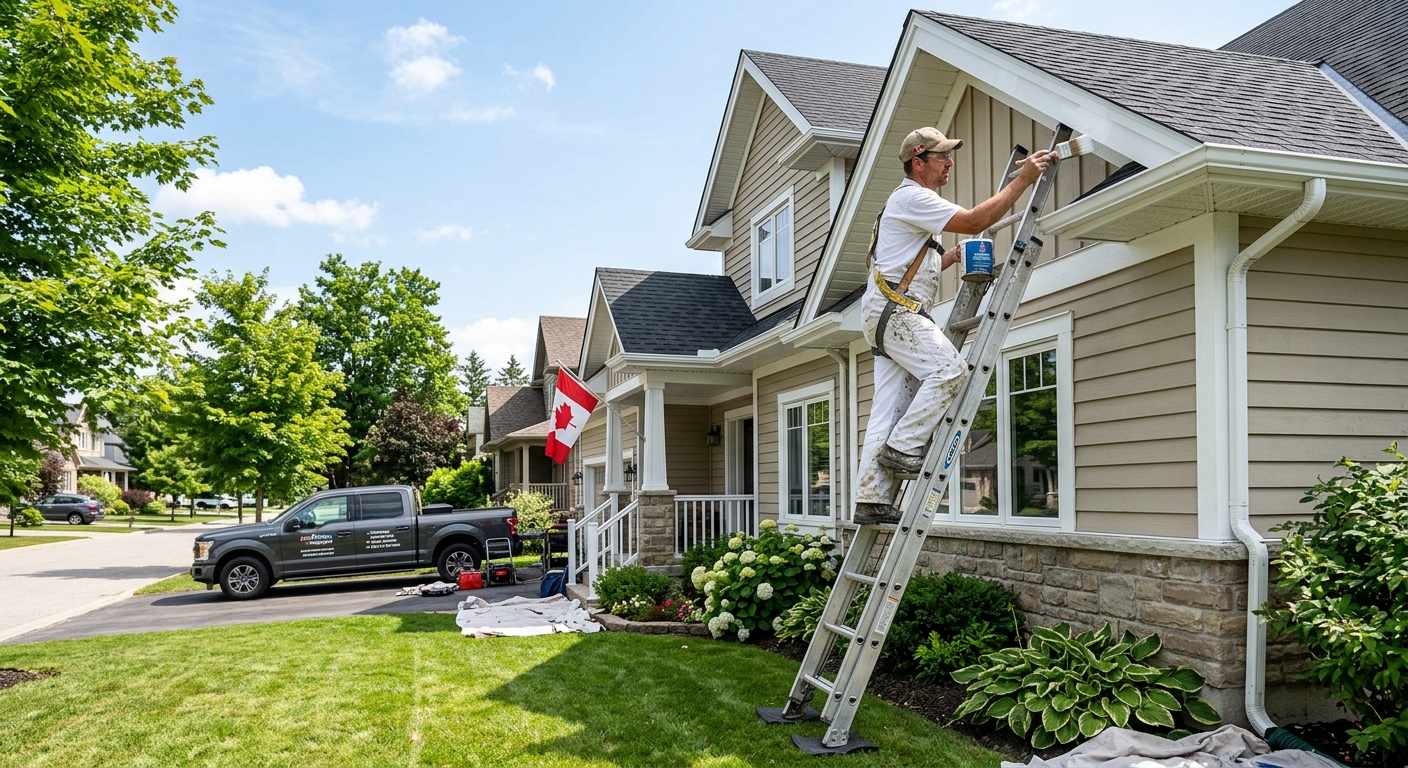
Painting options and costs in Whitchurch-Stouffville
In Whitchurch-Stouffville, painting choices usually come down to how much preparation is needed and when the work can be scheduled. With 49,864 residents and a housing mix where 22.4% of homes were built before 1981 (Statistics Canada, 2021 Census), many projects start with the unglamorous part: scraping, sanding, caulking, patching, and priming multiple paint layers—especially on older trim and window frames. In a repaint, that prep can be a major driver of labour, not just the number of rooms or the square footage.
Pricing is also shaped by the Greater Toronto Area’s short exterior season. Contractors in the Toronto region typically target late May to early June, then again September to mid-October, when temperatures stay above about 10°C for application and curing. June–August scheduling is often tight, which can push exterior pricing 10–15% higher during the peak window. Meanwhile, interior painting in Whitchurch-Stouffville is less weather-dependent and can be planned year-round, but labour still rises with ceilings, stairwells, and higher-finish expectations.
Trade activity is especially steady around downtown Stouffville and the Main Street corridor, where many homeowners prefer “refresh before selling” timelines or need coordinated work with busy seasonal schedules. Once you know whether you’re planning an interior refresh, a full exterior repaint, or a trim-and-accent update, the next step is comparing typical scopes—use the table below as a practical starting point for your quote discussion.
| Service |
What's Included |
Typical Duration |
Price Range |
| Interior — whole home (walls, ceilings, trim) |
Move/cover as agreed, prep & patching, prime where needed, 2-coat wall/ceiling system, caulk at trim, paint trim/doors as specified |
5–12 days |
$3,200 – $6,000 |
| Interior — per room (standard bedroom or living room) |
Prep, patch & sand, spot-prime, 2-coat walls, trim/doors as specified (basic caulking included) |
1–3 days |
$750 – $1,800 |
| Exterior — full house (siding, trim, soffits) |
Power-wash, scrape/sand as required, caulk, prime bare spots, 2-coat system, paint trim/soffits, surface protection and cleanup |
7–18 days |
$4,200 – $8,000 |
| Exterior — trim and accent colours only |
Prep and prime where needed on trim/rails/accents, caulk at joints, 2-coat paint, targeted cleaning |
2–6 days |
$1,500 – $3,500 |
| Kitchen cabinet painting (doors, frames, spray finish) |
Degrease, sand/finish prep, prime bonding coat, spray or brush/roll finish as quoted, hardware masking (removal optional) |
5–14 days |
$1,800 – $4,000 |
| Specialty / faux finish (accent wall, texture) |
Surface preparation to receive texture, 1–2 specialty applications, topcoat/clear where required |
1–5 days |
$800 – $2,800 |
Prices are estimates only and vary by project scope, site access and material selection.
What affects the price of painting in Whitchurch-Stouffville
Two homeowners can receive very different quotes for what sounds like the same paint job in Toronto and nearby communities. It’s common to see 30–50% swings because the biggest cost driver isn’t paint—it’s the total prep and complexity: surface condition, number of repairs, time on ladders/scaffolding, and how much masking/protection is required to keep dust out of vents, windows and finished floors.
Exterior painting is tightly climate-bound in the Toronto region. In Ontario and Alberta, the practical exterior window is roughly late May to early October, when temperatures can stay above about 10°C and rising during application, with moderate humidity. That limited season concentrates demand, especially in June–August, and pushes rates upward during peak scheduling. Coastal BC can often paint longer, but persistent dampness and mildew risk means more product discipline and timing—while the Toronto challenge is frost, rain showers, and humidity spikes that can affect drying and curing.
Whitchurch-Stouffville’s older housing stock also changes the math. When 22.4% of homes were built before 1981 (Statistics Canada, 2021 Census), many projects involve more scraping, sanding, caulking and priming. On some repaints, surface prep alone can represent 50–70% of labour. For example, an exterior “trim only” update might land around $1,500 – $3,500, but if the contract includes extensive bare-wood priming and multiple patch repairs, the same house can move toward the full exterior band of $4,200 – $8,000.
Concrete cost examples we see locally: (1) shifting from a simple 2-coat over a sound surface to a repaint requiring patching and priming can add several days; (2) an older, chalky siding section that needs spot scraping and stain-blocking will cost more even if the square footage is unchanged; (3) multi-storey access in established neighbourhoods can require lifts or heavier protection, increasing labour and insurance overhead.
| Price Factor |
Why It Matters |
Cost Impact |
| Surface prep — scraping, sanding, patching drywall or wood |
Determines adhesion and smooth finish; older surfaces need more labour to stabilize |
Often 50–70% of labour on repaints |
| Number of coats — 2-coat system over primer vs. 1 coat over existing |
Coverage and durability rely on correct build, especially over dark colours or patches |
Can shift total cost by 10–25% |
| Paint quality tier — contractor-grade vs. premium (Benjamin Moore, Sherwin) |
Premium lines typically hide better, level nicer, and last longer with fewer touch-ups |
Material difference may add ~5–15% total |
| Ceilings and trim — adds significant time vs. walls-only |
Ceilings require more cutting-in and protection; trim needs caulking and careful brushwork |
Often adds 15–40% depending on home layout |
| Exterior season window — short season raises summer rates |
Limited ideal weeks increase contractor demand and scheduling pressure |
Typically +10–15% in peak months |
| Lead-safe precautions — required for pre-1978 homes with lead paint |
Protects occupants and workers during sanding/scraping; adds containment and HEPA vacuum steps |
Can add noticeable labour time on older trim/windows |
| Surface material — drywall vs. plaster vs. wood vs. stucco |
Each substrate needs different primers and prep methods for proper bonding |
Ranges widely; can change primer usage and time |
| Height and access — multi-storey exterior requires scaffolding or lifts |
More setup, safety measures and protected work zones |
Can add several thousand dollars on large or tall homes |
Permits & regulations in Ontario
In Ontario, painting generally does not require a permit for typical residential interior or exterior work. You usually do not need a permit to paint walls, ceilings, trim, siding, soffits, or to apply caulking—provided you’re staying within normal residential finishes and there’s no major alteration to structural elements or municipal approvals. However, there are important health and safety expectations when disturbing older surfaces.
For homes built before 1978 (common in parts of Whitchurch-Stouffville), health guidelines recommend lead paint risk awareness before sanding, scraping or removing coatings. If lead is suspected or confirmed, lead-safe work practices are expected for professionals: wet methods to control dust, HEPA vacuuming, proper containment, and compliant disposal of dust and debris. This isn’t “optional best practice” for contractors working safely—it’s how reputable crews protect occupants and workers. For homeowners, it’s not typically a legal mandate to test, but if you’re hiring professionals, you should expect lead-safe procedures to be discussed for pre-1978 projects.
On the contractor paperwork side, confirm the company carries liability insurance and WSIB/WCB workers’ compensation coverage. Ask for a written contract that clearly lists paint brands/lines and sheens, the number of coats, which surfaces are prepped/primed, and whether cleanup and disposal are included.
To verify in Ontario, start with: (1) the contractor licensing/credentials they provide (if applicable to their business structure), (2) their certificate of insurance (request it directly), and (3) their WSIB clearance or workers’ compensation coverage proof. Your goal is to see current documents before work begins—then keep copies with your contract.
Interior vs exterior painting — getting the best result in Whitchurch-Stouffville
In Whitchurch-Stouffville, long-lasting paint performance comes from matching the prep and system to the surface and the way the home is used. Interior failure is often about prep shortcuts: filling only the visible dents, skipping primer over patch repairs, or choosing a sheen that doesn’t match traffic. For interiors, surface prep matters more than the brand of topcoat. Proper sanding and dust control, followed by priming for patched areas and any stains, is what prevents peeling, flashing, and uneven sheen. Sheen choice also matters: flat finishes hide wall imperfections, but they mark more easily; eggshell is often a good compromise for living rooms; satin or semi-gloss is more forgiving in higher-touch areas and trim where scuffs matter.
Two coats over a correctly primed base typically outlasts “one thick coat” because the film build is more consistent. A basic refresh in a living room might be in the $750 – $1,800 range, but if the walls need patching and priming, the price climbs because labour increases—often more than what homeowners expect.
For exteriors, the critical difference is exterior-grade preparation in Ontario’s cycles of rain, humidity swings, and freeze-thaw. That means thorough washing, scraping of loose paint, sanding, and caulking before paint so water can’t work its way behind coatings. Primer selection is also substrate-specific: oil-based vs. latex-type primers are used depending on what you’re bonding to, and older wood trim often needs special prep to prevent bleeding or failure. The Toronto market isn’t as persistently damp as coastal regions, so “mildew-resistant” is helpful when needed, but the priority is curing time and adhesion during the late May/June and September/early October windows.
Cabinet painting is a strong budget alternative to replacement, typically costing less than new cabinetry while delivering a dramatic update—just remember that cabinet prep and spray finish prep determine durability. For pre-1978 homes, build lead-safe precautions into the plan so sanding and scraping dust is controlled properly.
| Project Type |
Key Prep Step |
Recommended Coats |
Price Band |
| Interior — fresh drywall (new construction) |
Prime new drywall uniformly to control absorbency and flashing |
2 coats topcoat over primer |
$900 – $2,200 |
| Interior — repaint (good condition, no repairs) |
Clean, lightly sand, caulk minor gaps, spot-prime if needed |
2 coats topcoat (spot-prime then 2 as required) |
$750 – $1,800 |
| Interior — repaint (patching and priming needed) |
Sand and prime repairs to match sheen and prevent telegraphing |
2 coats topcoat plus primer for repairs |
$1,050 – $2,500 |
| Exterior siding (wood or fibre cement) |
Scrape loose paint, wash, prime bare spots, and caulk before final coats |
2 coats over properly primed surface |
$4,200 – $8,000 |
| Exterior trim and accents only |
Remove flaking areas, prime bonding points, caulk joints and edges |
2 coats on trim/accents |
$1,500 – $3,500 |
| Kitchen cabinets (spray finish) |
Degrease thoroughly, sand to profile, prime for adhesion, protect surrounding surfaces |
2-coat build (primer + finish) as specified |
$1,800 – $4,000 |
How to choose a painting contractor in Whitchurch-Stouffville
Choosing the right contractor in Whitchurch-Stouffville starts with proof of proper coverage. Ask for their Ontario liability insurance certificate (confirm it lists you as the certificate holder if possible), and request WSIB/WCB coverage details so you know workers are insured. When you’re reviewing documents, check that the coverage is current and that the company name matches the quote and contract. If the contractor can’t provide clear paperwork quickly, that’s a major planning risk—especially on exterior work where safety and access equipment are involved.
Next, don’t accept a single lump-sum number without breakdowns. Get 2–3 itemised written quotes that show labour and materials separately, including prep tasks (washing, scraping, sanding, caulking, priming), paint system (brand/line and sheen), and cleanup/disposal. A good proposal clearly lists what’s excluded: for example, removal of old hardware, lead-safe testing (if any), patch repairs beyond “spot” levels, or replacing damaged siding.
Warranty matters too. Ask for a workmanship warranty length and what it covers (peeling, adhesion failures, visible flashing), plus how product/manufacturer warranties apply. Confirm whether the warranty is transferable if you sell the home. For payment scheduling, a responsible approach keeps upfront payment around 10–15% and releases the balance after key milestones—then withholds a final holdback until the job is complete, cleaned, and inspected.
Finally, insist on a timeline: a start date and completion estimate in writing, aligned with the realistic GTA exterior season windows. If you’re painting in summer, ask how they’ll handle rain days and curing time.
- Verify liability insurance is current and request the certificate in writing.
- Confirm WSIB/WCB coverage is active and ask for proof before work begins.
- Ask for the paint brand and line number (not just “premium paint”).
- Get sheen selections for each surface (walls, trim, doors) in the contract.
- Ensure surface prep scope is spelled out (washing, scraping, sanding, patching).
- Ask whether caulking is included and whether joints are primed before paint.
- Confirm how many coats are included and where primer is required.
- Clarify disposal: are paint waste and debris hauled away and handled properly?
- Request a mock-up or finish sample for specialty colours/faux work when feasible.
- Check warranty terms in plain language (length, coverage, exclusions, process).
- Use a payment schedule with no more than 10–15% upfront and a final holdback.
- Get the start/completion dates and weather-handling plan for exterior work.
Red flags we see in Whitchurch-Stouffville: contractors who won’t provide insurance/WSIB proof, quotes that skip surface prep details, vague “2 coats” wording without stating primers and repairs, payment requests that exceed 10–15% upfront, and promises to paint exterior in bad-weather forecasts without a curing plan.
Frequently asked questions — painting in Whitchurch-Stouffville
How long does it take to paint a house?
In Whitchurch-Stouffville, timelines depend on whether you’re painting interior or exterior and how much prep is needed. A single interior room typically takes about 1–3 days, while whole-home interior work often runs 5–12 days depending on ceiling height, stairwells, and whether trim/doors are included. Exterior work is more schedule-sensitive because the GTA season is short and requires temperatures above about 10°C and enough curing time—many teams work late May to June, then September into mid-October. A full exterior repaint can take roughly 7–18 days, especially for older homes where scraping, sanding, caulking and priming take time.
What's the difference between paint quality tiers?
Paint “tiers” mainly differ in hiding power, how evenly they apply, resistance to scuffing, and how well the sheen stays consistent over time. Premium lines often level better and may cover in fewer passes—still usually with the same correct total coat system (commonly 2 coats over primer). In older Whitchurch-Stouffville homes built before 1981, better coverage and adhesion can reduce the risk of flashing and uneven finish after prep. That’s why two quotes with the same finish look can still differ: a contractor might be using a higher-quality exterior system and accounting for more primer/spot treatments. For reference, interior room work often starts around $750 – $1,800, and exterior full-house repainting is commonly in the $4,200 – $8,000 band based on prep and product selections.
How do I compare painting quotes?
To compare painting quotes in Ontario, start by matching scope line-by-line. Look for whether each quote includes washing, scraping/sanding, caulking, and priming where needed, and whether the contract lists number of coats and paint line/sheens. Compare what’s “spot” versus “full” repair—repairs and priming can be the difference between a trim-and-accent job and a full exterior repaint. Ask about labour breakdown versus lump sum, and confirm cleanup/disposal is included. Also compare schedule terms: an exterior quote in summer should address rain days, temperature requirements for curing, and how they’ll manage adhesion during humidity spikes. If one quote is far lower, it’s often skipping prep steps or using different paint/system assumptions.
What paint sheen should I use in different rooms?
Sheen selection is one of the best ways to avoid premature scuffing and reduce the visibility of wall imperfections. In Ontario homes like those in Whitchurch-Stouffville, common choices are: flat or ultra-low-sheen for ceilings and low-traffic wall areas where imperfections need hiding; eggshell for many living rooms and bedrooms because it balances washability and appearance; satin for hallways, kids’ rooms, and higher-touch areas; and semi-gloss or gloss for trim and doors where durability matters most. If you have textured or patched walls, lower sheen can hide unevenness—but it may mark more. A reputable contractor should recommend sheens by room and usage and list them in the written contract.
Can I paint my house exterior in spring or fall in Whitchurch-Stouffville?
Yes, but timing is critical in the Toronto region. Exterior painting generally works best from late May through June and again from September into mid-October, when temperatures stay above about 10°C for the application and curing window (often 24–48 hours) and humidity is manageable. Spring can be tricky if nights drop below workable temperatures or rain interrupts drying. Fall can also be good if the schedule is tight and the forecast supports curing before cooler nights and increased dampness. Reputable contractors will plan around rain and curing rather than “paint through” unfavourable conditions. If you’re planning exterior work on a home built before 1981, allow extra time for prep and priming because older surfaces often need more stabilization and caulking work.
How do I choose a painting contractor in Whitchurch-Stouffville?
Start with verification and documentation. Ask for current liability insurance and proof of WSIB/WCB coverage, and make sure the names match the contract/quote. Then request 2–3 itemised written quotes that break out prep, repairs, primer requirements, coats, paint line and sheen, and disposal/cleanup—so you’re comparing apples-to-apples. Check warranty terms for workmanship and whether the product warranty applies properly. Set payment expectations: never pay more than 10–15% upfront and use a holdback until the job is complete. Finally, for exterior work, insist on written start and completion dates that reflect the GTA exterior season. If a contractor can’t explain their prep process or skips details, that’s a red flag—even if the price looks attractive.