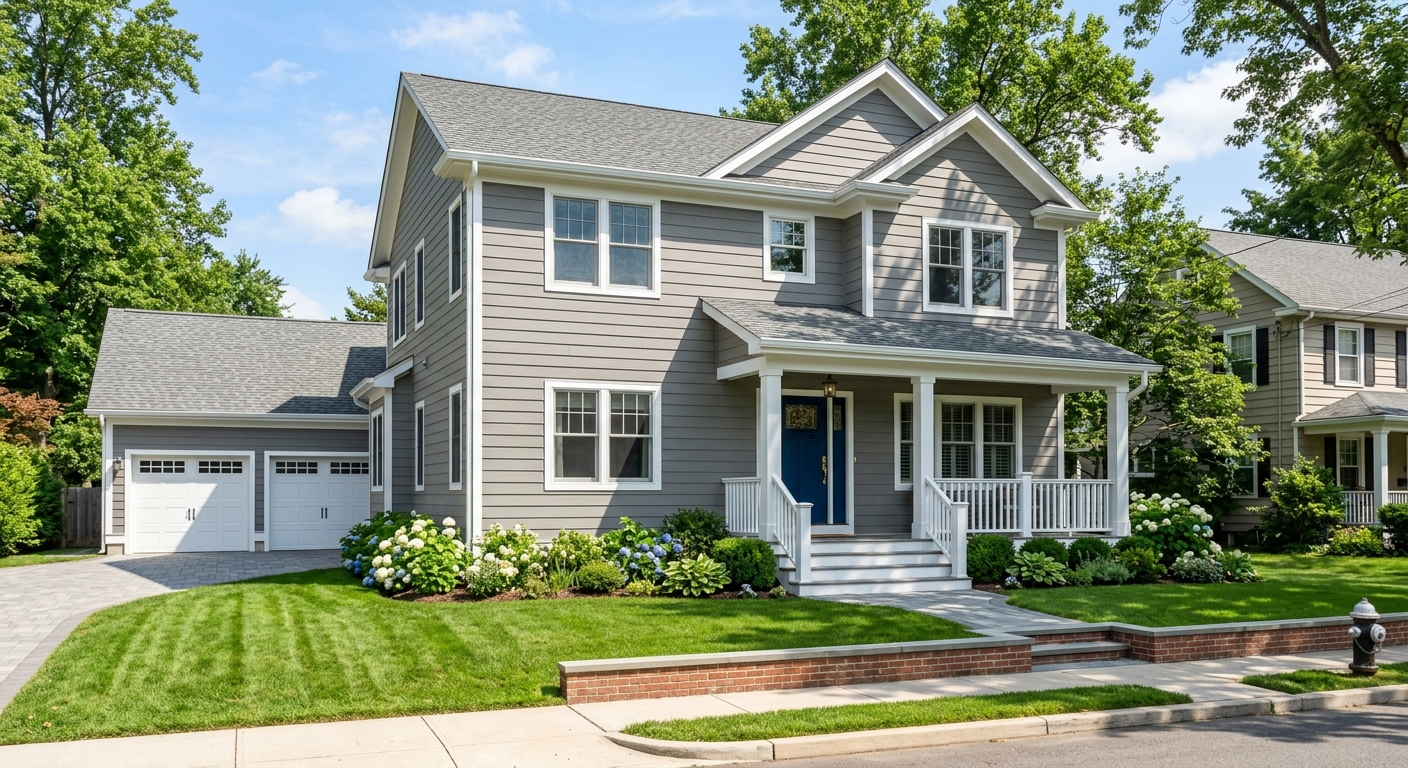
Painting options and costs in Jarvis
Painting in Jarvis is a little different than elsewhere because you’re balancing a small-town pace with a Toronto-area pricing reality. Jarvis’s population is 1,037 (Statistics Canada, 2021 Census), so contractor availability can tighten during the same high-demand weeks as the Greater Toronto Area. The other major cost lever is housing age: many properties are older, and older homes typically require more scraping, caulking, patching and priming before the first topcoat ever goes on. In practice, that prep can decide whether your job lands closer to the lower or higher end of the interior or exterior bands.
On the exterior side, Toronto-market costs are strongly seasonal. Contractors generally work from late May through June and again from September to mid-October, when temperatures are consistently above about 10°C for proper adhesion and curing. In June–August, peak scheduling pressure often pushes exterior pricing up roughly 10–15%. Weather disruptions (rain and humidity spikes) can also extend timelines, increasing labour for protection, re-scheduling and re-coating. In neighbourhoods and pockets around Jarvis with older housing stock and frequent “repaint + trim refresh” requests (including near the commercial core), exterior work is especially in demand because curb appeal improvements are a common seasonal priority.
Below are realistic starting points for common project types; use them to compare quotes before you talk specifics with a painter.
| Service |
What's Included |
Typical Duration |
Price Range |
| Interior — whole home (walls, ceilings, trim) |
Move items as needed, protect floors/fixtures, prep and patch, prime as required, caulk where needed, 2-coat finish on walls/ceilings, paint trim, clean-up |
5–12 days |
$3,200 – $6,000 |
| Interior — per room (standard bedroom or living room) |
Protect floors/trim, prep and patch, prime as required, 2-coat wall finish, basic touch-ups to trim |
1–3 days |
$400 – $1,800 |
| Exterior — full house (siding, trim, soffits) |
Pressure wash as appropriate, scrape/sand loose paint, repair wood/caulking, spot-prime, 2-coat exterior system, paint trim/soffits, protect landscaping and surfaces, clean-up |
7–18 days |
$3,800 – $8,000 |
| Exterior — trim and accent colours only |
Surface prep for trim only, caulk and spot-prime, paint trim accents (doors/railings where included), clean-up |
3–10 days |
$1,500 – $3,500 |
| Kitchen cabinet painting (doors, frames, spray finish) |
Hardware removal, de-grease/clean, sanding, adhesion primer, spray or brush-and-roll finish, re-install, new caulk where needed |
4–10 days (plus dry time) |
$1,200 – $4,000 |
| Specialty / faux finish (accent wall, texture) |
Surface prep, texture or decorative application, 1–2 accent coats depending on product, protective topcoat as needed |
1–5 days |
$600 – $3,500 |
Prices are estimates only and vary by project scope, site access and material selection.
What affects the price of painting in Jarvis
In the Toronto economic region, you can see the same “paint the house” job land 30–50% apart because painters price differently for prep, product tier, access and risk. Exterior work is especially sensitive: in the GTA, the exterior painting season is tightly climate-dependent. Contractors typically aim for late May to early October when temperatures stay above about 10°C for at least 24–48 hours after application, with humidity that won’t sabotage curing. Unlike coastal BC (where persistent dampness pushes mildew-focused systems and careful timing), Jarvis-area weather challenges are more about rain, frost risk and humidity spikes—plus the fact that a short “ideal” window concentrates demand and raises summer rates.
For pre-1980 housing stock across the region, surface prep is often the biggest cost driver: scraping, sanding, patching, caulking and priming can account for 50–70% of labour on a repainting job. That’s why a “$1,800 trim job” can quickly move toward the $3,500–$8,000 exterior band if rot repairs, additional caulk lines, or multiple paint layers are uncovered.
Concrete Jarvis examples: (1) If your siding has blistering or peeling at the edges, a contractor will spend more time removing unsound paint and spot-priming—pushing you toward the higher end of an exterior repaint. (2) If you’re painting in June–August during peak scheduling, even the same prep scope can cost 10–15% more because crew time is booked and re-mobilization after rain delays is expensive. (3) If the house has more height (two-storey gables, complex trim lines), scaffolding or a lift can raise labour and time, nudging total cost upward even with the same paint system.
| Price Factor |
Why It Matters |
Cost Impact |
| Surface prep — scraping, sanding, patching drywall or wood |
Poor adhesion starts with poor prep; older surfaces need more labour and sometimes repairs |
+10% to +40% |
| Number of coats — 2-coat system over primer vs. 1 coat over existing |
Coverage and durability depend on a proper 2-coat finish after bonding primer |
+5% to +25% |
| Paint quality tier — contractor-grade vs. premium (Benjamin Moore, Sherwin) |
Premium systems often improve hiding, block resistance and long-term fade/UV performance |
+5% to +20% |
| Ceilings and trim — adds significant time vs. walls-only |
Masking, cutting-in and detailing take longer; trim also needs caulking for crisp edges |
+10% to +35% |
| Exterior season window — short season raises summer rates |
Weather timing and scheduling pressure affect crew availability and rework risk |
+10% to +15% (peak months) |
| Lead-safe precautions — required for pre-1978 homes with lead paint |
Lead-safe methods (wet cutting, HEPA vacuuming, proper disposal) add time and controls |
+10% to +30% (if suspected/specified) |
| Surface material — drywall vs. plaster vs. wood vs. stucco |
Different substrates require different primers, adhesion prep and finishing approaches |
+5% to +25% |
| Height and access — multi-storey exterior requires scaffolding or lifts |
Safety setup and travel time increase labour hours |
+10% to +35% |
Permits & regulations in Ontario
In Ontario, painting itself typically does not require a permit. There are, however, health and safety best practices you should expect when dealing with older homes. For properties built before 1978, health guidelines recommend testing for lead paint before sanding or scraping, and using lead-safe work practices if lead is present. Professional crews typically follow controls such as wet methods to reduce dust, HEPA vacuuming during prep, careful containment/clean-up, and proper disposal of waste. This is not usually a homeowner “permit” requirement, but it is standard practice for reputable contractors.
Also confirm your painter is properly insured: you want liability insurance and WSIB coverage (workers’ compensation) for employees. A written contract should specify paint brand and sheen (or equivalent), number of coats, primer requirements, and the exact preparation included—especially caulking, sanding, patching and any spot-priming of bare or repaired areas.
What does require a permit in Ontario is not “paint,” but activities that can trigger other rules—commonly structural or building envelope work (major alterations), electrical/plumbing work, or regulated hazardous material remediation plans depending on scope. For a typical repaint or trim refresh, permit pull is generally not expected.
How to verify in Jarvis: (1) Find Ontario business/licensing details through the contractor’s published information (ask the contractor for their licensing/registration details if applicable), (2) request a current certificate of liability insurance naming you as additional insured if feasible, and (3) ask for proof of WSIB coverage and verify the certificate directly with the contractor’s documentation. Finally, confirm the work plan for pre-1978 prep aligns with lead-safe methods—even if no permit is involved.
Interior vs exterior painting — getting the best result in Jarvis
For homeowners in Jarvis, the difference between a long-lasting paint job and a premature failure is almost always preparation and the right system for your conditions, not just the brand on the can. Ontario’s temperature swings and seasonal humidity mean the paint needs to bond well and stay protected against moisture ingress at seams and trim lines. In interiors, moisture pressure is usually lower, so surface prep and sheen selection carry the biggest weight. In exteriors, prep plus caulking are critical because water finds the smallest gaps.
For interiors, start with filling and sanding: dents, joint compounds, and uneven repairs must be smooth before the first coat. Then choose sheen by room use. Flat/“matte” can hide imperfections on low-traffic ceilings, while eggshell is often a good balance for living rooms. Kitchens and hallways typically benefit from semi-gloss or satin on trim and semi-durables on walls where scuffs happen. Two coats over the correct primer always outlast a single thick coat—especially on patched drywall or stained areas where blotching can telegraph.
For exteriors, expect careful prep: scrape loose paint, sand feather edges, clean and prime appropriately, and apply caulking before painting so sealant cures properly and prevents water ingress. Primer choice matters by substrate; for bare or repaired areas, the primer must match the material and the existing paint condition. While mildew-resistant products are crucial in damp climates like coastal BC, Jarvis’s main risks are rain timing, humidity spikes and frost recovery—so temperature-stable products and good curing windows are key.
Kitchen cabinet painting is also a smart value lever: when the box and doors are sound, painting can be dramatically cheaper than replacement. For example, a cabinet paint job might land in the cabinet/trim band ($600–$4,000), whereas replacement commonly starts higher once you factor in demolition and new hardware. For pre-1978 homes, lead-safe precautions during cabinet prep or trim scraping should be discussed upfront if dust-generating sanding is planned.
| Project Type |
Key Prep Step |
Recommended Coats |
Price Band |
| Interior — fresh drywall (new construction) |
Proper drywall compound prep + primer to even absorption |
Primer + 2 finish coats |
$1,200 – $3,500 |
| Interior — repaint (good condition, no repairs) |
Wash/degloss light scuffs + spot-prime as required |
2 finish coats (spot prime only) |
$400 – $2,200 |
| Interior — repaint (patching and priming needed) |
Sanding/patched areas + bonding/spot primer for uniformity |
Primer where patched + 2 finish coats |
$900 – $4,000 |
| Exterior siding (wood or fibre cement) |
Scrape unsound paint + caulk seams before topcoats |
Primer + 2 finish coats (system dependent) |
$3,800 – $8,000 |
| Exterior trim and accents only |
Feather-sand edges + clean and spot-prime |
Spot primer + 2 finish coats on exposed trim surfaces |
$1,500 – $3,500 |
| Kitchen cabinets (spray finish) |
Degrease thoroughly + adhesion primer and dust-free finish |
Primer + 2 finish coats |
$1,200 – $4,000 |
How to choose a painting contractor in Jarvis
Start by verifying coverage and credentials in Ontario. Ask for proof of liability insurance (current certificate, policy limits appropriate for the job) and proof of WSIB coverage for employees—don’t just accept a verbal promise. You can confirm certificates by requesting the documentation and checking expiry dates; reputable contractors provide these quickly. For licensing: while painting contracts don’t always involve a specific “trade permit” the way renovations can, you still want a legitimate business registered appropriately for work in Ontario and consistent contact details on quotes and invoices.
Next, get 2–3 itemised written quotes instead of a single lump sum. A good quote breaks down labour and materials (prep hours, number of coats, primer type, caulking allowance, surface repairs) and lists paint brands and sheen. Make sure the scope clearly states what’s included and what’s excluded—especially pressure washing (exteriors), sanding/scraping extent, disposal of debris, and whether all surfaces like trim, soffits, railings or window frames are included.
Warranty matters. Look for a workmanship warranty that’s specific (length of time and what it covers). Also check whether the manufacturer warranty depends on correct prep and application, and whether it transfers to a new homeowner. Payment schedule is another safeguard: never pay more than about 10–15% upfront, and use a holdback until the job is complete and final touch-ups are done. Finally, demand a written timeline: proposed start date, weather-dependent exterior window, and completion estimate.
- Request WSIB proof and liability insurance certificate before signing anything.
- Ask for a clear scope: prep, repairs, caulking, prime/coat counts.
- Confirm paint brand and sheen (flat/eggshell/satin/semi-gloss) on the quote.
- Ensure disposal is included (bagging, hauling, and site clean-up standards).
- For exteriors, ask about surface prep expectations for peeling areas and bare wood.
- Confirm protection details: masking, drop cloths, plant/landscape shielding.
- Get the number of coats in writing (and whether spot-priming counts).
- Ask how they handle weather delays in Ontario’s short exterior season.
- Verify scaffolding/lift approach for multi-storey access.
- Check warranty terms in plain language (not just “materials only”).
- Use progress payments with a holdback until final inspection and touch-ups.
- Ask for references or photos of similar Jarvis/Toronto-area prep work (older homes).
Red flags I see in Jarvis-area jobs include: quotes that skip prep details (no mention of scraping/sanding/primer), insisting on a single thick coat instead of a system, offering only a lump sum without a breakdown, asking for large upfront deposits beyond about 10–15%, and no written warranty or vague coverage language. If a contractor can’t clearly explain their process for older trim, caulking, or lead-safe prep decisions for pre-1978 homes, keep looking.
Frequently asked questions — painting in Jarvis
How do I choose a painting contractor in Jarvis?
In Jarvis and across Ontario’s Toronto region, I recommend choosing a painter based on process and documentation, not just the lowest number. Start by asking for itemised quotes that separate labour, prep, primer and finish coats. Then verify insurance: request liability coverage paperwork and WSIB proof for employees, and confirm the certificates are current. For older homes, ask how they’ll handle scraping/sanding prep and whether they’ll follow lead-safe practices if lead is suspected in pre-1978 materials. Finally, require a written workmanship warranty and a clear timeline—especially for exterior work since the late May to early October window depends on temperatures above about 10°C. If you’re comparing interior quotes, remember interior pricing can run from roughly $400 up toward $6,000 depending on scope.
How many coats does an exterior repaint need in Jarvis?
Most exterior repaints in Jarvis need a coating system of primer (when required) plus two finish coats on top, because durability depends on proper bonding and uniform coverage. If the surface is in good condition and only minor areas are involved, you may see spot-priming plus two finish coats. If there’s peeling, bare wood, or repaired sections, plan for more prep and primer coverage to ensure adhesion. In Ontario’s climate, trying to “stretch” coverage with one thick coat often leads to uneven sheen and earlier failure. Also, the job timing matters: crews generally aim for days when it stays above about 10°C long enough for proper curing (typically 24–48 hours). Exterior pricing commonly falls in a band of $1,500–$8,000 depending on how much preparation is needed.
What is the best primer for older Jarvis homes?
For older Jarvis homes (especially pre-1978 properties), the “best” primer depends on what you’re coating and what condition the existing paint is in. If you’re bonding to sound painted surfaces, you still typically need prep—scraping loose paint, sanding edges, cleaning and then using a bonding primer where adhesion may be an issue. For bare wood or repaired areas, a primer designed to seal and bind those surfaces is essential before topcoating. If you’re dealing with stains or patch work, stain-blocking primers can prevent bleed-through. And because older homes may raise lead-dust concerns, the best primer approach is paired with lead-safe prep methods—wet methods, HEPA vacuuming and proper disposal—rather than rushing through dry sanding.
Should I paint or wallpaper my Jarvis home?
In most Jarvis homes, painting is the simpler, more predictable long-term choice unless you’re set on a specific design look. Wallpaper can be a great aesthetic option, but it’s less forgiving if walls have texture differences, patchy drywall repairs, or old paint that wasn’t fully prepped. Painting lets you control sheen and coverage, and you can better address small imperfections with filling, sanding and priming. In terms of cost, interior refresh projects usually sit in the broad interior painting range (often starting around $400 for a single room and rising significantly for whole-home work). Exterior moisture issues aren’t usually the driver indoors, but humidity and temperature swings can still affect adhesion if wall prep is inadequate. If you want wallpaper, ask for a prep plan and check whether it includes priming for adhesion on patched areas.
How do I fix peeling exterior paint in Jarvis?
Peeling exterior paint should be treated as a surface-adherence problem, not just an appearance issue. The correct process is: identify and remove all loose or unsound paint, scrape and sand back to stable edges, then clean the surface and repair any failed caulking joints. After that, you spot-prime the affected areas with an appropriate primer, then apply the exterior system (typically primer where needed plus two finish coats). In Jarvis’s Ontario conditions, leaving peeling edges “for later” almost always makes the failure expand because water and humidity get underneath the remaining coating. If you’re seeing peeling around windows, trim joints or eaves, pay close attention to sealant and flashing gaps—caulking before painting helps reduce water ingress. Because the prep drives labour, peeling areas can push exterior projects toward the higher end of the $1,500–$8,000 range.
What colours add the most resale value in Jarvis?
For resale value in Jarvis and the broader Toronto area, the safest approach is to choose timeless, neutral palettes that photograph well and complement different home styles. For exteriors, homeowners often see the best “buyer appeal” with warm whites, soft greiges, light stone/taupe tones, and restrained accent colours on trim. For interiors, consider warm off-whites and light greys with consistent undertones, and use sheen strategically (eggshell for living areas; satin or semi-gloss on high-touch areas and trim). Avoid overly saturated colours for whole-home coverage unless they’re easy to repaint later. A practical way to control cost is to limit expensive accent work to one area or to trim—this can keep you closer to mid-range interior budgets instead of moving into premium specialty finishes. If you’re planning a trim refresh, many homeowners stay within the common exterior trim band of about $1,500–$3,500.