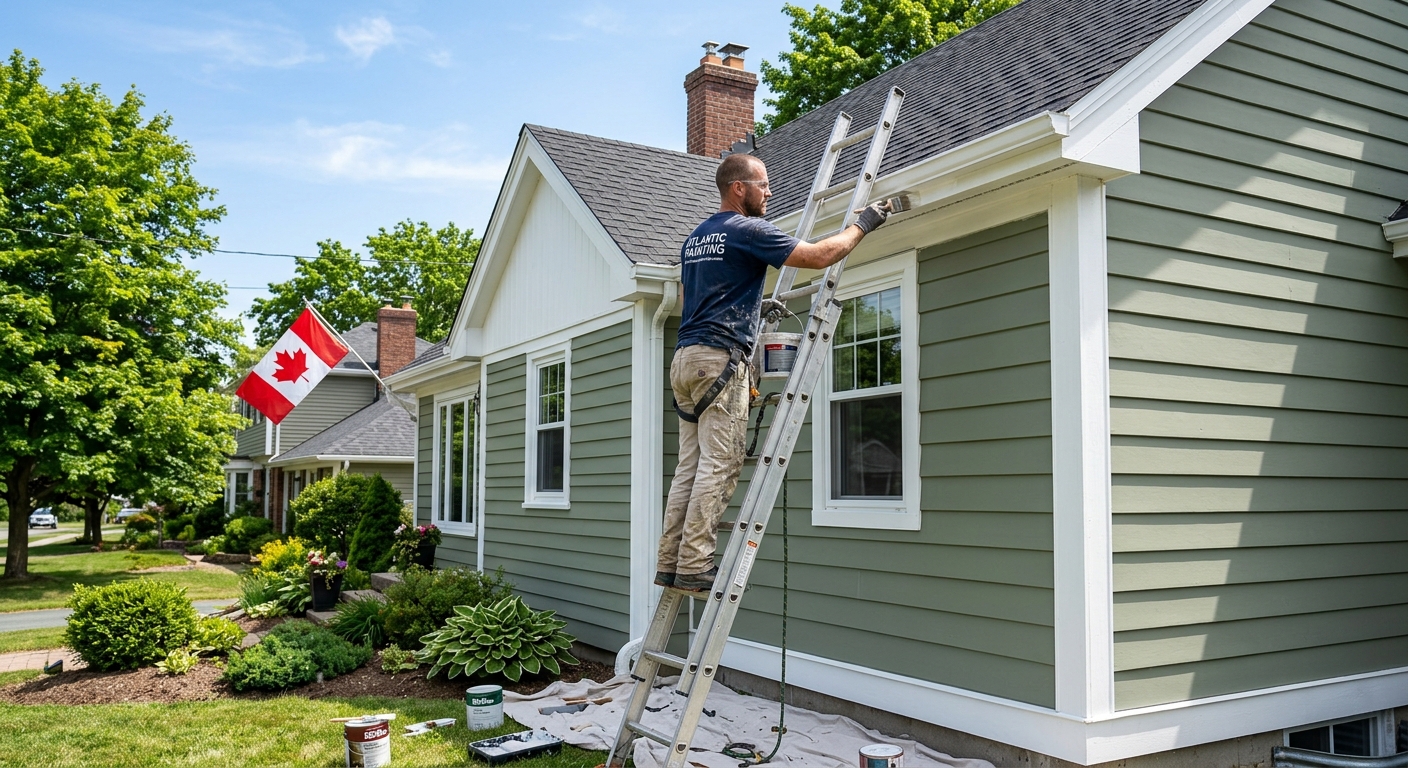
Painting options and costs in West End
In West End, Ontario, the “right” painting option is mostly about matching finish and schedule to how your home holds up in Toronto’s swingy weather. With only 4,142 people in the local profile area (Statistics Canada, 2021 Census), it still sits inside a much larger Toronto labour market—so pricing is shaped by contractor availability and how busy crews get during the short, ideal exterior weeks. Another local reality: the area’s housing stock includes many older homes. In practice, that means more time on scraping, patching, caulking, and priming, and for pre-1978 properties, professionals often use lead-safe methods if old paint is disturbed.
Exterior work in the GTA tends to run from late May through June and again from September to mid-October, when temperatures are high enough (about 10°C+) for proper adhesion and curing. Demand peaks during June–August, and that’s when many homeowners see exterior pricing run about 10–15% higher. Interior painting is far less season-sensitive, but costs vary by prep complexity—especially around trim-heavy rooms, ceiling heights, and whether you need repairs before paint.
Below is a practical comparison of common options, along with typical durations, so you can budget for West End projects and compare apples to apples when you request quotes.
| Service |
What's Included |
Typical Duration |
Price Range |
| Interior — whole home (walls, ceilings, trim) |
Protection/masking, surface prep (patching/sanding), prime as needed, 2-coat finish system, caulking at trim, basic cleanup and haul-off of paintable debris |
5–12 days |
$3,200–$6,000 |
| Interior — per room (standard bedroom or living room) |
Prep, prime spot-prime, 2-coat finish on walls and ceiling, standard trim touch-ups, dust control |
1–3 days |
$600–$1,800 |
| Exterior — full house (siding, trim, soffits) |
Pressure-wash (as appropriate), scraping/sanding, caulking, priming (where needed), 2-coat exterior system, surface protection, basic cleanup |
1–3 weeks |
$3,500–$7,500 |
| Exterior — trim and accent colours only |
Scrape/spot-prep, caulking, spot-priming, 2 coats to selected areas, protection of adjacent surfaces |
4–10 days |
$1,800–$4,200 |
| Kitchen cabinet painting (doors, frames, spray finish) |
Degrease/clean, sanding and bonding primer, spray/roll system, hardware masking, light touch-up, countertop/floor protection |
1–2 weeks |
$1,500–$3,800 |
| Specialty / faux finish (accent wall, texture) |
Surface prep, base coat(s), faux/texture application, final topcoat and protective clear where required |
2–6 days |
$800–$3,500 |
Prices are estimates only and vary by project scope, site access and material selection.
What affects the price of painting in West End
In West End, two quotes for the “same” paint job can differ by 30–50% because the real cost driver isn’t the paint—it’s preparation, access, and how many coats and products the surfaces actually need. You’ll see this most in exterior repainting, where the short GTA exterior season forces contractors to schedule around rain, humidity spikes, and frost risk. In the Greater Toronto Area, work is typically planned from late May to early October when temperatures stay above about 10°C for proper curing; when June–August demand is high, exterior pricing often runs 10–15% higher simply because crews are booked.
Older homes are another big variable. Many pre-1980 properties require more labour: scraping multiple paint layers, repairing deteriorated wood or drywall, caulking cracks, and priming bare or stained spots. On a repaint, surface prep can easily take 50–70% of labour time. If the home has older lead paint and prep requires sanding/scraping, lead-safe work practices can also add setup time (contained work areas, HEPA vacuuming, and proper disposal).
Here are concrete ways costs move in West End: if scaffolding or lifts are needed for multi-storey elevations, labour jumps quickly; if you’re changing sheen (e.g., flat to satin), additional coats may be required to avoid flashing; and if you’re repainting trim on weathered substrates, primer selection and spot-priming frequency matter. That’s why an interior refresh might start near the lower end of $400–$6,000, while exterior full-house repainting commonly falls in the $1,500–$8,000 band depending on prep severity and access.
| Price Factor |
Why It Matters |
Cost Impact |
| Surface prep — scraping, sanding, patching drywall or wood |
Dictates adhesion and smooth finish; older surfaces often need more grinding and repairs |
High (often 50–70% of labour on repaints) |
| Number of coats — 2-coat system over primer vs. 1 coat over existing |
Coverage and durability drop if coats are reduced without correct priming |
Medium to high |
| Paint quality tier — contractor-grade vs. premium (Benjamin Moore, Sherwin) |
Premium systems can level better and resist scuffing and fading longer |
Low to medium (materials vs labour mix) |
| Ceilings and trim — adds significant time vs. walls-only |
Detail work increases masking, cutting-in, and longer drying coordination |
Medium |
| Exterior season window — short season raises summer rates |
Late May–June and September–mid-October schedules are in tight supply |
Medium (often 10–15% higher in peak weeks) |
| Lead-safe precautions — required for pre-1978 homes with lead paint |
Safer containment, HEPA vacuuming, and compliant disposal add setup and time |
Medium to high depending on condition |
| Surface material — drywall vs. plaster vs. wood vs. stucco |
Different porosity and bonding needs change primer and prep scope |
Medium |
| Height and access — multi-storey exterior requires scaffolding or lifts |
More time on set-up, protection, and safer application |
High |
Permits & regulations in Ontario
In Ontario, painting typically does not require a permit for most residential work. However, there are important health and documentation steps—especially for older homes. For residences built before 1978, health guidelines strongly recommend testing for the presence of lead paint before sanding, scraping, or aggressive prep. If lead is present, professionals follow lead-safe work practices such as wet methods to reduce dust, HEPA-filtered vacuuming, and proper waste disposal. Homeowners aren’t always legally required to do these steps themselves, but contractors in West End commonly treat this as standard for safe, clean work.
What does require a permit? Painting itself generally doesn’t. Permits tend to be tied to structural changes, major electrical/plumbing work, or certain exterior changes that alter the building envelope—not to routine coats of paint. Where your situation could trigger additional rules is if you’re coupling painting with renovation that disturbs major surfaces, for example full window replacement, major drywall removal, or extensive demolition.
To protect yourself, require your contractor to carry liability insurance and WSIB/WCB workers’ compensation coverage. Then confirm details step-by-step: (1) verify the company/contractor details through the appropriate online registry or professional listings used in Ontario; (2) request a Certificate of Insurance showing liability coverage and valid dates; and (3) ask for WSIB/WCB clearance or proof of coverage before work starts. Finally, insist on a written contract listing the exact paint brand and sheen, number of coats, prep work included, protection/disposal, and start/completion dates.
Interior vs exterior painting — getting the best result in West End
The difference between a long-lasting paint job and a premature failure in West End is usually found in prep and product selection—not just in the colour. For interiors, start with repairs: filling cracks, sanding, and priming stained or patchy drywall. If you skip primer on problem areas, you’ll often see flashing (lighter bands) even with good topcoat. Next, choose the right sheen for how the room gets used: flat hides wall imperfections best but scuffs more; eggshell and satin balance washability with a softer look; semi-gloss is typically reserved for higher-touch trim and doors. Practically, two coats over a proper primer almost always outlast one thick coat, because it reduces thin spots and improves uniform coverage.
For exteriors in the GTA, Ontario’s weather swings make surface prep and caulking critical. Water must be kept out at seams, joints, and cracks—so caulking is done before final painting and coordinated with the right paint system. Primer type matters for substrate bonding and stain blocking; in many Ontario cases, the system is selected based on whether you’re painting bare/patchy areas, repainting over existing latex, or dealing with wood/fibre cement behaviour. While BC often pushes mildew-resistant priorities due to persistent dampness, Ontario’s main risks are rain timing, humidity spikes during curing, and frost or cold snaps that slow or disrupt adhesion.
Cabinet painting is a strong budget alternative to replacement: you can often refresh a kitchen for a fraction of a full renovation, especially when doors and frames can be properly degreased and primed. For pre-1978 homes, lead-safe precautions during sanding/scraping are the difference between “cosmetic” work and messy, risky dust.
For example, if a full exterior repaint lands in the $3,500–$7,500 range because heavy scraping and priming are required, spending the extra time on prep is usually justified. If your exterior is in good condition, an exterior trim-only scope (around $1,800–$4,200) can deliver a big visual upgrade without paying for whole-house prep.
| Project Type |
Key Prep Step |
Recommended Coats |
Price Band |
| Interior — fresh drywall (new construction) |
Prime all new drywall to ensure uniform absorption and reduce flashing |
1 primer + 2 finish coats |
$1,200–$4,000 |
| Interior — repaint (good condition, no repairs) |
Clean, lightly scuff/sand, and caulk trim gaps as needed |
1 primer coat spot-check + 2 finish coats |
$600–$3,000 |
| Interior — repaint (patching and priming needed) |
Patch/skim, sand smooth, then prime all repaired and stained areas |
Spot primer + 2 finish coats |
$800–$3,800 |
| Exterior siding (wood or fibre cement) |
Scrape/ sand failing areas, prime bare spots, and caulk before topcoats |
1 primer system + 2 finish coats |
$3,000–$7,500 |
| Exterior trim and accents only |
Spot prep and caulking at joints so paint bonds and seals properly |
Spot primer + 2 finish coats |
$1,800–$4,200 |
| Kitchen cabinets (spray finish) |
Degrease, sand, and apply a bonding primer to prevent peeling and fisheyes |
1 primer + 2 finish coats (spray system) |
$1,500–$3,800 |
How to choose a painting contractor in West End
Start by verifying coverage, not just credentials. In Ontario, ask for proof of liability insurance and WSIB/WCB workers’ compensation before the first day on site. To check: (1) request a current Certificate of Insurance showing liability coverage limits and valid dates; (2) confirm workers’ compensation coverage through the contractor’s provided clearance/proof; and (3) verify the business identity used on invoices matches the coverage certificates. If they can’t provide documentation quickly, assume risk is being shifted to you.
Next, get 2–3 itemised written quotes. The best quotes break out labour (prep, caulking, cutting-in, cleanup) and materials (primer/paint types, sheen, specialty primers). Avoid lump-sum-only offers without scope detail. Read exclusions line-by-line: what’s not included for disposal, pressure washing, lead-safe containment, replacing damaged drywall, or repairing water-caused deterioration?
Warranty matters too. Look for a workmanship warranty length (for example, how long they stand behind peeling, flaking, and adhesion issues), and understand whether the manufacturer warranty transfers to you. Payment schedule is another tell: never pay more than 10–15% upfront; use milestone payments and holdback until the job is complete and cleaned. Finally, demand the timeline in writing: start date, estimated duration, and what weather delays mean for exterior work.
- Ask for insurance certificates and confirm WSIB/WCB coverage before signing.
- Require the contract to list the exact paint brands and sheen (not “equivalent”).
- Make sure the scope includes prep steps: scraping, sanding, patching, caulking, and priming.
- Confirm whether disposal and leftover materials removal are included.
- Clarify whether pressure washing is included and what surfaces it applies to.
- Check if lead-safe methods are included for pre-1978 disturbance risks.
- Get a clear coat schedule (primer + number of finish coats) for each surface.
- Ask how they protect floors, landscaping, and nearby windows (and who is responsible for damage).
- Require a workmanship warranty in writing and what voids it.
- Use a payment schedule that keeps 10–15% holdback until final walkthrough.
- Request a written start date, completion estimate, and weather delay plan.
- Confirm how touch-ups are handled if you discover small issues after completion.
Red flags I see in West End include contractors who refuse insurance/WSIB proof, quotes that skip or minimize surface prep, “one-coat” promises without a bonding primer plan, vague scope wording that excludes disposal or caulking, and payment demands that exceed 10–15% upfront.
Frequently asked questions — painting in West End
What is the best primer for older West End homes?
For many older homes in West End (including pre-1978 properties), the “best” primer depends on what you’re coating: bare wood, previously painted latex, stains/ink bleed, or patched repairs. In practice, contractors usually start with a bonding primer for chalky or flaking areas, and a stain-blocking primer where you’ve got tannin bleed or persistent marks from water exposure. If you’re sanding or scraping older layers, professionals also plan lead-safe controls if lead is suspected—especially before aggressive prep. Always match the primer to the substrate and the existing paint system, because the fastest way to get peeling is primer mismatch. For budgeting, a full repaint often sits in the $1,500–$8,000 exterior band depending on prep and primer needs.
Should I paint or wallpaper my West End home?
In West End, painting is usually the better long-term choice for most rooms because it’s easier to repair and cheaper to refresh when you redecorate. Wallpaper can look great, but it’s unforgiving: seams show, and wall texture or cracks from older plaster/drywall require very specific prep. If you have patchy drywall, water-caused spotting, or uneven surfaces, paint plus proper primer typically gives a cleaner finish with less risk. That said, wallpaper can be ideal for one feature wall when you want a textured look and you’re confident walls are stable. Either way, surface prep is the make-or-break factor. For interiors, a single room often lands in the $600–$1,800 range, and doing more prep for either option still pays off in durability.
How do I fix peeling exterior paint in West End?
Peeling exterior paint in West End usually isn’t solved by a quick repaint—it requires identifying why the bond failed. Start by scraping back all loose paint to solid edges, then sand feathered areas smooth. Clean the surface and address moisture sources first (damaged flashing, caulk gaps, or persistent rain exposure at trim joints). Next, caulk before painting to seal water entry points, prime any bare/repair areas, and only then apply your full 2-coat system. GTA conditions matter: exterior work needs the late May–June or September–mid-October window so coatings cure properly above roughly 10°C and aren’t disrupted by rain or humidity spikes. Expect peeling repairs to increase prep time—often pushing your project toward the higher end of the $1,500–$8,000 exterior range.
What colours add the most resale value in West End?
In the West End Toronto market, resale-friendly colours tend to be timeless and light-reflective: warm whites, soft greiges, and muted neutral tones for walls, with crisp trim shades that make windows and doors look sharper. For exterior, homeowners usually do best with restrained palettes—think off-whites/creams for siding with complementary darker accents for shutters, railings, or front door. Highly saturated colours can be beautiful, but they’re often harder to match to future buyer tastes without paying for additional repainting. The best “resale value” comes from clean prep, consistent sheen, and colour that matches your home’s architectural lines. If your budget is tight, a trim-and-accent refresh (often around $1,800–$4,200) can update the look without the full-house prep costs.
How much does it cost to paint a house in West End?
In West End, the cost to paint a house depends mainly on interior scope (trim, ceilings, repairs) and exterior conditions (prep severity, access, and the exterior season schedule). As a realistic starting point, exterior full-house painting typically falls in the $1,500–$8,000 band, and many repaints land around the middle once scraping, caulking, and priming are included. Interior whole-home projects commonly sit in the $400–$6,000 spectrum based on how many rooms need repainting and whether you have patching/priming. In Ontario, quotes can differ by 30–50% because prep can consume the majority of labour on older surfaces. If you have an older pre-1980 style home, plan for more prep time than you’d expect on newer construction.
How much does interior painting cost per room in West End?
For West End homes, interior painting cost per room commonly ranges from $600–$1,800, assuming standard bedroom or living room size and typical trim. The range changes based on ceiling height, whether ceilings are included, condition of the walls, and how much patching/priming is needed. A “good condition” repaint with minimal repairs is often closer to the lower end; a room with visible damage, stains, or multiple patches will move toward the higher end because primer and sanding time increase. Sheen changes also matter—going to a more durable sheen (like satin/eggshell) can look better, but it may require more careful prep to avoid flashing. Always ask for an itemised quote so you can confirm what’s included (prep, caulking, and number of coats).