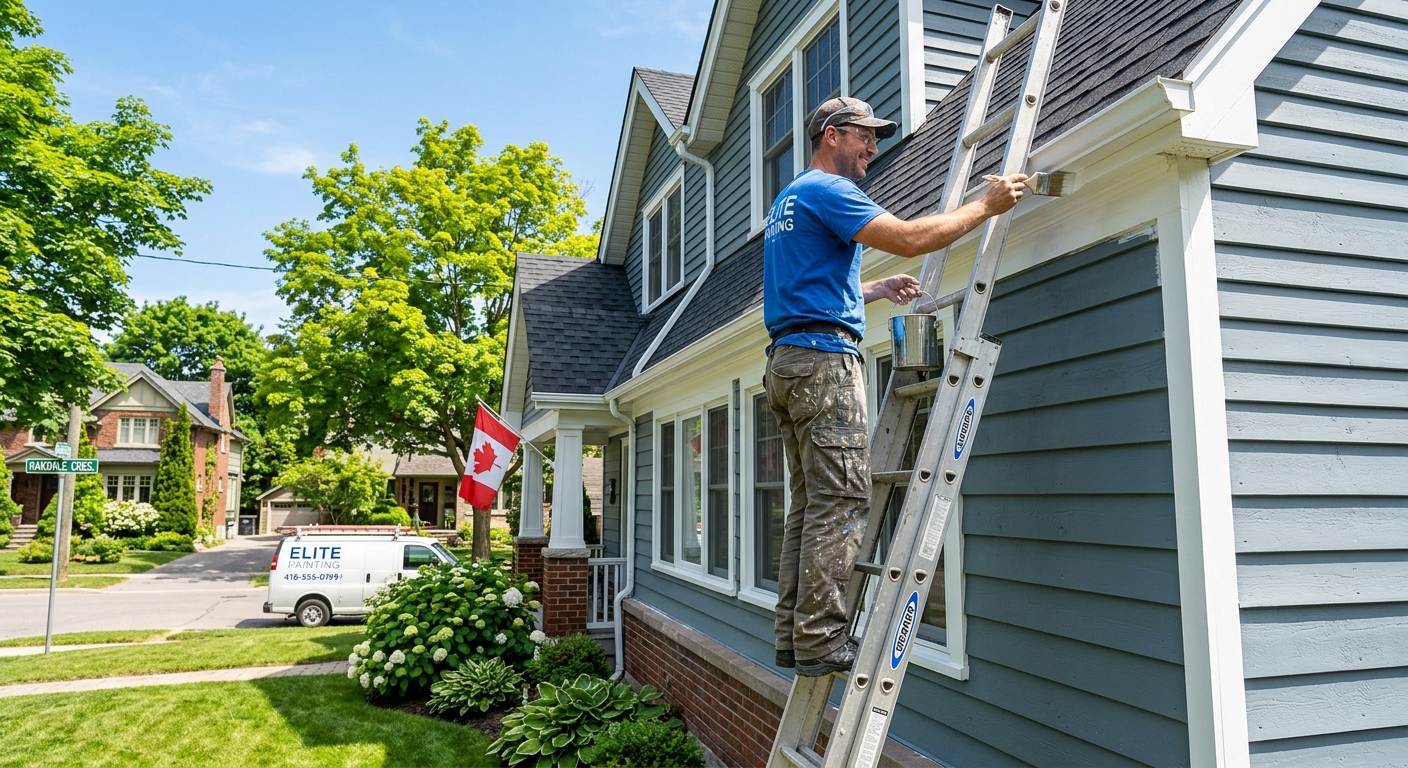
Painting options and costs in Aurora
Aurora homeowners have solid painting options, but the “right” choice depends on how much prep your home needs, the finish you want, and how tight the seasonal window is for exterior work. Aurora’s housing profile skews toward older properties—22.2% of homes were built before 1981—so many repaint jobs require more than a quick roll-and-tip. Expect extra labour for scraping, sanding, patching, caulking, and priming, and if trim or older surfaces test positive for lead paint, professionals use lead-safe methods (wet methods, HEPA vacuuming, and proper disposal) during preparation. On the buyer side, the region is also shaped by an active homeowner market: 17,475 homeowner households (81.2% of households own) means steady demand for refreshed interiors and curb appeal upgrades.
In the Toronto economic region, exterior painting is tightly climate-dependent. Contractors typically book late May through June and again September to mid-October when temperatures stay above about 10°C and curing isn’t interrupted by cold nights or heavy rain. In June–August, high summer demand can push exterior pricing 10–15% higher, so planning earlier usually helps you land closer to the lower end of the range. If you’re in high-demand areas such as Downtown Aurora / Bloomington Road, expect schedules to fill quickly because many homes share similar siding and trim details that require careful prep.
To help you compare apples-to-apples, here are realistic cost bands for common Aurora scopes—then you can decide what level of finish is worth paying for.
| Service |
What's Included |
Typical Duration |
Price Range |
| Interior — whole home (walls, ceilings, trim) |
Prep, patching, caulking, primer as needed, wall/ceiling paint, sanding/touch-ups, full trim and door painting; basic surface protection |
5–12 days |
$2,000 – $6,000 |
| Interior — per room (standard bedroom or living room) |
Prep, cut-in/edges, 2-coat system on walls (primer included where needed), baseboards/trim to standard height |
1–3 days |
$400 – $900 |
| Exterior — full house (siding, trim, soffits) |
Power-wash, scrape/sand, caulk, spot prime, prime bare areas, paint siding/trim/soffits; final cleanup; report on failing caulk/repairs |
5–14 days |
$3,500 – $8,000 |
| Exterior — trim and accent colours only |
Surface cleaning, spot prep, caulking, primer on bare spots, paint selected trim bands and accents |
2–6 days |
$1,500 – $3,500 |
| Kitchen cabinet painting (doors, frames, spray finish) |
Degrease/clean, hardware masking, sanding/de-glossing, bonding primer, spray or sprayed-smooth topcoat, reinstall hardware |
5–14 days (including dry times) |
$2,000 – $4,000 |
| Specialty / faux finish (accent wall, texture) |
Surface prep, specialty base/primer, application technique (rag-rolling, glaze, texture system), protective clear where required |
1–5 days |
$300 – $5,000 |
Prices are estimates only and vary by project scope, site access and material selection.
What affects the price of painting in Aurora
In Aurora (and across the Toronto market), the same-looking job can land 30–50% apart because quotes reflect labour intensity, risk, and preparation—not just the number of cans. Exterior work is a prime example. The GTA’s exterior season is limited and climate-bound: contractors rely on late May to early October conditions where temperatures are above about 10°C for application and curing. When “ideal” weeks are few, summer scheduling pressure increases, which is why exterior pricing often trends higher—commonly in the upper end of the $1,500 – $8,000 bands for full-house repaints during June–August.
Ontario’s older housing stock matters too. With 22.2% of homes built before 1981, many surfaces show more oxidation, more blistering, older caulk failures, and more paint layers. On repaint projects, surface prep can account for 50–70% of total labour—scraping and sanding overhead, drywall patching, wood repair, primer compatibility checks, and careful caulking before paint goes on. That’s also where costs climb most when scaffolding or lifts are needed, or when there’s a need to manage lead-safe precautions on pre-1978 surfaces.
Here are a few practical Aurora examples that move costs up or down: (1) If your siding has failing caulk at window trims and eaves, the caulking and spot priming can push an “accent-only” quote toward the low end of exterior full-house ranges. (2) If a previously painted ceiling requires stain-blocking primer due to water marks, interior costs can rise toward the upper end of per-room and whole-home estimates. (3) If your home has high ceilings, ornate trim, or many doors, interior trim work adds significant time even when wall surfaces are straightforward—so a job may still land closer to the $2,000 – $6,000 whole-home band.
| Price Factor |
Why It Matters |
Cost Impact |
| Surface prep — scraping, sanding, patching drywall or wood |
Determines adhesion and finish longevity; older layers often must be removed and stabilized |
Can add 30–60% vs “paint-ready” walls |
| Number of coats — 2-coat system over primer vs. 1 coat over existing |
Coverage and uniformity; primer prevents bleed-through and patch flashing |
Typically +10–25% labour/materials |
| Paint quality tier — contractor-grade vs. premium (Benjamin Moore, Sherwin) |
Better spread, hide, and scrub resistance reduce recoat risk and touch-ups |
Often +5–20% depending on surface area |
| Ceilings and trim — adds significant time vs. walls-only |
Cut-in work, masking, and smooth finish standards take longer |
Can shift a quote by $300–$1,500+ |
| Exterior season window — short season raises summer rates |
Contractors schedule around weather; demand spikes when ideal weeks are limited |
Frequently +10–15% in June–August |
| Lead-safe precautions — required for pre-1978 homes with lead paint |
Special containment, wet methods, HEPA vacuuming, disposal increases prep time |
Can add 10–40% on affected areas |
| Surface material — drywall vs. plaster vs. wood vs. stucco |
Different primers/techniques required to avoid peeling or flashing |
Often +5–25% depending on substrate condition |
| Height and access — multi-storey exterior requires scaffolding or lifts |
Safety, setup time, and more labour per panel |
Can add $500–$2,000+ |
Permits & regulations in Ontario
In Ontario, painting itself generally does not require a permit for typical homeowner projects. What can trigger additional requirements is the presence of hazardous materials during prep. For homes built before 1978, health guidelines recommend testing for lead paint before sanding or scraping. If lead is present, professional contractors follow lead-safe work practices such as wet methods (to reduce dust), HEPA vacuuming, proper containment where needed, and correct disposal procedures. This isn’t legally mandated for homeowners in the same way it is for regulated work, but it’s standard, responsible practice when professionals encounter potentially lead-bearing surfaces.
Separately, contractors should carry the right coverage for your protection. Confirm they have liability insurance and WSIB/WCB workers’ compensation coverage (so you’re not left holding the bag if someone gets injured on-site). Before work starts, get a written contract that clearly states the paint brands and sheen levels, the number of coats, the surface prep included, and what repairs are part of the scope (for example: how they handle failed caulk, soft wood, or damaged trim).
Step-by-step for Aurora homeowners: (1) Ask for a certificate of insurance and verify liability limits match the project risk. (2) Request WSIB/WCB clearance details or documentation. (3) Get the contractor’s licensing information from Ontario’s online business/licensing records and match the legal name to the quote/contract. (4) Request a written scope with exclusions and confirm disposal cleanup is included.
Interior vs exterior painting — getting the best result in Aurora
Getting a long-lasting paint job in Aurora comes down to prep discipline and the right system for what the surface is doing in our conditions. For interior spaces, the biggest predictor of success is surface preparation: filling dents, sanding to remove sheen and rough patches, priming stained or patched areas, and using the right primer for repairs. The topcoat brand matters, but sheen and use-case matter just as much. For example, kitchens and bathrooms often hold up better with satin or semi-gloss (where appropriate), while living rooms and bedrooms commonly use eggshell for a balanced look with good cleanability. Also, two coats over a proper primer almost always outlast one “thick” coat because it improves film build and uniformity, reducing patchy flashing that shows up in Aurora’s variable daylight.
For exteriors, prep is even more critical in Ontario’s freeze–thaw cycles and humidity swings. Caulking comes first, before paint, so water doesn’t find pathways behind trim and window frames. Primer selection matters too: use primers designed for the substrate and condition (bonding primer for older glossy surfaces, and the correct type for wood versus fibre cement/previous coatings). Unlike coastal BC—where dampness and mildew drive product choices toward mildew-resistant systems—Aurora’s failures are more often driven by cold, rain timing, and poor curing windows. Still, choosing temperature-stable exterior products and planning around late May–June and September–mid-October weather improves adhesion and durability.
Cabinet painting is a good budget alternative to replacement when doors and frames are properly prepped and finished with a spray-smooth system. For older trim in pre-1978 homes, lead-safe precautions are important during sanding/scraping. If you’re choosing between full-house exterior painting ($3,500 – $8,000) and trim/accent only ($1,500 – $3,500), the cost difference is justified when siding is sound and only edges and trim are failing—otherwise you’ll pay again sooner to correct peeling at the source.
| Project Type |
Key Prep Step |
Recommended Coats |
Price Band |
| Interior — fresh drywall (new construction) |
Prime bare drywall, fill joint imperfections, sand smooth |
Primer + 2 coats |
$900 – $2,200 |
| Interior — repaint (good condition, no repairs) |
De-gloss/mild sanding, caulk light gaps, spot-prime if needed |
1–2 coats (typically 2 for uniformity) |
$400 – $1,000 |
| Interior — repaint (patching and priming needed) |
Patch with appropriate compound, prime repairs and stains to prevent bleed |
2 coats topcoat over primer |
$600 – $1,500 |
| Exterior siding (wood or fibre cement) |
Power-wash, scrape loose paint, caulk, prime bare/failed areas |
2-coat system over primer |
$3,500 – $8,000 |
| Exterior trim and accents only |
Masking and edge prep, spot-prime bare wood/areas with adhesion issues |
2 coats over primer on prepped areas |
$1,500 – $3,500 |
| Kitchen cabinets (spray finish) |
Degrease, sand/de-gloss, bonding primer, careful sanding between coats |
Primer + 2 sprayed topcoats |
$2,000 – $4,000 |
How to choose a painting contractor in Aurora
Choosing the right painter in Aurora starts with verification. In Ontario, confirm the contractor has liability insurance (ask for the certificate and check the policy holder name matches the company on the contract) and WSIB/WCB workers’ compensation coverage (request documentation or a clearance letter). For licensing, use Ontario’s online registries to locate the business and match the legal name, address, and contact details to what’s on the quote. This reduces the risk of hiring someone without proper coverage or with a mismatched entity.
Then, get 2–3 itemised written quotes. The best quotes break labour and materials out separately: prep labour (scraping/sanding/patching), priming allowances, paint and primer brands, number of coats, and surface protection. Scope clarity matters—ask what’s excluded (for example: repairing rotten fascia/soft trim), whether they pull any permits if your scope somehow triggers one (most painting does not), and whether cleanup and disposal are included in the price.
Warranty should be written. Ask for the workmanship warranty length and what it covers (peeling due to prep defects versus isolated patch failures). Also ask about product/manufacturer warranty and whether the coverage is transferable after installation. For payment schedule, never pay more than 10–15% upfront; hold back a portion until completion and final inspection.
Finally, timelines should be in writing: start date, daily work hours, and a completion estimate—especially for exterior work, where rain or cold snaps can shift curing.
- Ask for liability insurance certificate and verify the legal name matches the contract.
- Request WSIB/WCB coverage documentation before work begins.
- Confirm licensing/registration details through Ontario’s online records and match to the quote.
- Get an itemised quote (labour, materials, primer allowances, prep time, coats).
- Clarify what prep is included (scraping, sanding, caulking, patching drywall).
- Ask what happens if additional repairs are discovered after prep (change order process).
- Confirm paint brands and sheen levels are written in the contract (not “equivalent” only).
- Ensure cleanup and disposal are included (especially sanding debris).
- Ask for a written warranty for workmanship and how claims are handled.
- Confirm payment terms: 10–15% max upfront, with a holdback to verify completion.
- Get a written start date and completion estimate; discuss weather contingencies.
- Look for a site visit and surface assessment (not just a phone estimate).
Red flags in Aurora include: a quote that won’t specify paint brand/sheens and number of coats, refusal to provide insurance/WSIB documentation, “cheap” pricing that skips prep (no mention of scraping/priming/caulking), demanding a large upfront payment, and vague timelines with no weather-based plan for exterior curing windows.
Frequently asked questions — painting in Aurora
Should I paint or wallpaper my Aurora home?
In Aurora and across Ontario, painting is usually the more practical choice for resale-ready, low-maintenance walls—especially in homes built before 1981 where patching and prior paint layers can complicate adhesion and alignment for wallpaper. If you’re dealing with minor wall imperfections, paint (with proper joint filling, sanding, and priming) tends to look smoother over time than wallpaper seams. Wallpaper can be great for accent walls, but it still needs strong prep and a suitable substrate, and removal later can be labour-intensive. Cost-wise, a standard paint-per-room job commonly falls in the $400 – $900 range, while wallpaper coverage often adds complexity and labour that can narrow the value gap quickly. If you want an accent look without the long-term hassle, consider a high-quality paint finish or specialty faux/texture on one wall.
How do I fix peeling exterior paint in Aurora?
Peeling exterior paint in Aurora should be addressed at the cause, not just the appearance. Typically, peeling happens when moisture gets behind the coating due to failed caulking, compromised primer adhesion, or trapped water under older layers. The repair process usually starts with power-washing, then scraping away all loose paint to a stable edge, sanding to remove feathered edges, and priming bare or repaired areas with the correct primer for the substrate. Caulk should be renewed before painting so water doesn’t re-enter around trim and joints. If you’re pricing this, peeling problems push the work toward the higher end of exterior ranges; a full house often lands closer to the $3,500 – $8,000 band depending on prep and height/access. In pre-1978 homes, professional lead-safe practices may be used during scraping/sanding—so ask contractors how they handle older trim and window/rail details.
What colours add the most resale value in Aurora?
For resale in Aurora, “safe, bright, and timeless” tends to win—clean whites, warm off-whites, soft greys, and muted earth tones. The goal is to complement natural light and landscaping rather than create a strong personal statement that limits buyer appeal. For interiors, eggshell on walls is a common choice because it offers easier cleaning than flat finishes while avoiding an overly shiny look. For exteriors, siding usually looks best in colours that match neighbourhood character and don’t fight the local light conditions—avoid extremely dark shades if your home faces heavy sun exposure, because heat can stress coatings faster. A paint upgrade can be a smart spend within the $1,500 – $3,500 trim/accent exterior band when your siding is already in good shape. If you’re doing more extensive work, planning an exterior full repaint within the $3,500 – $8,000 range gives you room to modernize colour while still prioritizing prep and primer quality.
How much does it cost to paint a house in Aurora?
In Aurora, “how much it costs” depends heavily on whether you’re painting interior, exterior, or both—and especially on how much surface prep your home needs. For interiors, a whole-home paint job can range from about $2,000 – $6,000 based on number of rooms, ceiling height, trim/door scope, and whether repairs and primer are required. For exteriors, full-house painting commonly falls within $3,500 – $8,000, while trim and accent-only work is typically $1,500 – $3,500. The Toronto-area climate affects exterior timing: contractors often work late May–June and again September to mid-October, and prices can rise 10–15% in peak June–August due to short ideal-weather windows. Because 22.2% of Aurora homes were built before 1981, many repaints need more scraping/sanding/caulking, which can shift the project toward the higher end of the range.
How much does interior painting cost per room in Aurora?
Per-room interior painting in Aurora typically lands around $400 – $900 for a standard bedroom or living room when walls are generally paint-ready. That range assumes typical masking, cut-ins, and a proper 2-coat approach over primer where needed. Prices move up when there’s more prep—patching drywall, priming stains, filling deeper damage, painting significant trim/baseboards, or dealing with high ceilings or lots of doors. If your walls are in good condition, you may stay closer to the lower side of the band. If you need additional repair work and stain-blocking primer, quotes often trend higher within the same band or push toward adjacent whole-home pricing (especially for multiple rooms). If you’re coordinating colours throughout the home, it can also affect scheduling labour and masking time. For best accuracy, ask the contractor to itemise prep and confirm sheen selection by room (often eggshell or satin depending on use).
When is the best time for exterior painting in Aurora?
The best time for exterior painting in Aurora is when you can reliably apply and cure paint in temperatures above about 10°C, with moderate humidity and fewer rain interruptions. In the GTA, contractors typically work from late May through June and again from September to about mid-October. Those windows matter because Ontario’s freeze–thaw cycle can punish coatings that don’t cure properly, leading to adhesion failures, blistering, or peeling in the following season. Planning for June–August can be tempting, but peak demand in the warmer months can push rates up by about 10–15% compared to off-peak weeks. If you’re scheduling, ask your contractor for weather-based milestones (when they’ll wash, scrape, prime, and coat) rather than just a single start date. For older homes (22.2% built before 1981), schedule extra prep time for scraping, caulking, and priming so the coating work stays weather-compliant.