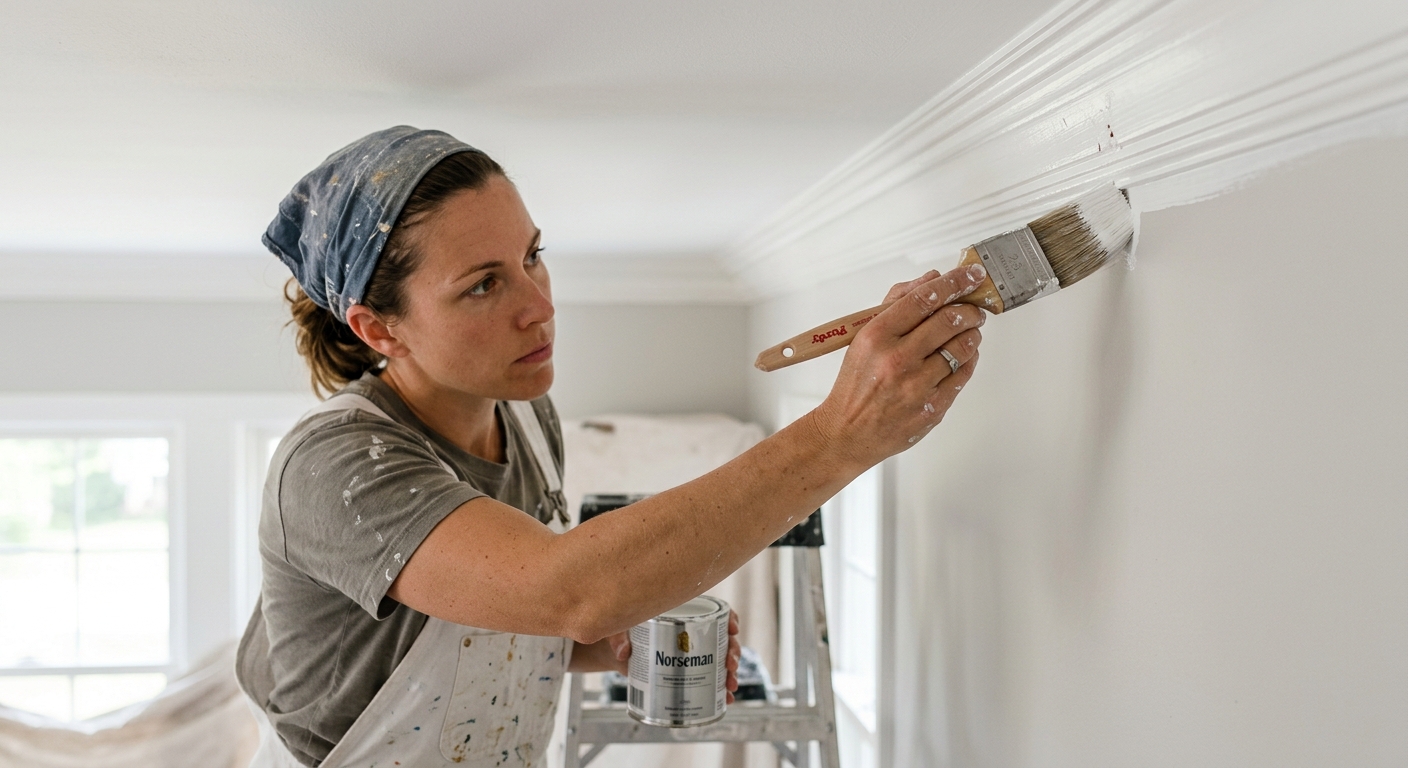
Painting options and costs in Dovercourt-Wallace Emerson-Junction
Painting options in Dovercourt-Wallace Emerson-Junction (Toronto) range from straightforward interior refreshes to full exterior repaints, and the pricing can swing depending on how much prep your surfaces need. In the 2021 Census, the neighbourhood’s wider area is home to 36,625 people (Statistics Canada, 2021 Census), and that density supports a busy labour market—helpful for scheduling, but it also means summer demand can tighten contractor availability. Just as importantly, Toronto’s older housing stock is common in this part of the city, so many homeowners face extra preparation work such as scraping, sanding, caulking, and priming, and sometimes lead-safe precautions when dealing with paint on pre-1978 trim and windows.
In the Greater Toronto Area, exterior painting is tightly climate-dependent. Most crews target late May through June and then September to mid-October, when temperatures stay above about 10°C for proper adhesion and curing. During June–August, short “ideal” weeks and peak demand typically push exterior pricing about 10–15% higher than shoulder-season work. For interiors, the season matters less; instead, costs are driven by labour time for masking, edge work, surface repair, and the time it takes to achieve a clean, uniform finish.
In Dovercourt-Wallace Emerson-Junction, exterior work is especially in demand along the Queen West and east-west corridor streets where homes often show noticeable trim wear from freeze–thaw cycles. If you’re ready to compare scope and budget, the table below outlines typical service bundles and price ranges—so you can map the quote to what you actually need.
| Service |
What's Included |
Typical Duration |
Price Range |
| Interior — whole home (walls, ceilings, trim) |
Surface cleaning, patching and sanding as needed, caulking, primer where required, 2-coat paint system, removal/masking for fixtures (not full furniture moves) |
5–10 days |
$2,000–$6,000 |
| Interior — per room (standard bedroom or living room) |
Prep of walls and trim, spot patching, caulking at edges, primer where required, 2-coat walls/trim finish |
1–3 days |
$400–$1,200 |
| Exterior — full house (siding, trim, soffits) |
Power washing, scrape/sand, caulking, spot-priming, 2-coat exterior system (substrate-appropriate primer), protection/masking, cleanup |
1–3 weeks |
$4,000–$8,000 |
| Exterior — trim and accent colours only |
Prep and prime exposed/failed areas, caulking, 2-coat trim/feature colour application, localized protection and cleanup |
3–7 days |
$1,500–$3,500 |
| Kitchen cabinet painting (doors, frames, spray finish) |
Degrease, light sanding/repair, bonding primer, sprayed finish for doors/drawers, reinstallation, hardware masking (no hardware replacement) |
5–12 days |
$2,000–$4,000 |
| Specialty / faux finish (accent wall, texture) |
Surface prep tailored to finish, base coat(s), texture/faux process, protective topcoat as needed |
2–7 days |
$300–$5,000 |
Prices are estimates only and vary by project scope, site access and material selection.
What affects the price of painting in Dovercourt-Wallace Emerson-Junction
Two homeowners in Toronto can receive quotes that differ by 30–50% for what sounds like the same paint job, and the gap is usually driven by prep time, surface complexity, and how the contractor schedules labour around the short exterior season. In Dovercourt-Wallace Emerson-Junction, exterior painting is constrained by Toronto’s freeze–thaw cycles and rain/humidity spikes. Crews typically plan for exterior work from late May into June and again from September to mid-October, when temperatures are above about 10°C for proper application and curing. This tighter season concentrates demand—so in June–August, pricing often sits closer to the top end of the exterior band. Interior work can be scheduled year-round, but it still depends on ceiling height, the number of edges and trim elements, and how much repair is needed.
Older homes around Toronto often mean multiple layers of existing paint, more careful scraping and sanding, and more caulking/priming to prevent adhesion failures. In practice, prep can account for 50–70% of total labour on a repaint, especially where there’s flaking, cracking, or water staining. For example, a “full house” exterior repaint can land in the $4,000–$8,000 range, but a trim-only refresh may be closer to $1,500–$3,500 when siding is sound and only detail areas need attention.
In Dovercourt-Wallace Emerson-Junction, cost can also move with access and material: a multi-storey front with bay windows and dense soffit lines adds time and protection. Meanwhile, if your siding is fibre cement or well-maintained wood with few failures, you may avoid extensive priming and keep labour closer to the lower end of the band.
| Price Factor |
Why It Matters |
Cost Impact |
| Surface prep — scraping, sanding, patching drywall or wood |
Prep determines adhesion and prevents peeling, bubbling and flashing |
Often the biggest driver; can add hundreds to over $2,000 depending on condition |
| Number of coats — 2-coat system over primer vs. 1 coat over existing |
Coverage and hiding power vary by surface and colour change |
Extra coat can add 10–25% on labour |
| Paint quality tier — contractor-grade vs. premium (Benjamin Moore, Sherwin) |
Better pigments and binders improve durability and reduce early fading/marking |
Material difference typically $200–$900 depending on house size and sheen |
| Ceilings and trim — adds significant time vs. walls-only |
Ceilings require more cutting-in and careful edge work; trim needs detail work |
Can shift a room project by $200–$800 |
| Exterior season window — short season raises summer rates |
Limited “ideal” weeks mean contractors charge more for scheduling |
Commonly +10–15% in June–August |
| Lead-safe precautions — required for pre-1978 homes with lead paint |
Proper containment, wet methods and HEPA cleanup reduce lead dust exposure |
Often adds $300–$1,500 depending on scope and extent of scraping |
| Surface material — drywall vs. plaster vs. wood vs. stucco |
Different substrates need different primers, sanding strategy and cure times |
Can add $200–$1,000+ based on primer and repairs |
| Height and access — multi-storey exterior requires scaffolding or lifts |
Set-up time and safety measures increase labour and gear costs |
Can add $500–$2,000+ |
Permits & regulations in Ontario
In Ontario, painting typically does not require a permit for either interior or exterior work. The main “compliance” concerns for homeowners are safety practices and proper documentation, not approvals. If your home was built before 1978, health guidelines recommend treating disturbed paint as potentially containing lead and using lead-safe work practices if testing indicates lead. That means wet methods to control dust, HEPA vacuuming, and correct bagging/disposal—professional contractors generally follow these steps even though it is not usually legally mandated for homeowners in the way a building permit would be.
Before work begins, confirm your contractor carries liability insurance and has workers’ compensation coverage (WSIB/WCB) for employees. For your written contract, insist it states the paint brand and sheen, the number of coats, and what surface preparation is included (for example: scrape/sand, caulking, patching, primer over repairs). If it’s an exterior project, also request that the contract clarifies cleanup and disposal.
What typically does require a permit is not the painting itself, but related work that can come with painting—like structural repairs, major electrical changes, or covered waterproofing rework tied to other building trades. Painting done as finishes only generally does not.
To verify a contractor in Dovercourt-Wallace Emerson-Junction, Ontario: (1) check their Ontario licence status using the appropriate online registry they provide (many will link it on their website or invoices), (2) ask for a current certificate of insurance showing liability limits and effective dates, and (3) request proof of WSIB/WCB clearance or coverage documentation (not just a verbal statement). Keep these documents with your contract and any change orders.
Interior vs exterior painting — getting the best result in Dovercourt-Wallace Emerson-Junction
In Dovercourt-Wallace Emerson-Junction, the difference between a long-lasting paint job and one that fails early comes down to prep, drying/curing conditions, and matching the coating system to the surface. For interiors, surface prep matters more than the brand of topcoat. That means filling, sanding, caulking edges, and priming stains or repair patches so the finished sheen looks uniform. Choosing the right sheen by room is equally important: many homeowners prefer flat/eggshell on walls for hiding minor imperfections, while satin or semi-gloss on trim and higher-touch areas resists scuffs and cleaning marks. A proper two-coat finish over the correct primer usually lasts longer and looks better than trying to get the job done with one “thick” coat.
For exteriors, Toronto’s climate punishes poor preparation. Before painting, scrape what’s failing, sand rough edges, clean thoroughly, and caulk where water can enter—doing caulking before painting is crucial so the sealant stays protected and bonded. Primer choice also matters: different substrates (wood, fibre cement, previously painted surfaces) need substrate-appropriate primers to prevent adhesion issues and flashing. Unlike coastal British Columbia where persistent dampness drives mildew-resistant product choices and careful timing, the GTA’s main exterior constraints are frost, rain, and humidity spikes during a shorter season window. In Alberta you may see different emphasis because of freeze exposure patterns; in the Toronto market, the focus is temperature-stable application and staying within workable weather so coatings cure properly.
Cabinet painting is often a smart budget alternative to replacement: if you keep the scope to repainting doors and frames and do thorough degreasing and sanding, you can refresh a kitchen without the upheaval of new cabinets. For pre-1978 trim and windows, lead-safe precautions are important during sanding/scraping—those steps protect your home and your contractor’s crew.
Dollar-wise, you might spend $1,500–$3,500 to refresh exterior trim and accents if siding is sound, but a full repaint closer to $4,000–$8,000 is justified when there’s widespread adhesion failure, peeling, or significant colour change—because the prep and priming work is what extends life.
| Project Type |
Key Prep Step |
Recommended Coats |
Price Band |
| Interior — fresh drywall (new construction) |
Prime bare drywall and sand any raised texture for uniform absorption |
2 coats over primer |
$1,200–$2,800 |
| Interior — repaint (good condition, no repairs) |
Clean, light scuff-sand, caulk edges, spot prime if needed |
2 coats where coverage needs it (primer only if stains/patches) |
$700–$2,000 |
| Interior — repaint (patching and priming needed) |
Patch/fill, sand smooth, spot prime repairs and stain areas |
2 coats with primer over repairs/stains |
$900–$2,600 |
| Exterior siding (wood or fibre cement) |
Scrape/sand failing areas, proper caulking, and substrate-appropriate primer |
2 coats (primer where required) |
$4,000–$8,000 |
| Exterior trim and accents only |
Detail prep: remove loose paint, sand edges, caulk gaps before coating |
2 coats on trim and accents (primer on bare/failed areas) |
$1,500–$3,500 |
| Kitchen cabinets (spray finish) |
Degrease thoroughly and prime for adhesion before spraying |
Primer + 2 finish coats (system dependent) |
$2,000–$4,000 |
How to choose a painting contractor in Dovercourt-Wallace Emerson-Junction
Start by verifying three essentials: Ontario business licensing where applicable/available, liability insurance, and workers’ compensation coverage. Ask for the contractor’s licence number and check it using the online registry they provide, then request a certificate of insurance showing liability limits and dates. For WSIB/WCB, get proof of clearance/coverage from the contractor—don’t accept “we’re covered” without documentation. In a neighbourhood like Dovercourt-Wallace Emerson-Junction, where many projects involve busy streets and tight access, these checks matter because incidents and delays still happen even on “simple” repaint jobs.
Next, get 2–3 itemised written quotes. The best estimates break costs into labour and materials and spell out surface prep (scraping, sanding, patching, caulking), coatings (primer type, paint brand, sheen), and the number of coats. Confirm what’s excluded: furniture moving, ceiling/trim additions, repairs beyond stated patch sizes, permits (usually none for painting), and disposal. If the quote doesn’t mention prep or caulking, it’s often a sign they’re cutting corners—or expecting extra charges later.
For warranty, ask for a workmanship warranty length and whether the product/manufacturer warranty is included or only available if you apply the paint system correctly. Also ask if the warranty is transferable if you sell the home. Payment should be scheduled: never pay more than 10–15% upfront, and keep a holdback until the final walkthrough and touch-ups are done. Get a start date and completion estimate in writing, with weather-related contingencies for exterior work.
- Request proof of liability insurance (certificate with policy dates).
- Request WSIB/WCB clearance or coverage documentation for employees.
- Verify licence info online using the contractor’s details.
- Ask for an itemised quote: labour hours, prep work, coatings, and cleanup.
- Confirm paint brand and sheen (and primer type) are listed in the contract.
- Confirm number of coats and what triggers extra coats (repairs, colour change).
- Check for a written scope: scraping/sanding level, patch limits, and caulking coverage.
- Confirm disposal is included (peel, paper, plastic, debris) for both interior and exterior.
- Ask about protection: flooring, landscaping, and how windows/fixtures are masked.
- Confirm prep requirements for pre-1978 homes if lead-safe practices are needed.
- Require a start date and completion window, especially for the exterior season.
- Use a payment schedule with a holdback until final inspection is complete.
Red flags to watch in Dovercourt-Wallace Emerson-Junction: (1) quotes that don’t describe surface prep or primer, (2) “one-coat” promises for repainting over unknown condition, (3) no proof of WSIB/WCB or liability insurance, (4) pressure for large deposits or cash-only payments, and (5) vague scope language like “as needed” without a process for approvals and extra charges.
Frequently asked questions — painting in Dovercourt-Wallace Emerson-Junction
What colours add the most resale value in Dovercourt-Wallace Emerson-Junction?
In Dovercourt-Wallace Emerson-Junction, resale-minded homeowners usually do best with neutral, light-reflective colours that feel clean in Toronto’s changing light. Think warm whites, soft greiges, and light warm-beiges for walls, with crisp whites or near-whites for trim. Dark accent colours can be great, but keep them to an accent wall or built-ins so buyers can imagine their own palette. If you’re doing a whole-home interior repaint, the savings come from fewer custom labour steps and more consistent coverage (which helps keep costs in the typical interior whole-home band). In practice, many projects land around $2,000–$6,000 depending on prep and number of rooms, so choosing broadly appealing colours helps you avoid costly rework later.
How much does it cost to paint a house in Dovercourt-Wallace Emerson-Junction?
“Paint a house” can mean very different scopes, so pricing varies widely in Ontario. For interiors, a whole-home repaint (walls, ceilings, and trim) often falls within the interior range of $2,000–$6,000 depending on repairs and number of trim-heavy areas. For exteriors, a full-house repaint (siding, trim, soffits) commonly falls within $4,000–$8,000, with higher end pricing more common when summer scheduling is tight or when older surfaces need extensive scraping and priming. In Dovercourt-Wallace Emerson-Junction, the biggest swings come from exterior prep condition and access—plus whether your home needs lead-safe work practices for pre-1978 trim.
How much does interior painting cost per room in Dovercourt-Wallace Emerson-Junction?
Per-room interior painting in Dovercourt-Wallace Emerson-Junction typically lands in the $400–$1,200 band, depending on wall height, ceiling work, trim amount, and whether there are repairs. A basic bedroom or living room that’s in good condition can be closer to the lower end if prep is mostly cleaning and minor caulking. If your room needs patching, sanding, and spot-priming (for example around water marks or rough drywall repairs), the price trends toward the upper end because labour time rises. Sheen choice also matters: semi-gloss or satin on trim and high-touch areas adds steps for cutting-in and coverage, but it often gives a finish that cleans better over time.
When is the best time for exterior painting in Dovercourt-Wallace Emerson-Junction?
The best time for exterior painting in Dovercourt-Wallace Emerson-Junction is when temperatures support proper adhesion and curing. Contractors typically target late May through June and then again from September to mid-October, aiming for stretches when conditions stay above about 10°C for at least 24–48 hours and humidity is moderate. June–August can be more expensive because demand is higher and fewer “ideal” weather windows are available, so booking earlier often helps. Rain and humidity spikes can also force rescheduling—especially for coats that need to cure before the next step (primer vs. topcoat). If you’re planning lead-safe prep for older trim, earlier scheduling also reduces the number of weather interruptions on messy scraping days.
How many coats of paint do I need?
Most quality interior and exterior systems use a two-coat approach, but the exact number depends on surface condition and whether primer is required. For interiors, repainting usually means 2 coats of finish paint, with primer only where you’re dealing with patch repairs, stained areas, or bare/sanded spots. For exteriors, you generally need 2 finish coats, plus primer where the substrate is exposed, where stains bleed, or where adhesion could be compromised. Using a proper primer before topcoats prevents flashing and early peeling. If your contractor is offering a “one-coat” exterior repaint, ask for the substrate condition and product system they’re using—because on older Toronto homes, prep and primer are what keep the coating system performing across seasons.
What paint is best for Dovercourt-Wallace Emerson-Junction's climate?
For Dovercourt-Wallace Emerson-Junction (Toronto region), “best” usually means a coating system matched to substrate and temperature-friendly application. For exteriors, choose a high-quality exterior paint with good adhesion and flexibility for freeze–thaw exposure, and use the correct primer for wood, fibre cement, or other surfaces. The GTA’s main issues are not year-round dampness like coastal BC; it’s weather swings—rain timing, humidity spikes, and frost—so the key is staying within the workable weather window so each coat cures properly. For interiors, residents typically prefer washable interior coatings: eggshell or satin on walls and semi-gloss on trim for scuff resistance. If you’re upgrading materials, that’s one way to justify moving toward the upper end of the typical exterior range like $4,000–$8,000—better systems hold up longer when applied on properly prepped surfaces.