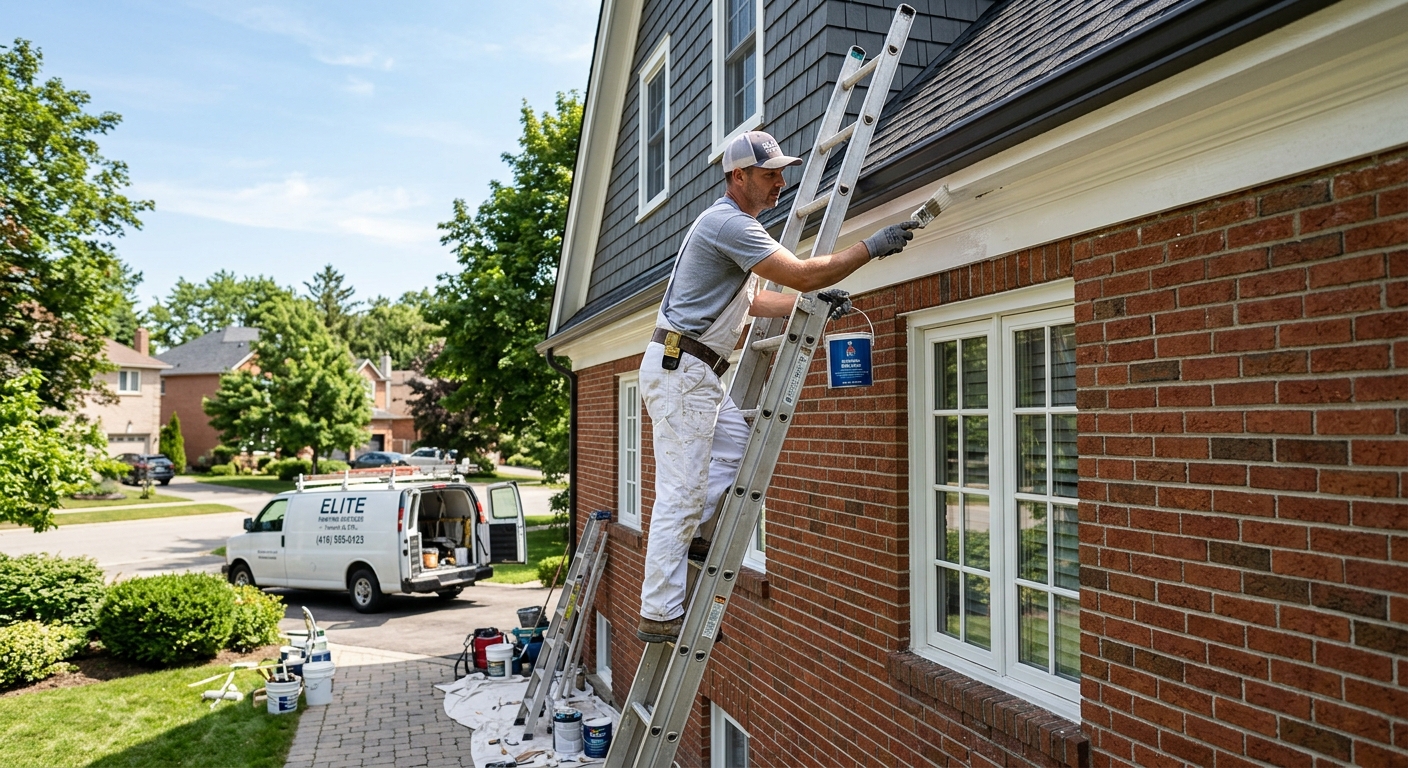
Painting options and costs in Centennial Scarborough
In Centennial Scarborough, painting choices usually start with scope: whether you’re refreshing interiors, tackling a full exterior repaint, or upgrading high-wear areas like kitchens and trim. If your home is older—Centennial Scarborough is part of a broader Toronto housing mix where many properties pre-date modern coatings—expect more labour for scraping, sanding, patching, and priming. In Ontario, that prep time matters because older surfaces often have multiple paint layers and uneven adhesion, and that can slow a crew down more than most homeowners expect. (Statistics Canada, 2021 Census)
Toronto’s market timing also plays a major role in cost. Exterior work is tightly climate-dependent in the GTA: contractors typically plan from late May through June, then again from September to mid-October when temperatures stay around 10°C+ for proper drying and curing. In June–August, demand rises during the short “ideal” window, and pricing commonly runs 10–15% higher. Interior projects, by contrast, can be scheduled year-round; the biggest drivers are prep complexity (repairs, patching, sanding) and how much trim, ceiling, and masking is involved.
Because prep and scheduling are real bottlenecks, quotes can differ even for similar homes—especially in high-demand pockets like the Centennial Scarborough and West Hill corridor, where older properties and denser streets often mean extra time for surface access and protection.
Use the table below as a practical starting point for planning your budget, then we’ll break down what pushes prices up or down in the Toronto area.
| Service |
What's Included |
Typical Duration |
Price Range |
| Interior — whole home (walls, ceilings, trim) |
Move/mask protection, patch & sand, caulking, prime where needed, paint walls/ceilings, doors/trim where specified; basic cleanup |
7–14 days |
$3,000 – $6,000 |
| Interior — per room (standard bedroom or living room) |
Protect floors/furnishings, patch & sand, prime where needed, paint walls, one coat on trim/doors as specified |
1–3 days |
$400 – $1,800 |
| Exterior — full house (siding, trim, soffits) |
Pressure washing (where appropriate), scrape/sand, caulk, prime bare/suspect areas, paint siding and full trim/soffits; surface protection and cleanup |
2–4 weeks |
$4,500 – $8,000 |
| Exterior — trim and accent colours only |
Prep and prime trim/railings/accents, paint targeted exterior elements; excludes full siding repaint |
5–10 days |
$1,500 – $3,800 |
| Kitchen cabinet painting (doors, frames, spray finish) |
Degrease, light sanding, repair/caulk, bonding primer, sprayed finish for doors/drawers, hardware touch-ups; interior cabinet boxes as per scope |
1–2 weeks |
$2,200 – $4,000 |
| Specialty / faux finish (accent wall, texture) |
Surface prep for specialty finish, texture or accent application, topcoat and protection of surrounding areas |
2–6 days |
$900 – $2,800 |
Prices are estimates only and vary by project scope, site access and material selection.
What affects the price of painting in Centennial Scarborough
In Toronto and across Ontario, quotes for what looks like the same “paint the house” job can easily differ by 30–50% because the real cost drivers are preparation, access, and how many coats/products are required for a durable bond—not the labour time alone. The paint bucket is only one part of the total budget; the majority of time often goes into surface prep, masking, protecting landscaping, and working around weather windows.
For exteriors in the GTA, the season is tightly climate-bound in the way that matters for adhesion and curing: contractors generally need roughly late May through early October conditions, with temperatures staying above about 10°C and drying time available in a 24–48 hour period. This is why a schedule bump in June–August can raise costs (the market is busy when “ideal” weeks are limited), while a fall start can reduce competition and sometimes ease pricing. In coastal BC, the constraints are more about persistent dampness and mildew risk—so product choices differ—whereas the GTA’s main pain points are frost, rain events, and humidity spikes.
Centennial Scarborough’s housing stock also leans older in many pockets, and that shows up as higher prep labour: scraping and sanding multiple layers, patching small wood or drywall defects, and priming problem areas. On repainting jobs, surface prep can take 50–70% of total labour—so if your quote lands closer to $4,500–$8,000 for exterior work, it’s often because more priming and patching are included, not because the paint is “fancier.” If you only need $1,500–$3,800 for trim and accent colours, the cost stays lower because the siding area and associated prep are excluded.
Two practical examples we see often: (1) larger multi-storey facades can increase rigging/scaffolding time, and (2) previously neglected caulking around windows and trim can force extra scraping and re-priming, which adds time even if the colour change is simple.
| Price Factor |
Why It Matters |
Cost Impact |
| Surface prep — scraping, sanding, patching drywall or wood |
Determines adhesion and smoothness; older surfaces usually need more work |
High; commonly 50–70% of exterior labour |
| Number of coats — 2-coat system over primer vs. 1 coat over existing |
Coverage and durability; thin coverage can fail sooner in Toronto’s humidity swings |
Moderate to high; often 10–25% difference |
| Paint quality tier — contractor-grade vs. premium (Benjamin Moore, Sherwin) |
Sheen retention, hide, and how well it covers patched areas |
Moderate; product cost plus labour for extra coats if lower-grade |
| Ceilings and trim — adds significant time vs. walls-only |
Masking, cutting-in time, and additional priming for stains |
Moderate; can change interior pricing by 15–30% |
| Exterior season window — short season raises summer rates |
Limited “ideal” weather concentrates demand and affects crew availability |
Moderate; June–August can be 10–15% higher |
| Lead-safe precautions — required for pre-1978 homes with lead paint |
Impacts containment, cleanup method, and disposal workflow |
Moderate; may add labour and supplies if lead is present |
| Surface material — drywall vs. plaster vs. wood vs. stucco |
Different porosity and bonding needs; changes primer choice |
Moderate; can shift preparation and coating totals |
| Height and access — multi-storey exterior requires scaffolding or lifts |
Access affects safety and how long prep/coat cycles take |
High; major driver on full exterior projects |
Permits & regulations in Ontario
In Ontario, painting itself typically does not require a permit for most residential jobs—so you generally won’t need to pull paperwork just to paint your home. The common exception isn’t the act of painting; it’s what’s happening underneath the paint. For homes built before 1978, health guidance strongly recommends testing for lead paint before sanding or scraping, and using lead-safe work practices if lead is present. For professional painters, that means wet methods to reduce dust, HEPA vacuuming where appropriate, and proper containment and disposal. For homeowners, it isn’t automatically mandated by law the way some construction work is, but contractors should be working to safe standards.
Separately, your contractor should have the right insurance and coverage. In Ontario, confirm they carry liability insurance and workers’ compensation coverage (WSIB/WCB) for their employees—this protects you if someone is injured or if there’s accidental damage during prep or exterior ladder/scaffold work.
When you receive an estimate for Centennial Scarborough, ask for a written scope that specifies the paint brand/line (not just “premium”), sheen, number of coats, and the surface prep included (e.g., caulking, priming bare spots, patching).
To verify quickly, start with the contractor registry information online (for licensing status where applicable), then request their certificate of insurance and WSIB/WCB clearance documentation. If they can’t provide clear paperwork before work starts, that’s a warning sign.
Interior vs exterior painting — getting the best result in Centennial Scarborough
In Centennial Scarborough, the difference between a beautiful job and an early failure usually comes down to preparation and moisture management—not just paint brand. Interiors are generally more forgiving than exteriors, but poor prep shows up fast: peeling over glossy patches, flashing on repaired drywall, or uneven sheen. For interior walls and ceilings, filling and sanding (followed by priming where repairs or stains bleed) matter more than choosing an expensive topcoat. Sheen also matters by room: eggshell or satin is commonly used for living areas because it resists scuffs better than flat; semi-gloss is often reserved for trim where you want easier cleaning.
For exteriors, Ontario’s freeze–thaw cycles and spring/fall rain events make caulking, primer bonding, and timing critical. You want caulking done before painting around window/trim joints so water can’t creep behind systems. Primer selection is substrate-dependent: wood and unsealed areas may need a bonding/appropriate primer, while problem areas require the right stain-blocking strategy. Also, Toronto’s shorter exterior season means crews can’t “wait it out” as easily; if they paint when surfaces aren’t dry enough, adhesion suffers and you’ll see bubbling or peeling sooner.
Kitchens are a good budget alternative to replacement: cabinet painting can deliver a major visual refresh for less than buying new units, provided doors/drawers are prepped correctly and finished with a spray-capable system. If you’re deciding between exterior repainting and smaller upgrades, a practical example is choosing trim and accent colours only at a band like $1,500–$3,800—this can be justified if your siding is still well-bonded and you just want a colour update without full surface prep.
If your home is pre-1978, use lead-safe practices during scraping/sanding and plan for extra prep time; it can be the difference between a quick job and a job that’s done responsibly and lastingly.
| Project Type |
Key Prep Step |
Recommended Coats |
Price Band |
| Interior — fresh drywall (new construction) |
Prime properly before topcoat; sand nibs and spot-prime fasteners |
1 primer + 2 topcoats |
$1,200 – $3,500 |
| Interior — repaint (good condition, no repairs) |
Clean/abrade lightly; address minor scuffs and caulk touch-ups |
1–2 topcoats depending on colour change and sheen |
$400 – $2,800 |
| Interior — repaint (patching and priming needed) |
Spot-prime patched areas to prevent flashing and uneven sheen |
2 topcoats after primer/spot primer |
$700 – $4,200 |
| Exterior siding (wood or fibre cement) |
Scrape/sand, caulk, prime bare or suspect areas after surface prep |
2-coat exterior system (primer + 2 coats as required) |
$4,500 – $8,000 |
| Exterior trim and accents only |
Strip/feather failing edges; prime and caulk before topcoat |
2 topcoats over primer on prepped surfaces |
$1,500 – $3,800 |
| Kitchen cabinets (spray finish) |
Degrease and sand for bonding; seal/prime cabinets properly before spraying |
Primer + 2 finish coats (varies by system) |
$2,200 – $4,000 |
How to choose a painting contractor in Centennial Scarborough
Start with verification. In Ontario, your painter should be able to show how they’re covered and qualified: request proof of liability insurance (so you’re not stuck with costs if damage occurs), and confirm workers’ compensation coverage (WSIB/WCB) for their employees. If the contractor is part of a larger company, ask for the certificate of insurance directly; reputable firms typically share it right away.
Next, get 2–3 itemised quotes. You want line items for labour and materials, not a single “lump sum” number. Ask for a breakdown that includes surface preparation steps (scraping, sanding, patching, caulking), primer type, how many coats of finish are included, and the exact areas painted (including what’s excluded such as soffit undersides or certain trim sections). Confirm whether disposal is included (paint waste, plastic sheeting, sanding debris).
Warranty matters too: find out the workmanship warranty length and whether it’s based on failure of adhesion, peeling, or coverage issues. Clarify whether the product/manufacturer warranty is applicable and transferable (some warranties require specific application/film thickness and documentation).
For payment scheduling, never pay more than 10–15% upfront. Hold back a portion until the job is complete and you’ve reviewed the finish. Finally, require a written start date and a completion estimate that reflects weather sensitivity for exterior work—Centennial Scarborough’s short exterior window means realistic timelines are critical.
- Ask for insurance and WSIB/WCB clearance before signing anything.
- Get quotes that list paint brand/line and sheen (flat/eggshell/satin/semi-gloss).
- Require a written prep checklist: scraping, sanding, patching, priming, caulking.
- Confirm masking/protection standards (floors, railings, landscaping).
- Clarify how colour changes are handled and how coverage is ensured (primer/coat count).
- Check if the quote includes cleanup and disposal of paint and debris.
- Ask about lead-safe processes for pre-1978 surfaces (testing plan and containment).
- Request an itemised labour/material breakdown, not just one number.
- Confirm warranty terms in writing (workmanship and any exclusions).
- Use a payment schedule tied to milestones; keep a holdback.
- Get start/completion dates in writing, especially for exterior season planning.
- Look for a crew plan: who does prep, who does cutting-in, who does finish coats.
Red flags in Centennial Scarborough: they won’t provide proof of insurance/WSIB/WCB; they refuse itemised scope and only offer a lump-sum; they guarantee “one-coat coverage” without primer/spot-priming details; they start exterior work regardless of rain forecasts/drying time; or they ask for large upfront payments with no written contract or warranty wording.
Frequently asked questions — painting in Centennial Scarborough
When is the best time for exterior painting in Centennial Scarborough?
The best time for exterior painting in Centennial Scarborough is when temperatures stay consistently above about 10°C for at least 24–48 hours after application. In the GTA, that typically means late May through June, and then again from September to mid-October when crews can avoid early frosts and still get proper curing. June–August often costs more because demand peaks during the limited “ideal” weeks, so booking earlier can help. Ontario’s humidity and sudden rain showers are the practical constraints, not constant coastal dampness. If your home is older (including many pre-1980 properties in the wider Toronto area), surface prep time is longer, so planning your dates matters even more for a durable result. (Statistics Canada, 2021 Census)
How many coats of paint do I need?
In most Toronto repaint situations, a durable exterior system is a 2-coat finish over the correct primer (primer may be full coverage or spot-priming depending on surface condition). If the previous paint is failing or bare spots exist, primer becomes essential to prevent peeling and uneven coverage. For interiors, many rooms are successfully completed with two finish coats, especially when you’re changing colours, painting over repaired drywall, or correcting patchy areas. If a contractor is suggesting “one thick coat,” ask what primer and surface prep are included—because poor prep or insufficient coats is one reason paint can fail prematurely. Pricing reflects this: a trim-and-accent exterior scope can fall around $1,500 – $3,800, while full exterior repaint work often lands closer to $4,500 – $8,000 because of broader prep and coating requirements.
What paint is best for Centennial Scarborough's climate?
For Centennial Scarborough and the wider Toronto region, the “best” exterior coatings are the ones designed for cold winters, heat swings, and humidity spikes, applied with the right primer to match your substrate (wood, fibre cement, stucco, or previously painted surfaces). The main goal is adhesion and film stability through freeze–thaw, plus resistance to rain exposure during the season. Unlike coastal BC, where mildew-resistant product selection and timing are heavily driven by persistent dampness, the GTA’s challenges are more about proper drying windows and preventing water from getting behind the coating through failed caulking. For older homes, bonding primers and proper caulking detail are often more important than chasing the fanciest topcoat. For interiors, match sheen to use: satin/eggshell for everyday walls and semi-gloss for trim typically holds up best with regular cleaning.
How long does exterior paint last here?
When preparation is done properly and the coating system matches your substrate, many homeowners in Ontario expect around 7–15 years from an exterior paint job, but the range depends heavily on prep quality and moisture management. If caulking is neglected, if surfaces weren’t fully cleaned, or if paint was applied before the substrate dried enough, you can see premature bubbling or peeling—often within a few seasons. Centennial Scarborough homes that are pre-1978 (in the wider Toronto housing stock) may also have older trim issues that take more time to correct, which affects longevity positively when properly addressed. Weather timing matters too: because the exterior season is short, crews have less margin for rework after rain. That’s why a careful surface-prop primer plan is often what separates a job at $1,500 – $3,800 (trim-focused) from full scope work nearer $4,500 – $8,000.
Should I paint or replace my cabinets?
For many homeowners in Centennial Scarborough, repainting cabinets is the smarter choice when the boxes are structurally sound and you want a quick visual upgrade. Replacement becomes the better option if doors/frames are warped, swollen from moisture, or if the cabinet layout no longer works for your kitchen. Cabinet painting is also a budget-friendly way to refresh—often achieved with a sprayed finish for a smoother, more durable look than hand rolling. The trade-off is time: you’ll need proper prep (degreasing, sanding, priming) and a staged schedule so the kitchen is usable again as soon as the coating cures. A typical cabinet painting budget commonly falls in the $2,200 – $4,000 range depending on size and finish complexity. If your cabinets are heavily damaged, replacement may cost more but can be the only way to eliminate repeated prep and rework.
How do I prep walls before painting?
If you’re preparing walls yourself, start with cleaning: remove grease, dust, and residue so paint can bond properly. Then inspect for defects—cracks, nail pops, small holes, and flaking paint. Any loose or peeling paint should be scraped back to stable edges, followed by sanding to create a uniform surface. For patched areas, use a drywall compound or appropriate filler, let it cure, sand smooth, and then spot-prime. Caulking small gaps around trim and baseboards helps prevent future cracking and drafts, which is especially relevant in Canadian homes through seasonal movement. If you’re painting a pre-1978 home where there’s potential lead paint, professional contractors typically use lead-safe practices during sanding/scraping (wet methods, HEPA vacuuming, and safe disposal). If you’re unsure, test first—because that prep step can change the safe process and your timeline.