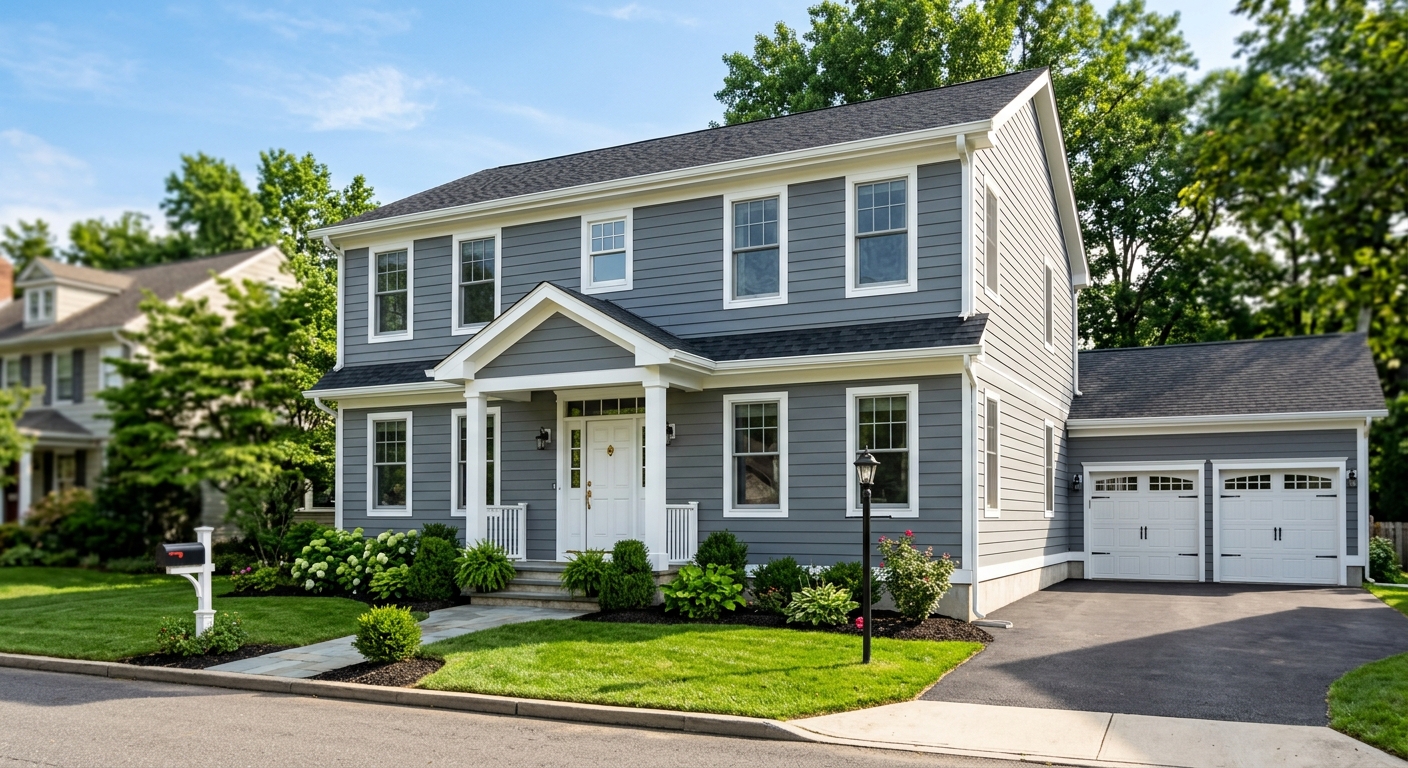
Painting options and costs in Goderich
Painting in Goderich often comes down to planning around our older housing stock and the shorter stretch of weather that’s truly paint-friendly. In the Stratford–Bruce Peninsula region, 73.7% of homes were built before 1981, so many repaint projects start with the unglamorous work: scraping loose coatings, patching small wood damage, sanding, caulking, and priming. In practice, that prep can also be where lead-safe procedures matter—especially when coatings are pre-1978—so reputable contractors either test or use appropriate dust-control methods rather than rushing into sanding.
Costs are also shaped by our continental seasonality and local scheduling demand. Exterior work in our region is typically limited to late spring through early fall; contractors need daytime conditions in the manufacturer-recommended range and surfaces that are dry enough to cure properly. That compressed window can tighten availability around areas like Victoria Harbour Road and the shoreline corridors, so bookings earlier in the season often bring the best value.
Interior painting is less weather-bound, but Goderich homes still bring variation: older plaster and textured finishes, ceiling height, and trim detail can add labour quickly. Because 65.1% of households in the area are owner-occupied, many homeowners prefer repainting and refreshing rooms rather than moving, which keeps interior demand steady and pricing more consistent across the year.
Below are realistic budget ranges to help you compare options and prepare for your site visit. Once we confirm surface condition and access, we can tighten the estimate.
| Service |
What's Included |
Typical Duration |
Price Range |
| Interior — whole home (walls, ceilings, trim) |
Prep, patching/filling, sanding where required, primer as needed, 2-coat system on walls and ceilings, spot prime stains, caulking minor gaps, paint coverage for interior trim (doors/large trim areas included; baseboards handled as part of trim) |
5–10 business days |
$1,800–$3,800 |
| Interior — per room (standard bedroom or living room) |
Protect floors and fixtures, patch and sand, prime as needed, 2-coat finish on walls, 2-coat ceiling where applicable, light trim touch-ups or full trim paint depending on scope |
1–3 business days |
$600–$1,600 |
| Exterior — full house (siding, trim, soffits) |
Surface inspection, scraping/sanding of peeling areas, caulking and minor repairs, priming bare spots, 2-coat exterior system, paint trim/soffits, labour for ladders/scaffolding as needed, basic site protection and clean-up |
3–7 days (weather-dependent) |
$3,500–$7,000 |
| Exterior — trim and accent colours only |
Clean, scrape loose coating, sand feather edges, prime where required, 2-coat system on selected trim areas and accents, masking/protection for siding |
2–5 days (weather-dependent) |
$1,500–$4,500 |
| Kitchen cabinet painting (doors, frames, spray finish) |
Degrease/clean, de-glossing where needed, fill/sand, prime (stain-blocking if required), spray-style topcoats for a smoother finish, hardware handling as agreed |
4–8 business days |
$1,200–$4,000 |
| Specialty / faux finish (accent wall, texture) |
Surface prep for effect longevity, base coat and undercoat for the finish, specialized application (rolling/trowel/sponge/texture), sealing/finish coat as specified |
1–4 business days |
$700–$3,500 |
Prices are estimates only and vary by project scope, site access and material selection.
What affects the price of painting in Goderich
In Goderich and across the Stratford–Bruce Peninsula region, it’s common to see quotes for the same-looking job land 30–50% apart. The difference usually isn’t the “paint colour”—it’s prep complexity, access, and how many coats and primers are actually required to make the finish last through Ontario’s humidity and freeze–thaw cycles. Even interior jobs can swing because older plaster, nicotine staining, or cabinets/trim detail demand more labour than a basic wall-and-ceiling refresh.
For exterior work, the seasonal driver is big. In our region, the practical window for exterior painting is typically late May to early October, when daytime temperatures are consistently high enough for proper application and curing. When the season tightens, demand concentrates and summer scheduling pressure increases labour rates. Coastal BC can sometimes run longer, but dampness and mildew risk change the product and timing strategy. In Ontario, we don’t have BC’s constant coastal moisture, yet freeze–thaw still punishes weak prep—especially around caulking lines and trim edges.
Older homes across Goderich (73.7% pre-1981) often require significant scraping and priming, and that prep can make up roughly half of total labour on repainting. For example, a full exterior refresh that lands near the lower end of the exterior band (about $1,500–$7,000) may be mostly stable siding with strong adhesion; the same house can move toward the top end if we find widespread flaking coatings, deteriorated caulk joints, or extensive priming. On the interior side, an easy bedroom repaint might sit near the $600–$1,600 range, while whole-home work with ceiling coverage and trim detail can quickly approach the upper interior band (up to $3,000).
Two concrete Goderich examples: houses along more exposed streets often show faster trim edge breakdown (more scraping and caulk renewal), and older ceilings or textured walls can require extra patching and sanding before the topcoat goes on.
| Price Factor |
Why It Matters |
Cost Impact |
| Surface prep — scraping, sanding, patching drywall or wood |
Prep determines adhesion and prevents peeling; older coatings and minor substrate damage require more time. |
Often the largest swing: ~20%–60% of labour on repaints |
| Number of coats — 2-coat system over primer vs. 1 coat over existing |
Coverage varies with substrate and colour change; cutting corners shortens lifespan. |
Can add ~10%–25% depending on coverage |
| Paint quality tier — contractor-grade vs. premium (Benjamin Moore, Sherwin) |
Better products typically level better, cover more consistently, and resist fading/mildew. |
Commonly ~5%–20% price difference |
| Ceilings and trim — adds significant time vs. walls-only |
Cut-in, masking, and fine finishing take longer; trim detail requires careful sanding and caulk. |
Often adds ~15%–40% |
| Exterior season window — short season raises summer rates |
Weather constraints compress scheduling; crews charge more when calendars are full. |
Can change quotes by ~10%–30% |
| Lead-safe precautions — required for pre-1978 homes with lead paint |
Proper dust control and disposal add time, materials, and process steps. |
Can add ~10%–25% on affected areas |
| Surface material — drywall vs. plaster vs. wood vs. stucco |
Different substrates need different primers and prep; plaster and wood often require more spot repairs. |
Varies widely: ~5%–40% |
| Height and access — multi-storey exterior requires scaffolding or lifts |
Safety equipment, setup, and careful masking increase labour and time. |
Often adds ~15%–35% |
Permits & regulations in Ontario
In Ontario, painting generally does not require a permit—meaning you typically don’t need approval to repaint your interior walls or exterior surfaces on a residential property. That said, when it comes to older coatings, health guidelines matter. For homes built before 1978, professionals commonly test for lead paint before sanding or scraping, or they use lead-safe work practices when lead is suspected. These practices include wet methods to reduce dust, HEPA-filtered vacuuming, proper containment and disposal, and clean-up verification. This is not legally mandated for homeowners in most day-to-day repainting, but it’s standard practice for professional contractors because the risk is real during sanding and removal.
What DOES require permits in the painting context is usually not “painting” itself, but related work such as structural changes, major renovations, or certain window/door alterations under municipal building rules. For a straightforward repaint, permits are typically not involved.
Before signing in Goderich, confirm your contractor carries liability insurance and WSIB (or equivalent workers’ compensation coverage). Then ask for a written contract that specifies the paint brand and sheen, number of coats, surface prep steps, and what’s excluded (for example, carpentry repairs beyond minor patching, or trim replacement). To verify: check their business credentials online, request certificates of insurance, and review proof of workers’ compensation coverage. If a job involves potential lead surfaces, ask whether lead testing or lead-safe procedures are included in the scope.
Interior vs exterior painting — getting the best result in Goderich
For a long-lasting finish in Goderich, the difference between a “fresh look” and a durable job is almost always preparation. For interiors, wall and ceiling prep (filling, sanding, and priming the right spots) matters more than the topcoat brand. Flat and eggshell sheens hide imperfections, but they can scuff more easily in high-traffic areas; satin or semi-gloss is often better for trim, doors, and areas that need more wipe-downs. Regardless of sheen, two coats applied over the correct primer—rather than one thick coat—generally outlasts short cuts because it builds uniform film thickness and consistent colour coverage.
For exteriors, Ontario’s humidity and freeze–thaw cycles make prep non-negotiable. Expect scraping of flaking areas, thorough cleaning, caulking of gaps before painting, and proper primer selection. On wood or fibre cement, using the wrong primer or skipping caulking can let moisture migrate behind the coating system, leading to early peeling. While BC trades often emphasize mildew-resistant products and constant moisture management, Ontario’s challenge is that temperatures swing—so you need a system designed for temperature-stable application and curing during the late spring to early fall window.
Cabinet painting is a strong budget alternative to replacement in Goderich: if your boxes are solid and the existing finish is in good shape, spray-style cabinet painting can refresh the kitchen without the demolition and downtime. On cost: moving from a whole-room repaint to cabinet refinishing is where labour intensifies. If a bedroom sits around the $600–$1,600 band, cabinets often land in the higher cabinet band (roughly $1,200–$4,000) because of degreasing, de-glossing, priming, controlled spray application, and longer handling/drying times.
For pre-1978 homes, lead-safe precautions remain important wherever sanding or scraping occurs, including around older trim and exterior details.
| Project Type |
Key Prep Step |
Recommended Coats |
Price Band |
| Interior — fresh drywall (new construction) |
Prime all bare drywall and sand minimal raised grain before topcoat |
1 primer coat + 2 finish coats |
$800–$2,200 |
| Interior — repaint (good condition, no repairs) |
Degloss/spot clean, light scuff-sand if needed, caulk minor gaps |
1 primer spot + 2 finish coats (or 2 finish coats if no priming needed) |
$600–$1,600 |
| Interior — repaint (patching and priming needed) |
Fill, sand flush, stain-block/prime patches to stop flashing |
1 primer coat + 2 finish coats (often includes spot priming throughout) |
$900–$2,400 |
| Exterior siding (wood or fibre cement) |
Scrape loose coating, clean, caulk, prime bare/suspect areas |
2 finish coats over appropriate primer |
$3,500–$7,000 |
| Exterior trim and accents only |
Feather-sand edges, spot prime, protect siding during masking |
2 finish coats with primer on bare/trim repairs |
$1,500–$4,500 |
| Kitchen cabinets (spray finish) |
Degrease thoroughly, de-gloss, prime with proper bonding/stain-blocking |
1 primer coat + 2 finish coats |
$1,200–$4,000 |
How to choose a painting contractor in Goderich
Choosing a painter in Goderich is easier when you verify three things up front: Ontario business standing (where applicable), liability insurance, and workers’ compensation coverage. Start by asking for a certificate of insurance showing liability coverage and the correct policy dates. Next, request proof of WSIB (or the appropriate workers’ compensation account where coverage is held). A contractor who can’t provide these documents promptly is a risk—especially for exterior work where ladder/scaffold time increases incident probability.
Then get 2–3 itemised written quotes. Avoid lump-sum-only numbers; you want a breakdown of labour and materials and a clear scope: what prep is included, how many coats are included, and which paint line/sheens are being used. Confirm whether paint disposal and site clean-up are included, and whether any permit pull is part of the scope (most residential repainting does not require one in Ontario, but related work can). Ask about lead-safe practices if your home predates 1978—at minimum, ask how they handle sanding/scraping dust and waste.
Warranty is also part of value. Get the workmanship warranty length in writing and ask whether manufacturer warranties apply to the coatings and whether they’re transferable if you sell. For payments, never pay more than about 10%–15% upfront; hold back the balance until the job is complete and touch-ups are finished. Finally, ask for a start date and a completion estimate in writing so you’re not stuck waiting through seasonal exterior delays.
- Ask for WSIB/coverage proof and liability certificate before signing.
- Require an itemised quote (labour, materials, primer/coat count, and prep scope).
- Confirm paint brand, colour code, and sheen (flat/eggshell/satin/semi-gloss).
- Make sure number of coats is stated (typically 2-coat systems with primer where needed).
- Clarify what’s included in prep (scraping/sanding/patching/caulking) and what’s excluded.
- Ask about disposal and clean-up (tarps, debris removal, and nail/surface checks).
- Get lead-safe approach details for pre-1978 areas.
- Request start date and completion timeline in writing.
- Confirm access needs (ladders vs scaffolding) and how that affects schedule and cost.
- Discuss how they protect floors, landscaping, and neighbouring surfaces.
- Ask about warranty length and what it covers (peeling, flaking, adhesion issues).
- Review the payment schedule; limit upfront and hold back for final walk-through.
Red flags in Goderich: a quote that won’t list prep steps or coat counts, promises of “one-coat coverage” over unknown surfaces, refusal to show proof of WSIB/coverage and liability insurance, vague warranties (or none in writing), and pressure to pay large deposits before work starts.
Frequently asked questions — painting in Goderich
When is the best time for exterior painting in Goderich?
The best time for exterior painting in Goderich is usually late May through early October, when daytime temperatures are warm enough for proper application and curing and when surfaces can dry thoroughly. Ontario’s humidity and our freeze–thaw cycle make early-season cold snaps risky—if coating sets poorly, you can get adhesion and peeling problems later. Because the exterior window in the Stratford–Bruce Peninsula region is relatively short, demand rises quickly, so booking in advance helps. If your siding is older (many Goderich homes are pre-1981), schedule around when scraping and caulking can be done without rain delays. Contractors also need time between coats for proper drying, so “good weather” days matter just as much as calendar dates.
How many coats of paint do I need?
Most quality exterior and interior systems in Goderich use a two-coat approach. For interiors, a typical repaint is often 2 finish coats, with primer applied spot-by-spot where stains, patches, or bare areas exist. For exteriors, plan for 2 finish coats over appropriate primer, because Ontario’s moisture cycling needs a continuous film for durability. If you’re repainting trim only, the same concept applies: prime bare or repaired areas, then apply 2 finish coats for uniform colour and protection. On pricing, this matters because a “cheap” 1-coat quote may look lower on paper but can land you closer to the top of the exterior band again later. For reference, exterior full-house projects are commonly estimated around the $3,500–$7,000 range depending on prep and repairs.
What paint is best for Goderich's climate?
For Goderich, you want coatings designed for temperature swings and moisture resistance. That means using an exterior acrylic system suited to Ontario conditions, with the right primer for the substrate (wood, fibre cement, or previously painted surfaces). The key isn’t just the paint name—it’s matching the primer and finish to the surface so adhesion holds through humidity and freeze–thaw. For older homes (and many built before 1981), primer selection and surface prep often determine longevity more than brand alone. Reputable contractors often choose premium contractor lines such as Sherwin or Benjamin Moore in the same way homeowners choose for interior durability—consistent coverage, better resistance to wear, and more reliable film build. Your quote should specify the product line and sheen, not just “exterior paint.”
How long does exterior paint last here?
In Goderich, exterior paint longevity depends heavily on prep and correct application timing. When surface scraping, cleaning, caulking, priming of bare spots, and two-coat application are done well, exterior coatings can last many years—often in the range homeowners expect for a proper repaint cycle. But peeling risk rises if adhesion is weak, caulking gaps are left unaddressed, or coatings are applied during marginal weather. Homes built before 1981 are common here, and older surfaces can have more stubborn failing coatings that need extra labour. Exterior timing also matters: our late spring to early fall weather window is the period when contractors can apply and cure coatings reliably. If your quote is near the lower end of the $1,500–$7,000 exterior spectrum, confirm exactly what prep and priming are included—those details are what extend service life.
Should I paint or replace my cabinets?
In many Goderich kitchens, painting cabinets is a smart alternative to replacement when the cabinet boxes are solid, the hardware holes and frames are stable, and the finish isn’t severely delaminated. Cabinet painting can refresh the look without the cost and disruption of demolition, and it’s often faster once the spraying and curing schedule is set. The trade-off is that it requires careful degreasing, de-glossing, priming, and multi-coat application to withstand daily use. If your cabinets are structurally damaged, warped, or the surfaces are extensively water-deteriorated, replacement may be more cost-effective long-term. For budgeting, cabinet painting commonly falls around the higher end of interior work—often roughly $1,200–$4,000—so a detailed quote should compare it to the realistic demolition and refacing costs. Also ask how they handle hardware and whether they replace or reuse it.
How do I prep walls before painting?
If you’re doing minor prep before a contractor arrives, the goal is cleanliness and damage control—don’t repaint over failing areas. In Goderich homes, start by removing wall dust, grease, or nicotine residue with a proper cleaner (especially kitchens) and letting surfaces dry fully. Patch holes or cracks only if you can sand smooth and stable; otherwise, have your painter handle repairs as part of the scope. Protect floors and furniture, and fix any loose trim or peeling paint so it isn’t disturbed later. For pre-1978 homes, avoid aggressive scraping if you suspect lead paint; instead, discuss lead-safe handling with your contractor and let them decide testing and dust-control steps. A well-prepped wall also helps determine whether you need primer; your quote should address patching, sanding, caulking, and primer where needed.