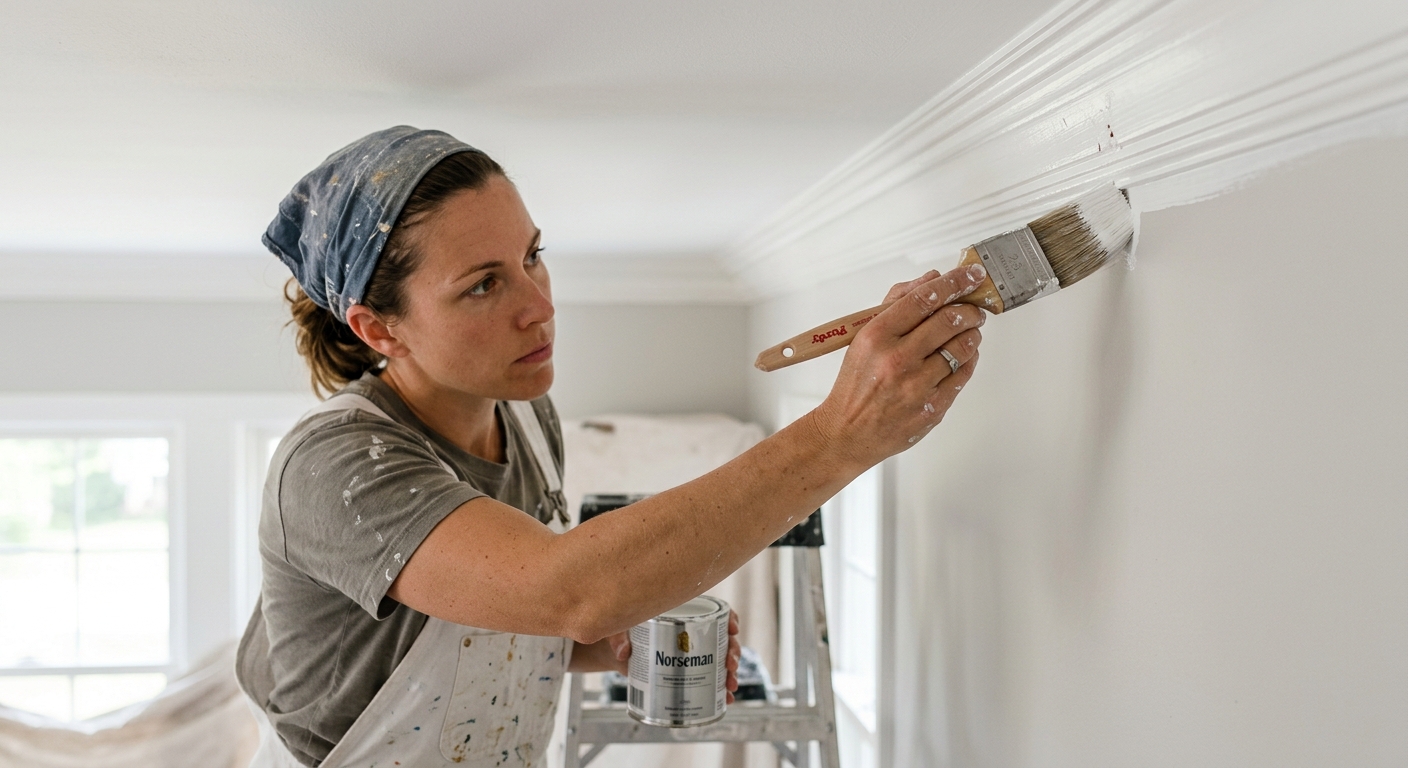
Painting options and costs in Westminster-Branson
In Westminster-Branson, the biggest cost drivers in painting are usually surface preparation and how the job fits Toronto’s short, weather-dependent window—especially for exteriors. Your local housing mix matters too: with a population of 26,274 (Statistics Canada, 2021 Census), this community has a meaningful share of older homes, and homes built before 1980 often need more scraping, sanding, caulking, and priming than newer construction. Many of these older properties (particularly around older trim, windows, and railings) can also trigger lead-safe work practices if lead paint is present, which increases prep time even when there’s no permit requirement.
In the Greater Toronto Area, exterior painting typically happens from late May through June and again from September to mid-October. Contractors work best when temperatures stay around 10°C or higher for 24–48 hours after application, because proper curing is critical for adhesion and durability. During June–August, demand concentrates into the few “ideal” weeks, which is why pricing often lands toward the top end of local bands (commonly 10–15% higher in peak summer). If you live near the lively strip around the downtown core and nearby retail corridors, you’ll often see longer lead times for painters as both residential touch-ups and turnover painting ramp up together.
Below is a practical comparison of common project types so you can benchmark quotes before you get into the details of prep scope and product selection.
| Service |
What's Included |
Typical Duration |
Price Range |
| Interior — whole home (walls, ceilings, trim) |
Move-prep, patching & sanding, prime as needed, two-coat finish on walls/ceilings; caulk and paint trim/doors; basic cleanup |
5–12 days |
$2,000–$6,000 |
| Interior — per room (standard bedroom or living room) |
Protect floors/furniture, patch & sand (minor repairs), prime where required, two-coat walls; paint ceiling typically included |
1–3 days |
$400–$1,200 |
| Exterior — full house (siding, trim, soffits) |
Power wash, scrape/sand loose paint, caulk gaps, prime bare/repairs, two topcoats; colour change included if finishes allow |
7–18 days (weather-dependent) |
$3,500–$8,000 |
| Exterior — trim and accent colours only |
Surface prep on trim areas, caulk and prime spot repairs, two topcoats on trim/rails/accents only |
3–8 days |
$1,500–$3,800 |
| Kitchen cabinet painting (doors, frames, spray finish) |
Degrease, de-gloss/sand, prime, spray topcoat or sprayed acrylic finish; hardware handling and touch-ups; reinstall |
5–12 days (including cure time) |
$1,800–$4,000 |
| Specialty / faux finish (accent wall, texture) |
Surface prep, base coat, custom application (limewash/texture/faux techniques as specified), protective clear as needed |
2–6 days |
$600–$4,500 |
Prices are estimates only and vary by project scope, site access and material selection.
What affects the price of painting in Westminster-Branson
Two quotes for what looks like the “same” painting job can vary by 30–50% across Toronto and Ontario because preparation is not standardized. One contractor may include full scraping to sound substrate and primer on repairs; another may only scuff-sand and spot-prime. In Westminster-Branson, that difference is amplified by exterior timing and by older home prep needs. Older homes throughout the region often require more labour—scraping, caulking, patching drywall or wood, and priming—which can make up 50–70% of total labour on repaints.
Exterior costs are also tightly tied to the climate-dependent season in the GTA. In this region, exterior painting generally runs late May to early October when temperatures are above about 10°C and rising during application, with moderate humidity for curing. By contrast, coastal BC has a longer season but persistent dampness and mildew pressure, so products and application strategy skew differently (not necessarily the same schedule). Here in the GTA, the limited “ideal” weeks concentrate demand; June–August often adds 10–15% to the exterior range, pushing full exterior repaints closer to the top end of the typical $1,500–$8,000 band.
Concrete examples I see frequently in Westminster-Branson: (1) a pre-1980 home with peeling paint on window trim can turn a mid-range exterior estimate into a higher one due to extra scraping and caulking, commonly shifting an exterior project from the lower side of the $3,500–$8,000 band toward the upper portion; (2) replacing a few boards or repairing stucco cracks before painting can lower rework later, but it adds upfront prep time that some “cheap” bids omit.
For interiors, the pricing sensitivity is similar but the trigger is different—labour intensity (ceilings, trim density, stairwells and masking an occupied home) rather than a strict weather window. That’s why interior projects can land anywhere from $400 per room refreshes up to multi-thousand whole-home work.
| Price Factor |
Why It Matters |
Cost Impact |
| Surface prep — scraping, sanding, patching drywall or wood |
Determines adhesion and how long paint stays flat and intact on your home |
+10% to +40% on repaints |
| Number of coats — 2-coat system over primer vs. 1 coat over existing |
Coverage, sheen uniformity and colour depth depend on correct layering |
+5% to +25% |
| Paint quality tier — contractor-grade vs. premium (Benjamin Moore, Sherwin) |
Premium coatings usually cover better and resist scuffing/UV longer |
+3% to +20% |
| Ceilings and trim — adds significant time vs. walls-only |
More cutting-in, more masking and more finish passes |
+10% to +35% |
| Exterior season window — short season raises summer rates |
Limited “ideal” weeks increase scheduling pressure and crew demand |
+10% to +15% in peak months |
| Lead-safe precautions — required for pre-1978 homes with lead paint |
Extra controls for sanding/scraping and proper cleanup/disposal |
+5% to +30% depending on condition |
| Surface material — drywall vs. plaster vs. wood vs. stucco |
Each substrate needs different primers and prep tolerances |
+5% to +25% |
| Height and access — multi-storey exterior requires scaffolding or lifts |
Safer access takes more labour and often rental equipment |
+10% to +40% |
Permits & regulations in Ontario
In Ontario, painting itself typically does not require a permit. Most interior repainting, drywall patching and trim work can proceed without municipal approvals. Where care is required is around health and safety: for homes built before 1978, health guidelines recommend testing for lead paint before sanding or scraping, and using lead-safe work practices if lead is present. Professionals typically use methods like wet scraping, HEPA-filtered vacuuming, controlled containment, and proper disposal—this is not commonly a homeowner “permit” issue, but it is standard practice to reduce exposure.
There are also contract and risk checks you should treat as non-negotiable. Confirm the contractor carries liability insurance and has WSIB (workers’ compensation) coverage if they’re operating with employees. For your written contract, insist it clearly lists paint brand/line where possible, sheen targets, number of coats, and exactly what surface prep is included (for example: scrape to sound substrate, prime bare spots, caulk gaps, whether a power wash is included, and how repairs are handled).
What usually DOES require a permit: work tied to structural or electrical changes, permits for major exterior changes, or regulated abatement projects. What typically does NOT: standard painting, patch-and-prime repairs, and repainting with the same general materials.
To verify in Westminster-Branson, start by checking the contractor’s licensing details through the appropriate Ontario registry listings (if applicable for their trade category), then request: (1) a certificate of insurance showing liability limits, (2) WSIB clearance or proof of coverage, and (3) a dated written contract with the scope. If they can’t provide documents promptly, treat it as a red flag.
Interior vs exterior painting — getting the best result in Westminster-Branson
The difference between a long-lasting paint job and one that fails early in Westminster-Branson usually comes down to prep discipline, correct primer selection, and realistic drying/curing. For interiors, we focus first on surface prep: filling and sanding nail holes, repairing cracks, priming stained areas (water marks, tannin bleed on some woods), and then using a consistent application technique. Sheen choice matters for wear and cleanability—flat for low-traffic ceilings, eggshell or satin for most living spaces, and semi-gloss for trims and higher-touch areas. In practice, two coats over a proper primer consistently outlast “one heavy coat,” particularly when walls have patchwork or colour changes.
For exteriors in the Toronto climate, surface prep is the foundation. Scrape loose paint to sound edges, sand feathered transitions, and caulk before painting to prevent water ingress behind trim and siding. Primer selection depends on what you’re painting: oil-based primers can be appropriate for specific stains or adhesion needs, while latex/acrylic systems are often used for compatibility with substrate. Timing also matters: Ontario freeze-thaw and rain can disrupt curing if coats are applied when conditions aren’t right, and the GTA season concentrates contractor availability. That’s why we plan exterior work for windows where temperatures stay at/above roughly 10°C for the required hours after application.
Cabinet painting is a great budget alternative to replacement, but it’s labour-heavy: degreasing, correct sanding/deglossing, proper priming, and spray finish with cure time. For pre-1978 homes, lead-safe precautions should be part of your exterior and trim scope when sanding or scraping is required.
Dollar example: if you’re comparing a “trim-only” exterior refresh versus a full repaint, trim-and-accent work might fit the $1,500–$3,800 range, while a full house repaint often lands in the $3,500–$8,000 band. If the siding is already failing or blistering, paying for partial work usually leads to faster overall rework—so spending the extra labour on the full prep/prime cycle is often justified.
| Project Type |
Key Prep Step |
Recommended Coats |
Price Band |
| Interior — fresh drywall (new construction) |
Prime bare drywall and patch seams for uniform absorbency |
2 coats over primer |
$1,200–$4,500 |
| Interior — repaint (good condition, no repairs) |
Light sanding/degloss and clean; spot-prime only if needed |
2 coats |
$600–$2,800 |
| Interior — repaint (patching and priming needed) |
Patch, sand flush, spot prime repairs to prevent flashing |
2 coats over primer spots (full primer as specified) |
$900–$4,500 |
| Exterior siding (wood or fibre cement) |
Scrape to sound paint, caulk joints, prime bare areas |
2 topcoats over primer |
$3,500–$8,000 |
| Exterior trim and accents only |
Feather sanding and caulking before painting trim/rails |
2 topcoats over primer/spot primer |
$1,500–$3,800 |
| Kitchen cabinets (spray finish) |
Degrease, sand/degloss, prime for adhesion and durability |
2 spray coats (plus primer) |
$1,800–$4,000 |
How to choose a painting contractor in Westminster-Branson
Start with proof of coverage and credentials. In Ontario, you should ask for (1) liability insurance—request the certificate of insurance and confirm it’s active for the job dates; (2) WSIB/WCB coverage—ask for WSIB clearance or proof of coverage for their workers; and (3) a signed written contract with scope details. For homeowners in Westminster-Branson, the practical test is whether they provide documents quickly and clearly, without emails back-and-forth. A contractor who can’t supply this information is taking unnecessary risk with your property and with their crew.
Then get 2–3 itemised written quotes. Don’t settle for a single lump-sum line—ask for labour and materials breakdown, including preparation, number of coats, paint brand/line (or at least tier), and whether power washing is included for exterior work. Review exclusions: disposal, protection/covering, repairs, and whether lead-safe controls are included if your home is pre-1978 and requires scraping.
Warranty matters too: ask about the workmanship warranty length and whether the paint manufacturer warranty applies only when applied per instructions. Confirm if the warranty is transferable to a future homeowner.
Payment schedule: never pay more than 10–15% upfront. Hold back a portion until the job is complete, cleaned up, and you’ve done a walkthrough and sign-off. Also ask for a start date and a completion estimate in writing, acknowledging Ontario’s rain and temperature swings—especially for exterior work planned between late May–June and September–mid October.
- Request certificate of liability insurance and verify coverage dates.
- Ask for WSIB/WCB proof (clearance or documentation) before work begins.
- Ensure quotes list number of coats and where primer is applied.
- Confirm surface prep scope: scrape/sand to sound substrate, patching level, and caulking responsibilities.
- Clarify whether power washing is included for exterior projects.
- Ask who supplies drop cloths, tape, masking, and surface protection.
- Check for cleanup and disposal line items (scrapings, paint waste).
- Confirm colour and sheen product line (eggshell/satin/semigloss) and where each is used.
- Get a written lead-safe plan if your home is pre-1978 and scraping is needed.
- Review warranty terms in writing (workmanship and what it excludes).
- Keep deposits at or under 10–15%; holdback until punch list completion.
- Make sure schedule and start/completion dates are on the contract.
In Westminster-Branson, common red flags include: (1) quotes that omit surface prep details (no mention of scraping/priming/caulking), (2) refusal to provide insurance and WSIB/WCB proof, (3) “one coat” promises or heavy-cost cuts on prep, (4) no written scope or product names, and (5) demanding large deposits upfront. If any of these show up, it’s safer to pause than to “hope it works out.”
Frequently asked questions — painting in Westminster-Branson
What is the best primer for older Westminster-Branson homes?
For older Westminster-Branson homes, the “best” primer depends on what you’re covering and how the existing surface behaves. If trim or siding has chalking, adhesion issues, or areas where paint is peeling, a primer designed for bonding and sealing is crucial—especially after scraping back to sound edges. For patched drywall, a bonding/premier interior primer helps prevent flashing and colour bleed, so you get a uniform finish. If you have pre-1978 elements and any scraping is involved, we treat the prep as lead-safe work if testing indicates lead paint is present. That added containment and cleanup time can raise labour even though permits usually aren’t required for painting. In terms of cost, primer and prep are often the difference between a mid-range interior refresh (around $400–$1,200 per room) and a more durable job where repairs actually stay looking clean.
Should I paint or wallpaper my Westminster-Branson home?
For most Westminster-Branson homeowners, painting is the simpler, more reliable choice—especially if you have minor wall imperfections, textured plaster variation, or older patchwork. Exterior humidity swings affect exteriors more than interiors, but indoors you still want a finish that tolerates cleaning around doors, hallways, and kitchens. Wallpaper can look great, but seams, corners, and moisture-prone areas (near kitchens and bathrooms) can create long-term maintenance. Also, wallpaper removal later can be labour-intensive and may uncover additional prep needs, which is where costs balloon. If you want a dramatic look without committing to full wallpaper coverage, an accent wall approach using a specialty finish can be a middle path. Budget-wise, most homeowners compare a per-room interior repaint in the $400–$1,200 range to specialty treatments that typically start higher (often $600+ depending on technique and prep).
How do I fix peeling exterior paint in Westminster-Branson?
Peeling exterior paint usually means one or more layers have lost adhesion due to moisture intrusion, improper prep, or freeze-thaw stress. In Westminster-Branson (Toronto-area climate), the correct repair sequence is: scrape all loose paint back to sound edges, sand feathered transitions, and remove any chalky residue. Then caulk gaps and joints to reduce water entry before painting. After that, prime bare and repaired areas with a primer compatible with your substrate and existing coating system. Finally, apply two finish coats with appropriate curing time based on forecast temperatures (aim for periods with temperatures staying around 10°C or higher for 24–48 hours). A key point: if the peeling is widespread on siding or trim, “trim-only” work can’t stop failure under adjacent failing areas—so you may need to plan a larger scope. Pricing often reflects this: a full exterior repaint commonly sits in the $3,500–$8,000 band, while trim-accent-only work is typically $1,500–$3,800.
What colours add the most resale value in Westminster-Branson?
In Westminster-Branson and across the Toronto market, resale-friendly colour palettes tend to be timeless and easy for buyers to visualize with their own furnishings. Popular choices include warm whites, soft greige, and muted light greys for siding/large wall areas, with deeper navy/charcoal accents on trim or doors. For interiors, eggshell or satin in neutral tones usually performs well because it photographs cleanly and feels brighter across different lighting. The “resale value” effect often comes more from consistent sheen and a clean, even finish than from chasing a trend. If you’re changing exterior colour significantly, budget for extra prep and sometimes multiple coats to ensure uniform coverage. If your project lands near the lower or mid exterior band, staying with a close-to-existing colour family can reduce re-coating surprises; exterior repaints typically run $3,500–$8,000 depending on prep and scope.
How much does it cost to paint a house in Westminster-Branson?
The cost to paint a house in Westminster-Branson depends mainly on whether you’re painting the interior, exterior, or both, plus prep needs. For interiors, whole-home work commonly ranges from $2,000 to $6,000, while per-room projects often land around $400–$1,200 for a standard bedroom or living room refresh. For exteriors, a full house typically falls in the $3,500–$8,000 range because exterior work is weather- and prep-intensive. Trim and accent-only exterior repainting is usually $1,500–$3,800. If your home is pre-1980, expect more prep (scraping, sanding, caulking, priming) which can push quotes upward. On top of that, Ontario’s short ideal season can increase contractor scheduling rates in peak summer. For the most accurate estimate, ask for an itemised quote that separates prep labour, coatings (number of coats), and material tier.
How much does interior painting cost per room in Westminster-Branson?
In Westminster-Branson, interior painting per room typically depends on room size, ceiling height, trim coverage, and how much patching and priming is required. For a standard bedroom or living room in good condition with minimal repairs, many homeowners see pricing in the $400–$1,200 range. If the walls need more patching, sanding, stain blocking, or primer due to repairs or colour changes, the same room can move toward the upper side of that range. Sheen selection also affects the outcome (eggshell/satin for walls, semi-gloss for trim), and ceilings add time for cutting-in and even coverage. If your home has lots of small trims and openings (or you’re repainting around stairwells and doors), labour increases even when the “room count” stays the same.