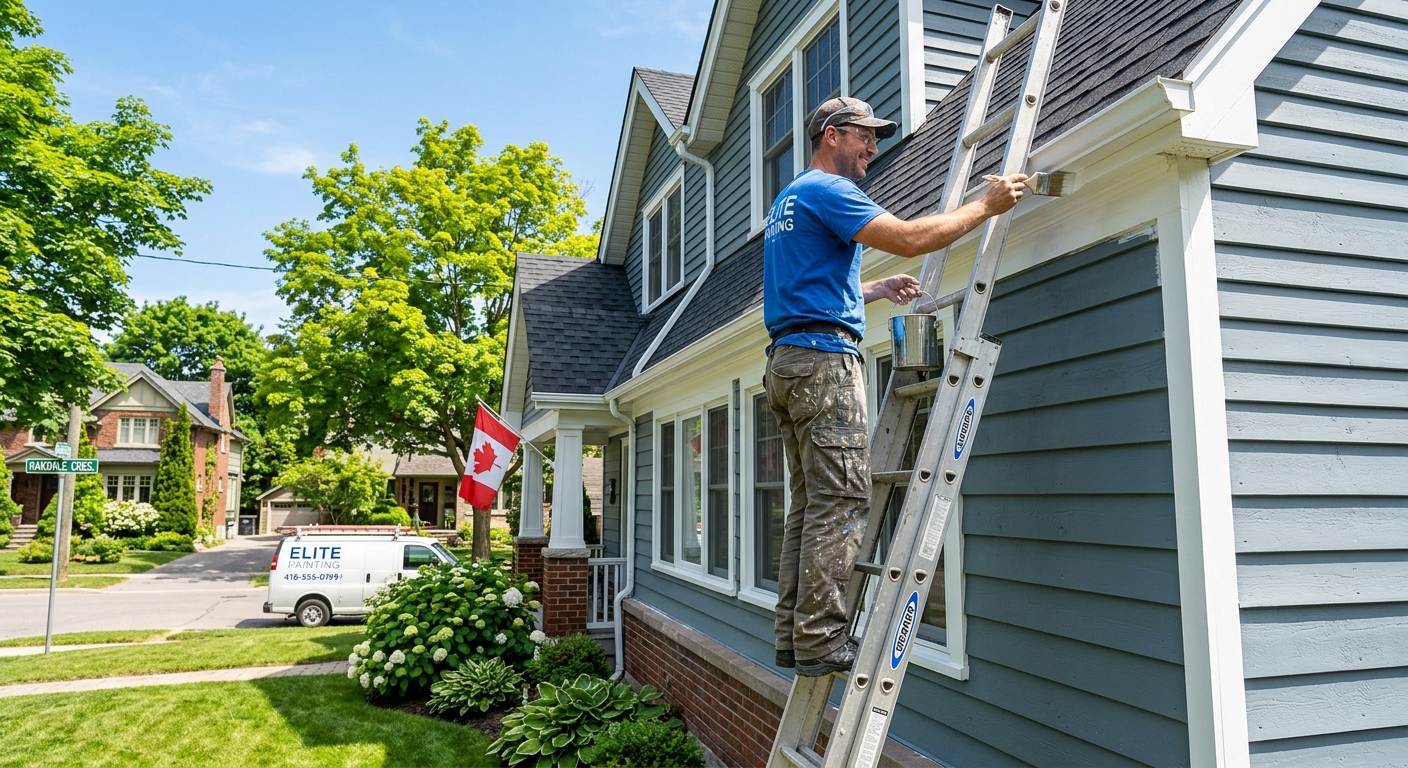
Painting options and costs in Eganville
Eganville homeowners have a lot of options, but the real cost differences usually come down to prep, access and timing—not just the paint label. With a population of 1,149 (Statistics Canada, 2021 Census), the local trades market can feel “small,” so scheduling—especially for exterior work—often concentrates into the best-weather weeks. You’ll also find many older houses in the broader Ontario housing stock, and in repainting scenarios that typically means more scraping, sanding, caulking and priming to build adhesion over existing paint. For pre-1978 trim, landing in the correct lead-safe work flow (testing when needed and using proper containment methods) can add labour and oversight.
In the Greater Toronto economic context, exterior painting is tightly climate-dependent. Contractors generally work from late May through June and again September into mid-October, when temperatures stay above about 10°C for proper application and curing. In June–August, short ideal windows and high demand can push exterior pricing roughly 10–15% higher than shoulder-season. Interior projects are far less weather-sensitive, so labour is the main driver—ceiling height, stairwells, masking, and your finish level (basic refresh versus premium colour changes) can swing the estimate.
In Eganville, areas that commonly see repeat demand include the downtown core and the surrounding residential streets where older, multi-layer siding and trim are common. With that in mind, here’s a practical comparison of typical scopes and pricing so you can line up apples-to-apples before contractors visit.
| Service |
What's Included |
Typical Duration |
Price Range |
| Interior — whole home (walls, ceilings, trim) |
Surface prep, patching/sanding, caulking, prime as needed, 2-coat finish on walls/ceilings, spot-prime stain/surface issues, clean-up and dust control |
5–10 days |
$2,000 – $6,000 |
| Interior — per room (standard bedroom or living room) |
Prep and protection, patching/sanding, caulking, prime as needed, 2-coat finish on walls (and ceiling if included), light trim work |
1–3 days |
$400 – $1,500 |
| Exterior — full house (siding, trim, soffits) |
Wash/degrease, scrape/sand to sound substrate, caulking, spot-prime, prime bare wood, 2-coat exterior system, detail work on soffits/fascia, protection and cleanup |
5–14 days |
$3,000 – $8,000 |
| Exterior — trim and accent colours only |
Surface prep on trim areas, prime as needed, 2-coat finish for trim/accents, careful masking of siding, basic caulking |
2–6 days |
$1,500 – $4,500 |
| Kitchen cabinet painting (doors, frames, spray finish) |
Degrease, sanding/abrading, repair as needed, bonding primer, spray-applied finish for doors/drawers, hardware handling (where agreed), curing and re-install |
5–12 days |
$1,200 – $4,000 |
| Specialty / faux finish (accent wall, texture) |
Layout and prep, base coat, specialty application (roller/brush/spatula or texture), protective topcoat where required |
1–5 days |
$300 – $5,000 |
Prices are estimates only and vary by project scope, site access and material selection.
What affects the price of painting in Eganville
In Toronto’s broader market context (including Eganville projects handled from the region), it’s common to see the “same” paint job come in 30–50% apart. That spread usually isn’t because one contractor is careless—it’s because the scope definition changes. One quote may include thorough surface preparation and primer where needed; another may assume the existing coating is already sound. Exterior work adds more variability because the season is short and labour is booked tightly when conditions are right.
For exteriors, contractors generally need a stable window late May through early October—temperatures above about 10°C for application and for curing over the next 24–48 hours. In Ontario, rain and humidity spikes can force rescheduling, which is why June–August demand often pushes exterior pricing up by about 10–15%. Coastal BC can often paint later in the year, but persistent dampness and mildew risk shift product choices toward higher-end mildew-resistant systems and more careful timing. In Eganville/central Ontario, frost risk and rain are the bigger problems, so the key cost lever is still prep: scraping, caulking, priming bare spots, and building a coating system that can flex with temperature swings.
Older housing stock across Ontario is another major driver. When you’re repainting a pre-1980-type home, preparation can become 50–70% of labour on the exterior. That’s why a “trim only” job can look cheaper on paper, but a hidden backlog—like cracking caulk lines or peeling edges near eaves—can push you toward the wider exterior band, similar to a full house project in total effort. As a rule, exterior repainting typically lands in the $3,000 – $8,000 range for full-scope work, while trim and accents alone often sit in the $1,500 – $4,500 range unless the substrate is failing behind the scenes.
| Price Factor |
Why It Matters |
Cost Impact |
| Surface prep — scraping, sanding, patching drywall or wood |
Prep determines adhesion and durability; damaged/peeling areas must be stabilized before coatings |
Often the largest variable; can add 20–60% to labour |
| Number of coats — 2-coat system over primer vs. 1 coat over existing |
Coverage and uniform sheen depend on proper layering and priming of bare spots |
Can shift total price by 10–25% |
| Paint quality tier — contractor-grade vs. premium (Benjamin Moore, Sherwin) |
Higher-end paints often hide better and reduce number of passes (not always, but often) |
Usually 5–20% depending on scope and substrate |
| Ceilings and trim — adds significant time vs. walls-only |
Cut-ins, masking, and detailed edges take longer and require steady workmanship |
Commonly adds 15–40% to interior projects |
| Exterior season window — short season raises summer rates |
Contractors compress schedules when ideal weather is limited and demand is high |
Typically 10–15% higher in peak summer weeks |
| Lead-safe precautions — required for pre-1978 homes with lead paint |
Testing/containment and HEPA cleanup raise labour and compliance steps |
Can add 10–30% on trim/areas requiring precautions |
| Surface material — drywall vs. plaster vs. wood vs. stucco |
Porosity and absorption require different primers and prep approaches |
May add 10–25% based on compatibility and repairs |
| Height and access — multi-storey exterior requires scaffolding or lifts |
Set-up time and safety procedures increase direct labour and overhead |
Can add 15–40% for difficult access |
Permits & regulations in Ontario
For most painting work in Ontario, you typically do not need a permit. Painting itself isn’t usually a permit-triggering activity the way major structural changes or certain specialized work can be. Where regulations and guidelines do come into play is safety and compliance—especially for older homes. For properties built before 1978, health guidelines recommend testing for lead paint before sanding or scraping, and if lead is present, using lead-safe work practices. In practice, that means wet methods to reduce dust, HEPA vacuuming, proper containment, and correct disposal of debris. It’s not “required for homeowners” in the same way it is for professionals, but it is standard for professional contractors because the risk isn’t theoretical.
When you hire a painter for Eganville or anywhere in Ontario, insist on documentation: a current liability insurance certificate (so you’re protected if there’s accidental damage), and proof of workers’ compensation coverage (WSIB coverage in Ontario) for the crew performing the work. Always get a written contract that states the paint brand/line (if agreed), sheen/colour, number of coats, and the exact surface prep responsibilities included.
Step-by-step homeowner checks: (1) Ask for the contractor’s insurance certificate and confirm it’s current and lists the correct business name; (2) Request WSIB clearance or proof of coverage; (3) Verify the contractor’s business contact details and trade references; (4) Ensure the written scope spells out preparation, protection, and disposal. If they can’t provide documents quickly and clearly, that’s a warning sign.
Interior vs exterior painting — getting the best result in Eganville
A long-lasting paint job in Eganville is less about chasing the “best” brand and more about matching prep and coatings to the material and the local weather cycle. Interiors mostly fail early when prep is skipped: loose paint left in place, drywall dust not wiped, holes not patched and feather-sanded, or stains not sealed before the finish coats. In interior rooms, sheen choice matters too. Flat paint can look great, but it’s less cleanable in kitchens and hallways; eggshell or satin typically holds up better to everyday scuffs. And regardless of brand, two proper coats over correct primer and repairs almost always outlast a “single heavy coat” approach.
Exteriors fail when water gets under the coating system—often through poor surface preparation, missed caulking joints, or primer mismatch. Before painting, Ontario exteriors benefit from thorough cleaning, scraping to sound edges, sanding, and then caulking before the final coats so the sealant can bond properly. Primer type matters: wood and bare substrates generally need a primer designed for adhesion and tannin/stain blocking where relevant, while existing coatings need a primer that matches the system and substrate. Unlike coastal BC where mildew pressure is the headline issue, in Eganville the big enemy is freeze–thaw, rain and humidity spikes during the short application season. That means your contractor should plan around temperature and curing time, not just “paint when it stops raining.”
If you’re deciding between cabinet painting and replacement, cabinet painting is often a smart value. For example, cabinet painting commonly lands around $1,200 – $4,000, while replacement can quickly jump far higher once demolition and new hardware are included—so long as the boxes are sound and the style doesn’t require structural changes. For pre-1978 homes, lead-safe precautions on trim and railings should be part of the plan, not an afterthought.
| Project Type |
Key Prep Step |
Recommended Coats |
Price Band |
| Interior — fresh drywall (new construction) |
Prime to seal absorption and ensure uniform finish |
2 coats finish (over primer) |
$1,200 – $3,500 |
| Interior — repaint (good condition, no repairs) |
Wash/scuff and spot-prime any marks or stains |
2 coats finish (spot-prime as needed) |
$400 – $2,500 |
| Interior — repaint (patching and priming needed) |
Patch, sand, caulk, and prime repairs for consistent sheen |
2 coats finish (with primer on repairs) |
$700 – $4,000 |
| Exterior siding (wood or fibre cement) |
Scrape to sound edges, caulk, and prime bare/inconsistent areas |
Primer + 2 coats exterior finish system |
$3,000 – $8,000 |
| Exterior trim and accents only |
Protect siding, sand feather edges, and prime trim profiles |
Prime where needed + 2 coats finish |
$1,500 – $4,500 |
| Kitchen cabinets (spray finish) |
Degrease, proper sanding/abrading and bonding primer for adhesion |
Primer + 2 finish coats (sprayed) |
$1,200 – $4,000 |
How to choose a painting contractor in Eganville
Choosing the right painter in Eganville is about verification and clarity. First, confirm Ontario coverage and documentation. Ask for: (1) liability insurance certificate—make sure it’s current and matches the legal business name; (2) WSIB coverage proof for workers—request the WSIB clearance/coverage evidence; and (3) a written scope that clearly states prep, materials and clean-up. If they can’t provide insurance and WSIB paperwork before quoting, don’t proceed.
Next, get 2–3 itemised written quotes rather than lump sums. Itemised quotes should break out labour and materials (for example, prep labour, primer, caulking, paint volumes, masking/protection, and any access costs). Read exclusions carefully: is removal of peeling paint included? Is disposal included? Are gutters, hardware and glass masked/protected? Is the contractor supplying the paint and primer, and will they match the sheen properly on doors and trim?
Warranty matters too. Look for a workmanship warranty (how long they stand behind surface adhesion and finish problems), plus the manufacturer/product warranty details. Ask whether the manufacturer warranty transfers if you sell the home. Payment should be staged: never pay more than 10–15% upfront, and request a holdback until the job is complete and cleaned. Finally, ask for a written start date and completion estimate so you can plan around the short exterior season.
- Provide current liability insurance certificate and confirm effective dates.
- Provide WSIB coverage proof for workers involved in your project.
- Use an itemised quote with labour + materials listed separately.
- Confirm exactly what prep is included (scrape/sand/caulk/prime) and what isn’t.
- Ask how they handle bad substrate (peeling edges, moisture damage, soft drywall).
- Confirm paint brand/line and sheen (flat/eggshell/satin/semi-gloss) for each surface.
- Clarify coat count and whether primer is included for bare/repairs/stains.
- Ask about disposal and whether dust and debris are contained and removed properly.
- Verify lead-safe approach for pre-1978 trim/areas if relevant (testing and containment methods where required).
- Request a written workmanship warranty and understand what defects are covered.
- Set a payment schedule with no more than 10–15% upfront; hold back until completion.
- Get start date, weather contingency plan, and completion estimate in writing.
Red flags in Eganville include: vague scopes (“we’ll prep as needed” without specifics), refusing to provide proof of liability and WSIB coverage, lump-sum pricing with no material/coat details, skipping written timelines, and pressuring you for large upfront deposits.
Frequently asked questions — painting in Eganville
How much does interior painting cost per room in Eganville?
In Eganville, most homeowners find interior room pricing lines up with the $400 – $1,500 band depending on size, wall condition, and whether ceilings/trim are included. A basic repaint of a standard bedroom in good condition (minimal repairs, careful masking, and two coats) will typically land on the lower half. If there’s patching and priming needed, nicotine/oil staining, or heavy trim work around doors and windows, the price usually climbs toward the upper range. In practice, labour for prep is what drives differences—sanding, patching, caulking and spot-priming. If you’re painting multiple rooms, ask for a whole-floor or whole-home quote because scheduling and protection costs are often reduced. (Statistics Canada, 2021 Census)
When is the best time for exterior painting in Eganville?
The best window in Ontario is typically late May through June, and again from September into mid-October, when temperatures stay above about 10°C for proper application and curing over the next day or two. In the Toronto-area market context, June–August demand can push prices 10–15% higher because ideal “ready-to-paint” weeks are limited. Contractors also need to avoid rain or high humidity spikes right after application, since adhesion and drying time matter for long-term durability. If your goal is to control cost, shoulder-season scheduling (late September to early October) can sometimes be more competitive—provided the contractor can still complete between weather events. For older houses, lead-safe prep (for pre-1978 trim) should be planned in the same period so the job doesn’t stall midstream.
How many coats of paint do I need?
For most interior repainting, the standard result is two coats of finish paint over appropriate primer. If your contractor must prime repairs, stain-prone areas, or bare substrate, primer counts as its own step even if it’s not “a coat of colour.” For exteriors, the coating system is typically primer plus two coats of exterior finish where substrate conditions require it; if the existing coating is in sound shape, the exact primer amount may be reduced, but you still generally end up with a two-coat finish for even coverage and durability. One thick coat can look acceptable at first, but it’s more likely to wear unevenly and fail sooner with Ontario freeze–thaw and humidity cycles. For cabinet painting, you should expect primer plus two finish coats sprayed for a smooth, hard surface.
What paint is best for Eganville's climate?
For Eganville and the wider Ontario climate, the “best” choice is the one matched to the substrate and the timing—because temperature, rain, and humidity spikes drive failure. For exterior siding and trim, homeowners typically get the best longevity from a quality exterior paint formulated for adhesion and weather resistance in freeze–thaw conditions. Your contractor should also use primers appropriate to the surface (wood, fibre cement, previously painted areas) and include caulking before painting so water doesn’t find openings. Unlike coastal BC, you generally don’t need to build the entire system around persistent mildew, but you do need a coating that tolerates Ontario’s moisture swings and curing needs in a short season. For interiors, choose sheen by room use: satin or eggshell in hallways and kitchens tends to resist scuffs better than flat.
How long does exterior paint last here?
With proper prep and a correctly applied exterior system, many homeowners in the Eganville/Ontario region plan for roughly 5–10 years of performance, though longevity depends heavily on substrate condition and how well caulking and priming were handled. Homes with more peeling paint, failing caulk joints, or untreated moisture issues can experience earlier failure even when the topcoat is good. If your exterior is repainted as a full-scope project (often priced within the $3,000 – $8,000 band), you usually have more thorough surface stabilization—scraping/sanding, spot priming, and re-caulking—which helps the coating system hold up through freeze–thaw cycles. For trim-and-accent only repainting (often $1,500 – $4,500), you may see shorter overall lifespan if the underlying siding coating or edge details remain compromised.
Should I paint or replace my cabinets?
In most Eganville kitchen refresh situations, painting cabinets is the better value if the cabinet boxes are solid and the doors can be prepared properly. Cabinet painting is commonly priced around $1,200 – $4,000 depending on scope, condition, and the finish approach (spray-applied results typically look smoother). Replacement often costs far more once you factor in demolition, new materials, installation and matching hardware. Painting is also faster in many cases, but it isn’t the right choice if the boxes are warped, severely damaged, or you’re changing layout/structure. A good painter will assess door warping, hinge alignment, and any previous finish issues—then seal and prime for adhesion. For pre-1978 homes, they should address lead-safe precautions on relevant trim elements during prep and cleanup.