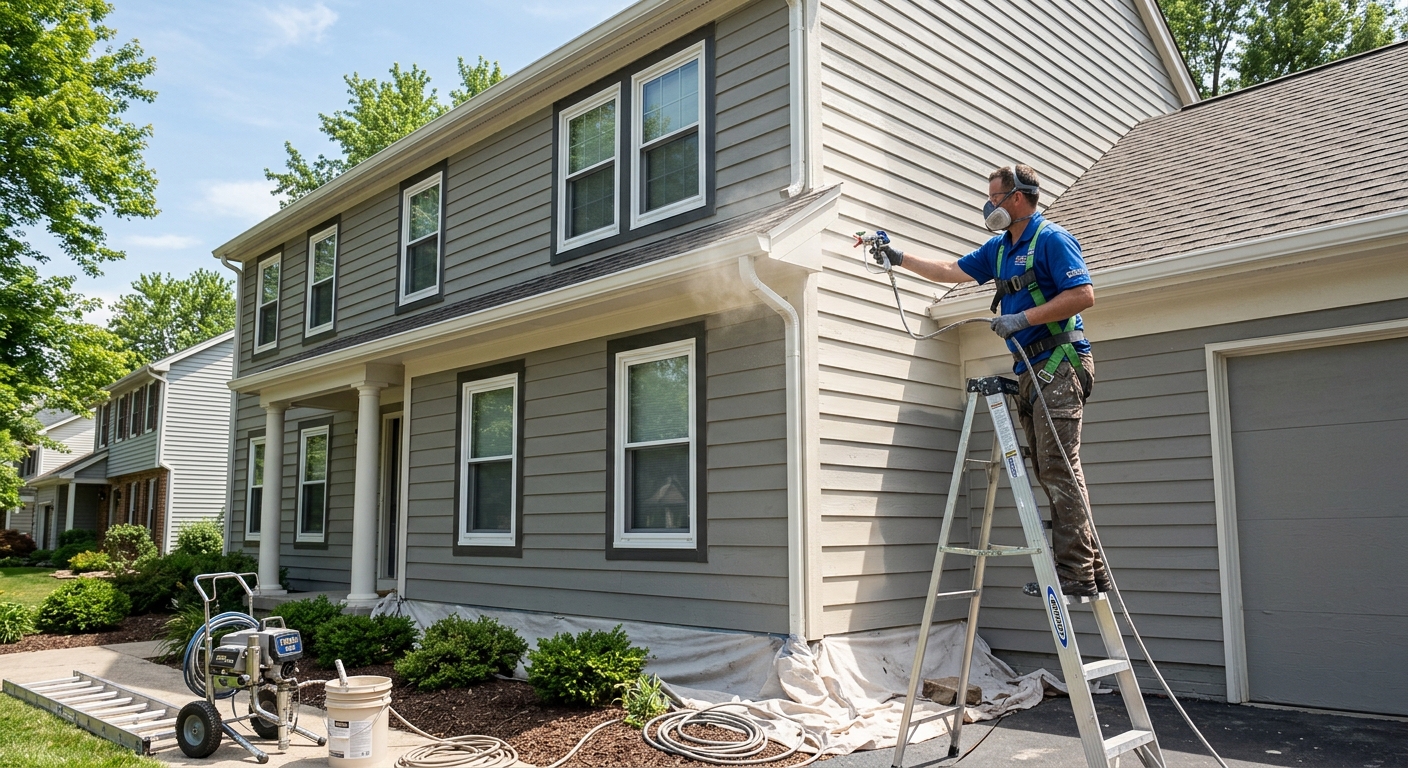
Painting options and costs in Tillsonburg
Tillsonburg homeowners typically have a few clear paths when it comes to painting: a straightforward refresh, a fuller repaint with trim and doors, or a more complex exterior job that includes heavy surface prep. In Tillsonburg’s London-area market, approximately 49.3% of homes were built before 1981 (Statistics Canada, 2021 Census), which often means more patching, caulking, and priming than people expect—especially when the existing finish has weathered for decades. That higher prep workload can also change how contractors handle older substrates, and professionals will often confirm whether lead-safe practices are needed before disturbing paint on pre-1978 surfaces.
On top of the housing age factor, Ontario’s continental weather shapes timing and labour availability. Exterior work in the London economic region is usually concentrated in a short May–September window when temperatures and humidity allow coatings to cure to manufacturer specs. In practice, that tight season can raise scheduling pressure, and it’s why exterior pricing in Tillsonburg commonly tracks the higher end of the band compared with off-season interior work. If you’re seeing demand spikes, it’s often because neighbourhoods with more mid-century stock—like parts of Simcoe Street and the older residential pocket near Broadway and Thamesford Road—tend to need periodic exterior refreshes.
Below is a practical comparison of what each type of job usually includes, how long it typically takes, and where pricing usually lands for Tillsonburg. Use it as a starting point when you’re reviewing itemised quotes and scope notes.
| Service |
What's Included |
Typical Duration |
Price Range |
| Interior — whole home (walls, ceilings, trim) |
Ceiling and wall prep, patching/sanding, caulking where needed, prime as required, paint walls/ceilings, light trim/door touch-ups or full trim paint depending on scope, protection of floors and fixtures, clean-up |
5–10 working days |
$1,900–$6,800 |
| Interior — per room (standard bedroom or living room) |
Protect floors and fixtures, prep and fill minor damage, sand/spot prime, paint walls and ceiling, basic trim/door paint where noted |
1–3 working days |
$1,500–$3,200 |
| Exterior — full house (siding, trim, soffits) |
Pressure wash (as needed), scrape/sand loose paint, repair caulking and damaged wood, prime bare surfaces, paint siding and exterior trim/soffits, site protection and final clean-up |
3–7 working days |
$3,800–$8,500 |
| Exterior — trim and accent colours only |
Prep and prime trim areas, scrape/sand flaking edges, caulk and feather surfaces, paint accents (doors, shutters, railings/trim only as specified) |
2–4 working days |
$2,500–$5,800 |
| Kitchen cabinet painting (doors, frames, spray finish) |
Degrease, sanding/scuffing, stain/colour correction if required, bonding primer, spray finish (labour-focused prep and masking), hardware handling as specified, final re-install/clean-up |
4–10 working days (including cure time) |
$2,200–$6,000 |
| Specialty / faux finish (accent wall, texture) |
Surface evaluation and repair, base coat(s), finish application (texture/faux/multi-layer), protective topcoat where needed |
2–6 working days |
$800–$5,000 |
Prices are estimates only and vary by project scope, site access and material selection.
What affects the price of painting in Tillsonburg
In Tillsonburg and across the London region, two quotes for the “same” paint job can differ by 30–50% because the biggest cost drivers are usually prep complexity and access—not the brush-and-roller time. Contractors can price very differently depending on how much sanding and scraping they anticipate, whether multiple primers are required, the number of coats specified over stain/patches, and whether trim, doors, or built-ins are included. Paint brand tiers also matter, but in most repaint scenarios the prep portion is where the budget either gets protected—or gets cut.
For exterior projects, Ontario’s season is tightly bound to conditions in the London economic region. In Ontario and Alberta, exterior painting generally needs late May to early October weather when temperatures are above about 10°C and rising during application. Coastal BC may allow more calendar time, but persistent humidity and rainfall often lead to stricter timing and increased mildew-resistant product selection. In Tillsonburg, the shorter exterior season concentrates demand, so summer scheduling pressure can nudge labour rates up.
Older homes also change the maths. With many properties built before 1981 (Statistics Canada, 2021 Census), contractors commonly spend more time on scraping, caulking, priming bare wood, and correcting failing caulk lines before the topcoat goes on. In real terms, prep can be 50–70% of labour on a repaint, which is why exterior repaint pricing can land around the mid-to-high end of the $2,500–$9,000 band. For example, a trim-only refresh might stay closer to the $2,500–$5,800 range, while a full exterior repaint that reveals damaged siding edges and needs bonding primer can push toward $7,000–$8,500.
Local conditions can also raise cost—like shaded north-facing elevations where moisture lingers, or properties with multi-storey elevation where scaffolding/lifts are required. Conversely, newer siding, stable stucco/wood substrates, and clear access roads can help keep your quote in the lower band.
| Price Factor |
Why It Matters |
Cost Impact |
| Surface prep — scraping, sanding, patching drywall or wood |
Peeling paint, chalky surfaces, and cracked caulk need removal and repair for adhesion |
+15% to +45% depending on condition |
| Number of coats — 2-coat system over primer vs. 1 coat over existing |
Proper hiding typically requires a full system; cutting coats risks faster wear |
+5% to +25% |
| Paint quality tier — contractor-grade vs. premium (Benjamin Moore, Sherwin) |
Better coverage, stain resistance, and colour stability can reduce rework and improve longevity |
+0% to +20% (often offset by fewer touch-ups) |
| Ceilings and trim — adds significant time vs. walls-only |
Trim edges, door frames, crown moulding, and ceilings demand more masking and detailed work |
+10% to +35% |
| Exterior season window — short season raises summer rates |
Weather-dependent curing reduces flexibility; contractors bid to protect scheduling |
+10% to +30% during peak |
| Lead-safe precautions — required for pre-1978 homes with lead paint |
Safe containment, HEPA cleanup, and proper disposal increase labour and materials |
+5% to +20% if lead-safe steps are triggered |
| Surface material — drywall vs. plaster vs. wood vs. stucco |
Different substrates need different primers and prep methods for bond and crack resistance |
+10% to +40% |
| Height and access — multi-storey exterior requires scaffolding or lifts |
Time goes into setup, safety controls, and protecting landscaping |
+15% to +60% |
Permits & regulations in Ontario
In Ontario, painting itself generally does not require a permit for typical interior or exterior work. Homeowners can hire painters without requesting a permit, but there are important compliance steps to discuss—especially when homes were built before 1978. Health guidelines recommend testing for lead paint before sanding or scraping when you suspect older coatings. If lead is present, standard lead-safe contractor practices include wet methods to minimize dust, HEPA vacuuming, careful containment (for example plastic sheeting and controlled access), and proper disposal of debris.
What does require permitting? In most cases for a painting project, the paint scope alone does not. However, related work can trigger permitting—such as significant structural repairs, electrical work near lighting/fixtures, or changing exterior openings. Ask your contractor to list any permit requirements that may fall outside the painting scope.
Before signing, confirm your contractor has the right coverage. In Ontario, ask for a current certificate of insurance for liability coverage and proof of WSIB (workers’ compensation). Step-by-step, a homeowner in Tillsonburg should: (1) request the contractor’s WSIB clearance/policy proof and a liability certificate; (2) verify the certificate’s insured party name matches the contractor you’re hiring; (3) look for licence/business details in the appropriate provincial online listings; and (4) keep all documents attached to your written contract. Also insist on a written contract that clearly specifies paint brand and sheen, number of coats, surface prep responsibilities, and whether disposal and power washing are included.
Interior vs exterior painting — getting the best result in Tillsonburg
Getting a long-lasting paint job in Tillsonburg is less about “buying the fanciest paint” and more about avoiding the common failure points that show up after one or two winters. For interiors, the top determinant is surface preparation: filling, sanding, and priming over stains, patch repairs, and uneven drywall. If walls weren’t properly prepped, topcoat failure often shows up as peeling at patch edges, flashing under bright light, or persistent scuffs. Sheen matters too—choose flat for low-touch ceilings, eggshell for many living areas where you want washability without a high-gloss shine, satin or semi-gloss for kitchens/bathrooms depending on ventilation and cleaning needs, and semi-gloss for trim and doors to stand up to frequent wipe-downs. In most cases, two coats over a correct primer system outlast one thick coat, because coverage and drying/curing uniformity are improved.
For exteriors, Ontario climate cycles—freeze-thaw, driving rain, and winter salt exposure—make prep non-negotiable. Caulking before painting is essential to stop water ingress behind trim and to prevent new cracks from telegraphing through. Primer selection also matters: bonding primer for repairs or bare wood, and substrate-appropriate primer so the topcoat can adhere. Even though mildew resistance is more famous in BC, shaded Tillsonburg elevations can still hold moisture, so mildew-resistant products are often the correct choice when conditions stay damp.
Cabinet painting is a cost-conscious alternative to replacement, but prep quality still governs results. For example, a well-prepped, spray-finished kitchen can land near the mid band (often $2,200–$6,000), and that cost can be justified versus replacement when you want to keep the layout. However, if your cabinets need significant box repairs or the finish is failing due to moisture damage, the prep workload can climb—so the quote should clearly separate sanding/priming labour and any carpentry repairs.
For pre-1978 homes, lead-safe precautions should be part of the plan if scraping/sanding is involved, and that can add time—yet it protects your household and speeds the job safely by preventing midstream scope changes.
| Project Type |
Key Prep Step |
Recommended Coats |
Price Band |
| Interior — fresh drywall (new construction) |
Prime new drywall to seal and prevent flashing |
Primer + 2 topcoats |
$1,500–$4,200 |
| Interior — repaint (good condition, no repairs) |
Clean, lightly scuff-sand, spot prime if needed |
2 topcoats (primer only where required) |
$1,500–$3,200 |
| Interior — repaint (patching and priming needed) |
Feather patch edges and prime repairs/stains thoroughly |
1 primer on patches + 2 topcoats |
$2,100–$4,900 |
| Exterior siding (wood or fibre cement) |
Scrape loose material, repair caulk lines, prime bare spots |
Primer as required + 2 topcoats |
$3,800–$8,500 |
| Exterior trim and accents only |
Spot scrape, sand edges, caulk, prime repaired areas |
Primer where needed + 2 topcoats |
$2,500–$5,800 |
| Kitchen cabinets (spray finish) |
Degrease and bond-prime for adhesion |
Bonding primer + 2 finish coats |
$2,200–$6,000 |
How to choose a painting contractor in Tillsonburg
Start by verifying coverage and eligibility before you compare prices. In Ontario, you can ask for proof of WSIB (workers’ compensation) and a current certificate of liability insurance—then check the policy is active and correctly lists the contracting company. For licensing, look up the contractor/business details through the appropriate provincial online registry sources (some trades are registered differently than others), and ensure the business name matches what’s on the invoice and insurance documents.
Next, get 2–3 itemised written quotes that separate labour and materials so you can compare apples-to-apples. A fair quote should spell out paint brand and sheen, the number of coats, and what prep steps are included (for example caulking, sanding, scraping, pressure washing, priming bare spots, and disposal). Make sure it states whether a permit pull is included—painting usually does not require one, but related repairs sometimes do—and whether surface protection and clean-up are part of the scope.
Warranty is another key differentiator: ask for the workmanship warranty length, whether it covers peeling/blistering tied to surface prep, and what product/manufacturer warranty applies to paint only. Confirm if the warranty is transferable to the next owner if you sell. Payment should be structured responsibly: never pay more than about 10–15% upfront, and hold back a portion until the job is complete and inspected.
Finally, lock the timeline in writing with a proposed start date and completion estimate, and ask how weather delays are handled—particularly for exterior work in the May–September curing window around Tillsonburg.
- Verify WSIB coverage proof (current status) before work begins.
- Request liability insurance certificate and confirm the insured contractor name matches your contract.
- Ask for an itemised quote: labour vs materials vs equipment/safety (scaffolding/lifts if needed).
- Confirm the exact paint brand/line and sheen (flat/eggshell/satin/semi-gloss) for each area.
- Make sure the scope lists prep: scraping, sanding, caulking, priming, and repair responsibilities.
- Check whether pressure washing is included for exteriors (and under what conditions).
- Confirm number of coats per surface and whether colour change requires extra primer.
- Ask who handles disposal of paint chips, masking materials, and debris.
- Get details on surface protection (floors, landscaping, fixtures) and how it’s removed.
- Request a written warranty for workmanship, including duration and what it covers.
- Review payment schedule: limit upfront deposit and set a holdback until completion.
- Ensure you receive a written start date, expected duration, and a plan for weather delays.
Concrete red flags I see around Tillsonburg include: quotes that lump everything into a single number without prep/coats details, contractors who won’t provide WSIB and liability paperwork, “we don’t do caulking or priming” statements for exteriors, deposits larger than about 10–15% without a signed contract, and vague timelines that don’t address temperature/curing windows for exterior work.
Frequently asked questions — painting in Tillsonburg
What's the difference between paint quality tiers?
In Tillsonburg, paint quality tiers mainly affect coverage, stain resistance, how smoothly it applies, and how consistently it dries over repairs and primer. Premium lines from major brands (commonly Benjamin Moore or Sherwin options) often have better hiding power, which can reduce the chance you’ll need additional coats after colour change or when patching old walls. That’s one reason exterior jobs can vary within the $2,500–$9,000 band: when prep is solid, a better topcoat can improve durability against moisture and sun-driven fading. Contractor-grade paints can be fine when budgets are tight, but you’ll want the quote to specify the coating system (primer + number of coats) rather than relying on “higher brand” claims alone. (Statistics Canada, 2021 Census)
How do I compare painting quotes?
To compare quotes in Tillsonburg, insist on itemised scope details instead of only the final total. Check that each quote lists surface prep steps (scraping/sanding/patching), caulking responsibilities, priming requirements, and the number of coats by surface. Confirm whether labour includes protection and clean-up, and whether materials (paint, primer, caulk, sanding supplies) are included at stated quantities. For pricing, interior whole-home projects often land somewhere in the $1,500–$7,000 range depending on trim and repair scope, while exteriors typically fall in the $2,500–$9,000 range. If one quote is much lower, ask what they’re excluding—often it’s priming, disposal, or the prep needed on older pre-1981 homes. (Statistics Canada, 2021 Census)
What paint sheen should I use in different rooms?
Sheen choice is a practical trade-off between appearance and cleanability in Ontario homes. In general, flat or matte is best for ceilings because it hides minor imperfections and reduces glare. For walls, eggshell is commonly used in living rooms and bedrooms because it offers a soft look but still wipes better than flat. Kitchens and bathrooms often benefit from satin or a washable eggshell/satin finish due to grease and moisture exposure—especially if your ventilation isn’t ideal. Trim and doors usually look best and stay cleaner with semi-gloss because they’re easier to wipe. Your contractor should also confirm the sheen plan aligns with how the product is spec’d over primer—two coats over the right primer is usually more durable than one heavy coat.
Can I paint my house exterior in spring or fall in Tillsonburg?
You can paint in spring or fall in Tillsonburg only if conditions meet the coating manufacturer’s application and curing specs. Even though exterior work is often concentrated in the late May to early October window in the London economic region, early spring or late fall can still work on sheltered days if temperatures are adequately above about 10°C during application and the surface isn’t damp. Also consider dew and short cure times near the shoulder seasons. If you’re painting older siding, prep delays can be costly—scraping, caulking, and priming all have their own temperature and moisture requirements. In short: yes, but rely on weather windows and product instructions, and build buffer days into the schedule.
How do I choose a painting contractor in Tillsonburg?
Choose a contractor by verifying coverage and matching scope details, not just by comparing totals. Ask for proof of WSIB and a current liability insurance certificate, and confirm the insured party name matches your contract. Then request 2–3 itemised written quotes showing labour and materials, including the number of coats and the prep work they’ll do (scraping/sanding/caulking/priming). A reputable painter should also explain how they handle older homes common in the area—about 49.3% built before 1981 (Statistics Canada, 2021 Census)—and whether lead-safe practices may be needed if pre-1978 coatings are disturbed. Finally, confirm the workmanship warranty, payment schedule (keep upfront around 10–15%), and get a written start date and completion estimate.
How many coats does an exterior repaint need in Tillsonburg?
Most exterior repaints in Tillsonburg require a full coating system: typically primer on bare or repaired areas and two topcoats for consistent hiding and durability. If the existing finish is sound and the colour match is close, some contractors may adjust the approach, but skipping the second topcoat usually increases the risk of early wear along edges, around caulking lines, and on sun-exposed elevations. The exact number depends on substrate condition, how much bare material was created during scraping, and whether you’re changing colour significantly. Because exterior work needs the May–September curing window in the London region, contractors often prefer to follow the manufacturer’s spec to avoid adhesion and film-formation issues that show up after winter freeze-thaw. Budget-wise, exterior projects commonly sit within the $2,500–$9,000 range depending on prep and access.