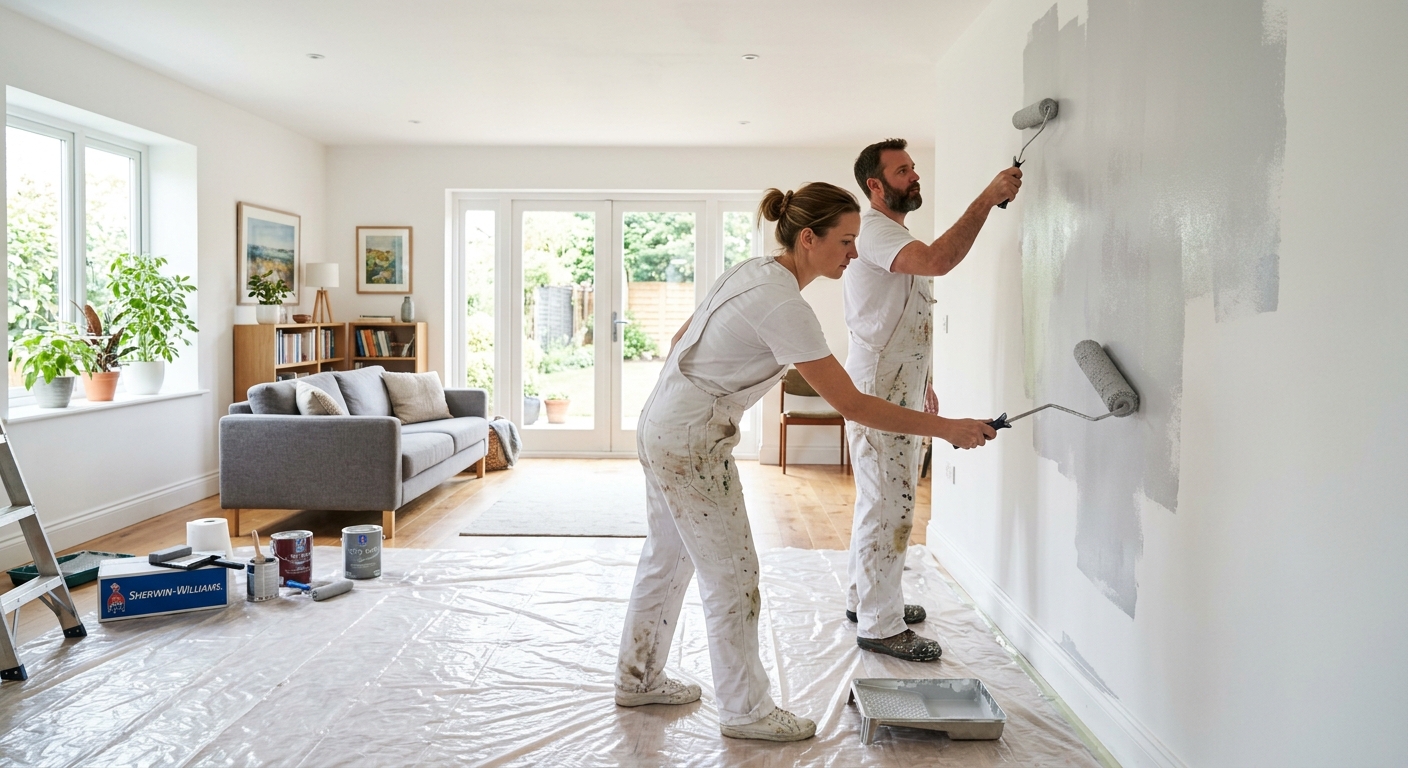
Painting options and costs in Pemberton Heights
Pemberton Heights homeowners often ask for “the same paint job” they saw down the street, but the realities of our local housing stock make costs diverge quickly. With a population of about 2,090 (Statistics Canada, 2021 Census), the trade community here is smaller than in larger centres, so scheduling and crew availability can affect timing and pricing. Many homes in the Lower Mainland–Southwest sit in the mid-century to late-1990s range, which commonly means more prep on repaint—scraping failing coatings, patching settlement cracks, and using stain-blocking primers for tannins and nicotine. On pre-1978 homes, lead-paint–safe practices may be required for professional work, adding containment, HEPA cleanup and disposal time.
Climate also shapes the budget in Pemberton Heights. Our coastal BC weather is defined by rain and humidity rather than deep freezes, so exterior crews must plan around dry windows and slower drying times. That pushes contractors to use mildew-resistant, high-adhesion systems on siding and trim, and to re-mobilize between weather windows when needed. Interiors, by contrast, are easier to keep consistent year-round, so labour can be shifted indoors through fall and winter—often smoothing price pressure.
Demand tends to be especially high around the Eldorado Park / Mount Currie Road area, where turnover and renovation activity can bring both interior updates and curb-appeal refreshes at the same time. Once you know your scope, the best way to compare estimates is to line up what’s included, then match your project to a realistic price band.
| Service |
What's Included |
Typical Duration |
Price Range |
| Interior — whole home (walls, ceilings, trim) |
Prep (patching/sanding), caulking, primer where needed, 2-coat finish for walls/ceilings, paint protection (floors/fixtures), clean-up |
5–14 days |
$2,000–$8,000 |
| Interior — per room (standard bedroom or living room) |
Prep, spot-prime, 2-coat walls/ceiling as applicable, basic trim painting, paint protection |
1–3 days |
$300–$1,800 |
| Exterior — full house (siding, trim, soffits) |
Power-wash/clean, scrape/patch where needed, caulking, primer system, 2-coat exterior paint, detail work on trim/soffits, weather-window scheduling |
2–6 weeks (calendar time) |
$3,500–$15,000 |
| Exterior — trim and accent colours only |
Masking/protection, spot prep, prime bare spots, 2-coat trim/accent colours |
3–10 days |
$1,200–$5,500 |
| Kitchen cabinet painting (doors, frames, spray finish) |
Removal/masking as feasible, degrease/sand, bonding primer, spray/roll finish, hardware handling (as arranged), re-install & touch-ups |
5–12 days |
$2,000–$8,000 |
| Specialty / faux finish (accent wall, texture) |
Surface preparation, base coat, specialty technique (texture/faux), clear protection where needed, clean-up |
2–7 days |
$500–$12,000 |
Prices are estimates only and vary by project scope, site access and material selection.
What affects the price of painting in Pemberton Heights
In the Lower Mainland–Southwest, the same “3-bedroom repaint” can land 30–50% apart across BC because the biggest cost variables aren’t the topcoat—they’re the prep and the risk management. Contractors plan differently based on access, surface condition, and whether special precautions are needed for older coatings. In repainting jobs, surface prep typically consumes the majority of labour; on many homes, that means scraping failing areas, caulking, sanding edges smooth, and priming problem stains or repaired drywall. In practice, that prep can represent 50–70% of labour on a repaint.
Exterior pricing is tightly tied to our coastal schedule. While Ontario and Alberta often run exterior work roughly late May to early October, Pemberton Heights benefits from a longer BC window, yet rain and humidity still govern when paint can be applied and when it will dry well enough to cure. Shorter “good weather” stretches concentrate demand and can push summer rates up. That’s why a full exterior can sit anywhere in a broad band such as $3,500–$15,000, depending on how much scraping, patching, and priming is required.
Two local examples show how conditions raise cost. First, older siding and trim often have chalking or peeling at edges—so an exterior job may require additional scraping and bonding primer before the finish coat. Second, houses with more height and complicated fascia/soffits can require scaffolding or lifts; that adds rigging time and impacts the overall schedule. If your surface is already in good condition and the scope is trim-only, pricing can be closer to $1,200–$5,500. Homes that need extensive prep generally land toward the higher end of both interior and exterior ranges due to time, disposal, and material consumption.
| Price Factor |
Why It Matters |
Cost Impact |
| Surface prep — scraping, sanding, patching drywall or wood |
Prep determines adhesion and hides future failures |
High; often 50–70% of labour on repaints |
| Number of coats — 2-coat system over primer vs. 1 coat over existing |
Wrong coat counts lead to flashing and quick wear |
Medium to high; can shift total by 10–30% |
| Paint quality tier — contractor-grade vs. premium (Benjamin Moore, Sherwin) |
Coverage, durability and stain blocking vary by tier |
Low to medium; usually changes material cost more than labour |
| Ceilings and trim — adds significant time vs. walls-only |
Detail work and masking take longer, especially with crown and casing |
Medium; frequently the difference between “per room” and “whole home” |
| Exterior season window — short season raises summer rates |
Weather windows affect drying/curing and crew availability |
Medium; scheduling pressure can increase overhead |
| Lead-safe precautions — required for pre-1978 homes with lead paint |
Containment, HEPA cleanup and disposal add time and materials |
High on affected areas; can add several days |
| Surface material — drywall vs. plaster vs. wood vs. stucco |
Each substrate needs different prep and primer bonding |
Medium; material-specific labour and primer costs |
| Height and access — multi-storey exterior requires scaffolding or lifts |
Safety setup and protected work zones add time |
High; can materially change the exterior budget |
Permits & regulations in British Columbia
In British Columbia, painting typically does not require a permit. For homes built before 1978, health guidelines recommend testing for lead paint before sanding, scraping, or grinding, and using lead-safe work practices if lead is present. In professional crews, that usually means wet methods to reduce dust, HEPA-filtered vacuuming during cleanup, careful containment to prevent dust spread, and appropriate disposal of materials. This isn’t typically mandated for homeowners, but it is considered standard practice for contractors because it reduces risk and improves jobsite cleanliness.
What often does not require permits: interior wall/ceiling repainting, repainting existing siding (without structural changes), and trimming painting on a residence where you’re not altering the building envelope. What may require additional approvals in special cases: if you’re planning work that affects electrical systems, plumbing, or structural elements (beyond painting), that’s separate from painting itself.
For verification in Pemberton Heights, homeowners should do three checks. First, confirm the contractor’s licensing status using the appropriate provincial registry (and ensure the business name matches what’s on your contract). Second, request a certificate of liability insurance showing active coverage for the contractor and ask for copies directly from the insurer or broker. Third, verify workers’ compensation coverage (WCB/WSIB-equivalent coverage in the province) for the people who will be on site. Finally, insist on a written contract that spells out paint brand and sheen, number of coats, and surface prep scope (including caulking, priming, and disposal expectations).
Interior vs exterior painting — getting the best result in Pemberton Heights
The difference between a long-lasting paint job and a premature failure in Pemberton Heights is almost always prep quality, not the colour choice. For interiors, filling cracks, sanding high spots, caulking gaps, and priming problem areas (stains, patched drywall, tannins, or bare repairs) are what keep paint from peeling or flashing. Sheen matters by room: flat or matte works for many ceiling and low-traffic wall areas; eggshell/satin are usually better for living spaces because they resist scuffs while still looking smooth. Importantly, two coats over a proper primer nearly always outlast one thick coat, especially on repairs.
For exteriors, British Columbia demands extra respect for the surface before paint touches it. Start with cleaning and proper drying, scrape or remove failing coatings, and caulk correctly before painting so water cannot creep behind trim joints. Primer choice is also crucial: wood and bare spots require bonding primers, while other substrates may need specific systems to prevent bleed-through and improve adhesion. Because our Lower Mainland–Southwest climate is humidity- and mildew-sensitive, exterior coatings should be mildew-resistant and matched to the expected drying conditions.
Cabinet painting can be a smart budget alternative to replacement—often landing in the $2,000–$8,000 band—if doors and frames are properly degreased, sanded, primed, and sprayed for a smooth finish. For older pre-1978 homes, lead-safe precautions can also add time to interior work when scraping or sanding is required.
As a dollar example, homeowners sometimes choose whole-home interior painting around $2,000–$8,000 to standardize sheen and trim quality across the house; trying to “touch up” only the worst rooms can cost nearly as much if the walls require matching prep and primer because colour and texture reveal differences in bright natural light common in coastal BC.
| Project Type |
Key Prep Step |
Recommended Coats |
Price Band |
| Interior — fresh drywall (new construction) |
Prime all drywall; tape/skim then sand smooth |
2 coats finish over primer |
$300–$8,000 |
| Interior — repaint (good condition, no repairs) |
Clean, scuff-sand, spot-prime as needed |
2 coats |
$300–$3,500 |
| Interior — repaint (patching and priming needed) |
Sand feathered edges; stain-block primer/patch primer |
2 coats (often primer + 2 finish where required) |
$800–$6,500 |
| Exterior siding (wood or fibre cement) |
Scrape failing areas; caulk; use proper exterior primer |
2 coats exterior over primer |
$3,500–$15,000 |
| Exterior trim and accents only |
Masking + prime bare spots to match substrate |
2 coats |
$1,200–$5,500 |
| Kitchen cabinets (spray finish) |
Degrease and sand; bonding primer prior to finish |
2–3 finish coats depending on colour/coverage |
$2,000–$8,000 |
How to choose a painting contractor in Pemberton Heights
Choosing the right painter in Pemberton Heights starts with proof, not promises. First, confirm British Columbia licensing status using the appropriate provincial registry, and make sure the business you hire matches the name on your contract. Second, request a certificate of liability insurance (active date range) and verify it covers painting work at your address; a professional contractor should provide it without hesitation. Third, verify workers’ compensation coverage for the people who will work on your home—ask for evidence and ensure it includes the workers scheduled for your job.
Next, get 2–3 itemised written quotes. You want line items for labour and materials, including primer type, caulking scope, number of coats, surface prep, and clean-up/disposal. Avoid lump sums that don’t say what’s actually covered. Read exclusions carefully: is painting around trim fully included, is masking included, are scaffolding/lift costs included for second-storey exteriors, and is disposal of scraping debris included? Also check whether permit pulls are involved (typically not for basic painting) and whether any lead-safe work is included on pre-1978 surfaces.
Warranty and schedule matter. Ask for a workmanship warranty length (and what it covers), plus manufacturer/product warranty details. Confirm whether the warranty is transferable if you sell the home. For payment, never pay more than 10–15% upfront; hold back a portion until the job is complete and touch-ups are done. Get your start date and completion estimate in writing, especially for exterior work where weather windows can shift timelines.
- Ask for itemised labour + materials (primer, paint brand, sheen, caulk type).
- Confirm how they handle surface prep on failing paint (what gets scraped vs. spot-coated).
- Verify insurance certificate validity and that it names the contracting business.
- Check workers’ compensation coverage before work begins.
- Request a written scope: coats, prep steps, and which areas are included/excluded.
- Ask who supplies ladders/scaffolding and whether lift costs are included.
- Confirm disposal responsibilities for debris and old paint materials.
- Clarify prep for cabinets: degreasing, sanding, primer system, and finish process.
- Make sure colours are matched with manufacturer codes and sample confirmation.
- Get a written timeline tied to weather windows for exterior projects.
- Confirm warranty terms for workmanship and how claims are handled.
- Do not accept large deposits; keep 85–90% for completion/verified finish.
Red flags I see in Pemberton Heights include quotes that don’t specify primer or number of coats, contractors who won’t provide insurance/WCB evidence, “we’ll just paint over it” approaches for peeling exteriors, no written scope for caulking/sanding/disposal, and payment requests that exceed 10–15% upfront without a clear contract schedule.
Frequently asked questions — painting in Pemberton Heights
How do I fix peeling exterior paint in Pemberton Heights?
Peeling exterior paint in Pemberton Heights usually isn’t fixed with a quick topcoat. The reliable approach is to scrape or remove all loose and flaking material back to sound edges, then sand transitions smooth. After that, caulk properly at joints and use an appropriate primer system before repainting with a mildew-resistant exterior coating designed for coastal BC humidity. If your home is pre-1978, professionals often follow lead-safe practices, including containment and HEPA cleanup, after testing or when lead is suspected. In budgeting terms, peeling generally pushes you toward higher exterior prep labour, which is why full-house work commonly sits in the $3,500–$15,000 band depending on how much coating must be removed and patched.
What colours add the most resale value in Pemberton Heights?
For resale in British Columbia—especially in Pemberton Heights where bright coastal light can highlight sheen and texture—neutral, timeless palettes tend to perform best. Off-whites, warm greiges, and soft greys on siding and main walls usually appeal to the widest buyer pool. For trim and accents, stay consistent with the home’s era: crisp whites or muted cool greys for modern looks; deeper charcoals for accents that won’t look dated quickly. Choose a sheen that protects high-touch areas (often satin for many walls), because scuffs can affect perceived cleanliness during showings. If you’re doing trim-only exterior painting, many homeowners stay within $1,200–$5,500, which is a good way to refresh curb appeal without committing to a full repaint.
How much does it cost to paint a house in Pemberton Heights?
The cost depends on whether you mean interior, exterior, or both, and how much prep the surfaces need. For interior, a whole-home paint project commonly ranges from $2,000–$8,000 depending on ceiling/trim coverage, repairs, and the number of coats. For exterior, the budget can be broader because rain/humidity windows affect scheduling and because failing coatings require more scraping and priming; full-house exterior painting commonly falls into $3,500–$15,000. Pemberton Heights also has older housing stock in parts of the community, which can increase prep time (patching, bonding primer, and sometimes lead-safe procedures for pre-1978 surfaces).
How much does interior painting cost per room in Pemberton Heights?
Per-room interior pricing in Pemberton Heights typically depends on size, ceiling height, condition, and trim scope. For a standard bedroom or living room in good condition, many projects land within about $300–$1,800 when prep is straightforward. If there are stains, heavy repair needs, or matching concerns (for example, lots of patchwork or different wall textures), the price tends to move toward the upper half of that band because priming and sanding time increases. Also remember that sheen changes can affect how “final” the walls look under natural light—so specifying the right finish (matte/eggshell/satin) early helps avoid redo work.
When is the best time for exterior painting in Pemberton Heights?
In British Columbia, the “best” time is when you can paint and let coatings dry and cure within reliable dry windows. Pemberton Heights exterior work usually goes best in late spring through summer when rain is less persistent and humidity is manageable, but you still need weather flexibility. The key is not just temperature; it’s whether the surface can dry and whether the product’s recoat times can be met. Contractors often schedule around rain forecasts and may shift crews between houses to hit workable windows. If your home needs extensive prep (scraping, caulking, priming), the timeline can extend because you may pause between coats when weather turns wet.
How many coats of paint do I need?
Most durable interior and exterior systems use a 2-coat finish over the right primer. Interiors typically call for 2 coats of wall/ceiling paint after priming any repairs, stains, or bare patches. Exteriors also usually use 2 coats over primer, especially when scraping down to bare or using a stain-blocking primer. If you’re painting over something darker or very uneven, sometimes extra attention is required to prevent flashing (visible differences), but that usually means ensuring correct primer and coverage rather than skipping coats. For cabinet painting, it commonly involves a primer plus multiple finish passes (often 2–3 finish coats) to achieve an even, smooth, wipeable surface.