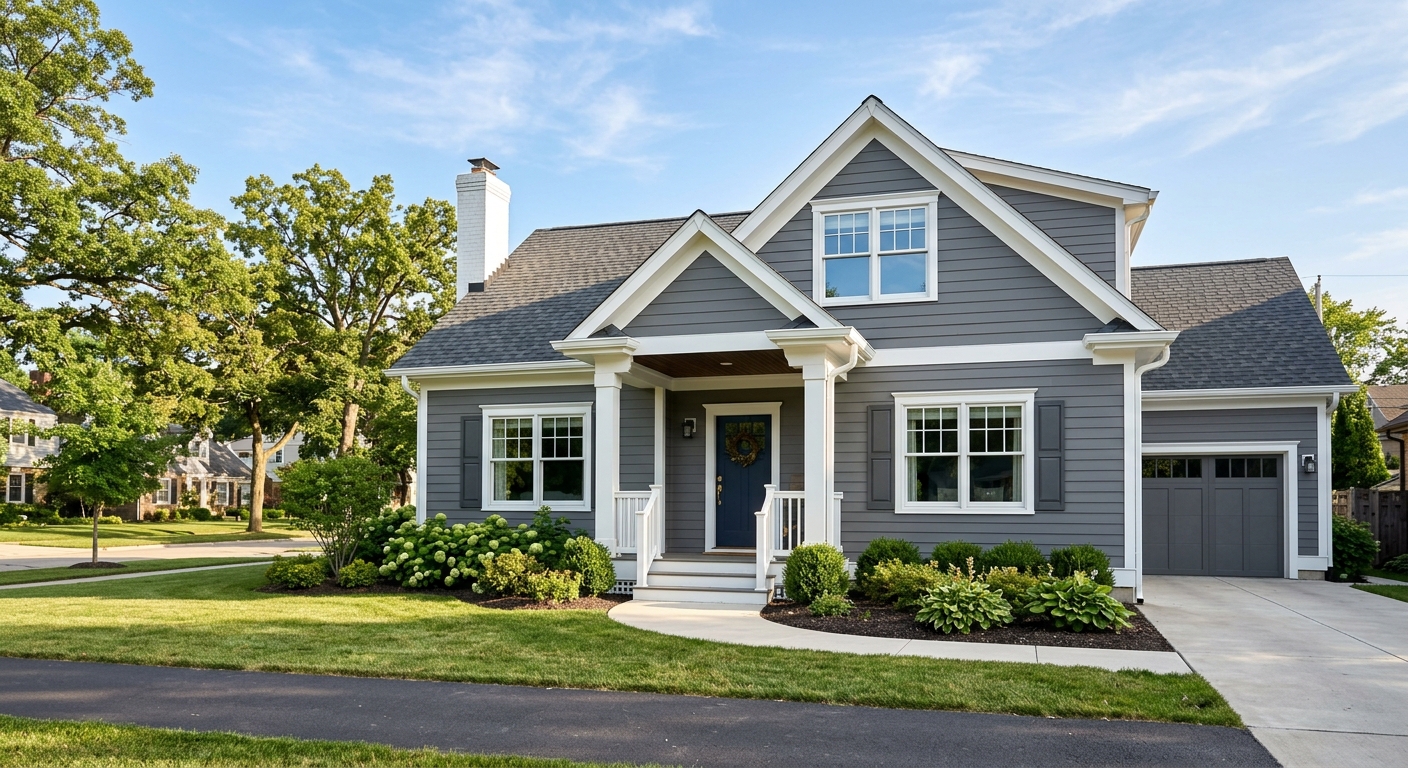
Painting options and costs in Mt Pleasant
Mt Pleasant homeowners typically have several good painting options, but the total cost depends on prep, surface conditions and scheduling—especially with the Lower Mainland–Southwest climate. With a population of 32,955 (Statistics Canada, 2021 Census), the area has steady contractor availability, yet exterior work still gets pushed around by rain and humidity. Many older houses in the Lower Mainland–Southwest were built mid-century through the 1990s, which often means more scraping, caulking, drywall patching and stain-blocking primer before any topcoat goes on. On pre-1978 homes, lead-paint–safe practices may be required during sanding or scraping—this is usually contractor-managed, but it can materially affect the estimate.
In Mt Pleasant, exterior pricing is sensitive to weather windows: contractors must plan around dry stretches, slower dry times and mildew risk. That can create higher summer scheduling pressure, even when the temperatures aren’t the limiting factor. Interiors are less seasonal, so crews often shift year-round into fall and winter work, which can help stabilize interior pricing compared with exteriors.
Where demand shows up most in Mt Pleasant is around the older, established residential pockets near the commercial core, where repainting cycles and trim updates are common after renovations. If you’re planning a repaint for a full home or just sprucing up one level, start by comparing typical project scopes below.
| Service |
What's Included |
Typical Duration |
Price Range |
| Interior — whole home (walls, ceilings, trim) |
Move-protection, caulking, patching, sanding, primer where needed, 2 coats on walls/ceilings, finish coats on trim, cleanup |
5–12 days |
$2,400–$7,500 |
| Interior — per room (standard bedroom or living room) |
Protect floors, patch/sand as required, prime stained/spot-primed areas, 2 coats (walls), basic trim touch-up |
1–2 days |
$750–$2,400 |
| Exterior — full house (siding, trim, soffits) |
Surface washing/degreasing, scrape/sand failing areas, caulking, spot-priming, 2-coat exterior system, protection and final cleanup |
2–4 weeks (weather dependent) |
$6,500–$14,500 |
| Exterior — trim and accent colours only |
Scrape/prime as needed, caulk where required, 2 coats on trim/accent surfaces, protection and cleanup |
5–10 days |
$1,800–$5,500 |
| Kitchen cabinet painting (doors, frames, spray finish) |
Hardware handling (where possible), degreasing, sanding, priming, spray-applied enamel finish, reassembly, light touch-up |
7–16 days (often spread over 2–3 mobilizations) |
$2,200–$7,200 |
| Specialty / faux finish (accent wall, texture) |
Prep and base coat, finish application, protective topcoat as required, system testing on-site |
2–7 days |
$900–$6,500 |
Prices are estimates only and vary by project scope, site access and material selection.
What affects the price of painting in Mt Pleasant
In Mt Pleasant and across the Lower Mainland–Southwest, two homeowners can receive quotes that differ by 30–50% for what sounds like the same job because the real drivers are prep scope, material systems and how crews can work around weather. British Columbia’s coastal conditions don’t behave like Alberta or Ontario: exterior work is less about extreme cold and more about managing humidity, rainfall and mildew risk during application and dry time.
In Ontario and Alberta, the exterior window is often roughly late May to early October, with paint application typically requiring temperatures above about 10°C and rising during the spray/roll-on process. Coastal BC can support longer seasons, but damp shoulder seasons still mean scheduling around dry stretches and using mildew-resistant, high-adhesion systems. That combination can raise labour rates or increase minimum call-out charges because crews may have to mobilize, wait out rain, and return to finish.
Older houses in the region also push costs up. When repainting, scraping, patching and priming can account for 50–70% of total labour—particularly on textured or previously repaired surfaces. For example, if your budget is closer to the lower end of interior painting (say the $300–$8,000 range), it often assumes solid walls and minimal repairs; once patching and primer scope expands, you quickly move toward the higher end. On exteriors, that same logic applies: a trim-only refresh might land closer to the lower exterior band, while a full-house repaint can climb toward the upper end because every failed coating area has to be stabilized before the topcoat goes on.
Concrete Mt Pleasant examples we see often: (1) damp areas near downspouts or eaves usually require extra cleaning and spot-priming; (2) older windowsills and fascia collect chalking and peeling that can’t be painted over cleanly without sanding and caulking. If pre-1978 lead-safe precautions are needed during scraping, containment and disposal time can add noticeable cost, but it protects the home and the crew.
| Price Factor |
Why It Matters |
Cost Impact |
| Surface prep — scraping, sanding, patching drywall or wood |
Most failures start with adhesion problems; prep determines how long paint lasts |
Often the biggest variable; can add 30–70% to labour |
| Number of coats — 2-coat system over primer vs. 1 coat over existing |
Proper coverage and uniform sheen require the right coat count |
Can shift total cost by 10–25% |
| Paint quality tier — contractor-grade vs. premium (Benjamin Moore, Sherwin) |
Higher-end systems tend to improve coverage, washability and long-term durability |
Materials may change by $200–$900+ for typical homes |
| Ceilings and trim — adds significant time vs. walls-only |
Cutting in, masking and multiple finish coats increase labour |
Can add 15–40% depending on complexity |
| Exterior season window — short season raises summer rates |
Rain and humidity extend drying time and force re-scheduling |
Often raises labour by 10–30% in peak weeks |
| Lead-safe precautions — required for pre-1978 homes with lead paint |
Containment, HEPA methods and disposal add time and compliance steps |
Can add several hundred to over $1,500+ on moderate jobs |
| Surface material — drywall vs. plaster vs. wood vs. stucco |
Different substrates require different primers and sanding intensity |
Often affects both prep and primer costs |
| Height and access — multi-storey exterior requires scaffolding or lifts |
Access equipment changes safety procedures and productivity |
Can add $500–$3,000+ depending on height and staging |
Permits & regulations in British Columbia
In British Columbia, painting generally does not require a permit—most residential paint work is considered maintenance. However, health guidelines matter for pre-1978 homes. If a home was built before 1978, best practice for professionals is to test for lead paint before sanding or scraping. If lead is present, lead-safe work methods are used (wet methods to reduce dust, HEPA vacuuming, proper containment where needed, and appropriate disposal). This isn’t typically a legal requirement for homeowners to follow step-by-step, but it is standard practice for contractors because the risk is real and the cleanup must be done correctly.
Work that typically does not require a permit includes: interior wall and ceiling painting, trim touch-ups, and exterior repainting of siding/trim where you are applying paint coatings as a surface finish. Work that can trigger separate permitting is usually not “painting” itself, but related renovation scope (for example, opening walls, major structural changes, or certain building-envelope repairs). For straightforward repainting, you should not expect a permit.
For your Mt Pleasant project, confirm the contractor carries liability insurance and workers’ compensation coverage (WCB). Then verify contract clarity: get a written agreement that specifies the paint brand/line, sheen, number of coats, and exactly what surface prep is included (scrape, sand, patch, prime). Step-by-step, you can verify licensing/coverage by checking the contractor’s public registry listing online, then requesting a certificate of insurance and WCB clearance proof before work begins.
Interior vs exterior painting — getting the best result in Mt Pleasant
In Mt Pleasant’s Lower Mainland–Southwest climate, a long-lasting paint job comes down to prep, correct product selection, and realistic coat build-up—not just the brand on the label. For interiors, start with surface preparation: patching dents and cracks, sanding edges smooth, and priming any spots that bleed, stain, or aren’t uniform in porosity. Then choose sheen by room use. Flat paint can hide wall imperfections, but it marks more easily; eggshell or satin often fits better for living rooms and hallways where cleaning is frequent. A durable system usually means two coats over a proper primer—when people try to “stretch” by using one thick coat, coverage can look fine at first but it often wears or scuffs faster.
For exteriors, the priority is even more strict. Coastal BC conditions make correct prep essential: pressure washing/degreasing (where appropriate), scraping and sanding failing coating edges, caulking gaps before painting to prevent water ingress, and using primers matched to the substrate (wood, fibre cement, stucco). Product selection matters too: mildew-resistant, high-adhesion systems are the standard response to humidity, and proper temperature and dry-time handling prevents premature blistering or adhesion loss.
Cabinet painting can be a smart budget alternative to replacement when the existing boxes are sound. In many Mt Pleasant kitchens, professional spray-enamel cabinet painting commonly lands in the $2,000–$8,000 range, often far less than full replacement when you’re keeping the layout and cabinet condition is good. For pre-1978 homes, lead-safe precautions apply if scraping is needed, and that preparation time can narrow your schedule window.
Where the price difference is justified: if your exterior needs extensive scraping and spot-priming, paying for full prep can be the difference between a job that looks good for a season versus one that holds up through damp shoulder months. If the walls are in good shape, choosing a mid-range interior system within the $300–$8,000 band usually gives better long-term value than skipping primer or reducing coats.
| Project Type |
Key Prep Step |
Recommended Coats |
Price Band |
| Interior — fresh drywall (new construction) |
Seal/prime for uniform absorption; caulk ceiling-wall joints |
Primer + 2 finish coats |
$900–$4,500 |
| Interior — repaint (good condition, no repairs) |
Light sanding/cleaning and spot-priming only where needed |
2 finish coats (primer only on spots) |
$450–$3,200 |
| Interior — repaint (patching and priming needed) |
Patch, feather sand, prime repairs and stain/odour spots |
Primer on repairs + 2 finish coats |
$650–$4,600 |
| Exterior siding (wood or fibre cement) |
Scrape failing coating, caulk gaps, prime bare/sanded areas |
2-coat exterior system (primer where required) |
$4,800–$14,500 |
| Exterior trim and accents only |
Remove loose paint, spot-prime, caulk before final coats |
2 finish coats |
$1,800–$5,500 |
| Kitchen cabinets (spray finish) |
Degrease, sand for profile, prime and build a smooth finish |
Primer + 2 spray finish coats |
$2,200–$7,200 |
How to choose a painting contractor in Mt Pleasant
Start by verifying the contractor’s British Columbia credibility and coverage. For licensing, use the official provincial registry search available online to confirm the business is properly registered for the work they’re advertising. Then ask for a certificate of insurance showing liability coverage—if they can’t provide it, don’t move forward. Finally, confirm workers’ compensation coverage (WCB) by requesting proof/clearance documentation before the first day on-site. These checks matter in Mt Pleasant because tight neighbourhood access can mean more ladder time, more staging, and more chance of minor incidents.
Next, get 2–3 itemised written quotes that separate labour and materials rather than lump-summing. A good quote breaks down prep (scrape, sand, patch, caulk), prime type, number of coats, surface protection, and cleanup/disposal. Carefully read what’s excluded: old caulk replacement, window hardware removal, lead-safe containment, or any drywall repair beyond a stated allowance. Ask if a permit pull is included if the scope expands beyond repainting—painting itself typically doesn’t require one, but related work might. Also confirm warranties: workmanship warranty length, product/manufacturer warranty details, and whether warranties are transferable to the next homeowner.
For payments, never pay more than about 10–15% upfront. Hold back a portion until completion and touch-ups are done, especially for exterior work that may be affected by a wet forecast. Insist on a written timeline with a start date and completion estimate, and ask how weather-driven delays are handled.
- Provide proof of BC registration and request a registry verification reference.
- Show a current liability insurance certificate (and verify limits).
- Provide WCB clearance/proof before work starts.
- Use an itemised quote: prep, primer, coats, labour hours, protection and disposal.
- Clarify paint brand/line, sheen levels, and whether upgrades change price.
- Confirm caulking scope and whether it’s included before exterior painting.
- Ask how they handle scraping on pre-1978 homes (lead-safe methods if needed).
- Request jobsite protection details (drop cloths, tape standards, wall protection).
- Confirm how they manage furniture/movable items for interiors.
- Get the warranty terms in writing, including duration and what it covers.
- Align payment schedule with progress—small deposit, holdback at completion.
- Ask for a written schedule and what happens if weather windows change.
Red flags in Mt Pleasant include quotes that skip surface prep details, promises like “no primer needed” on repairs or stains, reluctance to provide insurance/WCB documentation, large upfront payments beyond 10–15%, and vague scope language (no mention of coats, primer, disposal, or caulking for exteriors).
Frequently asked questions — painting in Mt Pleasant
Should I paint or wallpaper my Mt Pleasant home?
In Mt Pleasant and across the Lower Mainland–Southwest, painting is usually the lower-risk choice for most homeowners because it’s more forgiving when walls have minor waviness, patch lines or older texture variations. Wallpaper can look excellent, but it demands a very consistent wall surface; otherwise seams telegraph, edges lift in humid conditions, or repairs show through. If your walls have been repainted multiple times or have small hairline cracks, a good prep-and-prime paint system often holds up better through damp shoulder seasons. That said, wallpaper can be ideal for a single accent wall where you can control the scope, and it can be paired with the right primer. If you’re comparing budgets, a single-room interior paint project often starts around the $750–$2,400 range, while wallpaper installation can climb quickly once prep is accounted for. For kitchens or trim-heavy areas, paint generally also wins on washability.
How do I fix peeling exterior paint in Mt Pleasant?
Peeling exterior paint in Mt Pleasant almost always means moisture intrusion or loss of adhesion somewhere under the surface. The right fix isn’t just scraping and repainting—prep must address the cause. A contractor should scrape back all loose coating to sound edges, sand feathered margins smooth, and then clean the surface to remove chalking and contaminants. Next comes caulking: any gaps, cracks or failed sealant around trim should be re-sealed before painting so water can’t work its way behind the coating. After that, prime bare wood or any sanded areas with a primer compatible with the substrate and the existing paint system, then apply a full 2-coat exterior system. On pre-1978 homes, scraping may require lead-safe precautions if lead is present (typically contractor-handled). If you’re seeing widespread failure, plan for a higher estimate—full-house exterior repainting in the region commonly lands in the $6,500–$14,500 range depending on prep scope and access.
What colours add the most resale value in Mt Pleasant?
For resale value in Mt Pleasant, neutral, warm whites and light greiges tend to perform best because they complement a wide range of flooring and furnishings and help buyers imagine their own style. On exteriors, tidy trim contrast (not overly saturated accents) usually looks more “maintained” and photographs well in the coastal light conditions. Interior sheen choices matter too: eggshell or satin in common rooms reads clean and is easier to maintain than flat paint. If you want a bolder touch, keep it to a single feature wall, modern trim accents, or kitchen cabinet colour changes—cabinet repainting commonly sits in the $2,200–$7,200 range, and a restrained palette can modernize without looking trendy. Avoid choosing colours that require frequent touch-ups or show wall scuffs easily. A contractor can also test sample cards on your actual walls so you see how the colour shifts across morning and evening light.
How much does it cost to paint a house in Mt Pleasant?
Costs vary mainly with prep and scope. For many Mt Pleasant homeowners, a whole interior repaint (walls, ceilings and trim) typically falls into the $2,400–$7,500 range, assuming standard access and repair needs. Full exterior house painting (siding, trim and soffits) is more sensitive to rain windows and prep, so it commonly lands in the $6,500–$14,500 range for a typical single-family home. If your budget is tighter and you’re mainly refreshing trim and accents, you may see estimates closer to $1,800–$5,500. Cabinet repainting is its own category: professional spray finishes often land in the $2,200–$7,200 range depending on kitchen size and detailing. To get a more accurate number, ask for an itemised quote that clearly states scraping extent, patch/caulking allowance, primer type, and whether lead-safe work is included if the home is pre-1978.
How much does interior painting cost per room in Mt Pleasant?
Per-room interior painting in Mt Pleasant commonly depends on whether you’re repainting in good condition or repairing and spot-priming. For a standard bedroom or living room, estimates often fall around $750–$2,400. The lower end typically assumes clean walls with minimal patching and mostly consistent colour coverage. When the room needs more prep—patching drywall, sanding texture differences, priming stains or nicotine/wood tannin bleed-through—the job moves toward the higher end because prep can take much longer than applying the finish. Paint sheen and trim involvement also changes labour; ceilings and heavy trim cutting-in add time. If you’re budgeting, it helps to think in systems: a properly primed, two-coat finish usually outlasts shortcuts. For a more exact number, request a quote that breaks labour and materials and lists the number of coats on walls versus ceilings and whether trim is included or only touched up.
When is the best time for exterior painting in Mt Pleasant?
The best time for exterior painting in Mt Pleasant is when you have reliable dry stretches so the paint can adhere and dry without humidity-caused delays. While coastal BC can support a longer season than many inland regions, rain and damp shoulder periods still matter. In practice, contractors aim for weeks with stable weather and manageable humidity, then schedule around forecasts to avoid washing/drying issues and mildew risk. If you’re booking a larger project, expect more flexibility in sequencing (for example, doing sheltered areas first). For homes with significant prep, a weather window can also determine drying time for primer and between-coat recoat requirements. If you’re choosing between interior and exterior work, the region’s interiors often get scheduled through fall and winter, while exterior jobs tend to concentrate in the drier part of the year. A good contractor should explain their weather-handling plan and include how delays are managed in the written schedule.