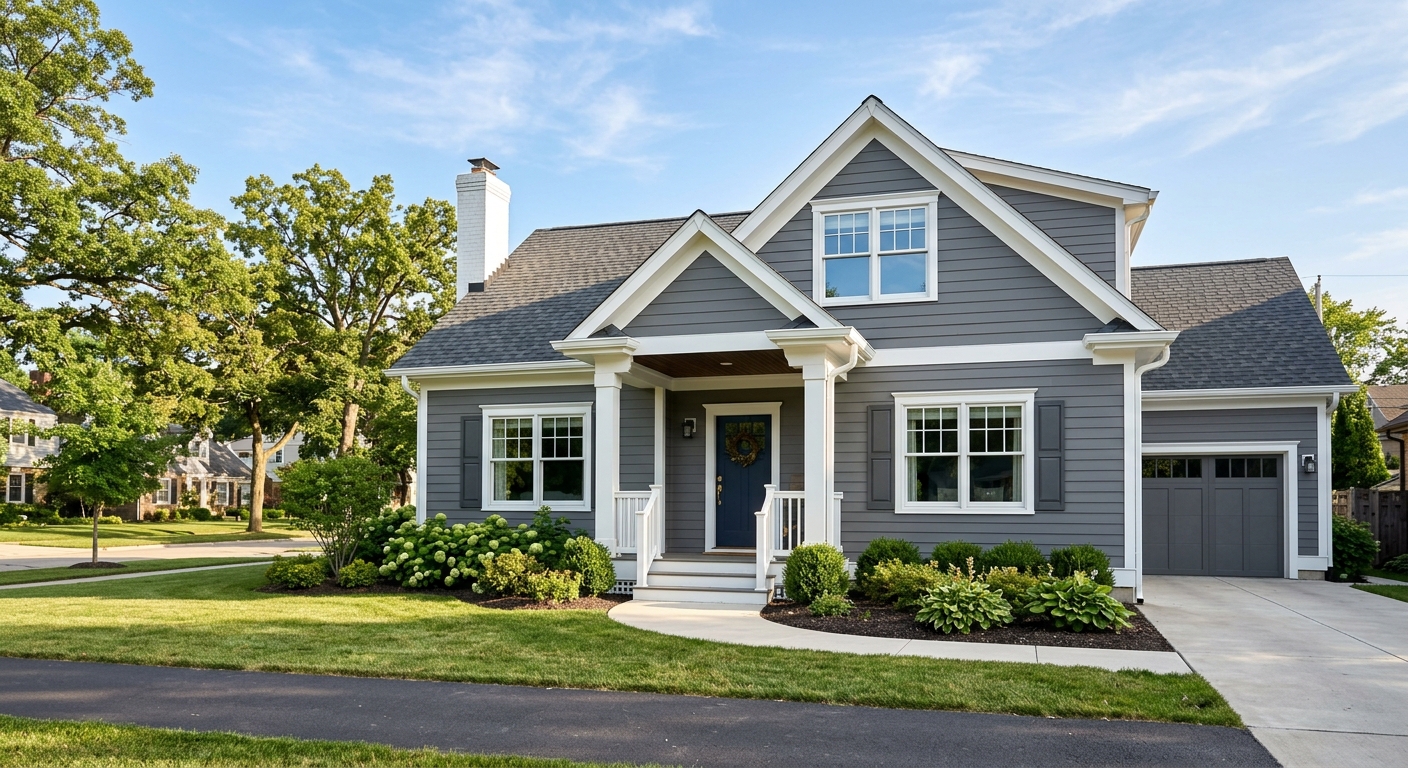
Painting options and costs in Canyon Heights
Canyon Heights is where many homeowners want a clean, modern look without fighting constant moisture and temperature swings. With a population of 2,849 residents (Statistics Canada, 2021 Census), you’ll often notice a smaller pool of trade capacity—so scheduling can tighten when multiple crews chase the same dry weather windows. It also matters that much of the surrounding Lower Mainland housing stock includes older mid-century and pre-1990 homes, where repainting typically demands extensive prep: scraping failing coatings, patching settlement cracks, and blocking stain from nicotine or wood tannins. For properties built before 1978, contractors commonly use lead-safe work practices (containment, HEPA vacuuming, careful cleanup, and compliant disposal), which can add time and cost even when you’re “just repainting.”
In the Lower Mainland–Southwest region, exterior painting cost drivers are shaped less by deep freeze and more by rain, humidity, and coastal shoulder seasons. That means painters build estimates around weather windows, use mildew-resistant high-adhesion systems, and plan for slower drying/film formation. Interiors are more predictable year-round, so crews often shift focus indoors through fall and winter to keep pricing steadier. Trade demand is especially high around the Canyon Heights area where homes are frequently repainted before listing—so many owners book consultations early.
Use the table below to compare realistic scope and budgeting ranges before you request itemised quotes.
| Service |
What's Included |
Typical Duration |
Price Range |
| Interior — whole home (walls, ceilings, trim) |
Prep (patch/sand), prime as needed, 2 finish coats, caulking at trim junctions, light masking/covering, clean-up |
5–10 days |
$3,500–$8,000 |
| Interior — per room (standard bedroom or living room) |
Prep, patch/sand, prime where needed, 2 finish coats, tape/mask, basic trim edge work |
2–4 days |
$800–$2,200 |
| Exterior — full house (siding, trim, soffits) |
Wash/degrease, scrape failing areas, patch caulked joints, prime bare substrate, 2 coats exterior-grade paint, weather-window planning |
2–3+ weeks (including re-mobilizations) |
$6,000–$15,000 |
| Exterior — trim and accent colours only |
Prep of trim only, prime where needed, 2 finish coats, caulk/spot repair, masking to protect siding |
4–8 days |
$1,200–$5,000 |
| Kitchen cabinet painting (doors, frames, spray finish) |
Hardware masking/removal, degrease, sanding, bonding primer, spray finish system, multiple coats, re-install/adjust |
7–14 days |
$2,200–$6,800 |
| Specialty / faux finish (accent wall, texture) |
Surface conditioning, specialty base/texture coats, decorative finish, topcoat protection, cleanup |
3–7 days |
$500–$12,000 |
Prices are estimates only and vary by project scope, site access and material selection.
What affects the price of painting in Canyon Heights
Even when two contractors quote the “same” repaint, Canyon Heights projects can land 30–50% apart across the Lower Mainland–Southwest and broader British Columbia. The main reason is that prep and risk management are not optional in this coastal climate: what you can’t see (adhesion, moisture issues, and how well old paint releases) drives labour hours. In Ontario and Alberta, exterior scheduling is more temperature-driven (late May to early October is the typical band). In coastal BC, the season can stretch, but high humidity and rainfall increase drying delays, the need for mildew-resistant coatings, and the likelihood of rework if surfaces aren’t ready—so exterior pricing reflects re-mobilizing between weather windows.
Older homes throughout the region also demand more surface prep—scraping loose coatings, caulking, patching drywall or wood, and priming stain-bleed areas—often representing 50–70% of labour on repaints. For example, if your exterior is in the $1,200–$15,000 range, a simple “trim only” job may stay near the lower end, but once bare spots appear on siding or junctions fail, costs can move toward the mid-range because primer system selection and prep time jump. Similarly, interior painting can start around the $300–$8,000 band, but ceilings and trim quickly push the total up: adding 10–20% height-and-detail time is common.
Two Canyon Heights-specific cost examples we see often: (1) fibre cement or wood siding with mildew staining typically requires a more thorough cleaning and higher-adhesion primer; (2) pre-1978 homes can add lead-safe precautions (containment and HEPA cleanup), which increases overhead and disposal costs even if the final colour is simple.
| Price Factor |
Why It Matters |
Cost Impact |
| Surface prep — scraping, sanding, patching drywall or wood |
Determines adhesion and smoothness; old coatings often fail in patches that expand later |
+20% to +60% |
| Number of coats — 2-coat system over primer vs. 1 coat over existing |
Coverage and durability depend on correct film build and hiding |
+10% to +35% |
| Paint quality tier — contractor-grade vs. premium (Benjamin Moore, Sherwin) |
Better binders and pigments often cover better and resist scuffing/mildew longer |
+0% to +25% |
| Ceilings and trim — adds significant time vs. walls-only |
Ceilings require more prep and cutting-in; trim needs careful sanding and caulking |
+15% to +40% |
| Exterior season window — short season raises summer rates |
Weather delays compress contractor availability and increase rework risk |
+10% to +30% |
| Lead-safe precautions — required for pre-1978 homes with lead paint |
Containment, HEPA vacuuming, and disposal add labour and compliance time |
+5% to +25% |
| Surface material — drywall vs. plaster vs. wood vs. stucco |
Different substrates need different primers and prep techniques |
+10% to +35% |
| Height and access — multi-storey exterior requires scaffolding or lifts |
Access equipment increases setup and time on task |
+15% to +50% |
Permits & regulations in British Columbia
In British Columbia, painting generally does not require a permit for typical residential work (interior repainting, exterior repainting, trim updates). The key compliance area for homeowners is safety practice—not permits. For homes built before 1978, health guidelines recommend testing for lead paint before sanding or scraping. If lead is present, lead-safe work practices are standard for professional contractors: wet methods to reduce dust, HEPA vacuuming, proper containment, and correct disposal of dust and debris. This is not something most homeowners are legally required to do, but professional painters in Canyon Heights commonly follow it because it reduces risk to your household.
Before you sign, confirm your contractor carries liability insurance and has workers’ compensation coverage (WSIB/WCB coverage). Also insist on a written contract that clearly states the paint brand and sheen, number of coats, surface preparation included (what will be scraped, patched, and primed), and how protection/cleanup will be handled.
What typically does NOT require a permit: painting interior walls/ceilings, repainting exterior siding/trim, and painting cabinets/doors (surface work).
What you may need a permit for (not “painting” itself): larger structural changes, window/door replacements, or reno work that involves electrical/plumbing—those are separate trades and approvals, not standard repainting.
To verify in Canyon Heights: (1) check the provincial business/painter registration/credential via online registry listings (where available), (2) ask for a certificate of insurance and confirm the expiry date and coverage amount, and (3) request proof of workers’ compensation coverage—your contractor should provide documents upon request.
Interior vs exterior painting — getting the best result in Canyon Heights
In Canyon Heights, the difference between a long-lasting paint job and early failure comes down to prep quality, correct primer, and matching product systems to how the surfaces behave in coastal BC conditions. For interiors, surface prep beats brand choice: filling nail holes, sanding for feather-edge smoothness, removing grease/markers, and priming stains or repaired patches are what prevent flashing and peeling. Sheen matters too. Flat/eggshell often suits low-abuse areas, while satin or semi-gloss is typically better for trim, doors, and higher-touch spaces because it cleans without showing scuffs. And yes—two coats over a proper primer almost always outlasts one thick coat on properly prepared substrates.
For exteriors, prep is even more critical. Coastal rain and humidity can undermine adhesion if surfaces aren’t clean and dry enough, so proper cleaning, scraping failing coatings, sanding edges, caulking before painting, and priming bare or stained areas are where durability is won. Primer choice is substrate-specific: different products are used for wood, fibre cement, and previously painted surfaces; the goal is a system that bonds and tolerates moisture exposure. Contractors also select mildew-resistant, high-adhesion products suited to the Lower Mainland–Southwest environment.
Cabinet painting is a smart budget alternative to replacement when you’re staying in the same layout: a sprayed finish with multiple coats can refresh your kitchen without the downtime of a full reno. But if your cabinets have heavy grease or previous finishes, thorough degreasing and bonding primer are essential—otherwise you’ll see peeling. For pre-1978 homes, lead-safe practices should guide scraping and cleanup before any exterior work starts.
A practical price example: switching from an “interior walls only” repaint to full interior coverage (walls + ceilings + trim) can move a project from roughly the $800–$2,200 per room band into the $3,500–$8,000 whole-home range—cost is justified because trim/ceiling prep and cutting-in require more labour, not because of paint volume alone.
| Project Type |
Key Prep Step |
Recommended Coats |
Price Band |
| Interior — fresh drywall (new construction) |
Prime bare drywall and feather seams; sand smooth before finish |
1 primer + 2 finish coats |
$1,200–$3,500 |
| Interior — repaint (good condition, no repairs) |
Light scuff/sand, clean, spot-prime any stains |
1–2 finish coats (plus primer only where needed) |
$700–$2,500 |
| Interior — repaint (patching and priming needed) |
Fill/skim repairs, sand flush, prime patches and problem areas |
1 primer + 2 finish coats (typical) |
$900–$3,200 |
| Exterior siding (wood or fibre cement) |
Scrape loose/failed coating, clean, caulk junctions, prime bare areas |
2 finish coats over primer system |
$6,000–$15,000 |
| Exterior trim and accents only |
Mask carefully, remove failing paint at edges, prime bare trim |
2 finish coats over spot-primer |
$1,200–$5,000 |
| Kitchen cabinets (spray finish) |
Degrease, sand for bond, prime with bonding system, mask for overspray |
2–3 coats depending on system (primer + multiple topcoats) |
$2,000–$6,800 |
How to choose a painting contractor in Canyon Heights
Start with verification. In British Columbia, licensing requirements can vary by trade category, so you should still confirm the contractor is in good standing with the appropriate provincial business credentials and that they can provide proof of current liability insurance. Ask for a certificate of insurance and check that it includes general liability coverage suitable for residential work. For coverage of workers, request proof of workers’ compensation coverage (WSIB/WCB—your contractor should be able to provide the relevant documentation). Don’t accept “we’re covered” without paperwork.
Next, get 2–3 itemised written quotes. Look for a breakdown that separates labour (prep, caulking, sanding, masking, cleanup) and materials (primer, paint system, caulk, specialty products). A quote should specify whether disposal is included and how they’ll protect landscaping, driveways, and windows. Scope clarity is critical in Canyon Heights because exterior jobs are sensitive to weather—your quote should state how drying and weather windows are handled.
Read the warranty section: workmanship warranty length (for example, touch-ups for peeling or flaking due to prep/adhesion issues), product/manufacturer warranty, and whether it’s transferable if you sell. Payment schedule matters too: never pay more than 10–15% upfront, and hold back a portion until the job is complete and you’ve had a chance to inspect it. Finally, ask for a start date and a completion estimate in writing.
- Confirm liability insurance with a current certificate (ask for the latest copy).
- Request workers’ compensation coverage documentation (WSIB/WCB).
- Insist on an itemised quote: labour + materials, not a single lump sum.
- Check what surface prep is included (scraping, sanding, patching, priming).
- Verify caulking timing: caulk before painting at exterior joints.
- Ask about lead-safe procedures for pre-1978 homes (containment and HEPA cleanup).
- Confirm paint brand and sheen in writing (not just “we use premium paint”).
- Clarify number of coats and primer system; avoid vague “as needed” wording.
- Ask how they protect landscaping, floors, and fixtures; review masking/covering details.
- Confirm disposal/cleanup: debris removal and handling of waste materials.
- Get a written timeline including weather contingencies for exterior work.
- Review warranty: workmanship coverage plus how you request a service visit.
Red flags I see in Canyon Heights include: (1) quotes that omit surface prep and priming details, (2) refusing to provide proof of insurance/WSIB/WCB coverage, (3) pressuring for high upfront payments, (4) vague paint specs (no brand/sheens/coats), and (5) no clear warranty for adhesion or peeling issues after exterior moisture exposure.
Frequently asked questions — painting in Canyon Heights
What is the best primer for older Canyon Heights homes?
For older Canyon Heights homes, the “best” primer depends on what you’re painting over—bare wood, previously painted trim, drywall patches, or areas with tannin/stain bleed. In practice, I prioritize bonding primers for adhesion on chalky or glossy surfaces and stain-blocking primers where nicotine, water marks, or tannins bleed through. If your home is pre-1978, you should also assume extra time for lead-safe prep (testing guidance before sanding/scraping and HEPA cleanup if lead is present), because the right primer system only works when the dust risk is managed properly in British Columbia. The most cost-effective approach is usually correct primer selection plus a true 2-coat finish plan; otherwise you may pay again sooner.
For budgeting context, interior repainting with patching and priming typically fits around the $900–$3,200 range per scope, because primer and prep time are part of the durability equation.
Should I paint or wallpaper my Canyon Heights home?
In Canyon Heights and coastal British Columbia, painting is usually the more practical choice for high-moisture areas and for homeowners who want easier maintenance. Wallpaper can look beautiful, but it amplifies prep requirements: every seam, crack, and uneven patch shows through, and repairs later can be more complex if a pattern is discontinued. Paint also lets you tailor sheen—eggshell or satin for everyday rooms—and it’s generally quicker to update for resale.
That said, wallpaper can be worthwhile for a single accent wall where the surface is stable and well-prepared. If your walls have settlement cracks or past patchwork, a good primer and 2-coat paint system typically outperforms in the long run. If you’re budgeting, interior work often varies widely—whole-home projects commonly land within the $3,500–$8,000 band depending on trim/ceiling scope.
How do I fix peeling exterior paint in Canyon Heights?
Peeling exterior paint in Canyon Heights usually can’t be solved with paint alone; the fix is surface readiness. Professionals start by identifying why the coating failed—often moisture intrusion at joints, insufficient adhesion, or chalking from weather exposure. The correct approach is to scrape off all loose material back to firm edges, sand the feathered margins, clean the surface thoroughly, and then spot-prime (or prime broadly where needed) with a primer that bonds to the substrate. Caulking should be done before repainting at junctions to prevent water ingress.
Because coastal BC humidity and rain affect drying, timing matters: painters schedule around dry windows and use mildew-resistant, high-adhesion exterior systems. If your home is pre-1978, lead-safe practices may apply before scraping. Costs vary, but trim-only touch-ups can fall around the $1,200–$5,000 range, while full exterior work is commonly much higher due to extensive prep—often within the $6,000–$15,000 band.
What colours add the most resale value in Canyon Heights?
For resale in Canyon Heights, homeowners typically do best with clean, timeless neutrals and restrained contrast—think warm whites, soft greiges, and light cool-toned greys for exteriors and main walls. Coastal light can shift how colours read, so test samples on your actual siding and trim (especially near shaded corners). On the exterior, keeping trim and fascia in a crisp, coordinated range usually protects buyer appeal—too-dark colours can look harsh next to wet-season lighting.
Inside, “easy-clean” shades and consistent sheen selection matter more than trendy deep colours. Eggshell on walls and satin/semigloss on trim tend to age well with fingerprints and scuffs. If you’re planning a larger repaint budget, interior whole-home work often sits in the $3,500–$8,000 range, so colour decisions should be made early to avoid rework.
When in doubt, choose one main wall colour, one trim/ceiling direction, and a single accent—this keeps the finish coherent and photographs well.
How much does it cost to paint a house in Canyon Heights?
The cost to paint a house in Canyon Heights depends mainly on whether you’re painting interior only, exterior only, or both—and how much prep is needed. For interiors, whole-home painting (walls, ceilings, and trim) commonly falls within the $3,500–$8,000 band. Per-room interiors often start around $800–$2,200 for a standard bedroom or living room depending on trim and patching needs.
For exteriors, Canyon Heights pricing usually reflects coastal moisture and weather-window scheduling. Exterior trim and accent work may land around $1,200–$5,000, while a full exterior repaint (siding, trim, and soffits) commonly falls in the $6,000–$15,000 range because scraping, priming, and caulking are extensive. If your home is pre-1978, lead-safe precautions can add time and costs due to containment and cleanup practices recommended for professional work. Always request an itemised quote so you understand where that total comes from.
How much does interior painting cost per room in Canyon Heights?
Interior painting per room in Canyon Heights typically depends on room size, ceiling height, whether trim is included, and how much patching/priming is required. For a standard bedroom or living room in good condition, many projects fit around the $800–$2,200 range, assuming standard prep and two-coat finish. Rooms with visible repairs, stains, or rough drywall often require additional priming and sanding, which moves the cost toward the upper end.
Sheen and trim scope also change the labour time: ceilings and detailed baseboards usually cost more because of cutting-in and additional surface prep. A simple repaint without major repairs can be closer to the lower end, but “patching and priming needed” is commonly closer to the mid-to-upper part of the range. If you’re coordinating multiple rooms, ask for a quote that breaks down labour and materials, so you can compare apples to apples between contractors.