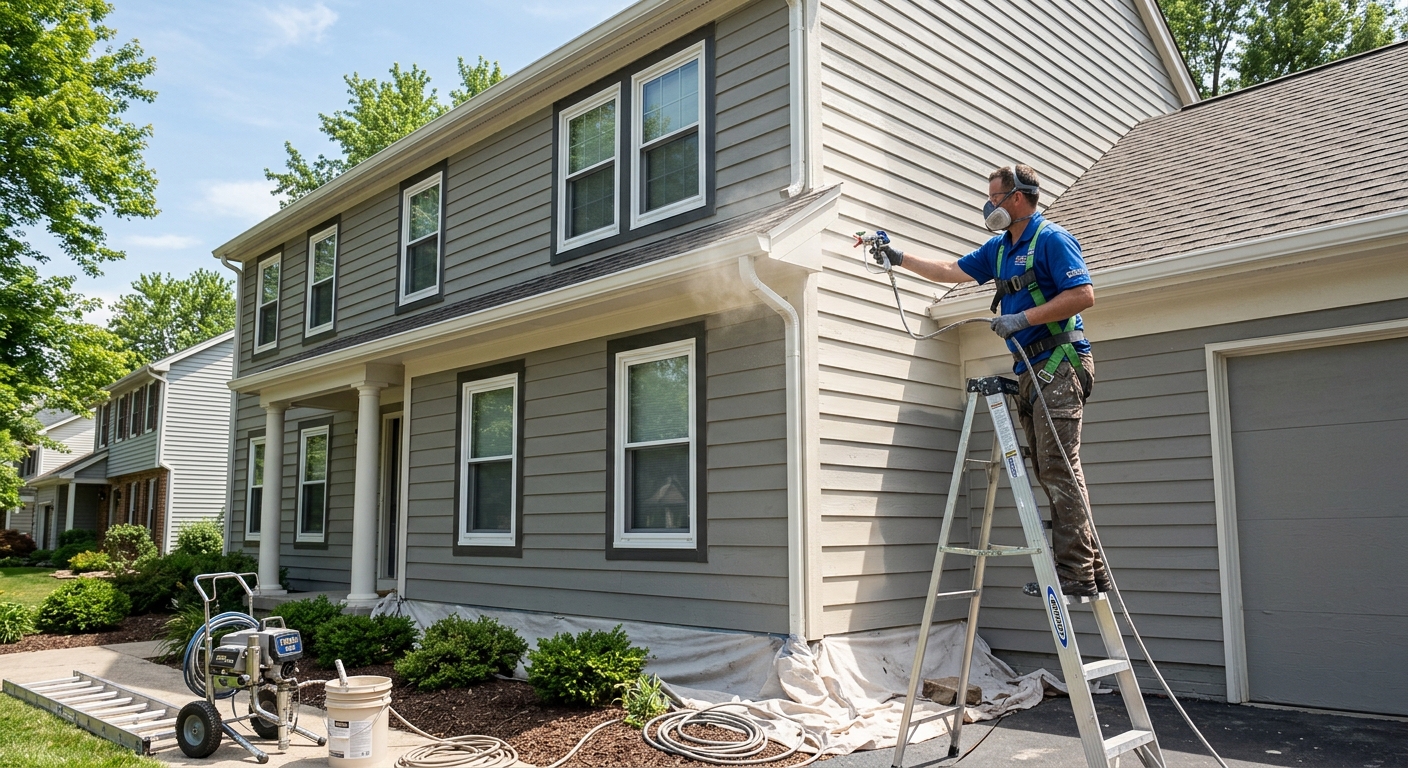
Painting options and costs in Fernie
Fernie homeowners usually get the most accurate painting numbers when they think in terms of scope, substrate condition, and timing—not just paint brand. In Fernie, with 59.6% of homes built before 1981 (Statistics Canada, 2021 Census), many properties have older, more weathered surfaces that need extra scraping, patching, caulking, and priming before the first topcoat. That prep-heavy reality is why two “same size” houses can land 30–50% apart in price even when the chosen sheen and colour are similar.
In the Kootenay region, the interior-continental climate brings cold, snowy winters and a short, warm, dry summer. Exterior painting is therefore tightly season-dependent: most façade work needs to be concentrated into the May–September window when surfaces are warm and dry enough to cure properly. This pushes contractor demand into a compressed period and can raise summer scheduling rates. If you’re near high-visibility areas like the downtown core, or on hillside lots with tight access, staging or scaffolding time can also add to labour.
Trade demand is especially steady around the Mount Hosmer / Fernie proper valley areas, where older homes and mixed siding materials are common. Once those variables are understood, you can compare typical budgets—below is a practical cost range for common Fernie painting projects, before final site measurements.
| Service |
What's Included |
Typical Duration |
Price Range |
| Interior — whole home (walls, ceilings, trim) |
Protection, prep/fill & sand, prime as needed, wall/ceiling painting, caulking where required, door/trim painting, clean-up |
5–10 days |
$2,000–$6,500 |
| Interior — per room (standard bedroom or living room) |
Prep, patching as needed, prime (as needed), walls + ceiling, trim touch-up or light trim painting |
1–3 days |
$500–$2,000 |
| Exterior — full house (siding, trim, soffits) |
Pressure wash (where suitable), scrape/sand, caulking, spot-prime, prime as required, 2-coat finish system, protection & disposal |
5–14 days (season dependent) |
$1,500–$7,000 |
| Exterior — trim and accent colours only |
Prep & prime on trim, caulking, finish coats on selected areas |
2–6 days |
$800–$3,500 |
| Kitchen cabinet painting (doors, frames, spray finish) |
Degrease, light scuff/sand, primer, spray/brush finish, hardware handling, protective topcoat, reassembly |
4–8 days (plus dry time between coats) |
$1,200–$4,500 |
| Specialty / faux finish (accent wall, texture) |
Surface conditioning, specialty primer/topcoat, texture application or faux technique, multiple colour/clear steps as required |
1–5 days |
$300–$6,000 |
Prices are estimates only and vary by project scope, site access and material selection.
What affects the price of painting in Fernie
In Fernie and across the Kootenay region, quotes for the “same” painting job can vary by 30–50% because prep effort and scheduling pressure drive labour more than the paint itself. Exterior work is especially sensitive to timing. In the Kootenay interior climate, the workable window is generally late May through early September when surfaces can warm and dry enough for proper cure. By contrast, in coastal BC the season can be longer, but humidity and frequent rain mean tighter scheduling and more mildew-resistant coating systems—often with additional labour to manage weather delays. Shorter seasons in the interior concentrate contractor availability into a few months, which can increase summer labour rates.
Older housing stock is the other big cost driver. With 59.6% of homes built before 1981 (Statistics Canada, 2021 Census), many projects require heavier surface preparation: scraping loose coating, sanding edges, patching substrate, caulking gaps, and priming. On a repaint, surface prep can represent 50–70% of total labour, especially if adhesion is poor or if the surface has chalking or failing caulk lines. Even one extra day for lead-safe precautions (where pre-1978 coatings test positive) can shift the total because of masking, wet methods, HEPA vacuuming, and disposal handling.
Concrete examples you’ll see in Fernie: a full exterior (siding + trim) might land in the $1,500–$7,000 band, but if the crew finds widespread peeling or soft wood, the prep can push the project toward the upper end. Conversely, an interior repaint of a good-condition room typically stays near $500–$2,000 because the savings come from skipping major repairs and reducing primer quantities.
| Price Factor |
Why It Matters |
Cost Impact |
| Surface prep — scraping, sanding, patching drywall or wood |
Determines adhesion and smooth finish; increases labour and material use |
Often +20% to +60% |
| Number of coats — 2-coat system over primer vs. 1 coat over existing |
Controls coverage, durability, and sheen uniformity |
Typically +10% to +35% |
| Paint quality tier — contractor-grade vs. premium (Benjamin Moore, Sherwin) |
Coverage, hide, and longevity can reduce total coats (or rework) |
Often +5% to +25% depending on coverage |
| Ceilings and trim — adds significant time vs. walls-only |
More masking/protection and slower cutting-in work |
Often +15% to +50% |
| Exterior season window — short season raises summer rates |
More scheduling pressure and higher demand for crews |
Often +10% to +30% |
| Lead-safe precautions — required for pre-1978 homes with lead paint |
Additional controls for sanding/scraping and specialized disposal |
Can add +10% to +40% |
| Surface material — drywall vs. plaster vs. wood vs. stucco |
Different porosity and bond requirements affect primer and prep |
Often +10% to +35% |
| Height and access — multi-storey exterior requires scaffolding or lifts |
Staging time and safety compliance increase labour and rental costs |
Often +15% to +60% |
Permits & regulations in British Columbia
In British Columbia, painting typically does not require a permit for residential work. That said, health guidelines matter—especially for older homes. For houses built before 1978, health guidance recommends testing for lead paint before sanding, scraping, or disturbing old coatings. If lead is present, lead-safe work practices are standard for professional contractors: wet methods to reduce airborne dust, HEPA vacuuming, proper containment/masking, and correct disposal of affected debris. This is not usually mandated for homeowners, but it is common professional practice and a key reason professional bids can cost more than “cash job” quotes.
What requires a permit is usually not the painting itself, but related work such as structural changes, electrical/plumbing alterations, or certain regulated hazardous abatement—those are project-specific and not automatically triggered by a paint job. For a straightforward repaint, you should expect no permit, but you should still verify the contractor’s credentials and the way they’ll protect occupants and furnishings.
In Fernie, you can verify a contractor step-by-step: (1) confirm their trade licence/registration information using the relevant provincial online listings; (2) ask for a certificate of liability insurance and ensure the coverage is current for the policy term and matches the job; and (3) request confirmation of workers’ compensation coverage (WCB/worker compensation) before work starts. Finally, insist on a written contract that specifies the paint brand, sheen, number of coats, and the exact prep/disposal responsibilities.
Interior vs exterior painting — getting the best result in Fernie
In Fernie’s Kootenay interior-continental climate, paint longevity comes down to prep quality and the “right system” for temperature and moisture swings. Interiors fail early when surfaces aren’t properly stabilized: filling and sanding, addressing stains or nicotine bleed-through, and using a primer where adhesion or stain-blocking is needed. For interiors, you’ll get better results from accurate prep than from paying a premium for the topcoat alone. Sheen choice also matters. Flat (where appropriate) hides wall imperfections, but high-traffic areas often perform better with eggshell or satin. Bathrooms and kitchens generally need more washable finishes, and trim often benefits from a semi-gloss for scrubbability.
The best rule of thumb is that two coats over a proper primer always outlast one “thick” coat because coverage and film build are more consistent. When you repaint, match the sheen and coverage plan to the substrate condition—especially in older homes where previous patches and mixed materials can create flashing.
For exteriors, the climate makes surface prep non-negotiable. Scrape loose coating, sand down chalky areas, caulk exterior joints before topcoating to prevent water ingress, and prime the right substrate (wood, metal, fibre cement, or stucco). In British Columbia, choosing a mildew-resistant, weather-appropriate system and applying it when conditions allow proper cure is critical—yet Kootenay drying conditions are generally better than coastal humidity, which helps crews keep schedules if they start in the warm, dry part of the season. For pre-1978 homes, use lead-safe precautions when old coatings may be disturbed.
Cabinet painting is a strong budget alternative to replacement. For example, if cabinet refacing/replacement would typically exceed a cabinet paint scope by several thousand dollars, a spray-finish cabinet painting project often fits in the $1,200–$4,500 range—while delivering a “new kitchen” look, provided surfaces are properly degreased and primed.
| Project Type |
Key Prep Step |
Recommended Coats |
Price Band |
| Interior — fresh drywall (new construction) |
Prime drywall properly to equalize porosity and prevent flashing |
1 primer + 2 finish coats |
$1,200–$3,800 |
| Interior — repaint (good condition, no repairs) |
Light sanding/scuffing and spot priming on stains only |
1–2 finish coats (typically 2 in practical coverage) |
$500–$2,500 |
| Interior — repaint (patching and priming needed) |
Patch/sand to feather edges, prime repairs to lock uniform sheen |
1 primer (repairs) + 2 finish coats |
$800–$3,500 |
| Exterior siding (wood or fibre cement) |
Scrape/sand failing areas, caulk gaps, and prime bare or weathered sections |
2 finish coats over primer system |
$1,500–$7,000 |
| Exterior trim and accents only |
Prep and spot-prime trim; correct any failing caulk lines |
2 finish coats (plus primer where needed) |
$800–$3,500 |
| Kitchen cabinets (spray finish) |
Degrease thoroughly, scuff/sand, prime for adhesion, then spray finish |
1 primer + 2 finish coats (varies by sheen system) |
$1,200–$4,500 |
How to choose a painting contractor in Fernie
To choose a painting contractor in Fernie, verify three things before you sign: licensing/registration where applicable, liability insurance, and workers’ compensation coverage (WCB/worker compensation). Ask for the exact certificate documents (not screenshots) and confirm they show the contractor’s legal name and the job start dates. For licensing, use British Columbia’s online information sources to confirm the contractor’s standing for the trade they claim; if they can’t point you to a matching registry entry, treat that as a yellow flag. For liability, request a certificate of insurance and check that coverage limits are appropriate for residential work and include work performed at client addresses. For worker compensation, ask for proof of coverage for their employees and subcontractors—this matters if someone is injured on your property.
Next, get 2–3 itemised written quotes. The best bids separate labour and materials and break out prep steps (scrape/sand, caulking, priming, drywall patching), not just “paint and labour” lump totals. Read the scope carefully: is permit pull included (usually not for simple painting), is disposal included, and are power-washing or stain blocking included or excluded? Clarify surface condition responsibilities—what happens if rot, widespread peeling, or hidden failing caulk is discovered during prep?
Demand clear warranty terms: workmanship warranty length, whether it covers peeling/blistering due to prep failures, and whether product/manufacturer warranties apply to the same surface system and are transferable to subsequent owners. Payment schedules should be conservative—never pay more than 10–15% upfront, and hold back a portion until the final walkthrough is complete. Finally, get a start date and completion estimate in writing, especially because exterior work is concentrated in the warm, dry part of the year.
- Ask who does the prep and whether they’ll include scraping, sanding, patching, and priming where required.
- Confirm caulking is included and which joints will be sealed before topcoating.
- Require brand + line name for paint and primer (not “a quality paint”).
- Check the quote includes surface protection (floors, landscaping, windows) and cleanup/disposal.
- Make sure the crew will handle lead-safe precautions for pre-1978 homes if applicable.
- Request proof of liability insurance and confirm WCB/worker compensation coverage.
- Look for an itemised labour vs materials breakdown—avoid one-line estimates.
- Confirm the number of coats and whether spot-priming is included (and where).
- Verify prep standards for sheen uniformity (especially patch-to-wall transitions).
- Ask how they manage weather for exterior work and what happens if rain delays the schedule.
- Get a written timeline with start date, workdays, and expected cure/dry windows.
- Insist on a walkthrough and a written scope sign-off before final payment.
Red flags in Fernie: (1) quotes that ignore prep (“we’ll just paint over it”), (2) contractors who won’t provide a written scope with coats and primer details, (3) missing or outdated insurance/WCB proof, (4) asking for large upfront deposits (beyond 10–15%), and (5) promising exterior work during rainy/cold weeks without a weather plan—especially during the narrow May–September window.
Frequently asked questions — painting in Fernie
How much does it cost to paint a house in Fernie?
In Fernie, the total cost depends heavily on surface condition and whether you’re doing full exterior coverage or just accents. For most homeowners, an exterior full-house repaint typically lands in the $1,500–$7,000 range, with the higher end usually driven by extra scraping, caulking, and primer because older homes are common (59.6% built before 1981, Statistics Canada, 2021 Census). Interior “whole home” scopes often fall in the $2,000–$6,500 range. If you’re booking exterior work in summer, remember the Kootenay season is tightly weather-bound, which can affect scheduling and labour availability. Always ask for an itemised quote so you can see exactly how much labour is going into prep.
How much does interior painting cost per room in Fernie?
For interior painting per room in Fernie, a typical bedroom or living room often costs in the $500–$2,000 band. The range changes based on prep needs (patching/sanding), whether ceilings are included, the amount of trim/doors, and how many coats are required to reach uniform sheen. If the room is in good condition and only needs a straightforward repaint, you can usually stay closer to the lower half because prep is light. If there are repairs, stain problems, or patchwork transitions, expect more primer and labour time, pushing you toward the middle or upper range. Ask whether your quote includes priming of repairs, not just topcoats.
When is the best time for exterior painting in Fernie?
The best time in Fernie is during the warm, dry stretch when surfaces can cure properly—generally late May through September. The Kootenay interior climate means winters are long and snowy, and colder shoulder months slow curing and can trap moisture under film. Starting when temperatures are consistently above about 10°C (and rising during application) helps the coating set correctly and reduces the risk of early failure. Scheduling also matters because demand is concentrated into that short window, so booking earlier often helps you lock a reliable crew and a weather plan. If you have older siding or failing caulk lines, that prep needs dry conditions too, not just a “paintable” day.
How many coats of paint do I need?
Most repaint projects in Fernie use a 2-coat finish system for durability and uniform colour. The exact plan depends on whether primer is required and what condition the surface is in. For example, if you’re painting over properly prepared and primed exterior areas, a 2-coat finish over primer is the common approach and fits the exterior scopes in the $1,500–$7,000 band. For interiors, good-condition rooms may only need 1–2 topcoats depending on coverage, but many contractors still use 2 coats to eliminate flashing, especially across patched drywall. Any stain, repaired substrate, or failed adhesion should be addressed with appropriate primer before topcoats.
What paint is best for Fernie's climate?
For Fernie’s Kootenay interior-continental conditions, look for coatings designed for exterior durability under temperature swings and moisture exposure. A mildew-resistant, weather-appropriate exterior system is important in British Columbia even in the drier interior—because condensation and shaded moisture can still occur. Substrate matters too: wood and fibre cement typically need the right primer and correct sealants at joints (caulking) so water doesn’t get behind the paint. For interiors, choose finishes that match how rooms are used—eggshell or satin for many living spaces because they’re washable, while trim often performs well at semi-gloss for scrubbability during winter dryness. A quality system is usually more reliable than chasing the most expensive brand.
How long does exterior paint last here?
With good prep and proper product selection, exterior paint in Fernie commonly lasts in the multi-year range, often around 5–10 years before noticeable wear—though the exact lifespan varies based on siding type, exposure, and how the job was prepared. Jobs that skimp on scraping, fail to prime bare/porous spots, or miss deteriorated caulk lines can show peeling or adhesion problems early, especially with freeze-thaw cycles typical of the Kootenays. Homes with older coatings (pre-1981 is common in Fernie; Statistics Canada, 2021 Census) often require more prep, which is why the labour component is a major driver of the $1,500–$7,000 exterior pricing band. The “best” longevity comes from getting the prep right and painting only during the workable, dry part of the season.