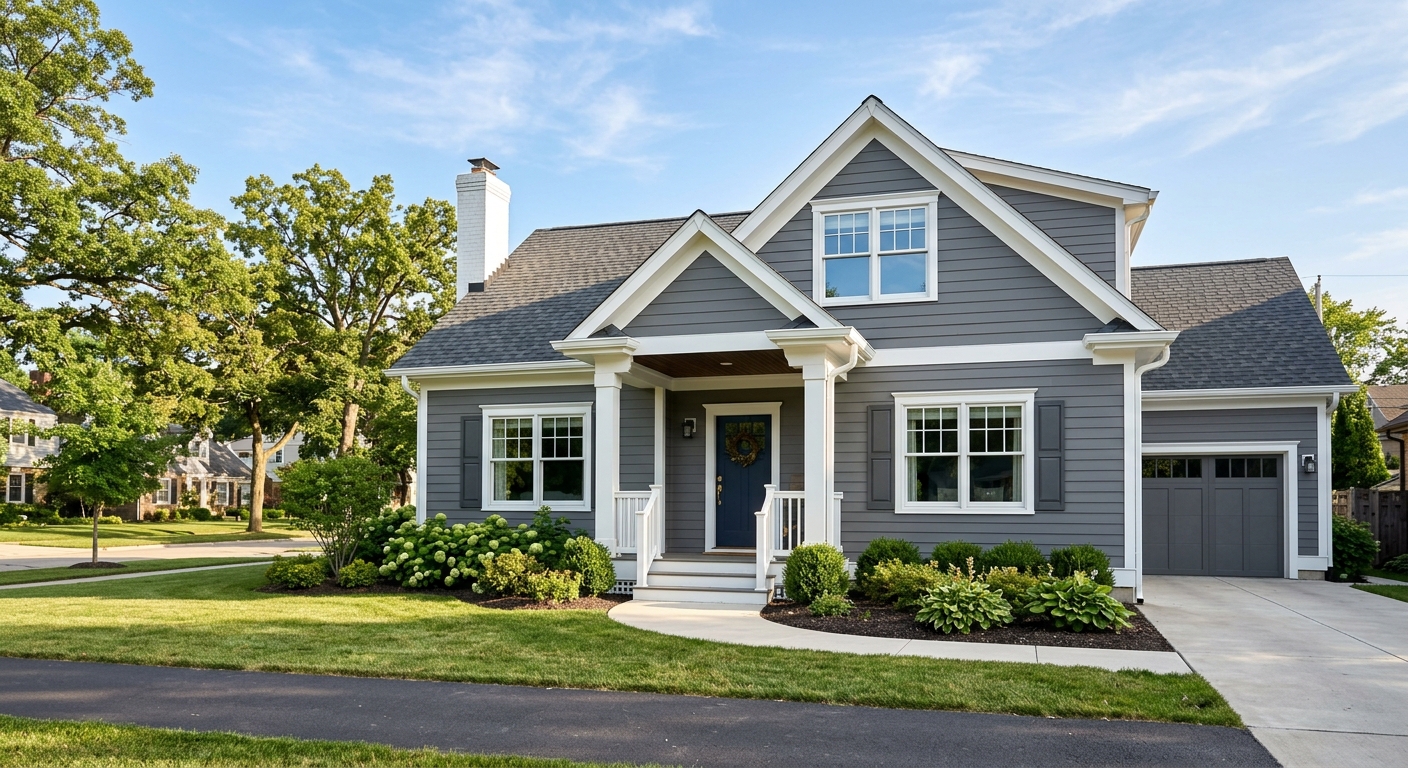
Painting options and costs in Carey
Carey, British Columbia is a great place to live, but the coastal damp and long shoulder seasons can be unforgiving on paint. In Carey (Lower Mainland–Southwest), many homes are mid-century to pre-1990s, which often means more prep on repaint jobs—scraping failing coatings, patching settlement cracks, and priming to lock down stains like wood tannins or nicotine. Statistics Canada counted 18,405 people in the area in the 2021 Census (Statistics Canada, 2021 Census), and that mix of older housing stock keeps painters busy—especially around established pockets like the flats and older residential streets where repainting and trim refreshes are common each year.
In this region, exterior pricing is shaped less by deep cold and more by rain and humidity. Siding and trim need good drying conditions after application, so crews may have to pause and restart between weather windows. That risk management, plus mildew-resistant, high-adhesion products suited to coastal BC siding and trim, is built into the higher end of the exterior bands. Interior work runs more steadily through fall and winter because you’re not relying on outdoor drying windows.
Cabinets and fine trim take a different skill set. Spray setup, masking, and multi-coat enamel systems can bring cabinet projects into the multi-thousand range, but they can still be a smarter move than replacing when the boxes are solid. Use the guide below to compare typical scopes and durations, then discuss your surfaces and sheen choices with a painter for a tight, apples-to-apples quote.
| Service |
What's Included |
Typical Duration |
Price Range |
| Interior — whole home (walls, ceilings, trim) |
Protect floors, prep/sand, caulking, spot prime, 2-coat finish on walls/ceilings, prime/paint trim, minor patching, cleanup |
5–10 working days |
$2,800 – $7,500 |
| Interior — per room (standard bedroom or living room) |
Prep and patch, 1–2 prime spots, 2-coat finish on walls, paint ceiling, basic trim touch-up or included trim where noted |
1–3 working days |
$600 – $2,200 |
| Exterior — full house (siding, trim, soffits) |
Wash/degrease, scraping/spot sanding, caulking, prime bare spots, 2-coat exterior system, protect landscaping/eaves, final cleanup |
8–15 working days (weather dependent) |
$6,000 – $12,500 |
| Exterior — trim and accent colours only |
Mask/protect surfaces, scrape and prep trim, prime where needed, 2-coat trim/accent colours, spot touch-ups |
3–7 working days (weather dependent) |
$1,600 – $4,800 |
| Kitchen cabinet painting (doors, frames, spray finish) |
Degrease, remove/label doors where possible, sand and prime, spray enamel finish, reinstall hardware-ready |
5–12 working days (shop/dry time built in) |
$2,200 – $6,500 |
| Specialty / faux finish (accent wall, texture) |
Surface prep for the finish type, base coat, specialty texture/faux layers, topcoat protection where required |
2–6 working days |
$900 – $3,900 |
Prices are estimates only and vary by project scope, site access and material selection.
What affects the price of painting in Carey
In the Lower Mainland–Southwest, two quotes for what looks like the same job can differ by 30–50% because the “invisible” work is where costs move: surface prep, product system choice, and scheduling around rain/humidity. British Columbia’s coastal conditions demand more careful sequencing than homeowners expect. Even when it’s not freezing, the paint still needs the right drying window and the right mildew-resistant, high-adhesion coatings to perform on siding and trim.
Exterior work is tightly climate-bound in Lower Mainland–Southwest: the painter has to apply and then leave enough time for proper cure before the next wet cycle. That’s why summer can be pricier—there are fewer truly usable days, so crews concentrate demand into narrower weather windows. In interior work, that pressure shifts later into the year because crews can move indoors during fall and winter.
Older homes throughout the region also push labour up. Scraping failing coatings, caulking gaps, patching drywall or wood, and priming over stains and tannins can be 50–70% of labour on a repaint job. For example, a “trim only” exterior job may start near the lower end of the exterior range (around $1,200 – $15,000 overall for exteriors), but once you add widespread prep on old, peeling paint, it often climbs toward the mid-band. Likewise, interiors can swing from the low end of the interior range (around $300 – $8,000) when it’s a simple repaint, and approach the higher end when ceilings, trim, and patches are extensive.
Concrete Carey scenarios that raise cost include: a lot of peeling spots on wood/fibre cement that require more scraping and priming; water marks that need stain-blocking primer; and multi-storey access where scaffolding or lifts are required. Costs can drop when walls are already in good condition (minimal sanding/patching) or when cabinet boxes are solid and only doors/frames need finishing.
| Price Factor |
Why It Matters |
Cost Impact |
| Surface prep — scraping, sanding, patching drywall or wood |
Preps determine adhesion and prevent early peeling/flaking |
Often the largest driver; can add 20–60% of labour on repaints |
| Number of coats — 2-coat system over primer vs. 1 coat over existing |
Two-coat systems provide coverage and durability; “one-and-done” fails more often |
Typically +10–30% depending on colour change and condition |
| Paint quality tier — contractor-grade vs. premium (Benjamin Moore, Sherwin) |
Higher solids/resin build can hide better and resist mildew/fading |
Material cost difference often 5–15%, but can reduce rework |
| Ceilings and trim — adds significant time vs. walls-only |
Ceilings require extra cutting-in; trim needs careful masking and multiple coats |
Can add 15–40% vs. walls-only scope |
| Exterior season window — short season raises summer rates |
Scheduling around rain reduces productive hours |
Can shift exterior pricing upward by 10–25% in peak months |
| Lead-safe precautions — required for pre-1978 homes with lead paint |
Containment, HEPA cleanup, and disposal time add real labour and materials |
Can add 15–50% where lead is present and coatings are disturbed |
| Surface material — drywall vs. plaster vs. wood vs. stucco |
Each needs different primers and texture/porosity handling |
Material + labour changes typically 5–25% |
| Height and access — multi-storey exterior requires scaffolding or lifts |
More setup, fall protection, and slower painting pace |
Commonly adds 10–35% to exterior labour |
Permits & regulations in British Columbia
In British Columbia, painting typically does not require a permit for homeowners. However, if your home in Carey was built before 1978, health guidelines recommend testing for lead paint before sanding or scraping. If lead is present, professionals follow lead-safe work practices such as wet methods to reduce dust, HEPA vacuuming, proper containment, and compliant disposal. This isn’t legally mandated for homeowners in every situation, but it’s standard practice for contractors and it meaningfully reduces exposure risk.
What usually does require a permit is not the painting itself—it’s the related work that may trigger permits, like major structural alterations, replacing exterior cladding, or modifications tied to building permits (for example, some kinds of renovations). Pure repainting, patching small defects, and spot priming generally do not.
To verify contractor readiness in Carey, start with three items: (1) British Columbia licence status via the appropriate online registry for their trade category; (2) a Certificate of Insurance showing liability coverage in the correct name and effective dates; and (3) confirmation of workers’ compensation coverage (WCB/WSIB equivalent coverage for workers). Ask for it in writing.
Then get a written contract that specifies the paint brand and sheen, number of coats, and exact surface prep scope (including caulking, scraping limits, and whether disposal is included). Clear scope prevents surprises when painters encounter hidden repairs behind old coating.
Interior vs exterior painting — getting the best result in Carey
The difference between a long-lasting paint job and a premature failure in Carey comes down to preparation, coating systems, and correct sheen/finish choices. For interiors, surface prep is usually more important than brand alone. Proper filling, sanding, and priming over patched areas prevents “shadowing” and peeling at seams. Choose sheen by room use: kitchens and bathrooms generally benefit from washable finishes (often eggshell or satin for walls), while hallways and high-traffic areas need durability. A reality check: two coats over the right primer almost always outlast one thick coat, especially when colours change or when there were stains.
For exteriors, Lower Mainland–Southwest performance depends on prep and moisture management. Caulking before painting helps prevent water ingress behind trim, while primer choice matters: oil-based primers may be used where bonding is critical, and latex systems can work well on stable substrates with the right primer. Coastal BC also makes mildew resistance and adhesion non-negotiable. Product systems should be selected for local conditions rather than “whatever was used last time.” Temperature stability matters too for curing—paint needs the right window to dry and set.
Cabinet painting can be a strong budget alternative to replacement when boxes are sound. The value is in prep and the finish system: degreasing, proper sanding, and spraying/enamel layering. For older Carey homes, lead-safe precautions should be considered if pre-1978 coatings are disturbed through scraping.
As a dollar example, a “trim only” exterior refresh might price closer to the lower end of exterior work, but if rot or widespread failure is discovered, the project can move toward a full exterior repaint range. That’s why a careful inspection at quote time usually saves money later—without cutting corners.
| Project Type |
Key Prep Step |
Recommended Coats |
Price Band |
| Interior — fresh drywall (new construction) |
Seal drywall (primer), fill and sand nail/screw pops, caulk transitions |
2 coats finish over primer |
$1,200 – $3,800 |
| Interior — repaint (good condition, no repairs) |
Light scuff/sand, degrease if needed, spot prime if stains bleed |
2 coats finish (often full-room) |
$600 – $2,600 |
| Interior — repaint (patching and priming needed) |
Patch, sand flush, prime bare spots and stain-affected areas |
2 coats finish + spot primer |
$900 – $4,200 |
| Exterior siding (wood or fibre cement) |
Scrape failing paint, caulk gaps, prime bare/porous spots, wash/degrease |
2-coat exterior system over primer |
$6,000 – $12,500 |
| Exterior trim and accents only |
Mask/protect, scrape/spot prime trim edges and weathered areas |
2 coats trim colour over primer/spot primer |
$1,600 – $4,800 |
| Kitchen cabinets (spray finish) |
Degrease, sand to profile, prime properly, mask hardware areas |
Primer + 2 top coats (spray-enamel finish) |
$2,200 – $6,500 |
How to choose a painting contractor in Carey
Choosing the right painter in Carey is mostly about verification and clarity. First, check British Columbia licensing for the trade category they claim to perform. If they do not carry the proper licence or cannot show how they’re authorized, treat it as a warning sign. Next, request a Certificate of Insurance that shows liability coverage with your address listed under the work they’re doing, and confirm effective dates match your scheduled window. For workers’ coverage, ask for proof of WCB/WCB-equivalent workers’ compensation coverage—what matters is that the contractor’s workers are covered if there’s an injury on site.
When you get quotes, ask for 2–3 itemised written estimates. You want separate lines for labour, materials (paint and primers), surface prep, caulking, cleanup/disposal, and any scaffolding or lift time. A lump sum can hide scope gaps like “paint only” versus “paint plus prep.” Read exclusions: Is power washing included? Is disposal of paint chips included? Is lead-safe work priced if the home is pre-1978? Also ask about permits—while painting usually doesn’t require permits in BC, other related renovation work sometimes does.
Warranty should be explicit: workmanship warranty length, what it covers (peeling, adhesion failure, cracking within the painted system), and whether the warranty is transferable to future owners. Payment schedule matters—never pay more than 10–15% upfront. Use a holdback at completion after walkthrough and punch list sign-off. Finally, insist on a written timeline with a start date and completion estimate, acknowledging weather windows for exterior work.
- Verify BC licence and trade category before signing.
- Confirm liability insurance with valid dates and correct contractor name.
- Require proof of workers’ compensation coverage for the crew.
- Request itemised quotes (prep, primer, coats, paint brand, cleanup, disposal).
- Ask what surfaces are included (ceilings, trim, doors, soffits).
- Confirm caulking scope and whether it’s done before primer/topcoat.
- Ensure the quote states number of coats and whether stain-blocking primer is included.
- Clarify lead-safe approach for pre-1978 homes before any scraping.
- Confirm protection measures (floors, landscaping, masking standards).
- Get a written workmanship warranty and product/manufacturer warranty details.
- Agree on payment schedule: max 10–15% deposit; holdback at completion.
- Require start date and completion estimate in writing.
In Carey, watch for these red flags: quotes that don’t spell out prep steps (especially scraping/priming); very low pricing that suggests paint-only without accounting for moisture and failure-prone surfaces; requests for a large upfront deposit (beyond 10–15%); no written warranty or an “as-is” workmanship clause; and contractors who can’t produce proof of liability insurance and workers’ coverage when asked.
Frequently asked questions — painting in Carey
How many coats does an exterior repaint need in Carey?
In Carey, most exterior repaints use a 2-coat system over properly primed areas. The exact number of coats depends on substrate condition, how much bare wood or failed coating must be primed, and how challenging the weather window is in the Lower Mainland–Southwest. With coastal humidity and rain, skipping a coat or trying to “stretch” coverage is one of the fastest ways to see premature peeling. If you’re changing colour or covering staining (for example, rust streaks or tannins), a stain-blocking primer is often needed first, then 2 top coats. For budgeting, a full house repaint typically lands in the mid-range of exterior work (often around $6,000 – $12,500), because the prep and coating system are where the durability comes from.
What is the best primer for older Carey homes?
For older Carey homes, “best” primer is the one matched to the failure cause: stain, adhesion loss, or porous substrate. Many pre-1978 coatings and older paint systems require extra attention—especially where there’s nicotine staining, tannins from wood, or widespread peeling. A stain-blocking primer is commonly used when you see discoloration bleed-through, and a high-adhesion primer helps where old coatings are compromised. If the surface is sound but dusty, prep and a suitable bonding primer can be enough; if you’re scraping back to bare or to loose layers, priming is critical to prevent adhesion failures. Also remember the lead-safe consideration: for pre-1978 homes, contractors should follow health guidelines if lead is suspected before sanding/scraping. A well-prepared surface in Carey is what keeps a 2-coat finish looking good longer.
Should I paint or wallpaper my Carey home?
For many Carey homes, paint is the simpler and lower-risk choice—especially in the Lower Mainland–Southwest where humidity cycles can impact how wall coverings behave over time. Wallpaper can look great, but it requires perfectly stable surfaces; any cracks, uneven patching, or moisture-related movement can show seams or lift edges. Paint, by contrast, is more forgiving when prep is done well: patch, sand, prime, then apply the right sheen for the room. That said, wallpaper can still work if you have clean, well-prepared drywall and you choose a moisture-tolerant product. In resale terms, most buyers expect paint throughout rather than patterned wallpaper everywhere. If you want a cost reference, a straightforward repaint per room often falls in the mid band of interior painting (commonly $600 – $2,200), which can be easier to scope than wallpaper labour and removals.
How do I fix peeling exterior paint in Carey?
Fixing peeling exterior paint in Carey starts with proper removal and prep—not just scraping loose bits and painting over. First, the failing coating must be scraped back to sound edges and spot sanded, because loose paint will continue to lift through any new topcoats. Next, address the gap/entry points: caulking gaps and priming bare wood or weathered trim are essential to limit moisture ingress in the coastal climate. If peeling is widespread, you may also need to adjust the primer system and sometimes rework the coating build. Weather timing matters too: painters need dry stretches for application and curing. For a realistic budget, spot trim fixes can be closer to the lower exterior trim band (often $1,600 – $4,800 for accents), but if you’re dealing with widespread peeling on siding, a full exterior repaint usually scales into the full-house exterior range due to more prep and primer.
What colours add the most resale value in Carey?
In Carey and the broader Lower Mainland–Southwest market, resale-friendly colour choices tend to be classic, bright, and easy to match with furnishings. Think off-whites, warm beiges, and soft greiges for walls; satin or semi-gloss in clean whites for trim; and muted, natural tones for accents. Extremely bold colours can look dated quickly, and high-contrast trim can feel more “custom” than “move-in ready” for many buyers. Lighting matters in coastal BC—cool daylight can shift undertones—so samples should be tested on your walls before committing. If you want a practical approach, pick a neutral base for most walls and reserve stronger colour for one focal area. Keeping the finish durable also helps day-to-day impressions. As a cost reminder, interior repainting often ranges broadly (from $300 – $8,000 depending on size and prep needs), so choosing colours that minimize rework and bleeding/staining issues is a smart way to protect your budget.
How much does it cost to paint a house in Carey?
The cost to paint a house in Carey depends on whether you’re doing interior, exterior, or cabinets, plus how much prep the surfaces need. For exterior full-house work in this coastal zone, many projects land in the mid to upper part of the exterior band—commonly around $6,000 – $12,500—because scraping, caulking, priming, and weather-window scheduling take time. Interior whole-home painting often sits in the interior range of $2,800 – $7,500, with the high end typically coming from ceilings, lots of trim, and significant patching/priming. Kitchen cabinet painting is often a separate project and usually ranges from about $2,200 – $6,500 depending on door count and finish complexity. If you share your rough square footage, number of rooms, and whether it’s repaint or new construction, you can get a more accurate quote with clear prep scope.