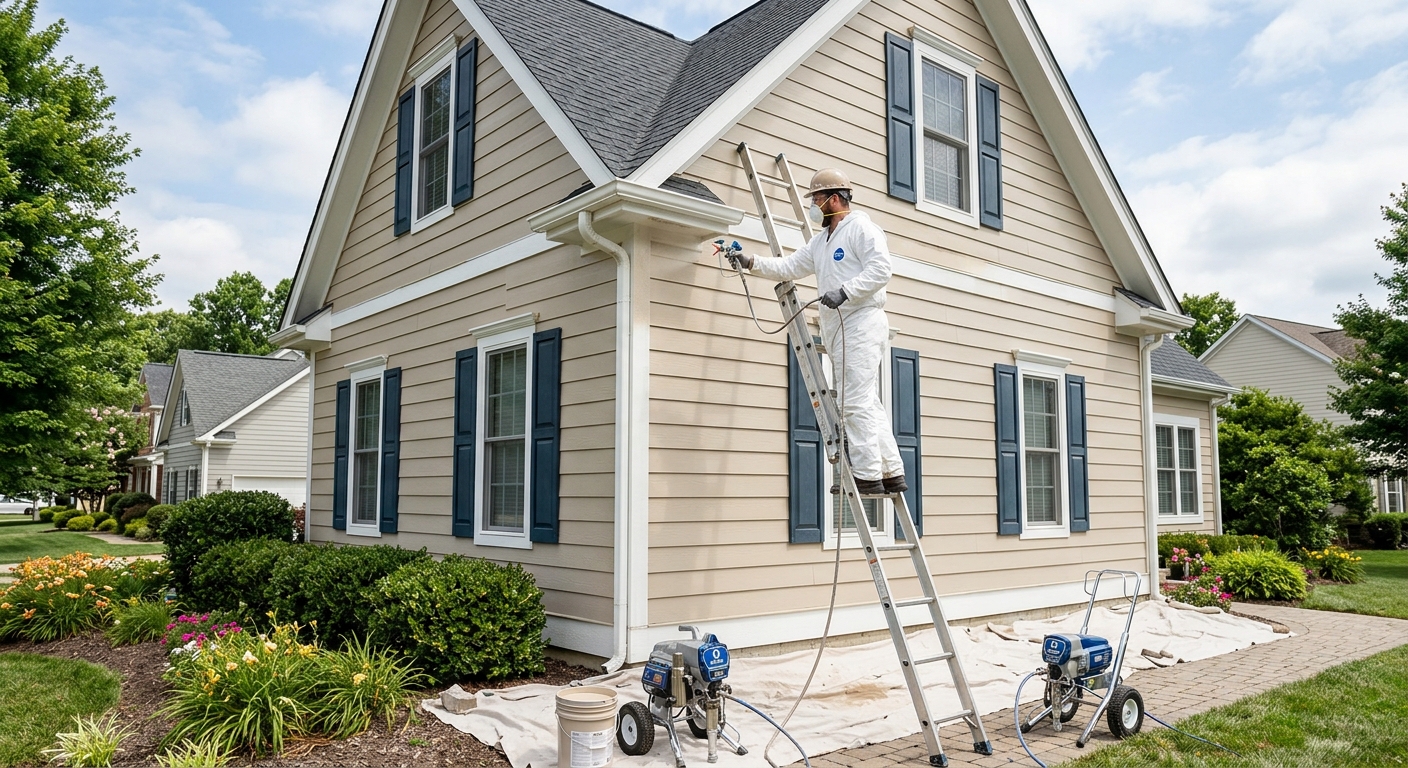
Painting options and costs in Huntsville
In Huntsville, painting costs are driven by two realities: many homes need more prep than a fresh “repaint,” and our short exterior window concentrates demand. With 45.3% of homes built before 1981 (Statistics Canada, 2021 Census), it’s common to find older siding, weathered trim, and previous paint layers that require scraping, sanding, caulking, and targeted priming before any topcoat can bond properly. On pre-1978 interiors and trim, contractors may also use lead-safe work practices if there’s a risk of lead-containing paint when sanding or scraping—this doesn’t always come up, but it does affect labour and containment time when it’s required.
Muskoka–Kawarthas weather shapes both materials and scheduling. Exterior painting is typically practical from late May through early October, when temperatures stay above 10°C and humidity is manageable for curing. That limited season—combined with cottage/lakefront access challenges—often means crew availability tightens in summer, and pricing can move toward the higher end of the band. Areas such as lakeside pockets of Windermere and other parts of the Highway 60 corridor are especially busy because access (driveways, docks, uneven grades) and colour-change repaint scopes frequently take longer.
Below are typical ranges homeowners in Huntsville use to budget, followed by a more detailed breakdown of what can push your quote up or down.
| Service |
What's Included |
Typical Duration |
Price Range |
| Interior — whole home (walls, ceilings, trim) |
Prep (patch/sand), caulking where needed, primer spot-priming, walls/ceilings coating, basic trim painting, light protection of floors and fixtures |
4–10 days |
$1,200 – $3,000 |
| Interior — per room (standard bedroom or living room) |
Prep and cleaning, patching as needed, one primer layer where required, walls and ceiling, minor trim touch-ups (light protection included) |
1–3 days |
$400 – $900 |
| Exterior — full house (siding, trim, soffits) |
Scrape/sand as needed, caulking, primer where required, two-coat exterior system, spot-repairs, protection and basic cleanup |
5–14 days |
$2,400 – $6,000 |
| Exterior — trim and accent colours only |
Surface prep focused on trim, primer spot-application, two-coat trim finish, masking and protection |
2–6 days |
$1,200 – $3,200 |
| Kitchen cabinet painting (doors, frames, spray finish) |
Degrease/clean, sanding, bonding primer, spray finish, hardware removal/labeling (where applicable), light touch-up and reinstall |
5–12 days |
$1,800 – $3,500 |
| Specialty / faux finish (accent wall, texture) |
Feature wall prep, textured or decorative technique, sealing/clear coating where needed, careful blending and cleanup |
1–5 days |
$300 – $2,800 |
Prices are estimates only and vary by project scope, site access and material selection.
What affects the price of painting in Huntsville
In Muskoka–Kawarthas, two quotes for the “same” painting job can differ by 30–50% because the work behind the walls is rarely identical. A lower price often assumes simpler prep and fewer coats, while a higher price reflects deeper surface prep (scraping, sanding, caulking, patching), better primer coverage, and tighter protection/cleanup—plus the reality that the exterior season is compressed. In Ontario (and similarly in Alberta), exterior work is typically limited to late May to early October. Contractors need temperatures above about 10°C and conditions that allow coatings to cure without moisture issues. Coastal BC can have a longer workable period, but rain, persistent humidity, and mildew risk can force different product choices and staging delays. The shorter Huntsville window concentrates demand, so summer scheduling pressure can push crews and trucks toward the higher end of the $1,200 – $6,000 exterior band.
Older home stock also changes the arithmetic. When 45.3% of homes were built before 1981 (Statistics Canada, 2021 Census), you more often encounter peeling edges, failing caulk joints, and uneven, chalky surfaces that require additional labour. On a repaint, surface prep can be 50–70% of labour, and that’s where cost swings happen: replacing soft caulk lines and priming bare wood can add hundreds quickly. For example, a trim-only scope might land near $1,200 – $3,200, but if the same trim has widespread adhesion failure and needs full priming, you can realistically see that move toward the upper end. Conversely, a simple interior repaint with good condition drywall can land closer to $400 – $900 per room, while patching and primer-heavy repairs push it higher.
| Price Factor |
Why It Matters |
Cost Impact |
| Surface prep — scraping, sanding, patching drywall or wood |
Adhesion starts here; failing paint and damaged surfaces must be stabilized before coating |
Can be the largest labour driver; often 50–70% of exterior labour on repaints |
| Number of coats — 2-coat system over primer vs. 1 coat over existing |
Coverage and durability depend on consistent build; colour changes often require extra coats |
Typically adds 10–40% depending on colour shift and condition |
| Paint quality tier — contractor-grade vs. premium (Benjamin Moore, Sherwin) |
Premium lines generally cover better and hold up longer, especially outdoors |
Materials may add hundreds; labour savings can offset in some scopes |
| Ceilings and trim — adds significant time vs. walls-only |
Ceilings require more cut-in, protection, and careful roller technique |
Often increases interior costs by 15–35% versus walls only |
| Exterior season window — short season raises summer rates |
Fewer good weeks means higher competition for crews |
Can shift pricing toward the upper end of bands in July–August |
| Lead-safe precautions — required for pre-1978 homes with lead paint |
Containment, HEPA methods, and proper disposal increase labour time |
Can add several hundred to the job depending on affected areas |
| Surface material — drywall vs. plaster vs. wood vs. stucco |
Different substrates need different primers and prep methods for bonding |
Plaster/wood frequently need more conditioning than modern drywall |
| Height and access — multi-storey exterior requires scaffolding or lifts |
Extra safety gear and setup time affect both labour and scheduling |
Often adds 10–30% for access-heavy houses |
Permits & regulations in Ontario
For painting work in Ontario, you generally do not need a permit for typical interior or exterior painting. However, the real “regulatory” piece for homeowners is health and safety planning—especially in homes built before 1978. Health guidelines recommend testing for lead paint before sanding or scraping old coatings in those homes, and if lead is present, using lead-safe work practices such as wet methods, HEPA vacuuming during dust control, and proper disposal. This isn’t usually a permit issue for homeowners, but it is standard contractor practice when risk exists.
Before hiring in Huntsville, confirm your contractor is properly insured and accountable. Step one: request proof of liability insurance (Certificate of Insurance) naming you where appropriate. Step two: verify workers’ compensation coverage (WSIB). In Ontario, the contractor should have an active WSIB account or coverage document. Step three: sign a written contract that clearly states the paint brand/line, sheen, number of coats, and what surface prep is included (for example, “scrape/sand to sound substrate,” “caulk joints,” and “spot-prime bare wood/drywall”).
What typically DOES require a permit isn’t painting itself—it’s things like structural changes, major electrical/plumbing modifications, or regulated abatement work beyond standard dust-control practices. What typically does NOT require a permit is applying paint, priming, caulking, and patching that’s part of a normal repaint. If you’re ever unsure, ask the contractor to spell out the scope and any compliance approach for pre-1978 surfaces.
Interior vs exterior painting — getting the best result in Huntsville
In Huntsville, the difference between a long-lasting paint job and a premature failure usually comes down to prep quality and system choices—not just which brand is on the label. For interiors, filling and sanding (especially around doors, patches, and nail holes), proper priming on bare areas, and cleaning dust off surfaces matter more than buying the most expensive topcoat. Sheen selection also affects durability and appearance: flat hides imperfections but scuffs more; eggshell and satin are common for living areas; semi-gloss on trim cleans up well. Two coats over the right primer almost always outlast one “thick” coat, because coverage stays consistent and film build is even.
For exteriors, Ontario’s freeze-thaw cycles and occasional high humidity demand a disciplined approach. Start with caulking before painting to prevent water ingress behind siding and trim. Use primers compatible with the substrate—wood, fibre cement, and any previously painted surfaces all bond differently. Where old paint is failing, scraping back to sound material and spot-priming is critical; skipping that step is a common reason homeowners see peeling within a season or two. While BC often emphasizes mildew-resistant choices more aggressively due to year-round damp, Huntsville still benefits from mildew-resistant exterior systems, particularly for shaded or lakeside façades where moisture hangs around longer.
Cabinet painting can be a smarter budget option than replacement. If replacement is out of reach, a spray-finish cabinet job often fits the $1,800 – $3,500 band and delivers a meaningful refresh—provided the prep and bonding primer are done correctly. And if you have pre-1978 trim or interior coatings, lead-safe methods may be needed when sanding or scraping, which can add cost but also protects your household and crew.
| Project Type |
Key Prep Step |
Recommended Coats |
Price Band |
| Interior — fresh drywall (new construction) |
Prime bare drywall to seal and create even absorbency, then sand lightly for a smooth finish |
1 primer + 2 topcoats |
$700 – $1,700 |
| Interior — repaint (good condition, no repairs) |
Clean and de-gloss lightly; spot-prime any scuffs or bare patches only |
1–2 topcoats (often 2 depending on colour change) |
$400 – $900 |
| Interior — repaint (patching and priming needed) |
Patch, sand flush, prime repairs thoroughly to prevent flashing |
1 primer + 2 topcoats |
$600 – $1,400 |
| Exterior siding (wood or fibre cement) |
Scrape to sound edges, caulk gaps, prime bare substrate before topcoating |
2-coat exterior system |
$2,400 – $6,000 |
| Exterior trim and accents only |
Remove loose paint, sand feather edges, spot-prime bare areas and caulk seams |
2-coat trim system |
$1,200 – $3,200 |
| Kitchen cabinets (spray finish) |
Degrease thoroughly and use a bonding primer for adhesion, then sand between coats if required |
Primer + 2 finish coats |
$1,800 – $3,500 |
How to choose a painting contractor in Huntsville
Start by verifying that your painting contractor can legally and practically manage the job. In Ontario, confirm WSIB coverage (proof of workers’ compensation), and request liability insurance documentation (Certificate of Insurance). A homeowner-friendly approach is to ask for both documents before you sign—so you know the contractor can protect you and their workers during staging on uneven Muskoka terrain or at height.
Next, get 2–3 itemised written quotes (not a single “lump sum” page). The best quotes break down labour and materials, and clearly list what prep is included: scraping back to sound material, caulking joints, priming bare wood/drywall, and how many coats on each surface. Ask whether paint removal and disposal are included, how they protect landscaping and windows, and whether the quote includes lead-safe precautions if your home is pre-1978. Also ask about product lines and sheen (flat/eggshell/satin/semigloss) rather than just “interior paint.”
Warranty matters: look for a workmanship warranty length for peeling, bubbling, and adhesion issues, plus clarity on whether product/manufacturer warranties require registration. Payment should be staged—never more than 10–15% upfront; hold back a portion until the final walk-through and touch-ups are complete. Finally, require a written timeline: a start date estimate and completion target, especially for exterior jobs where the late-May to early-October window matters.
- Ask for WSIB proof and confirm it’s active.
- Request liability insurance (Certificate of Insurance) before work begins.
- Get itemised labour + materials line items, not one total.
- Confirm exact paint brands/lines, sheen, and colour coverage expectations.
- Ensure prep scope is explicit (scrape/sand, patching, caulking, primer coverage).
- Check whether scaffolding/lifts are included if needed for multi-storey exteriors.
- Ask what’s excluded (e.g., rotten trim replacement, drywall replacement, major plaster issues).
- Confirm disposal is included (paint debris, masking materials, and drywall dust handling).
- Require a written start date and completion estimate.
- Verify how they protect floors, stairs, landscaping, and lakefront access paths.
- Look for a written workmanship warranty and what it covers.
- Use a staged payment schedule with a holdback after the final clean and touch-ups.
In Huntsville, red flags include: quotes that skip prep details (“we’ll paint over whatever’s there”), no written scope or product/specs, refusal to provide WSIB/liability documentation, an upfront deposit that’s more than 10–15% without a clear schedule, and vague warranty language (“best effort only”).
Frequently asked questions — painting in Huntsville
How much does it cost to paint a house in Huntsville?
For a typical Huntsville repaint, cost depends heavily on whether you’re painting just the interior rooms or doing the exterior siding and trim, and how much surface prep is required. As a budgeting guide, interior whole-home projects commonly start around the lower end of the $1,200 – $3,000 range for walls/ceilings/trim, assuming reasonable condition. Exterior full-house jobs often fall in the $2,400 – $6,000 band, because Muskoka’s freeze-thaw cycles and humidity mean prep and priming can be extensive—especially on older homes where 45.3% were built before 1981 (Statistics Canada, 2021 Census). If access is complex (uneven yards or cottage-style driveways), costs can also rise.
How much does interior painting cost per room in Huntsville?
Per-room pricing in Huntsville usually reflects the prep and whether the room is “repaint only” or needs repairs. For a standard bedroom or living room in good condition, homeowners commonly budget around $400 – $900 per room. If there are scuffs, patching, or areas that need bonding primer, the same room can move toward the upper end because repair work and primer prevent flashing. Two-coat results depend on colour change too, so moving from darker to lighter colours (or covering stains) may require additional time and product. A proper ceiling/wall and trim scope is what typically keeps the estimate accurate.
When is the best time for exterior painting in Huntsville?
The best window for exterior painting in Huntsville is typically late May through early October, when temperatures are above about 10°C and the coating can cure properly. Ontario’s freeze-thaw cycles don’t usually ruin exterior paint immediately, but they can contribute to premature failure if the paint film isn’t fully cured when temperatures dip. Summer can also be busier due to cottage/lakefront properties, so booking earlier in the season helps lock in availability. If humidity is high or rain is expected soon after application, crews may need to reschedule. Planning around weather isn’t just convenience—it’s one of the biggest drivers of long-lasting exterior adhesion.
How many coats of paint do I need?
Most durable results use a system: primer plus two finish coats for both interior and exterior, but the exact number depends on the substrate and condition. For exterior, a true two-coat system is standard over properly primed areas, especially on scraped and caulked surfaces. For interiors, repainting in good condition sometimes only needs two finish coats if colour or sheen changes are involved; “one coat” jobs often cut corners on coverage and can show unevenness. If you have bare drywall, patched spots, or stains, primer becomes non-negotiable to prevent flashing. Your quote should specify coat count and where primer is included so you can compare apples to apples.
What paint is best for Huntsville's climate?
In Huntsville, the best choice is the right coating system for exterior temperature and moisture swings. You generally want durable exterior acrylics (or other Ontario-suitable exterior lines) with good adhesion, plus products that handle occasional humidity and shaded areas where mildew can appear. For trim and wood details, bonding primer and proper caulking are just as important as topcoat brand. Inside, low-VOC paints and washable finishes are popular, especially for families and high-touch areas. If your home has pre-1978 coatings and you’re disturbing old paint, lead-safe practices and compatible primers help ensure adhesion and reduce risk—this is part of delivering a stable, long-lasting finish on older Huntsville homes.
How long does exterior paint last here?
With correct prep, caulking, primer compatibility, and a properly cured application during the warm season, exterior paint can last many years in Huntsville. The exact lifespan varies by surface condition, sun exposure, and whether your siding/trim had failing paint layers that needed removal. Older housing stock is common here—45.3% built before 1981 (Statistics Canada, 2021 Census)—which often means more time spent getting back to sound substrate before painting, and that directly affects longevity. Cutting prep or rushing around weather can reduce lifespan. A good contractor will discuss expectations based on the condition they find, not just the product name.