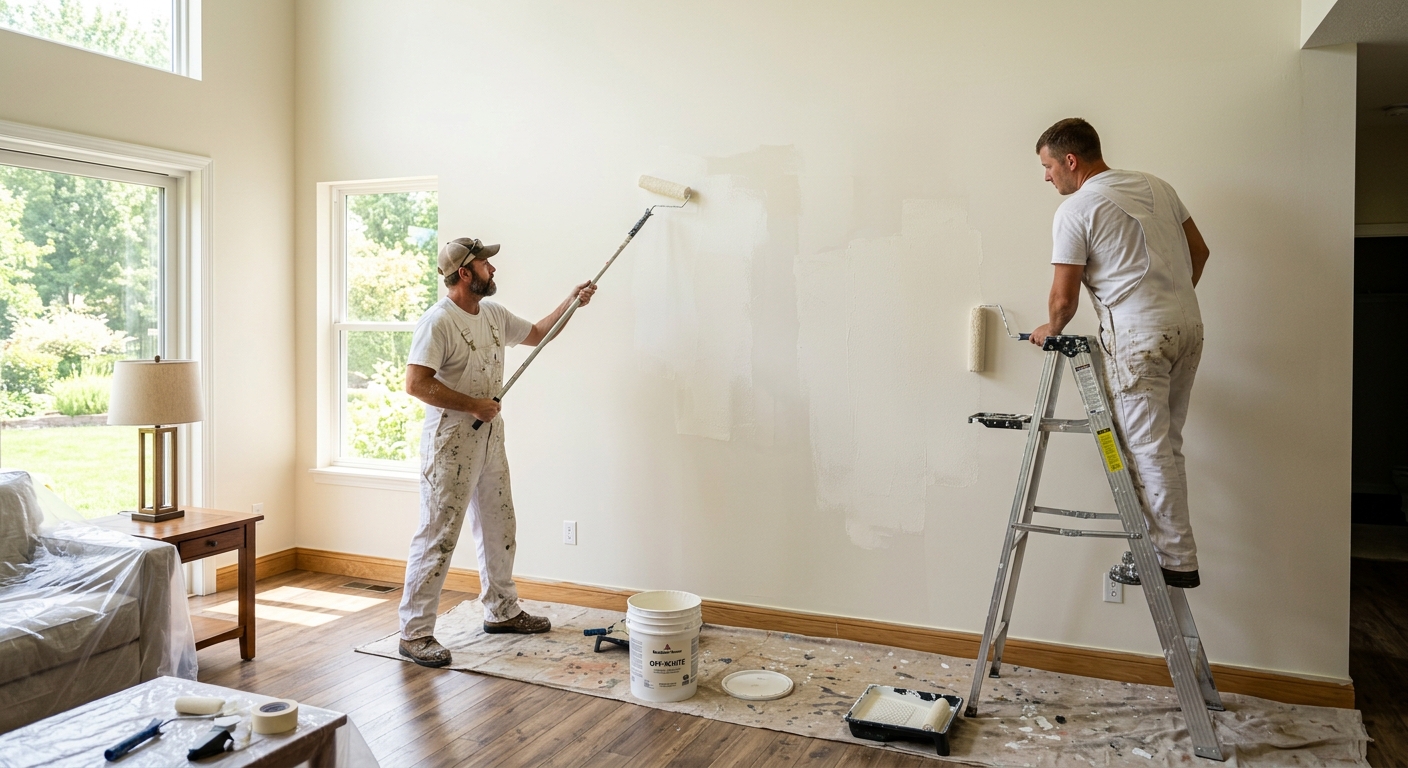
Painting options and costs in Niagara Falls
Niagara Falls homeowners have a lot of choice when it comes to painting, but the real cost swings based on prep, access, and the condition of older surfaces. With 60.8% of homes in the area built before 1981, many projects start with more than a quick coat—expect scraping, patching, sanding, caulking, and careful priming. That matters because the Hamilton–Niagara Peninsula market is shaped by four-season weather and a short, late-spring-to-early-fall window for exterior work. When temperatures cool or rain hangs around near Lake Ontario and the Niagara Escarpment, contractors pause so paint can properly bond and cure, which can push exterior pricing higher in peak summer. Interior work is typically more flexible, so schedules often open up in summer and shoulder seasons.
In neighbourhoods like Horseshoe Falls and along the older residential pockets near downtown, repainting and trim work are in steady demand because many homes feature aged wood trim, stucco, brick, and aluminum/vinyl siding. For a typical repaint, surface condition and the scope of trim/soffits often drive the difference between a “good deal” quote and a quote that includes the labour-heavy steps needed for a durable finish.
Use the table below as a practical starting point, then compare quotes based on what’s truly included (prep level, caulking, primer type, and disposal).
| Service |
What's Included |
Typical Duration |
Price Range |
| Interior — whole home (walls, ceilings, trim) |
Protect floors/fixtures, patch & sand, caulk where needed, prime repaired areas, paint walls/ceilings, paint door trim & baseboards; clean-up and debris removal |
3–7 days |
$2,500 – $5,500 |
| Interior — per room (standard bedroom or living room) |
Prep and protect, patch/sand minor imperfections, prime as required, paint walls and ceiling; include one coat trim where scheduled |
1–3 days |
$500 – $1,800 |
| Exterior — full house (siding, trim, soffits) |
Pressure wash (as needed), scrape/sand loose material, caulk all exterior joints, prime bare spots/repairs, paint siding/trim/soffits; careful masking & clean-up |
5–12 days |
$4,000 – $8,000 |
| Exterior — trim and accent colours only |
Detailed prep of trim only, scrape/sand as required, prime bare areas, caulk and paint trim accents; excludes full siding repaint |
2–6 days |
$1,500 – $4,500 |
| Kitchen cabinet painting (doors, frames, spray finish) |
Full cabinet hardware protection, degrease, sand & de-gloss, prime with bonding primer, spray paint doors/drawer fronts, roll/brush frames; re-install and touch-ups |
4–10 days (plus dry time) |
$1,800 – $4,500 |
| Specialty / faux finish (accent wall, texture) |
Surface prep for the accent area, base coat/primer as required, texture or faux process, protective topcoat depending on finish |
1–5 days |
$1,000 – $6,000 |
Prices are estimates only and vary by project scope, site access and material selection.
What affects the price of painting in Niagara Falls
In Niagara Falls and across the Hamilton–Niagara Peninsula, you can see quotes for the “same” paint job vary by 30–50%—even when square footage is similar—because the labour is mostly in prep and access. Exterior work is tightly bound to the late May to early October window: contractors generally need surface temperatures above 10°C and rising during application so coatings can flow and cure properly. Unlike coastal BC’s longer season (but higher humidity and rainfall), our region’s season compression concentrates demand, especially in July and August, and that can raise rates for multi-storey homes or any job needing scaffolding.
Prep is where older housing stock changes the math. With many homes dating back to before 1981, scraping peeling paint, sanding edges, patching wood rot, and caulking joints can represent 50–70% of labour on a repainting job. For interiors, good prep still dominates—patching and priming repairs before colour application is what prevents flashing and early peeling.
Two quick Niagara Falls examples: (1) A two-storey siding repaint on a heavily shaded lot may cost more because additional drying time and multiple primer passes are needed to ensure adhesion; (2) A trim-only refresh can be lower cost because you avoid full-surface cleaning and priming on siding, even if you’re still using higher-grade trim paint. If a full exterior job lands in the $4,000 – $8,000 band, it’s usually justified by extensive prep and caulking; trim-only projects in the $1,500 – $4,500 range often reflect a narrower scope and fewer primed areas.
| Price Factor |
Why It Matters |
Cost Impact |
| Surface prep — scraping, sanding, patching drywall or wood |
Most failures start at the substrate; removal of loose paint and fixing defects controls adhesion and longevity |
Often +20% to +45% |
| Number of coats — 2-coat system over primer vs. 1 coat over existing |
Even coverage and hiding power depend on true coating systems, not “thickening” paint |
Often +10% to +30% |
| Paint quality tier — contractor-grade vs. premium (Benjamin Moore, Sherwin) |
Premium paints typically cover better and resist staining/fading longer, reducing rework risk |
Often +5% to +20% |
| Ceilings and trim — adds significant time vs. walls-only |
Ceilings require more masking and careful cutting-in; trim needs more sanding, caulking, and detail work |
Often +15% to +40% |
| Exterior season window — short season raises summer rates |
Contractor availability and scheduling pressure increase during peak hot/dry days |
Can add +10% to +25% |
| Lead-safe precautions — required for pre-1978 homes with lead paint |
Containment and safe cleanup increase labour and disposal costs when lead is present |
Can add +10% to +35% |
| Surface material — drywall vs. plaster vs. wood vs. stucco |
Different substrates need different primer types, adhesion prep, and risk controls |
Often +10% to +30% |
| Height and access — multi-storey exterior requires scaffolding or lifts |
More rigging time, safety planning, and labour per square foot |
Often +15% to +50% |
Permits & regulations in Ontario
In Ontario, painting typically does not require a permit for ordinary interior or exterior coating work. The main “regulatory” considerations are professional responsibilities and safe work practices—especially for older homes. For properties built before 1978, health guidelines recommend testing for lead paint before sanding, scraping, or disturbing coatings that could contain lead. If lead is present, lead-safe work practices are standard for professional contractors: wet methods to reduce dust, HEPA-filtered vacuuming, containment (where appropriate), and proper disposal. For homeowners, it’s not usually a legal requirement to test before hiring, but it’s a best-practice expectation because dust control affects worker and occupant safety.
Beyond lead-safe practices, you should confirm the contractor is properly insured and can legally work on your site. Ask for proof of liability insurance and WSIB/WCB workers’ compensation coverage (not just general insurance). Always get a written contract that spells out: paint brand and sheen, number of coats, primer and caulking details, prep scope, and what happens with debris disposal and site protection.
To verify a contractor in Niagara Falls step-by-step: (1) request their WSIB/WCB clearance or certificate of coverage, (2) ask for their liability certificate naming your property or indicating coverage limits, and (3) confirm their business details and policy dates match the work period. For licensing, Ontario’s contractor licensing rules can vary by trade scope, so for painting, start by confirming they operate as a registered business and can provide current insurance documents before work begins.
Interior vs exterior painting — getting the best result in Niagara Falls
In Niagara Falls, a long-lasting paint job is less about brand names and more about prep discipline and correct systems for temperature, moisture, and surface type. For interior walls, the difference between a great finish and premature failure is usually filling and sanding, then priming patched areas so the topcoat dries uniformly. Sheen choice matters: flat paint hides wall imperfections best but can mark in busy areas; eggshell is a common balance for living rooms and bedrooms; satin and semi-gloss are tougher choices for kitchens, trim, and moisture-prone zones. A proper primer plus two coats of colour consistently outlasts “one thick coat,” particularly over repaired drywall—because hide, film build, and adhesion depend on the intended coating system.
For exteriors, the climate turns prep into the primary cost driver. Start with removing chalky or peeling material, then caulk exterior joints before painting so you seal water entry points, not just cover them. Primer selection matters too: different substrates (bare wood, patched areas, masonry-stucco, or older repaints) can need different bonding primers to prevent flashing and peeling. Also remember timing—apply coatings only when the weather supports proper cure, since Lake Ontario humidity and local temperature swings can slow drying. Premium, mildew-resistant exterior products are especially important where dampness lingers.
Cabinet painting is a practical budget alternative to replacement: if you’re considering a full kitchen refresh, a cabinet spray finish project often lands in the $1,800 – $4,500 range, whereas replacement commonly costs far more. For pre-1978 homes, lead-safe precautions should be included if sanding or scraping is required—ask what dust control and containment the contractor uses.
| Project Type |
Key Prep Step |
Recommended Coats |
Price Band |
| Interior — fresh drywall (new construction) |
Prime all drywall (including fasteners and seams), sand smooth, remove dust |
Primer + 2 coats colour (typical) |
$800 – $3,500 |
| Interior — repaint (good condition, no repairs) |
Clean/degloss, spot-prime any marks, light scuff sanding if needed |
2 coats colour (or 1 coat over properly prepared surfaces where approved) |
$500 – $2,200 |
| Interior — repaint (patching and priming needed) |
Patch and sand, then prime all repairs to match absorption |
Primer + 2 coats colour (typical) |
$700 – $3,200 |
| Exterior siding (wood or fibre cement) |
Scrape/repair, caulk joints, prime bare spots, proper wash-down and dry time |
Primer spots + 2 coats exterior system |
$4,000 – $8,000 |
| Exterior trim and accents only |
Detail scraping/sanding, caulk trim joints, spot-prime and feather edges |
Primer where needed + 2 coats trim paint |
$1,500 – $4,500 |
| Kitchen cabinets (spray finish) |
Degrease, sand/de-gloss, prime with bonding primer, control overspray and dry time |
Primer + 2 finish coats (typical spray system) |
$1,800 – $4,500 |
How to choose a painting contractor in Niagara Falls
Choosing a contractor in Niagara Falls comes down to verifying three things early: insurance, scope clarity, and workmanship accountability. First, ask for liability insurance (certificate of insurance with coverage limits) and proof of WSIB/WCB workers’ compensation. Then confirm they can explain how they protect your home: drop cloths, masking quality, ventilation plans, ladder safety, and how they’ll handle multi-storey access. You should be able to obtain documents before scheduling, not after work begins.
Next, request 2–3 itemised written quotes. The best quotes separate labour and materials and spell out prep steps (scraping, sanding, patching, caulking, priming) by surface, plus the number of coats and the paint brand/sheens. Avoid quotes that are “lump sum” with vague language like “paint as needed.” Ask what’s excluded: permit pull (usually not required for standard painting), surface repair limitations, disposal, and whether pressure washing and caulking are included in exterior scope.
Warranty and payment schedule are non-negotiable. Ask for a workmanship warranty length and whether it’s tied to your signed contract or transferable if you sell your home. For payment, never pay more than 10–15% upfront; hold back the final amount until the job is complete and cleaned up. Finally, insist on a written timeline with a start date and estimated completion date—exterior work especially depends on weather windows in Ontario.
- Confirm liability insurance certificate is current and covers your project type.
- Confirm WSIB/WCB coverage (request clearance or certificate, not just a verbal statement).
- Get an itemised quote showing prep, primer, paint, and labour separately.
- Check that the quote states number of coats and where primer is required.
- Ask if caulking is included and whether they caulk before painting (especially exterior).
- Clarify disposal: prep debris and paint waste removal should be included.
- Verify surface prep details: scraping, sanding grit level (if discussed), sanding and dust control.
- Confirm sheen schedule by room (flat/eggshell/satin/semigloss) in writing.
- Ask how they protect floors, landscaping, windows, and hardware during exterior work.
- Request start/completion dates and how weather delays are handled for exterior projects.
- Review warranty terms in writing for workmanship and preparation.
- Ensure payments are staged: small deposit only, then balance at checkpoints and final walk-through.
In Niagara Falls, common red flags include quotes that avoid prep details (“paint over whatever is there”), contractors who won’t provide insurance/WSIB documentation, unclear paint brands or sheen choices, unusually low pricing that doesn’t reflect priming and caulking, and payment demands that exceed 10–15% upfront.
Frequently asked questions — painting in Niagara Falls
Do I need to worry about lead paint in an older Niagara Falls home?
If your Niagara Falls home is older—many are built before 1981, and a large share pre-dates modern lead-safe practices (Statistics Canada, 2021 Census)—it’s smart to treat lead as a possibility. Professional contractors typically recommend testing for lead paint before sanding or scraping if your home has older coatings. If lead is found, lead-safe work practices (wet methods, HEPA vacuuming, containment where appropriate, and proper disposal) help reduce dust exposure. While homeowners aren’t usually “required” to test by law, it’s standard best practice for pros and protects everyone in the home. When comparing quotes, ask directly whether the contractor includes lead-safe procedures for pre-1978 areas and what their dust control plan looks like.
How long does it take to paint a house?
Timing depends on interior versus exterior and—most importantly—how much prep is required. For a typical interior whole-home job in Niagara Falls, many projects land around 3–7 days of active work, but dry times can extend scheduling. If you’re doing exterior painting, the late-spring to early-fall window matters because temperatures must support proper application and curing, and contractors need dry surfaces. A full exterior repaint often takes 5–12 days (sometimes more on multi-storey homes needing scaffolding). If you’re comparing quotes, look for how they account for prep (scraping and caulking) and the number of coats. For example, a full exterior project in the $4,000 – $8,000 range often includes the longer prep and priming time that drives the schedule.
What's the difference between paint quality tiers?
Paint quality tiers mainly affect hiding power, durability, and how forgiving the product is during application. Premium lines (often used by reputable contractors) typically cover better, resist stains/scuffing longer, and maintain colour consistency. That can reduce the likelihood of needing extra touch-ups or repainting sooner, especially in high-traffic areas or on trim that gets cleaned often. Contractor-grade products can still perform well when the prep and primer system are correct, but you may see more difference in coverage and smoothness, particularly over patched drywall or glossy prior coats. For budgeting, compare quotes not just by total price but by paint brand and whether the contractor uses a true 2-coat system over primer. If one quote is far cheaper than a $500 – $5,000 interior band without explaining prep/primer differences, that’s a common place where quality trade-offs show up.
How do I compare painting quotes?
To compare painting quotes fairly in Niagara Falls, focus on scope and coating systems—not just the final number. Ask each contractor to list surface prep steps (scraping/sanding, patching, priming), number of coats, primer type, and where caulking is included. Confirm whether labour includes protection (masking, floor coverings), clean-up, and debris disposal. Also check the materials: paint brand, sheen, and whether they specify a bonding primer where required. Exterior quotes should clearly state which areas are included—siding versus trim-only—and how they’ll handle dry time and weather delays within Ontario’s exterior season window. A trim-only quote in the $1,500 – $4,500 band should not look “too similar” to a full exterior quote unless prep scope and coverage are truly comparable.
What paint sheen should I use in different rooms?
Sheen selection is one of the best ways to get both a nice finish and practical cleanability in Ontario homes. For ceilings, flat or ceiling paint is common because it reduces glare and hides minor imperfections. For walls, eggshell or satin often works well: eggshell balances touch-ups and appearance in living rooms and bedrooms, while satin is better for areas that get wiped more (hallways, family rooms). Kitchens, bathrooms, and trim typically benefit from satin or semi-gloss/trim paint because they resist scuffs and cleaning. Your contractor should also match sheen to the surface prep quality—if walls are uneven from repairs, primer and proper sanding matter more than switching to a higher sheen. If you’re sensitive to glare, ask for a sheen schedule in writing before work starts.
Can I paint my house exterior in spring or fall in Niagara Falls?
You can paint in Niagara Falls in spring or fall, but success depends on temperature, surface dryness, and the ability to cure before moisture swings. In the Hamilton–Niagara Peninsula, the practical exterior window is usually late May through early October, when temperatures support proper application and curing and surfaces stay dry long enough for adhesion. Rain, fog, and humidity near Lake Ontario can delay drying and increase risk of issues like poor bonding or visible patching if coats are applied too early. Spring can work if the week ahead stays warm and dry; fall often needs tighter weather planning. When comparing exterior quotes, ask how the contractor schedules around rainy stretches and whether they’ll reschedule rather than push coating when conditions aren’t right.