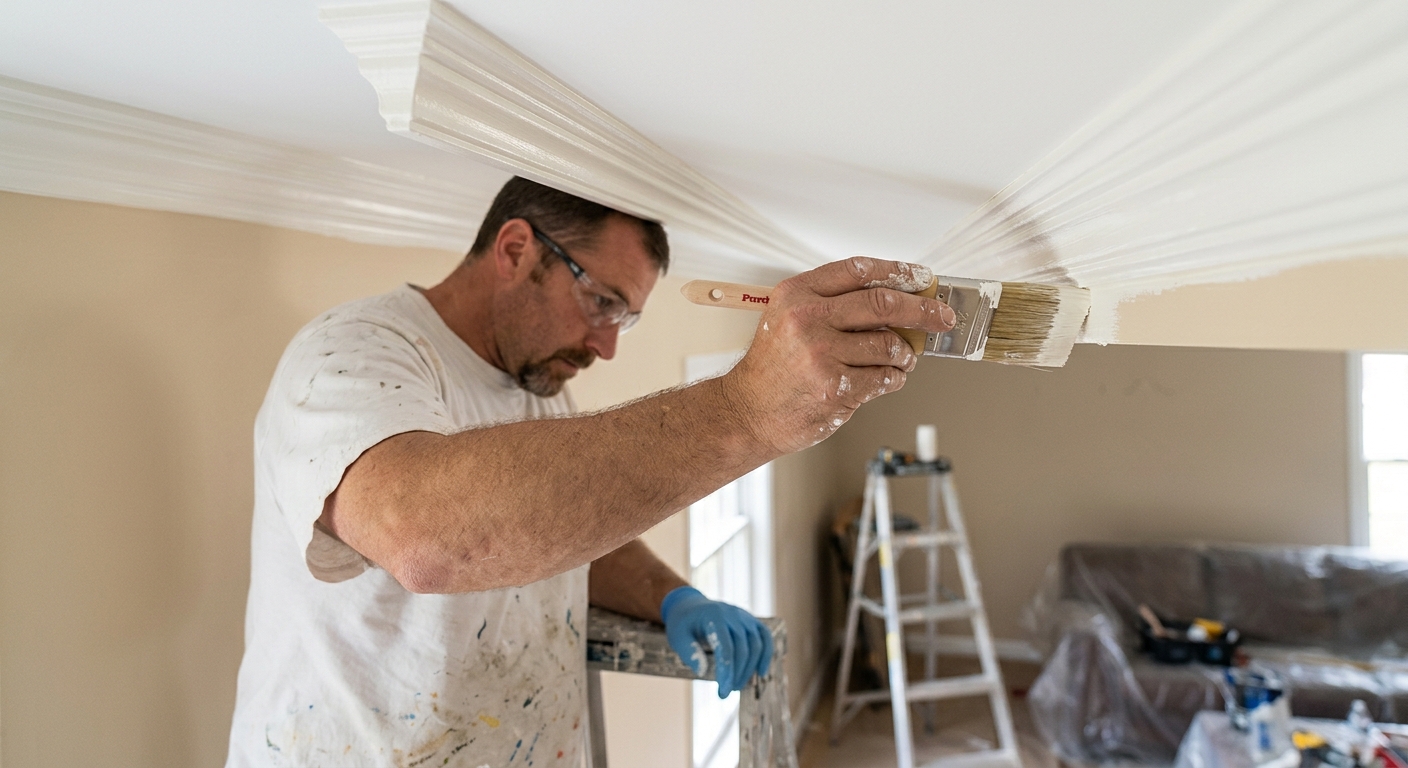
Painting options and costs in Picton
In Picton, homeowners usually choose between interior refreshes and exterior repainting based on budget, timelines, and the condition of the surfaces. Picton is a small town (4,702 people as of the 2021 Census; Statistics Canada, 2021 Census), and the trades capacity you can access tends to be more limited than in larger GTA suburbs—so planning around scheduling windows matters. You’ll also see many older residences in the area; older build dates often mean more prep work such as scraping, sanding, caulking, and priming, and in some cases lead-safe protocols may be required for pre-1978 components (trim, windows, railings). That prep time is where costs really move.
In the Toronto economic region, exterior painting is tightly climate-dependent. Contractors typically target late May through June and again September to mid-October, when temperatures are consistently above about 10°C and humidity stays moderate enough for proper curing. In the busy summer stretch, pricing can run about 10–15% higher because the “ideal” application weeks are limited. Interior jobs are less weather-sensitive, but the labour load can still be high when ceilings, stairwells, and trim are included.
In Picton’s more renewal-heavy pocket—around downtown Picton and the waterfront-facing streets—exterior repainting demand is common in spring and fall because curb appeal matters for seasonal move-ins and listings. Once you know which option fits your goals, you can compare realistic budget ranges in the table below.
| Service |
What's Included |
Typical Duration |
Price Range |
| Interior — whole home (walls, ceilings, trim) |
Full surface prep, caulking, sanding, patching as needed, primer on bare spots, 2-coat system, cut-in/edging, masking, clean-up |
6–12 business days |
$1,800 – $6,000 |
| Interior — per room (standard bedroom or living room) |
Prep and patching (minor), spot priming, 2-coat finish on walls/ceiling where accessible, masking and disposal |
2–4 business days |
$400 – $1,500 |
| Exterior — full house (siding, trim, soffits) |
Pressure washing (or equivalent cleaning), scraping/sanding, caulking, primer system, 2-coat exterior paint, protection of landscaping/windows, clean-up |
5–10 business days |
$2,500 – $8,000 |
| Exterior — trim and accent colours only |
Surface prep on trim areas, sanding/spot-priming, caulking, 2-coat trim paint, masking of siding, clean-up |
3–6 business days |
$1,500 – $4,500 |
| Kitchen cabinet painting (doors, frames, spray finish) |
Degreasing, light sanding, primer/adhesion system, spray-finished doors (best results), hardware removal, back-priming as needed, re-install |
5–10 business days (including dry/cure time) |
$1,200 – $4,000 |
| Specialty / faux finish (accent wall, texture) |
Surface preparation for the specialty system, base coat(s), application and finishing technique, protective topcoat as required |
2–6 business days |
$300 – $5,000 |
Prices are estimates only and vary by project scope, site access and material selection.
What affects the price of painting in Picton
In Picton and across the Toronto region, you can see the same “interior repaint” quote swing by 30–50% because painting is mainly labour and preparation. Two contractors can price differently based on how aggressively they prep, how many coats they apply on certain surfaces, how much trim work they include, and how they handle protection and clean-up. Even where the product is similar, the process determines how long the finish lasts—especially in Ontario’s freeze-thaw cycles and seasonal humidity changes.
For exterior work, the season is tightly climate-bound in the Greater Toronto Area: contractors usually work from late May to early October, and they need stretches of time when temperatures are above about 10°C and rising during application so coatings can cure and adhere. In GTA summers, demand peaks and the “ideal” weeks are limited, which often pushes exterior pricing roughly 10–15% higher in June–August. Coastal BC often has a longer calendar but higher mildew risk and dampness, while Ontario’s main threats are rain, frost, and humidity spikes that can delay curing or require re-coating.
Older homes throughout the region typically need more prep—scraping, caulking, patching and priming—which can represent 50–70% of total labour on a repainting job. That’s why a repaint that might sit in the interior band (for example, $400–$6,000) can still feel expensive when you add ceilings, heavy trim, and multiple repairs. For exteriors, that same logic is why a job can move from the lower end (around $1,500–$3,000 for trim-only) up toward $8,000 when the full house needs more surface restoration, more primer system, and extended working days due to weather interruptions.
In Picton specifically, I often see cost rising when there’s flaking trim paint that requires more scraping, or when accessibility is tight around decks and landscaping. Costs can come down when the existing coating is firmly bonded and the siding is relatively uniform—meaning fewer patches and fewer coats of primer.
| Price Factor |
Why It Matters |
Cost Impact |
| Surface prep — scraping, sanding, patching drywall or wood |
Prep determines adhesion and smoothness; repainting isn’t just “covering.” |
Can add the biggest labour swing; typically 20–70% of effort on repaints |
| Number of coats — 2-coat system over primer vs. 1 coat over existing |
Sheen, coverage, and hiding power affect durability and uniform colour. |
Often shifts price by roughly 10–25% |
| Paint quality tier — contractor-grade vs. premium (Benjamin Moore, Sherwin) |
Premium coatings can improve hide, scrub resistance, and long-term appearance. |
May change material line-item by ~5–20% depending on coverage |
| Ceilings and trim — adds significant time vs. walls-only |
Ceilings and detailed trim increase masking, cut-in work, and touch-ups. |
Commonly increases total labour by 15–40% for interior jobs |
| Exterior season window — short season raises summer rates |
Weather limitations compress demand and affect scheduling and turnaround. |
Can push exterior pricing up ~10–15% in peak weeks |
| Lead-safe precautions — required for pre-1978 homes with lead paint |
Wet methods, HEPA vacuuming, and disposal add time and materials if lead is present. |
Can add 5–25% depending on how much disturbed surface exists |
| Surface material — drywall vs. plaster vs. wood vs. stucco |
Different substrates need different primers and prep intensity. |
May add primer/repair time; often 10–30% |
| Height and access — multi-storey exterior requires scaffolding or lifts |
Higher access increases setup time, labour, and safety measures. |
Often adds a substantial labour premium; frequently 15–50% |
Permits & regulations in Ontario
In Ontario, painting typically does not require a permit for normal interior or exterior repainting. Where rules matter is not the “permit” side for homeowners, but safe work practices for specific hazards. For homes built before 1978, health guidelines recommend testing for lead paint before sanding or scraping. If lead is present, contractors are expected to follow lead-safe methods—such as wet methods to reduce dust, HEPA vacuuming, careful containment where needed, and proper disposal of debris. It’s not usually a legal requirement for homeowners to test, but it’s standard professional practice to protect occupants and workers.
Also, confirm your contractor carries liability insurance and WSIB/WCB workers’ compensation coverage (coverage prevents you from being stuck with costs if a worker is injured on your property). Ask for a written contract that clearly states the paint brand (or approved equivalency), sheen level, number of coats, and the specific surface prep scope included—especially pressure washing, scraping, sanding, patching, caulking, primer types, and how repairs beyond “minor patching” are handled.
To verify before signing: (1) check the contractor’s Ontario registration status and business information through provincial business and contractor listings (start with their website details and then confirm via available provincial resources), (2) request a current certificate of insurance for liability and verify the effective dates and address match, and (3) ask for proof of WSIB/WCB clearance (or coverage details) and keep it in your project file. Finally, insist the scope includes any listed prep work—so “freehand improvements” aren’t added mid-job.
Interior vs exterior painting — getting the best result in Picton
In Picton’s Ontario climate, the difference between a long-lasting paint job and a premature failure usually comes down to prep quality and coat system discipline—not just paint brand. Indoors, the biggest drivers are surface repairs (filling, sanding, priming), correct sheen selection by room, and realistic coverage. A “thick” coat is not the same as two proper coats: two coats over a proper primer generally outlast a single heavy layer because it dries more evenly and reduces flashing. For high-touch areas like hallways, choose a resilient sheen (often eggshell or satin) and keep the walls properly primed so the topcoat doesn’t peel later.
For exteriors, Ontario’s cycle of rain, humidity spikes, and freeze-thaw makes timing and substrate prep critical. Caulk should be applied before painting to seal joints and help prevent water ingress. Primer type matters: wood and bare areas often need a bonding primer, while previously painted surfaces need correct prep for adhesion. If you’re dealing with older trim or patchy adhesion, skipping primer is a common reason coatings fail early.
A practical example: if you’re quoted $2,500–$4,500 for exterior trim and accents only, that’s usually justified when the siding is intact and the work is focused—primarily masking, spot prep, and two trim coats. If the quote climbs toward the full-house exterior band (up to $8,000), it’s typically because more labour is tied to scraping, patching, priming, and longer weather-dependent cure windows.
For kitchens, cabinet painting is a strong budget alternative to replacement when the boxes are solid and hardware holes align. For pre-1978 homes, lead-safe precautions still apply if sanding or scraping creates dust—planning this upfront is cheaper than discovering requirements mid-project.
| Project Type |
Key Prep Step |
Recommended Coats |
Price Band |
| Interior — fresh drywall (new construction) |
Prime to seal and control suction before topcoat |
1 primer + 2 topcoats |
$1,200 – $6,000 |
| Interior — repaint (good condition, no repairs) |
Clean, lightly scuff-sand, spot-prime as needed |
1 primer on spots + 2 topcoats |
$400 – $3,500 |
| Interior — repaint (patching and priming needed) |
Patch, sand smooth, and prime repaired areas thoroughly |
1 full primer where required + 2 topcoats |
$900 – $6,000 |
| Exterior siding (wood or fibre cement) |
Thorough cleaning, scraping loose paint, and correct primer system |
2 topcoats + primer as required for adhesion |
$2,500 – $8,000 |
| Exterior trim and accents only |
Masking plus detailed prep of trim edges and junctions |
2 trim coats + spot primer |
$1,500 – $4,500 |
| Kitchen cabinets (spray finish) |
Degrease, sand/adhesion prep, and prime for a durable bond |
Primer + 2 conversion-style finish coats |
$1,200 – $4,000 |
How to choose a painting contractor in Picton
Choosing a contractor in Picton is easiest when you verify three basics: Ontario licensing/registration where applicable, liability insurance, and WSIB/WCB coverage. Start by asking for proof before you book anything—then confirm the documents match your project address and the dates are current. Request a certificate of insurance for liability and ensure it lists you as the owner/insured interest where appropriate. For WSIB/WCB, ask for proof of coverage or clearance status and confirm it’s active for the painter working on your home. If a contractor can’t provide these, move on.
Next, get 2–3 itemised written quotes—not a single lump sum. The best quotes break out labour and materials, list the surface prep scope (washing, scraping, sanding, caulking, drywall patching, primer), state the number of coats, and specify product brands or approved equivalents. Confirm what’s excluded: furniture moving, disposal, lead-safe containment (if applicable), scaffold or lift charges, and whether they will do pressure washing for exterior work. Clarify whether paint disposal and masking material disposal are included.
Warranty matters too: ask for workmanship warranty length and whether it covers peeling, flaking, and adhesion failures under normal conditions. Distinguish between product/manufacturer warranty (brand coverage) and contractor workmanship. Payment schedule should protect you—never pay more than about 10–15% upfront, and hold back until the job is complete and the punch list is finished. Get an agreed timeline with a start date and completion estimate in writing, plus a plan for weather delays on exteriors.
- Request proof of liability insurance before signing (not after the first day).
- Confirm WSIB/WCB coverage for the workers assigned to your job.
- Use a written scope that lists prep steps, primer use, and caulking responsibilities.
- Ask for the number of coats per surface and where primer is required.
- Require paint brand and sheen level (flat/eggshell/satin/semi-gloss) in writing.
- Ensure protection details are included (drop sheets, masking, ventilation for interiors).
- Clarify how they handle older-home layers and loose coating (scrape/sand vs. “paint over”).
- Ask how lead-safe practices would be handled for pre-1978 areas if dust-producing prep is needed.
- Confirm whether pressure washing and yard protection are included for exteriors.
- Discuss access: ladders vs. lift/scaffold and who pays if site conditions change.
- Get disposal included (paint waste, masking, and debris from scraping/patching).
- Set payment milestones: small deposit, then progress payments, final after completion.
Red flags in Picton include: a quote that says “we’ll prep and paint” without specifying primer/caulking/coats; refusing to provide insurance or coverage proof; asking for a large upfront payment beyond 10–15%; starting exterior work without considering the temperature/cure window; and no written warranty terms or an overly brief contract that leaves prep exclusions vague.
Frequently asked questions — painting in Picton
Should I paint or replace my cabinets?
In Picton and across Ontario, painting is usually the smarter choice when the cabinet boxes are structurally sound and doors/frames aren’t warped or badly delaminated. If you’re dealing with a kitchen that’s dated but still solid, cabinet painting (doors, frames, often sprayed for a smoother finish) can refresh the look for a fraction of replacement. Typical cabinet painting pricing commonly lands in the $1,200–$4,000 range, depending on door count, condition, and whether hardware changes are required. Replacement may be necessary if the boxes are water-damaged or if the existing finish is peeling extensively from moisture exposure.
Before you decide, ask your contractor to check adhesion issues and whether there’s grease buildup (big cause of early failure). For pre-1978 homes, plan lead-safe practices if sanding or scraping will disturb old paint. A good quote will include prep steps and the specific coating system so you can compare apples to apples.
How do I prep walls before painting?
Homeowners can do a lot of prep, but the key is avoiding steps that cause uneven results. In Ontario, I recommend you start with simple, non-destructive prep: remove wall hangings, cover floors, and wash greasy areas (kitchen) with a degreaser so paint can bond. Fill small nail holes and minor cracks with patching compound, then sand smooth once dry. Wipe down dust after sanding and let the walls fully dry.
What you shouldn’t guess at: sanding off large areas of flaking paint without a plan, scraping down to bare wood/gypsum without priming, or painting over stained/unknown finishes without a primer suitable for the problem. A proper professional will include cleaning, patching, sanding, and spot priming. If your walls are in poor condition, interior repainting often trends toward the upper interior band (up to $6,000) because repairs and primer time grow quickly.
If your home is older (pre-1978), get advice on lead-safe precautions before disturbing paint.
Do I need to worry about lead paint in an older Picton home?
You should treat lead paint as a “manage carefully” issue in older Picton homes, especially if your house was built before 1978. Ontario generally doesn’t require homeowners to test, but health guidelines recommend testing before sanding or scraping. If lead is present, contractors typically use lead-safe work practices such as wet methods to limit dust, HEPA vacuuming where appropriate, and proper disposal. This is not just paperwork—it materially affects cleanup time and the protection setup.
What you can do as a homeowner: review when upgrades occurred (some layers may have been painted over), ask your contractor whether they will do a lead risk assessment, and request written details on lead-safe procedures if they anticipate dust-producing prep. If your project is exterior trim-only, the exposure risk may be lower than full wall sanding, but it depends on what surfaces are disturbed.
Plan for lead-safe precautions in the quote because it can change labour and materials. The goal is clean work without leaving dust behind—particularly important for families and pets.
How long does it take to paint a house?
Timelines in Picton depend on interior vs. exterior, the scope, and how much surface prep is required. A “per room” interior repaint commonly takes about 2–4 business days, while whole-home interior projects often land around 6–12 business days. Exteriors are longer because they rely on weather windows and because prep (scraping, sanding, caulking, and priming) can expand when older paint layers aren’t well bonded.
For exterior painting in the Toronto region, contractors typically plan around late May–June and September–mid-October, when temperatures are above about 10°C and cure conditions are stable. If the weather turns rainy or too cool mid-job, cure times stretch and delays can push the completion date. Exterior trim and accent repainting may take roughly 3–6 business days, while full-house exteriors often run 5–10 business days.
The best way to estimate your schedule is to ask for a written timeline based on access, number of rooms, and your surface condition at the time of inspection.
What's the difference between paint quality tiers?
Paint quality tiers mainly differ in hide (how many times you need to coat), how smoothly they level out, durability (scrub resistance and scuff performance), and how consistent the finish looks as it dries. Premium lines from brands commonly used by Ontario pros—such as Benjamin Moore or Sherwin—often cost more per litre, but they can reduce the number of coats needed for even coverage and can improve how the finish tolerates cleaning and everyday wear.
That said, in most Picton jobs, prep and the correct primer system matter more than chasing the most expensive topcoat. If primer is missing where it’s required, even premium paint can fail early. When surface conditions are right and the quote includes a proper 2-coat system, you’re far more likely to avoid issues like flashing, peeling, or rough texture.
For budgeting, think in bands: interior projects can range from about $400 up to $6,000 depending on repairs and trim work, and exterior full-house jobs are commonly within $1,500–$8,000 based on prep and weather-dependent execution.
How do I compare painting quotes?
To compare quotes fairly in Picton, insist on itemised proposals that show labour and materials, and make sure every quote uses similar prep scope and coat count. Watch for “apples to oranges”: one contractor might include pressure washing, scraping, sanding, caulking, and primer; another might only mention painting over existing surfaces. Confirm the number of coats, where primer is required, and what sheen and paint brand are specified.
Ask each contractor what’s excluded: disposal, furniture moving, patching beyond minor repairs, scaffold/lift charges, and whether weather delays change the schedule or labour cost. Also verify warranty terms (workmanship coverage) and the payment schedule—strong projects typically start with a small deposit around 10–15%, then progress payments, with final payment tied to completion.
If you see a huge difference—say one quote sits closer to $1,500–$3,000 for exterior trim while another targets $2,500–$8,000—ask what additional prep or restoration is included. Ontario’s older-home layers and Ontario’s short exterior season can justify differences, but it should be explained clearly in writing.