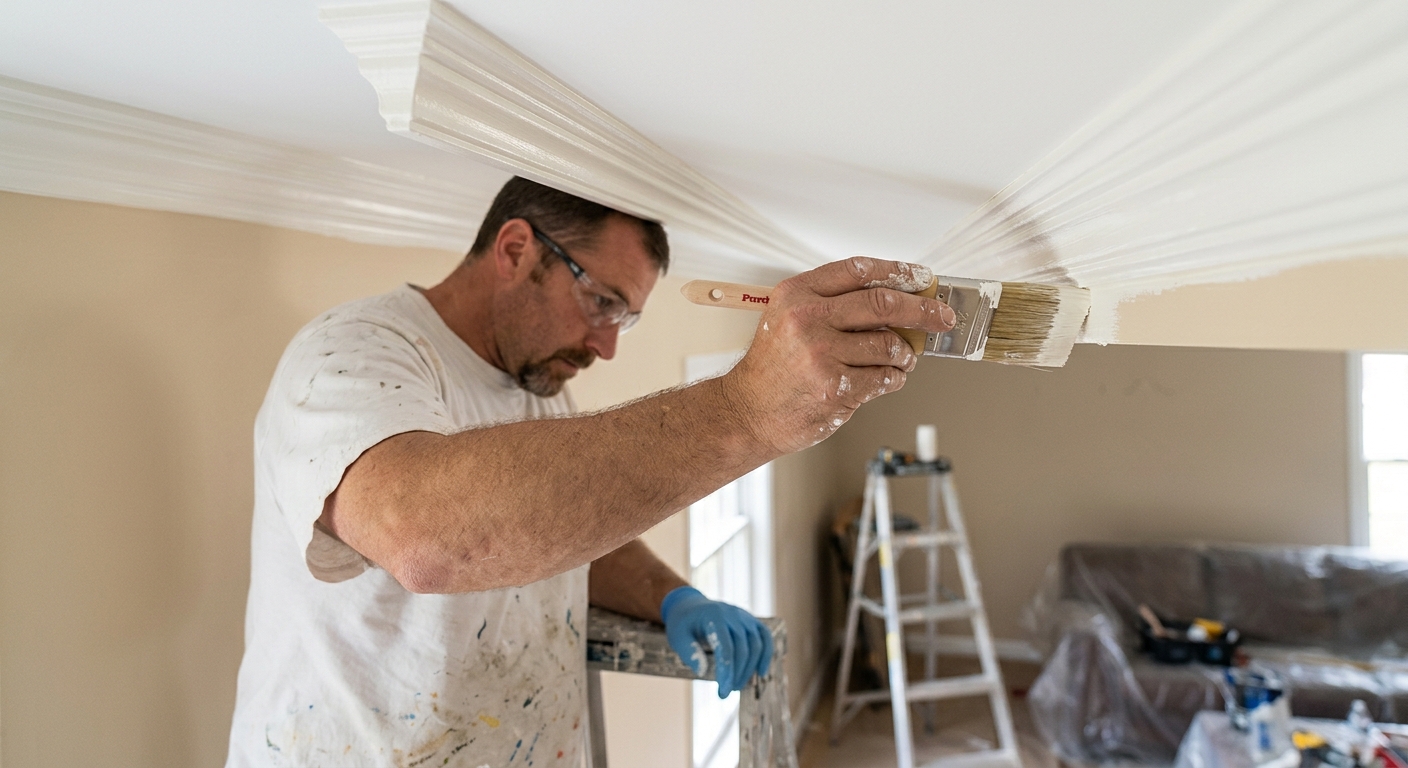
Painting options and costs in Old East York
In Old East York, painting choices usually start with two realities: most neighbourhoods are built up over decades, and the timing for exterior work depends on the weather. The 2021 Census puts Old East York’s population at 9,233 (Statistics Canada, 2021 Census), which aligns with steady demand from homeowners and small businesses—especially around busy streets and side streets where access and staging need careful planning. Equally important, Toronto’s older housing stock (with many pre-1980 homes) typically needs more prep than newer builds: scraping, patching, sanding, caulking, and priming multiple layers before a topcoat can stick. For pre-1978 properties, professionals also plan lead-safe precautions before disturbing paint on trim, windows, railings, and older doors.
Cost is shaped by Toronto’s climate and contractor availability. Exterior painting in the Greater Toronto Area is tightly bound to a short, temperature- and humidity-friendly season—commonly late May through June, then again from September to mid-October—when temperatures are consistently above about 10°C for proper curing. In June to August, peak scheduling can push exterior pricing 10–15% higher because crews are stretched and “ideal” weather windows are limited. Interior work is more flexible year-round, but labour still dominates: ceiling height, stairwells, occupancy, masking, and finish level can swing a quote significantly.
Below are typical, homeowner-facing ranges for Old East York. Use these to sanity-check proposals before you compare line by line in the next sections.
| Service |
What's Included |
Typical Duration |
Price Range |
| Interior — whole home (walls, ceilings, trim) |
Move furniture as agreed, protect floors/windows, patch & sand, prime where needed, paint walls/ceilings, paint baseboards/door trim; basic hardware masking |
5–10 days |
$3,000–$6,000 |
| Interior — per room (standard bedroom or living room) |
Prep & patching, prime scuffed areas, paint walls (and ceiling if selected), caulk edges; clean-up and haul-away |
2–4 days |
$900–$1,800 |
| Exterior — full house (siding, trim, soffits) |
Pressure-wash, scrape/sand loose paint, patch & caulk, prime bare spots, spot-prime stains/repairs as needed, 2-coat finish system; prep for gutters/edges |
2–4 weeks (seasonal availability) |
$3,500–$8,000 |
| Exterior — trim and accent colours only |
Surface prep on trim/accents, prime as required, caulking, 2-coat application on trim areas only; protect siding and landscaping |
1–2 weeks |
$1,500–$3,600 |
| Kitchen cabinet painting (doors, frames, spray finish) |
Degrease/de-scuff, remove & label doors as agreed, prime and spray/finish; new hardware masking; light touch-ups and reinstallation |
1–2 weeks (plus dry time) |
$2,000–$4,000 |
| Specialty / faux finish (accent wall, texture) |
Target-wall prep, texture/faux application, sealing and touch-ups; colour-matching and test swatches |
2–5 days |
$800–$2,500 |
Prices are estimates only and vary by project scope, site access and material selection.
What affects the price of painting in Old East York
In Toronto and across Ontario, quotes for the “same” painting job can vary by 30–50% because surface preparation, coating strategy, and crew productivity differ. Two painters can offer similar final paint colours, but one might include thorough scraping, proper priming, and multiple coat systems—while another may assume “one coat” touch-up over problematic areas. Exterior work, in particular, is sensitive to scheduling and weather, and that changes what crews can reasonably do in a given week.
For Old East York homeowners, the exterior season window is the big driver. In the Toronto region, exterior painting typically runs from late May to early October, when temperatures are above roughly 10°C and rising during application. Coastal BC often has a longer “calendar” season, but persistent dampness increases mildew risk and requires mildew-resistant coatings and careful timing. In the GTA, the main constraints are frost, rain, and humidity spikes rather than year-round wetness—yet the short ideal weeks concentrate demand. On top of that, many older homes across the area (including in Old East York) need extensive prep. Scraping, caulking, and priming can represent 50–70% of total labour on a repaint because loose paint must be removed and edges sealed before any finish coat can last.
Concrete examples: a full exterior repaint might land in the $3,500–$8,000 range depending on how much back-priming is required after paint failure and how much caulking is needed around windows and trim. If you keep scope to trim and accent colours only, you may be closer to $1,500–$3,600—but only if siding prep is minimal. Height and access also matter: multi-storey fronts near busier streets often require lifts or careful staging, which adds labour.
| Price Factor |
Why It Matters |
Cost Impact |
| Surface prep — scraping, sanding, patching drywall or wood |
Prep governs adhesion and longevity; missed loose paint or poorly sanded patches will fail first. |
High (can be the majority of labour) |
| Number of coats — 2-coat system over primer vs. 1 coat over existing |
Coverage and uniformity rely on a planned build-up, not shortcuts. |
Medium to high |
| Paint quality tier — contractor-grade vs. premium (Benjamin Moore, Sherwin) |
Premium coatings often cover better, resist scuffs/staining, and level more consistently. |
Low to medium (material) but reduces rework risk |
| Ceilings and trim — adds significant time vs. walls-only |
Cut-in and protection time increases; trim requires extra sanding/caulking for a clean edge. |
Medium |
| Exterior season window — short season raises summer rates |
Limited ideal weeks increase scheduling pressure and crew overhead. |
Medium (often 10–15% in peak periods) |
| Lead-safe precautions — required for pre-1978 homes with lead paint |
Lead-safe work practices change how surfaces are prepped, cleaned, and how waste is handled. |
Medium (time and materials) |
| Surface material — drywall vs. plaster vs. wood vs. stucco |
Different substrates absorb differently and need different primers and patch compounds. |
Medium |
| Height and access — multi-storey exterior requires scaffolding or lifts |
Access equipment and protection increase time and safety overhead. |
Medium to high |
Permits & regulations in Ontario
In Ontario, painting typically does not require a permit. That means you generally do not need to apply for permission to paint interior walls, ceilings, trim, or to repaint the exterior of a private home. The one key exception is not “painting” itself, but regulated work that sometimes goes alongside it—for example, certain structural changes, alterations, or work affecting building envelope components may trigger other approvals. For straightforward coating work on an existing single-family home, permits are usually not part of the process.
Where Ontario practice matters is health and safety. For homes built before 1978, health guidelines recommend testing for lead paint before sanding or scraping, and using lead-safe work practices if lead is present (wet methods to reduce dust, HEPA vacuuming, proper disposal, and containment). This is not usually mandated for homeowners, but it is standard practice for professional contractors. A reputable painter should be able to describe their lead-safe approach clearly—especially around older trim, windows, railings, and doors.
Before work begins in Old East York, confirm three items: (1) liability insurance, (2) workers’ compensation coverage (WSIB/WCB), and (3) a written contract that lists surface prep steps, paint brand/line and sheen, primer use, and the number of coats included. To verify coverage, ask for a current certificate of insurance and proof of WSIB/WCB coverage; keep a copy with your contract. For licensing, homeowners in Ontario typically check the contractor’s standing through available provincial contractor resources (where the contractor is registered) and verify the business name matches the documentation you receive.
Interior vs exterior painting — getting the best result in Old East York
In Old East York, the difference between a long-lasting paint job and a premature failure comes down to prep and the right coating plan for Toronto’s freeze–thaw cycles and summer humidity swings. For interior work, surface preparation matters more than brand hype. Filling and sanding nail pops, caulking irregularities, priming stained or patched areas, and achieving proper dry time before topcoat are what prevent flashing and peeling over time. Sheen choice is equally important: flat can hide wall imperfections but scuffs more; eggshell and satin are common for living areas and hallways; semi-gloss is often best on trim and higher-touch areas because it’s easier to clean.
For exteriors, prep is non-negotiable in Ontario. Scrape loose paint, sand remaining edges, pressure-wash effectively, and caulk before painting so water can’t intrude behind coatings. Primer type must match the substrate and condition—oil-based primers can be useful for certain stains or adhesion issues, while latex systems often perform well when paired with correct prep and compatible topcoats. Unlike coastal BC where mildew resistance is a constant focus, the GTA’s bigger risks are rain timing, humidity spikes, and winter damage that reveals itself later. That’s why crews time exterior work around temperatures above about 10°C and verify curing conditions.
Cabinet painting is a budget alternative to replacement, but it still requires degreasing and a careful primer/finish system. If your goal is affordability, cabinet painting can be a smart investment, while trying to “spot paint” cabinet doors without full prep usually leads to peeling and texture differences.
Example: a full exterior repaint may start around $3,500–$8,000, but if the siding has widespread failing paint or extensive caulking needs, paying for full prep is justified because a cheaper “surface-only” approach tends to reappear as blistering or peeling within a season or two—especially after Toronto’s damp-to-dry transitions.
| Project Type |
Key Prep Step |
Recommended Coats |
Price Band |
| Interior — fresh drywall (new construction) |
Proper drywall prep: joint compound cure time, sand smooth, spot-prime, caulk edges |
Primer + 2 topcoats |
$1,200–$3,500 |
| Interior — repaint (good condition, no repairs) |
Thorough cleaning, scuff-sand shine, caulk minimal gaps |
1–2 topcoats (usually 2 for uniformity) |
$900–$2,500 |
| Interior — repaint (patching and priming needed) |
Patch sand + feather edges, prime repairs and stain spots |
Primer + 2 topcoats on affected areas (then blend) |
$1,200–$4,000 |
| Exterior siding (wood or fibre cement) |
Scrape/sand loose paint, wash, prime bare spots, caulk at transitions |
Primer on bare areas + 2 finish coats |
$3,500–$8,000 |
| Exterior trim and accents only |
Remove loose paint, profile edges, caulk and spot-prime |
2 finish coats (with primer where needed) |
$1,500–$3,600 |
| Kitchen cabinets (spray finish) |
Degrease thoroughly, de-scuff, prime properly, control dust for a smooth coat |
Primer + 2 topcoats (often sprayed) |
$2,000–$4,000 |
How to choose a painting contractor in Old East York
Choosing a contractor in Old East York comes down to verifying the essentials before you compare price. In Ontario, you want proof of liability insurance and workers’ compensation coverage (WSIB/WCB). Ask for the current certificate of insurance and verify dates and that your address can be covered under their policy as an additional job site. For WSIB/WCB, request proof of coverage that matches the legal business name on the contract.
Then get 2–3 itemised quotes. “Itemised” should mean labour and materials separated, with clear allowance for prep (scraping, sanding, patching, priming), caulking, number of coats, and disposal. A good quote states the paint brand/line, sheen (for interiors), and how many coats are included—especially whether the exterior includes primer on bare metal/wood and patch areas. Also confirm whether permits are required (typically not for painting in Ontario) and whether your quote includes pressure washing, masking/protection, and waste removal.
Warranty should be written: workmanship warranty length, what it covers (peeling due to workmanship vs. product failure), and whether it’s transferable if you sell the home. Payment scheduling matters: never pay more than 10–15% upfront; hold back a portion until completion and final walk-through. Finally, insist on a written timeline with start date and completion estimate, because the GTA exterior season is weather-dependent.
- Confirm liability insurance and request a certificate before any work starts.
- Verify WSIB/WCB coverage with documentation (not a verbal assurance).
- Ask for an itemised quote: labour + materials, not a single lump sum.
- Check prep scope: scraping/sanding, patching, caulking, and priming are listed.
- Confirm number of coats by surface type (walls/trim/exterior/patches).
- Review paint brand/line and sheen included (for interiors) and compatibility (for exteriors).
- Ask how they protect landscaping, windows, and eavestroughs on Old East York streets.
- Confirm clean-up and disposal are included (drop cloths, hauling, and final broom sweep).
- Get a written schedule with weather contingencies for exterior work.
- Ask how they handle lead-safe work for pre-1978 homes (testing and safe prep steps).
- Review warranty in writing, including what happens if peeling or flashing occurs.
- Agree on payment milestones: 10–15% upfront maximum; holdback until final sign-off.
Red flags to watch in Old East York: contractors who won’t provide insurance/WSIB proof; quotes that skip scraping/priming on repaints; “we’ll do it cheap with one coat” language for exteriors; vague scope that doesn’t mention caulking and prep; and payment requests that exceed 10–15% upfront or won’t allow a holdback.
Frequently asked questions — painting in Old East York
How do I choose a painting contractor in Old East York?
Start by verifying proof of liability insurance and WSIB/WCB coverage, then insist on 2–3 itemised written quotes. In Old East York, the crews you choose should be able to explain how they handle surface prep—scraping, sanding, patching, and priming—because prep is what keeps paint from failing after Toronto’s rain and temperature swings. For exterior work, ask for a clear plan for timing within the late May–June and September–mid-October window and how they manage rain/humidity. If you’re comparing budgets, don’t just anchor to the low number; compare what’s included. For example, a realistic exterior full-house repaint often sits around $3,500–$8,000 depending on prep needs.
How many coats does an exterior repaint need in Old East York?
Most exterior repaints in Old East York use a 2-coat topcoat system, with primer applied where the surface is bare, patched, or otherwise needs adhesion support. The exact approach depends on what’s underneath: stable, well-prepped surfaces may only need primer on bare spots, while failing or heavily scraped areas often require more primer and sometimes stain-blocking. Toronto’s climate makes coverage and proper curing essential—application should happen when temperatures are consistently above about 10°C and dry conditions allow paint to cure. If a contractor promises “one coat and you’re done” for a repaint, that’s a common reason for early peeling or flashing. If you’re budgeting, your quote should reflect prep and multiple coats rather than a rushed application.
What is the best primer for older Old East York homes?
For older Old East York homes (including many pre-1980 builds, and often some pre-1978 paint systems), the best primer depends on substrate and condition: wood, fibre cement, stained trim, and areas with residue from old paint all behave differently. If there are stains or adhesion concerns, an adhesion-focused primer and stain-blocking strategy is commonly needed before the topcoat. If lead paint is suspected on pre-1978 trim, professionals may require lead-safe testing and safe prep methods before priming—wet methods and HEPA vacuuming reduce dust risk. The key isn’t a single “magic primer”; it’s matching the primer to the surface after correct scraping and sanding. Ask your contractor to specify primer type and where they’re using it (bare wood, patch repairs, and any problematic areas).
Should I paint or wallpaper my Old East York home?
For many Old East York homeowners, paint is the more practical choice because it’s easier to patch and repaint later, especially in homes with older wall surfaces and trim details. Wallpaper can look great, but it often highlights imperfections unless walls are perfectly smooth, and removing it later can be messy—especially around older drywall or plaster that needs repairs. Painting also gives you more control over sheen and washability. A good mid-ground is paint for walls and keep statement texture or accent finishes for smaller areas, where the prep effort is manageable. If you want to maximize durability without overspending, consider a paint-first plan: interior repaint budgets often start around $900–$2,500 depending on repairs, and paint generally outperforms wallpaper for cost-effective refreshes.
How do I fix peeling exterior paint in Old East York?
Peeling exterior paint should be addressed by removing the loose material and correcting the cause, not just scraping and repainting. In Old East York, that typically means: scrape back to sound edges, sand feathered areas smooth, pressure-wash, caulk transitions where water can get in, and prime bare spots so the finish coat can bond. If you paint over peeling without proper prep, the failure usually comes back—often in the same spots—after Toronto’s wet/dry cycles and cold snaps. If your home is pre-1978, ensure lead-safe precautions are considered before sanding or scraping. A proper contractor will include the prep steps in writing and explain primer use. Compare quotes to make sure scraping, patching, and caulking are actually included.
What colours add the most resale value in Old East York?
For resale value in Old East York, homeowners typically get the strongest “buyer-friendly” results with timeless neutrals and well-controlled undertones. On exteriors, clean whites, warm off-whites, soft greiges, and muted earth tones are often easier for buyers to imagine customizing. For trim, a crisp but not stark white usually reads fresh without looking harsh in varied light. On interiors, eggshell or satin in neutral families tends to photograph well and hides everyday scuffs better than flat. If you’re choosing a bolder accent, confine it to an entry feature wall or powder-room style area rather than coating every room. If you’re budgeting, colour changes themselves aren’t usually the cost driver; prep and number of coats are. Your job cost still often falls within the interior $400–$6,000 range depending on scope and repairs.