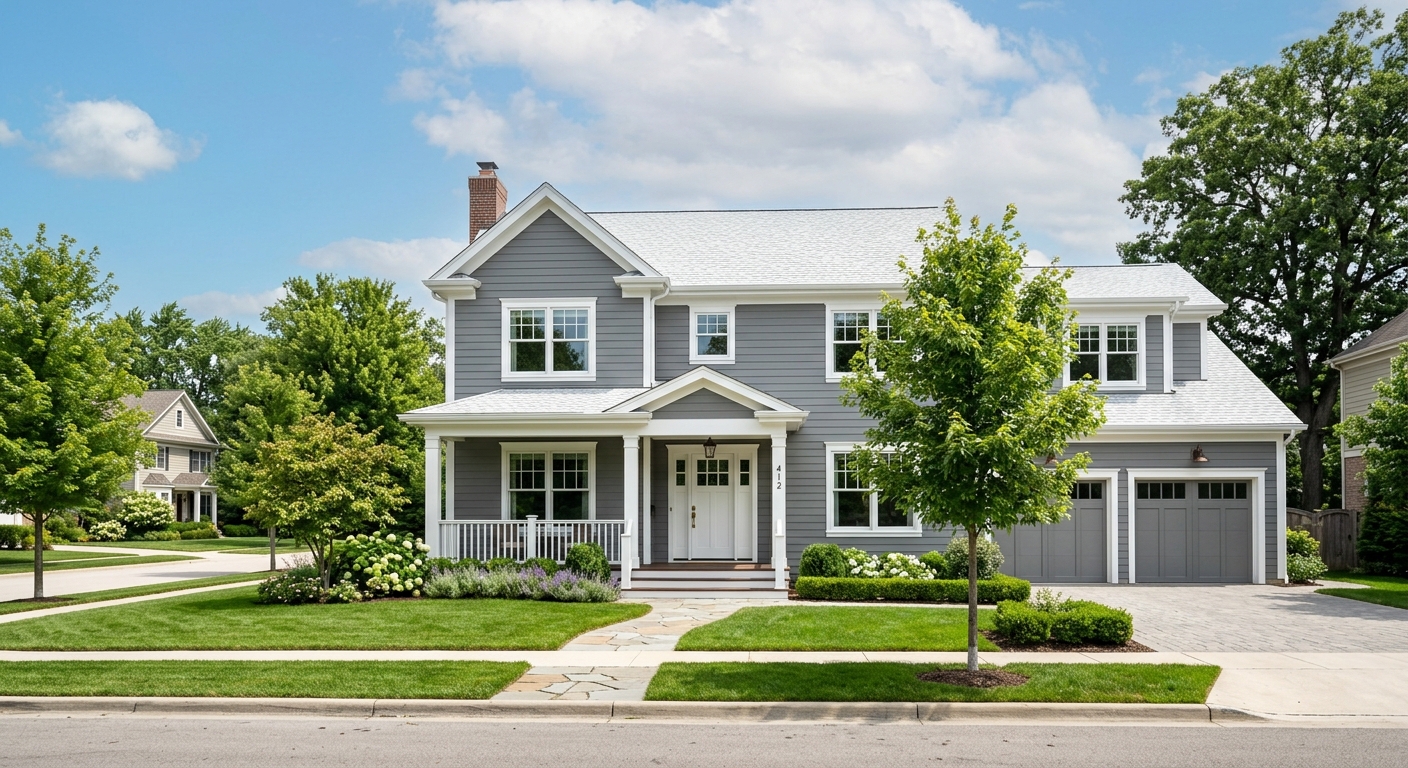
Painting options and costs in Kitchener
Kitchener homeowners have a lot of painting choices, but cost really comes down to prep, surface type, and how the short Ontario exterior season affects scheduling. In Kitchener (population 256,885), nearly half of the housing stock is older—48.6% of dwellings were built before 1981—which usually means more scraping, sanding, caulking, and priming than a modern repaint. That prep work can also involve additional lead-safe precautions for pre-1978 surfaces before sanding or scraping starts. (Statistics Canada, 2021 Census.)
In the Kitchener–Waterloo–Barrie region, contractors typically see exterior demand bunch up from late May through early fall. When temperatures are stable and surfaces are dry, crews can apply paint consistently; when rain or cool snaps hit, labour and material handling slow down, and prices rise because fewer days fit the schedule. Neighbourhoods with older housing patterns—such as the Huron Park and Preston Park areas—often get more requests for full exterior repaints, because many homes are wood or fibre-cement siding that needs careful patching and caulking before finish coats go on.
Below is a realistic cost snapshot to help you compare options. Use it as a planning tool, then we’ll tighten the numbers after an on-site look at wall condition, trimming workload, access (ladder vs. lifts), and the finish sheen you want for the room.
| Service |
What's Included |
Typical Duration |
Price Range |
| Interior — whole home (walls, ceilings, trim) |
Protect floors & fixtures, patch/sand minor defects, caulk where needed, prime repaired areas, apply wall/ceiling topcoats and full trim/door coats (sheen matched to room) |
5–10 days |
$2,900–$7,800 |
| Interior — per room (standard bedroom or living room) |
Mask/protect, prep & patch, prime as required, two coat system on walls; add trim/door touch-up or full trim based on scope |
1–3 days |
$2,500–$4,500 |
| Exterior — full house (siding, trim, soffits) |
Power wash (when needed), scrape/sand loose paint, caulk joints, prime bare wood/spot repairs, paint siding + trim/soffits with a 2-coat finish schedule |
1–2 weeks (weather-dependent) |
$4,500–$9,000 |
| Exterior — trim and accent colours only |
Spot prep on trim features, prime bare spots, caulk where required, paint trim/accent runs (not full siding repaint) |
3–7 days |
$2,500–$5,800 |
| Kitchen cabinet painting (doors, frames, spray finish) |
Remove hardware, deep clean/degreaise, sand/scuff, prime, spray cabinet doors (and frames), re-install hardware, light touch-ups |
5–12 days |
$1,800–$4,500 |
| Specialty / faux finish (accent wall, texture) |
Surface prep for texture consistency, apply specialty coating or finish system (plus clear/finish protection if required) |
1–4 days |
$800–$2,800 |
Prices are estimates only and vary by project scope, site access and material selection.
What affects the price of painting in Kitchener
Two quotes for the “same” repaint can differ by 30–50% across the Kitchener–Waterloo–Barrie region because the biggest variable isn’t the paint—it’s how much labour it takes to make the surface ready for paint to bond and last. In Ontario, contractors price for prep complexity (old coatings, repairs, caulking), accessibility (steps, multi-storey heights, window counts), and how many days crews can work in stable weather during the exterior window. For interior projects, differences still show up due to ceiling height, trim quantity, patching needs, and how much sanding/priming is required for a smooth finish.
For exterior work specifically, the Kitchener–Waterloo–Barrie season is tightly climate-bound. In Ontario, the practical exterior painting window is roughly late May to early October, with temperatures above about 10°C and rising conditions during application. Coastal BC often has a longer calendar but higher humidity and rainfall risk, which pushes mildew-resistant products and more weather-delay planning; in inland Ontario, the constraint is fewer suitable days—so scheduling pressure can raise summer rates. Older homes throughout the region (48.6% built before 1981) commonly need scraping and spot priming; on repaint projects, surface preparation can account for 50–70% of total labour, which is why a “standard” exterior can land anywhere from the $2,500–$9,000 band rather than a single number.
Concrete examples: a bungalow with peeling edges and deteriorated caulk will often require more scraping and re-caulking than a well-maintained home; and a two-storey with lots of soffit and fascia detail adds labour and sometimes lift rentals. If you’re staying within interior pricing, ceilings and heavy trim work can push an interior repaint closer to the $2,500–$7,000 band; if you’re doing an exterior full-house repaint, budget closer to the upper range when prep reveals multiple layers.
| Price Factor |
Why It Matters |
Cost Impact |
| Surface prep — scraping, sanding, patching drywall or wood |
Determines adhesion and how long the paint will resist peeling and flaking |
High: can shift the job by tens of percent |
| Number of coats — 2-coat system over primer vs. 1 coat over existing |
Coverage and durability depend on how much new primer and topcoat is actually needed |
Moderate to high: often 1 extra coat increases labour/material time |
| Paint quality tier — contractor-grade vs. premium (Benjamin Moore, Sherwin) |
Premium lines often provide better hide, washability, and hold-up in wear zones |
Low to moderate: usually smaller than prep differences |
| Ceilings and trim — adds significant time vs. walls-only |
Ceilings and detailed trim increase cutting-in, protection, and masking time |
Moderate: can materially change the total days |
| Exterior season window — short season raises summer rates |
Weather limits work days; crews charge for high-demand scheduling pressure |
Moderate to high in summer |
| Lead-safe precautions — required for pre-1978 homes with lead paint |
Safe dust control, containment, and proper cleanup raise labour and disposal costs |
Moderate: biggest on worst-case surfaces |
| Surface material — drywall vs. plaster vs. wood vs. stucco |
Different materials need different primers and prep methods for bonding |
Moderate: substrate dictates primer and time |
| Height and access — multi-storey exterior requires scaffolding or lifts |
More time for setup/safety equals higher labour |
Moderate to high |
Permits & regulations in Ontario
In Ontario, painting generally does not require a permit for typical interior or exterior repainting work. Where homeowners may need to be more careful is not permitting—it’s safety planning. For homes built before 1978, health guidelines recommend testing or assuming lead hazards before sanding or scraping, because older paint may contain lead. If lead is present, lead-safe work practices are the standard for professionals and typically include wet methods to reduce airborne dust, HEPA-filtered vacuuming, proper containment where needed, and compliant disposal procedures. While this is not “legally mandated” for homeowners in the same way it is for regulated professional work, it’s good practice and protects the people in the home.
Before you sign, confirm your contractor carries liability insurance and has WSIB/WCB coverage for workers. Then require a written contract that clearly lists: the paint brands and sheens, number of coats, and surface prep/patching included (scraping, sanding, caulking, priming). Also request details on cleanup and disposal.
To verify eligibility step-by-step in Kitchener:
- Check the contractor’s business listing and professional registration (if applicable) using Ontario’s online resources.
- Ask for a Certificate of Insurance (liability) and confirm it names you/your property owner interest where required.
- Ask for WSIB/WCB account proof and coverage status for the company working on-site.
- Request a clearance letter or coverage confirmation document before work starts.
- Make sure the scope includes protection of windows/doors and prep responsibilities so there’s no “surprise” later.
Interior vs exterior painting — getting the best result in Kitchener
In Kitchener, the difference between a long-lasting paint job and a premature failure is mostly preparation and timing, not just the colour. For interiors, the priority is fixing and smoothing the surface: filling nail pops, sanding high spots, and priming repairs so the topcoat dries uniformly. Sheen choice also matters for durability. Flat or matte can hide wall imperfections, but it marks more easily in high-touch areas; eggshell or satin generally performs better for living rooms and hallways, while semi-gloss is often reserved for trim, doors, and frequently cleaned surfaces.
Even if you like the look of a thicker coat, two coats over a proper primer usually outlast one “heavy” application because it improves coverage and reduces the chance of flashing or patchiness. For exteriors, caulking before paint is critical in Ontario’s freeze-thaw environment—good caulk lines help prevent water ingress that leads to blistering and peeling. Primer selection should match the substrate: bare wood, stained areas, and patched zones often need an appropriate bonding primer. In Ontario, the wrong primer or rushing during cool, damp days can slow drying and weaken adhesion. (By contrast, damp-prone conditions are a bigger driver in coastal BC, where mildew-resistant choices are more emphasized; in Alberta, temperature-stable scheduling can be equally important.)
Kitchen cabinet painting is a smart budget option to avoid replacement, especially when frames and boxes are solid. For example, cabinets often land in the cabinet band around $1,800–$4,500; skipping replacement can free up budget for better prep and spray finishing, which is what prevents tacky wear or peeling at the edges.
If your home is pre-1978 and you’re scraping or sanding visible wear, plan for lead-safe precautions so the finish coats go on over properly prepared, safely cleaned surfaces. That’s where the “best result” starts.
| Project Type |
Key Prep Step |
Recommended Coats |
Price Band |
| Interior — fresh drywall (new construction) |
Prime entire surface to seal joint compound and prevent flashing |
Primer + 2 topcoats |
$2,700–$7,000 |
| Interior — repaint (good condition, no repairs) |
Wash/scuff sand, spot-prime nothing-or-minor areas only |
2 topcoats (primer only where needed) |
$2,500–$5,500 |
| Interior — repaint (patching and priming needed) |
Fill, sand, feather edges, then prime repairs for uniform sheen |
2 topcoats + primer on repairs |
$3,000–$7,800 |
| Exterior siding (wood or fibre cement) |
Scrape loose paint, caulk joints, prime bare/spot repairs |
Primer + 2-coat finish system (as required) |
$4,500–$9,000 |
| Exterior trim and accents only |
Remove failing paint spots, sand feather edges, caulk and prime |
Primer + 2 coats (trim dependent) |
$2,500–$5,800 |
| Kitchen cabinets (spray finish) |
Degrease, sand/scuff, prime fully, then spray for an even film build |
Primer + 2 finish coats (typical) |
$1,800–$4,500 |
How to choose a painting contractor in Kitchener
Choosing the right painter in Kitchener comes down to verification, clarity, and accountability. Start with Ontario compliance checks: ask for proof of liability insurance and confirm the company has WSIB/WCB coverage for its workers. To check, look for (1) a Certificate of Insurance from the insurer (not just a screenshot), (2) the WSIB/WCB coverage confirmation number or clearance letter, and (3) that the documents match the company name that will appear on your contract and invoices.
Next, get 2–3 itemised written quotes—not just a lump sum. A proper quote breaks down labour and materials, identifies which rooms or exterior elevations are included, and states what prep is covered (scraping, sanding, patching, caulking, priming). Pay attention to exclusions such as: removal of fixtures, minor drywall repairs beyond a set amount, disposal fees, and whether permits (if ever required for special circumstances) are included. In most standard painting cases there’s no permit, but disposal, protection, and prep scope are where costs are won or lost.
Warranty matters: confirm a workmanship warranty length (for example, blistering/peeling within a set period) and whether product/manufacturer coverage is separate. Also ask if the workmanship warranty is transferable if you sell the home.
For payment schedule, don’t pay more than about 10–15% upfront. Hold back the final payment until the job is complete, cleaned, and inspected. Finally, demand a start date and a completion estimate in writing—exterior timing in Ontario can shift with rain and temperature, so a flexible plan should be clearly stated.
- Request insurance and WSIB/WCB proof before the first day on-site.
- Ask for an itemised quote (labour vs. materials), not a single number.
- Confirm the number of coats by surface type (walls, ceilings, trim, exterior siding).
- Make sure surface prep responsibilities are listed (scrape/sand/patch/prime).
- Check whether caulking is included on exterior trim and siding joints.
- Clarify what’s included in cleanup and paint/disposal handling.
- Ask for prep-to-finish timelines and protection steps for floors/fixtures.
- Confirm warranty terms in writing, including coverage and timeframe.
- Review sheen selection process for each room (it impacts durability and look).
- Ensure the contract states paint brands and sheens, not “equivalent” only.
- Verify who supplies caulk, primer, tape, masking and protection materials.
- Confirm the crew count and whether subcontractors are used.
Red flags in Kitchener: quotes that skip surface prep details, refusal to provide insurance/WSIB/WCB proof, “too good to be true” pricing for exterior full-house prep, no written warranty, and pressure to pay most of the balance up front or with only verbal promises.
Frequently asked questions — painting in Kitchener
What paint sheen should I use in different rooms?
In Kitchener homes, sheen choice is a durability decision as much as a style one. For most living areas and hallways, eggshell or satin is a common balance: it resists scuffs better than flat while still looking smooth. Kitchens and areas near cooking typically benefit from satin or even semi-gloss on trim, because they’re easier to wipe clean. Bedrooms often use matte/flat on walls if traffic is light, but remember that flat marks more easily. Ceilings are usually matte/flat for a uniform look. If you have older plaster or patch areas (common in homes built before 1981), a consistent prep and primer system matters as much as sheen to avoid flashing. In general, plan around $2,500–$7,000 for interior whole-home work depending on sheen and prep level.
Can I paint my house exterior in spring or fall in Kitchener?
Yes, but timing is everything in Ontario. In Kitchener, late spring and summer usually give the best conditions because crews need surfaces to be dry and temperatures to stay warm enough during application and early curing. For many projects, the practical exterior window is roughly late May to early October, with rain and cool nights delaying application. Spring can be workable if you can start once daytime temperatures reliably climb and the siding isn’t staying damp. Fall painting often becomes riskier because early cool snaps and moisture can affect drying and adhesion, especially on patched or primed areas. If you’re scheduling exterior work, booking early is smart—summer demand tightens schedules in the Kitchener–Waterloo–Barrie region. Typical exterior full-house repaint budgets commonly sit in $4,500–$9,000, and delays can increase labour days.
How do I choose a painting contractor in Kitchener?
Start by verifying the contractor’s insurance and coverage. Ask for proof of liability insurance and WSIB/WCB coverage before any work begins, and make sure the documents match the company name on your contract. Next, request 2–3 itemised written quotes so you can compare labour, materials, and prep scope—especially surface scraping, sanding, patching, caulking, and priming. Confirm the paint brands and sheens, the number of coats, and what’s excluded (for example, disposal or extra drywall repairs). In Kitchener, where many homes are older (48.6% built before 1981), make sure prep is not treated as optional—proper bonding prep is what prevents early peeling. Finally, insist on a written timeline and workmanship warranty. If an exterior quote is far below the market without explaining prep, it’s often a sign of missing scope.
How many coats does an exterior repaint need in Kitchener?
Most Kitchener exterior repaints use a 2-coat topcoat system, but the total number of “coats” including primer depends on what’s happening on your siding. If paint is sound and there’s minimal bare area, you may still need primer for spots—so the schedule becomes “primer on repairs + two finish coats.” If there’s failing paint, exposed wood, significant patching, or widespread bare areas after scraping, priming and additional coat build may be needed to ensure uniform appearance and durability. This is why exterior quotes vary; prep can be the majority of labour on older homes. For budgeting, many full-house exterior projects fall within $4,500–$9,000, especially when caulking and priming are extensive. Weather also matters: Ontario’s late-May to early-October window helps the coatings cure properly.
What is the best primer for older Kitchener homes?
There isn’t one single “best” primer for every older Kitchener home; the right choice depends on substrate and what you’re uncovering after scraping. For bare wood, patched areas, or spots where old coating failed, primers must bond and seal so the finish coats don’t peel or flash. If the home has stains or uneven absorption, stain-blocking or bonding primers may be required. For pre-1978 homes, you may also need lead-safe precautions during prep (wet methods, HEPA vacuuming, proper cleanup) before priming can happen safely. Practically, a good contractor will test a few areas, then specify primers by condition rather than using a generic base. This prep-first approach is one reason “exterior full house” budgets often land in the $4,500–$9,000 range when older surfaces demand more sanding, priming, and caulking.
Should I paint or wallpaper my Kitchener home?
In Kitchener, painting is usually the faster, more predictable choice for most homeowners—especially in homes with older surfaces that may have minor cracking, texture variation, or patchwork. Wallpaper can look great, but it demands a very smooth, stable substrate and precise moisture control; prep mistakes show quickly once the pattern is up. Paint lets you tailor the sheen by room (matte for ceilings/low-traffic walls, eggshell or satin for daily-use areas), and it’s typically easier to touch up later. Wallpaper also creates additional complexity if you ever want to repaint—removing it can be labour-heavy. If you do choose wallpaper, plan for full prep and an experienced installer, particularly on textured walls common in older Ontario housing stock. For many interior refreshes, homeowners aim for interior painting budgets like $2,500–$7,000, and painting generally offers better value when prep and repairs are needed anyway.