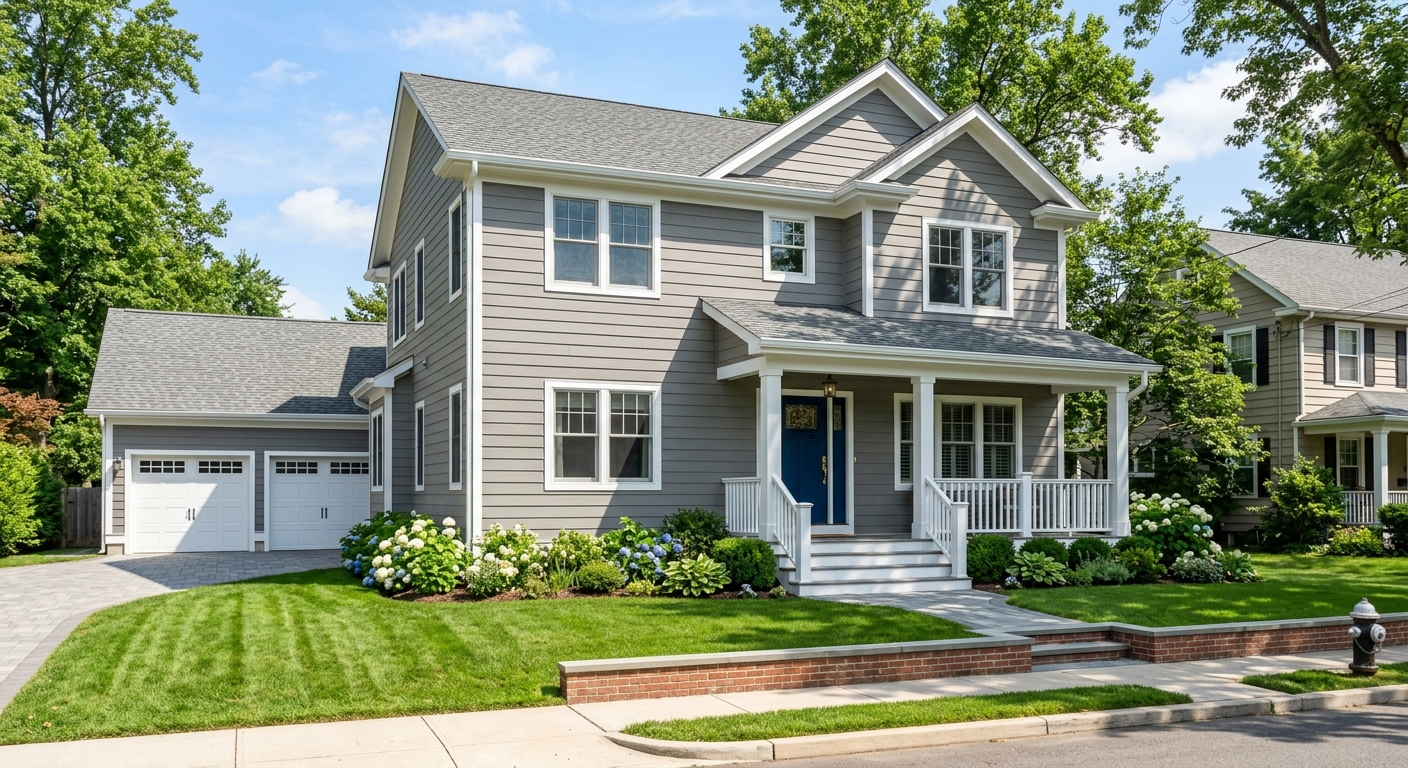
Painting options and costs in Bay Street Corridor
Bay Street Corridor, Ontario has a lot of character—and a lot of paint history—so homeowners typically choose between a refresh coat and a true repaint with surface repairs. One reason pricing can swing is the age of the housing stock: in Toronto, a substantial share of homes are pre-1980, which often means more scraping, sanding, caulking, priming, and potentially lead-safe work practices on older trim and railings. For context, Bay Street Corridor’s local population is 25,797 (Statistics Canada, 2021 Census), and that density contributes to high labour demand and faster booking during summer.
In the Greater Toronto Area, exterior painting costs are tightly linked to a short, climate-dependent season. Contractors usually get the bulk of exterior work done in late May through June, and again from September to mid-October when temperatures stay above roughly 10°C for proper curing and adhesion (and when humidity is less likely to spike). In June to August, peak scheduling pressure commonly pushes exterior pricing about 10–15% higher than shoulder-season availability. Interior work is less season-sensitive, so the biggest drivers become prep quality, sheen choice, ceilings/trim complexity, and whether rooms need repairs.
If you’re in and around Yorkville or the Bay Street–Bloor area, demand is especially strong because many homes are older and need thorough prep to reach a smooth, durable finish. From there, the clearest way to compare options is to look at the typical scope, duration, and price bands below.
| Service |
What's Included |
Typical Duration |
Price Range |
| Interior — whole home (walls, ceilings, trim) |
Masking/protection, prep (filling/sanding), prime as needed, paint on walls/ceilings, caulking at trim seams, brush/roll finish, basic clean-up |
5–12 days |
$1,800 – $6,000 |
| Interior — per room (standard bedroom or living room) |
Protection, prep, prime as needed, 2-coat finish on walls; trim touch-ups included |
1–3 days |
$400 – $1,500 |
| Exterior — full house (siding, trim, soffits) |
Power-wash, scrape/sand spot prep, caulking, stain-blocking/primer where required, 2-coat exterior system, touch-ups, site clean-up |
2–4 weeks (weather-dependent) |
$3,500 – $8,000 |
| Exterior — trim and accent colours only |
Targeted prep and priming on trim/rails/feature areas, 2-coat finish, masking to protect siding |
4–10 days |
$1,500 – $4,500 |
| Kitchen cabinet painting (doors, frames, spray finish) |
Degrease, light sanding, bonding primer, spray-painted finish, hardware masking/removal (as agreed), basic reassembly |
5–12 days (plus dry time) |
$1,500 – $4,000 |
| Specialty / faux finish (accent wall, texture) |
Surface prep for texture/finish, design consultation, base coats, specialized topcoat application, protective clear if required |
2–7 days |
$300 – $5,000 |
Prices are estimates only and vary by project scope, site access and material selection.
What affects the price of painting in Bay Street Corridor
In Bay Street Corridor, it’s common to see bids for the “same” painting job differ by 30–50% across Toronto and Ontario. The reason usually isn’t paint price—it’s labour time spent on prep, number of coats, coating system selection, and how access/scheduling constraints are handled. For example, an exterior repaint that costs near the lower end of the exterior band ($1,500–$8,000) can jump toward the middle or top end when the contractor has to address extensive peeling, multiple paint layers, or widespread caulking replacement. On the interior side, a basic refresh might land closer to the lower end of typical room work, while a home with patching and trim details often requires a budget closer to the upper end of interior totals ($400–$6,000).
Exterior work in this region is tightly climate-bound: contractors typically plan for late May to early October conditions when temperatures are above about 10°C for proper application and curing, and humidity is moderate. That short “ideal” window means more crews competing for fewer workable days. Coastal BC has a longer stretch but persistent moisture pushes different product choices and careful mildew control; the GTA’s main constraints are frost, rain and humidity spikes rather than year-round dampness. Short season + peak summer demand is a direct driver of 10–15% higher exterior rates in June–August.
Older homes throughout the Toronto area also raise costs with surface prep that can account for 50–70% of labour on repaints—scraping, sanding, caulking and priming aren’t optional if you want a durable finish. In practice, fixing failing caulk at window/trim joints and priming bare wood before topcoats can add $300–$1,200 or more depending on length and number of openings. Conversely, a well-maintained property with minimal peeling may only need targeted prep, bringing exterior pricing closer to the lower band.
| Price Factor |
Why It Matters |
Cost Impact |
| Surface prep — scraping, sanding, patching drywall or wood |
Prep determines adhesion and smoothness; older paint layers and damaged substrates take more time |
Can be +$500 to +$2,500 |
| Number of coats — 2-coat system over primer vs. 1 coat over existing |
Coverage and durability improve with proper primer and two finish coats |
Often +10% to +25% |
| Paint quality tier — contractor-grade vs. premium (Benjamin Moore, Sherwin) |
Higher solids and better pigments typically reduce rework and improve hide |
Can shift +$200 to +$800 |
| Ceilings and trim — adds significant time vs. walls-only |
Cut-in work, detail brushing/rolling, and protection for trim take longer |
Often +$300 to +$1,800 |
| Exterior season window — short season raises summer rates |
Limited “ideal” weeks concentrate demand and raise contractor scheduling costs |
Often +10% to +15% (June–Aug) |
| Lead-safe precautions — required for pre-1978 homes with lead paint |
Safe containment, wet methods and HEPA cleanup add time and setup |
Can add +$400 to +$1,500 |
| Surface material — drywall vs. plaster vs. wood vs. stucco |
Different substrates require different primers and prep methods |
Varies; typically +$200 to +$1,000 |
| Height and access — multi-storey exterior requires scaffolding or lifts |
Access equipment and safety protocols increase labour and overhead |
Often +$500 to +$2,500 |
Permits & regulations in Ontario
For typical painting work in Ontario, you do not need a permit. Painting itself is generally considered routine interior/exterior maintenance, and municipalities usually don’t require a permit for a repaint. The key regulation in practice is health and safety: for homes built before 1978, health guidelines recommend testing for lead paint before sanding, scraping, or demolishing existing coatings. If lead is present, lead-safe work practices are standard for professionals, including wet methods to reduce dust, HEPA vacuuming, proper containment, and correct disposal of debris. This isn’t “permit-driven” for homeowners, but it’s the reason licensed contractors price lead-safe preparation into older-home jobs.
What does require permitting is not painting itself, but adjacent work that may be regulated—examples include structural changes, window replacements, or work that triggers other building or trade requirements. Painting contracts usually do not include those items.
Before hiring in Bay Street Corridor, verify three things step-by-step: (1) Ontario licensing status where applicable (ask for the contractor’s business details and proof of trade registration if they’re doing related work), (2) liability insurance—request a current certificate of insurance with your address listed as applicable/for the job, and (3) WSIB/WCB workers’ compensation coverage—ask for confirmation on the certificate or clearance letter from the contractor. Also insist on a written contract listing surface prep, paint brands/colour codes, sheen, number of coats, and disposal details so there are no surprises mid-job.
Interior vs exterior painting — getting the best result in Bay Street Corridor
In Bay Street Corridor, a long-lasting paint job is less about chasing a specific brand and more about managing surfaces and drying conditions. Interior failures usually come from skipping repairs or rushing the primer step. For interiors, start with filling and sanding (especially around nail pops, patch seams, and scuffed drywall). Choose sheen based on room use: flat hides wall imperfections but is harder to clean; eggshell and satin are common for living spaces; semi-gloss on trim and doors helps them resist scuffs. Two coats over the proper primer consistently outlast one thick coat, particularly when you’re covering stains, repaired drywall, or uneven patches.
Exterior failures are more expensive because they show up faster in Ontario’s weather swings—sun/temperature changes, rain events, and freeze-thaw cycles. The critical first step is surface prep: scraping loose paint, sanding edges, and priming bare wood or problematic substrate. Caulking should be addressed before painting to prevent water ingress behind trim. Primer choice matters by substrate (and sometimes by whether you’re dealing with wood, fibre cement, or other materials). Unlike coastal BC where mildew resistance is often a bigger ongoing driver due to dampness, the GTA’s main exterior risks are moisture spikes from rain and curing conditions—so contractors focus on timing (when temperatures stay above about 10°C), managing humidity, and using an appropriate exterior system.
Kitchen cabinet painting is a budget alternative to replacement, but it only works when cabinets are degreased, properly bonded, and sprayed with a finish system designed for doors and frames. For pre-1978 homes, lead-safe precautions should be built into any scraping or sanding plan on older trim.
To ground it in dollars: if whole-home interior painting is quoted near the higher end (for example, $6,000 range for trim-heavy, multi-day prep), it’s justified when ceilings/trim need extensive patching and caulking. If the job is a simple repaint with minimal repairs, a lower interior band quote ($400–$1,500 per room) is more realistic—provided the scope confirms proper priming and two coats.
| Project Type |
Key Prep Step |
Recommended Coats |
Price Band |
| Interior — fresh drywall (new construction) |
Prime all drywall to uniform absorbency; sand/fill for smoothness |
Primer + 2 finish coats |
$1,200 – $3,500 |
| Interior — repaint (good condition, no repairs) |
Light scuff, patch small imperfections, caulk trim seams if needed |
2 finish coats (primer only if required) |
$400 – $2,000 |
| Interior — repaint (patching and priming needed) |
Full primer on repaired areas; sand to blend and reduce flashing |
Primer + 2 finish coats (spot or full as required) |
$900 – $4,500 |
| Exterior siding (wood or fibre cement) |
Scrape/sand failing areas, prime bare substrate, caulk before topcoats |
Primer + 2 finish coats (system-based) |
$3,500 – $8,000 |
| Exterior trim and accents only |
Masking protection and thorough prep on trim edges; prime for adhesion |
Primer where needed + 2 finish coats |
$1,500 – $4,500 |
| Kitchen cabinets (spray finish) |
Degrease and bonding primer; sand between coats for adhesion |
Primer + 2 finish coats (typical system) |
$1,500 – $4,000 |
How to choose a painting contractor in Bay Street Corridor
Choosing the right contractor in Bay Street Corridor comes down to proof: licensing/coverage, itemized scope, and a schedule that respects Ontario’s weather window. Start by verifying Ontario requirements applicable to the business and trade work they perform. Next, confirm liability insurance—ask for a current certificate of insurance and make sure it covers the type of work being done at your address. For workers’ compensation, request WSIB/WCB coverage confirmation; you want documentation that the contractor’s employees (or the contractor themselves, if incorporated and applicable) are covered for jobsite work.
Then, get 2–3 itemised written quotes. A good quote separates labour and materials (not just a single lump sum), and it lists prep tasks such as power washing, scraping/sanding, caulking, priming, and what “patching” includes. Ask whether permits are pulled—typically painting doesn’t require one in Ontario, but a contractor should confirm there’s no permit work included and no exclusions that would shift costs to you. Also clarify disposal: is debris hauling and cleaning included?
Warranty should be in writing. Look for workmanship warranty length (commonly tied to adhesion/craft issues after completion), and confirm whether manufacturer/product warranties apply and what conditions void them. Payment schedule matters: never pay more than 10–15% upfront; hold back a portion until the final walk-through and corrections. Finally, require a written timeline with a stated start date, weather contingency plan for exteriors, and estimated completion date.
- Request proof of liability insurance (certificate) before signing.
- Confirm WSIB/WCB clearance or coverage documentation.
- Insist on an itemised quote: labour vs materials, not only “total”.
- Match the quote to your scope: walls, ceilings, trim, doors, railings.
- Ask exactly what prep is included (scrape, sand, patch, prime, caulk).
- Confirm number of coats and primer requirements.
- Verify paint brand and sheen in writing (flat/eggshell/satin/semi-gloss).
- Clarify exclusions (lead-safe testing/disposal, scaffold/lift costs, heavy repairs).
- Ask about colour change coverage and stain-blocking approach.
- Get a disposal plan (what’s hauled away and how the site is cleaned).
- Review warranty: workmanship term, what it covers, and how to claim.
- Require a payment schedule with a holdback until punch list completion.
Red flags in Bay Street Corridor include: quotes that don’t specify prep steps (especially caulking/priming), “one coat” promises for repainting, no written scope or product list, pressure to pay most of the balance upfront, and refusal to provide insurance/WSIB/WCB confirmation before starting.
Frequently asked questions — painting in Bay Street Corridor
How do I fix peeling exterior paint in Bay Street Corridor?
If exterior paint is peeling in Bay Street Corridor, you generally need more than a spot touch-up. Peeling usually means adhesion failed because of loose paint edges, poor prep, or trapped moisture at caulk/trim joints. The professional approach is to scrape back to sound material, sand feathered edges, power-wash, and then prime bare wood or problematic substrate with an appropriate exterior primer system before applying two finish coats. Caulking should be replaced or renewed where joints are failing so water can’t migrate behind the coating. In older pre-1978 homes, plan for lead-safe work practices before any sanding or scraping (wet methods, HEPA cleanup, and proper disposal).
What colours add the most resale value in Bay Street Corridor?
In Bay Street Corridor and across the Toronto market, resale-friendly colour choices are typically “classic and bright,” because they photograph well and appeal to a wider buyer pool. For exteriors, homeowners often do best with warm whites/creams, soft greiges, or muted light tans paired with darker trim (soffits, window frames, and front doors). For interiors, eggshell or satin in neutral tones (warm off-whites, light greys with a beige undertone) keeps rooms feeling larger and cleaner without looking dated. The cost difference usually comes from coverage and prep, not the colour itself—so if you’re budgeting for an interior refresh that might land in the $400–$1,500 per room band, choose colours that don’t require excessive stain-blocking or heavy repainting.
How much does it cost to paint a house in Bay Street Corridor?
The cost to paint a house in Bay Street Corridor depends heavily on whether you mean interior, exterior, or both, and how much surface prep is required. For interior painting, whole-home projects commonly land anywhere from about $1,800 up to the higher end of typical totals (the broader interior band runs $400–$6,000 depending on trim ceilings and repairs). For exterior painting, most full-house scopes fall within the exterior range of $1,500–$8,000—often higher in June–August because the GTA’s exterior season is short and contractor demand peaks. If your home is older (pre-1980), expect added labour for scraping, caulking, sanding, and priming; that prep can be a major portion of the budget. A detailed, itemised quote is the fastest way to see where your costs come from.
How much does interior painting cost per room in Bay Street Corridor?
Interior painting per room in Bay Street Corridor typically falls between $400 and $1,500 for standard bedroom or living-room scopes, assuming normal masking and prep. If the room is in good condition with minimal repairs, many projects can stay toward the lower half of that range. If you need patching, priming, sanding to blend repaired drywall/plaster, or more time for trim/ceiling cut-ins, costs move upward. Also note that sheen choice affects practical outcomes: matte/flat can hide minor wall imperfections but may be less ideal in high-traffic areas. If you’re planning an interior repaint in a multi-storey home, stairwells and access can add labour similar to “trim-heavy” work.
When is the best time for exterior painting in Bay Street Corridor?
The best time for exterior painting in Bay Street Corridor is when temperatures are consistently above about 10°C for proper application and curing—usually late May through June, then again September to mid-October. Summer (June–August) can cost more because demand peaks and ideal weather “windows” are limited, even though conditions can be workable. Contractors also time coats around rain risk and humidity spikes because those can affect drying and adhesion. If you’re planning a full exterior repaint, aim for the first workable weeks of the season or after the summer rush; you’ll often get better scheduling flexibility while still allowing adequate curing time for a durable finish.
How many coats of paint do I need?
Most quality painting systems in Ontario are two-coat finish systems, with primer used based on substrate and condition. For interiors, a repaint in good condition typically uses two finish coats; primer may only be needed if you’re covering stains, patching drywall, or changing to a much lighter/different colour requiring additional hide. For exterior work, you commonly use a primer where needed plus two finish coats to achieve uniform coverage and long-term adhesion. If someone promises “one thick coat” on exteriors or over unprepared surfaces, that’s a common path to premature failure. For older Toronto homes, adequate priming after scraping and caulking is often what separates a job that lasts years from one that peels sooner.