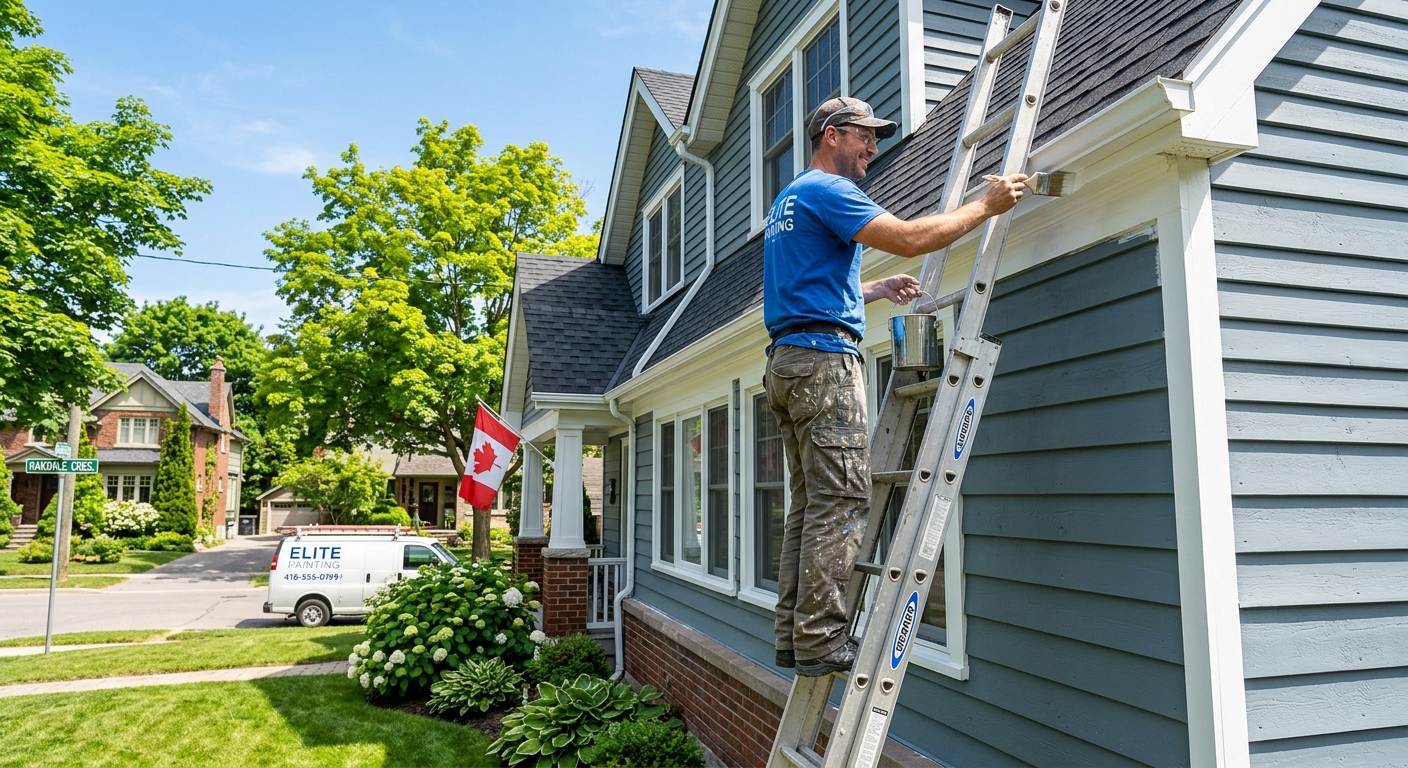
Painting options and costs in Forest Hill North
In Forest Hill North, painting choices usually start with budget and timing, but the right quote depends on your home’s age and how much prep is required. With a total population of 12,806 (Statistics Canada, 2021 Census), this neighbourhood sees steady contractor demand, especially around the “ideal” exterior weeks. Many homes in the Toronto area are older, and that matters: older surfaces often need extra scraping, sanding, patching, caulking, and priming, and in pre-1978 properties contractors typically follow lead-safe work practices before disturbing paint. That additional preparation is where a lot of cost differences come from.
Toronto’s exterior painting is tightly climate-bound. In the Greater Toronto Area, contractors typically work late May through June and again September to mid-October, when temperatures are above roughly 10°C for at least a day or two—enough for proper adhesion and curing. In June–August, peak scheduling can push exterior pricing 10–15% higher due to limited windows. Interior painting is less season-sensitive and can be planned year-round, but labour still drives the price based on ceiling height, stairwells, masking and the finish level.
Trades are particularly in demand along parts of Bathurst Street and the surrounding Forest Hill/Bedford Village corridor where larger homes and multi-storey facades are common. Below is a practical cost comparison to help you benchmark quotes before you meet a contractor.
| Service |
What's Included |
Typical Duration |
Price Range |
| Interior — whole home (walls, ceilings, trim) |
Move/cover contents as agreed, surface preparation (patching/sanding), prime as required, paint walls and ceilings, caulk where needed, and paint interior trim/doors; includes clean-up |
5–10 days |
$3,500 – $6,000 |
| Interior — per room (standard bedroom or living room) |
Prep and protect floors/trim, fill and sand minor imperfections, prime spot areas as needed, paint walls and ceiling; caulk touch-ups around edges |
2–4 days |
$600 – $1,400 |
| Exterior — full house (siding, trim, soffits) |
Full wash/degrease as needed, scraping/sanding loose material, caulking joints, prime bare/spot areas, paint siding/trim/soffits; includes protecting landscaping and windows |
7–18 days |
$4,500 – $8,000 |
| Exterior — trim and accent colours only |
Surface prep limited to trim/accents, prime exposed areas, paint selected trim runs and accents; assumes siding colour is staying as-is |
3–10 days |
$1,800 – $4,200 |
| Kitchen cabinet painting (doors, frames, spray finish) |
Thorough cleaning/degreasing, hardware removal (as agreed), sanding/de-glossing, spot-priming, spray application, reassembly, and final touch-ups |
5–12 days |
$2,000 – $4,000 |
| Specialty / faux finish (accent wall, texture) |
Surface prep suitable for the technique, base coat and finishing system per spec, protective coating for durability |
2–7 days |
$700 – $3,000 |
Prices are estimates only and vary by project scope, site access and material selection.
What affects the price of painting in Forest Hill North
In Forest Hill North (and across the Toronto region), it’s common to see quotes for the “same” painting job differ by 30–50%. The difference is rarely the topcoat brand; it’s the amount of prep, the number of coats applied correctly, and how the contractor manages risk—especially on older surfaces. A repaint that needs extensive scraping, caulking and priming can move your project from an interior range closer to the low end (for example, $400–$6,000 for interior painting, depending on scope) into the higher end once sanding, drywall repair and detailed trim work are included.
Exterior painting is also shaped by the tightly climate-dependent season in the Toronto area. Contractors typically need temperatures above about 10°C and stable conditions for adhesion and curing, so the work window runs roughly late May to early October. Unlike coastal BC, where persistent dampness and mildew risk require mildew-resistant coatings and extra timing, the GTA’s main constraints are frost, rain and humidity spikes rather than year-round moisture. Because the “ideal” weeks are limited, summer demand in June–August often pushes exterior labour rates up, which is why exterior projects commonly land within the $1,500–$8,000 band.
Here are concrete examples I see in Forest Hill North. First, pre-1980 surfaces tend to have more paint layers and more brittle caulk—prep can become 50–70% of labour on repainting jobs. Second, multi-storey elevations near busy corridor streets often require scaffolding or lifts; that adds time and cost for setup and protection. Third, homes with heavy trim detail can cost noticeably more because ceilings and trim take longer to sand, caulk, and coat than walls-only work—often flipping an “okay” job into a meticulous one.
| Price Factor |
Why It Matters |
Cost Impact |
| Surface prep — scraping, sanding, patching drywall or wood |
Preps determine adhesion and longevity; older layers and damaged areas require more labour |
Higher quotes when prep is extensive; can account for 50–70% of labour on repaints |
| Number of coats — 2-coat system over primer vs. 1 coat over existing |
Proper coverage and uniform sheen usually require a two-coat finish system |
Can add 10–25% depending on colour change and substrate condition |
| Paint quality tier — contractor-grade vs. premium (Benjamin Moore, Sherwin) |
Premium lines often hide better and resist scuffing/fading longer |
Materials difference is real, but prep usually drives the majority of the total price |
| Ceilings and trim — adds significant time vs. walls-only |
Ceilings require extra coverage and careful edge work; trim needs caulking and smoothing |
Often increases interior scope by several hundred dollars or more |
| Exterior season window — short season raises summer rates |
Limited “ideal” weeks increase scheduling pressure and crew costs |
Typically adds 10–15% during June–August compared with shoulder months |
| Lead-safe precautions — required for pre-1978 homes with lead paint |
Safe containment and HEPA vacuuming add time and disposal steps |
May add measurable cost vs. standard sanding, especially on trim and railings |
| Surface material — drywall vs. plaster vs. wood vs. stucco |
Each substrate needs the right cleaning/primer system for bond and stain blocking |
More specialist primers and prep when moving between materials |
| Height and access — multi-storey exterior requires scaffolding or lifts |
Access affects safety, set-up time and protection of windows/landscaping |
Can be a major swing factor on exterior jobs |
Permits & regulations in Ontario
For painting in Ontario, permits are generally not required for typical interior or exterior painting work. Where things get more regulated is when work involves surfaces that could contain lead paint. For homes built before 1978, health guidance recommends testing for lead paint before sanding or scraping, and following lead-safe work practices if lead is present. In practice, most professional crews in Forest Hill North treat this as standard procedure: wet methods to reduce dust, HEPA vacuuming, properly bagged/disposed debris, and containment to protect occupants. This is not automatically a homeowner “permit” issue, but it is the difference between a quick repaint and a job done safely and correctly.
What DOES require a permit? In general terms, painting itself doesn’t trigger permits, but related work can—such as structural exterior changes, window replacement, electrical work, or major envelope repairs that fall under building code/permit categories. If your contractor proposes anything beyond coating—like exterior structural modifications or envelope sealing that changes systems—ask whether a permit is required.
How to verify your contractor in Forest Hill North: (1) Confirm Ontario business details and trades/contractor standing through the appropriate online directories your contractor uses for their business listing; (2) request a certificate of insurance (liability) showing your address or interest if available; and (3) confirm workers’ compensation coverage (WSIB/WCB) for the crew working on your home. Then insist on a written contract that spells out paint brand/colour, sheen, number of coats, surface prep scope (including priming), protection measures and disposal.
Interior vs exterior painting — getting the best result in Forest Hill North
The best-looking paint jobs in Forest Hill North fail for predictable reasons: rushed prep, missed primer steps, and “not quite ready” surfaces meeting the wrong weather window. In Ontario interiors, the most common driver of longevity is surface prep—filling and sanding, spot-priming stains, and caulking edges so the finish goes on smoothly. Sheen matters too: kitchens and high-touch areas usually benefit from eggshell to satin, while ceilings are often flat for visual hiding. Regardless of brand, two coats over a proper primer system typically outlast one thick coat, especially when coverage is affected by patching or colour change.
For exteriors, prep is even more non-negotiable. Caulk first (before painting) where water can enter—around trim joints, window casings and seams—then allow sealants to cure before coating. Use primer type matched to the substrate and condition: oil-based or specialized bonding primers are sometimes needed on difficult woods or stain-prone areas, while latex systems are common on sound, properly prepared surfaces. Toronto’s climate—frost risk, rain chances and humidity spikes—means you must paint when temperatures stay above about 10°C for at least 24–48 hours after application so the coating can cure and adhere reliably.
Cabinet painting is a smart budget alternative to replacement when your boxes are solid and you can tolerate downtime for reinstallation. For a pre-1978 home, expect lead-safe precautions to be part of trim preparation. As a dollar example, upgrading exterior trim prep and priming correctly can be justified: moving from a minimal “wash and recoat” approach into a prep-included plan can add hundreds of dollars, but it’s what helps prevent peeling around detail work where water sits.
| Project Type |
Key Prep Step |
Recommended Coats |
Price Band |
| Interior — fresh drywall (new construction) |
Prime bare drywall fully and sand smooth for uniform finish |
Primer + 2 coats |
$900 – $2,200 |
| Interior — repaint (good condition, no repairs) |
Clean/degloss lightly, caulk edges, scrape any minor imperfections |
2 coats (primer only if needed) |
$500 – $1,600 |
| Interior — repaint (patching and priming needed) |
Patch, sand, spot-prime repairs to avoid flashing |
Primer spot + 2 finish coats |
$700 – $2,400 |
| Exterior siding (wood or fibre cement) |
Scrape/sand loose areas, caulk joints, prime bare/spot areas |
Primer (as required) + 2 coats |
$4,000 – $8,000 |
| Exterior trim and accents only |
Degrease, sand/scuff, prime exposed bare trim |
Prime (as required) + 2 coats |
$1,800 – $4,200 |
| Kitchen cabinets (spray finish) |
Thorough degreasing, de-glossing/sanding, proper primer for adhesion |
Primer + 2 coats (or system equivalent) |
$2,000 – $4,000 |
How to choose a painting contractor in Forest Hill North
Choosing well in Forest Hill North usually comes down to verifying coverage, getting comparable quotes, and making sure the scope protects you when something goes wrong. Start by verifying Ontario licensing requirements for the business (and/or trade standing as applicable), then request proof of liability insurance and confirm the company has WSIB/WCB workers’ compensation coverage for their painters. The practical checks are simple: (1) ask for a current certificate of insurance and check it’s not expired; (2) confirm WSIB/WCB is active for the contractor and the crew assigned; and (3) match the insured business name to the quote and contract so you’re not dealing with a mismatch between quoting company and job-site crew.
Next, ask for 2–3 itemised written quotes, not lump sums. You want labour and materials separated, and clarity on what’s included: pressure washing or chemical cleaning, scraping/sanding extent, patching and priming, caulking, disposal and protection of landscaping and floors. Ask whether a permit pull is included if any related exterior work triggers one (painting itself typically does not). Also confirm warranty terms in writing: the workmanship warranty length, whether it covers peeling/flaking due to adhesion/prep, and whether manufacturer product warranties apply. If the home is pre-1978, ask specifically how lead-safe precautions are handled.
For payment, use a schedule that doesn’t front-load risk: never more than 10–15% upfront, and hold back part of the payment until completion and final walkthrough. Get the start date and completion estimate in writing so you’re not left waiting on weather or staging delays mid-job.
- Confirm liability insurance is active and request COI documentation before work starts.
- Verify WSIB/WCB coverage for the crew assigned to your home.
- Ask for an itemised quote (prep, primer, coats, labour, materials, disposal).
- Ensure the scope lists what is excluded (window caulking, mould remediation, drywall repair extent).
- Check whether protection is included (drop sheets, plastic sheeting, masking quality, floor coverings).
- Confirm caulking is included before exterior coating where needed.
- Require written paint specs: brand, colour codes, sheen levels and product names.
- Ask about surface testing (lead paint testing where relevant) and containment method.
- Get a written start date and weather contingency plan for exterior work.
- Confirm disposal and recycling responsibilities for scraping debris and paint cans/rollers.
- Review warranty coverage in plain language (workmanship vs. manufacturer product).
- Use a payment schedule with a holdback until final walkthrough and touch-ups are done.
Red flags I see in Forest Hill North include: contractors who won’t itemise labour/materials and only offer “one number,” skipping prep/primer details in writing, refusing to show current insurance and WSIB/WCB certificates, quoting exterior jobs without discussing the short late-spring/fall curing window, and pushing for large upfront payments beyond 10–15%.
Frequently asked questions — painting in Forest Hill North
What colours add the most resale value in Forest Hill North?
In Forest Hill North, resale-minded homeowners typically get the best results with timeless neutrals that photograph well and don’t fight natural light from larger Toronto windows. Warm whites, soft greiges and muted warm greys tend to appeal to buyers while still letting trim and landscaping stand out. If you want colour, keep it controlled: a refined accent wall in a deep navy or charcoal often reads “modern” without feeling trendy. For trim, sticking with a crisp white or an eggshell/near-white helps doors and millwork look clean even after years of wear. If you’re budgeting, remember interior painting can span from about $400 up to $6,000 depending on how much trim and ceiling work you include, so choosing a colour palette that reduces redo risk is worth it. (Statistics Canada, 2021 Census)
How much does it cost to paint a house in Forest Hill North?
Cost depends heavily on whether you’re painting the interior only or tackling exterior. For interiors, the typical total range often lands anywhere from $400 to $6,000 depending on how many rooms, ceilings, and trim details are included. For a full exterior repaint in the GTA, many homes fall within the $1,500–$8,000 band based on siding condition, required scraping, caulking, primer coverage and access (scaffolding or lifts for multi-storey homes). In Forest Hill North, older homes are common in the broader Toronto housing stock, so surface prep can push quotes upward if you have loose paint layers or significant caulk replacement. If you’re planning ahead, many contractors prefer the late May–June and September–mid October windows because temperatures need to stay above about 10°C for proper curing and adhesion.
How much does interior painting cost per room in Forest Hill North?
Per-room interior painting in Forest Hill North usually depends on ceiling height, trim workload and whether repairs are needed. For a standard living room or bedroom in good condition, many quotes land roughly around $600 to $1,400 for a full room scope (walls and ceiling, plus prep and masking). If the room needs patching and priming—like after repairs, water marks, or significant texture changes—expect it to move upward (often $700 to $2,400 depending on how much sanding and primer is required). Two things that can swing the price: ceiling work and trim/doors. Cutting corners on patching or priming can cause flashing and early scuffing, which is especially noticeable in Toronto light. For homeowners comparing quotes, ask for the exact number of coats and what prep is included, not just a total number.
When is the best time for exterior painting in Forest Hill North?
For Forest Hill North, the best exterior window is late May through June, and again September to mid-October. The reason is climate: contractors generally need temperatures above about 10°C and stable conditions for 24–48 hours after application so paint can cure and adhere properly. Scheduling in June–August is often more expensive because crews are in high demand and “ideal” days are limited—often adding about 10–15% to exterior pricing compared with shoulder-season work. Rain and humidity spikes can also cause delays if prep materials must dry out fully before coating. If your schedule is flexible, shoulder weeks can reduce weather risk and sometimes improve pricing. If you’re repainting older trim, allowing proper cure time for caulking before painting is also critical for long-term performance.
How many coats of paint do I need?
Most quality systems in Ontario end up being a two-coat finish, especially when colour is changing or repairs are involved. The exact answer depends on what’s underneath. If you’re over new drywall or bare spots, you typically need primer plus two finish coats. If your exterior or interior surfaces are in good shape and properly prepared, you may still apply two finish coats for uniform coverage and consistent sheen. One thick coat is a common shortcut that often leads to uneven appearance and earlier wear, particularly on trim. In older Toronto-area homes, multiple prior layers can hide or trap stains, which means spot-priming is often required before full coating. As a homeowner benchmark: exterior projects commonly land in the $1,500–$8,000 range partly because correct systems (primer and two coats) take time and materials. Ask your contractor to specify the number of coats for each substrate in writing.
What paint is best for Forest Hill North's climate?
“Best” means the right product for the surface and a system designed for GTA weather—frost risk, rain exposure and humidity changes—not just a premium brand name. For exteriors in Forest Hill North, look for coatings formulated for exterior durability and good adhesion in fluctuating conditions, plus a primer suited to your substrate (wood, fibre cement, stucco) and its condition. Homes with older, detail-rich trim often benefit from a primer that bonds well to challenging surfaces and prevents stain bleed. Unlike coastal BC, where mildew resistance and persistent dampness drive product choices, the GTA focus is curing and film stability around rain and temperature swings. For interiors, choose sheen by room function: flat/near-flat on ceilings for hiding imperfections, and eggshell to satin in living spaces and higher-traffic areas. If your quote totals are in the $1,500–$8,000 exterior band, ask what primer and topcoat system is specified so you can compare apples-to-apples.