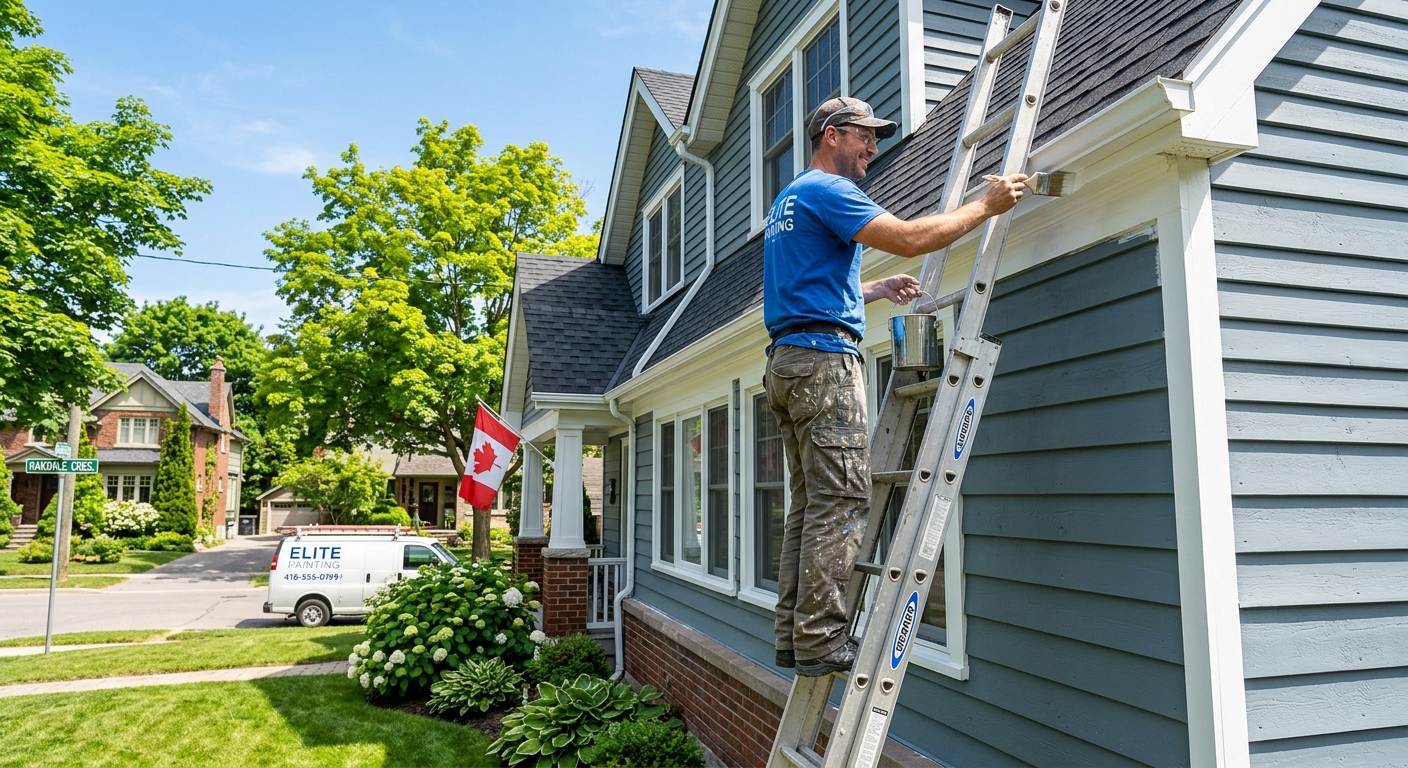
Painting options and costs in Agincourt South-Malvern West
In Agincourt South-Malvern West, the right painting option comes down to how much prep your home needs and how soon you want it done. With a population of 23,757 (Statistics Canada, 2021 Census), there’s steady demand for both interior refreshes and full exterior repaints. Many older properties in this part of Toronto also mean more labour: older trim and window details often require careful scraping, caulking and priming, and pre-1978 materials may trigger lead-safe work practices if disturbing old paint becomes necessary. That prep work is one reason “same-size home” quotes can differ so much.
On the cost side, GTA exterior work is tightly shaped by season and contractor availability. Typically, pros can complete good exterior adhesion and curing when temperatures stay above about 10°C for 24–48 hours, which is why exterior season often concentrates from late May through June and again from September to mid-October. When June–August humidity spikes or a rain week compresses schedules, pricing in Toronto commonly runs 10–15% higher. Neighbourhood demand is especially noticeable around Malvern and the broader Scarborough corridor where many homes are due for trim and siding touch-ups.
Below is a practical cost range guide for the most common projects in Agincourt South-Malvern West, so you can compare proposals and choose the scope that fits your timeline.
| Service |
What's Included |
Typical Duration |
Price Range |
| Interior — whole home (walls, ceilings, trim) |
Move/cover protection, prep & patching, prime where needed, caulk edges, paint walls/ceilings, clean-up; includes standard trim (baseboards, doors where accessible) |
5–10 days |
$1,800 – $6,000 |
| Interior — per room (standard bedroom or living room) |
Prep & patching, prime where needed, paint walls and ceiling, caulk touch-ups, tidy at completion |
1–3 days |
$400 – $1,800 |
| Exterior — full house (siding, trim, soffits) |
Pressure wash where appropriate, scrape/sand, spot prime, caulking, prime coat(s) as required, 2-coat exterior finish system; include basic surface protection around openings |
1–3 weeks (weather-dependent) |
$3,000 – $8,000 |
| Exterior — trim and accent colours only |
Scrape/sand targeted areas, prime as needed, caulk/spot prime, 1–2 coat coverage on trim and accents, masking protection for siding |
3–7 days |
$1,500 – $4,800 |
| Kitchen cabinet painting (doors, frames, spray finish) |
Degrease & clean, sanding, bonding primer, spray finish for doors, careful masking and hardware protection, light touch-ups |
7–14 days |
$1,200 – $4,000 |
| Specialty / faux finish (accent wall, texture) |
Surface prep, basecoat, texture/faux layers as specified, seal/topcoat where needed |
2–6 days |
$300 – $5,000 |
Prices are estimates only and vary by project scope, site access and material selection.
What affects the price of painting in Agincourt South-Malvern West
In Agincourt South-Malvern West (Toronto market), the same-looking project can land 30–50% apart once you price the hidden steps—prep quality, surface condition, and how many coats the surface truly needs. Toronto contractors also experience tighter scheduling pressure in peak weeks, so labour rates and availability can shift quickly. That’s why a “quick repaint” can come in near the interior band of $400–$6,000 for broader scopes, while a repaint that includes repairs and extra priming climbs toward the high end.
Exterior painting is the most season-sensitive factor in this region. In the GTA, the ideal window for applying exterior coatings is usually late May through June and again September to mid-October, when temperatures are above about 10°C for at least 24–48 hours and humidity is manageable. Coastal BC often has a longer season but persistent dampness and mildew risk, which pushes different product choices and tighter timing. Alberta’s colder swings can also affect curing, even if the calendar starts earlier. In the GTA, shorter “ideal” stretches concentrate demand, so pricing often rises 10–15% in June–August. If you need work done right during that pressure period, many contractors either adjust rates or reduce availability.
Older homes in the Toronto area also drive cost through prep: scraping blistered paint, sanding old gloss, patching cracks and caulking gaps. In many repaints, prep is roughly half of the labour effort—sometimes more. A common example: exterior repaint quotes for a pre-1980 bungalow often start in the exterior band of $1,500–$8,000, but can move upward by several thousand dollars when lead-safe practices are required and when multiple paint layers must be removed and sealed. Another example: interior jobs can look similar, yet adding ceilings and trim (and fixing nail pops or drywall edges) frequently adds 40%+ to the labour component.
| Price Factor |
Why It Matters |
Cost Impact |
| Surface prep — scraping, sanding, patching drywall or wood |
Determines adhesion and finish smoothness; older surfaces often need more work than new drywall |
Can add 20–60% depending on condition |
| Number of coats — 2-coat system over primer vs. 1 coat over existing |
Paint coverage depends on substrate, colour change, and primer bonding |
Typically +10–30% for additional coats |
| Paint quality tier — contractor-grade vs. premium (Benjamin Moore, Sherwin) |
Premium paints often cover better, resist scuffs/fading, and need less rework |
Materials +5–25%; labour can drop with better coverage |
| Ceilings and trim — adds significant time vs. walls-only |
Cutting in, masking, and detail work is labour-intensive |
Often increases total interior cost by 25–50% |
| Exterior season window — short season raises summer rates |
Limited “ideal” weeks increase competition for crews and equipment |
Frequently +10–15% in June–August |
| Lead-safe precautions — required for pre-1978 homes with lead paint |
Special work methods reduce dust spread; adds time and disposal steps |
Can add several hundred to multiple thousand dollars |
| Surface material — drywall vs. plaster vs. wood vs. stucco |
Different primers and prep methods are needed for bonding and crack control |
Varies widely; complex substrates raise priming labour |
| Height and access — multi-storey exterior requires scaffolding or lifts |
More time for setup, protection, and safer application |
Often +15–40% on exterior projects |
Permits & regulations in Ontario
For painting in Ontario, most typical residential painting does not require a permit. That said, there are important health and safety expectations—especially for older homes in Agincourt South-Malvern West. For homes built before 1978, health guidelines recommend testing for lead paint before sanding or scraping. If lead is present, professionals use lead-safe work practices such as wet methods to reduce dust, HEPA vacuuming, containment where needed, and proper disposal of waste materials. Homeowners aren’t generally “legally mandated” to follow the same professional lead-safe protocol, but in practice, this is the standard approach contractors use to keep dust levels down and reduce exposure risk.
Where permits do show up is usually in related work scopes (for example, structural or electrical changes, some window/door alterations, or larger renovation projects). Pure painting and staining typically stay in the “no permit” category.
Before you sign, confirm your contractor carries liability insurance and has workers’ compensation coverage (WSIB/WCB) for their crew. Ask for a written contract that clearly states the paint brand/line, sheen levels, number of coats, and which prep steps are included (e.g., caulking, spot-priming, and patching). To verify coverage in a homeowner-friendly way: (1) request your contractor’s certificate of insurance and ensure it’s current; (2) ask for proof of WSIB/WCB coverage; and (3) verify credentials through Ontario’s appropriate online contractor/licensing registry where applicable for their trade category. Keep copies of all documents with your contract and receipts.
Interior vs exterior painting — getting the best result in Agincourt South-Malvern West
In Agincourt South-Malvern West, the difference between a durable paint job and a premature failure is usually prep and system match—not “miracle” products. Interior failures typically show up first as scuffs, flashing, or peeling at edges. The biggest driver is surface preparation: filling nail pops and drywall seams, sanding for a consistent profile, and priming stains, patched areas, and glossy surfaces before topcoating. Even if you choose a great brand, skipping primer or rushing patching often shows through as uneven sheen or roughness.
Sheen choice also matters by room. Flat or matte hides wall imperfections best but marks more easily; eggshell and satin are often better for living areas and hallways; semi-gloss is frequently used on trim and doors for cleanability. A practical rule: two coats over a properly primed surface outlast one “thick” coat because coverage becomes more uniform and the film builds to the right thickness for long-term wear.
Exterior longevity depends on Ontario’s temperature and moisture swings. Prep is critical: scraping loose paint, sanding edges, pressure washing where appropriate, and caulking before painting so water doesn’t creep behind the coating. Primer selection matters by substrate—different products bond to wood, fibre cement, brick, and patched areas. Unlike BC where mildew resistance is the constant priority, GTA considerations lean toward managing rain timing and humidity spikes. For pre-1978 homes, use lead-safe methods if old paint is disturbed during scraping or sanding.
Cabinet painting is a strong value option versus replacement when you’re keeping the box structure. A typical kitchen cabinet spray-finish job can fall in the $1,200–$4,000 range, and it’s usually justified when the cabinet layout is staying put and the existing boxes are solid. If you’re simply replacing “dated” hardware and want a fresh look, that’s where cabinet painting offers the biggest payoff; if cabinets are warped or failing, replacement may be the cheaper long-run route.
| Project Type |
Key Prep Step |
Recommended Coats |
Price Band |
| Interior — fresh drywall (new construction) |
Prime entire surface for uniform absorption, then caulk trim edges |
Primer + 2 topcoats |
$1,200 – $4,500 |
| Interior — repaint (good condition, no repairs) |
Light sanding, degrease, spot-prime any scuffs or stains |
1–2 topcoats over primer spots |
$400 – $2,800 |
| Interior — repaint (patching and priming needed) |
Patch, sand smooth, and prime repairs to eliminate flashing |
Primer + 2 topcoats on repaired areas (often full room) |
$800 – $6,000 |
| Exterior siding (wood or fibre cement) |
Scrape loose paint, fix cracks, prime bare/spot areas, caulk before finish |
Primer where needed + 2 finish coats |
$3,000 – $8,000 |
| Exterior trim and accents only |
Mask carefully, sand edges, spot-prime failures, caulk joints |
1–2 finish coats depending on coverage |
$1,500 – $4,800 |
| Kitchen cabinets (spray finish) |
Degrease, sand for bonding, bonding primer, controlled spray conditions |
Primer + 2 topcoats |
$1,200 – $4,000 |
How to choose a painting contractor in Agincourt South-Malvern West
Choosing the right contractor in Agincourt South-Malvern West starts with paperwork and scope clarity. First, verify they have current liability insurance and workers’ compensation coverage (WSIB/WCB) for their employees. To check this: ask for a current certificate of insurance and confirm the effective dates; request proof of WSIB/WCB coverage (or documented exemption/alternative coverage if applicable in their case); and verify their business details through Ontario’s appropriate online resources for trade credential information where relevant. A reputable painter should answer these quickly—if they won’t, that’s a warning sign.
Next, get 2–3 itemised written quotes rather than lump sums. Ask for a line-by-line breakdown of labour and materials, including prep steps (scraping, sanding, patching, caulking), priming requirements, and the number of coats. Read the exclusions carefully: is power washing included, is disposal included, and is any permit or municipal requirement applicable to your scope addressed? (Painting itself typically doesn’t require a permit in Ontario, but some related scopes can.)
Warranty matters too. Look for a clear workmanship warranty length and what it covers (peeling at prep failures, adhesion issues, etc.). Separate this from manufacturer warranties on products. Confirm whether the warranty is transferable if you sell your home.
Finally, payment schedules should be conservative. In Ontario home contracts, you should generally avoid paying more than about 10–15% upfront. Hold back the balance until the job is complete, cleaned, and meets the agreed scope. Ask for the start date and estimated completion time in writing—especially for exterior work where rain timing can shift schedules.
- Provides a written scope listing prep, caulking, priming and paint system.
- Itemises labour vs materials (not just “labour and materials”).
- States the paint brand/line and sheen for walls, trim and ceilings.
- Includes disposal and cleanup details (waste removal, protection removal).
- Shows proof of liability insurance (current certificate) and WSIB/WCB coverage.
- Documents how they protect floors, furniture, landscaping and windows.
- Explains how they handle drywall repairs or older paint layers.
- Specifies number of coats and when primer is required.
- Clarifies scheduling for exterior work around GTA weather windows.
- Offers a workmanship warranty in writing with coverage details.
- Uses a payment schedule with a small deposit and a holdback.
- Provides a timeline with start and completion estimates in the contract.
Red flags I often see with painting contractors in Agincourt South-Malvern West include: vague quotes that don’t list prep steps, refusing to provide insurance/WSIB proof, promising “one-coat” coverage without priming, requesting large upfront payments (beyond ~10–15%), and starting exterior work without a weather plan—then blaming “Ontario weather” after missed adhesion windows.
Frequently asked questions — painting in Agincourt South-Malvern West
How long does exterior paint last here?
In Agincourt South-Malvern West, typical exterior coating life depends heavily on prep and the product system. With proper scraping/sanding, spot-priming, caulking, and a true 2-coat exterior system, many homeowners see good performance in the range of roughly 7–12 years before touch-ups become necessary. In the GTA, the main risks are rain timing, humidity spikes, and frost—so exterior work is usually best executed when temperatures are above about 10°C for 24–48 hours. If an exterior job starts mid-summer during peak scheduling pressure, rushing prep or painting over damp surfaces often shortens lifespan.
Should I paint or replace my cabinets?
For most homeowners in Agincourt South-Malvern West, painting (especially a spray-finish) is the smarter option when the cabinet boxes are solid, doors are structurally sound, and you’re aiming for a refreshed look rather than a layout change. A kitchen cabinet painting project commonly falls around the $1,200–$4,000 range depending on door count, sheen, and how much repair is needed. Replacement may make sense if boxes are sagging, water-damaged, or the structure is failing. Also consider time: painting means a controlled removal and re-install period, while replacement can take longer due to ordering and scheduling. If you want value without demolition, painting is usually the better budget alternative.
How do I prep walls before painting?
Best results come from letting your contractor manage prep, but you can understand what should happen. Walls should be cleaned to remove kitchen oils, smoke residue, and dusty surfaces; then any holes, nail pops, and cracks should be filled and sanded smooth. Glossy or stained areas should be spot-primed to prevent flashing and staining bleed-through. Caulking is used at edges (baseboards, trim lines, and corners) to seal gaps that let air and moisture move the finish. If the room was previously painted with a high-gloss sheen, a light scuff-sand is often needed for bonding. For a “repaint in good condition,” many projects land closer to the interior band starting around $400 for a single room, but repaired walls typically push the project toward higher pricing because priming and sanding take more time.
Do I need to worry about lead paint in an older Agincourt South-Malvern West home?
If your home is pre-1978, lead paint precautions are something to take seriously during scraping or sanding. In Ontario, health guidelines recommend testing for lead before disturbing old paint, and if lead is present, using lead-safe practices such as wet methods, HEPA vacuuming, and careful disposal to reduce dust hazards. Homeowners aren’t typically “legally mandated” to follow the same exact lead-safe procedures as professionals, but reputable contractors will follow lead-safe methods as standard practice. When lead-safe work is required, costs can rise because prep and cleanup take longer—sometimes adding hundreds to several thousand dollars. If you have peeling trim, older railings, or failing exterior paint layers, ask your contractor directly whether lead-safe precautions are included in the scope.
How long does it take to paint a house?
Timing in Agincourt South-Malvern West depends on interior vs exterior and the level of prep. For interior, a whole-home refresh typically takes about 5–10 days, while one room is often 1–3 days depending on sanding, patching, and how much trim work is included. Exterior projects are more weather-dependent: contractors commonly work late May through June and again September to mid-October when curing conditions are steadier (temperatures above about 10°C for 24–48 hours helps). A full exterior repaint often takes 1–3 weeks because days can be lost to rain, humidity spikes, or insufficient cure time between coats. If your quote is near the exterior band of $1,500–$8,000, the difference usually reflects labour hours for prep and how complex the siding/trim condition is.
What's the difference between paint quality tiers?
Paint quality tiers mainly affect coverage, durability, and how consistently the finish levels. Premium lines from major manufacturers often have better hiding power, more reliable film formation, and better scuff/wash resistance—so you may need fewer correction coats and less “rework” to achieve uniform colour and sheen. Contractor-grade products can still perform well when the prep and coating system are correct (primer where needed, proper number of coats), but lower-tier paints sometimes require more coats to avoid patchiness or uneven gloss. For homeowners comparing quotes, don’t judge by the sticker price of paint alone—ask for the full system: primer type, number of finish coats, and whether the prep includes spot-priming and caulking. That’s what drives lasting results in Toronto’s variable humidity and seasonal temperature swings.