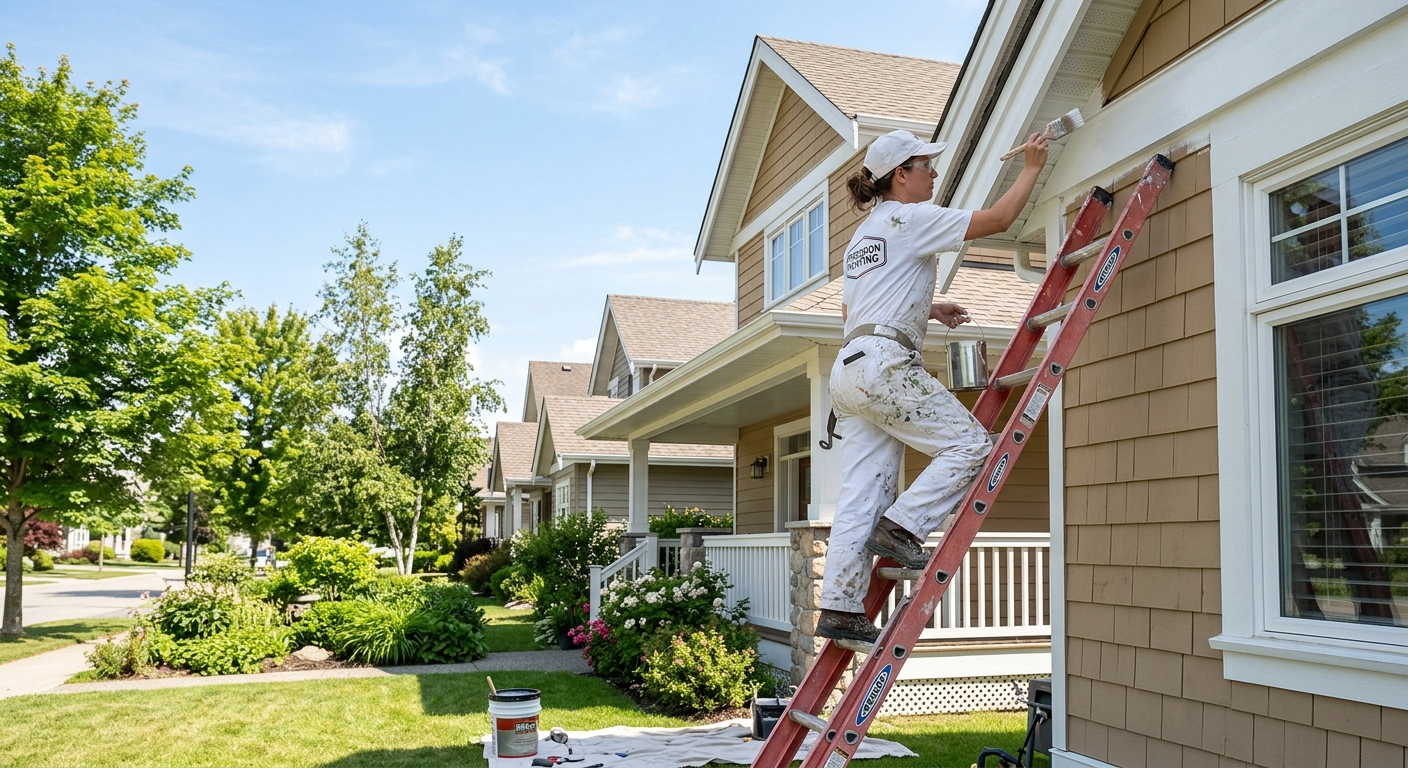
Painting options and costs in Greely
Greely, Ontario (population 9,049 in 2021) is a community where homeowners often balance busy schedules with the realities of Ottawa-area weather. For many older properties in town, the “before paint” work is what drives the final bill: if your home has pre-1978 coatings, professional lead-safe practices are commonly used when disturbing surfaces (Statistics Canada, 2021 Census). That can mean extra containment, HEPA cleanup, and careful priming—important for durability, but it adds time and specialized materials.
Cost in the Ottawa economic region is also strongly shaped by the compressed exterior season. Exterior painting typically runs late spring through early fall, when daytime temperatures are roughly 10–30°C and nights stay above freezing—conditions that help coatings cure properly and bond reliably. Because that window is shorter than in some areas, scheduling pressure can push summer rates up. Interiors, by contrast, are year-round, but quotes still vary because older drywall and wood trim usually require more sanding, patching, and full priming to avoid flashing, peeling, and adhesion failures.
In Greely, trades are especially in demand around the Greely Village area and nearby residential corridors where family homes turn over and renovations are frequent. Once you know which service best matches your scope, you can compare realistic ranges in the table below.
| Service |
What's Included |
Typical Duration |
Price Range |
| Interior — whole home (walls, ceilings, trim) |
Move/cover protection, surface cleaning, patching, sanding, caulking, prime as needed, 2-coat finish, basic trim work, prep and cleanup |
5–10 working days |
$1,500–$4,500 |
| Interior — per room (standard bedroom or living room) |
Clean, patch, sand, caulk where needed, prime as required, 2-coat finish to walls; optional door/trim touch-ups not included unless specified |
1–3 working days |
$450–$1,300 |
| Exterior — full house (siding, trim, soffits) |
Wash/degrease, scrape/sand loose coatings, repair caulking, prime exposed areas, spot-prime stained or bare surfaces, 2-coat exterior system, full trim including soffits |
2–4 weeks (weather-dependent) |
$3,800–$9,000 |
| Exterior — trim and accent colours only |
Preparation of trim areas, spot-scrape/sand, caulk, prime as needed, 2-coat finish on designated exterior accents; siding not repainted |
3–7 working days |
$1,200–$3,200 |
| Kitchen cabinet painting (doors, frames, spray finish) |
Remove hardware (as applicable), degrease, sand, repair small defects, prime, spray topcoat, re-install hardware, light touch-ups, proper ventilation and curing time |
4–10 working days |
$2,200–$4,500 |
| Specialty / faux finish (accent wall, texture) |
Surface prep for the chosen effect, base coat, application method specific to the finish, clear/finish coat as required, clean-up |
2–7 working days |
$900–$3,500 |
Prices are estimates only and vary by project scope, site access and material selection.
What affects the price of painting in Greely
In the Ottawa region, two quotes for what sounds like the same paint job can differ by 30–50% once prep, surface condition and scheduling are accounted for. The biggest drivers are (1) how much labour your specific home needs before the first coat and (2) how constrained the exterior season is for contractors.
For exterior work, the season is tightly climate-bound in Ottawa: exterior painting typically runs late May to early October, with daytime temperatures staying around 10°C and above during application. In coastal British Columbia, the season may be longer, but high humidity and frequent rain systems can increase the risk of mildew and adhesion issues—so crews use mildew-resistant products and moisture checks that add cost. In Greely, that “short, reliable window” concentrates demand into fewer weeks, so crews can be booked solid and day rates rise. That’s why a full exterior project can land closer to the upper end of the $1,200–$9,000 band depending on timing and repairs.
Older homes throughout the Ottawa area mean more surface prep—scraping failing paint, sanding rough spots, caulking cracks, patching wood/brick details, and priming everything that needs it. On many repainting jobs, surface prep can represent roughly 50–70% of labour. For example, if you’re dealing with flaking trim or stained siding, you may pay an extra $500–$1,500 just to address primer/spot-stain blocking and additional dry time. In the interior, the difference between a simple refresh and a “patch + prime” repaint can also be big—moving a room from the lower part of the $300–$3,500 interior band toward the higher end.
Two concrete Greely examples: (1) homes with peeling trim often require deeper sanding and thorough priming, increasing cost immediately; (2) houses with good, stable walls and fewer repairs can keep interior per-room pricing closer to the low-mid range, especially when only two coats are needed over clean surfaces.
| Price Factor |
Why It Matters |
Cost Impact |
| Surface prep — scraping, sanding, patching drywall or wood |
Prep determines adhesion; failed prep leads to peeling and flashing |
Often +20% to +60% on repainting |
| Number of coats — 2-coat system over primer vs. 1 coat over existing |
Coverage and durability rely on a consistent film build |
Additional coat commonly adds +10% to +25% |
| Paint quality tier — contractor-grade vs. premium (Benjamin Moore, Sherwin) |
Higher-quality coatings often cover better and resist stains/scuffing longer |
Materials +5% to +20%, usually offset by fewer problems |
| Ceilings and trim — adds significant time vs. walls-only |
Ceilings and trim require more masking, cutting-in and smoothing |
Typically +15% to +35% |
| Exterior season window — short season raises summer rates |
Weather days are “lost” time; demand concentration tightens scheduling |
Can add +10% to +40% depending on timing |
| Lead-safe precautions — required for pre-1978 homes with lead paint |
Special containment, HEPA cleanup and disposal add labour and materials |
Often +5% to +25% on affected areas |
| Surface material — drywall vs. plaster vs. wood vs. stucco |
Different substrates need different primers and mechanical prep |
Can swing totals by +10% to +50% |
| Height and access — multi-storey exterior requires scaffolding or lifts |
More setup time and safety controls |
Commonly +15% to +45% on larger homes |
Permits & regulations in Ontario
In Ontario, painting typically does not require a permit. The permitting conversation usually comes up for other trades (structural work, electrical/plumbing modifications, or work that changes a building’s use), not for standard interior or exterior painting. For homeowners in Greely, the more relevant regulation-related topic is how you handle older surfaces.
For homes built before 1978, health guidelines recommend testing for lead paint before sanding, scraping, or aggressive surface prep. If lead is present, lead-safe work practices are standard for professional contractors: wet methods to reduce dust, HEPA vacuuming, proper bagging and disposal, and cleaning verification. This is not usually a legal “permit” for the homeowner to obtain, but it is a crucial safety standard that affects how contractors price and schedule the work.
When hiring, confirm your contractor carries liability insurance and has workplace coverage (WSIB/WCB) for workers. Then insist on a written contract that clearly states the paint brand and sheen, number of coats, which surfaces will be primed, and what prep is included (scraping, sanding, caulking, patching). A good quote also spells out whether disposal and site protection (floor/rail coverings) are included.
How to verify in steps: (1) Ask for the Ontario licence/registration details they use for the trade and confirm the information matches their company name; (2) request a current certificate of insurance and check the expiry date and coverage type; (3) ask for proof of WSIB/WCB coverage; (4) ensure the contract includes scope and materials so there are no “surprise” extras later.
Interior vs exterior painting — getting the best result in Greely
In Greely’s Ottawa-area climate, the most common cause of premature paint failure is not the paint brand—it’s inadequate surface preparation and weather timing. For interiors, durability starts with patching and priming. Drywall imperfections should be filled, sanded smooth, and spot-primed before the finish coat; stained or high-porosity patches should be primed so your topcoat doesn’t flash or “ghost.” Sheen choice also matters: flat paint hides wall imperfections but marks more easily; eggshell or satin typically performs better in living areas, hallways and bedrooms; semi-gloss is often best for trims and doors because it cleans well. And yes—two coats over the correct primer generally outlasts a thicker one-coat attempt.
For exteriors, the prep rules get stricter. Caulking before painting helps prevent water ingress along joints and trim edges, and it reduces future bubbling or peeling driven by moisture. The primer must match the substrate—different products are needed for wood versus fibre cement versus previously painted areas. In the Ottawa region, proper drying time between coats is critical because freeze-thaw can stress films after application; that’s why crews plan around the weather window when daytime temperatures are reliably above ~10°C. If you’re using paint to refresh older trim on a pre-1978 home, contractors typically build in lead-safe precautions, which helps protect both the homeowner and the worker.
Budget-wise, cabinet painting is a realistic alternative to replacement. For example, if cabinet replacement plus installation may quickly climb past many homeowners’ comfort zone, a spray-finish cabinet repaint can still deliver a major visual upgrade—often in the neighbourhood of the cabinet band (commonly $2,200–$4,500 here) when the box structure is sound and you’re prepared for a short kitchen “out of service” period.
| Project Type |
Key Prep Step |
Recommended Coats |
Price Band |
| Interior — fresh drywall (new construction) |
Prime properly after fastening/filling; sand smooth and remove dust |
Primer + 2 finish coats |
$800–$2,200 |
| Interior — repaint (good condition, no repairs) |
Clean/degloss lightly, patch minor scuffs, spot-prime any stains |
2 finish coats (primer only on patches) |
$300–$1,200 |
| Interior — repaint (patching and priming needed) |
Fill/sand repairs, prime patched areas and any sealed spots |
2 finish coats + primer for patches/changes |
$600–$2,100 |
| Exterior siding (wood or fibre cement) |
Scrape loose paint, sand edges smooth, caulk, prime exposed areas |
2 exterior coats (primer as required) |
$3,800–$9,000 |
| Exterior trim and accents only |
Thorough prep on trim edges; caulk and spot-prime |
2 coats (primer where needed) |
$1,200–$3,200 |
| Kitchen cabinets (spray finish) |
Degrease and sand; prime with a system designed for cabinetry |
Prime + 2 topcoat coats |
$2,200–$4,500 |
How to choose a painting contractor in Greely
Choosing the right contractor in Greely is mostly about verifying proof and matching the quote to your actual scope. Start with coverage: ask for their Ontario registration/licensing details for the trade (as applicable), a certificate of liability insurance, and proof of WSIB/WCB workers’ compensation coverage. You can verify by checking the certificate’s legal name and expiry date, then requesting the coverage numbers/letter that confirms they’re insured for the work they’ll perform. If they can’t provide documentation quickly, that’s usually a sign the project will cost you more later through change orders or delays.
Next, get 2–3 itemised written quotes. Prefer breakdowns for labour, materials, prep work (scraping/sanding/patching), priming, number of coats, and cleanup/disposal. A lump sum can hide scope gaps. Read exclusions carefully: is protective masking included, is old caulking removed and re-applied, are stained surfaces pre-primed, and is lead-safe prep included if pre-1978 surfaces require it? Also confirm whether permits are needed (usually not for painting), and whether the contractor will handle debris removal and site sweep-and-clean.
Warranty matters too. Ask for the workmanship warranty length, what it covers (peeling due to adhesion vs. normal wear), and whether product/manufacturer warranties apply to you or require the contractor to register the job. Payment should be controlled: never pay more than about 10–15% upfront; use a holdback (often at completion) until you’ve inspected the finished surfaces. For timing, ask for a written start date and completion estimate that accounts for weather delays common to Ottawa-area exterior work.
- Request liability insurance and confirm expiry dates
- Confirm WSIB/WCB coverage before work starts
- Get an itemised scope (prep, primer, coats, cleanup)
- Confirm paint brand, product line and sheen (eggshell/satin/semi-gloss)
- Verify how they handle repairs: patching, sanding grit, and spot-priming
- Ask whether caulking is included and how it’s finished
- Confirm number of coats and what triggers extra coats (stains/bleed-through)
- Ask about ventilation and curing time for cabinet work
- Ensure disposal and floor protection are included
- Get a warranty statement in writing (workmanship + product coverage)
- Plan payment schedule with a holdback until final walkthrough
- Ask for start/completion dates and weather contingencies in writing
In Greely, common red flags include: quoting without discussing surface prep, refusing to provide insurance/WSIB proof, vague scopes that don’t specify coats/primer, requiring a large upfront payment, and missing a written start date—especially for exterior jobs where weather windows can narrow quickly.
Frequently asked questions — painting in Greely
How much does interior painting cost per room in Greely?
For Greely and the Ottawa area, interior painting per room commonly falls in a practical range of about $450–$1,300, depending on room size and condition. A straightforward repaint (cleanable walls, minimal patching) is usually on the lower end, while rooms that need patching, sanding, and priming push the price higher. If ceilings are included and trim requires attention (caulking, scuff repair, more cutting-in), you should expect the quote to reflect that extra labour. Material choice can also move the total—premium low-VOC products may cost more, but they often cover more evenly and resist scuffs better. If your home has older wall issues, ask the contractor to itemise prep so you’re comparing like-for-like scopes.
When is the best time for exterior painting in Greely?
The best time for exterior painting in Greely is typically late spring through early fall, aligning with the Ottawa-region weather window when daytime temperatures are roughly 10–30°C and nights stay above freezing. This timing helps coatings cure properly so adhesion holds and you avoid softening or peeling after temperature swings. Plan around rain too: contractors in this area prefer clear, dry conditions and enough drying time between coats. While you can sometimes do touch-ups outside this window, a full exterior project is usually scheduled for the period that reliably supports proper cure. The upside of Greely’s climate (compared to damp coastal regions) is that you’re not dealing with persistent marine humidity, but the compressed season still means summer scheduling pressure.
How many coats of paint do I need?
Most residential work in Greely follows a system: two finish coats plus primer when required by the substrate or surface condition. If you’re repainting and the existing paint is well-bonded, colour change is minor, and there are no stains or repairs, you might not need to prime the entire surface—spot-priming only. However, if you have patched areas, stained drywall, bare wood, or areas where scraping exposed different materials, primer becomes essential for even sheen and coverage. A contractor should specify this in the written scope so you can compare quotes accurately. In practical terms, the “2-coat system over primer” approach is what keeps projects from looking good initially and failing early. If someone promises one coat without conditions, ask how they’ll handle bleed-through and coverage.
What paint is best for Greely's climate?
For Greely (Ottawa area), the best choice is usually a quality interior coating for inside and an exterior system rated for temperature swings and moisture exposure outside. Because exterior work here is weather-dependent and typically runs late spring to early fall, the exterior product should be designed for Ontario conditions—good film build, strong adhesion, and proper curing specs. On older homes, contractors often prioritise primer compatibility with the siding/trim material and seal any stains or exposed surfaces before topcoating. If your pre-1978 home requires sanding/scraping precautions, that affects prep, which influences what “best” really means (safe, thorough prep first). For cabinets, look for a system intended for cabinetry rather than generic wall paint—spray application plus proper primer is what helps it resist daily cleaning and scuffs.
How long does exterior paint last here?
With proper prep and correct timing in Greely’s Ottawa-area climate, exterior paint often lasts several years, and many homeowners plan maintenance over time rather than expecting a “set and forget” finish. Longevity depends heavily on how much surface prep was done (scraping loose coating, sanding edges, repairing caulk joints) and whether primer matched the substrate. If the job is done early in the season and the coating can cure fully before temperature swings, it performs better. If prep was rushed or caulking was skipped, you’re more likely to see bubbling or peeling at joints and trim edges. Homes with older, aging surfaces frequently need more labour, but that investment is what protects the paint system. If a contractor’s quote is unusually low, it may indicate reduced prep, which usually shortens lifespan.
Should I paint or replace my cabinets?
In most Greely kitchens, painting is worth considering when the cabinet boxes and doors are structurally sound and you’re mainly changing colour or refreshing a dated finish. Replacement can be expensive and disruptive; cabinet painting delivers a major visual change while keeping your existing layout. A spray-finish cabinet repaint commonly lands around $2,200–$4,500 depending on number of doors, finish level, and prep needs. Painting isn’t ideal if cabinets are sagging, water-damaged, or heavily swollen—those structural issues usually require replacement. Also think about lifestyle: cabinet work needs cleaning, degreasing, sanding, priming, and curing time, so your kitchen may be partially out of service for several days. For pre-1978 homes, safe surface prep is important when coatings are disturbed. Ask for a system-based quote that includes primer and a realistic cure schedule.