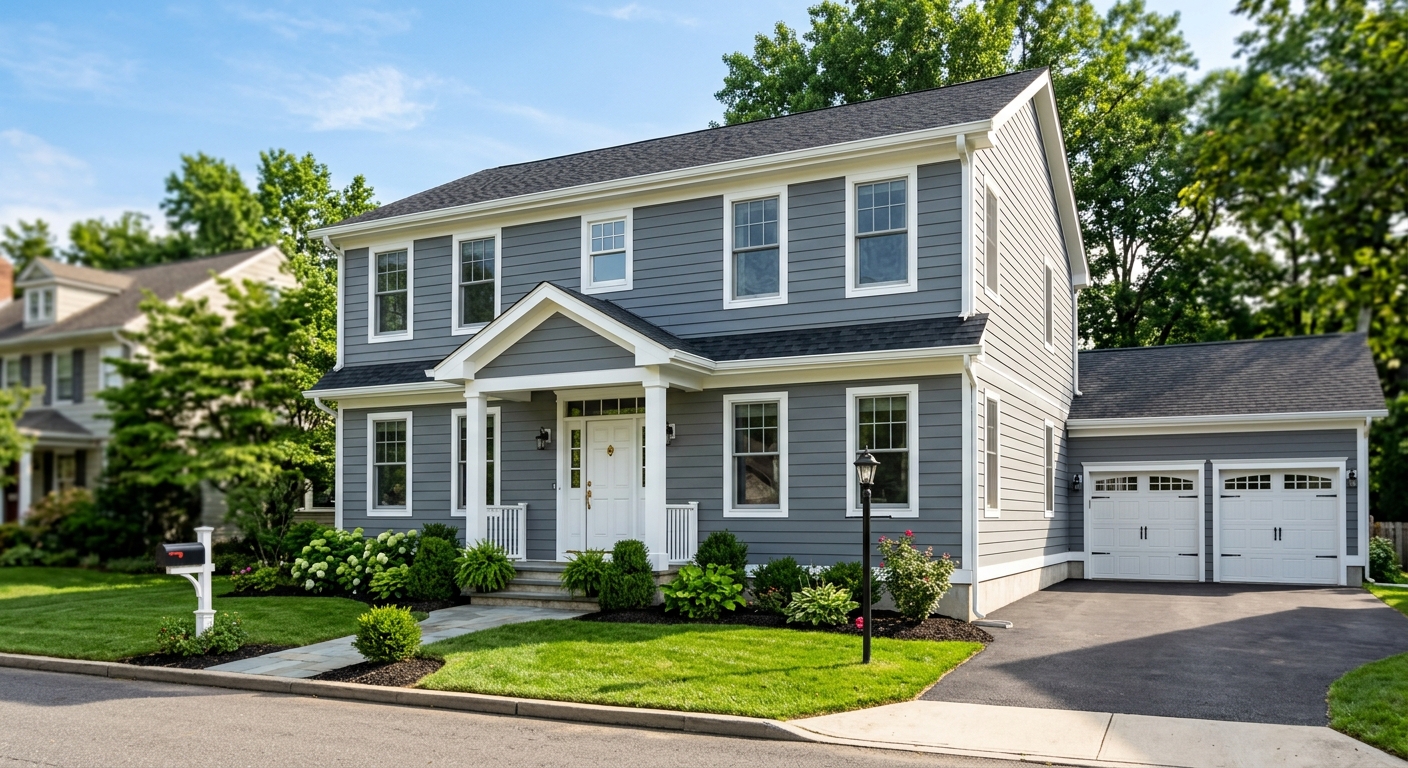
Painting options and costs in Callander
Callander homeowners have a solid range of painting options, but the final price usually comes down to how much prep your home needs and how the weather lines up with the work window. In Callander’s area, many dwellings were built well before today’s modern insulation and ventilation standards—nearly half of local homes date back to before 1981. That matters because older siding, trim, and interior surfaces often carry failing coatings and hidden moisture issues, which typically pushes labour toward scraping, sanding, caulking, patching, and priming. From the 2021 Census, Callander shows 1,435 homeowner households, and that high owner-occupant rate generally translates into steady demand for repainting and trim refreshes throughout the year. (Statistics Canada, 2021 Census.)
Pricing is also shaped by market timing. Northeast Ontario trades don’t have the tight coastal humidity challenges seen on damp Pacific coasts, but Callander’s freeze–thaw swings and rain-driven drying days still affect exterior schedules and can reduce how many workable days crews get in a season. In practice, that means exterior painting tends to be concentrated late spring through early fall, with north- and shaded elevations requiring extra attention to drying conditions and film integrity. In town, you’ll often see painters booked up around the busier residential corridors near the Callander Bay / Highway 11 area, where accessibility and driveway staging can add a bit of time.
Below are realistic, homeowner-friendly budget bands to help you compare quotes before you book a site visit.
| Service |
What's Included |
Typical Duration |
Price Range |
| Interior — whole home (walls, ceilings, trim) |
Move-protected furniture, prep/patching, caulking, sanding as needed, primer where required, paint supply, 2-coat finish on walls/ceilings, basic trim coverage, clean-up |
3–7 days |
$6,000 – $9,000 |
| Interior — per room (standard bedroom or living room) |
Prep/patching, caulking, primer as needed, 2-coat finish, tape-off, floor and vent protection, clean-up |
1–3 days |
$2,500 – $4,500 |
| Exterior — full house (siding, trim, soffits) |
Power-wash/detergent cleaning, scraping and sanding loose coating, spot-priming, caulking, patch repairs, 2-coat exterior system, protection of landscaping and windows, clean-up |
5–12 days |
$8,500 – $15,000 |
| Exterior — trim and accent colours only |
Prep of trim, sanding/scraping as needed, primer where required, paint/colour application, caulking on trim lines, masking protection |
2–5 days |
$4,000 – $7,500 |
| Kitchen cabinet painting (doors, frames, spray finish) |
Hardware handling (labeling), thorough degreasing, deglossing/sanding, repairs as needed, primer and sprayed cabinet finish, reassembly, light clean-up |
5–10 days (incl. cure time) |
$3,000 – $6,000 |
| Specialty / faux finish (accent wall, texture) |
Surface stabilization, base coat, texture/faux application, topcoat/seal where required, protection and clean-up |
1–4 days |
$800 – $3,500 |
Prices are estimates only and vary by project scope, site access and material selection.
What affects the price of painting in Callander
Two quotes for what seems like the “same paint job” can differ by 30–50% across Northeast Ontario because the scope of prep and drying risk is rarely identical. In Callander, exterior work is tightly climate-bound: in Ontario, most crews target roughly late May to early October, when temperatures stay comfortably above 10°C and rising during application so paint can level and cure properly. Shorter seasons concentrate demand, and that can raise summer scheduling pressure. The result is that a “simple repaint” may cost more than expected if the existing coating is failing, if there’s trim rot that needs patching, or if the house layout creates extra access time.
Prep is frequently the biggest driver—on older homes throughout the Northeast, scraping loose coatings, sanding edges, caulking joints, and priming problematic areas can represent 50–70% of labour on a repaint. That’s especially true when you’re dealing with peeling paint or chalky surfaces where adhesion is the real problem, not just colour. For interiors, additional time goes to ceiling and trim details, and for older substrates there can be lead-safe precautions.
Here are concrete examples I commonly see around Callander: (1) If your siding has a pattern of blistering or peeling near eaves and down spouts, the contractor may need extra scraping and spot-priming—this can move an exterior project from the lower end of a typical $4,000–$15,000 band up toward the mid-to-upper range. (2) If your home has many trim elevations (gable ends, multiple window surrounds) and you need caulking plus detail work, the time adds quickly—often justifying an interior total closer to $2,500–$9,000 versus a lower per-room expectation.
All of these factors show up in the line items below.
| Price Factor |
Why It Matters |
Cost Impact |
| Surface prep — scraping, sanding, patching drywall or wood |
Proper adhesion prevents peeling and flaking; patches must be feathered and sealed |
Often the largest swing item; commonly +15–45% versus “clean surfaces only” estimates |
| Number of coats — 2-coat system over primer vs. 1 coat over existing |
Coverage and durability depend on film build, sheen consistency, and hidden repairs |
May add $300–$2,000 depending on primer needs and how many surfaces are exposed |
| Paint quality tier — contractor-grade vs. premium (Benjamin Moore, Sherwin) |
Premium lines can improve hide, washability and long-term colour stability |
Material difference typically $200–$900, but may reduce rework and touch-ups |
| Ceilings and trim — adds significant time vs. walls-only |
Ceilings increase coverage area; trim needs cutting-in, sanding, and careful masking |
Can add 20–40% on interiors, especially where trim is extensive |
| Exterior season window — short season raises summer rates |
Contractors compress schedules to meet weather-dependent cure and drying times |
Commonly adds scheduling premium on peak weeks; may push totals up $500–$3,000 |
| Lead-safe precautions — required for pre-1978 homes with lead paint |
Testing and containment protect occupants and reduce contamination risk |
Time and labour can add $400–$1,800 on affected jobs |
| Surface material — drywall vs. plaster vs. wood vs. stucco |
Different substrates need different primers and adhesion systems |
Primer/repair systems can add $250–$1,500 |
| Height and access — multi-storey exterior requires scaffolding or lifts |
More setup time, safety planning, and controlled masking around windows/doors |
May add $600–$3,500 depending on layout |
Permits & regulations in Ontario
In Ontario, painting itself typically does not require a permit. The main regulatory attention for painting is safety and health—especially for older homes. For homes built before 1978, health guidance recommends testing for lead paint before sanding, scraping, or removing coatings, and using lead-safe work practices if lead is present. That includes wet methods to reduce dust, HEPA vacuuming, containment where required, and proper disposal. While this is not automatically a homeowner permit issue, it is standard professional practice to protect people in and around the home.
Where permits do come into play is usually not the paint operation—it’s when other building trades are involved (for example, structural changes, major renovations, or certain regulated work like electrical/plumbing repairs). Pure interior re-painting and exterior repainting are generally considered “finishing” and do not require a painting permit.
Before you sign in Callander, confirm your contractor carries liability insurance and has WSIB (workers’ compensation) coverage. Then insist on a written contract that spells out: paint brand and sheen, number of coats, which surfaces get primer, and which prep steps are included (scraping/sanding/patching/caulking). When you verify coverage, ask for: (1) an Ontario WSIB clearance or coverage letter, (2) a current certificate of insurance showing liability limits, and (3) a clear written scope of work tied to those documents. You should also request proof of staff coverage if multiple workers are assigned.
Interior vs exterior painting — getting the best result in Callander
In Callander, the difference between a long-lasting paint job and a premature failure is usually prep quality and moisture control—not just the colour. For interiors, start with the boring stuff: filling cracks, sanding rough patches, priming stains, and sealing repaired areas so the topcoat cures evenly. Sheen matters by room use. Flat and matte can hide wall imperfections, but they scuff more in high-touch zones; eggshell is a common living-room compromise; satin or semi-gloss is often reserved for trim and higher-washability areas. Also remember that two coats over a proper primer will almost always outperform one thick coat—especially when you’re covering patched drywall or absorbing spots.
For exteriors, Ontario’s weather makes surface prep and caulking non-negotiable. Expect pressure washing or detergent cleaning, scraping of loose coating, sanding feather edges, spot-priming bare or stained areas, and then caulking before paint so joints stay water-tight. Primer type also matters: different substrates (wood vs. fibre cement vs. masonry details) need primers that promote adhesion and block stains. While “mildew-resistant” products are more emphasized in coastal climates, we still plan for damp days and cool nights in the Northeast—so timing coats and using temperature-appropriate products matters.
Cabinet painting is a good budget alternative to replacement when boxes are sound. For example, a full kitchen cabinet replacement can run far beyond typical painting, while cabinet painting often fits within the $3,000–$6,000 band—provided doors and frames are prepped correctly and the finish is sprayed and cured.
If your home is pre-1978, lead-safe precautions may be necessary, particularly if scraping is required—this can add time, but it’s the difference between a quick refresh and a safer repaint.
| Project Type |
Key Prep Step |
Recommended Coats |
Price Band |
| Interior — fresh drywall (new construction) |
Prime all drywall to seal absorption; caulk seams and nail pops |
2 coats finish over primer |
$2,500 – $6,500 |
| Interior — repaint (good condition, no repairs) |
Clean, lightly scuff/sand where needed, spot-prime minor stains |
2 coats finish (spot-prime only) |
$2,500 – $5,500 |
| Interior — repaint (patching and priming needed) |
Patch + sand, seal repaired areas with appropriate primer |
2 coats finish over primer |
$3,500 – $9,000 |
| Exterior siding (wood or fibre cement) |
Scrape failing coating, sand edges, spot-prime bare areas, caulk joints |
2 coats exterior system over primer |
$8,500 – $15,000 |
| Exterior trim and accents only |
Mask and prep trim carefully; caulk and spot-prime stained/sanded spots |
2 coats finish over spot-primer |
$4,000 – $7,500 |
| Kitchen cabinets (spray finish) |
Degrease and degloss; prime cabinets before spraying topcoat |
Primer + 2 finish coats |
$3,000 – $6,000 |
How to choose a painting contractor in Callander
Choosing the right painter in Callander is mostly about verification and clarity. First, confirm Ontario coverage: ask for proof of liability insurance and workers’ compensation (WSIB). How to check: (1) request the contractor’s WSIB clearance or coverage letter and confirm the named business matches the quote, (2) ask for a current certificate of insurance showing liability limits and effective dates, and (3) ensure the people on the job are covered (a signed quote alone isn’t enough).
Next, get 2–3 itemised written quotes rather than one lump sum. A good quote separates labour and materials, and it specifies what prep is included (scraping, sanding, patching, priming, caulking) and what’s excluded (e.g., replacing damaged boards, removing storm damage, restoring rotted trim). Ask whether disposal is included for paint debris and whether masking/protection materials are covered. Also request the start date and completion estimate in writing, because weather impacts exterior timelines in the Northeast.
Warranty matters too. Look for a workmanship warranty length (and what voids it), plus how product/manufacturer warranties are handled. Determine whether the warranty is transferable if you sell the home.
Payment schedule should be conservative: never pay more than 10–15% upfront, and hold back funds until the job is complete and inspected. For added protection, ensure the contract lists paint brands, sheens, number of coats, and the surfaces included.
- Ask what prep is included for failing paint: scrape/sand, spot-prime, and caulk locations.
- Confirm the exact paint brand and sheen (eggshell/satin/semigloss) on the quote.
- Request the scope for ceilings and trim (often excluded unless stated).
- Verify WSIB coverage with a clearance letter and confirm the business name.
- Verify liability insurance with a current certificate of insurance.
- Check whether disposal and clean-up are included in the total.
- Confirm how they protect floors, stairs, landscaping, and windows.
- Ask about drying time and what happens if rain or cool nights delay coats.
- Look for a written start date and completion estimate, especially for exterior work.
- Review warranty terms: workmanship duration and coverage boundaries.
- Confirm the payment schedule (max 10–15% upfront; holdback until inspection).
- Ensure the quote includes number of coats and where primer is applied.
Red flags in Callander: a quote that’s only a single lump sum without prep details, refusal to provide WSIB/liability documentation, vague “paint brand by contractor’s choice” language, overly short exterior timelines that ignore weather risk, and requests for large upfront deposits with no signed contract or schedule.
Frequently asked questions — painting in Callander
How many coats of paint do I need?
In Callander, most quality interior and exterior repainting work uses a 2-coat system, but the “how many” depends on whether primer is needed. For interiors, if you’re repainting good-condition walls with no staining or patches, you’ll typically still see 2 finish coats for uniform coverage and sheen consistency. If you’re patching drywall or sealing repaired areas, plan for primer plus 2 finish coats. For exteriors, you generally need primer on bare or sanded spots and then 2 coats of the exterior system overall—especially important because moisture intrusion and freeze–thaw can stress thin film builds.
What paint is best for Callander's climate?
For Callander (and the Northeast), durability comes from choosing the right coating for the substrate and using it at the correct temperatures. On interiors, a washable eggshell or satin on walls is often a homeowner-friendly balance between scuff resistance and easy touch-ups. For exteriors, use products designed for Canadian climates and apply them during the workable window when temperatures are rising and above about 10°C. Older homes—many of which were built before 1981—often have more prep and adhesion challenges, so an appropriate primer is just as important as the topcoat. If you’re comparing quotes, don’t choose purely by price; a correct primer plan is what keeps repainting from cycling every few years.
How long does exterior paint last here?
Exterior longevity in Callander depends heavily on prep and moisture management. When scraping, sanding, spot-priming, and caulking are done correctly, many homeowners expect a solid service life before a full repaint becomes necessary—often measured in multiple years rather than seasons. If the previous coating was failing or moisture was already getting in, rushing to paint over without full adhesion prep can shorten the lifespan significantly. Homes built before 1981 can be especially sensitive because older joints and trim details may hold water or develop adhesion problems. If your quote is sitting at the lower end of the exterior band (for example, around $4,000–$7,500 for trim-only), make sure the scope includes the prep steps you need for long-term performance.
Should I paint or replace my cabinets?
In many Callander kitchens, painting is the smarter first option if the cabinet boxes are solid and doors/frames are just outdated or worn. Cabinet painting can refresh the look without the demolition and downtime that replacement brings. A sprayed cabinet finish is commonly budgeted in the $3,000–$6,000 range, and the biggest determinant is prep: degreasing, deglossing, repairs (if any), primer, and thorough cure time. If your cabinets have structural issues like sagging frames, water damage, or severe delamination, replacement may be more cost-effective long-term. But if they’re sound, painting often gives the best “value per year,” particularly when you want a schedule that fits a typical homeowner living routine.
How do I prep walls before painting?
For homeowners, the safest approach is to focus on clearing the workspace and protecting belongings—not doing the heavy prep if you’re dealing with unknown coatings. In Callander homes built before 1978, it’s especially important to avoid aggressive scraping/sanding that could disturb lead paint without proper lead-safe handling. If you’re prepping for an interior repaint, start by removing wall art and hardware, cleaning greasy marks, and moving/covering furniture. For the actual paint-prep steps—patching holes, sanding, caulking gaps, and priming stains—contractors should evaluate the substrate on-site. A good prep plan is what keeps the finish consistent, prevents peeling, and helps you get the expected 2-coat durability. If a quote promises “just paint over,” ask what they do about patches, stains, and adhesion.
Do I need to worry about lead paint in an older Callander home?
Yes, it’s worth taking seriously if your Callander home is older (especially pre-1978). Health guidance recommends testing before sanding or scraping and using lead-safe work practices if lead is present—wet methods to reduce dust, HEPA vacuuming where appropriate, proper containment, and disposal procedures. This isn’t usually a “permit” issue for homeowners, but it is a professional safety standard. Many older homes also have more failing coatings, which can increase dust risk if someone scrapes aggressively. When you request a quote, ask whether lead-safe precautions are included for pre-1978 substrates and whether the contractor will use appropriate controls. It’s also reasonable to ask for proof of insurance coverage and documented methods so the job is done safely and cleanly.