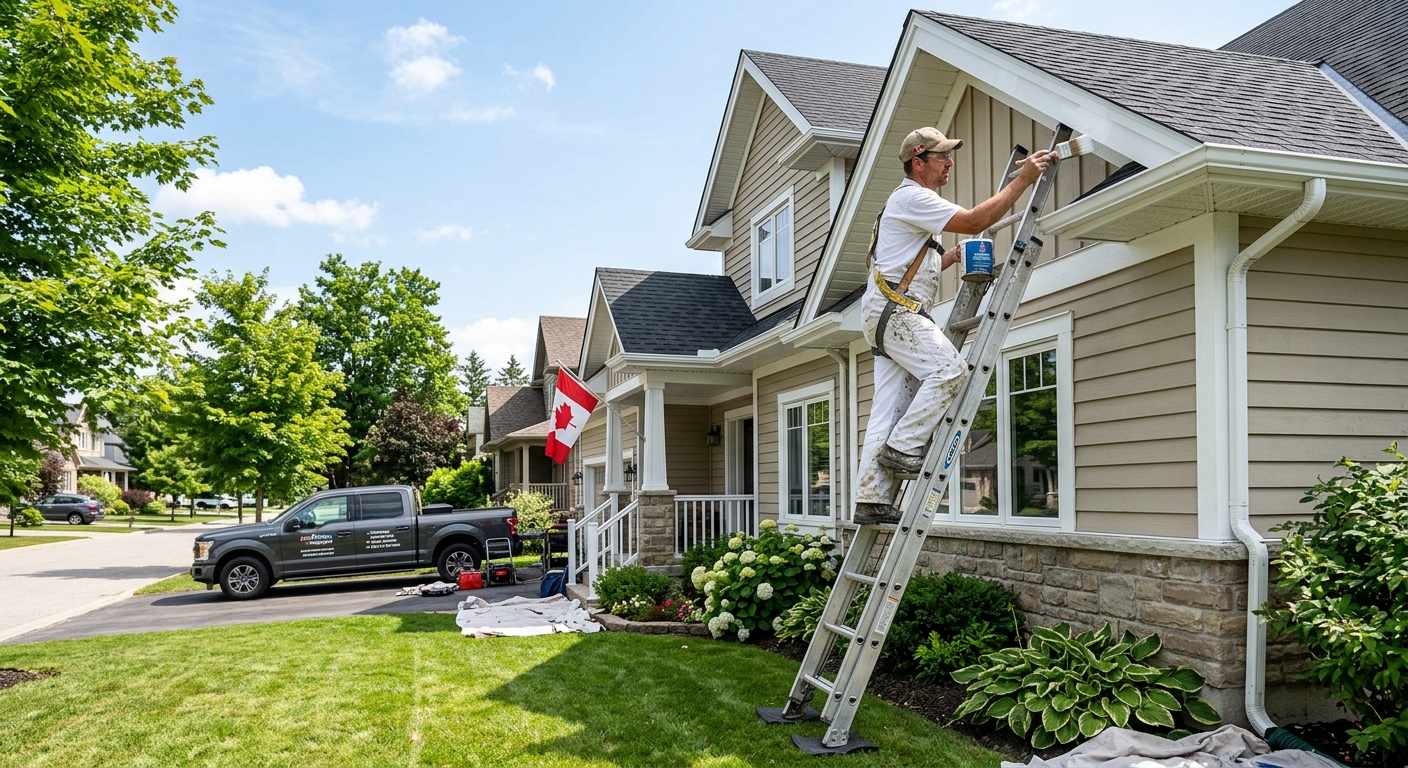
Painting options and costs in Victory Heights
Victory Heights homeowners typically start by comparing paint options, but the real budget swings come from prep and the weather windows. In this part of the Lower Mainland–Southwest, Victory Heights has a sizable older housing base—across the region, many homes date back to the mid-century through the 1990s—so a repaint often means more than “roll and go”: scraping failing coatings, repairing settlement cracks, and using stain-blocking primer for nicotine or wood tannins can be required. If your home is pre-1978, lead-paint–safe work practices are commonly used by pros to control dust and manage disposal, which adds time and cost even when the finish is straightforward. (Statistics Canada, 2021 Census)
Costs in Victory Heights also reflect Lower Mainland realities. Exterior painting is constrained by rain and humidity rather than extreme cold, so crews must schedule around dry stretches, allow for slower drying times, and plan for re-mobilizing between weather windows. That’s why you’ll see exterior projects priced differently than interior work, which can be paced more steadily through fall and winter. In the neighbourhoods around the Victory Heights area where townhouses and detached homes cluster closely, demand for both interior repainting and trim work tends to peak when homeowners are preparing listings and renovations—so availability and scheduling can affect your final quote.
Use the table below to align expectations, then we’ll dig into what drives the numbers.
| Service |
What's Included |
Typical Duration |
Price Range |
| Interior — whole home (walls, ceilings, trim) |
Protect floors/furniture, wall prep (patch/sand/spot prime), 2-coat wall/ceiling system, caulking, paintable masking, interior trim/doors and basic clean-up |
5–10 days |
$2,000 – $7,500 |
| Interior — per room (standard bedroom or living room) |
Prep and patching as needed, prime where required, 2-coat walls, prep for trim/ceiling edge, clean-up and final inspection |
1–3 days |
$700 – $1,800 |
| Exterior — full house (siding, trim, soffits) |
Pressure wash/clean, scrape/sand loose coating, patch and caulk, mildew-resistant primer and paint system, paint soffits/eaves where accessible, protection and weather-window scheduling |
7–18 days (weather dependent) |
$3,800 – $14,500 |
| Exterior — trim and accent colours only |
Detail prep, scrape/sand spots, caulk, prime where needed, paint trim and accents, careful masking and cleanup |
3–8 days |
$1,200 – $5,500 |
| Kitchen cabinet painting (doors, frames, spray finish) |
Degrease, light sanding, repair small defects, bonding primer, spray or high-quality brush/roll finish, new hardware prep/masking, interior prep |
5–14 days |
$2,500 – $7,900 |
| Specialty / faux finish (accent wall, texture) |
Test patches, surface stabilization/flattening as needed, texture or decorative system, protective topcoat, cleanup |
2–7 days |
$900 – $6,500 |
Prices are estimates only and vary by project scope, site access and material selection.
What affects the price of painting in Victory Heights
Even for the same “paint everything white” request, you can see quotes vary by 30–50% across Lower Mainland–Southwest and the broader BC market. The biggest reasons aren’t just labour availability—they’re prep complexity, product selection for coastal conditions, and how scheduling risk gets priced in when rain disrupts exterior drying. In Ontario and Alberta, exterior timing is usually tied to temperatures being consistently workable (often late May to early October). Coastal BC generally has a longer season, but high humidity and rainfall mean slower drying and a higher risk of mildew or adhesion problems if the wrong system is chosen. In Victory Heights, that risk management shows up in the estimate as weather-window planning plus mildew-resistant, high-adhesion primer and topcoats.
Prep is frequently the cost driver. Older homes in the Lower Mainland can require extensive scraping, caulking and priming; on a repaint, prep is commonly 50–70% of the labour. For example, a whole-home interior repaint can land in the $2,000 – $7,500 band when patching is minimal, but it can push higher toward the top end when ceilings need attention and trim requires careful prep and caulking. On the exterior, the difference between trim-only touch-ups and a full house repaint is justified when you’re dealing with failing coating edges, peeling around vents, or staining—full work in the $3,800 – $14,500 range includes weather-dependent prep and a continuous coating system.
Two local examples in Victory Heights: (1) siding and trim that have lifted paint edges after damp seasons often require additional sanding and spot-priming to prevent future bubbling; (2) homes close to trees or shaded facades commonly develop mildew patches that need dedicated cleaning and a system designed for moisture-prone surfaces.
| Price Factor |
Why It Matters |
Cost Impact |
| Surface prep — scraping, sanding, patching drywall or wood |
Adhesion depends on clean, stable surfaces; loose coating must be removed and repairs must be flat |
+15% to +45% |
| Number of coats — 2-coat system over primer vs. 1 coat over existing |
Coverage and durability require consistent film build; stains and uneven substrates need primer + 2 topcoats |
+5% to +25% |
| Paint quality tier — contractor-grade vs. premium (Benjamin Moore, Sherwin) |
Premium lines typically offer better hiding, stain resistance, and scuff performance |
±0% to +20% |
| Ceilings and trim — adds significant time vs. walls-only |
Cutting-in, edging, caulking and careful masking take longer than wall rolls |
+10% to +35% |
| Exterior season window — short season raises summer rates |
Contractors re-prioritize crews around dry days; weather delays increase labour pressure |
+10% to +40% |
| Lead-safe precautions — required for pre-1978 homes with lead paint |
Containment, HEPA vacuuming, and proper disposal increase labour and materials |
+8% to +30% |
| Surface material — drywall vs. plaster vs. wood vs. stucco |
Different substrates require different primers and texture-friendly prep |
+0% to +25% |
| Height and access — multi-storey exterior requires scaffolding or lifts |
Set-up and safety time affect labour; hard-to-reach areas raise risk and cost |
+15% to +50% |
Permits & regulations in British Columbia
In British Columbia, painting generally does not require a permit for typical interior or exterior repainting work. Where the homeowner does need to be thoughtful is housing age: for homes built before 1978, health guidelines recommend testing for lead paint before sanding or scraping, and using lead-safe work practices if lead is present. Professional contractors commonly use wet methods to reduce dust, HEPA vacuuming during prep, and proper disposal of dust and debris. This isn’t legally mandated for homeowners in the same way it is for professional work, but it is standard professional practice because the risk is real.
Before you sign, confirm the contractor carries appropriate liability insurance and has workers’ compensation coverage (WSIB/WCB) for their crew. Then insist on a written contract that spells out the paint brand/line, sheen, number of coats, and which prep steps are included (scrape/sand extent, caulking, priming, and how they handle repairs).
Step-by-step for Victory Heights homeowners:
- Check the contractor’s British Columbia licence status in the relevant provincial directory for their class of work (search by company name).
- Ask for a certificate of insurance for liability—verify the policy is current and that it lists the correct business name/address.
- Request proof of WSIB/WCB coverage (clear document or statement of account).
- Ask for a written scope addendum that lists included prep, disposal, and surface patching—no “allowance only” wording without amounts.
- Confirm the product system used (primer + topcoat) so you can match expectations to the job.
Interior vs exterior painting — getting the best result in Victory Heights
The difference between a long-lasting paint job and a premature failure in Victory Heights is mostly in prep and the coating system, not the brand marketing. For interiors, the order of operations matters: filling, sanding, and priming is more important than the topcoat name. If you have patched drywall, uneven texture, or stains, you need spot-priming and proper scuff sanding so the finish can mechanically grip. Sheen choice also changes how the paint holds up to real life—flat hides wall imperfections, but eggshell or satin is typically better for living rooms, hallways and family spaces because it cleans better without looking glossy. A proven approach in Canadian homes is two coats over a proper primer; “one thick coat” often looks fine day one but fails sooner at edges and high-touch zones.
On the exterior in British Columbia, preparation is everything. Clean and scrape loose edges, caulk first before painting to prevent water ingress paths, and select a primer matched to the substrate (wood, fibre cement, stucco). Mildew-resistant, high-adhesion products are key in our coastal humidity; applying when surfaces are damp or when the weather window is unstable increases the chance of darkening, adhesion loss, or patchy sheen. (Lower Mainland–Southwest work also commonly runs slower due to humidity, so crews build that schedule risk into pricing.) For pre-1978 homes, lead-safe containment and cleanup are essential before scraping.
Cabinet painting can be a smart alternative to replacement. If your kitchen is dated but structurally sound, professional cabinet painting in the $2,500 – $7,900 band is often justified because you’re upgrading appearance without tearing out boxes, plumbing, and flooring. It’s usually not the right choice when cabinets are swollen from leaks or the boxes are failing—then replacement or repair comes first.
| Project Type |
Key Prep Step |
Recommended Coats |
Price Band |
| Interior — fresh drywall (new construction) |
Seal/prime thoroughly, tape compound flush, light sand for even texture |
Primer + 2 finish coats |
$2,200 – $6,800 |
| Interior — repaint (good condition, no repairs) |
Wash/degloss, spot prime scuffs or stains, minor sanding at sheen changes |
2 finish coats |
$1,600 – $5,000 |
| Interior — repaint (patching and priming needed) |
Patch/sand, caulk transitions, prime repaired areas to lock in absorbency |
Primer spots + 2 finish coats |
$2,000 – $7,500 |
| Exterior siding (wood or fibre cement) |
Clean, scrape loose coating, caulk, prime system, address mildew-prone areas |
Primer + 2 finish coats (as required by substrate) |
$3,800 – $14,500 |
| Exterior trim and accents only |
Detail prep and masking, spot prime bare or stained areas |
Spot primer + 2 finish coats |
$1,200 – $5,500 |
| Kitchen cabinets (spray finish) |
Degrease and bonding prime; careful masking and sanding between stages |
Primer + 2–3 finish coats (system-dependent) |
$2,500 – $7,900 |
How to choose a painting contractor in Victory Heights
Start with verification. In British Columbia, confirm the contractor’s business licence status in the appropriate provincial registry for their work scope, then request proof of liability insurance (a current certificate listing the correct business) and evidence of workers’ compensation coverage (WSIB/WCB) for their crew. If a contractor can’t provide these documents quickly, that’s a major signal—especially for exterior work where ladders, lifts and weather risk are part of the job.
Next, get 2–3 itemised written quotes instead of lump sums. Ask for labour and materials breakdown: prep included (how much scraping, sanding, patching), paint system (primer and topcoat), the number of coats, and disposal/masked protection. For British Columbia jobs, ask whether permit-related steps are addressed if any are required for the specific work type (typical repainting usually doesn’t need a permit, but condominium strata rules or access permits sometimes affect scheduling and exclusions). Also check warranty: workmanship warranty length, product/manufacturer warranty details, and whether the warranty transfers to a future owner.
For payment schedule, never pay more than 10–15% upfront. Hold back a portion until the job is complete and touch-ups pass a final walkthrough. Require a timeline with a start date and an estimated completion date in writing—then review how they’ll manage rain windows in Victory Heights for exterior painting.
- Ask for licence proof and confirm the company name matches the quote.
- Request liability insurance certificate and verify it’s active.
- Confirm WSIB/WCB coverage for workers.
- Insist on an itemised scope (prep, coats, primer, caulking, repairs).
- Clarify exclusions (what’s not being painted, what isn’t included in cleanup).
- Ask if disposal of scrape/patch debris is included.
- Verify paint lines and sheen levels, not just “quality paint.”
- Request a contingency plan for wet weather on exteriors.
- Confirm how masking and protection are handled around landscaping and fixtures.
- Review warranty terms in writing (workmanship + products).
- Ask for sample testing if you’re changing colours significantly.
- Keep a payment schedule: 10–15% upfront max, holdback on completion.
Red flags I see in the Victory Heights market: quotes that omit primer type and number of coats, “we’ll scrape if needed” wording with no allowance, no proof of liability/WSIB/WCB, unusually low exterior pricing that ignores weather-window risk, and contracts that don’t clearly state what prep/repairs are included.
Frequently asked questions — painting in Victory Heights
How long does it take to paint a house?
In Victory Heights, timelines depend heavily on prep and—if you’re painting the exterior—on dry weather windows. Interior work is usually easier to schedule: a whole-home interior repaint commonly takes about 5–10 days depending on number of rooms, ceiling height, and patching needs. Exterior timelines are often longer because crews must wait for workable conditions and allow for slower drying under coastal humidity. A full exterior repaint may take 7–18 days including weather gaps. If your scope is trim-only or accent colours, it can be much faster. Your contractor should give a written start date and a completion estimate, plus a plan for how they’ll handle rain delays.
What's the difference between paint quality tiers?
Paint quality tiers mainly affect hiding power, stain-blocking ability, durability and how forgiving the product is during application. Contractor-grade coatings can be fine for many walls, but premium lines typically provide better coverage and scuff resistance, which matters in high-touch areas like hallways, stair landings and kitchens. Premium systems also tend to perform better when you have patching, uneven absorbency, or the need for stronger stain blocking (for example, when wood tannins bleed or when previous coatings show through). In Victory Heights, choosing the right primer system matters as much as the topcoat tier—especially for exteriors where mildew resistance and adhesion are critical. A professional quote should specify the primer + topcoat package, not only the brand name.
How do I compare painting quotes?
Compare quotes the way you’d compare construction materials: by scope and system, not just price. Ask each contractor to list prep tasks (scraping/sanding extent, patching drywall, caulking), whether primer is included (and which primer), the number of coats, and the exact sheen levels for each surface. Confirm disposal and cleanup are included. If you’re looking at exterior work in British Columbia, compare how they’ll handle rain and humidity and how drying time affects scheduling. A fair “apples-to-apples” comparison is easiest when the quote includes product details and labour breakdown. As a reference point, many Victory Heights homeowners spend roughly $3,800 – $14,500 for a full exterior repaint, while trim-only accents are often closer to $1,200 – $5,500.
What paint sheen should I use in different rooms?
In Victory Heights and across coastal BC, sheen choice is a practical performance decision. Flat/eggshell is often used for low-traffic bedrooms or ceilings because it hides minor wall imperfections, but it’s less durable for frequent cleaning. Eggshell or satin is a common best fit for living rooms, hallways and family spaces since it cleans better and resists scuffs. Kitchens and bathrooms typically benefit from a more washable finish (often satin or semi-gloss, depending on surface and how much moisture/condensation you see). For trim and doors, semi-gloss is popular because it withstands touch and cleaning while highlighting crisp edges. Your contractor should recommend sheen based on room use, light level and surface condition—not just a “one sheen fits all” approach.
Can I paint my house exterior in spring or fall in Victory Heights?
You can often paint in spring or early fall in Victory Heights, but success depends on the actual dry window, surface temperatures and humidity, not the calendar. In coastal BC, rain and moisture can delay drying and increase the risk of adhesion or mildew issues if surfaces don’t stay workable long enough. Many homeowners try to jump on early dates, but contractors usually schedule based on forecasted dry stretches and proper cure time. If you paint too late in the season and the coating hasn’t fully dried before damp weather returns, you can see premature issues. A professional exterior painter should explain how they’ll monitor weather conditions and why they might reschedule to protect the finish.
How do I choose a painting contractor in Victory Heights?
Choose a contractor based on verified credentials, a detailed written scope, and realistic scheduling. In British Columbia, confirm the painter’s licence status in the provincial directory for their scope, request a certificate of liability insurance, and verify workers’ compensation coverage (WSIB/WCB). Then make sure the quote is itemised: prep steps, primer type, coat count, sheen selections and disposal/cleanup should be written clearly. For warranties, ask for workmanship warranty length and whether manufacturer warranties apply to the products used. In Victory Heights, also ask how they plan around coastal humidity for exteriors. Finally, keep payment sensible—10–15% upfront max—and hold back until a final walkthrough is completed.