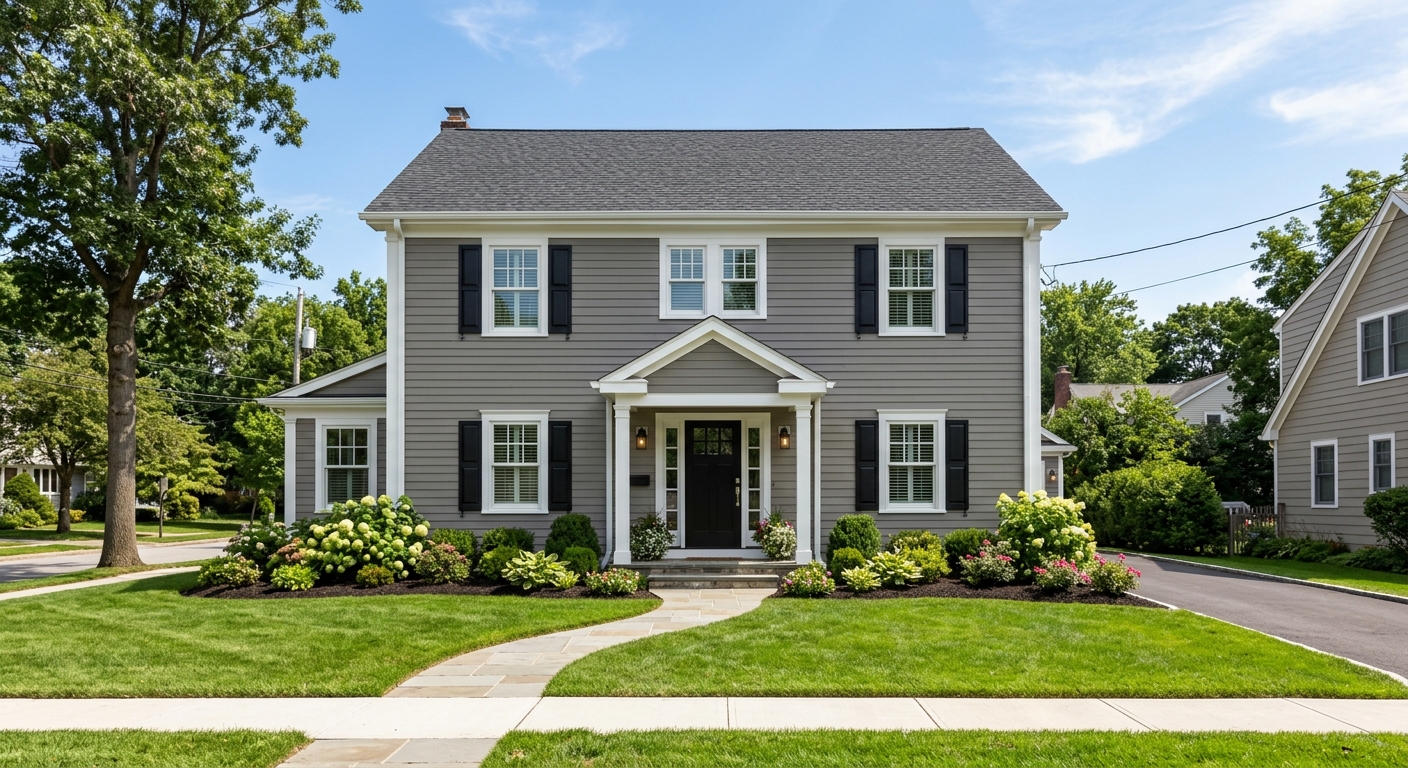
Painting options and costs in Tumbler Ridge
Tumbler Ridge painting costs are strongly shaped by weather, logistics and the age of the housing stock. In Tumbler Ridge, 18.3% of homes were built before 1981, which often means more time spent on surface prep (scraping failing coatings, caulking gaps, patching older drywall or wood siding) and, when applicable, extra lead-safe precautions before sanding or scraping. With a population of 2,399 (Statistics Canada, 2021 Census), the contractor pool is smaller than in larger centres, so scheduling pressure can build quickly when crews are available—especially for exterior work.
In Northeast BC, including Tumbler Ridge, exterior painting is tightly bound to a short, warm-weather window. Even when it’s not technically “coastal,” crews still follow coastal-style best practices: using mildew-resistant acrylics, monitoring humidity, and timing coats to avoid cool nights and rain—conditions that can cause slow drying, flashing, or early grime staining. That means two things for homeowners: you’ll usually pay more for summer premium scheduling, and any delays (snow/late rain, access issues, or hidden water damage) can push work into the most in-demand weeks.
Trade demand is often highest around neighbourhoods with older rental or mixed-age housing pockets—commonly the East/West highway-adjacent areas where homes tend to show earlier coating breakdown. The end result is that interior updates can be planned more flexibly, while exteriors often need careful budgeting and confirmation of lead times.
Here’s a practical cost comparison to help you translate scope into a realistic range.
| Service |
What's Included |
Typical Duration |
Price Range |
| Interior — whole home (walls, ceilings, trim) |
Protection, patching, sanding where needed, caulking, primer as required, 2-coat finish, including baseboards/door trim and select touch-ups |
5–10 business days |
$4,500–$9,000 |
| Interior — per room (standard bedroom or living room) |
Prep and patching, primer where required, 2-coat finish on walls/ceiling, light trim touch-ups |
2–4 business days |
$2,500–$5,500 |
| Exterior — full house (siding, trim, soffits) |
Detailed prep (scrape/sand), caulking, spot-priming bare spots, 2-coat exterior paint system, protection and cleanup; includes normal access for typical single-family homes |
8–15 business days (weather-dependent) |
$6,500–$15,000 |
| Exterior — trim and accent colours only |
Surface cleaning, prep, prime bare spots, 2-coat application on trim bands/accents (not full siding resurface) |
4–8 business days (weather-dependent) |
$4,000–$9,500 |
| Kitchen cabinet painting (doors, frames, spray finish) |
Degreasing, sanding/scuffing, bonding primer, paint system, hardware masking/removal as agreed, reinstall/adjustment |
4–9 business days (dry/cure times) |
$1,800–$6,000 |
| Specialty / faux finish (accent wall, texture) |
Surface prep, base coat, application of specialty texture or faux layers, sealing/topcoat appropriate to finish |
2–6 business days |
$900–$5,000 |
Prices are estimates only and vary by project scope, site access and material selection.
What affects the price of painting in Tumbler Ridge
You can get very different quotes for the “same” paint job in Northeast BC—typically a 30–50% swing—because contractors price the invisible work: prep, cure times, equipment, cleanup and weather risk. In Tumbler Ridge (and across Northeast), the exterior season is short and demand is concentrated. When crews are booked, labour rates and scheduling premiums rise. On the coast, the window can be longer, but humidity and rainfall force tighter control; in practice, contractors still plan for mildew-resistant acrylics and better humidity management. The result is that, whether it’s a cool morning or a rainy day, the paint can’t be applied “whenever,” so the schedule and cost can change quickly.
Older housing stock across the region is another major driver. When homes are older (and 18.3% were built before 1981 in Tumbler Ridge), existing surfaces often have failing coatings, cracked caulk lines, or past moisture intrusion. On repaints, prep can represent 50–70% of labour on the exterior—scraping, sanding, patching, priming and sealing. That labour intensity is one reason exterior projects commonly land in a band like $6,500–$15,000 rather than just the “paint cost.”
Two concrete local examples: (1) north-facing or shaded elevations often take longer to dry, so contractors may slow down application to avoid streaking or adhesion issues; (2) peeling around eaves or window trim usually requires more spot-priming and caulk replacement—small areas can still cost like “extras” because prep is the time sink. By contrast, a well-kept interior repaint can be closer to the $2,500–$5,500 per-room range because repairs are minimal and drying time inside is more predictable.
| Price Factor |
Why It Matters |
Cost Impact |
| Surface prep — scraping, sanding, patching drywall or wood |
Determines adhesion and long-term durability; older coatings often fail from the surface up. |
High; frequently the biggest driver on repaints |
| Number of coats — 2-coat system over primer vs. 1 coat over existing |
Coverage, hide and uniform sheen depend on proper film build. |
Medium to high; usually adds labour and material |
| Paint quality tier — contractor-grade vs. premium (Benjamin Moore, Sherwin) |
Better products typically cover better and resist scuffing, fading and staining longer. |
Low to medium; can change total project by a few hundred to more |
| Ceilings and trim — adds significant time vs. walls-only |
Cutting-in, masking, and smoothing are time-intensive. |
Medium; can increase interior scope costs noticeably |
| Exterior season window — short season raises summer rates |
Contractors must align drying/temperature/rain risk, so scheduling is tighter. |
Medium to high in peak months |
| Lead-safe precautions — required for pre-1978 homes with lead paint |
Testing and safe handling take time and require containment/cleanup steps. |
Medium; can add labour and disposal costs |
| Surface material — drywall vs. plaster vs. wood vs. stucco |
Different substrates need different primers and prep methods for adhesion. |
Medium; affects primer type and labour |
| Height and access — multi-storey exterior requires scaffolding or lifts |
Safety and equipment time increase production cost and labour. |
High on two-storey or complex access homes |
Permits & regulations in British Columbia
In British Columbia, painting typically doesn’t require a permit for homeowners. There are also no routine “painting permits” for interior or exterior repainting the way there are for certain structural changes. What does matter is safety and compliance when hazards are present—most notably lead paint. For homes built before 1978, health guidelines recommend testing for lead before sanding or scraping, and using lead-safe work practices if lead is present. Professional lead-safe methods commonly include wet methods to suppress dust, HEPA vacuuming for cleanup, proper bagging/disposal and containment to prevent dust migration. This isn’t always legally mandated for homeowners in the way it is for regulated trades, but it’s standard practice for contractors in BC to protect occupants and workers.
What generally does not require a permit: interior wall/ceiling repainting, exterior repainting, spot priming, trim painting and caulking. What can require additional steps (not necessarily a permit) is work that triggers safety obligations due to suspected lead, significant surface deterioration, or special disposal requirements for certain materials.
To verify a contractor serving Tumbler Ridge, check three things: (1) licensing/registration status in BC via the provincial business and contractor listings (the contractor should be clearly registered/legitimate); (2) liability insurance—ask for a current certificate naming you as additional insured if possible; (3) workers’ compensation coverage—confirm WSBC/WCB coverage via documentation or a clearance letter. Also insist on a written contract that spells out paint brand/line, sheen, number of coats, and exactly which prep tasks are included.
Interior vs exterior painting — getting the best result in Tumbler Ridge
The difference between a long-lasting paint job and a premature failure in Tumbler Ridge is usually not the “fancy” topcoat—it’s the prep, the right coating system for the substrate, and realistic timing. For interiors, surface prep matters more than brand name: filling and sanding, vacuuming dust, spot-priming repairs, and smoothing caulk lines. Sheen choice also affects how long the finish looks good. Flat paint can hide imperfections on ceilings, but in high-touch areas (hallways, kids’ rooms) satin or eggshell on walls usually holds up better to scuffs and cleaning. And yes—two coats over a proper primer typically outlasts one thick coat because it builds consistent film thickness and improves uniformity.
For exteriors, prep is even more critical in Northeast BC’s mixed continental conditions. Clean and scrape failing paint, repair cracks, and caulk before painting to prevent water ingress behind trim and siding. Primer selection matters: on wood or fibre cement, bonding primer where required helps adhesion; on patched areas, spot-priming prevents “telegraphing” through the finish. Product selection should match local realities—mildew-resistant acrylics are standard practice in BC environments, and contractors still consider temperature swings and cool nights that can slow drying.
Cabinet painting is often a smart budget alternative to replacement. If your kitchen is functional but dated, cabinet painting can refresh the look for a fraction of replacement—commonly within the $1,800–$6,000 range—provided the prep is done right (degreasing, sanding/scuffing, bonding primer). If your home is pre-1978, lead-safe precautions should be addressed before any aggressive sanding, even for trim.
As an example, choosing full exterior work might sit around $6,500–$15,000, while a smaller trim-only refresh could land closer to $4,000–$9,500; the price difference is justified when trim is the only failing element. If siding paint is peeling or caulking is failing broadly, “trimming only” often won’t hold the look for long.
| Project Type |
Key Prep Step |
Recommended Coats |
Price Band |
| Interior — fresh drywall (new construction) |
Seal + prime new drywall to control absorbency and prevent flashing |
Primer + 2 finish coats |
$4,500–$9,000 |
| Interior — repaint (good condition, no repairs) |
Light scuff/sand, caulk minor gaps, spot-prime problem spots |
2 finish coats (primer only where required) |
$2,500–$5,500 |
| Interior — repaint (patching and priming needed) |
Patch, sand smooth, prime all repaired areas to avoid uneven sheen and bleed |
Primer on repairs + 2 finish coats |
$3,500–$7,500 |
| Exterior siding (wood or fibre cement) |
Scrape failing paint, caulk seams, and prime bare/spot areas |
2-coat exterior system (with primer/spot primer) |
$6,500–$15,000 |
| Exterior trim and accents only |
Clean + sand feather edges, spot-prime and caulk where needed |
2-coat finish on trim/accents (with primer where required) |
$4,000–$9,500 |
| Kitchen cabinets (spray finish) |
Degrease, sand/scuff, bonding primer for adhesion; careful masking |
Primer + 2 finish coats (including proper curing time) |
$1,800–$6,000 |
How to choose a painting contractor in Tumbler Ridge
In Tumbler Ridge and across British Columbia, start by confirming you’re dealing with a legitimate contractor who can protect both you and their crew. Ask for proof of liability insurance (a certificate of insurance) and proof of workers’ compensation coverage through WSBC/WCB. Then verify their business status by checking BC listings for the contractor name you were given—don’t rely on a social page alone.
Next, get 2–3 itemised written quotes rather than one lump sum. You want a line-by-line breakdown for labour and materials: prep scope (scraping, sanding, caulking, patching), primer inclusion, number of coats, paint brand/line and sheen, plus equipment/protection time. Read exclusions: is disposal included? Is pressure-washing included or just “surface cleaning”? Is lead-safe work costed if your home is pre-1978?
Warranty should be explicit. Look for a workmanship warranty length, product/manufacturer warranty details, and whether the warranty transfers if you sell your home. For payment scheduling, never let the contractor take more than about 10–15% upfront. Hold back payment until the job is complete and inspected. Also, insist on a written timeline with a start date and completion estimate that accounts for BC weather—especially for exterior work where rain and cool nights can stall drying.
- Ask for insurance proof (liability) and confirm it’s current
- Verify WSBC/WCB coverage for the crew
- Request two references from similar Northeast BC projects
- Get itemised quotes (labour vs materials) and line items for prep tasks
- Confirm primer is included where needed, not just “paint and labour”
- Ensure number of coats and paint product/line is written in the contract
- Ask whether disposal and hazardous waste handling (if applicable) are included
- Confirm whether pressure washing is included and what “surface cleaning” means
- Clarify protection steps: floor/rail protection, masking, and cleanup standard
- Check warranty wording and whether it includes workmanship and prep failures
- Agree on a payment schedule with only 10–15% upfront and holdback at completion
- Get a weather-related schedule note for exteriors (cool nights/rain windows)
Red flags I see in Tumbler Ridge: quotes that omit surface prep or primer details, “cash only” or no written scope, no insurance/WSBC proof, a vague warranty (“we’ll fix it if needed” with no timeframe), and crews demanding the full balance before touch-ups and final walkthrough.
Frequently asked questions — painting in Tumbler Ridge
When is the best time for exterior painting in Tumbler Ridge?
For Tumbler Ridge, the best results usually come from the late-spring to early-fall stretch when temperatures stay safely above about 10°C and rising during application. Even though Northeast BC isn’t marine-coastal, cool nights and rain can still slow drying and cause adhesion problems or flashing—so contractors time coats to avoid wet days and to keep windows for cure time. Practically, that means planning early so you’re not competing for peak slots. Interior work can be scheduled year-round more easily, and if you’re comparing budgets, interior repaint ranges like $2,500–$5,500 are often easier to lock in during off-peak periods.
How many coats of paint do I need?
Most properly executed projects in British Columbia use a 2-coat system for the finish. If the surface is bare, heavily patched, or stained, primer is required before the finish coats—so you’ll often see “primer + 2 finish coats.” For example, a well-kept interior repaint with minimal repairs typically still gets two finish coats for uniform coverage and sheen control. On the exterior, two finish coats over spot-primed areas is the standard approach to protect from moisture movement and temperature swings. If a contractor proposes “one thick coat,” ask what primer is included and how coverage will be guaranteed; skipping coats is one of the fastest routes to early wear, especially in north-facing or shaded areas.
What paint is best for Tumbler Ridge's climate?
In Tumbler Ridge and the Northeast BC region, the “best” paint is the one that matches both the substrate and the drying conditions. For exteriors, contractors generally use mildew-resistant exterior acrylics and follow proper surface prep so moisture can’t sit behind peeling edges. Because weather can swing within a week (including cool nights), products that tolerate temperature and dry predictably are preferred. On interiors, choose sheen by function: flat for ceilings, and eggshell/satin for walls where cleaning is needed. If you’re budgeting, the best value is usually a system built on correct prep and primer, not only premium paint—cost-effective interior ranges like $4,500–$9,000 for whole-home work can still deliver excellent longevity when prep is done thoroughly.
How long does exterior paint last here?
Exterior paint life in Tumbler Ridge depends heavily on prep quality and the condition of the existing coating. When a contractor scrapes failing paint, repairs caulk lines, spot-primes bare areas and applies a proper 2-coat system, you can typically expect a more durable finish through the next few seasons—often several years—though exact timelines vary by sun exposure, wind-driven rain, and whether there’s ongoing moisture movement behind trim. If moisture intrusion is present (common around older eaves and window edges in pre-1981 homes), paint may fail sooner even with premium products. A good contractor will inspect for these issues and explain whether spot repairs are enough before quoting an exterior range such as $6,500–$15,000 for a full house.
Should I paint or replace my cabinets?
In many Tumbler Ridge kitchens, painting is worth considering first—especially if the cabinet boxes are solid and doors can be refinished. Replacing cabinets is a full renovation project; painting cabinet doors and frames can refresh the look at a fraction of the cost, commonly within $1,800–$6,000 for a spray-finish cabinet job. The deciding factors are condition and finish: if doors are warped beyond minor correction, or if hardware/mounting systems are failing, replacement may be more practical. If the boxes are in good shape, cabinet painting is often a budget alternative—just make sure the contractor includes degreasing, bonding primer and proper dry/cure time, so the finish doesn’t peel at edges.
How do I prep walls before painting?
For most homeowners, the safest approach is to let the contractor handle prep beyond basic clearing and protection. Still, you can do helpful pre-work: remove wall items, cover floors and furniture, and keep pets/kids away during prep and painting. Before paint goes on, walls generally need cleaning (remove grease/dust), patching, sanding smooth, caulking small gaps, and spot-priming repaired areas. In British Columbia, if your home is pre-1978, testing for lead paint is strongly recommended before sanding or scraping; professional crews often use wet methods and HEPA vacuum cleanup if lead is detected. If you suspect lead, don’t start scraping—ask the contractor what lead-safe steps they’ll follow and ensure it’s written into the scope.