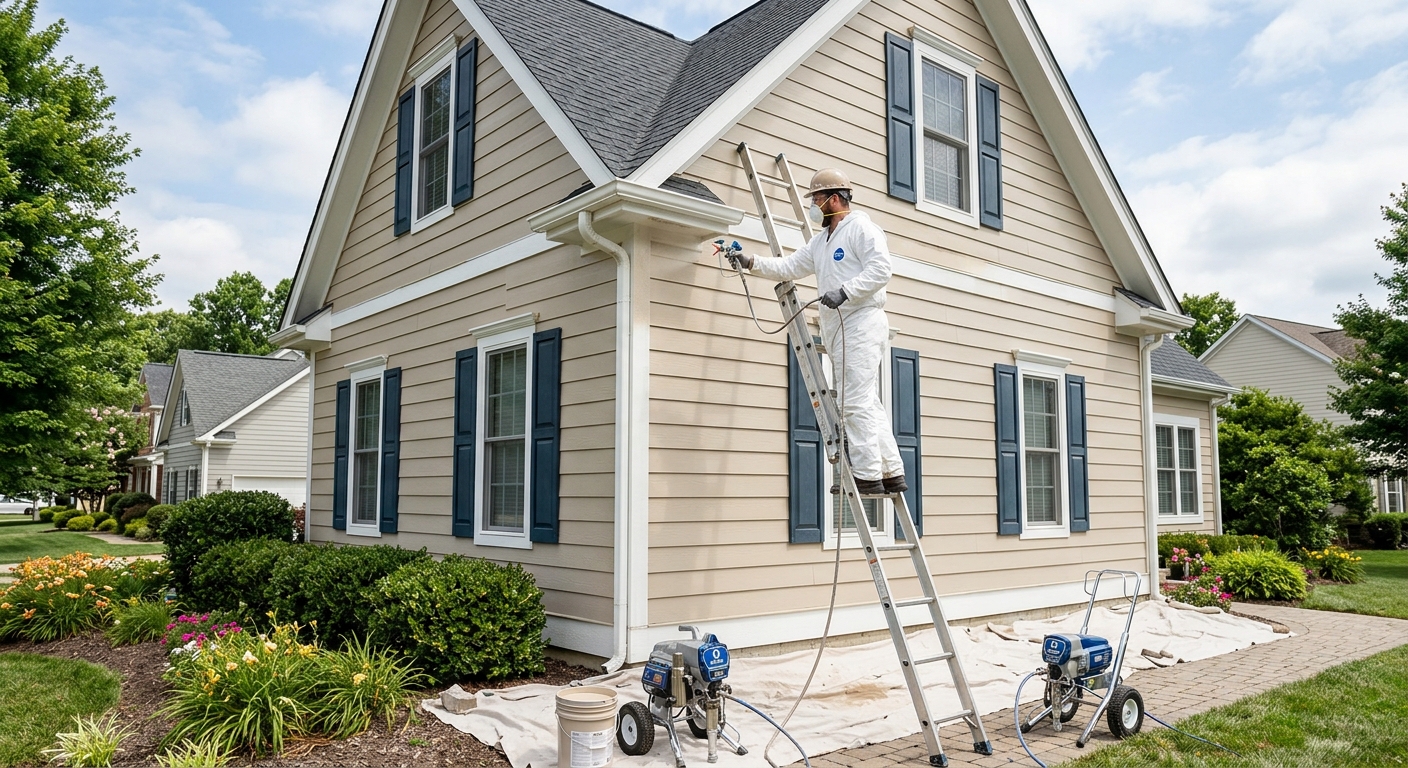
Painting options and costs in Kimberley
Kimberley homeowners usually have a few solid routes when it comes to painting: do the full interior refresh, tackle exterior facades during the dry season, or focus on cabinets and trim for a faster visual change. With Kimberley having 8,115 residents and about 78.2% of households owning their homes (Statistics Canada, 2021 Census), many projects are planned as long-term maintenance rather than short cosmetic updates. One reason costs can creep upward on older properties is that 69.1% of homes were built before 1981 (Statistics Canada, 2021 Census), which often means more surface defects, older caulking, and extra priming to lock down chalky or uneven substrates.
In the Kootenay region, the continental interior climate (cold, snowy winters and short warm, dry summers) makes exterior painting tightly seasonal. Most façade work has to be scheduled into a limited May–September window when surfaces stay warm and dry long enough for coatings to cure properly, and that scheduling pressure affects contractor availability and summer rates. That’s why you’ll often see exterior bids priced near the high end of the Kootenay band even for “standard” work. In Kimberley, areas such as Moyie Park and the downtown strip around 2nd Avenue tend to be especially busy because homeowners want improvements before peak summer travel and school timelines.
Below is a practical cost comparison for common scopes, so you can line up bids apples-to-apples before you decide what to paint now versus later.
| Service |
What's Included |
Typical Duration |
Price Range |
| Interior — whole home (walls, ceilings, trim) |
Protection, surface cleaning, patching where required, caulking (where needed), 2-coat wall/ceiling system, primer on repaired areas, brush/roll trim work |
5–10 days |
$2,000 – $5,000 |
| Interior — per room (standard bedroom or living room) |
Prep and patching, spot-priming, 2-coat walls, basic trim touch-ups (typ. one pass), ceiling paint where included |
1–3 days |
$500 – $1,800 |
| Exterior — full house (siding, trim, soffits) |
Pressure wash/clean as needed, scrape/sand failing areas, caulking, bonding primer where required, 2-coat exterior system, trim/soffit coating, site protection and cleanup |
1–3 weeks (seasonal scheduling) |
$3,500 – $7,000 |
| Exterior — trim and accent colours only |
Spot prep for trim edges, caulking and priming where bare spots exist, 2-coat trim/accent application |
3–7 days |
$1,500 – $3,800 |
| Kitchen cabinet painting (doors, frames, spray finish) |
Degrease, sanding/derooting glossy surfaces, bonding primer, spray/rolled finish on doors and frames, hardware masking, reinstall |
5–12 days (plus dry/cure time) |
$1,200 – $3,500 |
| Specialty / faux finish (accent wall, texture) |
Surface prep specific to the technique, specialty materials, application by technique, protective topcoat |
1–5 days |
$700 – $3,000 |
Prices are estimates only and vary by project scope, site access and material selection.
What affects the price of painting in Kimberley
In Kootenay and across British Columbia, two contractors can quote the “same” painting job and still come in 30–50% apart—usually because the hidden work (prep, patching, priming, access, and coats) is handled differently. For example, exterior work in the Kootenay region is tightly climate-bound into a short interior summer window. When temperatures drop at night or the surface stays damp, coatings can fail to cure cleanly, which means more labour for the pro crew and sometimes more material. By contrast, coastal BC can have more calendar flexibility, but humidity and rain require mildew-resistant products and careful scheduling so surfaces aren’t painted over moisture. On top of that, older homes throughout the region—remember, 69.1% were built before 1981 (Statistics Canada, 2021 Census)—often need extra surface repair and priming. In many repaint projects, prep can be 50–70% of the labour cost, even before you factor in disposal of scraped material and dust control.
Concrete Kimberley examples: (1) If you’re painting weathered wood siding, scraping back to sound material and re-priming bare spots can push an exterior repaint closer to the $3,500 – $7,000 band instead of a lighter touch-up. (2) If you’re adding only trim and accent colours, you may land nearer the $1,500 – $3,800 range because the prep area is smaller—yet caulking quality still matters for winter freeze-thaw. (3) Heights and access on sloped lots can increase staging or lift time, which adds labour even when the paint amount looks modest.
| Price Factor |
Why It Matters |
Cost Impact |
| Surface prep — scraping, sanding, patching drywall or wood |
Determines adhesion and smoothness; removes failing paint and corrects defects |
+ $300 – $1,800 |
| Number of coats — 2-coat system over primer vs. 1 coat over existing |
Proper coverage avoids flashing, peeling, and early rework |
+ 10% – 25% |
| Paint quality tier — contractor-grade vs. premium (Benjamin Moore, Sherwin) |
Premium lines often cover better, resist scuffing, and last longer |
+ $150 – $900 |
| Ceilings and trim — adds significant time vs. walls-only |
Trim edges, caulking, and detailed work are labour-intensive; ceilings require careful masking |
+ $200 – $1,200 |
| Exterior season window — short season raises summer rates |
Compressed schedule increases demand and often requires priority booking |
+ 5% – 20% |
| Lead-safe precautions — required for pre-1978 homes with lead paint |
Wet methods, HEPA vacuuming, containment, and disposal add time and compliance |
+ $250 – $1,400 |
| Surface material — drywall vs. plaster vs. wood vs. stucco |
Different porosity and bond requirements change primer and prep steps |
+ $200 – $1,500 |
| Height and access — multi-storey exterior requires scaffolding or lifts |
Safety measures and time spent moving equipment increase costs |
+ $300 – $2,200 |
Permits & regulations in British Columbia
In British Columbia, painting generally does not require a permit. What you may see instead are requirements around worker safety and, for older homes, best-practice precautions. For homes built before 1978, health guidelines recommend testing for lead paint before sanding or scraping. If lead is present, professionals typically follow lead-safe work practices such as wet methods to reduce dust, HEPA vacuuming during cleanup, and proper disposal of contaminated debris. This is not legally mandated for homeowners in the same way it is for contractors, but in practice it’s a standard expectation for professional crews working on older substrates in communities like Kimberley and the wider Kootenay region.
Before work starts, make sure your contractor carries liability insurance and has workers’ compensation coverage (WCB/WSIB coverage is commonly referenced in pricing and safety documentation). Also ask for a written contract that clearly states the paint brand/line, sheen level, number of coats, which surfaces are prepped (and how), and whether caulking, sanding, primer, and disposal are included.
Homeowner verification, step-by-step: (1) Ask for a copy of the contractor’s certificate of insurance and confirm the policy is active (and matches the project address). (2) Request their workers’ compensation clearance/coverage information. (3) Verify they’re licensed/registered as required for their scope by checking the applicable provincial registry and the business name matching the quote/invoice. Then get everything in writing: scope, prep, product choices, and completion timing.
Interior vs exterior painting — getting the best result in Kimberley
The difference between a long-lasting paint job and a premature failure in Kimberley is mostly preparation and correct coating choice for the climate swings. Inside, surface prep matters more than the “best” topcoat. Filling, sanding, and priming repaired areas keeps the finish uniform—especially when patch compounds or older, glossy paint cause poor bond. Sheen also controls durability: flat is forgiving on ceilings but not ideal for high-touch walls; eggshell and satin balance washability and appearance; semi-gloss or trim sheen helps wipe marks. A key rule: two coats over a proper primer almost always outlasts one thick coat, because coverage is consistent and shrink/flash is reduced.
Outside, winter and freeze-thaw cycles in the Kootenay region make caulking and surface prep non-negotiable. Exterior jobs should include cleaning, scraping/sanding to sound material, and priming with the right system for the substrate (wood versus fibre cement versus previously painted coatings). Caulking should be addressed before painting so water can’t track behind trim. While coastal BC places more emphasis on mildew management due to humidity, Kootenay exteriors still benefit from mildew-resistant products and schedules that respect drying and curing times.
Cabinet painting is often the best “budget alternative” to replacement: it can deliver a dramatic upgrade for a fraction of replacement costs when the prep is done right (degrease, bond primer, and controlled spray/finish). For context, moving from exterior trim-only touches in the $1,500 – $3,800 band to a full-house repaint in the $3,500 – $7,000 band is justified when you’re also addressing widespread prep, priming, and full colour coverage—not when it’s just freshening edges.
| Project Type |
Key Prep Step |
Recommended Coats |
Price Band |
| Interior — fresh drywall (new construction) |
Seal/prime properly and feather-treat joints for uniform texture |
Primer + 2 topcoats |
$1,200 – $3,800 |
| Interior — repaint (good condition, no repairs) |
Clean and lightly scuff; spot prime any visible stains |
2 topcoats (primer only on spots) |
$500 – $2,600 |
| Interior — repaint (patching and priming needed) |
Sand/feather patches and prime repaired areas for consistent bond |
1 primer + 2 topcoats |
$900 – $3,500 |
| Exterior siding (wood or fibre cement) |
Scrape/sand failing areas, caulk as required, and prime the substrate |
Primer as needed + 2 topcoats |
$3,500 – $7,000 |
| Exterior trim and accents only |
Remove loose paint, prep edges, and caulk before coating |
2 topcoats with spot priming |
$1,500 – $3,800 |
| Kitchen cabinets (spray finish) |
Degrease thoroughly and apply a bonding primer for adhesion |
Primer + 2 finish coats |
$1,200 – $3,500 |
How to choose a painting contractor in Kimberley
Choosing the right contractor in Kimberley comes down to verifying coverage, getting transparent scope, and matching the quote to how the job will actually be executed in the Kootenay climate. First, confirm British Columbia licensing/registration for their trade scope (if applicable for their services), then request proof of liability insurance. Next, verify workers’ compensation coverage (WCB/WSIB) so you’re not exposed if someone is injured on-site. Ask for a clearance letter or documentation they can provide—then check the business name matches the quote and that the certificate is current.
For pricing, don’t accept a vague “lump sum” if you want consistency across bids. Get 2–3 itemised quotes with a labour + materials breakdown, including what’s included in prep (scraping, sanding, caulking, priming), how many coats, the paint line and sheen, and whether primer is included when repairs show bare spots. Confirm disposal is included (especially for scraped material) and whether permit pull is required for any related work (painting itself typically does not require one in BC, but any adjoining electrical/plumbing or remediation might).
Warranty should be in writing: workmanship length (often 1–2 years depending on scope), product/manufacturer warranty terms, and whether warranties are transferable if you sell the home. On payment, never pay more than 10–15% upfront; hold back the remainder until the punch list is complete and surfaces are fully cured. Finally, demand a written timeline with a start date and completion estimate—exterior work in Kimberley is heavily dependent on dry, warm days during the May–September window.
- Ask for insurance certificate (liability) and confirm dates/coverage match the project.
- Request workers’ compensation coverage documentation before signing.
- Verify the business name on paperwork matches the quote and invoice.
- Get itemised quotes: prep, primer, coats, paint brand/line, and labour separated.
- Confirm surface prep standards: scrape to sound material, feather edges, and prime bare spots.
- Make sure caulking is specified (especially for exterior trim and joints).
- Confirm number of coats and sheen levels by room/surface.
- Clarify what’s excluded: furniture moving, window trim masking, mould remediation, landscaping touch-ups.
- Ask how they protect floors/railings and manage dust containment on older homes.
- Confirm disposal and cleanup: daily sweep/vacuum and final debris removal.
- Get warranty terms in writing: workmanship and how issues are corrected.
- Payment schedule: 10–15% max deposit, progress payments tied to milestones.
Red flags I see too often in Kimberley: (1) quotes that don’t mention scraping/sanding/priming or skip caulking; (2) “one-coat coverage” promises; (3) refusal to provide insurance/coverage documentation; (4) a large upfront deposit (more than 10–15%); and (5) vague schedules that ignore the short May–September exterior window.
Frequently asked questions — painting in Kimberley
How many coats of paint do I need?
Most homeowner repaint projects in Kimberley require two finish coats for even coverage and durability, especially on walls and trim. If a surface is repaired, stained, or has older, chalky paint, a primer (or stain-blocking primer) is usually needed first so the topcoat bonds and doesn’t flash. For example, interior room repaints in typical condition often fall into the $500 – $1,800 band when it’s a straightforward 2-coat system with spot priming. Exterior work generally follows a primer-as-needed + two-coat approach, because Kootenay winter freeze-thaw stresses edges and joints. If your contractor proposes a “thick one-coat” shortcut, ask what primer they’ll use and whether it’s appropriate for the exact substrate.
What paint is best for Kimberley's climate?
For Kimberley and the Kootenay region, the “best” paint is really the right system for the substrate and weather conditions—not just a brand name. Exteriors should be matched to wood or fibre cement with primer compatibility and coatings that handle temperature swings and seasonal moisture. Even though Kimberley is less humid than coastal BC, the short May–September window means products must cure properly on warm, dry surfaces, and schedules must respect rain and overnight temperature dips. For interiors, choose durable, low-VOC finishes that tolerate winter dryness and variable indoor heating. If you’re comparing quotes, ask whether they’re using a premium exterior line in the correct sheen for trim, and whether mildew-resistant additives are part of the system. That’s often where quality shows up in real life.
How long does exterior paint last here?
Exterior paint life in Kimberley often depends on prep quality, how well joints are caulked, and whether the coating system was applied within the drying/curing window. With good prep—scraping to sound substrate, priming bare areas, and sealing gaps—a typical repaint can last several years before noticeable wear. Premature failure usually comes from skipping steps: painting over loose paint, insufficient priming on repairs, or applying when surfaces aren’t fully dry enough to cure. Because Kootenay summers are relatively short and demand is seasonal, quality contractors sometimes prioritize work schedules to avoid late-summer weather swings. If you’re budgeting, remember that exterior pricing in Kimberley commonly ranges through the $3,500 – $7,000 band for full-house work; that higher end usually reflects the prep and primer required to extend service life.
Should I paint or replace my cabinets?
In most Kimberley homes, painting cabinets is the better first option—especially when the boxes and doors are solid but the finish is dated or worn. Replacement is justified only if the cabinet boxes are damaged (water swelling, failed joints) or the layout is changing significantly. A quality cabinet repaint can modernize your kitchen with controlled spray/finish and durable topcoats, while keeping disruption lower than a full replacement. Expect cabinet painting to price around the typical cabinet band of about $400–$3,500; in practice, many completed Kimberley jobs land in the $1,200 – $3,500 range depending on door count, prep complexity, and whether you need bonding primer for adhesion. The key is prep—degreaasing and sanding—and following a primer + finish coat schedule, not just spraying colour.
How do I prep walls before painting?
For Kimberley, the best “homeowner prep” is really about making the contractor’s prep easier and safer. Remove wall art, lights where possible, and anything hanging from trim. If you have picture holes or nail pops, point them out—patching and sanding are usually part of the contractor’s scope, not something you should try to do unevenly. Don’t paint over peeling patches or leave loose texture; anything failing should be scraped/sanded to sound edges by the painter. Before work begins, protect valuables by moving them away from the work zone and keeping pets/kids out of the area. Your contractor will typically handle cleaning, sanding, patching, caulking, and priming. If you’re concerned about mould or heavy staining, mention it up front so they can include the right stain-blocking primer.
Do I need to worry about lead paint in an older Kimberley home?
If your Kimberley home is older, you should take lead paint seriously—especially before any sanding or scraping. Health guidelines in British Columbia recommend testing for lead paint in homes built before 1978 before disturbing surfaces. If lead is present, lead-safe practices like wet methods, HEPA vacuuming, and proper disposal are standard for professional contractors to reduce exposure and dust migration. While this is not always legally mandated for homeowners in the same way as for contractors, it’s still the safer approach. In practice, this can add time and cost to bids (extra prep and containment/disposal), which is one reason older-property exteriors often land on the higher end of the $3,500 – $7,000 full-house repaint band. If your contractor proposes “dry scrape only,” ask how they’ll manage lead-safe work procedures.