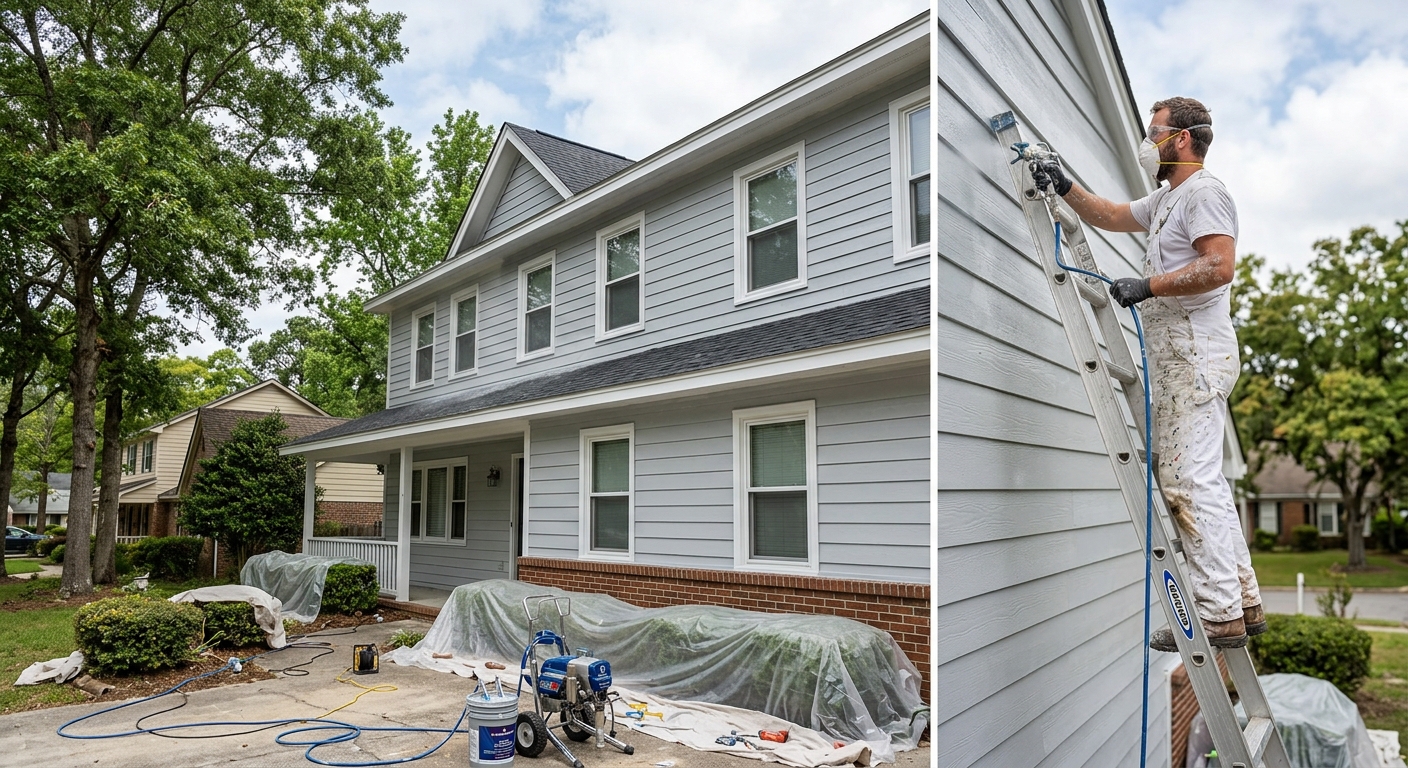
Painting options and costs in Hillside-Quadra
In Hillside-Quadra, choosing a painting option is really about matching the right prep level and finish system to the way local homes age. With Hillside-Quadra’s population recorded at 7,860 in the 2021 Census (Statistics Canada, 2021 Census), you’ll see steady demand for repainting and trim work as owners maintain older housing stock. In Lower Mainland–Southwest, many homes date to the mid-century to 1990s range, so repaint jobs commonly involve scraping failing coatings, patching settlement cracks, and priming for staining control—especially around wood trim and problem areas. If your home is pre-1978, contractors may also use lead-paint–safe practices, which can add time for containment, cleanup, and disposal even when you’re not “doing anything special” beyond repainting.
Costs in this part of British Columbia also reflect the coastal climate: exterior work is less about deep cold and more about rain and humidity. Painters typically need to schedule around dry weather windows, manage slower drying times, and rely on mildew-resistant, high-adhesion products suited to siding and trim. That concentrates exterior demand into fewer usable days, which can tighten availability for summer starts.
In neighbourhoods around Quadra Street and the broader Hillside-Quadra corridor, cabinet repainting and full exterior repaints are particularly in demand because many homes have older kitchens and mature trees that shade façades—both of which can affect moisture and drying. Use the table below to compare typical scope, duration, and pricing before you request an itemised quote.
| Service |
What's Included |
Typical Duration |
Price Range |
| Interior — whole home (walls, ceilings, trim) |
Protect floors, clean, patch/sand where needed, prime as required, paint walls/ceilings, paint interior trim/doors, caulk where appropriate, final cleanup |
5–12 business days |
$3,000–$8,000 |
| Interior — per room (standard bedroom or living room) |
Protect and prep surfaces, patch/sand minor defects, prime stained/patch areas, paint walls, and typically paint ceiling; trim if included in scope |
1–3 business days |
$600–$2,500 |
| Exterior — full house (siding, trim, soffits) |
Wash, scrape/sand failing coatings, repair/caulk visible cracks and joints, prime bare/porous areas, paint siding/trim/soffits; weather-managed scheduling |
1–3 weeks (weather dependent) |
$6,000–$15,000 |
| Exterior — trim and accent colours only |
Protect surrounding areas, prep and prime trim, paint accent sections; minor caulking as identified |
3–7 business days |
$1,200–$5,500 |
| Kitchen cabinet painting (doors, frames, spray finish) |
Degrease, sand/abrade, prime bonding surfaces, spray finish on doors/drawers (where applicable), replace hardware as requested, reinstall/adjust |
6–14 business days (including curing) |
$2,000–$8,000 |
| Specialty / faux finish (accent wall, texture) |
Surface preparation for texture levels, custom finish application, sealing/clear coat as needed, cleanup and protection |
2–8 business days |
$500–$12,000 |
Prices are estimates only and vary by project scope, site access and material selection.
What affects the price of painting in Hillside-Quadra
Even when you’re comparing the “same” paint job across Lower Mainland–Southwest and other parts of British Columbia, the final quote can swing by 30–50%—mostly because the heavy cost drivers aren’t the colour, they’re the surface condition and the logistics of getting the job done right. A repaint can be mostly labour if the coating system is failing, while a light refresh can be faster and cheaper. In Hillside-Quadra, older façades and interior walls often require substantial prep: scraping peeling paint, sanding glossy surfaces for adhesion, patching drywall or wood repairs, and priming for tannins, nicotine, or patch-related colour variation.
Exterior work in this region is tightly climate-bound in the sense that painters must wait for dry stretches and manage humidity; short weather windows concentrate demand, which can raise scheduling pressure. Coastal BC may have a longer workable season than harsher provinces, but rain, persistent fog, and dew keep drying times unpredictable. That’s why reputable contractors price for risk management: high-adhesion products, mildew-resistant systems, and remobilising if a weather window collapses. On repaints, surface prep is commonly 50–70% of total labour, and that can push a job near the mid-to-upper ends of exterior ranges like $6,000–$15,000 depending on repairs.
Two concrete Hillside-Quadra examples: (1) a house with shaded siding under mature trees can take longer to dry between coats, increasing crew time; (2) trim and soffits with old caulk often require re-caulking and spot priming—small areas that still add ladders, taping, and multiple prime/coat steps. Interiors follow similar logic: ceilings and trim-heavy scopes can move a project toward the higher interior band of $3,000–$8,000, even when wall space seems “average.”
| Price Factor |
Why It Matters |
Cost Impact |
| Surface prep — scraping, sanding, patching drywall or wood |
Adhesion depends on removing loose coatings and correcting substrate defects |
Often 30–70% of labour cost |
| Number of coats — 2-coat system over primer vs. 1 coat over existing |
Sheen, hiding power, and primer quality affect long-term uniformity |
Can change total price by 10–25% |
| Paint quality tier — contractor-grade vs. premium (Benjamin Moore, Sherwin) |
Higher-end coatings typically offer better coverage, durability, and colour stability |
Materials difference can add 5–20% overall |
| Ceilings and trim — adds significant time vs. walls-only |
Detail work increases cutting-in time, masking, and touch-ups |
Often pushes projects upward by 15–35% |
| Exterior season window — short season raises summer rates |
Weather delays require tighter crew scheduling and resequencing |
Can add 10–30% depending on timing |
| Lead-safe precautions — required for pre-1978 homes with lead paint |
Containment, HEPA cleanup, and disposal take extra hours and materials |
Can add 5–20% (or more on complex jobs) |
| Surface material — drywall vs. plaster vs. wood vs. stucco |
Porosity and movement dictate primer choice and drying behaviour |
Can shift total by 10–25% |
| Height and access — multi-storey exterior requires scaffolding or lifts |
Access systems increase time, safety controls, and mobilization cost |
Often adds 15–40% on exteriors |
Permits & regulations in British Columbia
In British Columbia, painting typically requires no permit for the work itself. The main compliance items are safety practices and contractor insurance—not municipal approvals. If your home was built before 1978, health guidelines recommend treating potentially painted surfaces as if lead may be present before sanding or scraping. That means using lead-safe work practices (for example, wet methods to reduce dust, HEPA vacuuming, and proper bagging/disposal). It’s not usually a “homeowner permit” situation, but it is standard practice for professional contractors because the risk is real when coatings contain lead.
Work that typically does not require a permit: repainting interior walls, applying new coatings to siding/trim, and staining/painting most exterior surfaces. Work that can trigger stricter safety expectations is still usually not a permit issue, but lead-related risk changes the method and cleanup requirements—especially when scraping, sanding, or removing layers.
For a Hillside-Quadra homeowner, verify the basics step-by-step: (1) License/registration—check the contractor’s standing on the appropriate provincial registry listing for their business (if they are required to hold a licence or be registered for their trade activity); (2) Liability insurance—ask for a certificate of insurance showing adequate general liability limits; (3) Workers’ compensation coverage (often referenced as WCB coverage)—request proof the company has coverage for workers. Also insist on a written contract that specifies paint brand and sheen, number of coats, surface prep included, and how disposal is handled if there are scraped coatings and debris.
Interior vs exterior painting — getting the best result in Hillside-Quadra
In Hillside-Quadra, the difference between a durable paint job and a premature failure is usually prep and system choice, not brand marketing. For interiors, start with filling, sanding, and priming: patch compounds and stained surfaces need the right primer so the topcoat doesn’t flash or peel later. Sheen matters by room—flat/eggshell on ceilings and low-traffic walls helps hide imperfections, while satin or semi-gloss on trim and higher-touch areas cleans better. A common durability rule in our market is that two coats applied over proper primer always outlast one thick coat. If a quote sounds low because it plans to “skip primer” or apply only one coat over patched areas, you can usually expect uneven sheen, faster scuffing, and more callbacks.
Exteriors are even more prep-driven in coastal BC. Caulking should be addressed before painting to prevent water ingress behind trim lines and into joints. Primer selection depends on the substrate: bare wood, previously painted porous surfaces, and areas stained by tannins often need different primers to achieve stable bonding. In this Lower Mainland–Southwest climate, mildew-resistant and high-adhesion products are essential, and coatings must tolerate humidity and temperature swings during the application window.
Cabinet painting is a smart budget alternative to replacement when the cabinet boxes are solid and the existing finish can be properly prepared. A well-prepped spray cabinet job commonly lands in the $2,000–$8,000 range, while replacement typically runs far higher once you include hardware, installation, and potential countertop adjustments—so painting can be justified if you’re keeping layout and quality. For pre-1978 homes, lead-safe precautions still matter when sanding or scraping interior trim paint layers.
As a dollar example, a “trim-only refresh” exterior might be $1,200–$5,500, but if the siding coating is failing and needs scraping and priming, the cost often moves toward the full exterior band of $6,000–$15,000. Paying for the prep up front is usually the reason the finish lasts.
| Project Type |
Key Prep Step |
Recommended Coats |
Price Band |
| Interior — fresh drywall (new construction) |
Prime all drywall surfaces, spot prime patches and nail pops |
2 coats topcoat over primer (typical) |
$1,500–$6,500 |
| Interior — repaint (good condition, no repairs) |
Clean and de-gloss; scrape any minor defects; spot prime as needed |
2 coats topcoat (over spot-primed areas) |
$300–$4,500 |
| Interior — repaint (patching and priming needed) |
Patch/sand, then prime repaired areas to prevent flashing |
2 coats topcoat over primer (spot or full as required) |
$800–$8,000 |
| Exterior siding (wood or fibre cement) |
Scrape loose coatings, repair and caulk, then prime bare/porous areas |
Primer + 2 topcoat system (typical repaint) |
$6,000–$15,000 |
| Exterior trim and accents only |
Degrease, sand to adhesion, caulk joints, then prime trim |
Primer + 2 coats (typical) on prepared surfaces |
$1,200–$5,500 |
| Kitchen cabinets (spray finish) |
Thorough degrease, abrade, prime bonding surfaces before spray |
Primer + 2 sprayed topcoats (common for durability) |
$2,000–$8,000 |
How to choose a painting contractor in Hillside-Quadra
Choosing the right painter in Hillside-Quadra comes down to verifying coverage, getting a quote that matches your scope, and ensuring the company will stand behind workmanship. First, confirm British Columbia insurance and coverage: ask for (1) proof of liability insurance (certificate of insurance showing the contractor is insured for the work); and (2) proof of workers’ compensation coverage (WCB coverage) so you’re not exposed if a worker is injured on site. Then verify business standing by checking the contractor’s listing through provincial resources applicable to their trade activity and asking for the company’s name and business details to match what appears on their documents.
Get 2–3 written, itemised quotes—ideally with a labour and materials breakdown rather than one lump sum. The best quotes spell out surface prep (scraping, patching, priming), the number of coats, what products/brands are being used, sheen selection, and exactly what areas are included (ceilings, trim, soffits, cabinet doors, interiors of drawers, etc.). Pay attention to exclusions such as furniture moving, disposal of scraped coatings, and whether permits or inspections are included (in painting, permits are generally not required, but disposal and safety requirements are still real). A clear warranty matters: look for a workmanship warranty length in writing, and confirm whether product/manufacturer warranty is limited to specific conditions. Also ask if warranties are transferable to future owners if you sell.
Finally, use a sane payment schedule: never pay more than 10–15% upfront, and hold a portion back until the job is complete and you’ve done a walkthrough. Request a specific start date and completion estimate in writing, since exterior painting in coastal BC can shift with weather windows.
- Ask for liability insurance certificate and verify coverage dates.
- Request proof of workers’ compensation (WCB) coverage.
- Insist on an itemised quote: labour, primer, topcoat, caulking, disposal, and specialty prep.
- Confirm number of coats and sheen for each area (walls, ceilings, trim).
- Verify what prep is included: scraping, sanding, patching, spot priming vs full priming.
- Confirm caulking approach and where it will be applied before painting.
- For pre-1978 homes, ask about lead-safe methods if coatings may be contaminated.
- Ask how they manage rain/humidity on exterior schedules and drying times.
- Clarify furniture moving, floor protection, and cleanup/disposal responsibilities.
- Review warranty terms for workmanship and whether it’s in the contract.
- Set payment terms: 10–15% upfront maximum; holdback until completion.
- Get a written timeline including the completion target and what happens with weather delays.
Red flags to watch for in Hillside-Quadra: quotes that refuse to discuss prep scope (especially primer); very low exterior pricing with no plan for scraping, caulking, or mildew-resistant systems; no written contract with paint brands and coat counts; asking for large upfront payments; and avoiding proof of insurance/WCB coverage.
Frequently asked questions — painting in Hillside-Quadra
Should I paint or replace my cabinets?
In British Columbia, cabinet painting is usually the smarter first step when the cabinet boxes are solid and the doors are the main issue (colour dated, minor wear, or surface grime). A sprayed cabinet refinishing project typically lands in the $2,000–$8,000 range in this market, which can be far less than full replacement once you add labour, new hardware, and any countertop or backsplash adjustments. Painting is also often quicker than replacement because the kitchen can be partially reassembled as components cure. The main reason to replace is structural failure (warped boxes), major water damage, or if you’re changing the entire layout. If your home is pre-1978 and doors/trim were painted many times, pro lead-safe prep practices may be warranted when sanding or scraping.
How do I prep walls before painting?
For most Hillside-Quadra homeowners, you don’t need to do the full prep yourself, but you can help by removing items, patching obvious nail holes, and clearing the area for floor protection. The prep that matters most is professional-grade: sanding glossy areas for adhesion, cleaning dust and oils, patching and sanding to feather edges, and priming stains or repairs so you avoid flashing. If you see peeling paint or bubbling, don’t just skim over it—this usually requires scraping back to stable edges, then priming. For minor scuffs, cleaning and light de-glossing can work, but for stained drywall or watermarks you should expect spot-priming before topcoat. A reputable contractor can also advise on sheen choice so the finished look stays consistent across walls and ceilings.
Do I need to worry about lead paint in an older Hillside-Quadra home?
Lead paint can be a concern for homes built before 1978 in British Columbia, particularly when sanding, scraping, or removing old coatings that may contain lead. It’s not typically something homeowners “need a permit” for, but health guidelines encourage lead-safe practices when lead is present or suspected. In practice, a professional contractor should discuss testing and methods such as wet scraping/sanding to control dust, HEPA vacuum cleanup, and proper disposal of debris. If you’re planning repainting and the walls or trim have multiple old paint layers, ask your contractor whether they will use lead-safe work methods and containment. Getting this right matters because it affects both safety and cost—lead-safe procedures can add time and materials, which is why more complex prep can push an interior job toward the higher end of the $300–$8,000 interior band depending on scope.
How long does it take to paint a house?
Time in Hillside-Quadra depends heavily on prep and scope. Interior projects are less weather-dependent, so they follow the crew schedule more reliably: a whole-home interior repaint typically takes about 5–12 business days, while a single room often takes 1–3 business days depending on patching and trim coverage. Exterior timelines are more variable because rain and humidity affect drying and recoat windows. A full exterior can take 1–3 weeks overall, including weather-managed breaks, even if the “hands-on” time is shorter. If the house has peeling coatings, more extensive scraping, or requires scaffolding, expect extra days. For cabinets, plan for about 6–14 business days because doors/drawers need thorough prep and curing between coats. A good contractor will give a written start date and completion estimate and explain what triggers schedule shifts.
What's the difference between paint quality tiers?
Paint quality tiers mainly affect coverage, durability, and how forgiving the product is during application—especially relevant in British Columbia’s humidity where adhesion and film integrity matter. Contractor-grade coatings may be fine for straightforward walls, but premium lines often hide better (fewer coats to reach uniform colour), resist scuffing more effectively, and handle tougher substrates with better bonding when matched with the right primer. The practical homeowner takeaway: the “best” paint isn’t just the topcoat—primer and prep are part of the system. If a quote uses a lower-tier topcoat but omits primer where it’s needed, you can end up paying more later for touch-ups. Conversely, a mid-to-premium coating combined with correct prep can make a noticeable difference in how the finish holds up over time. For budgeting, interior projects can range widely—sometimes from $300–$8,000—and quality tier is one input among several.
How do I compare painting quotes?
To compare quotes in Hillside-Quadra, don’t just compare totals—compare scope and system. Ask each contractor to list: surface prep included (scraping, sanding, patching), primer type and where it’s applied, number of coats, paint brands/models, and sheen. Confirm what’s included for trim/ceilings, caulking, and cleanup/disposal. For exterior work, require a clear plan for weather windows and recoat timing, because rain and humidity can stretch schedules; a low quote that assumes “perfect weather” often costs more in delays or callbacks. Check insurance documents and WCB/WCB coverage proofs, and verify the warranty terms are in the contract. If one quote is dramatically lower (or higher) than the others, that usually signals a difference in prep depth, coat count, or whether stain/lead or water-damage areas are being treated properly.