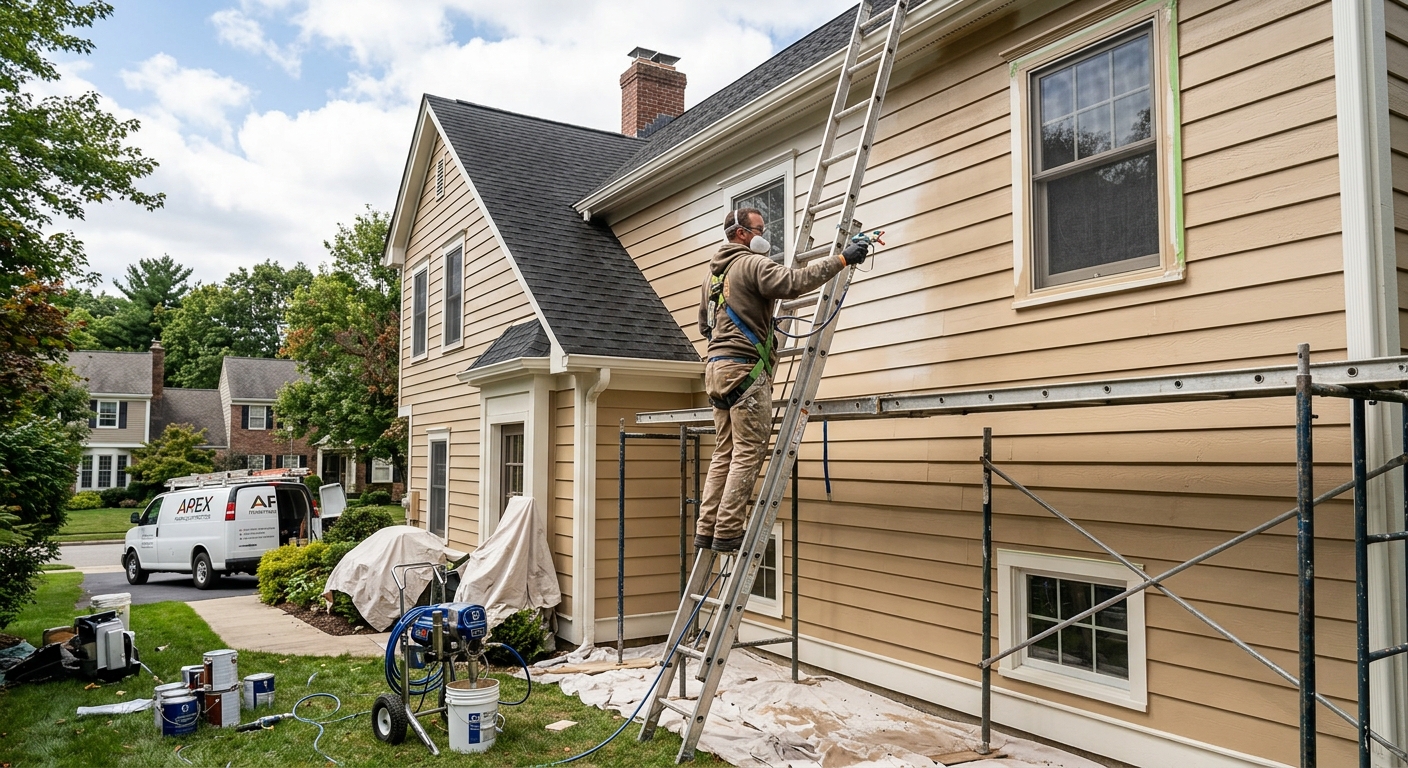
Painting options and costs in Sun Peaks
Sun Peaks homeowners usually have two priorities when they talk about repainting: getting a finish that holds up through British Columbia’s damp swings, and keeping the budget predictable. With a total population of about 1,400 (Statistics Canada, 2021 Census), the local trade market is smaller than the Lower Mainland, so scheduling can tighten quickly during dry windows—especially for exterior work. Another key cost driver is housing age: many area homes and cottages were finished during earlier building eras, and on pre-1978 properties painters may need lead-paint–safe practices (testing, containment, cleanup, and disposal time) before sanding or scraping. Even when lead is not present, that extra diligence adds labour and planning to the estimate.
In the Lower Mainland–Southwest, exterior pricing is shaped by rain and humidity rather than extreme cold. Painters often build in time for weather monitoring, slower drying, and mildew-resistant, high-adhesion coatings suited to coastal siding and trim. Interiors are less seasonal, so crews can shift work indoors through fall and winter. Around Sun Peaks, demand is especially steady in the main resort corridor and nearby residential pockets where turnovers and seasonal stays lead to frequent touch-ups and full repaints—both of which rely heavily on preparation quality.
Use the table below as a practical starting point for budgeting, then we can tighten the numbers after a site walkthrough and a finish-material choice.
| Service |
What's Included |
Typical Duration |
Price Range |
| Interior — whole home (walls, ceilings, trim) |
Patch/sand as needed, caulking, primer where required, wall/ceiling coatings, trim/door painting, edge protection, clean-up |
5–10 days |
$2,500–$8,000 |
| Interior — per room (standard bedroom or living room) |
Prep and repairs, 1–2 coats walls, trim/doors as scoped, masking and cleanup |
1–3 days |
$600–$2,500 |
| Exterior — full house (siding, trim, soffits) |
Power wash, scrape/spot repair, caulking, primer and 2-coat exterior system, mildew-resistant coating where appropriate, edge detailing |
1–2+ weeks (weather dependent) |
$3,500–$15,000 |
| Exterior — trim and accent colours only |
Spot prep, caulking, primer where required, 1–2+ coats on trim/accents, careful masking and line control |
3–6 days |
$1,200–$6,500 |
| Kitchen cabinet painting (doors, frames, spray finish) |
Remove hardware where feasible, degrease, light sanding/scuffing, bonding primer, spray-finish coating, hardware re-install |
5–12 days (including dry/cure time) |
$2,000–$8,000 |
| Specialty / faux finish (accent wall, texture) |
Surface prep suited to finish type, base coats, specialized technique, protective topcoat where needed |
2–6 days |
$500–$12,000 |
Prices are estimates only and vary by project scope, site access and material selection.
What affects the price of painting in Sun Peaks
You’ll often see quotes for the same repaint land 30–50% apart across the Lower Mainland–Southwest and other parts of British Columbia, even when the paint brand sounds similar. The biggest reasons are (1) how much prep is needed on the existing coating and (2) how the crew protects the home during longer, damp drying stretches. For exteriors, the season is tightly weather-bound in Lower Mainland–Southwest: rain and humidity mean painters must schedule around dry windows and use mildew-resistant, high-adhesion products. That “wait for the weather” time doesn’t exist the same way in short, dry jurisdictions, so summer labour pressure can raise rates.
Another factor that moves pricing fast is surface prep. Across the region, many repaint jobs involve scraping failing coatings, patching settlement cracks, and priming stains—sometimes where nicotine, water marks, or wood tannins bleed through. On older homes, prep can be 50–70% of total labour. If you’re budgeting at the lower end of interior ranges—say a straightforward room repaint near the $300 level—expect costs to climb toward the high end if ceilings, heavy patching, and full trim work push more hours into preparation and sanding. Likewise, exterior work can start near the $1,200 band for trim-only updates, but full-house siding work moves quickly into the higher exterior brackets once primer coverage, caulking, and re-mobilizing crews are accounted for.
In Sun Peaks, concrete examples of local conditions that affect cost include: multi-storey access on sloped lots (more lifts/scaffolding time), high humidity slowing dry times between coats (more project days), and older finishes that flake or blister (more scraping and disposal). Those variables are why two quotes can differ even when the visible colour change looks simple.
| Price Factor |
Why It Matters |
Cost Impact |
| Surface prep — scraping, sanding, patching drywall or wood |
Determines adhesion and how long the coating lasts |
Typically +20% to +60% |
| Number of coats — 2-coat system over primer vs. 1 coat over existing |
Coverage and uniformity depend on whether the old coating is stable |
Often +10% to +40% |
| Paint quality tier — contractor-grade vs. premium (Benjamin Moore, Sherwin) |
Higher-tier paints usually resist stains/fading and hide better with fewer re-coats |
Usually +5% to +25% |
| Ceilings and trim — adds significant time vs. walls-only |
Cut-in detail work and masking around baseboards/doors increases labour |
Often +15% to +50% |
| Exterior season window — short season raises summer rates |
Fewer dry days means crews rebook and carry scheduling overhead |
Seasonally +10% to +35% |
| Lead-safe precautions — required for pre-1978 homes with lead paint |
Containment, HEPA cleaning, and disposal add time and compliance steps |
Can add +20% to +80% |
| Surface material — drywall vs. plaster vs. wood vs. stucco |
Different substrates need different primers and prep approaches |
Often +10% to +40% |
| Height and access — multi-storey exterior requires scaffolding or lifts |
Safety equipment and slower production rates |
Typically +15% to +60% |
Permits & regulations in British Columbia
In British Columbia, painting itself generally does not require a permit, whether you’re repainting interiors or refreshing exterior siding and trim. The main regulatory “watch-outs” for professionals relate to health and safety practices—not to pulling a permit—especially for older homes. For properties built before 1978, health guidelines recommend testing for lead paint before sanding or scraping. If lead is present, professional crews follow lead-safe work practices such as wet methods to control dust, HEPA vacuuming, properly sealing the work area, and disposing of contaminated materials correctly. This is not legally mandated for homeowners in the same way it is for contractors performing the work, but it is standard professional practice to protect occupants and workers.
What does require special handling (and sometimes additional approvals/steps) is typically not “the act of painting,” but the compliance around hazardous materials and workplace safety measures when lead paint is involved. For licensing and coverage, confirm your contractor carries liability insurance and workers’ compensation coverage (WCB). Ask for a written contract that clearly states the paint brand/product, sheen, number of coats, surface prep scope (including caulking and priming), and whether disposal and clean-up are included.
To verify before signing in Sun Peaks: (1) check the contractor’s provincial business/registration and any required trade documentation using official online resources; (2) request a certificate of insurance naming you as the certificate holder (or providing proof that coverage applies); (3) ask for WCB clearance or proof of coverage; and (4) ensure the contract includes a detailed scope so changes don’t become extras later.
Interior vs exterior painting — getting the best result in Sun Peaks
In Sun Peaks, the difference between a long-lasting paint job and a premature failure usually comes down to prep, sequencing, and the right system for the surface—not just the colour. For interiors, proper filling, sanding, and spot-priming are what prevent flashing, peeling, and early scuffing. Choose sheen based on the room’s use: flatter finishes can hide minor wall imperfections, while washable eggshell/satin options are commonly preferred for living areas and hallways. The “two coats over a proper primer” approach matters because it locks in uniform coverage and build; in practice, a cheap “one thick coat” can look fine at first but wears faster and highlights uneven texture under sunlight.
For exteriors in coastal-influenced British Columbia conditions, prep is even more decisive. Scrape what’s loose, wash and allow full dry, caulk seams before painting to prevent water ingress, and use primer matched to the substrate (wood, fibre cement, or patched areas). Mildew-resistant, high-adhesion products are important where damp shoulder seasons are common. If a contractor uses a mismatched primer or rushes dry times, you’re more likely to see peeling or colour dulling sooner. Lead-safe precautions also matter on pre-1978 homes: that means dust control and safe cleanup before any sanding or scraping.
Cabinet painting is a budget alternative to replacement when the box is solid and doors/frames are prepared properly. It typically sits in the cabinet band—often starting around the $2,000 range for smaller kitchens—and can be a good value compared with full replacement, which usually involves major demolition and weeks of renovation. The justified choice is keeping a well-built kitchen and spending on a spray-finish system and thorough prep; the shortcut choice is skimping on sanding/degreasing, which can ruin adhesion.
| Project Type |
Key Prep Step |
Recommended Coats |
Price Band |
| Interior — fresh drywall (new construction) |
Prime all bare drywall, feather seams, sand for uniform texture |
Primer + 2 coats |
$1,500–$6,500 |
| Interior — repaint (good condition, no repairs) |
Clean, lightly scuff-sand, spot-prime any stains |
1–2 coats (often 2 over primer where needed) |
$300–$3,800 |
| Interior — repaint (patching and priming needed) |
Patch, sand, prime repaired spots to prevent flashing |
Primer on patches + 2 topcoats |
$800–$8,000 |
| Exterior siding (wood or fibre cement) |
Scrape/spot repair, caulk gaps, prime properly, manage weather window |
Primer + 2 coats exterior system |
$3,500–$15,000 |
| Exterior trim and accents only |
Mask carefully, spot-prime bare wood/patches |
Spot primer + 2 coats on trim |
$1,200–$6,500 |
| Kitchen cabinets (spray finish) |
Degrease and sand/scuff for adhesion; primer tuned to substrate |
Primer + 2 finish coats (spray) |
$2,000–$8,000 |
How to choose a painting contractor in Sun Peaks
Choosing the right contractor in Sun Peaks comes down to proof and clarity. Start with licensing/coverage verification in British Columbia: ask for their current liability insurance certificate (so you’re protected if there’s accidental damage), proof they carry workers’ compensation coverage (WCB) for their employees, and any required documentation for their trade/business registration. How to check: request the certificate of insurance and confirm policy dates match your project period; for WCB, ask for a clearance/coverage letter or proof number and verify it’s current; and use official online resources for their business details and standing.
Then request 2–3 itemised written quotes. You want labour and materials separated (paint/primer quantity, caulking, sanding materials, disposal, and prep labour), not a single lump sum with vague language. Read the scope carefully: is power washing included for exteriors, is disposal included, and are soffits/edges detailed or “as available”? Clarify whether any permits or special compliance steps are required for your specific situation—most painting doesn’t need a permit, but lead-safe handling may apply on pre-1978 homes.
Warranty matters too: confirm workmanship warranty length and whether it covers prep failures (like peeling due to poor adhesion). Ask whether product/manufacturer warranties are included and whether those warranties are transferable. For payment schedule, never pay more than 10–15% upfront; hold back a portion until the job is fully complete and cleaned up. Finally, insist on a written timeline with a start date and completion estimate; exterior work is weather-dependent in British Columbia, so a realistic plan matters.
- Provide a detailed, itemised quote (labour vs. materials) with quantities or clear allowances
- Specify paint brand and sheen (not just “premium paint”)
- List the exact prep steps: scraping, sanding, patching, caulking, priming, and stain blocking
- Confirm disposal and surface protection (floors, landscaping, fixtures)
- Show proof of liability insurance and that coverage is current
- Provide WCB/coverage proof for their workers
- Use a written start date and a weather contingency plan for exterior work
- Explain how they handle dry/cure times between coats
- Confirm warranty terms in writing (workmanship + any paint/product warranty details)
- Request colour/finish samples in writing (especially sheen selection)
- Ask who does the prep—are painters assigned to the finish team or multiple crews?
- Keep communication in writing for scope changes and change orders
Red flags I watch for in Sun Peaks: vague quotes with no prep description, refusal to provide insurance/WCB proof, pressure for large upfront payments, no written warranty details, and “one-coat” promises for exteriors or patched interiors without primer/spot-priming.
Frequently asked questions — painting in Sun Peaks
How long does exterior paint last here?
In Sun Peaks and across British Columbia’s damp shoulder-season conditions, exterior paint longevity is strongly tied to prep quality and weather timing, not just the brand. A properly executed repaint with the correct primer for the substrate and caulking in the right seams can often last multiple years before you see noticeable fading or early breakdown; however, houses with peeling coatings, failing caulk joints, or heavy mildew growth typically show issues sooner. Contractors usually build the cost around surface prep, because scraping and priming are what keep water from migrating under the coating system. If you’re comparing options, full-house exterior work commonly sits in the $3,500–$15,000 band, reflecting the labour needed to maintain adhesion through rain and humidity swings (Lower Mainland–Southwest market context).
Should I paint or replace my cabinets?
If your cabinet boxes are solid, doors and frames are salvageable, and the finish isn’t failing from water damage, painting is often the smarter choice in Sun Peaks. Cabinet painting in British Columbia typically ranges around the $2,000–$8,000 band, depending on kitchen size and how detailed the doors/frames are. Replacement can cost far more because it brings demolition, disposal, re-installation, and usually longer disruption to your home. Painting is also faster than replacement when you want a refresh before a seasonal period. The key is preparation: thorough degreasing, proper sanding/scuffing, bonding primer, and then a spray-style finish. If the wood is swollen, warped, or the box joints are loose, replacement (or a hybrid) may be the better long-term option.
How do I prep walls before painting?
For homeowners in Sun Peaks, you can help by removing artwork, wall hangings, and loose décor and ensuring pets/children are kept away from the work zone. Beyond that, the true “prep” that controls quality is usually professional labour: cleaning residues, patching holes and cracks, sanding for a consistent texture, and spot-priming repaired or stained areas so you don’t get flashing. If you do any prep yourself, avoid sanding through unstable paint layers or aggressively scraping where coatings may be flaky—especially in older British Columbia homes where pre-1978 lead risk may exist. The contractor should confirm surface condition at the walkthrough and include primer and caulking where needed. For budgeting, a repaint with minimal repairs can start near the $300–$3,800 band for rooms, but patched and primed repaints often move toward the higher interior ranges.
Do I need to worry about lead paint in an older Sun Peaks home?
It’s smart to be cautious if your Sun Peaks home is pre-1978. In British Columbia, while homeowners don’t generally “need a permit” to paint, health guidance recommends testing for lead paint before sanding or scraping, and using lead-safe work practices if lead is present. Professional painters typically use dust-control methods such as wet methods and HEPA vacuuming and then dispose of contaminated materials correctly. This is why quotes can jump—lead-safe precautions add containment setup, cleanup time, and documentation. If your home is pre-1978, ask the contractor how they handle lead-safe preparation as part of the scope. A well-written contract should spell out surface prep tasks clearly so you understand whether lead-safe containment is included in the pricing.
How long does it take to paint a house?
Timing in Sun Peaks depends on whether it’s interior or exterior and how much prep is required. Interior whole-home work often lands around 5–10 days for walls/ceilings/trim, assuming repairs aren’t extensive and the household can accommodate moving furniture during masking and cutting. Exterior projects are more weather-dependent in British Columbia; even when crews are ready, rain and humidity can delay drying between coats and extend the schedule across dry windows. For budgeting, exterior timelines commonly run 1–2+ weeks, depending on scaffolding needs and the extent of scraping, caulking, and priming. Cabinets are their own category: a spray-finish cabinet project can take about 5–12 days including dry/cure times. If you want an accurate estimate, a site walkthrough is essential because surface condition drives the actual labour hours.
What's the difference between paint quality tiers?
Paint quality tiers mostly affect hiding power, durability, washability, and consistency of finish—not just “how it looks day one.” Higher-tier contractor-grade and premium paints typically cover better, resist scuffing and stains, and help reduce re-coats when the prep is correct. In interiors, a premium product can mean fewer touch-ups and better appearance over time, especially on high-use areas like hallways and kitchen-adjacent spaces. In exteriors, quality matters because adhesion and mildew resistance are only as good as the system: correct primer, the right coating for siding/trim, and application during suitable weather windows. When contractors quote different options, you’ll often see pricing align with the broader interior/exterior bands—such as interior work spanning $300–$8,000 or cabinet painting typically sitting around $2,000–$8,000—because higher-tier materials usually come with higher-quality application performance.