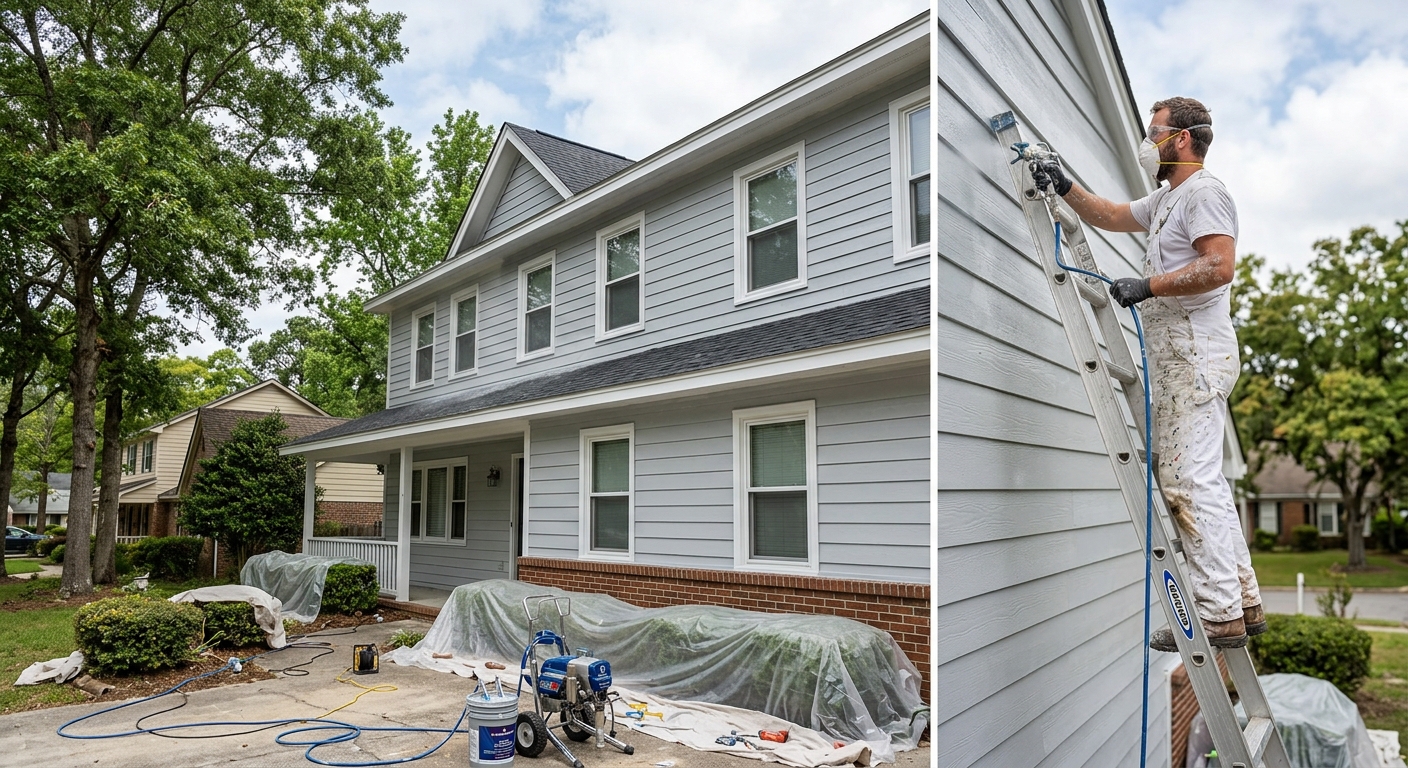
Painting options and costs in Burnaby Heights
Painting options in Burnaby Heights range from cost-effective refreshes to full, “start-from-scratch” repaints—depending mainly on how much prep is required. Burnaby Heights is home to about 8,280 people (Statistics Canada, 2021 Census), and the neighbourhoods here include a mix of older mid-century housing and more recent builds, which affects how quickly a job can move from scraping to rolling. In particular, older homes (including many built before 1980) often need more surface preparation—scraping failing coatings, patching drywall or settlement cracks, stain-blocking nicotine or wood tannins, and upgrading to modern primers. For homes built before 1978, contractors may also use lead-paint–safe practices, adding containment, cleanup, and disposal time to the estimate.
In the Lower Mainland–Southwest, cost is shaped less by extreme cold and more by rain, humidity, and the “windows” between weather systems. Exterior pricing reflects scheduling around dry stretches, using mildew-resistant, high-adhesion products, and allowing for slower drying times. Interior work is more consistent year-round, so teams often shift capacity indoors through fall and winter. If you’re in a high-activity pocket like Burnaby Heights near the Burnaby Heights SkyTrain area, demand can be strong because homeowners are planning upgrades before school season and winter wet weather. The result is that scope and prep can swing the price meaningfully—so the quickest way to compare estimates is to match what’s included and what’s not—starting with the table below.
| Service |
What's Included |
Typical Duration |
Price Range |
| Interior — whole home (walls, ceilings, trim) |
Move-in/move-out protection as needed, patching/sanding, prime where required, paint walls/ceilings, caulking where needed, and repainting trim with proper sheen selection |
5–12 days |
$2,800 – $8,000 |
| Interior — per room (standard bedroom or living room) |
Prep and patching, prime as needed, paint walls and ceiling, clean-up, and basic trim touch-ups (or full trim if requested) |
1–3 days |
$300 – $1,800 |
| Exterior — full house (siding, trim, soffits) |
Pressure washing (where suitable), scraping/sanding, caulking, spot-priming, high-adhesion/mildew-resistant primer and finish system, and two coats where required |
7–18 days (schedule-dependent) |
$5,500 – $15,000 |
| Exterior — trim and accent colours only |
Surface prep on trim, spot prime, caulking as needed, masking, and repainting accents without disturbing full siding colour changes |
3–8 days |
$1,200 – $5,500 |
| Kitchen cabinet painting (doors, frames, spray finish) |
Degreasing/cleaning, light sanding or full prep to match condition, bonding primer, sprayed finish for doors, and install/reassembly protection |
5–14 days (including dry/cure time) |
$2,000 – $6,800 |
| Specialty / faux finish (accent wall, texture) |
Surface conditioning, specialty base coat, custom application (glaze/texture effects), and clear/finish protection where specified |
2–8 days |
$500 – $12,000 |
Prices are estimates only and vary by project scope, site access and material selection.
What affects the price of painting in Burnaby Heights
For the same type of paint job, quotes in the Lower Mainland–Southwest can land 30–50% apart across British Columbia because prep and risk management aren’t priced the same way. In coastal BC, the exterior painting schedule is strongly climate-bound: long damp shoulder seasons mean crews often need to wait for dry, stable conditions. That’s different from parts of Ontario or Alberta where crews can plan around clearer temperature thresholds. Even though BC typically has a longer “season” than the prairies, humidity and rainfall can slow drying and increase the chance of mildew or adhesion issues if the system isn’t matched to the substrate. That’s why experienced teams price in mildew-resistant, high-adhesion products and the extra time to re-mobilize between weather windows.
Prep is the biggest driver in Burnaby Heights, especially for repaints. Older homes throughout the region commonly require scraping, caulking, drywall patching, and priming; in many repaint projects, surface preparation can be 50–70% of total labour. For example, a straightforward interior refresh for a clean bedroom might sit near the $300–$1,800 range, but once you add patching, stain blocking, and ceiling/trim attention, the same room can move toward the upper end. Outdoors, a “trim-only” job might be more budget-friendly—while a full exterior repaint in $5,500–$15,000 territory is justified when siding and soffits need proper sanding, spot-priming, and a full coating system to manage moisture cycling.
Concrete local examples: peeling finish around downspouts and window heads usually costs more because caulking and spot-priming must address water ingress paths; textured ceilings or older plaster can require more time to feather and prime; and a multi-storey home near street access often needs scaffolding or lifts, increasing both labour and materials handling.
| Price Factor |
Why It Matters |
Cost Impact |
| Surface prep — scraping, sanding, patching drywall or wood |
Ensures adhesion and smooth finish; reduces peeling and flashing through |
Can add 30–70% of labour on repaints |
| Number of coats — 2-coat system over primer vs. 1 coat over existing |
Coat count controls coverage, durability, and colour consistency |
Often moves the price by 10–25% |
| Paint quality tier — contractor-grade vs. premium (Benjamin Moore, Sherwin) |
Better coverage, easier application, and longer service life |
Materials may vary by 5–20% |
| Ceilings and trim — adds significant time vs. walls-only |
Detail work increases masking, cutting-in, and surface time |
Commonly adds 15–35% to interior jobs |
| Exterior season window — short season raises summer rates |
Scheduling around dry weather affects availability and crew mobilization |
May add 10–30% during peak windows |
| Lead-safe precautions — required for pre-1978 homes with lead paint |
Containment, HEPA vacuuming, and disposal take extra time |
Can add 5–20% depending on extent |
| Surface material — drywall vs. plaster vs. wood vs. stucco |
Different substrates need different primers and sanding/feathering |
Usually 10–25% variation |
| Height and access — multi-storey exterior requires scaffolding or lifts |
Access equipment and safety procedures increase labour |
Can add 15–40% on larger properties |
Permits & regulations in British Columbia
In British Columbia, painting generally does not require a permit for typical interior or exterior painting of a residential property. The main “rule set” for pros is health and safety and, for older homes, lead-paint–safe work practices rather than a construction permit. For homes built before 1978, health guidelines recommend testing for lead paint before sanding or scraping. If lead is found, professional contractors commonly follow lead-safe methods such as wet scraping, HEPA vacuuming during prep, proper containment, and responsible disposal. This isn’t usually legally mandated for homeowners doing their own work, but it’s standard risk management for professional painters.
Also confirm the contractor carries liability insurance and that their workers are covered under WSIB/WCB (workers’ compensation). Before you sign, insist on a written contract that specifies the paint brand and product line, sheen, number of coats, and the surface prep scope (including patching, priming, caulking, and wash/scrape steps).
Step-by-step for Burnaby Heights homeowners: (1) Ask for their certificate of insurance and verify dates and coverage limits; (2) Ask for WSIB/WCB clearance information and confirm workers are covered for the job; (3) Use the province/registry link the contractor provides (many will share a registry profile) and confirm their business details match the contract; (4) Request the lead-safety approach in writing for any pre-1978 areas you suspect may be coated with older materials.
Interior vs exterior painting — getting the best result in Burnaby Heights
In Burnaby Heights, the difference between a long-lasting paint job and premature failure comes down to preparation, the correct system for the substrate, and choosing the right sheen for how the room gets used. For interiors, surface prep matters more than the topcoat brand: fill and sand holes, spot-prime stains and patches, and caulk where needed so you don’t trap movement behind the coating. Then pick sheen intentionally—flat for low-traffic ceilings, eggshell for many living areas, satin or semi-gloss for higher-touch areas like hallways, doors, and trim. Two coats over a properly primed surface nearly always outlasts one thick coat, because coverage and binders develop more reliably with the intended build.
For exteriors, British Columbia’s wet/damp cycling makes prep non-negotiable. Caulk before painting so joints are sealed against water ingress (then allow it to cure per product directions). Use primers suited to the substrate—wood and fibre cement can demand different bonding chemistry than stucco or previously painted surfaces. In coastal BC, mildew-resistant, high-adhesion systems are key; crews should also use products that tolerate humidity and temperature swings so you don’t get peeling, blistering, or chalking. Lead-safe precautions apply if your home is pre-1978 and the coatings are disturbed during scraping or sanding.
Cabinet painting is a smart alternative to replacement when doors and frames are prepped properly. The price is often “real money saved” without sacrificing the look. For example, if replacing a kitchen can easily run well beyond the $2,000–$6,800 cabinet range, a properly sprayed cabinet finish can deliver a similar refresh for less—provided you’re budgeting for degreasing, primer bonding, and multiple finish coats.
| Project Type |
Key Prep Step |
Recommended Coats |
Price Band |
| Interior — fresh drywall (new construction) |
Prime new drywall thoroughly and sand nibs/surface uniformity |
1 primer + 2 finish coats |
$900 – $3,500 |
| Interior — repaint (good condition, no repairs) |
Wash/degreaase where needed, light scuff-sand, caulk minor gaps |
1–2 finish coats (often 2 for best durability/coverage) |
$300 – $2,500 |
| Interior — repaint (patching and priming needed) |
Patch drywall/feather repairs, spot-prime stains and repairs |
2 finish coats over primered areas (plus primer on patches) |
$600 – $8,000 |
| Exterior siding (wood or fibre cement) |
Scrape/sand, remove loose coatings, caulk joints, spot prime, then system coat |
1 primer + 2 finish coats (typical system) |
$5,500 – $15,000 |
| Exterior trim and accents only |
Mask carefully, prep trim edges, spot prime where abrasion or staining exists |
1 primer + 2 finish coats on properly prepped trim |
$1,200 – $5,500 |
| Kitchen cabinets (spray finish) |
Degrease and bond-prime (prep is what prevents peeling) |
1 primer + 2 sprayed finish coats (system dependent) |
$2,000 – $6,800 |
How to choose a painting contractor in Burnaby Heights
Choosing a painter in Burnaby Heights comes down to verifying coverage, matching scope, and protecting yourself in the contract. First, confirm British Columbia licensing/business registration if applicable in their materials, but more importantly ask for proof of liability insurance and WSIB/WCB workers’ compensation before work starts. How to check: request the current certificate of insurance and verify it lists the right insured party, the job location, and active dates; request the WSIB/WCB clearance documentation (or clearance letter details) and ensure it covers the crew working on your home. If they can’t provide documents, or they only provide a verbal promise, treat that as a major warning.
Second, get 2–3 itemised written quotes—not just one lump sum. You want labour and materials separated (paint, primer, caulking, patching, masking, disposal) and a clear scope of prep (wash/scrape/sand/spot-prime). Ask: is surface prep included or “as needed”? Is disposal included? Is there a permit pull included (typically not for painting, but some associated work may require one)? Clarify what’s excluded.
Third, understand warranty. Ask for a workmanship warranty length, whether the product/manufacturer warranty applies directly to you, and if it’s transferable. Use a sensible payment schedule: never pay more than about 10–15% upfront. Holdback until the job is complete and touch-ups are addressed. Finally, request a written timeline with a start date target and completion estimate, and ask how they handle rain-humidity delays typical to coastal BC scheduling.
- Request proof of liability insurance and verify dates/coverage.
- Request WSIB/WCB clearance and confirm it covers the crew.
- Insist on a written scope: surfaces, prep, priming, caulking, and paint system.
- Ask for paint brand/product line and sheen, not just “premium paint.”
- Confirm number of coats and how colour changes are handled.
- Check what clean-up includes (vacuuming, protecting floors, final wipe-down).
- Clarify disposal: scraped material, old caulk, and packaging.
- Get start and completion dates in writing (and weather contingency for exteriors).
- Ask whether they test for lead paint on pre-1978 coatings before sanding/scraping.
- Confirm whether ceilings/trim are included or billed as add-ons.
- Review warranty details in writing (workmanship vs product warranty).
- Agree on a payment schedule with a small deposit and holdback until final walkthrough.
Red flags I see in Burnaby Heights: (1) quotes that skip or minimize prep (“we’ll just paint over it”), (2) no proof of insurance/WSIB/WCB coverage, (3) vague product descriptions with no brand/line/sheens, (4) pressure to pay the majority upfront, and (5) no written timeline or warranty terms.
Frequently asked questions — painting in Burnaby Heights
How do I compare painting quotes?
Start by comparing scope, not just the total. Ask each contractor the same questions: What prep is included (scraping, sanding, patching, washing)? Is spot-priming included on repairs and stains? How many coats are included over primer? For Burnaby Heights exteriors, confirm they use mildew-resistant, high-adhesion products and how they handle wet weather scheduling. If you’re comparing interiors, clarify ceilings and trim: a walls-only number will almost always look cheaper than a full home quote. As a price reference, a typical per-room interior job can land around $300–$1,800, while full exterior repaints often run much higher—frequently within the $5,500–$15,000 band depending on prep and access.
What paint sheen should I use in different rooms?
In British Columbia homes, the best sheen is about cleanability and how light reflects. Ceilings are usually best in flat (or “ceiling” flat) to hide imperfections. Walls in living areas commonly use eggshell—durable enough for everyday touch-ups while keeping a soft look. For trim, doors, and higher-touch areas, satin or semi-gloss is practical because it wipes clean and resists scuffs. In hallways and near kitchens, satin often performs better than eggshell. If your quote is aiming for premium results, insist on sheen selection as part of the scope, not a last-minute decision. A contractor who can explain sheen choices room-by-room (and match it to the prep level) is usually the one delivering longer-lasting results in Burnaby Heights.
Can I paint my house exterior in spring or fall in Burnaby Heights?
Yes, but in Burnaby Heights the bigger issue is not only temperature—it’s dry, stable conditions. Coastal BC humidity and rainfall mean crews need weather windows to apply paint and let it dry properly for adhesion and mildew resistance. Spring can work if you can reliably schedule around dry stretches; fall can work too, but drying times may be slower and morning fog can delay application. A solid contractor will build flexibility into the schedule and use products suited to damp conditions. If you’re aiming to paint exterior siding, plan around a realistic dry period rather than a single “date.” It’s also worth considering prep timing: sanding and caulking (including joint work) often control the outcome as much as the colour you choose.
How do I choose a painting contractor in Burnaby Heights?
Choose a contractor who proves coverage and writes everything down. Verify liability insurance and WSIB/WCB workers’ compensation coverage before work starts—ask to see the documents and confirm the coverage is current and applicable to your job. Then request 2–3 itemised written quotes with labour and materials broken out (including paint brand/product line, primer type, caulking, prep steps, and disposal). Check warranty terms in writing, including workmanship length and whether product/manufacturer coverage applies properly. For pre-1978 homes in British Columbia, ask about lead-safe practices if sanding/scraping is required. Finally, protect your cash flow: never pay more than about 10–15% upfront, and hold back until final walkthrough and touch-ups are done.
How many coats does an exterior repaint need in Burnaby Heights?
Most exterior repaints need a system: typically a primer (if bare or properly prepared substrate requires it) and two finish coats for durability and uniform coverage. The exact number can change based on the existing coating condition, colour change, and how much prep reveals bare surfaces. If the siding is sound and properly prepared, contractors still usually target a 2-coat finish over the primed surface for long-term performance in Lower Mainland–Southwest moisture conditions. That’s why “cut corners” quotes can fail early—when they skip primer or reduce finish coats, you can get peeling or flashing. In terms of budgeting, full exterior repaints commonly fall in the $5,500–$15,000 band in Burnaby Heights, where prep and correct coating systems are a major part of the total cost.
What is the best primer for older Burnaby Heights homes?
For older Burnaby Heights homes in British Columbia, the “best” primer is the one matched to what you’re covering and what your surface needs—peeling is usually solved with prep first, then bonding primer where required. If there are repairs, water staining, or patches, spot-priming with a stain-blocking product prevents bleed-through. If the home has older, chalky coatings, a bonding primer may be necessary after scraping/sanding. If your home is pre-1978, lead-paint–safe practices are important before sanding or scraping, and the priming choice follows what’s left after safe prep. A reputable contractor will describe the primer plan in the quote and tie it to the substrate (wood, fibre cement, stucco) and the condition of existing paint—rather than using one universal primer for every situation.