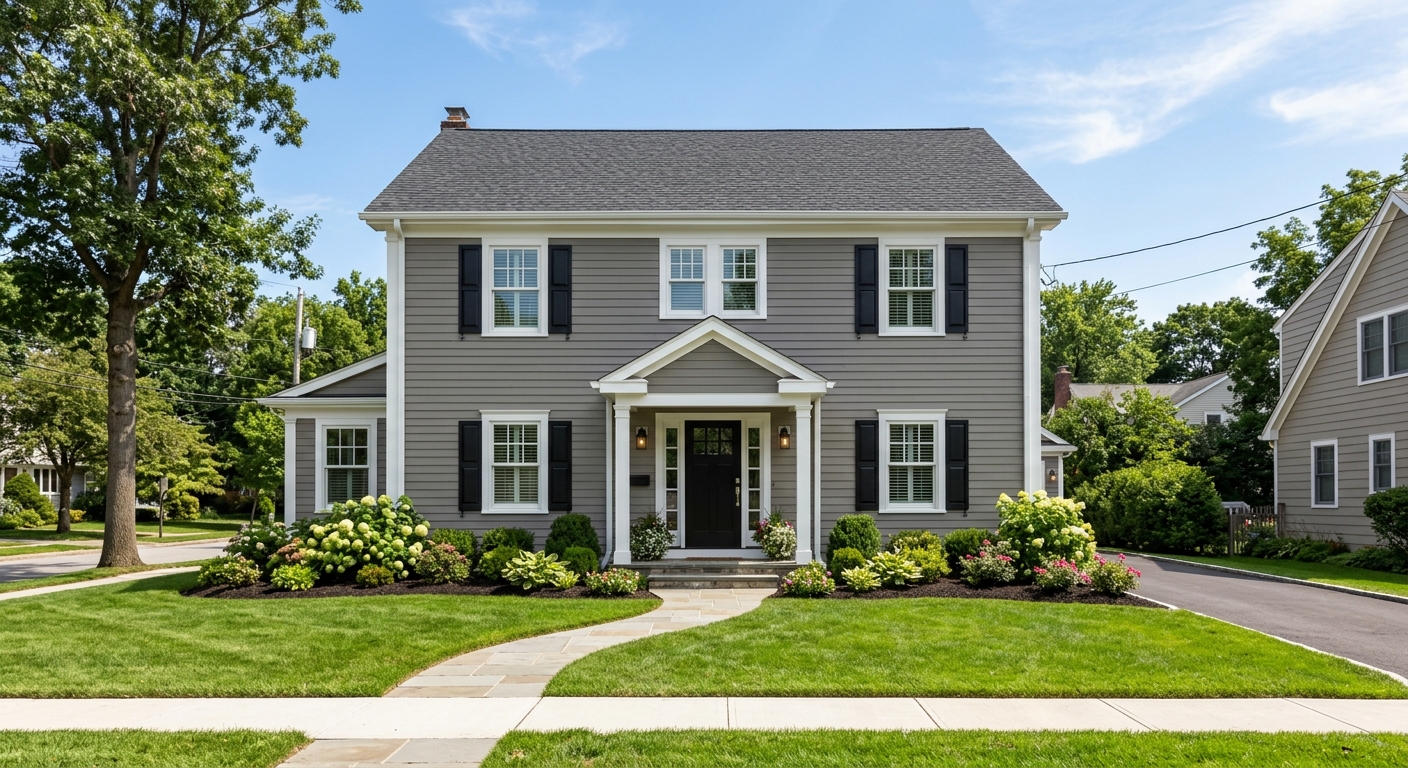
Painting options and costs in Glenwood
In Glenwood, British Columbia, painting costs come down to scope and—more than most places—how much prep your surfaces need. Many homes in the Lower Mainland–Southwest were built mid‑century to the 1990s, so you’ll often see failing coatings, settlement cracks, and tannin or nicotine staining that must be sealed before colour goes on. With a population of 11,437 people (Statistics Canada, 2021 Census), Glenwood is part of a steady regional rotation of crews and materials runs, which helps keep interior timelines predictable but can concentrate exterior scheduling into the short dry windows.
Lower Mainland–Southwest weather shapes pricing differently than Ontario or Alberta. Exterior work is constrained by rain and humidity: crews must apply coatings during dry stretches, then manage slower drying times and higher mildew risk. That means a “same-size” exterior repaint can price higher in the summer when access, scheduling, and re-mobilization costs pile up. If your home sits in a high-demand pocket such as the Glenwood village core and nearby residential streets where access is tighter, labour time for masking, protection, and careful edging can also add up. If you have a pre‑1978 home, contractors may need lead‑paint–safe practices, increasing containment, cleanup, and disposal time.
Use the table below to compare typical project scopes and see where your budget will land—then we can tighten the estimate after a site walkthrough.
| Service |
What's Included |
Typical Duration |
Price Range |
| Interior — whole home (walls, ceilings, trim) |
Move-protecting, patching and sanding, caulking where needed, primer as required, two topcoats, plus basic trim detail painting |
7–14 days |
$3,500–$7,500 |
| Interior — per room (standard bedroom or living room) |
Surface prep, patching, sanding, spot prime, two coats of wall paint; trim painting included if noted |
2–4 days |
$800–$2,500 |
| Exterior — full house (siding, trim, soffits) |
Pressure wash/prep, scrape and repair, caulking, stain/sealer where needed, mildew-resistant primer and two-coat system |
7–18 days (weather dependent) |
$4,500–$12,500 |
| Exterior — trim and accent colours only |
Prep and surface repair for trim zones, caulking, primer spot/sealant as required, two topcoats |
3–7 days (weather dependent) |
$1,200–$4,800 |
| Kitchen cabinet painting (doors, frames, spray finish) |
Hardware handling, thorough degrease, bonding primer, spray application, two finish coats, light touch-ups |
5–10 days (often spread with cure time) |
$2,000–$6,500 |
| Specialty / faux finish (accent wall, texture) |
Surface preparation for texture or technique, basecoat, texture/faux layers, protective clear where appropriate |
2–6 days |
$700–$4,500 |
Prices are estimates only and vary by project scope, site access and material selection.
What affects the price of painting in Glenwood
It’s common to see the “same” painting project come in 30–50% apart across the Lower Mainland–Southwest and other provinces. In British Columbia, exterior cost drivers are tied to coastal conditions: rain, humidity, and longer damp shoulder seasons slow drying and increase the risk of mildew or adhesion failure if coatings are pushed outside dry windows. In Ontario and Alberta, contractors plan around winter constraints differently—often resulting in different demand patterns and crew availability.
In Glenwood, an exterior repaint can be constrained by weather windows and scheduling. Even when temperatures stay mild, the long humid stretches mean painters must use mildew‑resistant, high‑adhesion products and manage how fast primer and paint can cure. Shorter “good weather” weeks concentrate demand, so summer rates can climb. For older homes throughout the region, surface prep is also the big cost lever: scraping failing paint, caulking, patching drywall or wood, and priming can take 50–70% of labour on a repainting job—especially when you need stain blocking or bonding primer. That’s why a repaint that looks “simple” from the street can still land in a higher range, such as the $1,200–$15,000 exterior band depending on trim complexity and patching.
Two practical examples we see locally: (1) fibre cement or older wood siding with chalky finish often requires deeper prep and a more aggressive primer system—adding labour and materials; (2) multi-storey front elevations increase time for masking and safe access, which moves costs upward even if the colour scheme is small. Interior projects may look cheaper on paper—within $300–$8,000—but patching, ceiling work, and the number of sheens chosen can move the estimate quickly.
| Price Factor |
Why It Matters |
Cost Impact |
| Surface prep — scraping, sanding, patching drywall or wood |
Prep is the adhesion foundation; failing coatings can’t be painted over reliably |
+$500 to +$4,000 depending on condition |
| Number of coats — 2-coat system over primer vs. 1 coat over existing |
Coverage and uniform sheen require correct layering, especially over patches |
+10% to +35% for additional coats |
| Paint quality tier — contractor-grade vs. premium (Benjamin Moore, Sherwin) |
Higher-end lines often cover better and tolerate scrubbing and moisture |
+$200 to +$1,200 in material uplift |
| Ceilings and trim — adds significant time vs. walls-only |
Cutting in, brushing corners, and edge control takes longer |
+$300 to +$2,500 |
| Exterior season window — short season raises summer rates |
Crews must work around rain/humidity and re-mobilize between dry spells |
Can shift totals by 10% to 25% |
| Lead-safe precautions — required for pre-1978 homes with lead paint |
Containment, HEPA cleanup, and disposal add time and compliance steps |
+$800 to +$3,500+ |
| Surface material — drywall vs. plaster vs. wood vs. stucco |
Different substrates need different primer chemistry and adhesion tests |
+$300 to +$2,000 |
| Height and access — multi-storey exterior requires scaffolding or lifts |
Access equipment and safety procedures add labour and coordination time |
+$700 to +$4,000+ |
Permits & regulations in British Columbia
In British Columbia, painting typically does not require a permit. What matters most is safe work practice—particularly for older homes. For homes built before 1978, health guidelines recommend testing for lead paint before sanding or scraping, and using lead-safe work practices if lead is present. Professional contractors commonly follow wet methods to reduce dust, use HEPA vacuuming for cleanup, and manage proper disposal and containment. This is not legally mandated for homeowners, but it is standard practice in the trade for jobs that may create hazardous dust.
When you hire a contractor in Glenwood, confirm they carry liability insurance and have workers’ compensation coverage (WSBC/WCB) for their employees. Also insist on a written contract that clearly lists: paint brand and sheen, number of coats, surface prep items (including patching/priming/sealer), and which areas are included (trim, ceilings, soffits, etc.).
Step-by-step verification you can do as a homeowner:
- Ask for the contractor’s certificate of insurance and confirm the business name matches the quote/contract.
- Request proof of workers’ compensation coverage (WSBC/WCB) before work begins.
- Confirm your written scope includes lead-safe measures if your house is pre‑1978 (testing, containment, HEPA cleanup, disposal).
- Look for a clear, itemised list of prep and coatings so exclusions aren’t hiding the real cost.
- Keep the documents on file; they matter if you ever need to make a warranty claim.
Interior vs exterior painting — getting the best result in Glenwood
In Glenwood, the difference between a long-lasting paint job and a premature failure comes down to prep quality, correct product selection, and how the work is layered for your local conditions. For interiors, surface prep is more important than the brand of topcoat. We’re talking about filling and sanding imperfections, addressing water-stain issues properly, and using primer when you patch or when stains bleed. Sheen choice matters too: flatter finishes are often used for ceilings, while eggshell to satin on walls helps with everyday cleaning without looking too glossy. And a key reality: two coats over a properly primed surface generally lasts longer and looks more uniform than one thick coat that doesn’t bond correctly.
For exteriors in British Columbia, prep is even more critical. Caulking before painting helps prevent water ingress at joints, fascia lines, and trim edges. Primer type should match the substrate (and the existing coating condition), especially on wood, fibre cement, or stucco where adhesion varies. Because of mildew risk in coastal humidity, exterior products need to be suited to BC conditions, and application timing must respect dry weather so coatings can cure. In some cases, oil vs. latex primer choices are needed to lock down different stains or surfaces.
Cabinet painting is often a smarter budget alternative to replacement: if your cabinet boxes are solid, spray-applied finishes with bonding primer and multiple coats can deliver a refreshed look within the typical $2,000–$6,500 cabinet band, instead of major demolition and new install costs. For pre‑1978 homes, lead-safe practices should be part of planning—especially when scraping is required.
Concrete example: an exterior “trim and accents only” job might land around $1,200–$4,800, but if your siding shows widespread flaking and you need deeper scrape/prime work, moving to a full-house system is often justified—within the broader exterior range $4,500–$12,500—because the extra prep is what prevents peeling cycles.
| Project Type |
Key Prep Step |
Recommended Coats |
Price Band |
| Interior — fresh drywall (new construction) |
Prime all drywall surfaces (including patch areas), then sand lightly for uniform absorption |
2 coats over primer |
$300–$8,000 |
| Interior — repaint (good condition, no repairs) |
Wash/degloss, spot prime if needed, then protect floors and trim |
2 coats |
$800–$4,500 |
| Interior — repaint (patching and priming needed) |
Patch, sand, spot prime to stop flash-dry and uneven sheen |
2 coats (plus primer/spot sealer as required) |
$1,200–$7,500 |
| Exterior siding (wood or fibre cement) |
Scrape failing coating, caulk gaps, prime for adhesion and moisture control |
2 coats over primer system |
$4,500–$12,500 |
| Exterior trim and accents only |
Edge prep, caulk before painting, spot-prime and seal as needed |
2 coats |
$1,200–$4,800 |
| Kitchen cabinets (spray finish) |
Degrease and bonding primer, followed by careful masking and sanding between coats |
Primer + 2 finish coats |
$2,000–$6,500 |
How to choose a painting contractor in Glenwood
Start by verifying three things for any contractor working in Glenwood and across British Columbia: licensing/competence, liability insurance, and workers’ compensation (WSBC/WCB) coverage. Ask for their certificate of insurance for general liability—your goal is to see the business name, coverage limits, and effective dates clearly. Then request proof of WSBC/WCB coverage for their employees. Next, verify their stated qualifications and experience with the specific job type you’re hiring for (interior topcoats, exterior scrape/prime systems, or spray cabinet finishes).
Get 2–3 itemised written quotes, not just one lump-sum number. You want a breakdown that distinguishes labour from materials and lists prep work explicitly (scraping, sanding, drywall patching, caulking, priming/sealing, cleanup, and disposal). Confirm whether permits aren’t required for your scope (usually no permit for painting), but ensure the quote includes any lead-safe measures if your home is pre‑1978 and scraping is required.
Warranty and payment terms matter. Look for a clear workmanship warranty length and whether product/manufacturer warranty is separate. Ask if warranties transfer to a new owner if you sell. Payment should be staged—never more than about 10–15% upfront—and you should hold back a portion until punch-list items are complete. Also get a written timeline with a start date, estimated completion, and what happens if weather delays an exterior schedule.
- Provides a written scope with prep and coating steps, not just “paint walls/trim”.
- Shows liability insurance documents before the first day of work.
- Shows WSBC/WCB coverage proof for workers.
- Names paint brand, sheen, and number of coats in the contract.
- Specifies how stains/tannins/nicotine are blocked (primer type and where used).
- Includes caulking details where exterior joints meet trim and siding.
- Explains how lead-safe practices are handled for pre‑1978 homes (if applicable).
- Lists how floors, landscaping, and fixtures are protected and cleaned.
- States disposal responsibilities for paint debris and any contaminated materials.
- Offers a workmanship warranty and clarifies what voids it.
- Uses a clear payment schedule with a holdback until completion.
- Provides a completion timeline that considers Glenwood’s dry-window constraints.
Red flags in Glenwood: (1) unwillingness to put prep steps and product details in writing, (2) quotes that skip scraping/priming on flaking or stained areas, (3) no proof of liability insurance or WSBC/WCB coverage, (4) asking for large upfront payments beyond 10–15%, and (5) claiming they can paint exterior surfaces during rainy/humid conditions without discussing cure and mildew risk.
Frequently asked questions — painting in Glenwood
Can I paint my house exterior in spring or fall in Glenwood?
Yes, but timing is everything in Glenwood and the Lower Mainland–Southwest. Spring and fall can work if you have a stretch of dry weather so the coatings can cure properly; high humidity and rain can cause adhesion issues or mildew growth if paint is applied too late in a wet pattern. Many homeowners schedule early summer to reduce interruptions, but a good contractor can plan around forecasts and use mildew‑resistant products suited to BC conditions. If your exterior has chalky or failing coatings, prep and priming step timing matters even more. For budgeting, exterior repainting commonly sits within the $1,200–$15,000 range depending on prep scope and weather-related remobilization.
How do I choose a painting contractor in Glenwood?
Choose a contractor who will itemise the scope and show proof of insurance and workers’ compensation coverage. In Glenwood, ask for a certificate of liability insurance and proof of WSBC/WCB coverage before work starts. Then request 2–3 written quotes that separate labour and materials and specifically list prep tasks like scraping, sanding, patching, caulking, and priming/sealing. For pre‑1978 homes, confirm lead-safe practices are included if scraping is required. Also look for a workmanship warranty and a sensible payment schedule—typically no more than 10–15% upfront, with a holdback until completion. Finally, confirm brand and sheen details so you get consistent results across walls, trim, and ceilings.
How many coats does an exterior repaint need in Glenwood?
Most exterior repaints in Glenwood require a two-coat topcoat system, but the real question is what happens before those coats. If you’re scraping and patching, you’ll usually need a primer/bonding primer and/or stain-blocking sealer where the substrate demands it (wood tannins, nicotine staining, or chalky old paint). In practice, that means you’ll often see primer plus two finish coats for a durable result. Coastal humidity makes it especially important to follow recoat windows and dry conditions; applying too soon can trap moisture and lead to early failure. Contractors should also confirm caulking is done before painting to reduce future water ingress at joints and trim edges. Your quote should reflect the total system, not just “two coats.”
What is the best primer for older Glenwood homes?
For older Glenwood homes, the “best” primer depends on what you find during prep—coating condition, stains, and substrate. If there’s tannin bleed from wood, nicotine residue, or water staining, a stain-blocking primer is usually necessary before colour. If the existing surface is chalky or failing, you may need a bonding primer designed for adhesion over the remaining substrate. Where you’ve repaired drywall or wood, spot-priming those patches helps prevent flash-dry and uneven sheen. For pre‑1978 homes, if lead paint is a possibility and scraping is required, lead-safe protocols should be part of the plan before any priming work begins. A qualified contractor will recommend primer type based on your specific siding and current coating condition—not a one-size-fits-all choice.
Should I paint or wallpaper my Glenwood home?
In Glenwood and across British Columbia, painting is usually the lower-risk choice because humidity and temperature swings can affect adhesion and edge lifting if wallpaper isn’t installed perfectly on the first attempt. Wallpaper can look beautiful for accent walls, but it can also be harder to remove later and may reveal patchwork if drywall or plaster has texture issues. Painting works well when the goal is consistency, ease of touch-ups, and better control over seams and sheen. If you want texture, consider specialty finishes as an alternative to wallpaper—such as a controlled accent wall look that still uses prep standards similar to paint. If you’re comparing cost, a typical interior room repaint often falls within the $800–$2,500 range, while specialty finishes can rise toward the $500–$12,000 band depending on technique and wall area.
How do I fix peeling exterior paint in Glenwood?
Peeling exterior paint should be fixed by correcting the root cause, not just scraping and repainting blindly. In Glenwood, peeling usually means moisture intrusion or poor adhesion because coatings were applied over failing surfaces. A proper repair starts with removing loose paint back to sound material, then sanding/scraping edges to create a stable boundary. Next, caulking cracks and joints is critical to block water entry, followed by priming the exposed areas—often a bonding primer for adhesion and possibly a stain-blocking or moisture-appropriate primer depending on the surface. Once primer is in place and the area is dry, apply two finish coats following dry-recoat timing. If your home is pre‑1978 and you suspect lead paint, contractors should follow lead-safe practices during scraping and disposal. A thorough quote will specify each step.