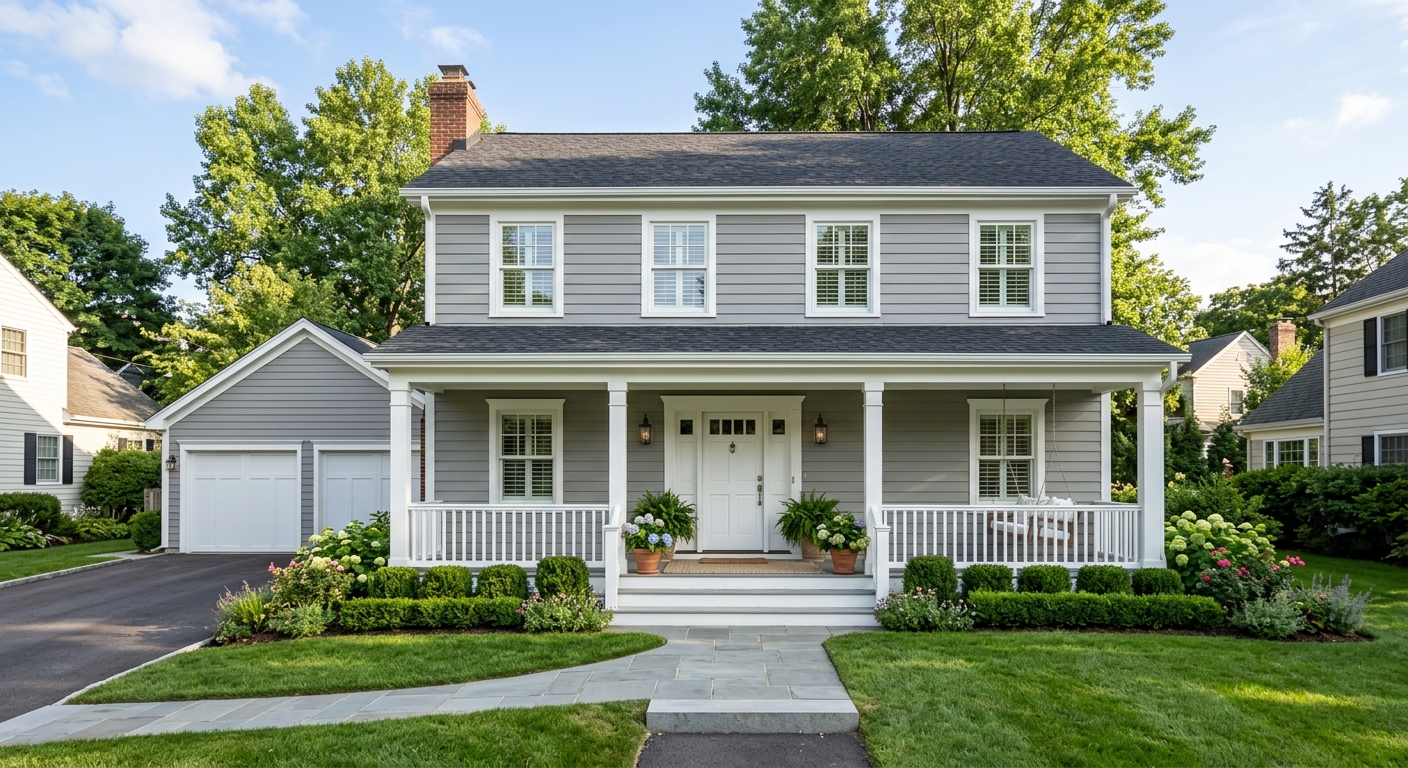
Painting options and costs in Clearwater
In Clearwater, British Columbia, homeowners usually start planning paint projects as soon as temperatures are reliably above freezing and crews can keep surfaces dry. With a population of 2,388 (Statistics Canada, 2021 Census), the local market is small, so availability can tighten quickly when the Thompson–Okanagan exterior season heats up. Clearwater also has older housing stock—50.5% of homes were built before 1981 (Statistics Canada, 2021 Census)—which typically means more scraping, caulking, spot-priming, and patching before finish coats. If your trim or exterior has older coatings (often seen in homes from pre-1978 eras), many contractors use lead-safe work practices to reduce dust risk.
In the Thompson–Okanagan region, exterior painting demand is strongly seasonal: bookings usually compress into a late spring to early fall window in communities higher in elevation, with fewer “weather days” to recover between coats. That short season concentrates labour, so exterior work often lands closer to the upper end of the regional price bands—especially for urgent or late-season touch-ups. On top of that, older homes commonly have multiple paint layers and sun-chalking, so prep effort rises fast. For interiors, cost is steadier year-round, but ceilings, trim, and the condition of walls can still shift quotes materially.
In Clearwater’s more established areas—like the Clearwater neighbourhood around the downtown core—exterior repainting is often in higher demand because many homes show early signs of sun-wear on siding and trim. Once you know what you’re getting included, comparing price ranges becomes much easier—see the table below.
| Service |
What's Included |
Typical Duration |
Price Range |
| Interior — whole home (walls, ceilings, trim) |
Move/cover options, patching, sanding, caulking, spot-priming, 2-coat finish system (walls/ceilings), painting baseboards/door trim; colour change coverage strategy; clean-up |
3–7 days |
$3,000–$6,000 |
| Interior — per room (standard bedroom or living room) |
Prep and protection, patch/sand/prime as needed, 2-coat walls; option to include trim or leave trim as-is (priced as trim add-on if omitted) |
1–3 days |
$550–$1,800 |
| Exterior — full house (siding, trim, soffits) |
Power wash, scrape/sand/spot prime, caulking where needed, 2-coat exterior system for siding and trim; priming specified by substrate; protection and disposal; scheduling around dry windows |
5–12 days |
$3,800–$12,000 |
| Exterior — trim and accent colours only |
Surface prep limited to trim/accents, caulking and priming where required, 2-coat finish on trim areas; masking/protection to keep edges crisp |
2–6 days |
$800–$3,500 |
| Kitchen cabinet painting (doors, frames, spray finish) |
Degrease and degloss, remove/label hardware, fill/sand, bonding primer, spray finish for doors and frames, clear protection for durability, re-install; hardware re-use or optional replacement |
4–10 days (including dry/cure) |
$2,000–$5,000 |
| Specialty / faux finish (accent wall, texture) |
Surface prep and base coat, texture or faux process, sealing/final protective sheen selection, patch/repair prep specific to the effect |
1–5 days |
$600–$3,500 |
Prices are estimates only and vary by project scope, site access and material selection.
What affects the price of painting in Clearwater
Even when a homeowner requests “the same” paint job in Clearwater, British Columbia, quotes can vary by 30–50% across the Thompson–Okanagan region and the wider province because the real cost drivers are mostly invisible in marketing—surface condition, prep labour, scheduling, and material system choices. In the Thompson–Okanagan, exterior painting is tightly climate-bound: in higher-elevation areas, contractors typically rely on a short late-spring to early-fall period when temperatures stay reliably above freezing and the surface is dry enough for adhesion. That short season concentrates demand, so exterior rates can sit higher when crews are booked.
Older housing stock throughout the region—like the 50.5% of homes built before 1981 (Statistics Canada, 2021 Census)—usually raises prep time. For repainting jobs, scraping, caulking, patching, and primer spot-work can be 50–70% of the total labour, not including scaffolding or long masking runs. In practical terms, if your home’s siding has several peeling edges or sun-chalked sections, expect more labour and more primer consumption before the finish coats begin.
Concrete Clearwater examples: (1) Homes with rough cedar grain or failing caulk lines often require extra sanding and targeted bonding primer before topcoats, pushing exterior projects toward the mid-to-upper part of the $800–$12,000 exterior band. (2) If you choose a “trim refresh only” approach, you may stay closer to the lower end of that band (around the $800–$3,500 range), but only if the trim edges and moisture points are still stable—otherwise prep expands. (3) On interiors, switching from walls-only to including ceilings and trim commonly adds time quickly, which is why whole-home interior estimates often land in the upper interior range rather than the per-room range.
| Price Factor |
Why It Matters |
Cost Impact |
| Surface prep — scraping, sanding, patching drywall or wood |
Prep determines adhesion and smoothness; it also affects how much primer and finish are needed |
High: can drive 30–60% of labour on repaints |
| Number of coats — 2-coat system over primer vs. 1 coat over existing |
Peeling, staining, and colour change often require full hiding power |
Medium-High: adds cost and cure time |
| Paint quality tier — contractor-grade vs. premium (Benjamin Moore, Sherwin) |
Better pigment/film build can reduce re-coats and improve durability |
Medium: typically shifts materials and sometimes labour time |
| Ceilings and trim — adds significant time vs. walls-only |
Ceilings require more cutting, protection, and detail work |
High for whole-home scopes |
| Exterior season window — short season raises summer rates |
Scheduling pressure increases crew costs and can require rush planning |
Medium-High: can add a seasonal premium |
| Lead-safe precautions — required for pre-1978 homes with lead paint |
Containment, HEPA vacuuming, and safe disposal increase labour |
Medium: adds time but protects occupants and crews |
| Surface material — drywall vs. plaster vs. wood vs. stucco |
Different substrates absorb differently and require different bonding/primers |
Medium: wrong primer can cause early failure |
| Height and access — multi-storey exterior requires scaffolding or lifts |
Access equipment and safety planning increase setup and production time |
High for tall homes or difficult landscaping access |
Permits & regulations in British Columbia
In British Columbia, painting itself generally does not require a permit for typical residential work. If you’re repainting walls, ceilings, trim, fences, or the exterior siding/trim, you typically proceed as a contractor with proper job-site safety and product handling. The key regulatory requirement for homeowners is not a “permit,” but safe practices—especially for older coatings.
For homes built before 1978, health guidelines recommend testing for lead paint before sanding or scraping. If lead is present, lead-safe work practices are standard for professionals: wet methods to reduce dust, HEPA vacuuming during prep, contained work areas when needed, and proper disposal of debris. While these practices are not always legally mandated for homeowners, professional contractors in Clearwater will often follow them because the consequences of contaminated dust are real.
Insurance and coverage still matter regardless of permits. Before work starts, confirm the contractor carries liability insurance and has workers’ compensation coverage (WCB). Next, ask for a written contract that clearly states the paint brands/line and sheen, the number of coats, and exactly which surface preparation steps are included (power washing, scraping/sanding, priming, caulking, and disposal).
To verify in Clearwater: (1) check the contractor’s licensing status in the relevant provincial online registry, (2) request a certificate of insurance and verify it includes you as the certificate holder if offered, (3) ask for proof of WCB coverage, and (4) request written scope details so exclusions don’t get discovered mid-job.
Interior vs exterior painting — getting the best result in Clearwater
In Clearwater, the difference between a long-lasting paint job and premature failure usually comes down to prep quality and matching the right product system to the conditions. For interiors, surface prep matters more than the brand alone: filling nail pops, sanding rough patches, cleaning residues, and priming repaired areas to prevent flashing or peeling. Sheen selection also plays a practical role—flat for low-traffic ceilings, eggshell or satin for many living spaces, and semi-gloss on trim for wipe-ability. A reliable rule: two coats over a properly primed surface beats “one thick coat,” especially when you’re hiding repairs or changing colours.
For exteriors in British Columbia, water management is everything. Caulking should be addressed before painting because failing caulk can let moisture behind the coating system, leading to bubbling and adhesion loss. Primer choice is substrate-specific: wood and weathered surfaces often need bonding primer; masonry or fibre cement may require different prep and primer chemistry. Because Clearwater sits in a Thompson–Okanagan market where crews are working a dry-window exterior schedule, the right products and correct cure times are essential. In milder but humid BC conditions, mildew-resistant primers and topcoats are commonly specified to reduce staining and biological growth.
Cabinet painting is a budget-friendly alternative to replacement when the boxes and doors are structurally sound. With a spray finish and proper deglossing, it can deliver a clean, durable result. For pre-1978 homes, contractors should still treat old trim paint with lead-safe precautions—containment, HEPA vacuuming, and safe disposal—because cabinet and trim areas are often where older coatings show up.
Example: if a whole exterior repaint might sit around $3,800–$12,000, choosing an “exterior trim and accents only” scope might land closer to $800–$3,500. That difference is justified when the siding system is still firmly bonded and only trim shows sun-wear or peeling edges; it’s not justified when failing siding requires full prep and priming to stop moisture intrusion.
| Project Type |
Key Prep Step |
Recommended Coats |
Price Band |
| Interior — fresh drywall (new construction) |
Prime all bare drywall + sand uniform, then caulk gaps at trim edges |
Primer + 2 finish coats |
$250–$6,000 |
| Interior — repaint (good condition, no repairs) |
Clean, lightly scuff-sand, and spot-prime any marks before full coats |
2 finish coats (primer spot only) |
$600–$2,800 |
| Interior — repaint (patching and priming needed) |
Fill/sand, then prime repaired areas to prevent flashing |
Primer on patches + 2 finish coats |
$800–$4,200 |
| Exterior siding (wood or fibre cement) |
Scrape/sand loose material, caulk, power wash, then prime problem areas |
Primer (as required) + 2 finish coats |
$3,800–$12,000 |
| Exterior trim and accents only |
Mask carefully, scrape edges, caulk, and spot prime stained or weathered areas |
2 finish coats over spot primer |
$800–$3,500 |
| Kitchen cabinets (spray finish) |
Degrease/degloss, fill/sand, bonding primer for adhesion |
Primer + 2 finish coats (spray system) |
$2,000–$5,000 |
How to choose a painting contractor in Clearwater
Choosing a contractor in Clearwater, British Columbia comes down to proof, paperwork, and clarity. Start by verifying licensing through the appropriate provincial online registry (when applicable for the work type), then ask for a certificate of liability insurance and confirm the policy is active for your dates and address. Next, request proof of workers’ compensation coverage (WCB). Don’t guess—ask to see the document and confirm it’s in good standing.
Then get 2–3 quotes, but insist they’re itemised—not just a single lump sum. A proper quote breaks down labour tasks (surface prep, patching, sanding, caulking, masking/protection, clean-up) and materials (primer type, finish paint line, amount estimates). Ask whether disposal is included, whether power washing is included (and what’s done if paint is failing), and whether any permits are required for ancillary steps (for example, access equipment rules or special disposal requirements, if they arise). In Clearwater, older homes are common, so ask how they handle prep on pre-1978 coatings.
Quality protection also includes warranties. Confirm the workmanship warranty length and whether it’s written and honoured. Ask about manufacturer warranties for paint (and what conditions can void them), and whether the warranty is transferable if you sell the home.
For payments, a good rule is to keep upfront deposits modest: never pay more than 10–15% at the start, and hold back a portion until the final walkthrough. Finally, get the start date, estimated completion timeline, and weather contingencies in writing—because exterior work in the Thompson–Okanagan market is sensitive to dry windows.
- Ask for WCB proof and confirm coverage details before work begins
- Request liability insurance certificate and verify dates/address
- Get an itemised scope: prep, caulking, priming, coats, and clean-up
- Confirm paint brand/line and sheen in writing (not just “premium paint”)
- Ask how they handle lead-safe precautions for pre-1978 homes (methods and disposal)
- Verify they include surface preparation to manufacturer adhesion standards
- Confirm whether power washing is included for exteriors and what happens if surfaces stay dirty
- Ensure caulking is addressed before finish coats for exterior trim/siding edges
- Ask about access plan: ladders vs lifts vs scaffolding for multi-storey homes
- Check warranty terms: workmanship duration and what defects are covered
- Review payment schedule and keep holdback until completion
- Require a written start date, finish estimate, and weather rescheduling plan
Red flags in Clearwater: (1) quotes with no mention of prep steps like scraping, sanding, caulking, or spot-priming; (2) no written warranty or vague “best effort” language; (3) asking for large upfront payments (more than 15%); (4) refusing to provide proof of insurance/WCB; and (5) treating older trim/exteriors with sanding “as-is” when lead risk may exist for pre-1978 homes.
Frequently asked questions — painting in Clearwater
How long does exterior paint last here?
In Clearwater and much of the Thompson–Okanagan region, exterior paint longevity is largely driven by prep quality and moisture control. A well-prepped and properly primed exterior system can last several years, but the critical window is whether the existing coating is firmly bonded and whether caulking and adhesion points are maintained. Homes built before 1981 (Statistics Canada, 2021 Census) often start from older paint layers that can fail early if scraping and spot-priming are skipped. Because exterior work is scheduled around dry, above-freezing conditions, rushed coats or painting over damp surfaces can shorten service life. If you’re budgeting, a full exterior repaint often sits around $3,800–$12,000, and that higher end is usually justified when there’s heavy peeling and extensive prime/repair work.
Should I paint or replace my cabinets?
Painting kitchen cabinets is usually the smarter choice if the cabinet boxes are solid, doors are not warped, and the surface can be properly prepped for adhesion. In Clearwater homes, you’ll often see cabinets updated with paint rather than replacement, because it’s faster and less disruptive than full replacement. The key is the process: thorough degreasing/deglossing, correct bonding primer, and a spray-capable finish system for durability. Cabinet painting typically lands in the $2,000–$5,000 band depending on the number of doors/drawers and how much repair is needed. Replacement can make sense only if boxes are damaged, hinges/wiring are outdated beyond repair, or the kitchen layout itself needs a full redesign.
How do I prep walls before painting?
For interiors in British Columbia, homeowners can reduce mess by moving items, removing hardware where possible, and covering floors and fixtures. But the “real” prep that affects finish is usually done by the painter: patching, sanding to a uniform surface, cleaning residue, and priming repaired or stained areas to prevent flashing. If you do any prep yourself, avoid aggressive sanding that creates dust without proper cleanup, and don’t paint over glossy surfaces. For best results in Clearwater, especially in homes with patchwork or older textures, expect at least spot-priming before the finish coats. A typical interior repaint—where patching and priming are needed—often trends into the $800–$4,200 range because the prep time is what ensures a smooth, durable outcome.
Do I need to worry about lead paint in an older Clearwater home?
You should plan for it—especially if your home is pre-1978—because the risk is tied to older coatings on trim and exterior elements. In British Columbia, there isn’t a permit requirement for painting, but health guidance recommends testing for lead paint before sanding or scraping if your home is in that age range. If lead is present, professional contractors typically use lead-safe work practices such as wet methods, HEPA vacuuming, containment when needed, and proper disposal. This is not only about compliance; it’s about controlling contaminated dust that can spread through the home. Because Clearwater has older housing stock (Statistics Canada, 2021 Census), it’s common for contractors to build lead-safe prep time into the scope—so it may influence your budget compared with a newer home.
How long does it take to paint a house?
Timing depends on interior vs exterior, surface condition, and the amount of prep. For interior whole-home work in Clearwater, many projects take about 3–7 days because crews must patch, sand, prime where needed, and allow proper drying between coats and touch-ups. Exterior timelines are longer because jobs are weather-constrained; crews typically need dry, above-freezing conditions, and multiple coats require cure time. On a full exterior repaint, 5–12 days is common depending on height/access, prep intensity, and how much caulking and spot-priming is required. If your home is older and has multiple failing paint layers, prep can drive schedule. Budgeting for exterior projects that often fall in the $3,800–$12,000 range usually aligns with the added labour and weather-sensitive coordination.
What's the difference between paint quality tiers?
“Quality tier” mostly affects pigment strength, film build, binder performance, and how evenly paint covers on real surfaces. Premium lines (often contractor-favoured brands you may hear like Sherwin or Benjamin Moore) can provide better hiding power, improved durability, and better resistance to scuffs or moisture, which can reduce the chance of needing extra coats. That said, the bigger difference in how long it lasts usually comes from correct prep and matching primer to the substrate. In Clearwater and across British Columbia, a cheaper topcoat applied over poor prep can fail early, while a solid paint system on correctly prepped surfaces performs far better. For homeowners, you’ll often see cost differences reflected in the overall range—interior projects run broadly from $250–$6,000, and exterior jobs are commonly $800–$12,000 depending on prep and exposure.