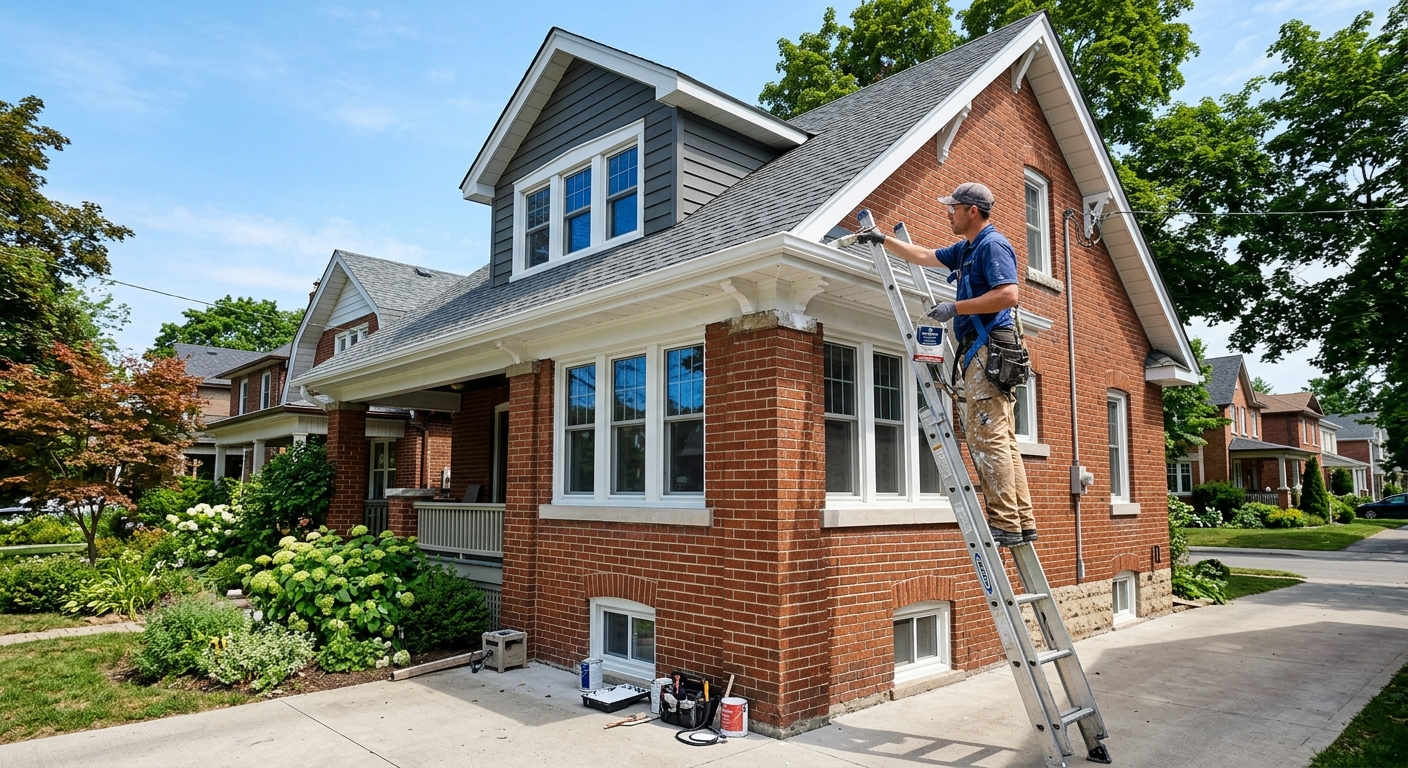
Painting options and costs in Coquitlam Town Centre
Coquitlam Town Centre is a busy Lower Mainland–Southwest community, and that shows up in how quickly reputable painters can schedule once weather windows open. With a 2021 population of 24,282 (Statistics Canada, 2021 Census), there’s enough housing turnover to keep trades active year-round, especially around older residential pockets where repaints are common. The biggest driver of cost is usually not the colour—it’s how much preparation is required on existing surfaces, which is why homes from earlier eras often require extra work before any topcoat goes on. In fact, many properties across Metro Vancouver include mid-century to 1990s construction features, so you’ll often see scraping, patching, stain blocking, and updated priming built into repaint estimates. If the home is pre-1978, contractors typically plan for lead-paint–safe work practices as a risk management step (even though homeowners aren’t legally required to do so).
In the Lower Mainland–Southwest region, exterior painting costs are influenced by rain and humidity rather than deep cold. Contractors may need to schedule around dry stretches, re-mobilize crews between weather windows, and use mildew-resistant, high-adhesion products suited to coastal BC siding and trim. Interior work is steadier, so many crews shift their year indoors through fall and winter. Demand is especially noticeable in older areas around Coquitlam Centre and the nearby transit corridor, where repainting cycles tend to cluster.
Use the table below to compare typical homeowner options for Coquitlam Town Centre, then we’ll break down the specific factors that move these numbers up or down.
| Service |
What's Included |
Typical Duration |
Price Range |
| Interior — whole home (walls, ceilings, trim) |
Move light furniture, patch/prime where needed, paint walls/ceilings, paint doors/trim baseboards, caulking touch-ups, cleanup |
3–7 days |
$3,500 – $7,500 |
| Interior — per room (standard bedroom or living room) |
Patch and sand minor defects, prime stained spots, paint walls and one coat to ceiling (where applicable), prep trim and doors as agreed |
1–2 days |
$500 – $1,800 |
| Exterior — full house (siding, trim, soffits) |
Wash, scrape failing coatings, patch/sand, caulk, prime bare spots, paint siding + trim/soffits; weather coordination; standard disposal |
1–3 weeks (weather dependent) |
$6,000 – $15,000 |
| Exterior — trim and accent colours only |
Clean and prep trim/accent areas, spot-prime, paint trim lines, soffits and small accent features; less siding coverage |
5–10 days |
$1,200 – $5,500 |
| Kitchen cabinet painting (doors, frames, spray finish) |
Degrease, remove/label doors when needed, sand prep, prime, spray finish and topcoat, minor hardware masking, re-install |
1–3 weeks |
$2,500 – $6,500 |
| Specialty / faux finish (accent wall, texture) |
Surface prep suited to the technique, custom finishes (e.g., striations/texture/marbled-look as specified), protective topcoat |
2–6 days |
$700 – $4,500 |
Prices are estimates only and vary by project scope, site access and material selection.
What affects the price of painting in Coquitlam Town Centre
In Coquitlam Town Centre and across the Lower Mainland–Southwest, two quotes for what sounds like the same job can differ by 30–50% because prep level, product system, and scheduling risk are handled differently. In British Columbia, exterior work costs are tightly affected by coastal rain and humidity, so painters protect adhesion and manage mildew risk with higher-adhesion primers and mildew-resistant coatings. That means crews may wait for dry windows, and some jobs require re-mobilization if conditions change. In Ontario and Alberta, the exterior season is more temperature-driven (and typically runs roughly late May to early October for workable conditions), so the rhythm and demand curve differ even when the house is similar in size.
Another big factor is that older housing stock across the region frequently needs more than “roll and paint.” Scraping failing coatings, patching settlement cracks, caulking properly, and stain-blocking nicotine or wood tannins can become the majority of labour. On many repainting jobs, surface prep can represent 50–70% of total labour, which helps explain why an exterior project at the lower end of the $6,000 – $15,000 band may jump if hidden failures are worse than expected. For example, one home might only require trim correction, fitting the $1,200 – $5,500 trim-only band, while another with peeling near the eaves needs broader priming to stop recurrence.
Concrete Coquitlam examples: (1) fibre cement or older wood trim that’s been painted multiple times often forces deeper scraping and longer prep before primer will bond; (2) homes with greater height or complex soffits usually need lifts or scaffolding, adding labour time and safety setup; (3) interior failures from previous water spotting can require stain-blocking primer even when the wall “looks fine,” adding material and extra coats.
| Price Factor |
Why It Matters |
Cost Impact |
| Surface prep — scraping, sanding, patching drywall or wood |
Determines adhesion; failed coatings and loose paint must be removed for a long-lasting finish |
Often +20% to +60% versus “light prep” |
| Number of coats — 2-coat system over primer vs. 1 coat over existing |
Proper coverage depends on sheen choice and whether primer is used on bare or stained areas |
+10% to +35% depending on conditions |
| Paint quality tier — contractor-grade vs. premium (Benjamin Moore, Sherwin) |
Premium systems can reduce recoat frequency and improve durability |
+5% to +25% (materials) with labour sometimes affected |
| Ceilings and trim — adds significant time vs. walls-only |
Cutting-in, masking, and multiple detail surfaces increase labour hours |
+15% to +40% on interior projects |
| Exterior season window — short season raises summer rates |
Rain/humidity can delay application and push work into limited dry days |
+10% to +30% during peak scheduling pressure |
| Lead-safe precautions — required for pre-1978 homes with lead paint |
Containment, HEPA cleanup, and disposal time increase prep steps and costs |
Often +15% to +45% when triggered |
| Surface material — drywall vs. plaster vs. wood vs. stucco |
Different substrates need different primers and repair approaches |
+10% to +35% depending on complexity |
| Height and access — multi-storey exterior requires scaffolding or lifts |
Safety setup and time add labour, and masking/protection must be more extensive |
+15% to +50% for tall or steep-access homes |
Permits & regulations in British Columbia
In British Columbia, painting generally does not require a permit for typical interior or exterior surface painting. However, for homes built before 1978, lead-related health guidelines recommend testing for lead paint before sanding or scraping, and then using lead-safe work practices if lead is present. This is not usually a homeowner legal requirement, but it is standard professional practice—especially for jobs where scraping, sanding, or aggressive surface prep is needed. Lead-safe methods include wet methods to reduce dust, HEPA-filtered vacuuming, careful containment when required, and proper disposal of paint debris and filters.
While there’s no routine “paint permit,” there are still rules that DO affect contractors: they must carry appropriate liability insurance and have workers’ compensation coverage (WCB) for employees. For homeowners, the best protection is a written contract that clearly spells out paint brands, sheen, number of coats, and exactly what surface preparation is included (e.g., whether failed paint is scraped to sound edges, what gets primed, and whether caulking is part of the scope).
To verify in Coquitlam Town Centre, start by asking for their certificate of insurance (liability) and a current WSBC/WCB clearance record for employees (if applicable to their business structure). Then confirm the contractor’s credentials through the provincial licensing/regulatory listings where their trade classification is shown. For a quick paper trail, request a lead-safe plan in writing for pre-1978 homes, and keep the job quote and contract as your scope reference.
Interior vs exterior painting — getting the best result in Coquitlam Town Centre
In Coquitlam Town Centre, the “best value” painting isn’t the cheapest can of paint—it’s the right prep and a coating system designed for our coastal, variable humidity conditions. For interiors, long-lasting results come from proper surface prep: filling and sanding defects, spot-priming repaired or stained areas, and sealing problem spots before topcoat. A professional can use contractor-grade paint on a well-prepped wall and get better durability than a lower-prep job that uses premium product. Sheen choice matters too: flat is common for ceilings, eggshell works well for low-splash wall areas, satin is a practical middle ground for living spaces, and semi-gloss is often best for trim, doors, and moisture-prone areas.
For exteriors, prep is the difference between a job that lasts five to seven years and one that re-peels sooner. Coastal BC weather rewards careful cleaning, caulking before painting (to prevent water ingress), and using the correct primer for the substrate—oil-based primer on certain stains/adhesion challenges historically, and latex systems matched to the wall type today. Exterior paint systems also need mildew-resistant properties because long damp shoulder seasons increase the risk of surface growth. Two coats over a properly primed base typically outlast one thick coat; thickness can’t replace coverage and bond.
Cabinet painting is a smart alternative to replacement when you want a refreshed kitchen without the upheaval. In Coquitlam, a well-prepped spray cabinet finish often sits in the $2,500 – $6,500 range—so it can be far less than full kitchen replacement while still looking “factory” when prep is done correctly. For pre-1978 homes, exterior sanding or scraping should follow lead-safe precautions to keep dust and debris handling controlled.
Dollar example: if your exterior trim currently has peeling around edges, paying for full scraping and priming to reach sound substrate is often the difference between staying in the lower end of trim-only work (closer to $1,200 – $5,500) versus expanding to a full-house scope if failures are widespread (moving toward $6,000 – $15,000). Sometimes that decision is justified—especially when peeling appears near eaves, corners, or previous caulk lines where water intrusion starts.
| Project Type |
Key Prep Step |
Recommended Coats |
Price Band |
| Interior — fresh drywall (new construction) |
Prime drywall to seal and uniform texture before topcoat |
1 coat primer + 2 coats topcoat (typically) |
$3,000 – $7,000 |
| Interior — repaint (good condition, no repairs) |
Clean/scuff-sand and spot-prime minor marks for even sheen |
2 coats (primer may be spot-applied) |
$2,500 – $6,000 |
| Interior — repaint (patching and priming needed) |
Patch with compound, sand smooth, prime repairs and stains |
2–3 coats depending on coverage (commonly 2 topcoats) |
$3,500 – $8,000 |
| Exterior siding (wood or fibre cement) |
Wash, scrape loose paint, caulk, and prime bare/failed areas |
2 coats exterior system (plus primer where needed) |
$6,000 – $15,000 |
| Exterior trim and accents only |
Detail scrape and spot-prime along trim edges and transitions |
2 coats on trim accents (primer on bare spots) |
$1,200 – $5,500 |
| Kitchen cabinets (spray finish) |
Degrease, sand/prime for adhesion, mask and spray for even film build |
Primer + 2 topcoats (system dependent) |
$2,500 – $6,500 |
How to choose a painting contractor in Coquitlam Town Centre
Choosing a contractor in Coquitlam Town Centre is mostly about verification and clarity. First, confirm British Columbia licensing/registration for the trade category they operate under (ask for their business number and any applicable trade designation details). Then verify liability insurance: request a certificate of insurance and ensure it lists you as the certificate holder where applicable. For workers’ compensation, ask for their WCB/WSBC clearance documentation if they have employees—this is a basic requirement for most insured work, and it protects you if someone is injured on your property.
Next, get 2–3 itemised written quotes—not lump sums. Itemisation should show labour and materials separately and describe prep: what gets scraped, what gets patched, what gets caulked, and what is primed. Make sure the quote clarifies exclusions (e.g., rot repair, wood replacement, stucco rework, mold remediation beyond surface mildew, or furniture moving beyond light repositioning). Ask whether permit pull is included; painting itself typically does not require permits, but sometimes ancillary work or strata-related documentation does in specific buildings. Also confirm disposal: leftover paint and debris handling should be addressed in the scope.
For warranty, request both workmanship warranty length and product/manufacturer warranty details. Ask whether warranties are transferable if you sell. Payment schedule should be controlled: never pay more than 10–15% upfront, and hold back a portion until completion and final touch-ups. Finally, insist on timeline details in writing: start date, realistic completion estimate, and how they handle weather interruptions for exterior jobs—because humidity and rain are a pricing factor in this region.
- Verify licensing/registration details in British Columbia before signing.
- Request a current liability insurance certificate (and ask about added insured wording if offered).
- Confirm WCB/WSBC coverage for employees (ask for clearance documentation).
- Ask for proof of similar recent projects in Coquitlam or the Lower Mainland–Southwest.
- Get a written scope that names paint brands, sheens, and exact coating system (primer + topcoat).
- Require explicit prep definitions: “scrape to sound substrate,” “spot-prime,” “caulk and sand smooth,” etc.
- Confirm how they protect floors, plants, and landscaping during exterior work.
- Ask whether they handle minor carpentry (nail pops, trim touch-ups) or if that’s excluded.
- Make sure surface tests are discussed for pre-1978 lead risk and lead-safe practices if needed.
- Request a clear payment schedule with a small deposit and a holdback for final completion.
- Check that disposal/cleanup is included, including waste containment for scraping.
- Ensure warranty terms and how to claim them are written in the contract.
If a contractor won’t put details in writing, pressures you for a large deposit, avoids insurance/WCB paperwork, promises “no prep needed,” or gives only a single lump-sum number with no coats/primer information, treat that as a major red flag in Coquitlam Town Centre.
Frequently asked questions — painting in Coquitlam Town Centre
How do I fix peeling exterior paint in Coquitlam Town Centre?
Peeling exterior paint usually means the prior coating failed to bond to the substrate or moisture got behind the system. In Coquitlam Town Centre, the coastal rain/humidity cycle makes proper prep especially important: scrape loose paint back to sound edges, clean thoroughly, and address the water path (often caulking gaps at trim lines). Then prime bare or repaired areas with an adhesion-focused primer and follow with a full exterior coating system (typically two topcoats) so the film builds and coverage hold up. If the home is pre-1978, have the contractor discuss lead-paint–safe practices before any sanding or scraping. If you’re pricing options, a trim-only fix may start around $1,200 – $5,500, but widespread failure often pushes the scope toward a full exterior repaint band like $6,000 – $15,000.
What colours add the most resale value in Coquitlam Town Centre?
In British Columbia—and especially in Lower Mainland–Southwest neighbourhoods around Coquitlam Town Centre—resale-friendly colour choices tend to be timeless, light-reflective, and consistent with surrounding trim lines. Homebuyers commonly respond well to crisp whites/soft off-whites for trim, warm greiges or light taupes for siding, and muted deep accents (like dark charcoal or navy) on doors and select trim. Avoid highly saturated “trendy” colours if the rest of the exterior stays neutral, because repainting can be costly and buyers may perceive mismatch. If your home is already weathered, lighter wall colours can also help visually hide minor patch differences after prep work. For a common budget-friendly move, many homeowners use a trim/accent refresh starting near $1,200 – $5,500. For whole exterior scope, the broader band of $6,000 – $15,000 makes deeper colour changes practical when prep is fully addressed.
How much does it cost to paint a house in Coquitlam Town Centre?
The total cost depends heavily on whether you’re painting interior, exterior, or both, and how much prep is needed. For interior painting, whole-home projects typically fall around $3,500 – $7,500 for walls/ceilings/trim when there’s moderate patching. For exteriors, a full house repaint (siding, trim, soffits) often lands in the $6,000 – $15,000 range because scraping, caulking, priming, and weather scheduling in coastal humidity make prep and labour more intensive. Kitchen cabinet painting is often priced separately because it requires degreasing, priming, and spray-ready finishing; that commonly sits around $2,500 – $6,500. Since Coquitlam Town Centre is dense and older housing stock is common, the contractor demand can concentrate during good weather windows, so prompt scheduling and a clearly defined scope can help you avoid surprises.
How much does interior painting cost per room in Coquitlam Town Centre?
Per-room interior pricing in Coquitlam Town Centre usually depends on wall condition, how much trim/doorwork is included, and whether you need stain-blocking primer. For a standard bedroom or living room with typical prep, many homeowners land around $500 – $1,800 per room. Rooms with patching and priming (water spotting, previous wall repairs, or texture changes) tend toward the higher end because repairs often drive labour more than paint type. If your room includes extra ceiling work, heavy trim detail, or multiple cut-in edges, cost also rises. If you’re considering a whole-home repaint, it often becomes better value to group rooms so the crew can move efficiently and you reduce mobilisation costs.
When is the best time for exterior painting in Coquitlam Town Centre?
For British Columbia’s Lower Mainland–Southwest coast, the “best time” is less about extreme cold and more about avoiding rain and humidity that can affect drying and mildew risk. Exterior crews typically target stretches of dry weather and plan around slower drying times in damp shoulder seasons. In Coquitlam Town Centre, that means you want a window where surfaces can be cleaned, fully dried, and coated without unexpected wetting in the first drying period. If you have peeling areas or bare substrate spots, those need extra attention so primer and topcoats adhere correctly. Because scheduling pressure is common when the dry windows hit, the price can be higher during peak demand even when the physical house hasn’t changed—one reason weather coordination is built into exterior estimates.
How many coats of paint do I need?
Most successful painting systems use a primer where required and then two topcoats for long-term durability. For interiors, two coats over a proper primer typically perform better than relying on one heavy coat—especially on patched areas, stained surfaces, or when switching between substantially different colours. For exteriors in Coquitlam Town Centre, the common standard is also a two-coat exterior system over primer on bare or problem areas, plus caulking and surface prep to keep water out. In practical terms, if the substrate needs stain-blocking or has failed coatings, you may see extra primer steps even if the topcoat count stays at two. If you want a quick budgeting anchor, cabinet projects usually follow a primer + two topcoats approach for the smooth, durable finish, commonly priced in the $2,500 – $6,500 range depending on size and detail.