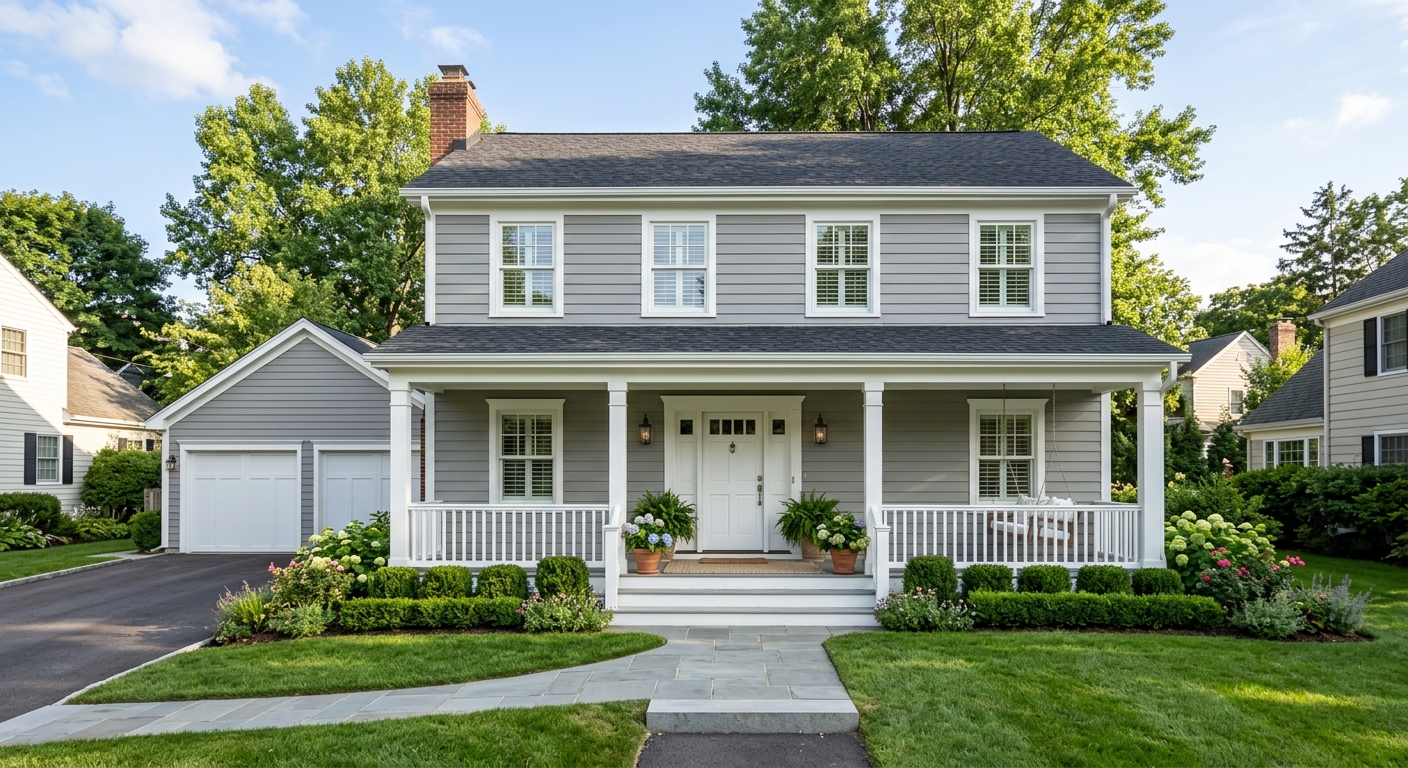
Painting options and costs in Castlegar
Castlegar homeowners usually have a clear goal when they call a painter: look fresh, but also stay durable through our winters. With about 8,338 residents and 2,700 homeowner households, painting demand stays steady, especially in the repaint cycle for older housing. In fact, 64.5% of local homes were built before 1981, which typically means more prep—scraping, sanding, patching, and priming—than newer construction. Some older coatings may also trigger lead-safe work practices, so expect extra care around dust control if original materials are present.
In the Kootenay region, we’re working with a continental interior climate: cold, snowy winters and a relatively short, warm, dry summer. That compresses the exterior painting window into roughly May–September when surfaces warm up and paint can cure properly. In-season demand affects contractor availability and can move pricing toward the top end of the Kootenay bands. Interior work is less weather-dependent, so interior estimates are often more stable year-round, though winter indoor dryness can still impact drying time and how coatings level out.
In Castlegar, areas like Harrop/Procter-facing routes and neighbourhoods near the downtown core tend to see consistent trades activity because there’s a mix of older housing stock and ongoing renovations. Once you know what you’re doing—interior refresh versus a full façade—the next step is comparing typical project scope against realistic price ranges in our local market.
| Service |
What's Included |
Typical Duration |
Price Range |
| Interior — whole home (walls, ceilings, trim) |
Move/cover basics, patch & sand, spot-prime as needed, 2-coat finish, caulking, prep of trim and door frames, cleanup and protection |
3–10 days |
$3,000 – $5,500 |
| Interior — per room (standard bedroom or living room) |
Cut-in/edge work, patch & sand, prime where required, 2-coat walls/ceilings; trim touch-ups included if noted |
1–3 days |
$500 – $1,500 |
| Exterior — full house (siding, trim, soffits) |
Power wash/clean, scrape & sand, caulking, spot-prime, 2-coat exterior system, detail work around doors/windows, cleanup and disposal |
1–3 weeks |
$3,500 – $7,000 |
| Exterior — trim and accent colours only |
Prep and paint for trim only, includes sanding/spot-priming, caulking as needed, and protective masking |
3–7 days |
$1,500 – $3,800 |
| Kitchen cabinet painting (doors, frames, spray finish) |
Removal/labeling, degrease, sanding degloss, bonding primer, sprayed finish with proper cure, re-install, hardware prep |
5–14 days (including dry/cure time) |
$2,000 – $3,500 |
| Specialty / faux finish (accent wall, texture) |
Surface preparation, basecoat, specialty application, sealing/topcoat, and protection of adjacent surfaces |
1–5 days |
$300 – $6,000 |
Prices are estimates only and vary by project scope, site access and material selection.
What affects the price of painting in Castlegar
Two painters can quote the same “paint the house” request and still land 30–50% apart in the Kootenay market. The difference is usually scope and prep: quality surface preparation, caulking detail work, primer selection, and how many coats the system requires. In Castlegar, exterior work is also tightly tied to weather, so contractor scheduling pressure can add cost when crews are booked for short, high-demand weeks.
Exterior painting in this region is climate-bound because we need surfaces warm enough to apply and cure. The practical takeaway for homeowners is timing and curing: a colder, damp week can force rework or delay jobs, which increases labour and overhead. Coastal BC can offer a longer calendar window, but humidity and rainfall require more careful timing and mildew-resistant products—often adding labour to manage drying conditions and protect surfaces. In the Kootenay interior, we typically get better drying than the coast, but the summer window is shorter, so availability can tighten.
Older homes throughout the Kootenays—64.5% built before 1981 locally—drive up prep. Scraping loose paint, sanding edges, patching drywall, and spot-priming can represent 50–70% of total labour on repainting jobs. For example, a trim-only refresh might fit into the $1,500 – $3,800 band, while a full façade that requires extensive prep and additional priming commonly approaches the $3,500 – $7,000 band. Accessibility matters too: steep lots or multi-storey elevations can require scaffolding or lifts, increasing setup and labour time.
Concrete examples you’ll see in Castlegar: peeling paint around window trim can turn a “simple exterior repaint” into a bonding/priming job; heavy staining near eaves may require stain-blocking primer before topcoat; and interior humidity swings during winter furnace season can change dry time, which affects scheduling and labour per day.
| Price Factor |
Why It Matters |
Cost Impact |
| Surface prep — scraping, sanding, patching drywall or wood |
Determines adhesion and smoothness; includes patching rough edges and feathering repairs |
Often +15–40% on repaint jobs |
| Number of coats — 2-coat system over primer vs. 1 coat over existing |
Many failures come from trying to “stretch coverage” without proper primer and coat count |
Can change price by +10–25% |
| Paint quality tier — contractor-grade vs. premium (Benjamin Moore, Sherwin) |
More durable resins and better hiding can reduce recoat risk and touch-ups |
Material upcharge; labour may drop if coverage is better |
| Ceilings and trim — adds significant time vs. walls-only |
Cutting-in and masking around trim and ceiling lines is slower, especially on older homes |
Commonly +10–30% |
| Exterior season window — short season raises summer rates |
Weather limits scheduling, increasing demand during May–September |
Can shift total +10–20% in peak weeks |
| Lead-safe precautions — required for pre-1978 homes with lead paint |
Dust control, HEPA vacuuming, and disposal add labour steps when lead is present or suspected |
Often +5–25% depending on surface condition |
| Surface material — drywall vs. plaster vs. wood vs. stucco |
Different materials need different primers and bonding methods |
Can change primer and prep time by +10–25% |
| Height and access — multi-storey exterior requires scaffolding or lifts |
Setup, safety time, and extra labour per pass |
Often +15–35% on exterior |
Permits & regulations in British Columbia
In British Columbia, painting generally does not require a permit for typical residential work. That includes interior painting, and most exterior repainting where you’re not changing major building components. For homes built before 1978, recommended health guidance is to consider lead paint testing before sanding or scraping. If lead is present, contractors typically follow lead-safe work practices such as wet methods to reduce airborne dust, HEPA vacuuming, careful containment, and proper disposal. For homeowners, this isn’t automatically “legally mandated” in the same way it is for regulated workplace activities, but it’s standard professional practice—especially because older Castlegar properties often have multiple paint layers.
What does usually require attention is not a “painting permit” so much as safety compliance and workplace rules: sanding/scraping operations that disturb hazardous coatings should be handled with containment and cleanup that matches the risk. If a contractor is doing regulated lead abatement, that’s a different compliance category.
Before signing in Castlegar, verify three things step-by-step: (1) contractor licence—confirm it through the appropriate British Columbia online registry; (2) liability insurance—ask for a certificate of insurance showing active coverage for the project period; and (3) workers’ compensation coverage—request proof of WCB/clearance if they have employees. Then insist on a written contract listing paint brand/line, sheen levels, surface prep responsibilities, number of coats, and disposal included or excluded.
Interior vs exterior painting — getting the best result in Castlegar
In Castlegar’s Kootenay interior climate, the fastest way to get a “pretty but short-lived” paint job is to focus on topcoat and skip prep. For interiors, surface prep—filling holes, sanding down roughness, and priming stains or patch repairs—matters more than whether you chose a premium label. If you have patched drywall, a proper primer locks down the repair so the finish looks uniform. Sheen selection also affects wear: flat looks great in low-traffic ceilings, but in hallways, kitchens, and around doors, a smoother finish (eggshell or satin) typically cleans better. And across rooms, a system of two coats over a suitable primer almost always lasts longer than one thick coat over existing paint.
For exteriors, prep is even more critical in British Columbia’s freeze-thaw reality. Caulking needs to be handled before painting so water doesn’t find its way behind failing trim lines and into substrates. Primer type matters: some substrates bond better with oil/alkyd-based primers (or specific bonding primers), while others suit latex primers designed for exterior adhesion. In the Kootenay (less marine damp than coastal BC, but still variable moisture), homeowners should still expect mildew-resistant and weather-stable products—especially on shaded, north-facing façades.
Cabinet painting is a smart budget alternative to replacement when boxes are solid and doors/drawers are serviceable. It’s also a prep-heavy job: degreasing, sanding, bonding primer, and controlled spraying/cure time are what determine whether the finish feels factory-smooth.
Budget example: if a full exterior repaint lands in the $3,500 – $7,000 range because prep is extensive, skipping scraping and spot-priming to “save now” can shorten the life of the new coating. In contrast, a smaller trim-only scope in the $1,500 – $3,800 band can be an efficient upgrade when the main siding paint is still well-adhered.
| Project Type |
Key Prep Step |
Recommended Coats |
Price Band |
| Interior — fresh drywall (new construction) |
Prime all drywall and sand minor ridges before finish |
2-coat finish over primer |
$1,200 – $3,200 |
| Interior — repaint (good condition, no repairs) |
Degloss/clean, caulk minor gaps, spot-prime any marks |
2-coat finish |
$500 – $2,200 |
| Interior — repaint (patching and priming needed) |
Feather repairs, sand smooth, prime patches and stains |
2-coat finish over primered areas |
$800 – $3,500 |
| Exterior siding (wood or fibre cement) |
Scrape failing paint, caulk, clean, and spot-prime exposed substrate |
2-coat exterior system (often primer + 2 finish) |
$3,500 – $7,000 |
| Exterior trim and accents only |
Mask carefully, sand edges, and prime bare/spot-failing areas |
1–2 coats finish depending on condition (primer where needed) |
$1,500 – $3,800 |
| Kitchen cabinets (spray finish) |
Degrease thoroughly, bond-prime and sand for adhesion |
2-coat sprayed finish over primer |
$2,000 – $3,500 |
How to choose a painting contractor in Castlegar
Choosing well in Castlegar is mostly about verification and paperwork. Start with licensing: ask the contractor for their British Columbia business licence/registration details (and any trade designation that applies), then confirm it through the appropriate BC online registry. Next, request proof of liability insurance—get the certificate of insurance and confirm it lists the coverage amount and the correct business name. If they employ workers, you should also confirm workers’ compensation coverage (WCB) by requesting a clearance letter or proof of account coverage. If they can’t provide these, you’re taking risk on the jobsite.
Then compare quotes properly. Get 2–3 itemised written quotes that separate labour and materials, and state what’s included in surface prep, caulking, primer selection, paint brand/line, and disposal. Avoid “lump sum only” quotes that don’t describe what’s being done to your specific walls or exterior surfaces—especially on older homes where prep can become 50–70% of the labour.
Warranty matters too. Ask for a clear workmanship warranty length, whether it covers peeling/blistering and how long after completion, and whether any manufacturer product warranty is included (and if it’s transferable to future owners). For payment scheduling, never pay more than 10–15% upfront; hold back a portion until completion and final walkthrough. Finally, request a signed timeline: start date and an estimated completion date in writing, so you have recourse if weather delays push exterior work during the short season.
- Confirm BC registration/licensing details match the quote and contract.
- Request a current certificate of liability insurance before work begins.
- Ask for proof of workers’ compensation (WCB) clearance/coverage if they have employees.
- Get quotes itemised into labour, prep materials, paint/primer, and disposal.
- Verify paint brand/line and sheen per area (ceiling, walls, trim; interior vs exterior).
- Confirm prep scope: scraping/sanding/patching/priming, not just “paint over.”
- Check caulking coverage for exterior trim and window/door edges.
- Ask whether primer is included for bare wood, stained areas, and patch repairs.
- Confirm masking/protection of floors, landscaping, and adjacent surfaces.
- Ask how they handle lead-safe precautions for pre-1978 homes if coatings are disturbed.
- Warranty terms in writing: workmanship duration and what it covers.
- Payment schedule: keep retainers and holdbacks; avoid large upfront payments.
Red flags I see around Castlegar: (1) “We’ll just do one coat” on a repaint without primer discussion, (2) no written scope for prep/caulking, (3) missing insurance or no WCB proof, (4) pressure to pay most of the total upfront, and (5) vague warranties that don’t specify what failure types are covered.
Frequently asked questions — painting in Castlegar
Should I paint or replace my cabinets?
In most Castlegar kitchens where cabinet boxes are solid (no sagging, swollen sides, or major water damage), painting is often the best value. If your doors and frames have usable thickness and you’re willing to do the labour-heavy prep, you can refresh the look without the cost and disruption of replacement. A typical cabinet paint job (spray finish) often falls in the $2,000 – $3,500 band, and it’s usually much faster than full replacement—though cure time still matters. Replacement can be worth it if the cabinets are structurally failing or the finish is peeling badly from the substrate. If your home is older, consider whether sanding might disturb older coatings and discuss lead-safe precautions for pre-1978 material.
How do I prep walls before painting?
For homeowners in British Columbia, prep is mainly about cleaning and removing anything that prevents adhesion. Start by removing wall dust, grease (especially around kitchens), and any scuffs that can “telegraph” through new paint. Patch holes, then sand smooth and feather edges so you don’t create a raised repair. Caulk gaps around trim and corners if they’re opening. If there are stains, water marks, or nicotine/odour-related discolouration, spot-priming is usually what prevents bleed-through. Most quality repaint failures come from skipped prep, not from “bad paint.” If you’re planning to DIY, keep sanding dust contained and be cautious with older coatings in pre-1978 homes—professionals often use lead-safe methods.
Do I need to worry about lead paint in an older Castlegar home?
Castlegar has a significant share of older housing—64.5% of homes were built before 1981 (Statistics Canada, 2021 Census)—so it’s reasonable to plan for lead-related caution when coatings are disturbed. In BC, for pre-1978 homes, health guidance recommends considering lead testing before sanding/scraping. If lead is present, contractors typically use lead-safe practices such as wet methods, HEPA vacuuming, containment, and correct disposal. While it’s not always legally “required” for homeowners to follow the same workplace controls, it’s the standard approach for professional contractors because the risk comes from dust you can’t see. When you request a quote, ask how they’ll handle dust control and cleanup if they encounter older paint layers.
How long does it take to paint a house?
Timing depends on whether you’re doing interior versus exterior work and how much prep is needed. Interiors can often be completed in days once surfaces are ready—whole-home painting typically falls around $3,000 – $5,500 in our local estimates and may take roughly 3–10 days depending on rooms and trim. Exteriors in the Kootenay are constrained by weather; crews generally focus on the May–September period when surfaces are warm and dry enough to apply and cure. A full exterior house repaint commonly runs 1–3 weeks in scheduling, but the calendar can shift if rain, cold nights, or humidity slow cure. If staging/scaffolding is needed, that also adds days. Ask your contractor for a written start date and a realistic completion estimate.
What's the difference between paint quality tiers?
Paint quality usually affects hiding power, durability, scuff resistance, and how forgiving it is during application and recoat. Premium lines can cover better in fewer passes and handle wear more consistently—often reducing the odds of needing touch-ups later. Contractor-grade products can be an excellent choice when the system is correct: appropriate primer, proper prep, and the right sheen for the location. In Castlegar homes, where interior dryness and exterior temperature swings happen across seasons, the correct bonding primer and coat count matters as much as the brand. A quote might fall anywhere across the interior and exterior bands, such as interior whole-home at $3,000 – $5,500 or trim-focused exteriors at $1,500 – $3,800, but quality tiers should be compared alongside prep scope—not just price per litre.
How do I compare painting quotes?
When comparing quotes in Castlegar, don’t start with the total price—start with scope. Ask for itemised quotes that break out labour and materials, including primer type, number of coats, surface prep (scraping/sanding/patching), caulking, and disposal. Confirm the exact paint brand/line and sheen for each area, and whether trim/ceilings are included. Make sure the quote states whether they’ll do a full 2-coat system where required, rather than assuming 1 coat. For exterior work, ask how they plan around the short season and curing needs. Finally, verify the contractor’s British Columbia insurance and WCB coverage, and ensure warranty terms are written. A slightly higher quote can be the better deal if prep and coatings are properly specified.