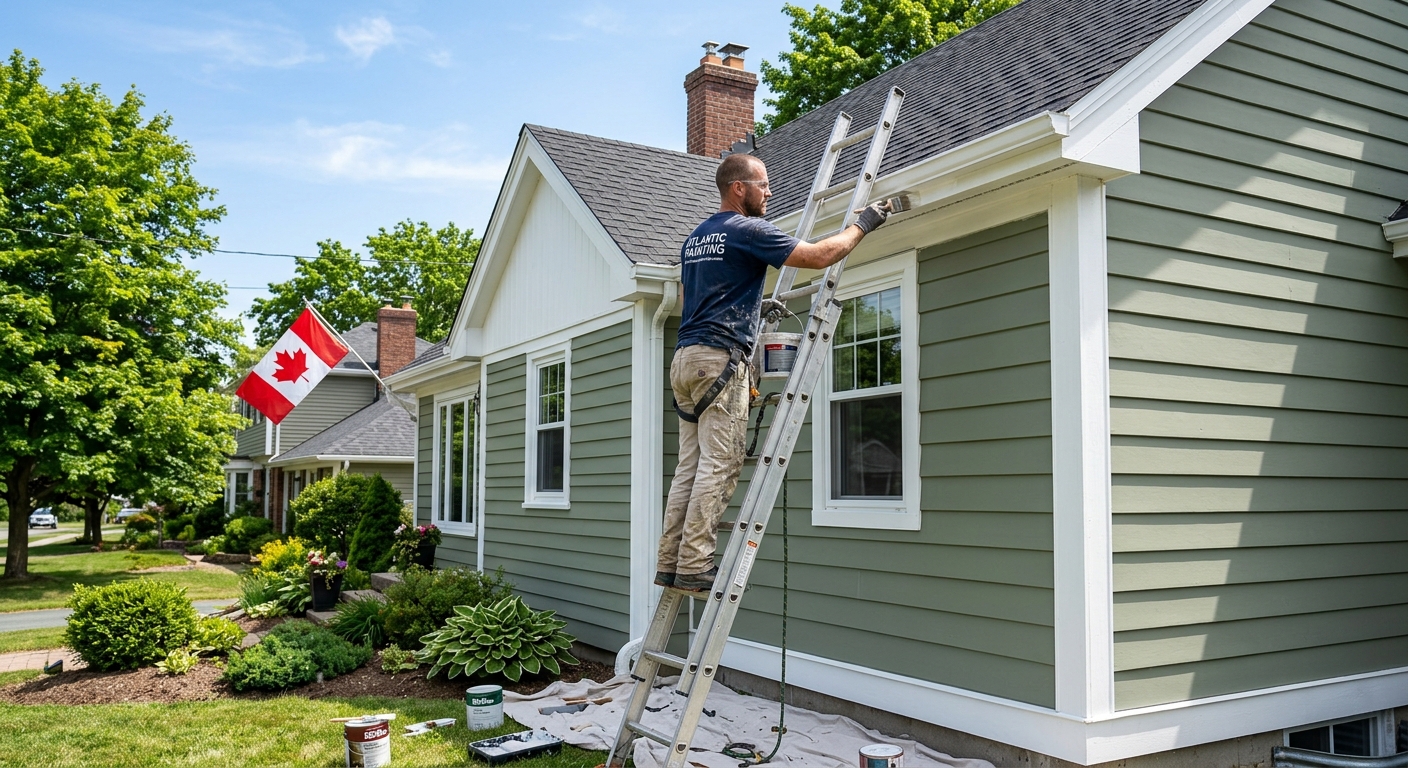
Painting options and costs in West End
In West End, British Columbia, homeowners usually start by comparing painting options against their budget, but the “right” choice depends on how much prep your surfaces need and what finishes will hold up in our coastal climate. With a population of about 47,200 in the area, there’s steady demand for quality painters, especially in older pockets of the West End where mid‑century renovations are common (Statistics Canada, 2021 Census). Many residential buildings pre‑date modern coatings, so the job may involve more scraping, patching, and stain-blocking primer work than you’d expect. On homes built before 1978, contractors often recommend lead-safe practices if lead is suspected, which can add time for containment and cleanup.
The Lower Mainland–Southwest market also shapes pricing. Exterior work is less constrained by extreme cold than by rain, humidity, and the need to paint during dry, stable windows—so teams may re-schedule between weather fronts, and that labour and material planning is reflected in the estimate. Interiors are more predictable year-round, so crews often shift work indoors through fall and winter to keep timelines steady.
In West End, where access can be tighter and properties are frequently older, demand is especially strong around Denman Street and the surrounding heritage-adjacent blocks, because homeowners want clean lines on trim and a durable finish on both interiors and the exterior envelope. Next, use the table below to ballpark the most common services people book in the neighbourhood, then we’ll break down the key cost drivers that explain quote differences.
| Service |
What's Included |
Typical Duration |
Price Range |
| Interior — whole home (walls, ceilings, trim) |
Protect floors/furnishings, prep and patch, caulking, prime where needed, paint walls/ceilings, finish coats, clean-up |
5–10 working days |
$2,200 – $7,500 |
| Interior — per room (standard bedroom or living room) |
Prep, sand/fill minor repairs, spot prime, paint walls, one room ceiling (if requested), basic trim touch-ups |
1–3 working days |
$600 – $1,900 |
| Exterior — full house (siding, trim, soffits) |
Wash, scrape failing coatings, repair caulk/patch, spot prime, paint siding/trim/soffits, weather-window scheduling, site protection |
2–4 weeks (weather-dependent) |
$6,500 – $14,500 |
| Exterior — trim and accent colours only |
Clean, scrape loose paint, caulk, prime where needed, paint trim/accents (not full siding), surface protection and clean-up |
1–2 weeks (weather-dependent) |
$1,800 – $5,800 |
| Kitchen cabinet painting (doors, frames, spray finish) |
Hardware protection/removal as agreed, degrease, sanding/spot repair, bonding primer, sprayed finish coats, re-install, touch-ups |
5–12 working days (plus dry time) |
$2,200 – $6,800 |
| Specialty / faux finish (accent wall, texture) |
Surface prep, base coat, custom finish application, sealer/topcoat, masking where required, cleanup |
2–7 working days |
$900 – $4,500 |
Prices are estimates only and vary by project scope, site access and material selection.
What affects the price of painting in West End
For the same-looking project, West End quotes can swing by 30–50% across the Lower Mainland–Southwest and the broader British Columbia market. The biggest drivers are how much prep the job needs, how weather affects exterior scheduling, and the labour time required for high-detail work like trim, ceilings, and cabinet finishes. In the Lower Mainland–Southwest, exterior painting is tightly climate-bound: rain and humidity can slow drying and increase the risk of mildew or poor adhesion, so crews must paint during dry windows and use mildew-resistant, high-adhesion systems. That “re-mobilize between weather windows” time is why an exterior can land closer to the top end of the exterior range of $1,200 – $15,000, even when the square footage seems similar.
Older homes across the region also matter. When repainting, scraping loose coating, sanding adhesion points, caulking, and priming bare or stained areas can be 50–70% of labour on many repaints. For example, a trim-and-accent refresh might look like $1,200 – $5,800 on paper, but if there’s widespread coating failure or nicotine/wood-tannin bleed, the prep time pushes the job toward the upper band. On interiors, that same prep reality can push you from basic wall painting toward a higher-build whole-home scope (often within the $300–$8,000 interior band), especially when ceilings and trim are involved.
Two local cost examples I see often in West End: (1) fibre cement or older painted wood that’s chalking requires more sanding and bonding primer to stop peeling—adding hours before paint ever touches the surface; and (2) tight streetside access where we need extra protection and careful masking around landscaping or hardscaping. These are practical realities of the Lower Mainland–Southwest, not “nickel-and-dime” items.
| Price Factor |
Why It Matters |
Cost Impact |
| Surface prep — scraping, sanding, patching drywall or wood |
Prevents peeling and bubbling; adhesion depends on clean, sound surfaces |
Often +20% to +60% on repaints |
| Number of coats — 2-coat system over primer vs. 1 coat over existing |
Ensures even sheen, hides stains, and matches colour accurately |
Typically +10% to +25% when moving from thin coverage to full system |
| Paint quality tier — contractor-grade vs. premium (Benjamin Moore, Sherwin) |
Better coverage can reduce coats; premium systems often last longer |
Material delta can be ~+5% to +20% |
| Ceilings and trim — adds significant time vs. walls-only |
More cutting-in, masking, and detailed work |
Can add +15% to +40% for trim-heavy homes |
| Exterior season window — short season raises summer rates |
Weather delays can compress crews into fewer dry days |
May add +10% to +35% depending on schedule pressure |
| Lead-safe precautions — required for pre-1978 homes with lead paint |
Containment, HEPA cleanup, and disposal are labour-intensive |
Can add +15% to +50% where lead risk is confirmed |
| Surface material — drywall vs. plaster vs. wood vs. stucco |
Different substrates need different primers and prep methods |
Often shifts job by +5% to +25% |
| Height and access — multi-storey exterior requires scaffolding or lifts |
More setup time and safety controls |
Can add +10% to +45% for tall/complex access |
Permits & regulations in British Columbia
In British Columbia, painting typically does not require a permit—so there’s usually no “permit pull” for standard interior or exterior coating work. Where you may see paperwork requirements is when you’re dealing with special conditions on the property (for example, rules linked to strata or heritage guidelines), not because of a provincial painting permit process.
For homes built before 1978, health guidelines recommend testing for lead paint before sanding, scraping, or demolition of coatings. If lead is present, professional lead-safe work practices are standard: wet methods to reduce dust, HEPA vacuuming, containment where needed, and proper disposal of contaminated materials. This is not automatically legally mandated for homeowners, but it’s the common contractor standard in BC—particularly when dry sanding would otherwise create airborne dust. If a contractor is serious about risk control, they’ll discuss how they’ll protect occupants and handle debris.
Also confirm the contractor carries liability insurance and workers’ compensation coverage (WSIB/WCB). Ask for certificates before work starts. Get a written contract that specifies the paint brand and sheen, how many coats are included, and what prep is part of scope (scraping, patching, priming, caulking, surface washing).
Step-by-step in West End: (1) request their BC licence details (if applicable to your scope) and verify via the provincial business registry info they provide, (2) ask for a current certificate of insurance showing they’re insured for your job type, (3) request proof of workers’ compensation coverage (WSIB/WCB), and (4) get a contract with a written scope and product list so there are no surprises later.
Interior vs exterior painting — getting the best result in West End
In West End, the difference between a long-lasting paint job and an early failure is usually not the paint label—it’s how well the surfaces are prepped and matched to the environment. For interiors, the #1 factor is surface preparation: filling and sanding imperfections, then priming patched areas and stain-prone zones. Sheen choice matters for day-to-day living: flat or matte is common on ceilings, eggshell on many living areas for a wipeable finish, satin for hallways or higher-touch walls, and semi-gloss on trim for crisp cleanability. And while it’s tempting to stretch coverage, two coats over the proper primer system typically outlast one thick coat because it improves uniformity, hides patchiness, and reduces recoat failures.
For exteriors, BC’s coastal conditions make prep non-negotiable. You need clean surfaces, correct caulking before painting to prevent water ingress behind trim, and the right primer for your substrate (wood, fibre cement, stucco). In Lower Mainland–Southwest, mildew-resistant, high-adhesion products are the practical baseline because damp periods can trigger growth if the coating system isn’t designed for it. Temperature stability and drying times also influence product selection and scheduling.
Cabinet painting is a strong budget alternative to replacement when you want the look updated without full renovation. For many kitchens, a spray-finish cabinet project can land in the $2,200 – $6,800 range, while a replacement is usually far higher once you include demo and new materials. For pre‑1978 homes, lead-safe precautions may add cost to any scraping or patching that disturbs old coatings, but they protect your indoor environment and help avoid costly cleanup mistakes.
If a quote sounds “too cheap,” compare the prep scope and primer system first—not just the topcoat price. Often, paying for the right prep is where your money is actually buying longevity.
| Project Type |
Key Prep Step |
Recommended Coats |
Price Band |
| Interior — fresh drywall (new construction) |
Prime bare drywall and sand smooth for an even sheen |
2 coats (primer + 1–2 finish coats as needed) |
$300 – $8,000 |
| Interior — repaint (good condition, no repairs) |
Light sand/scuff, caulk minor gaps, spot-prime if needed |
2 finish coats |
$600 – $3,800 |
| Interior — repaint (patching and priming needed) |
Fill/sand, prime patches and stain-prone spots before topcoat |
Primer + 2 finish coats (system-based) |
$900 – $5,500 |
| Exterior siding (wood or fibre cement) |
Wash, scrape failing paint, repair and caulk, prime sound substrate |
Primer + 2 top coats (weather-dependent) |
$6,500 – $14,500 |
| Exterior trim and accents only |
Scrape loose areas, clean, spot-prime, caulk before coating |
Spot primer + 2 top coats |
$1,800 – $5,800 |
| Kitchen cabinets (spray finish) |
Degrease, sand/repair, bonding primer for adhesion, mask and spray |
Bonding primer + 2–3 finish coats |
$2,200 – $6,800 |
How to choose a painting contractor in West End
Choosing a painting contractor in West End comes down to verification, clarity, and workmanship discipline. Start with British Columbia coverage: ask for proof of liability insurance and workers’ compensation coverage (WSIB/WCB) and confirm the certificate is current for the dates they’ll be on your property. If your scope involves any work that triggers specific professional licensing (for example, specialized prep or building-envelope coordination), request their licence information up front and verify it through the appropriate online registry sources they provide. Don’t accept “we have insurance” without seeing a certificate.
Next, get 2–3 itemised written quotes. You want line items for labour and materials so you can compare apples to apples: prep hours, number of coats, primers, caulking allowance, paint brand and sheen, and disposal. A strong contractor will state what’s included and what’s excluded—especially for exterior work where weather can affect schedule. Ask if product warranties and manufacturer instructions are followed, and whether disposal and surface protection are part of the scope.
Warranty matters. Confirm the workmanship warranty length, whether the paint/manufacturer warranty applies to your exact system, and if it’s transferable if you sell the home. For payment, a sensible schedule is to never pay more than 10–15% upfront; keep a holdback until the job is complete and walkthrough items are addressed. Finally, insist on a timeline: a start date and a completion estimate in writing.
- Verify liability insurance certificate dates and coverage amount
- Confirm WSIB/WCB coverage for all workers on site
- Get a written scope that lists prep work (scrape, sand, patch, caulk, prime)
- Ask for paint brand, sheen, and the number of coats by surface
- Require disposal and cleaning details for sanding/scrape debris
- Confirm how they protect floors, stairs, landscaping, and fixtures
- Request schedule approach for rain/humidity and drying setbacks
- Ask how they handle lead-safe practices for pre‑1978 homes (if applicable)
- Ensure they include masking/cutting-in method for trim and corners
- Use an agreed communication plan (text/email) for approvals and changes
- Clarify warranty terms in writing before paying final balance
- Keep upfront payment to 10–15% and hold back until completion
In West End, red flags I commonly see include: quotes that skip or “allow for” unknown surface prep time, vague paint specs (no brand/sheens/coats stated), no proof of liability/WSIB/WCB coverage, large upfront requests beyond 10–15%, and exterior pricing that ignores rain-window scheduling or caulking prep.
Frequently asked questions — painting in West End
What paint sheen should I use in different rooms?
In West End and across British Columbia, sheen choice is a practical durability decision as much as a style one. A flat or matte finish is typically best on ceilings because it helps hide minor imperfections. For walls, eggshell is a common “safe” option for living rooms and bedrooms—balanced appearance with better washability than flat. In hallways, kitchens, or high-touch areas, satin often performs better because it cleans up more easily. Trim is usually semi-gloss for crisp definition and easier wiping. If you’re repainting patched areas, also make sure you’re using the right primer and applying full coverage in two coats, because sheen uniformity depends on the full system, not just the top colour.
Can I paint my house exterior in spring or fall in West End?
You can sometimes paint in spring or early fall in West End, but the real limiter is weather—rain and humidity that slow drying and increase mildew risk. Lower Mainland–Southwest homes often require careful scheduling around dry windows, especially for siding and trim where proper adhesion is critical. A contractor should plan for re-mobilizing between weather fronts, which is why exterior quotes can vary even when scope is similar. If you’re aiming for cost predictability, many crews start after stable spring dry days and try to finish before the wetter, cooler stretches settle in. If the surfaces are damp or not ready to accept paint, it’s better to wait than push forward—because coating failure can cost more than the “saved” time. Typical full exterior pricing commonly falls around $6,500 – $14,500, depending on how weather impacts prep and drying.
How do I choose a painting contractor in West End?
In West End, start by verifying coverage and transparency. Ask for a current liability insurance certificate and proof of workers’ compensation coverage (WSIB/WCB) before work begins, and keep it documented. Then request 2–3 itemised quotes that break out labour, materials, prep, and paint system details: brand, sheen, primers, number of coats, caulking allowance, and disposal. The scope should spell out what’s included—surface washing, scraping, patching, and any lead-safe approach for pre‑1978 coatings if relevant to your home. Review workmanship warranty length and whether manufacturer coverage depends on using the correct system. Finally, use a sensible payment schedule: never more than about 10–15% upfront, and keep a holdback until a final walkthrough confirms everything meets expectations.
How many coats does an exterior repaint need in West End?
Most exterior repaints in West End follow a system approach: primer plus two top coats, but the exact number depends on substrate condition and whether you’re correcting stains or exposed bare areas. If the existing coating is sound and properly prepared, you may only need 2 top coats with spot priming. If there’s scraping, patching, and bare wood/fibre cement areas, plan on primer to ensure adhesion and even colour. British Columbia’s coastal humidity makes it especially important not to cut corners on prep, because moisture trapped behind poor adhesion can lead to early peeling. A correctly prepared full exterior typically lands in the $6,500 – $14,500 range when primer systems and caulking are included, and that price normally reflects the labour needed to do it right during suitable dry windows.
What is the best primer for older West End homes?
For older West End homes, “best” usually means the right primer for the specific surface and coating condition. In practice, that often includes a bonding primer when existing paint is chalky or flaking, a stain-blocking primer when you see nicotine or wood tannin bleed, and a suitable primer matched to drywall, wood, or fibre cement repairs. If the home has pre‑1978 coatings and there’s any risk of lead dust from sanding or scraping, the primer choice and prep method may go hand-in-hand with lead-safe containment and cleanup practices recommended for professional contractors. Before any primer goes on, surfaces should be washed, scraped where necessary, and caulked appropriately. Ask your contractor to name the primer type and explain why it’s chosen—good primers aren’t generic, and they directly affect how long the topcoat will stay looking uniform.
Should I paint or wallpaper my West End home?
In West End, painting is often the better default because it’s more forgiving on imperfect surfaces and easier to maintain in day-to-day life. Wallpaper can look great, but it tends to telegraph wall issues—like settlement cracks, patch outlines, or uneven repairs—unless the walls are exceptionally smooth before installation. Painting offers more control for spot-prime and patching, and it’s generally easier to refresh later if you want a new colour direction. In British Columbia’s humid coastal climate, both finishes must be installed on properly prepared, stable surfaces; however, exterior conditions don’t directly apply to interior wallpaper. If you’re dealing with patched drywall and you want longevity, interior repainting within the typical $600 – $3,800 per-room range can be a practical path. A good contractor will guide you based on your wall condition, traffic level, and how washable you need the finish to be.