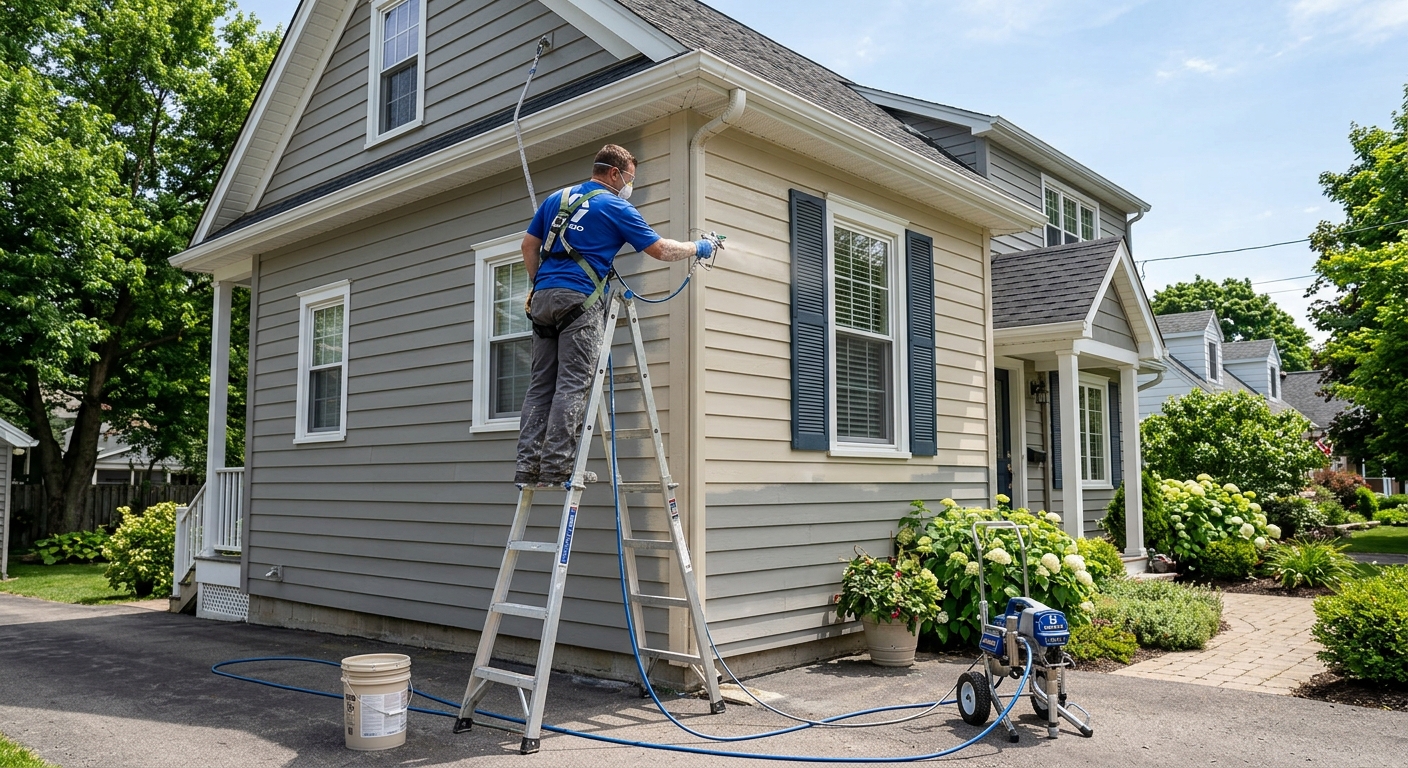
Painting options and costs in Historic Downtown
Historic Downtown, British Columbia is a great place to live—and a demanding place to paint. With a population of 9,910 (Statistics Canada, 2021 Census), this neighbourhood keeps steady demand for both interior refreshes and detail-heavy exterior work. Many homes here were built mid-century through the 1990s, so repaints often involve extensive prep: scraping failing coatings, patching settlement cracks, stain-blocking nicotine or wood tannins, and priming to ensure adhesion. On pre-1978 properties, contractors also use lead-paint–safe practices when sanding or scraping surfaces, because older layers can be hazardous and require careful containment and cleanup.
In the Lower Mainland–Southwest market, pricing is shaped less by deep cold and more by rain, humidity, and the need to hit workable weather windows. Crews may be waiting for dry stretches before application, and drying can take longer after coastal drizzle—so schedules and mobilization are factored into the quote. Interior painting generally runs more steadily through fall and winter, which can make interior work easier to book. In Historic Downtown, trade demand is especially strong around Waterfront and the West End, where older strata and heritage-adjacent homes create frequent touch-ups and full repaint jobs.
Below is a practical range homeowners in Historic Downtown can expect, before we tighten scope based on access, surface condition, and finish selection. Use it to compare quotes and to decide where your budget buys the most durability.
| Service |
What's Included |
Typical Duration |
Price Range |
| Interior — whole home (walls, ceilings, trim) |
Protective masking, surface prep (patch/sand/prime as needed), 2-coat system on walls/ceilings, full trim painting, caulking and cleanup |
5–12 days |
$2,000–$8,000 |
| Interior — per room (standard bedroom or living room) |
Prep and spot repair, prime as required, 2-coat wall system, basic trim and door touch-up (scope dependent) |
1–3 days |
$300–$1,800 |
| Exterior — full house (siding, trim, soffits) |
Wash/degrease, scraping/spot repair, caulking, primer and full finish coats, painting siding and exterior trim, coordination around dry windows |
1–3 weeks (weather-dependent) |
$4,500–$12,500 |
| Exterior — trim and accent colours only |
Targeted prep and priming on trim, 2-coat finish, selective masking for siding/doors, weather-window scheduling |
3–7 days |
$1,200–$4,800 |
| Kitchen cabinet painting (doors, frames, spray finish) |
Hardware removal, sanding and bonding primer, sprayed doors and frames, caulking and touch-ups, reinstallation; excludes cabinet refacing |
1–3 weeks (with dry time) |
$2,000–$6,500 |
| Specialty / faux finish (accent wall, texture) |
Surface conditioning, multi-step application (technique dependent), clear topcoat where needed, careful edge control |
1–5 days |
$500–$12,000 |
Prices are estimates only and vary by project scope, site access and material selection.
What affects the price of painting in Historic Downtown
In Historic Downtown and across the Lower Mainland–Southwest, it’s common to see quotes for the “same” job differ by 30–50%. The gap usually comes down to how much prep is truly included, what paint quality tier is used, and how the contractor handles weather and older-home surfaces. In other Canadian provinces, crews can sometimes work with longer, more predictable drying conditions; here, coastal humidity and rain often mean longer drying times and more remobilizing between weather windows.
Exterior painting is tightly climate-bound in the Lower Mainland–Southwest. Even though we don’t face Ontario-style winter freeze cycles, you still need stretches of dry weather to apply and cure. That can shorten the practical summer window compared with “average” inland forecasts, so crews may charge more in peak weeks to secure access and materials. Older homes throughout the region also mean more surface prep—scraping, caulking, sanding, and priming—because coating failure can be hidden under an intact-looking layer. On a repainting job, prep can represent roughly 50–70% of labour, and that can shift a project by thousands.
Concrete examples: a full exterior that starts at around $4,500 can jump toward $12,500 if we uncover widespread failing paint that requires extensive scraping and bonding primer across siding and soffits. On the interior side, a “per-room” repaint can stay closer to the $300–$1,800 band when walls are in good condition; the same room moves toward $1,200–$2,800 once you add patching, stain-blocking, and ceiling work. Climate and housing age both drive the difference—coastal moisture punishes thin prep, while older substrates demand more adhesion-building primer systems.
| Price Factor |
Why It Matters |
Cost Impact |
| Surface prep — scraping, sanding, patching drywall or wood |
Determines whether paint bonds and whether cracks/texture telegraph through |
Can add major labour; often 50–70% of exterior repaint labour |
| Number of coats — 2-coat system over primer vs. 1 coat over existing |
More coats improve coverage and durability, especially over stained or bare areas |
Typically shifts interior/exterior totals by hundreds to thousands |
| Paint quality tier — contractor-grade vs. premium (Benjamin Moore, Sherwin) |
Higher solids and better coverage reduce number of touch-up passes |
Commonly a noticeable materials delta, but often protects longevity |
| Ceilings and trim — adds significant time vs. walls-only |
Trim requires precision masking and multiple detailed coats |
Frequently adds 10–25% to interior labour |
| Exterior season window — short season raises summer rates |
Weather interruptions can slow production and require re-scheduling |
Can increase cost during peak weeks |
| Lead-safe precautions — required for pre-1978 homes with lead paint |
Containment, HEPA cleanup, and proper disposal add time and compliance steps |
Can raise exterior and heavy scraping/interior prep budgets |
| Surface material — drywall vs. plaster vs. wood vs. stucco |
Different substrates need different primers and prep methods |
Primer and labour differences often add hundreds |
| Height and access — multi-storey exterior requires scaffolding or lifts |
Access equipment and safety measures increase setup and labour |
Often the difference between “mid” and “upper” exterior ranges |
Permits & regulations in British Columbia
In British Columbia, painting typically does not require a permit for normal interior or exterior work. For homes built before 1978, health guidelines recommend testing for lead paint before sanding or scraping. If lead is present, professional contractors follow lead-safe work practices such as wet methods to reduce dust, HEPA vacuuming, proper disposal of debris, and thorough cleanup. This is not legally required for homeowners in the same way it is for contractors under work-safety frameworks, but it’s standard professional practice in Historic Downtown and across BC.
What DOES require permits (or separate approvals) is usually not the painting itself, but the broader construction scope: for example, structural changes, window/door replacements, or any work that changes the building envelope may trigger permitting requirements depending on the work. If your project includes asbestos abatement, major demolition, or regulated environmental removal, that’s handled under separate processes.
Regardless of permit needs, confirm your contractor has liability insurance and workers’ compensation coverage (WSBC/WCB). Then get a written contract that clearly states the paint brand and sheen, the number of coats, and exactly what surface prep is included (spot priming vs. full bonding primer, caulking scope, and disposal).
To verify: 1) check the contractor’s British Columbia licence/details via the appropriate online registry listing; 2) ask for a certificate of insurance naming you as certificate holder (or verifying the policy is active); 3) request proof of current workers’ compensation coverage. Finally, look for a written work plan and jobsite safety notes, especially if lead-safe procedures may apply to pre-1978 surfaces.
Interior vs exterior painting — getting the best result in Historic Downtown
In Historic Downtown’s coastal climate, the difference between a long-lasting paint job and a premature failure is usually preparation—not the brand on the pail. For interiors, start with the surface: filling, sanding, and priming matter more than chasing the most expensive topcoat. Then choose sheen correctly by room. Flat paint hides imperfections on ceilings, eggshell works well on many walls, and satin or semi-gloss is better in higher-touch areas like kitchens and trim. Two coats over a proper primer almost always beats one thick coat, especially when you’re covering patched areas or stains. A common cost mistake is saving on primer; it can lead to flashing, uneven sheen, and rework that quickly erodes any “cheap quote” advantage.
For exteriors, British Columbia demands disciplined prep: wash and degloss, scrape failing coating, patch and sand smooth, and caulk before painting to prevent water ingress. Primer selection matters by substrate—different products bond better to bare wood, fibre cement, or previously painted surfaces. In coastal BC conditions, we also prioritize mildew-resistant, high-adhesion systems and allow for realistic dry/cure times after fog and drizzle. Compared with inland provinces, rework risk increases when application happens too quickly after damp weather.
Cabinet painting is a strong value option to replacement when the boxes and doors are sound. If your kitchen is structurally fine, paying for spray-finish prep and bonding primer can refresh the look for a fraction of replacement. For example, a typical cabinet spray project often lands in the $2,000–$6,500 band; if you instead replace, you’re usually far beyond that once you include labour trades and material overhaul. And if your home is pre-1978, lead-safe precautions during sanding/scraping add steps that protect health and reduce dust-related cleanup issues.
| Project Type |
Key Prep Step |
Recommended Coats |
Price Band |
| Interior — fresh drywall (new construction) |
Prime thoroughly to control suction and raise/lock surface for a uniform finish |
1 primer + 2 finish coats |
$1,200–$6,000 |
| Interior — repaint (good condition, no repairs) |
Light sanding, spot scuff, caulk small gaps, prime stains if needed |
2 finish coats (primer only where required) |
$300–$3,800 |
| Interior — repaint (patching and priming needed) |
Patch/skim, sand smooth, prime bare areas and any stain/odour problems |
1–2 primer coats as needed + 2 finish coats |
$600–$8,000 |
| Exterior siding (wood or fibre cement) |
Scrape failing coating, address moisture issues, and use high-adhesion primer |
Primer where needed + 2 finish coats |
$4,500–$12,500 |
| Exterior trim and accents only |
Clean, degrease, scrape loose areas, sand to feather edges, prime exposed spots |
Primer where needed + 2 finish coats |
$1,200–$4,800 |
| Kitchen cabinets (spray finish) |
Degrease, sand/abrade, bond with proper primer, mask/contain for a clean spray finish |
Primer + 2 sprayed finish coats |
$2,000–$6,500 |
How to choose a painting contractor in Historic Downtown
Choosing the right contractor in Historic Downtown starts with verification. In British Columbia, confirm the contractor’s licensing details through the online registry listing relevant to the trade. Ask for a current certificate of liability insurance—ensure it’s active for the job dates and that the coverage limits are appropriate for residential work. Next, verify workers’ compensation coverage (WSBC/WCB). Don’t accept “we’re covered” without documentation; request proof of coverage for the individuals who will be on-site.
Then get 2–3 itemised quotes that separate labour and materials, rather than a vague lump sum. You want line items for prep work (scraping/sanding/patching), priming, caulking, number of coats, and disposal or cleanup. Read the scope for exclusions: are ceilings included, are windows/mantels masked properly, and is lead-safe work assumed or conditional?
Warranty matters. Ask for the workmanship warranty length (how long they stand behind prep and application) and whether the product/manufacturer warranty applies directly to you or only to the original purchaser. Also ask if warranties are transferable if you sell your home.
Payment schedule should protect you: never pay more than about 10–15% upfront, and hold back a portion until completion and final walkthrough. Finally, require a timeline in writing with a start date and completion estimate, plus how they’ll handle weather delays for exterior painting.
- Request proof of BC licence details (and match the company name on the contract)
- Verify certificate of liability insurance is current before any work starts
- Confirm WSBC/WCB coverage for workers on the job
- Use itemised quotes: labour vs. materials, and clear quantities
- Make sure surface prep scope is explicit (spot prime vs. full primer; caulking scope)
- Confirm number of coats for each surface and where primer is mandatory
- Ask how they’ll protect floors, stairs, and cabinetry (masking vs. surface covers)
- Check whether disposal and cleanup are included (scraps, sanding residue, drop sheets)
- Clarify paint brand, product line, and sheen level—don’t accept “builder’s grade” only
- Get workmanship warranty details in writing, including what voids it
- Confirm payment schedule: small deposit, holdback until walkthrough sign-off
- For exterior work, require a written weather-delay plan and re-scheduling policy
In Historic Downtown, common red flags include: quotes that omit surface prep details (especially scraping and priming), “too-good” pricing that doesn’t line up with the $1,200–$15,000 exterior reality for prep-heavy jobs, refusal to provide insurance/WSBC proof, contracts that don’t specify number of coats and paint lines, and crews that start without a clear start/completion schedule or containment plan for pre-1978 lead-safe situations.
Frequently asked questions — painting in Historic Downtown
How many coats of paint do I need?
In Historic Downtown, most long-lasting residential work uses a 2-coat finish system. The “extra” step isn’t always an extra finish coat—it’s correct priming where the substrate changes or where stains/repairs are present. For example, if you’re repainting walls in good condition, you may only need 2 finish coats; if you have patched drywall, water marks, or tannin staining, a primer step is usually required before both finish coats. For exteriors, you should expect primer on scraped/bare areas plus 2 finish coats, because coastal humidity and rain exposure punish thin coverage. If someone offers only one coat over unprepared or stained surfaces, that’s a common cause of early failure.
What paint is best for Historic Downtown's climate?
For British Columbia’s coastal conditions, the “best” paint is the one designed for adhesion and mildew resistance on your specific substrate, applied with realistic drying windows. On interiors, choose sheens by room: flat for ceilings, eggshell on many living spaces, and satin/semigloss on trim and higher-touch areas. On exteriors, prioritize high-adhesion primers and mildew-resistant topcoats, especially if your home experiences frequent dampness. Quality matters because coverage and durability reduce the need for rework. If your scope includes a whole exterior repaint, many homeowners end up in the $4,500–$12,500 band partly because the right primers and preparation help the paint last longer in humidity and rain cycles (Statistics Canada, 2021 Census).
How long does exterior paint last here?
In Historic Downtown and across the Lower Mainland–Southwest, exterior paint life depends heavily on prep quality and weather timing rather than just paint brand. When scraped areas are properly repaired, primed, caulked, and painted with two finish coats over high-adhesion systems, exterior coatings can perform well for years despite our damp shoulder seasons. When prep is rushed or coatings are applied after damp conditions, failure often shows up sooner as peeling, blistering, or mildew staining. Your contractor should explain how they’ll manage weather windows and drying/cure times for your specific siding and trim. A realistic plan is included in quotes for full-house exterior work, commonly starting around $4,500 and scaling up with access and required repairs.
Should I paint or replace my cabinets?
If your kitchen cabinets are structurally solid, painting is often the better value choice in Historic Downtown. Cabinet painting typically refreshes doors and frames with bonding primer and a sprayed finish; it can land in the $2,000–$6,500 range depending on kitchen size, detail level, and how much prep is needed. Replacement may be appropriate if boxes are damaged, doors are warped beyond repair, or you’re changing layout and hardware significantly. Painting is also a practical approach when you want the look updated without triggering broader demolition and trade coordination. A good contractor will tell you up front if existing coatings are failing (peeling/adhesion problems) because that increases prep time and affects the final price.
How do I prep walls before painting?
Homeowners can help, but prep is usually most successful when the contractor handles it—especially for scraping, patching, and priming decisions. Still, you can prepare by clearing furniture, moving valuables out of rooms, and protecting floors. If you have minor nail holes or small scuffs, you can patch and sand lightly, but be careful not to create dust that contaminates final primer/paint. The contractor should verify surface condition: check for flaking coatings, adhesion, staining, and uneven texture. They’ll typically sand, spot prime problem areas, fill and sand repairs, then prime properly before 2-coat application. For older homes common in Historic Downtown, primer selection for stain-blocking is often the difference between a durable finish and visible “patch lines.”
Do I need to worry about lead paint in an older Historic Downtown home?
If your home is pre-1978 in British Columbia, it’s smart to worry about lead paint because older coatings can contain lead. For professional contractors, health guidelines recommend testing before sanding or scraping, and if lead is present, using lead-safe practices like wet methods, HEPA vacuuming, containment, and proper disposal. It’s not the same as a homeowner “permit requirement,” but the safety approach is standard for professionals because dust control is critical. In Historic Downtown, where many mid-century properties exist, we build lead-safe prep steps into estimates when risk is likely—especially for exterior scraping or interior cabinet/wall prep. Ask your contractor how they’ll handle pre-1978 surfaces and what documentation they provide for their lead-safe process.