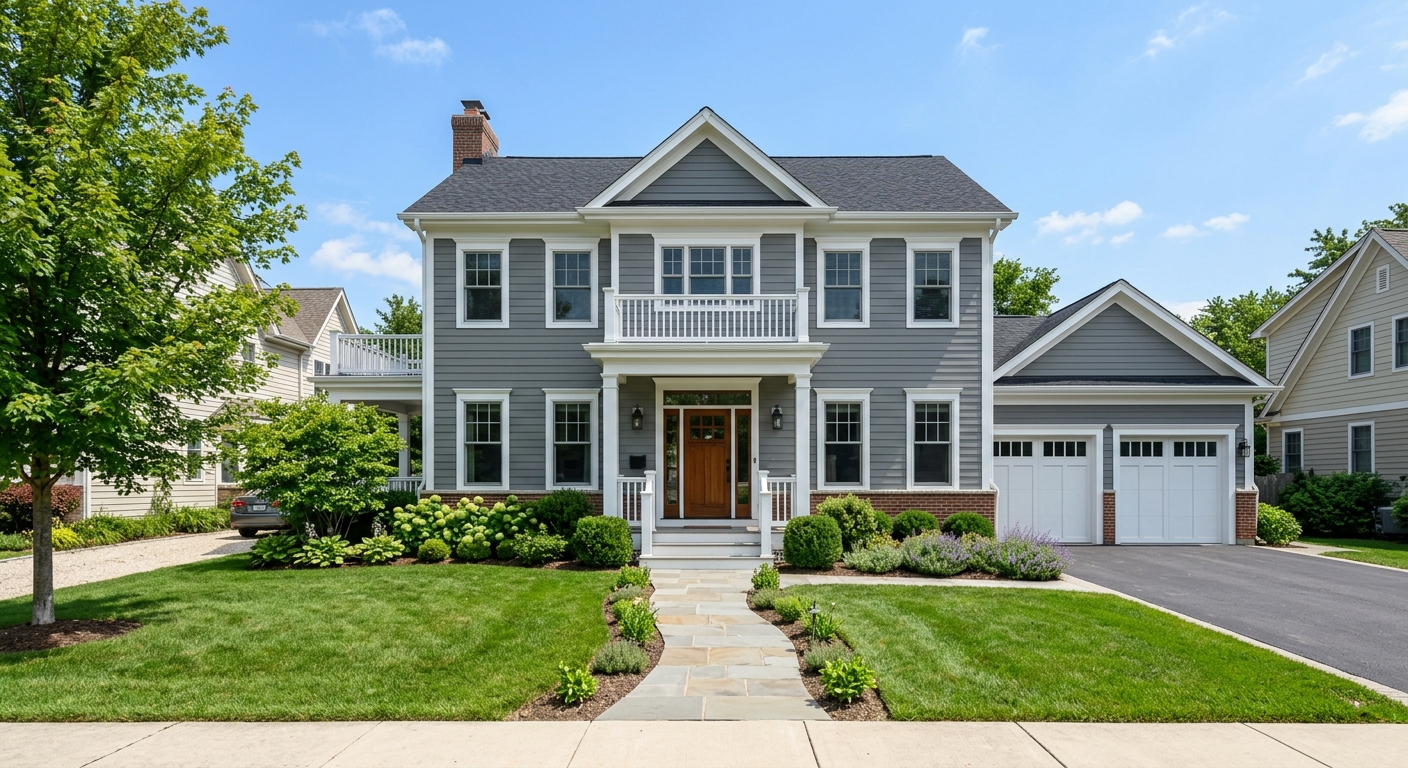
Painting options and costs in Rosemount
Rosemount is a small community in the Greater Toronto Area (Toronto economic region), and that local rhythm shows up in painting pricing and scheduling. With a 2021 population of 5,610 (Statistics Canada, 2021 Census), you’ll generally find fewer tradespeople available at short notice than in larger GTA centres—so timing matters, especially for exterior work. Housing age is another driver: Toronto’s older stock means more frequent repainting prep, including scraping, patching, caulking, and priming. If your home is from the pre-1980 era, contractors often plan extra time for layered finishes and, on some properties, lead-safe precautions are a standard professional practice before sanding or scraping.
In the GTA, exterior painting is tightly climate-dependent. Crews typically work from late May through June, then again from September to mid-October when temperatures stay above about 10°C for at least 24–48 hours and humidity is manageable. Peak demand during the best weeks can push exterior pricing about 10–15% higher in June–August compared to shoulder weeks. Interior projects are less season-sensitive, but labour still dominates—masking, stairwells, ceiling height, furniture protection, and the finish level you want (basic refresh versus premium colours) all affect cost.
Below is a realistic snapshot of what homeowners in Rosemount usually budget for common jobs, before we talk about the biggest price variables in the next section.
| Service |
What's Included |
Typical Duration |
Price Range |
| Interior — whole home (walls, ceilings, trim) |
Move/cover items, surface prep, patching, sanding, caulking, prime as needed, paint walls/ceilings, prime and paint trim; cleanup and protection removal |
5–12 days |
$1,800 – $6,000 |
| Interior — per room (standard bedroom or living room) |
Prep and protect, patch/sand, prime as needed, paint walls and one ceiling coat; basic trim touch-ups where included in scope |
2–4 days |
$400 – $1,400 |
| Exterior — full house (siding, trim, soffits) |
Power wash, scrape/sand, caulking, prime bare spots, paint siding/trim/soffits; weather checks; protected cleanup |
2–4 weeks (staged) |
$3,000 – $8,000 |
| Exterior — trim and accent colours only |
Prep localized areas, caulking, prime as needed, paint trim/rails/accents; excludes full siding repaint |
1–2 weeks (staged) |
$1,500 – $4,500 |
| Kitchen cabinet painting (doors, frames, spray finish) |
Degrease, light scuff sanding, repair/caulk as needed, prime and spray doors/frames, hardware off as required; reinstall and final cleanup |
5–10 days |
$1,200 – $4,000 |
| Specialty / faux finish (accent wall, texture) |
Surface prep, base coat, specialty material application and finishing, protective topcoat where required; assumes one feature area |
2–6 days |
$600 – $5,000 |
Prices are estimates only and vary by project scope, site access and material selection.
What affects the price of painting in Rosemount
In Rosemount and across the Toronto market, it’s normal to see the same general paint scope come in 30–50% apart. That spread usually isn’t because one contractor is “worse”—it’s because preparation and coating strategy (not paint colour) are where labour and material differences show up. Exterior jobs in the GTA are tightly bound to the climate season: late May to early October is when teams can reliably apply paint and get proper curing while temperatures remain above about 10°C and rain timing is workable. By comparison, coastal BC often has a longer workable window but higher humidity and persistent dampness, so product choices and anti-mildew measures can add cost. In Ontario, the constraint is more about frost, rain timing, and humidity spikes. When the ideal weeks are limited, scheduling pressure can add 10–15% to exterior budgets in June–August.
For older homes in the region, prep can be the biggest cost driver—scraping, sanding, caulking, priming, and addressing failing caulk or compromised wood often represent 50–70% of total labour on a repaint. If you’re starting with multiple paint layers, that labour multiplies. A simple example: homeowners sometimes choose a “standard” exterior quote around the lower end of the $1,500 – $8,000 exterior band by limiting scope to trim and accents; that’s often the difference between a quick refresh and a full house repaint that climbs toward the upper end due to siding prep.
On the interior side, the same principle applies—if patching and priming are extensive, interior refresh work can move from the $400 – $6,000 range toward the upper end quickly. In Rosemount, practical cost swings can also come from access (multi-storey ladders versus scaffolding/lifts), ceiling height, and how much drywall/plaster repair is required before topcoats. In short: the market price reflects prep time, not just paint.
| Price Factor |
Why It Matters |
Cost Impact |
| Surface prep — scraping, sanding, patching drywall or wood |
Adhesion and longevity depend on removing loose material and smoothing transitions. |
Often the largest labour swing; can account for 50–70% on repaints |
| Number of coats — 2-coat system over primer vs. 1 coat over existing |
Coverage and durability depend on whether old colour, stains, or bare substrate are sealed. |
May increase labour and materials by 20–40% |
| Paint quality tier — contractor-grade vs. premium (Benjamin Moore, Sherwin) |
Higher-tier paints often have better hide, durability, and washability, reducing rework. |
Typically modest per-litre cost, but can reduce total coats/spotting |
| Ceilings and trim — adds significant time vs. walls-only |
Trim edges and ceiling lines require careful cutting-in and masking; more surface areas. |
Can add 15–35% depending on room count and trim condition |
| Exterior season window — short season raises summer rates |
Limited ideal weather increases demand and can force staging around rain. |
Commonly adds 10–15% during June–August peaks |
| Lead-safe precautions — required for pre-1978 homes with lead paint |
Safety work slows removal of old coatings and increases containment/cleaning steps. |
Can add 10–25% if testing shows lead and protocols are required |
| Surface material — drywall vs. plaster vs. wood vs. stucco |
Different substrates require different priming and prep methods for adhesion. |
May add 5–20% depending on repairs and primer requirements |
| Height and access — multi-storey exterior requires scaffolding or lifts |
Safety equipment, time, and productivity change with access complexity. |
Can materially move the job toward the higher end of the exterior band |
Permits & regulations in Ontario
For painting in Ontario, you typically do not need a permit for standard interior or exterior painting of an existing home. The work is considered maintenance and finishing in most homeowner scenarios. Where you do need to be more careful is around older materials and safety practices.
For homes built before 1978, health guidelines recommend considering lead paint testing before sanding or scraping. If lead is present, contractors are expected to use lead-safe work practices such as wet methods to minimize dust, HEPA vacuuming, appropriate containment/cleanup, and proper disposal of debris. This isn’t typically something homeowners are “legally required” to do for a personal DIY repaint, but in professional contracting it’s standard practice for safety and responsible site management.
Also confirm your contractor carries liability insurance and has workers’ compensation coverage (WSIB/WCB) for anyone working on your property. Ask for certificates before work starts.
When you sign a contract, make sure it states (at a minimum) the paint brand/product line, sheen, number of coats, surface prep responsibilities (power washing, scraping, sanding, patching, caulking), and what’s included in final cleanup and disposal.
To verify credentials in Rosemount, start with the provincial contractor licensing registry (where applicable for the contractor’s business type and trade category), then request:
- Liability insurance certificate (confirm coverage limits and validity dates)
- WSIB/WCB account status or clearance documentation (ask for proof)
- A written proposal/contract with specific materials and scope wording
Interior vs exterior painting — getting the best result in Rosemount
In Rosemount’s Ontario climate, a long-lasting paint job comes down to two things: correct surface prep and the right coating system for conditions. A premature failure—peeling, blistering, or rapid fading—usually isn’t caused by “bad paint.” It’s typically caused by skipping prep steps, painting over contaminants, or using the wrong primer/coating combination for the substrate and weather timing.
For interiors, topcoat brand matters less than prep. The difference between a refresh that looks great for years versus one that scuffs or shows flashing is proper filling, sanding, caulking, and priming. If you’re repainting after patching, you need a primer step for drywall/plaster repairs; otherwise, you’ll often see uneven sheen or staining telegraphing through. Sheen choice also matters: flat finishes help hide wall imperfections, eggshell is a common “happy middle” for many living areas, satin is popular for hallways and bedrooms, and semi-gloss is often used for trims and doors because it resists scuffs and is easier to clean. Two coats over a suitable primer generally outlasts one thick coat because coverage and uniform film build are more consistent.
For exteriors in the GTA, prep is critical: power washing, removing failing paint, sanding edges, and caulking at appropriate stages to prevent water ingress. Primer selection depends on substrate and prior coatings. In Ontario, you want a system that handles temperature changes, rain timing, and curing requirements during the limited late-May-to-October window. Unlike coastal BC’s year-round dampness concerns, the GTA’s failures are more often driven by moisture exposure during application and freeze-thaw risk if work is rushed or materials haven’t cured.
Cabinet painting is the budget alternative to replacement—done right, it can deliver a “new kitchen” look without the full labour of demo and rebuild. For pre-1978 homes, any scraping/sanding should follow lead-safe practices to protect occupants and workers.
Dollar example: on a typical full exterior repaint, moving from a “minimal prep” approach to proper scraping, priming bare wood, and full caulking can be the difference between a lower-end budget and the upper range—often justified because it prevents rework within a few seasons.
| Project Type |
Key Prep Step |
Recommended Coats |
Price Band |
| Interior — fresh drywall (new construction) |
Prime and seal new drywall thoroughly before colour |
2 coats of topcoat (typically with primer/sealer as required) |
$1,500 – $6,000 |
| Interior — repaint (good condition, no repairs) |
Light scuff/sand and spot prime any marks or stained areas |
2 coats of topcoat |
$400 – $3,000 |
| Interior — repaint (patching and priming needed) |
Fill/sand patches and prime repaired areas to even out absorption |
2 coats of topcoat (with primer on repairs) |
$1,200 – $6,000 |
| Exterior siding (wood or fibre cement) |
Scrape failing paint, sand, wash, and prime exposed substrate; caulk cracks |
2 coats over a proper primer system |
$3,000 – $8,000 |
| Exterior trim and accents only |
Prep localized areas and spot-prime bare wood/metals |
2 coats in most cases |
$1,500 – $4,500 |
| Kitchen cabinets (spray finish) |
Degrease, scuff sand, and seal before spray application |
2–3 coats depending on primer/sealer and coverage |
$1,200 – $4,000 |
How to choose a painting contractor in Rosemount
Choosing the right contractor in Rosemount comes down to proof and process. First, verify Ontario requirements and work coverage. Request the contractor’s liability insurance certificate (it should list your address/coverage details as appropriate) and confirm workers are covered with WSIB/WCB. To check insurance, look for the insurer name, policy number, effective dates, and coverage limits. For WSIB/WCB, ask for clearance or account proof directly from the contractor before they begin work—don’t rely on verbal confirmation. If you’re working with a subcontractor, ask who is insured and who is responsible for site safety.
Next, get 2–3 itemised written quotes—not a single lump sum. A good quote breaks out labour (prep steps, masking, sanding, caulking, cleanup) and materials (primer type, paint brand/product line, number of coats). Read the exclusions: is permit pulling included (most painting doesn’t require it), is lead-safe work included if applicable, and is disposal included? Make sure the quote spells out surface prep specifics like power washing, scraping/sanding extent, drywall repair allowances, and caulking responsibilities.
Warranty matters too. Ask for the workmanship warranty length (how long they stand behind adhesion and workmanship), whether product/manufacturer warranty is separate, and if it transfers to you as the homeowner. For payment scheduling, plan to never pay more than 10–15% upfront; hold back a portion until the job is complete and reviewed. Finally, get a written start date and a realistic completion estimate that accounts for weather windows—especially for exterior work in Ontario.
- Ask who will do prep and how they handle failed caulk and peeling edges on exteriors.
- Confirm liability insurance certificate details and effective dates.
- Confirm WSIB/WCB coverage with clearance proof.
- Ensure quotes list paint brands/lines and sheens (not just “paint”).
- Check that number of coats is stated for each surface.
- Verify primer requirements are included (especially for repairs and bare substrate).
- Confirm caulking is included and where it will be applied.
- Ask how they protect landscaping, windows, and walkways during exterior prep.
- Confirm disposal and waste handling are included in the quote.
- Require a workmanship warranty in writing before paying the majority.
- Use a payment schedule with a holdback until punch-list items are complete.
- Get start/completion timing in writing, with weather contingencies for exterior work.
Red flags in Rosemount include: quotes that avoid describing prep steps (especially scraping/sanding/caulking), no proof of WSIB/WCB or liability insurance, “we’ll paint over anything” wording for flaking surfaces, warranties that aren’t written or are limited to “materials only,” and payment terms demanding more than 15% upfront without a signed contract and schedule.
Frequently asked questions — painting in Rosemount
How do I prep walls before painting?
For Rosemount homeowners, the safest way to start is to prep based on the wall condition—paint doesn’t stick well to dust, grease, or loose material. Begin by cleaning: wash greasy areas (kitchens and near doors) and let everything dry fully. Scrape and sand any peeling paint, then wipe dust off so primer can bond properly. Fill holes and cracks with a proper patch compound, sand smooth, and spot-prime repairs so the new texture doesn’t “flash.” If you’re repainting over glossy surfaces, scuff-sand lightly to degloss. Finally, caulk gaps where walls meet trim. If your walls are from older Toronto-era construction, ask your contractor to discuss testing/safety if you suspect lead paint before sanding or aggressive scraping.
Do I need to worry about lead paint in an older Rosemount home?
In Ontario, lead safety is especially relevant for homes built before 1978. For Rosemount properties that fit that era, health guidelines recommend considering lead paint testing before sanding or scraping because dust and chips are the main concern. If lead is present, professionals typically use lead-safe work practices such as wet methods, HEPA vacuuming, containment/cleanup, and correct disposal of waste—this is not a DIY “eyeball it” situation. As a homeowner, you can still ask questions: whether the contractor will test or assume the need for lead-safe precautions, how they’ll contain the area, and what cleanup standard they use. A lead-safe approach can add cost to the job, sometimes shifting it within the broader interior or exterior bands (for example, an exterior full repaint commonly budgets within the $1,500 – $8,000 range depending on prep and safety scope).
How long does it take to paint a house?
Timing depends on scope and prep, and in Rosemount the season matters most for exterior painting. Interior projects are often faster to schedule because they’re not reliant on outdoor temperatures; a whole-home interior repaint commonly takes about 5–12 days depending on the number of rooms, ceiling/trim workload, and how much patching is required. Exterior painting in the GTA usually runs late May through June, and again September to mid-October, when temperatures are above roughly 10°C and materials can cure during workable stretches. A full house exterior repaint can take 2–4 weeks because teams often stage work around weather, curing, and accessibility—not because they’re painting every day end-to-end.
What's the difference between paint quality tiers?
Paint quality tiers usually affect hide/coverage, durability, stain resistance, and how evenly the surface finishes after drying. Contractor-grade coatings can work well, but premium lines from brands like Benjamin Moore or Sherwin often provide better pigment load and smoother application, which can reduce spot touch-ups and help achieve an even sheen. In practice, a premium system can help when you’re repainting with tricky colour changes, dealing with patched drywall, or painting high-touch areas that need to be washable. The trade-off is that premium paint can cost more per litre, but overall project cost can stay within the same labour band because better coverage can mean fewer coats or fewer correcting visits. As a homeowner, focus on whether your quote specifies primer type and the number of coats—these are usually more important than the marketing name on the can.
How do I compare painting quotes?
To compare quotes in Rosemount, don’t just look at the total price. Ask for an itemised breakdown of labour and materials, including primer type, paint brand/product line, sheen, and how many coats are planned on each surface. Verify prep scope: power washing and scraping for exteriors, patching/sanding/caulking for interiors, and whether repairs beyond a basic allowance are covered. Confirm exclusions (disposal, lead-safe protocols if applicable, cabinet hardware removal, and any specialty finishing). A quote that lands at the low end can still be appropriate, but only if prep is realistic. For exterior work, you may see budgets within the broader $1,500 – $8,000 band; make sure the lower number isn’t simply “trim-only” dressed up as a full job. Finally, insist on a written timeline and a workmanship warranty.
What paint sheen should I use in different rooms?
In Ontario homes, sheen is both aesthetic and practical. Flat (or matte) finishes can hide wall imperfections well, making them common for low-traffic areas like bedrooms, but they’re less scuff-resistant. Eggshel l is a popular choice for living rooms and hallways because it balances washability with a soft look. Satin is typically better for higher-traffic areas and families with kids because it cleans more easily without looking overly shiny. Semi-gloss is often best for trim, doors, and cabinets because it stands up to cleaning and highlights crisp edges. If you’re repainting over repairs, the sheen choice won’t fix uneven texture—proper priming and sanding are still required for a uniform look.