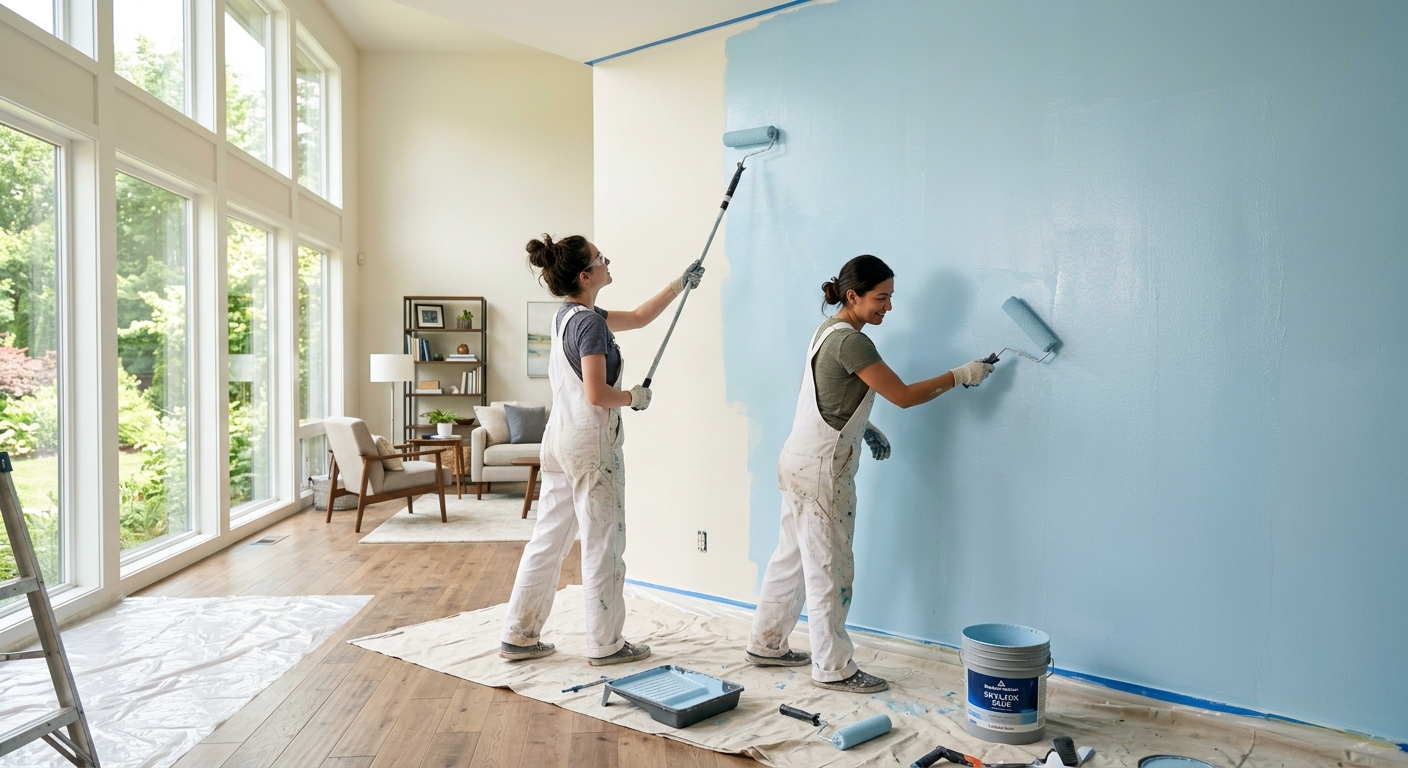
Painting options and costs in Preston Centre
In Preston Centre, choosing the right painting option usually comes down to surface prep, finish level, and how your home’s age meets Ontario’s weather. With a population of 10,441 (Statistics Canada, 2021 Census), the local demand is steady, and contractors focus schedules to fit the limited, workable weeks outdoors. Many homes in the wider Toronto area date back to the pre-1980 era, and that typically means more scraping, caulking, sanding, patching, and priming—especially around window trim, soffits, and any areas that have been repainted multiple times.
Toronto-area exterior work is tightly climate-bound. Contractors commonly plan exterior painting from late May through June and again in September to mid-October when temperatures stay above about 10°C for at least a day or two, and humidity is manageable so coatings can cure and adhere properly. Because peak season is competitive, June–August can push pricing 10–15% higher even for comparable scope. Interior work is less season-sensitive year-round, but labour still drives cost: ceiling height, stairwells, how much furniture protection is needed, and whether you want basic coverage or a smoother, premium look.
In Preston Centre, repainting is especially common along the main commercial stretches and nearby residential pockets where landlords and growing families turn over units and keep exteriors fresh—so expect good availability for interior projects and faster booking for exterior work. Use the table below to compare typical service bundles and durations before you request itemised quotes.
| Service |
What's Included |
Typical Duration |
Price Range |
| Interior — whole home (walls, ceilings, trim) |
Move-in/move-out style masking, patching, sanding, priming where needed, 2-coat wall system, ceiling coat, caulking at trim gaps, clean-up and debris disposal |
4–10 days |
$3,000–$6,000 |
| Interior — per room (standard bedroom or living room) |
Masking, patching and sanding, spot priming, 2-coat walls, one ceiling coat, basic trim touch-ups (light caulking if required) |
1–3 days |
$600–$2,000 |
| Exterior — full house (siding, trim, soffits) |
Power wash, scrape/sand, caulking, spot repairs, primer system for bare/repairs, 2-coat exterior paint, back-rolling/edge work, ladder safety, clean-up |
7–20 days (seasonal scheduling) |
$4,500–$8,000 |
| Exterior — trim and accent colours only |
Prep of trim surfaces, caulking, sanding/spot priming, 2-coat trim paint, careful masking to protect siding/stonework |
3–8 days |
$1,800–$4,500 |
| Kitchen cabinet painting (doors, frames, spray finish) |
Degrease and decontamination, light sanding, repairs, bonding primer, spray-finish topcoat, hardware masking/labeling, re-install or re-hang |
5–12 days (including cure/return) |
$2,200–$4,000 |
| Specialty / faux finish (accent wall, texture) |
Surface smoothing and priming, texture application or decorative finish, protective topcoat (as specified), detailed clean-up |
1–5 days |
$900–$3,500 |
Prices are estimates only and vary by project scope, site access and material selection.
What affects the price of painting in Preston Centre
In Preston Centre and across the Toronto economic region, you can see the same “paint the walls” job land 30–50% apart between quotes. The difference is rarely the paint alone—it’s preparation, labour time, access conditions, and how many coats and specialty materials your home actually needs. Even within Ontario, contractors price risk differently: older surfaces can hide adhesion problems, and weather-driven exterior curing can compress scheduling into fewer ideal days.
For exterior work, the season in this region is tightly climate-bound. Exterior painting in Ontario typically runs roughly late May to early October when temperatures stay above about 10°C and are rising during application. Unlike coastal BC—where persistent dampness and mildew risk can force different coating choices—the GTA’s main hazards are frost, rain, and humidity spikes. In practice, those constraints mean fewer “ideal” weeks, so June–August can trend higher by 10–15%. Add to that older housing stock and you often see prep become the biggest cost driver; on repaints, surface prep can be 50–70% of total labour due to scraping, caulking, sanding, and priming across multiple paint layers.
Concrete examples from Preston Centre projects: (1) a pre-1980 bungalow with cracked trim caulk and peeling sections can push an exterior repaint from the lower band toward the higher end—often moving you within the $1,500–$8,000 regional exterior range depending on repair volume; (2) a tidy interior with minimal scuffs may fit the lower interior band, while a home needing heavy patching and priming can climb toward the top of interior pricing like $400–$6,000; (3) multi-storey elevations or dense landscaping raise access time because we rely more on lifts and careful perimeter protection. If you want the best value, ask your contractor to spell out the exact prep and coat plan so you can compare apples to apples.
| Price Factor |
Why It Matters |
Cost Impact |
| Surface prep — scraping, sanding, patching drywall or wood |
Determines adhesion and how long the coating lasts; labour-heavy on older layers |
High; often the biggest portion on repaints |
| Number of coats — 2-coat system over primer vs. 1 coat over existing |
Coverage and uniformity; thin coats over poor prep fail sooner |
Medium–High; can shift pricing by thousands on large jobs |
| Paint quality tier — contractor-grade vs. premium (Benjamin Moore, Sherwin) |
Workability, durability, colour stability and hide; premium often covers better |
Medium; materials cost changes, labour may also change |
| Ceilings and trim — adds significant time vs. walls-only |
More cutting-in time, masking, and detail work |
High for whole-home projects |
| Exterior season window — short season raises summer rates |
Scheduling pressure affects availability and crew planning |
Medium–High in June–August |
| Lead-safe precautions — required for pre-1978 homes with lead paint |
Special controls can be necessary if lead paint is identified or suspected on trim |
Medium; adds steps, containment, and disposal costs |
| Surface material — drywall vs. plaster vs. wood vs. stucco |
Different adhesion needs; plaster may require different smoothing and priming |
Medium; affects primer and prep time |
| Height and access — multi-storey exterior requires scaffolding or lifts |
Increases labour time, safety, and material staging |
High where access is difficult |
Permits & regulations in Ontario
In Ontario, painting generally does not require a permit for typical interior or exterior repainting. The main “regulatory” considerations are health and safety practices—especially for older homes—plus standard requirements for a professional contractor’s insurance and workers’ compensation coverage.
For homes built before 1978, health guidelines recommend testing for lead paint before sanding or scraping. If lead is present, lead-safe work practices are the standard approach professional crews follow: wet methods to reduce dust, HEPA vacuuming, sealed containment when needed, and proper disposal of debris and materials. This isn’t typically a homeowner self-permit step, but it is what responsible contractors plan for when prep involves scraping, sanding, or removing existing paint.
Also confirm the contractor carries liability insurance and has WSIB (workers’ compensation) coverage for employees. Get a written contract that clearly lists the paint brand and sheen (flat/eggshell/satin, etc.), number of coats, surface prep scope (what gets primed and where), and exclusions like furniture moving, lead testing responsibility, and disposal.
To verify coverage in Preston Centre, homeowners should (1) request their Certificate of Insurance showing liability limits, (2) ask for WSIB clearance or documentation, and (3) review the contract before work starts. For licensing, confirm the contractor’s registration or applicable credentials where required for business operations, then compare the certificate details to the company name on the proposal and invoice.
Interior vs exterior painting — getting the best result in Preston Centre
The difference between a durable paint job and a premature failure in Preston Centre usually comes down to prep quality, correct coating selection, and timing. For interiors, you can often choose less-expensive topcoats and still get good results if patching, sanding, and priming are done properly. Filling and sanding nail holes and patch areas, then priming spots before rolling, prevents flashing and uneven sheen. Sheen matters too: flat hides wall imperfections but scuffs more; eggshell is a common choice for living rooms and bedrooms; satin or semi-gloss works better on trim and higher-touch areas because it cleans easier.
For exteriors, the coating system is only as strong as the surface prep. Caulking before painting is critical to prevent water ingress and keep gaps from telegraphing through the paint later. Primer choice depends on substrate condition: bare wood, stained areas, chalky surfaces, and repairs typically need targeted bonding and stain-blocking primer. While BC often pushes mildew-resistant products due to persistent dampness, and Alberta has its own extremes, Ontario’s reality is frost, rain, and humidity spikes—so cure time and weather windows are part of “product choice.”
Cabinet painting is a budget-friendly alternative to replacement when the existing boxes are solid. You’ll pay for prep (degreasing, sanding and priming) and for the finish system, but it’s often still far less than full cabinet replacement and can deliver a clean, updated look.
Example: if an exterior full-house repaint starts near the $4,500–$8,000 band, and you’re deciding between “minimal scrape and paint” versus thorough prep with caulking and proper priming, the higher-prep approach is usually justified. It’s the same principle as interior patch jobs: you’re paying to fix the root cause, not just colour over it.
| Project Type |
Key Prep Step |
Recommended Coats |
Price Band |
| Interior — fresh drywall (new construction) |
Prime all drywall (including patch seams) to ensure uniform absorption |
Primer + 2 topcoats (walls), 2 coats on ceilings where needed |
$1,200–$3,500 |
| Interior — repaint (good condition, no repairs) |
Clean and lightly scuff sand; spot prime any marks or stains |
1–2 topcoats depending on coverage; typically 2 for colour change or high-hide needs |
$600–$2,800 |
| Interior — repaint (patching and priming needed) |
Patch, sand, and prime all repaired areas to prevent flashing |
2 topcoats after spot/area priming |
$900–$4,000 |
| Exterior siding (wood or fibre cement) |
Scrape/sand failing edges, power wash, caulk where required, prime repairs |
Primer on bare/repairs + 2 exterior coats (system build) |
$4,500–$8,000 |
| Exterior trim and accents only |
Mask carefully; remove loose paint, sand feather edges, caulk gaps |
Spot prime + 2 trim coats |
$1,800–$4,500 |
| Kitchen cabinets (spray finish) |
Degrease, decontaminate, bond prime, sand between steps for adhesion |
Bond primer + 2 topcoat coats (spray system) |
$2,200–$4,000 |
How to choose a painting contractor in Preston Centre
Choosing the right painting contractor in Preston Centre is mostly about verifying coverage, getting a clear scope, and matching the quote to your actual surface conditions. Start with Ontario requirements you can check immediately: ask for liability insurance and proof that employees are covered by WSIB for their work. If the contractor is “self-contained” with no documentation, that risk lands on you.
Next, request 2–3 itemised written quotes. I recommend you avoid lump-sum-only proposals; ask for a breakdown by labour and materials (prep, primer, topcoat, disposal, and any specialty products). Also read what’s excluded: furniture moving, lead-safe procedures, trim removal, high-access scaffolding, and whether paint disposal and site clean-up are included.
Warranty is a big differentiator. Clarify the workmanship warranty length (and what it covers), the manufacturer warranty for materials, and whether the product warranty is transferable to future owners. For payment, never allow more than about 10–15% upfront; hold back a meaningful portion until the job is complete and you’ve reviewed touch-ups.
Finally, get start date and completion estimate in writing. For exterior work, timing matters in the GTA: contractors need consistent days above roughly 10°C for proper curing, and a written timeline prevents “weather excuses” from turning into long delays.
- Request WSIB coverage documentation and confirm it matches the company named on the quote.
- Request a current Certificate of Insurance for liability and verify the limits are appropriate for your job size.
- Insist on an itemised scope: what gets scraped, sanded, patched, caulked, and primed.
- Ask how many coats of primer and topcoat are planned, and whether repairs get primer before paint.
- Confirm paint brand and sheen (flat/eggshell/satin/semi-gloss) for every room/area.
- Check prep exclusions: lead testing responsibility, furniture moving, floor protection standards.
- Confirm disposal and clean-up: is debris hauled away and are areas left broom-clean?
- Review scheduling: does the quote account for weather windows for exterior work in Ontario?
- Ask what happens if rain or humidity spikes before curing is complete (recoat vs. reschedule).
- Get a written workmanship warranty statement with coverage and claim steps.
- Agree on a payment schedule (small deposit, then progress payments, final holdback after walkthrough).
- Ensure your contract includes colour selection timing and rework rules if colours are changed midstream.
Red flags I see around Preston Centre: contractors who won’t provide proof of WSIB/insurance, quotes that skip the actual prep scope (“just paint it”), no mention of primer/coat counts, promises to paint exterior in poor weather without cure considerations, and payment terms asking for large upfront deposits. If any of these appear, slow down and request clarification before signing.
Frequently asked questions — painting in Preston Centre
What paint sheen should I use in different rooms?
In Preston Centre homes, sheen is about balancing appearance with cleanability in a Toronto climate where dust and humidity can affect how marks show. For ceilings, most people use flat or ceiling-specific matte because it hides imperfections. For bedrooms and living rooms, eggshell is a practical middle ground—so it doesn’t look too shiny but still wipes better than flat. Kitchens and hallways often benefit from satin for walls because it handles fingerprints and frequent cleaning. Trim and doors typically look best with semi-gloss (or a durable interior trim satin depending on the product), since it resists scuffs. If your budget is tight, keeping the correct sheen by room usually delivers more visible value than chasing the most expensive brand.
Can I paint my house exterior in spring or fall in Preston Centre?
Yes, and fall can actually be a great window in Ontario if temperatures stay consistent long enough for curing. In the Toronto region, exterior contractors usually target late May through June and then September to mid-October, because crews need workable weather—typically temperatures above about 10°C for at least 24–48 hours after application. Spring is workable when freeze-thaw risk is done, but rain and humidity swings can delay curing and require rescheduling. Fall success depends on the forecast and how quickly nights drop; a crew that rushes can lead to soft film or premature peeling. If you’re comparing quotes, know that exterior pricing can rise in June–August due to demand, so a well-timed fall job can sometimes land closer to the lower side of the exterior band (often within the $1,500–$8,000 range depending on prep and height).
How do I choose a painting contractor in Preston Centre?
Start with verification: in Ontario, you should receive proof of liability insurance and workers’ compensation coverage (WSIB) for the contractor’s employees. Then compare quotes based on scope, not just totals. Ask for itemised labour and materials, including what gets scraped, sanded, patched, caulked, and primed, and the planned number of coats. Confirm brand and sheen selections. For older Preston Centre homes (commonly pre-1978 in the region), ask how they handle lead-safe precautions if lead paint is present on trim or railings—this affects prep steps and clean-up. Finally, require a written contract, a clear start date and completion estimate, and a workmanship warranty. A credible contractor will talk through the quote line by line instead of trying to steer you toward a quick close.
How many coats does an exterior repaint need in Preston Centre?
Most exterior repaints in Preston Centre end up being a “system” of primer plus two topcoats, but the exact plan depends on substrate condition. If you’re painting over previously sound paint with no major repairs, you may still see two topcoats for even coverage and durability. Where there’s bare wood, failed areas, or heavy sanding through to older surfaces, primer (and sometimes stain-blocking primer for affected spots) is essential before the finish layers. Cracks or gaps should be caulked during prep so the coating isn’t forced to bridge movement. In the GTA climate, curing time is part of the equation; ideal weather windows are short, so two coats done correctly during a workable period help prevent early adhesion failures. For budgeting, exterior jobs commonly land in the regional exterior band of $1,500–$8,000 depending on prep volume and height/access.
What is the best primer for older Preston Centre homes?
For older homes in Ontario, there isn’t one single “best” primer—it’s a best-by-substrate decision. Pre-1978 properties in the region often have multiple paint layers and may have areas with chalking, staining, or bare wood where old coatings have failed. In those cases, the prep plan usually dictates primer type: bonding primer for areas needing adhesion, a stain-blocking primer where tannins or water stains show through, and primer suited to drywall patches if you’re also doing exterior repairs at transitions. Also note lead-safe considerations: if lead paint is suspected on trim, pro crews typically use containment and HEPA vacuuming along with wet methods before sanding. A good contractor will tell you exactly which primer is planned for each material and why—rather than using one primer everywhere.
Should I paint or wallpaper my Preston Centre home?
For Preston Centre homes, the decision is mostly about wall condition, maintenance, and how much prep you’re willing to fund. If your walls have hairline cracks, patchy texture, or previous patchwork, painting is often easier and more reliable—proper filling, sanding, and priming can create a uniform surface for a long-lasting finish. Wallpaper can look amazing, but it demands even surfaces and careful seam alignment; textured walls and recurring repairs often increase labour and can shorten wallpaper lifespan. Bathrooms and kitchens are tricky because humidity affects adhesives and edges—paint systems can be easier to keep consistent. If your goal is a simple refresh and you’re working within interior ranges like $400–$6,000, painting is usually the more predictable value. Wallpaper can be worth it for a single accent wall when the prep is solid and you want a designer look.