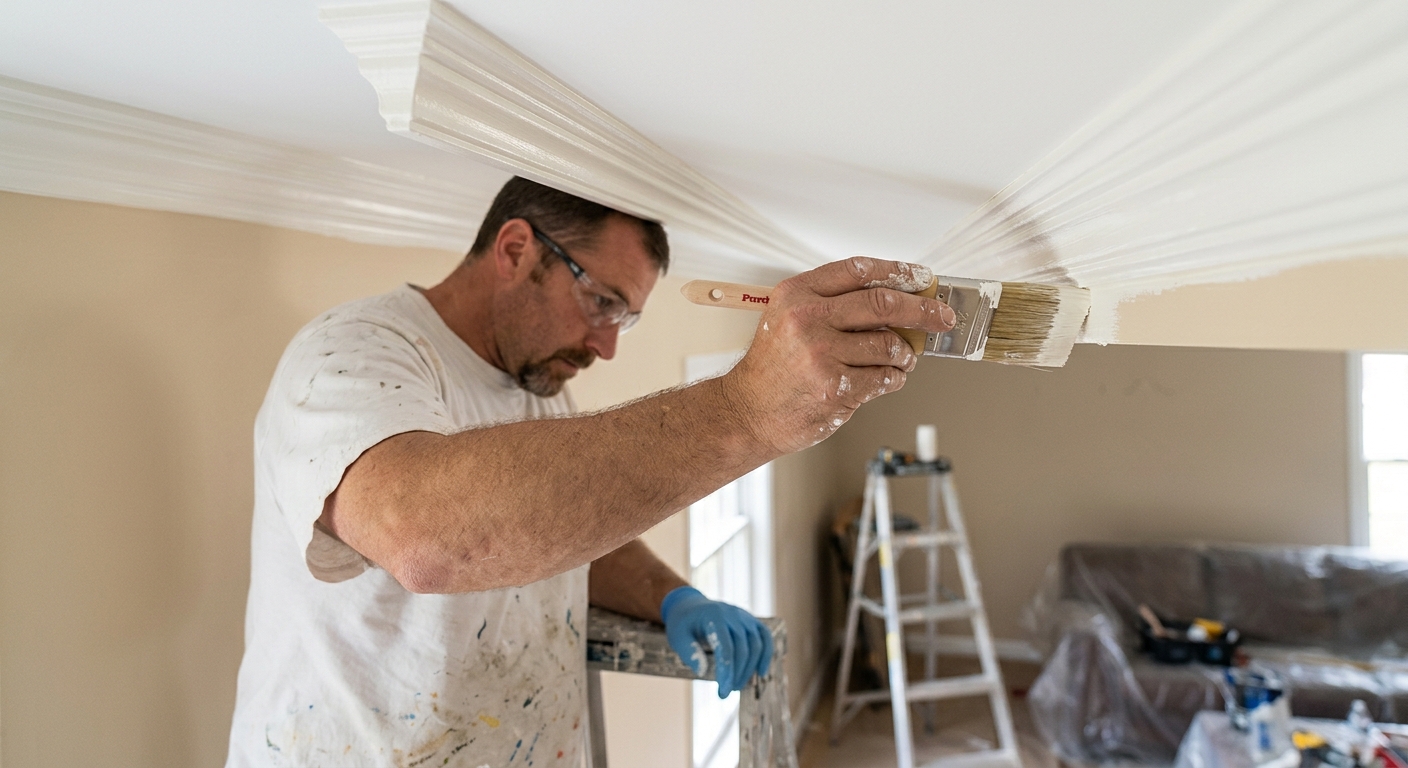
Painting options and costs in Brooklin
Painting options in Brooklin range from quick interior refreshes to full exterior repaints, and the total cost usually comes down to prep time, coating system, and how tight the weather window is. Brooklin’s housing stock includes many older properties—In the Toronto economic region, the 2021 Census counted a population of 25,000 in Brooklin (Statistics Canada, 2021 Census)—and older homes often need more scraping, caulking, and priming before paint can last. Where homes are pre-1978, contractors typically treat sanding and scraping as a potential lead-dust risk and use lead-safe work practices even though homeowner testing isn’t mandated by Ontario rules.
In the GTA, exterior painting is strongly influenced by short, climate-dependent weeks. Contractors typically aim for late May through June and again September to mid-October, when temperatures stay above about 10°C for proper adhesion and curing and humidity doesn’t spike. In June–August, peak demand can push exterior pricing up roughly 10–15% compared with shoulder-season weeks. Interior work is more flexible year-round, so scheduling is usually less constrained and labour becomes the main driver—especially with ceilings, stairwells, and trim.
In Brooklin’s established residential areas—such as around Rossland Rd and the broader commuter neighbourhoods—exterior projects are especially in demand because homeowners want to lock in a durable finish before the first colder rain events. Below is a practical comparison of common services so you can translate a quote into scope.
| Service |
What's Included |
Typical Duration |
Price Range |
| Interior — whole home (walls, ceilings, trim) |
Move/cover furniture as agreed, prep/fill/sand, caulking, prime as needed, 2-coat system, mask/protect floors and fixtures, clean-up |
5–14 business days |
$1,800 – $6,000 |
| Interior — per room (standard bedroom or living room) |
Prep/fill small defects, sand, prime as required, 2-coat finish on walls and trim, patching of minor nicks |
1–3 business days |
$400 – $1,500 |
| Exterior — full house (siding, trim, soffits) |
Pressure washing/cleaning as appropriate, scrape/sand, caulk, prime bare/failed areas, 2-coat exterior system, protect landscaping and windows, final clean-up |
6–18 business days |
$3,500 – $8,000 |
| Exterior — trim and accent colours only |
Spot prep on failing areas, prime as needed, 2-coat finish on trim/selected elements, protection and clean-up |
3–8 business days |
$1,500 – $4,500 |
| Kitchen cabinet painting (doors, frames, spray finish) |
Full cleaning/degreasing, disassembly where possible, sanding and deglossing, bonding primer, spray or brushed finish, hardware masking/reambalignment, re-install |
5–15 business days (including dry times) |
$2,000 – $4,000 |
| Specialty / faux finish (accent wall, texture) |
Surface prep to a smooth baseline or texture basecoat, custom technique, protective topcoat as required, design coordination where needed |
2–7 business days |
$900 – $3,500 |
Prices are estimates only and vary by project scope, site access and material selection.
What affects the price of painting in Brooklin
It’s common to see the “same” interior or exterior repaint come in 30–50% apart across Toronto and Ontario, even when the square footage looks similar. The reason is that a quote isn’t just paint—it’s preparation, labour scheduling, coating systems, and how much complexity your home adds. A contractor using a true 2-coat system over proper primer can cost more on paper than a lower bid that cuts corners on prep, coverage, or coats; the trade-off shows up as peeling, flashing, or faster wear.
Exterior work in the GTA is tightly seasonal. In Ontario and Alberta, the window for exterior work typically runs roughly late May to early October, with temperatures above about 10°C and rising during application. That means job availability concentrates into a short period, and peak scheduling in June–August can push exterior pricing 10–15% higher than shoulder-season work. Coastal BC may have longer windows, but dampness and mildew risk often demand extra product choices and careful timing.
Brooklin’s older housing mix also matters. For many repaints, surface preparation can be 50–70% of total labour—scraping failed paint, sanding edges, patching wood or drywall, and caulking before coating. If your home is closer to the exterior price band (for example, $1,500 – $8,000 for exterior), heavy prep can swing you toward the upper end; if walls are intact and only require touch-ups, you may stay nearer the lower half. On interiors, ceiling height, trim detail and the amount of priming needed can swing the job from the mid interior band (for example, $400 – $6,000) to a whole-home cost that’s driven by labour rather than paint cost.
Concrete examples in Brooklin: a pre-1980 exterior with multiple paint layers often needs more labour than a newer build; a multi-storey home may require scaffolding or lifts; and homes with lots of trim—fascia, soffits, window casings—tend to cost more because detail surfaces demand more masking and careful cutting-in.
| Price Factor |
Why It Matters |
Cost Impact |
| Surface prep — scraping, sanding, patching drywall or wood |
Prep determines adhesion; failed coating must be removed and edges feathered |
Often +20% to +60% on repaints (can be the biggest swing) |
| Number of coats — 2-coat system over primer vs. 1 coat over existing |
Proper coverage and hide require a correct coat schedule |
Typical range shift: +10% to +25% |
| Paint quality tier — contractor-grade vs. premium (Benjamin Moore, Sherwin) |
Higher-end coatings can improve coverage, durability, and colour stability |
Materials +5% to +15%, sometimes offset by fewer issues |
| Ceilings and trim — adds significant time vs. walls-only |
Cutting-in, masking and multiple surfaces increase labour |
Commonly +15% to +40% |
| Exterior season window — short season raises summer rates |
Limited “ideal” weeks concentrates demand and impacts availability |
Often +10% to +15% in June–August |
| Lead-safe precautions — required for pre-1978 homes with lead paint |
Safe containment and cleaning add time and materials when lead is present |
Can add +5% to +20% depending on extent |
| Surface material — drywall vs. plaster vs. wood vs. stucco |
Different substrates need different primers and prep methods |
Can shift +10% to +30% |
| Height and access — multi-storey exterior requires scaffolding or lifts |
Access changes safety planning, setup time, and drying logistics |
Often +15% to +45% |
Permits & regulations in Ontario
In Ontario, painting typically does not require a permit for standard interior or exterior painting work. Where professional contractors slow down, it’s usually because of health and safety practices—not municipal approvals. For homes built before 1978, health guidelines strongly recommend that sanding or scraping be preceded by lead paint testing and that lead-safe work practices are followed if lead is present (wet methods, HEPA vacuuming, proper containment, and disposal). This isn’t something a homeowner is legally required to do personally in every case, but it’s a standard expectation for reputable contractors when lead risk exists.
By comparison, permits are more likely to be required for work that changes building systems or structural elements—painting itself generally isn’t one of those triggers. What is “typically” required instead is documentation and safe work: contractors should confirm they carry liability insurance and WSIB/WCB coverage for their workers before starting. You should also insist on a written contract that clearly states paint brand and sheen, the number of coats, primer type, surface prep scope (scrape/sand/caulk/patch), and what’s included for protection and cleanup.
To verify coverage in Brooklin, ask for:
- Ontario licensing/registration details where applicable (and any contractor info they’re required to provide)
- Certificate of insurance (liability) naming you as certificate holder where appropriate
- WSIB/WCB clearance/coverage proof (ask for current confirmation)
- Written scope that aligns with the estimate (no “allowances” for major prep)
Interior vs exterior painting — getting the best result in Brooklin
In Brooklin, the difference between a long-lasting paint job and a premature failure is usually surface prep and the right coating system for Ontario’s freeze–thaw patterns, rain events, and seasonal humidity swings. For interior work, prep is more important than brand. Proper filling, sanding, and priming corrected before topcoating prevents flashing, peeling, and patchy sheen. Sheen choice also matters: flat or matte works well for lower-touch areas like ceilings, eggshell is a reliable wall choice for living rooms and bedrooms, satin is often better for family rooms and corridors, and semi-gloss is frequently used for trim and doors because it cleans easily. In practical terms, two coats over a proper primer consistently outlast one thick coat—especially in high-traffic areas where owners notice scuffs and uneven sheen first.
For exterior painting, your best insurance against Ontario weather is a meticulous prep sequence: clean properly, scrape loose material, feather edges, caulk the right joints before painting, and prime where bare or failed areas exist. Ontario’s conditions don’t demand “mildew-only” products like persistent coastal dampness, but humidity spikes and rain timing still affect how paint cures. Selecting primer and finish for the substrate matters—wood/fibre cement, trim, soffits, and any previously painted surfaces each behave differently. In pre-1978 homes, lead-safe precautions for sanding and scraping may be needed, which can add labour but protects your family and helps the job proceed safely.
Cabinet painting is where homeowners can save money while still getting a durable look. If replacing kitchen cabinets would be a full renovation, cabinet refinishing is often a budget alternative—commonly in the $2,000 – $4,000 band depending on number of doors/frames and finish level. That spend is typically justified when your cabinet boxes are sound and you’re investing in correct sanding/deglossing and a bonding primer; skipping prep here leads to peeling and cloudy finish.
| Project Type |
Key Prep Step |
Recommended Coats |
Price Band |
| Interior — fresh drywall (new construction) |
Seal/nail-hole fill, sand smooth, prime for uniform absorption |
1 primer + 2 topcoats |
$900 – $3,000 |
| Interior — repaint (good condition, no repairs) |
Degrease, scuff-sand sheen changes, spot-prime if needed |
1 coat spot-primer + 2 topcoats |
$400 – $2,200 |
| Interior — repaint (patching and priming needed) |
Patch, sand, feather, then prime repaired areas thoroughly |
2 primer/prime-pass areas + 2 topcoats overall |
$700 – $6,000 |
| Exterior siding (wood or fibre cement) |
Scrape failing paint, clean, caulk seams, prime bare/failed areas |
Primer as required + 2 finish coats |
$3,500 – $8,000 |
| Exterior trim and accents only |
Detail prep and feather sanding on trim edges; caulk before colour |
Spot-prime as required + 2 finish coats |
$1,500 – $4,500 |
| Kitchen cabinets (spray finish) |
Full degrease, sanding/deglossing, bonding primer prep |
Primer + 2 finish coats (typically sprayed for smoothness) |
$2,000 – $4,000 |
How to choose a painting contractor in Brooklin
Choosing the right painting contractor in Brooklin comes down to verifying coverage, comparing scope line-by-line, and ensuring the schedule is realistic for Ontario’s exterior season. First, confirm liability insurance: ask for a current certificate of insurance and verify it’s active for the project timeframe. Next, confirm workers’ compensation coverage—ask for proof of WSIB/WCB coverage before work starts and ensure it matches the company doing the painting (not a subcontractor you haven’t been told about). If the contractor is offering services that require specific registration, request the contractor details and confirm they’re valid for Ontario.
When requesting quotes, ask for 2–3 itemised estimates instead of a single lump sum. A useful quote separates labour and materials and lists surface prep (scrape/sand/patch/caulk/prime), coating system (primer type, paint brand and sheen), and clean-up/disposal. Scrutinize exclusions: are scaffolding/lifts included for a two-storey exterior? Is pressure washing included or treated as an add-on? Will they protect landscaping, floors, and windows properly? What’s the warranty length for workmanship, and is it tied to completion date?
For payments, never pay more than 10–15% upfront. Hold back part of the total until the job is complete and touch-ups are done. Finally, insist on a start date and estimated completion in writing—particularly for exterior projects that must align with those short late-spring and early-fall temperature/curing windows.
- Ask for liability insurance certificate (and verify dates/limits)
- Ask for WSIB/WCB coverage proof for the painting crew
- Request the full, itemised scope: prep, primers, coats, and sheen
- Confirm paint brand and product line (not “similar grade”)
- Clarify what’s included for caulking and spot priming
- Check whether pressure washing and disposal are included
- Ensure exterior timing aligns with rain-free curing windows
- Confirm how they protect landscaping, windows, and siding edges
- Verify warranty terms for workmanship (length and coverage)
- Ask about product/manufacturer warranty and whether it transfers to you
- Require a payment schedule (max 10–15% upfront; holdback on completion)
- Get start/completion dates in writing
Red flags I see in Brooklin include: no proof of WSIB/WCB or liability insurance; quotes that skip surface prep details (“paint over whatever is there”); unusually low bids that rely on fewer coats; no written contract with paint brands/sheens and the prep list; and pressure to take large deposits upfront or to pay before touch-ups and final cleanup.
Frequently asked questions — painting in Brooklin
Do I need to worry about lead paint in an older Brooklin home?
In Brooklin and across Ontario, lead paint is mainly a concern for homes built before 1978. If your home has older trim, windowsills, railings, or multi-layer paint, sanding and scraping can create lead dust if lead is present. Ontario doesn’t generally require a homeowner to complete lead testing in order to paint, but professional best practice is to test first and use lead-safe controls if results indicate lead. For contractors, that typically means containment, wet methods, HEPA vacuuming, and proper disposal. If you’re comparing quotes, look for explicit lead-safe language in the scope—especially if the work involves scraping, sanding, or dry removal on pre-1978 surfaces.
How long does it take to paint a house?
The timeline in Brooklin depends on scope and curing time, especially for exteriors. Interior whole-home work is often scheduled for 5 to 14 business days because prep, caulking, and multiple coats take time around occupancy. Exterior full-house painting typically takes 6 to 18 business days, but the calendar matters as much as the days on site. Contractors in the GTA usually aim late May through June and again September to mid-October when temperatures stay above about 10°C for proper application and curing. June–August demand can increase turnaround time. If you’re planning around a sale, ask your painter to put the start date, estimated completion, and rain contingencies in writing.
What's the difference between paint quality tiers?
Paint “tiers” usually reflect coverage, durability, and how consistently the finish looks after it cures. Premium coatings (often seen in brands like Benjamin Moore or Sherwin) typically provide better hide and longer-lasting scuff resistance, which can reduce patchiness and rework. Budget or contractor-grade paints can still perform well, but they may require more careful prep or extra coats to achieve the same appearance, especially on tricky transitions like stained spots, repaired drywall, or colour changes. In Brooklin, this matters because exterior work needs a stable application window—so using the correct coating system and not cutting corners on primer and coats is more important than the label alone. For example, exterior projects commonly land anywhere from $3,500 – $8,000 depending on prep and product system.
How do I compare painting quotes?
To compare quotes in Brooklin fairly, don’t just compare the total price—compare the scope. Ask each contractor to list labour and materials, including surface prep (scrape/sand/patch/caulk/prime), number of coats, and the exact paint brand and sheen. Confirm whether pressure washing is included for exteriors, whether scaffolding or lifts are included for multi-storey homes, and what’s excluded (like disposal, trim detail, or hardware removal). A good quote is specific about the system: primer type and when it’s applied, not just “2 coats.” If you see a quote near the interior range of $400 – $6,000, make sure one bid isn’t covering ceilings/trim while another isn’t. Finally, review warranty length and payment schedule—those can reveal quality differences quickly.
What paint sheen should I use in different rooms?
Sheen affects both appearance and how forgiving the walls are to cleaning and daily wear. For ceilings, flat or matte usually hides imperfections best. For most living spaces, eggshell is a popular balance—washable enough for everyday life without the glare of higher sheens. Satin is often ideal for hallways and family rooms where scuffs and frequent cleaning happen. Trim, doors, and railings are commonly finished with semi-gloss because it resists marks and wipes clean. In older Brooklin homes, walls may show uneven texture after sanding repairs, so using the right sheen plus proper priming helps prevent “flashing.” If you’re budgeting, remember that switching sheen choices doesn’t replace prep—cost differences within typical interior jobs ($400 – $6,000) are mainly prep and labour intensity.
Can I paint my house exterior in spring or fall in Brooklin?
Yes—spring and fall can be excellent in Brooklin if conditions stay workable. In the GTA, exterior painting is typically planned for late May through June and again September to mid-October because contractors need temperatures above about 10°C for proper adhesion and curing, plus moderate humidity. Fall can be great for avoiding peak summer pricing, but you still need enough dry, warm weather for the paint to set before early cold snaps and rain. Spring can work well too, as long as the surface is dry and temperatures are rising during application. Avoid painting when heavy rain is likely within the curing window. If you’re comparing exterior bids in the $1,500 – $8,000 band, ask how each contractor schedules weather-dependent steps like caulking, priming, and final topcoats.