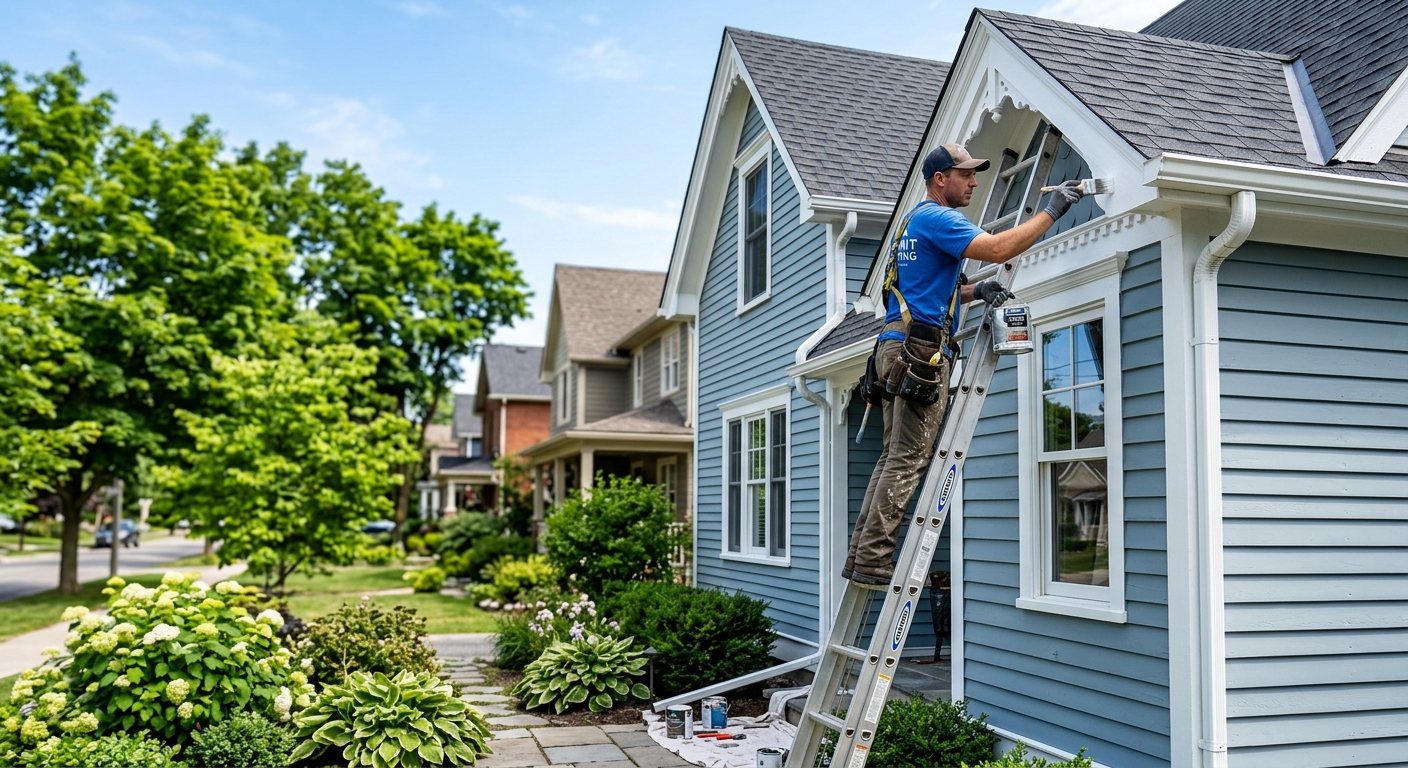
Painting options and costs in Beechborough-Greenbrook
In Beechborough-Greenbrook, Ontario, painting costs usually come down to two things: how much preparation your home needs and how tightly we can schedule the exterior season. For perspective, the community sits in a Toronto economic region where housing demand is steady; Beechborough-Greenbrook itself has a population of 6,577 (Statistics Canada, 2021 Census). That stable demand matters because contractors in the GTA often focus on the weeks when conditions support proper curing.
A lot of local homes are older, and in Toronto’s wider housing stock the pre-1980 style of construction is common—meaning more scraping, patching, caulking, and priming than homeowners expect. On top of that, homes built before the late 1970s may have lead paint on trim, windows, or railings; even when you’re not required to test as a homeowner, professionals plan for lead-safe methods to avoid contamination during sanding and scraping.
Cost is also shaped by our climate rhythm. Exterior work here is typically booked from late May through June and again from September to mid-October, when temperatures stay above roughly 10°C and humidity is moderate enough for adhesion and curing. In June–August, peak demand and the limited “ideal” weeks often push exterior pricing higher—so comparing options early is how you avoid paying for last-minute scheduling. If you’re in a more active demand pocket like the Church Street area in Beechborough-Greenbrook, it’s especially important to lock in prep details and timelines before the busy summer window.
Below is a practical starting point for budgeting, and what most local crews consider the “typical scope” for each service.
| Service |
What's Included |
Typical Duration |
Price Range |
| Interior — whole home (walls, ceilings, trim) |
Move/cover furniture, prep and patch, sand where needed, prime repairs, paint walls/ceilings, paint interior trim and doors (as specified) |
6–12 days |
$2,000–$6,000 |
| Interior — per room (standard bedroom or living room) |
Prep and patch, prime as needed, paint walls and one ceiling, basic cut-in along trim; excludes major repairs |
1–3 days |
$400–$1,800 |
| Exterior — full house (siding, trim, soffits) |
Power wash (or thorough cleaning), scrape/sand flaking areas, caulk selected joints, prime bare spots, paint siding, trim, fascia/soffits |
7–16 days (season-dependent) |
$3,500–$8,000 |
| Exterior — trim and accent colours only |
Selective prep on trim areas, caulk and prime bare wood/spot-priming, paint trim, doors, and specified accents |
3–8 days |
$1,500–$3,800 |
| Kitchen cabinet painting (doors, frames, spray finish) |
Hardware removal, heavy degrease, sanding/de-gloss, repairs as needed, primer and sprayed topcoat, reinstall hardware |
4–10 days (includes dry/cure time) |
$1,200–$4,000 |
| Specialty / faux finish (accent wall, texture) |
Surface prep for smooth adhesion, texture base or faux technique, multiple layers where required, protective topcoat |
2–6 days |
$300–$5,000 |
Prices are estimates only and vary by project scope, site access and material selection.
What affects the price of painting in Beechborough-Greenbrook
Even when homeowners pick the same “colour + sheen,” quotes in the Toronto region can differ by 30–50% because painting is mostly preparation, not just applying product. Labour pricing changes with the job’s time on site, the degree of patching and priming, and whether crews need extra tools like lifts or scaffolding. Material pricing also varies by coating tier, primer type, and how much product is required to achieve a consistent finish.
For exteriors, the GTA’s season is tightly climate-bound. In Ontario, crews generally work exterior surfaces when temperatures are above about 10°C for 24–48 hours and humidity is moderate—roughly late May to early October. Coastal BC may have a longer workable stretch, but persistent dampness pushes more mildew-resistant systems and careful scheduling; Alberta can have longer frost-free windows but temperature swings can complicate cure. In Beechborough-Greenbrook and nearby GTA communities, the shorter “ideal” window concentrates demand, so late-season bookings often come with higher rates. That’s why a full exterior can sit closer to the top of the $1,500–$8,000 band, especially in June–August.
Older homes across the Toronto area typically need more surface prep—scraping, caulking, sanding, and priming—often representing 50–70% of labour on a repainting job. For a repaint where the siding has blistering or failing caulk, that prep time can add hundreds to a few thousand dollars. For example, a repaint that’s “walls only” might land near the middle of the interior range ($400–$6,000), while the same home with trim, doors, and detailed patch work commonly pushes total labour up quickly.
Here are common Beechborough-Greenbrook examples that shift costs:
- Homes with multiple paint layers or peeling on older trim require more scraping and spot-priming than newer siding.
- Brick/siding transitions and window details need careful caulking and feathering; those small areas can consume surprising time.
- High-visibility trim lines (fascia, soffits, railings) often require more coats for uniform sheen, especially if the substrate was previously stained or mismatched.
| Price Factor |
Why It Matters |
Cost Impact |
| Surface prep — scraping, sanding, patching drywall or wood |
Adhesion and longevity depend on removing loose material and flattening defects |
Often the largest variable; can change the total by hundreds to thousands |
| Number of coats — 2-coat system over primer vs. 1 coat over existing |
Coverage and uniform sheen require correct layering, especially with repairs |
Typically adds 10–30% to labour and product on repaint work |
| Paint quality tier — contractor-grade vs. premium (Benjamin Moore, Sherwin) |
Higher-quality coatings can improve hide, durability, and washability |
Materials may rise, but reduced rework can offset; cost can shift 5–20% |
| Ceilings and trim — adds significant time vs. walls-only |
Cutting in, masking, and achieving crisp edges are labour-intensive |
Can add 20–40% for interiors when trim/doors are included |
| Exterior season window — short season raises summer rates |
Limited “ideal” weather compresses scheduling and increases demand |
Can push exterior pricing 10–15% higher during June–August |
| Lead-safe precautions — required for pre-1978 homes with lead paint |
Professional containment and clean-up adds time and materials if lead is present |
May add 5–25% depending on extent and surfaces involved |
| Surface material — drywall vs. plaster vs. wood vs. stucco |
Porosity and adhesion needs differ by substrate and existing coatings |
Primers and prep time can vary widely; often 10–30% |
| Height and access — multi-storey exterior requires scaffolding or lifts |
More safety set-up time and slower working speed |
Can add several hundred to over a thousand on typical homes |
Permits & regulations in Ontario
In Ontario, painting usually does not require a building permit. What does require attention is the type of surface work being done and the health precautions needed for older materials. For homes built before 1978, health guidance recommends testing for lead paint and using lead-safe work practices if lead is present—things like wet methods to control dust, HEPA vacuuming, and proper bagging/disposal. This is not automatically “a permit issue” for homeowners, but it’s standard practice for professional crews because sanding and scraping can create hazardous dust.
To be clear about what typically does not need a permit: interior wall/ceiling painting, trim painting, exterior repainting, caulking and repainting joints, and routine touch-ups generally fall outside permit requirements. What can trigger additional compliance is work that involves regulated hazards (like lead-containing coatings) or work affecting building safety—however, that’s usually handled through contractor procedures, not homeowner painting permits.
Step-by-step, here’s how you verify your contractor for a project in Beechborough-Greenbrook:
- Check the Ontario licence status (where applicable for the contractor’s business type) and confirm the company name matches the quote.
- Request a current Certificate of Insurance (liability) and verify the policy is active and covers your property.
- Request WSIB / WCB coverage documentation for employees and confirm coverage is active before work starts.
- Ask for a written contract that specifies paint brand/line, sheen, number of coats, prep steps (power wash, scrape/sand, caulk, primer), and what’s included/excluded.
Interior vs exterior painting — getting the best result in Beechborough-Greenbrook
In Beechborough-Greenbrook and the Toronto area, the difference between a long-lasting paint job and a premature failure is usually preparation, not the brand on the label. For interiors, surface prep comes first: patching dents and cracks, sanding high spots, cleaning residues, and priming repairs. Sheen selection matters by room—flat for low-touch ceiling surfaces, eggshell or satin for living spaces, and semi-gloss on trim and areas that need easier cleaning. The other rule that holds up locally: two coats over the right primer outlast one “thick” coat. If you’re repainting kitchens or bathrooms, we’ll also address moisture-resistance and adhesion because those spaces experience more temperature and humidity swings.
For exteriors, Ontario’s freeze-thaw cycle and rain exposure make caulking and prep non-negotiable. We scrape back to sound material, clean thoroughly, caulk joints before painting (so the seal is intact under the coating system), and use the correct primer for what we’re bonding to—different primers for wood, fibre cement, and masonry products. Even within Ontario, the “one product fits all” approach often fails because substrate and existing coatings vary. Unlike BC, where mildew and persistent dampness heavily influence product choices, the main GTA risks are rain timing and humidity spikes during the application season.
Kitchen cabinet painting can be a smart budget alternative to replacement. If your frames and boxes are solid, cabinet painting typically offers a big visual refresh for a fraction of full replacement. For example, a cabinet project might land closer to the $600–$4,000 trim/cabinet band, while replacement often reaches far higher once new hardware, installation, and disposal are counted.
For pre-1978 homes in Ontario, we also use lead-safe precautions on trim, windows, and railings because sanding can spread lead dust. That effort doesn’t look dramatic, but it protects occupants and helps avoid rework due to contaminated surfaces.
| Project Type |
Key Prep Step |
Recommended Coats |
Price Band |
| Interior — fresh drywall (new construction) |
Prime the drywall properly and sand any raised compound |
2 coats (plus primer as required) |
$1,000–$3,500 |
| Interior — repaint (good condition, no repairs) |
Clean/degloss, light sand, spot-prime if needed |
2 coats |
$400–$2,500 |
| Interior — repaint (patching and priming needed) |
Patch, sand, prime repairs and stains for uniform finish |
2 coats (often 3 where repairs/stains show) |
$800–$6,000 |
| Exterior siding (wood or fibre cement) |
Scrape/sand flaking areas, caulk selected joints, prime bare spots |
2 coats (primer + topcoats per system) |
$3,500–$8,000 |
| Exterior trim and accents only |
Strip loose coating, feather edges, spot prime and caulk |
2 coats on trim; primer as needed |
$1,500–$3,800 |
| Kitchen cabinets (spray finish) |
Heavy degrease, sand/de-gloss, prime for adhesion |
2 topcoats over primer (dry/cure schedule) |
$1,200–$4,000 |
How to choose a painting contractor in Beechborough-Greenbrook
Choosing the right painter is about verifying coverage and getting clear scope—not just picking the lowest number. For Ontario projects in Beechborough-Greenbrook, confirm your contractor carries liability insurance and WSIB/WCB workers’ compensation coverage. How to check: ask for a current Certificate of Insurance (liability) showing your contractor’s name, policy status, and limits; request WSIB/WCB clearance proof or documentation that employees are covered; and make sure the insurance certificate dates cover your work start and completion dates. For licensing, confirm the contractor is registered/eligible for the work they’re performing and that the business name on the quote matches what you verify online.
Next, get 2–3 itemised written quotes. You want a breakdown for labour vs. materials, and a list of prep steps (washing, scraping, sanding, patching, caulking, priming). Avoid “lump sum” quotes that don’t specify paint line, sheen, and how many coats you’ll receive. Also ask about exclusions: disposal of peeling materials, protection for landscaping and windows, permit pull (usually not required for painting in Ontario), and whether stained trim or lead-affected areas will receive special handling if discovered.
Warranty and payment timing matter. Ask for a workmanship warranty length (how long they stand behind adhesion, peeling, or failure of caulk lines), and whether product/manufacturer warranties are transferable. Payment should be conservative: never more than 10–15% upfront, and hold back the remainder until the job is complete and you’ve done a walkthrough.
- Written start date and completion estimate
- Paint brand/line, sheen, and colour codes listed
- Prep scope: wash, scrape/sand, patch, prime, caulking details
- Number of coats for each surface
- Protection plan for floors, stairs, landscaping, and windows
- Surface disposal and clean-up method (including sanding dust control)
- Lead-safe plan for pre-1978 surfaces (if applicable)
- Scaffolding/lift included for multi-storey exterior access (if needed)
- Material allowances stated (what’s included in the price)
- Workmanship warranty in writing
- Payment schedule with small deposit only (10–15% max) and holdback
- Change-order process if conditions differ from the estimate
Red flags I see from weaker contractors in the Beechborough-Greenbrook market: refusing to provide insurance/WSIB proof, vague scopes like “prep as needed” without specifics, quoting only one coat when primer/repairs are involved, demanding large upfront payments, and skipping written timelines or warranties. If you hear “don’t worry” about lead-safe dust control on older trim, that’s a serious warning sign.
Frequently asked questions — painting in Beechborough-Greenbrook
What paint is best for Beechborough-Greenbrook's climate?
For Beechborough-Greenbrook in Ontario, the “best” paint is the one matched to the surface and the local conditions—especially for exteriors during the short, weather-dependent season. We typically use high-quality exterior coatings designed for freeze-thaw exposure and rain timing, with the correct primer system for your substrate (wood, fibre cement, or masonry). For interiors, choose sheen based on how the room is used: eggshell or satin for living areas and semi-gloss for trim and doors because they wipe clean. If you’re budgeting, interior projects often start in the $400–$6,000 band depending on repair and trim scope, so it’s usually better to invest in proper primer and prep than to chase premium paint alone. (Statistics Canada, 2021 Census)
How long does exterior paint last here?
In the Beechborough-Greenbrook area, exterior paint longevity usually depends on prep quality and weather timing, not just the product. When surfaces are scraped to sound material, caulked properly, primed for adhesion, and painted within suitable temperature/humidity conditions, many homeowners see good performance for years—often in the “mid to high” range rather than just a season. The GTA’s climate creates risk around rain and humidity spikes, and the exterior season is commonly late May to early October, with work again in September to mid-October. That means rushed scheduling can lead to poorer curing and earlier peeling. A well-prepped full exterior often lands around the $1,500–$8,000 pricing band depending on height, materials, and repairs, but the prep line items are what protect your investment long-term.
Should I paint or replace my cabinets?
If your kitchen cabinets are structurally sound (frames and boxes aren’t sagging or water-damaged), painting is usually the better value for Beechborough-Greenbrook homeowners. Cabinet painting can refresh your kitchen without the disruption of full replacement, and it’s often cheaper than new units once installation and disposal are included. That said, paint won’t fix underlying issues like warped boxes, cracked particleboard, or persistent moisture problems. For solid cabinets, we typically use a thorough degrease + sanding/de-gloss process, prime for adhesion, then spray topcoats for an even finish. Most cabinet painting projects fit roughly in the $600–$4,000 range depending on door count, hardware, prep repairs, and finish complexity. If your current style is dated but the structure is good, painting is frequently the smarter choice.
How do I prep walls before painting?
Proper prep is what makes the finish last. For most Beechborough-Greenbrook interior repaints, homeowners should: remove loose items and wall hangings, wipe down surfaces to remove dust/grease (especially near kitchens), and address visible problems like holes, flaking, or stains. If you’re dealing with glossy paint, a light sanding or degloss is usually necessary so the new coating can bond. Any cracks should be cleaned and filled, then sanded smooth; stained areas often need spot priming rather than paint-only. In contrast, sanding dry paint that may contain lead on pre-1978 trim or features should be handled carefully—professionals use lead-safe methods when lead is suspected or confirmed. When repairs and priming are required, interior pricing can move toward the higher end of the $400–$6,000 range because prep labour is the driver.
Do I need to worry about lead paint in an older Beechborough-Greenbrook home?
If your Beechborough-Greenbrook home was built before 1978, it’s wise to take lead precautions seriously. Ontario doesn’t typically require a permit for painting, and homeowners aren’t legally forced to test before painting—but health guidance recommends testing if lead paint is suspected, and using lead-safe work practices if lead is present. Professional crews commonly use wet methods to control dust, HEPA vacuuming, and proper disposal if they find lead-containing coatings during scraping or sanding. The practical takeaway: don’t dry-sand old trim or railings without a plan. If your contractor says they’ll “just sand it smooth” without any dust control or containment, that’s not the approach that aligns with lead-safe best practices.
How long does it take to paint a house?
The timeline depends on scope, the number of rooms/floors, and how much prep is required. For Beechborough-Greenbrook interiors, a single room repaint is often completed in 1–3 days; a whole-home interior with walls, ceilings, and trim can take roughly 6–12 days across the crew’s schedule, especially when there’s patching, sanding, priming repairs, and detailed trim work. Exterior timing is more weather-dependent: crews typically work in the late May–June window and again in September to mid-October, when temperatures are warm enough and curing conditions are reliable. Because exterior work is tightly scheduled, delays from rain or high humidity can extend the calendar time even if the work days remain similar. If you’re budgeting for an interior range around $400–$6,000, expect days to track with the amount of prep and trim inclusion.