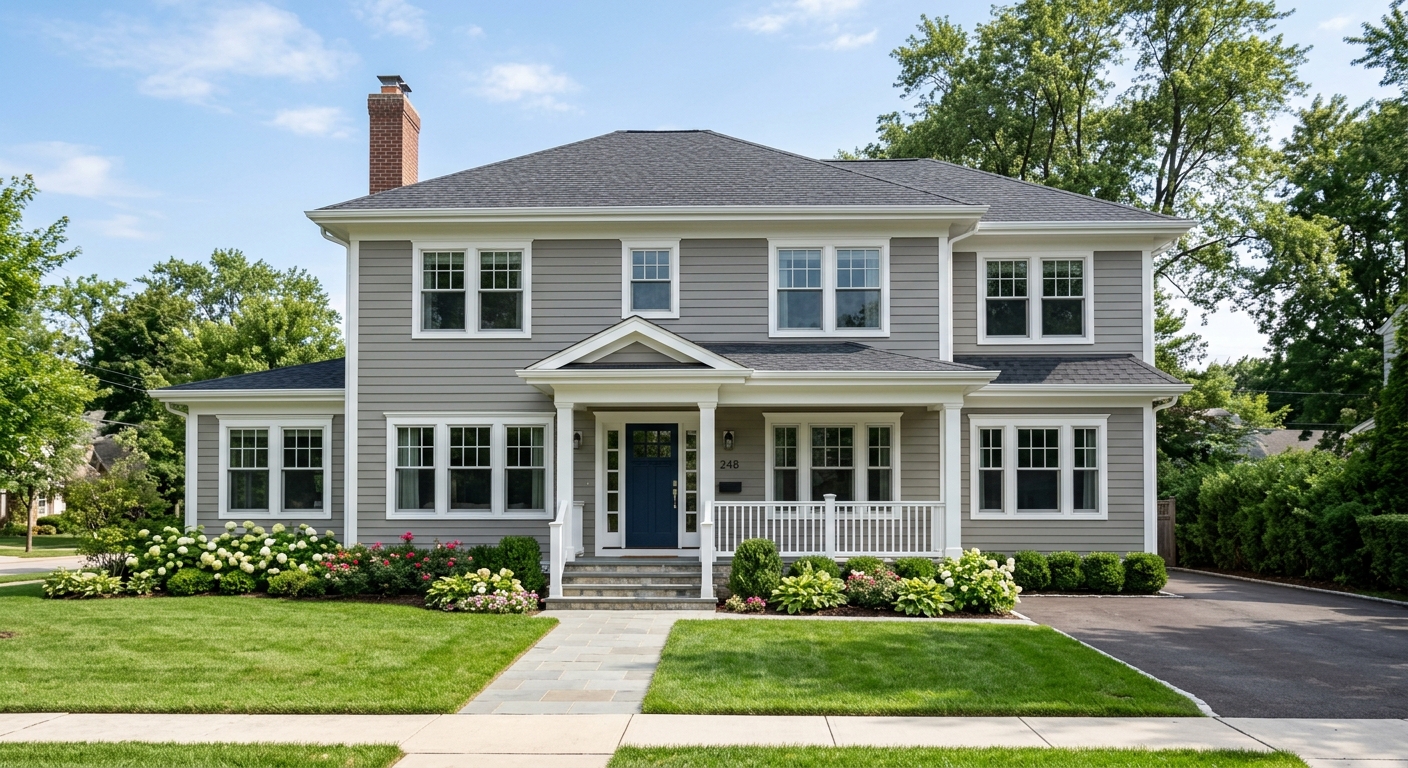
Painting options and costs in Hornepayne
Painting in Hornepayne is largely about timing, surface condition and how much prep your home needs. With only 968 residents and a high proportion of owner households (350, or 79.5% of households own) you’ll often see repeat customers and fast turnarounds when crews are available, but scheduling can still tighten in peak months. Just as important, 84.1% of homes were built before 1981—so many projects are really “prep and prime” jobs in disguise. For these older builds, failed coatings, narrow trim, and past water staining can drive additional scraping, sanding, caulking and patching before paint ever goes on.
In the Northeast market context, exterior costs are shaped by a short, climate-bound application window. Even when crews are ready, the work only goes smoothly when temperatures stay above about 10°C and nights aren’t too cool—otherwise curing slows and adhesion can suffer. Hornepayne’s mix of older siding, wind exposure and freeze–thaw cycles means contractors prioritize stable surfaces, proper caulking, and primer compatibility over “quick coat” approaches.
In town, painting demand is especially strong around the Main Street / downtown area and along the main approach routes, where homeowners tend to coordinate maintenance with inspections and ongoing repairs. If your home is due for a repaint (or you’re planning a refresh before listing), the pricing usually lands in the bands below. Use this table to compare options and then line up a site visit so your scope matches what the crew will actually do.
| Service |
What's Included |
Typical Duration |
Price Range |
| Interior — whole home (walls, ceilings, trim) |
Protect floors/furniture, wash/prep, caulking as needed, patching minor imperfections, prime where required, 2-coat finish, remove/reinstall basic hardware coverage |
5–10 days |
$4,800–$9,000 |
| Interior — per room (standard bedroom or living room) |
Prep and spot patching, 2-coat walls (prime where required), finish on trim (baseboards/door casing), basic masking/protection |
2–4 days |
$2,500–$6,000 |
| Exterior — full house (siding, trim, soffits) |
Scrape/sand failing coatings, pressure wash where appropriate, caulking, spot prime bare spots, 2-coat exterior finish, paint soffits/trim and downpipe touch-ups as specified |
7–18 days |
$8,500–$15,000 |
| Exterior — trim and accent colours only |
Surface prep for trim areas, caulking and spot priming, 2-coat system on trim surfaces and selected accent sections |
3–8 days |
$4,000–$9,500 |
| Kitchen cabinet painting (doors, frames, spray finish) |
Degrease, sanding/de-gloss, repairs to surfaces, bonding primer, sprayed cabinet finish, hardware masking and careful reinstallation |
5–12 days |
$2,200–$6,000 |
| Specialty / faux finish (accent wall, texture) |
Surface prep specific to the effect, base coat(s), specialty application, protective topcoat where required |
2–6 days |
$800–$5,000 |
Prices are estimates only and vary by project scope, site access and material selection.
What affects the price of painting in Hornepayne
In Hornepayne and across Ontario’s Northeast region, the same “paint the house” request can swing 30–50% between quotes because painting cost is mostly labour-driven, and labour is driven by prep, access and timing. Exterior work in this market is tightly climate-bound: crews need a reliable warm-weather stretch to apply and cure coatings properly, typically late spring through early fall. That short window compresses demand, so scheduling premiums can appear in summer.
Coastal BC practices influence how contractors think about moisture control, even though our inland Ontario conditions differ. Here, the risk is often adhesion failure from cool, damp days during application and uneven curing between coats. On top of that, many Hornepayne homes are older (84.1% built before 1981), which usually means more surface prep—scraping, sanding, patching, caulking and priming. On a repaint, prep can represent 50–70% of total labour, especially when coatings are flaking or when past water intrusion has left stains and compromised spots.
Concrete examples from Hornepayne: (1) a full exterior repaint where trim is lifting and caulking is failing typically lands near the higher end of the $8,500–$15,000 band; (2) a refresh limited to trim and accents can be closer to $4,000–$9,500 because the prep footprint is smaller and scaffolding/lifts may be reduced. (3) Homes with more height and tight access can add time for safe setup, masking and careful edge work even when the square footage seems similar.
| Price Factor |
Why It Matters |
Cost Impact |
| Surface prep — scraping, sanding, patching drywall or wood |
Prep determines adhesion and final appearance; failing coatings must be removed or stabilized |
Can add 20–60% depending on condition |
| Number of coats — 2-coat system over primer vs. 1 coat over existing |
Older paints often need a full bonding/locking primer plus two finish coats for uniform colour and durability |
Typically 10–25% variance |
| Paint quality tier — contractor-grade vs. premium (Benjamin Moore, Sherwin) |
Premium lines generally cover better and may hold colour/finish longer, reducing the need for extra coats |
Material delta can shift totals by 5–15% |
| Ceilings and trim — adds significant time vs. walls-only |
Ceilings require careful cutting-in and protection; trim needs detailed masking and sanding between coats |
Often adds 15–35% to interior work |
| Exterior season window — short season raises summer rates |
Fewer weather-ready days increases crew urgency and can compress availability |
Scheduling can add 10–25% |
| Lead-safe precautions — required for pre-1978 homes with lead paint |
Testing and lead-safe work methods increase time for containment, HEPA cleanup and disposal |
Can add 5–20% depending on findings |
| Surface material — drywall vs. plaster vs. wood vs. stucco |
Different substrates need different primers and prep for bonding and stain blocking |
Often 10–30% |
| Height and access — multi-storey exterior requires scaffolding or lifts |
More setup, masking and safety equipment increases labour |
Can add 15–40% |
Permits & regulations in Ontario
In Ontario, painting typically does not require a permit for normal interior and exterior repainting. The most common “regulatory” piece for homeowners is not a permit—it’s making sure you’re following safe practices when disturbing older materials. For homes built before 1978, health guidelines recommend testing for lead paint before sanding or scraping, and using lead-safe work practices if lead is present (for example: wet methods to reduce dust, HEPA vacuuming, proper disposal and containment). This is not legally mandated for homeowners in the same way it is for professional lead-safe work, but it’s standard practice for contractors because careless scraping can create hazardous dust.
What does require a permit is uncommon in straightforward painting. Permits are more typical when work touches major building changes (for example, structural alterations) or specific municipal requirements—pure repainting usually doesn’t. For your painting contractor in Hornepayne, your key confirmations should be: they carry liability insurance and have valid workers’ compensation coverage (WSIB/WCB), and that you’re getting a written contract with paint brand, sheen, number of coats and surface prep included.
To verify, you can: (1) ask for their certificate of liability insurance and confirm the coverage limits and effective dates; (2) request proof of WSIB/WCB status; (3) use Ontario’s public contractor/licensing lookups where applicable for their business registration; and (4) ensure the contract specifies disposal, prep steps (scrape/sand/prime/caulk) and coverage of any lead-safe precautions if your home is pre-1978.
Interior vs exterior painting — getting the best result in Hornepayne
The difference between a long-lasting paint job and a premature failure in Hornepayne is usually prep quality, coat build and scheduling—not the colour name on the can. For interiors, start with repairs: filling and sanding ridges, priming stains, and caulking gaps around trim and baseboards. The brand matters less than whether the surface is properly prepped. Also, choose sheen intentionally. Flat or matte is ideal for low-traffic ceilings and some wall sections, while eggshell or satin tends to hold up better in living rooms and hallways. Two coats over the correct primer always outlast one heavy coat, especially where patching or staining is involved.
For exteriors, prep is everything in Ontario’s freeze–thaw reality. Scraping failing coatings, sanding feather edges, caulking before painting to prevent water ingress, and using the right primer by substrate are the steps that prevent peeling and blistering. Even if you’ve heard about mildew-resistant acrylics from damp regions, the key lesson transfers: contractors must manage moisture and avoid painting when conditions won’t allow stable curing. In practice, crews will monitor temperature and use primers suited to wood, fibre cement, or masonry surfaces.
Cabinet painting is a practical budget alternative to replacement when frames and doors are structurally sound—done well, it can look like a refresh without demolition and new cabinetry lead-times. For pre-1978 homes, lead-safe precautions are part of good prep, including minimizing dust from sanding or scraping. If you compare options, spending more on prep is often justified: for example, a trim-only exterior colour refresh might come in around $4,000–$9,500, but a full repaint with extensive scraping and priming might better protect the siding in a budget plan nearer $8,500–$15,000.
| Project Type |
Key Prep Step |
Recommended Coats |
Price Band |
| Interior — fresh drywall (new construction) |
Prime drywall to seal porosity and prevent flash/shading |
1 primer + 2 finish coats |
$2,500–$7,500 |
| Interior — repaint (good condition, no repairs) |
Wash, light scuff-sand and caulk hairline gaps |
1–2 finish coats depending on coverage (often 2) |
$2,500–$6,500 |
| Interior — repaint (patching and priming needed) |
Spot prime patches and stain/odour areas to stop bleed-through |
Spot primer + 2 finish coats |
$3,500–$9,000 |
| Exterior siding (wood or fibre cement) |
Scrape failing paint, sand edges, caulk, then prime bare areas |
2-coat exterior finish over appropriate primer |
$8,500–$15,000 |
| Exterior trim and accents only |
Feather/sand, remove loose coating, then caulk and spot prime |
2-coat system on trim surfaces |
$4,000–$9,500 |
| Kitchen cabinets (spray finish) |
Degrease and sand/de-gloss, then use a bonding primer |
Primer + 2 finish coats (sprayed) or manufacturer-specified equivalent |
$2,200–$6,000 |
How to choose a painting contractor in Hornepayne
Choosing a painter in Hornepayne is easiest when you treat it like a trades audit: verify coverage, verify scope, and verify the paperwork. First, confirm Ontario proof: request their certificate of liability insurance and check that it’s current and includes you as a certificate holder where possible. Ask for WSIB/WCB documentation for workers who will be on site—don’t rely on verbal assurances. Next, get 2–3 itemised written quotes that break out labour and materials; you want to see prep steps (scrape/sand/patch/prime), number of coats, paint line, and how they’ll handle dust control and cleanup. A lump-sum estimate can hide scope gaps that later inflate costs.
Read exclusions carefully: is prep included for failing caulk lines, are mouldy areas addressed, is paint disposal included, and are protected items covered and protected? Make sure the contract states a workmanship warranty length and what it covers (peeling/adhesion failures due to defective prep versus normal wear). Confirm whether the manufacturer warranty applies to the product you’re using and whether it’s transferable if you sell the home. For payment schedule, keep it fair: never pay more than 10–15% upfront, and hold back part of the balance until final walkthrough and touch-ups are complete.
Finally, demand a written timeline: start date, expected completion date, and what weather conditions could pause exterior work—this is especially important in Ontario’s short, temperature-dependent exterior window.
- Ask for liability insurance certificate and confirm effective dates and coverage limits.
- Request WSIB/WCB proof before work begins; verify coverage applies to the jobsite.
- Get 2–3 itemised quotes with separate labour and materials lines (not one number).
- Confirm prep scope: scrape/sand extent, patching, caulking, and primer coverage.
- Ask for the paint brand, line and sheen for each surface (walls, trim, ceilings, exterior trim).
- Verify number of coats is stated (primer + 2 finish on most repaints/exteriors).
- Confirm cleanup plan: dust control, tarps, floor protection and waste disposal.
- Check how they handle hardware: removal/reinstallation, masking, and touch-up of edges.
- In pre-1978 homes, ask about lead-safe process for scraping/sanding (testing/dust control).
- Get a written start date and completion window, plus weather contingencies for exteriors.
- Review warranty details in writing (workmanship vs product/manufacturer warranty).
- Set a payment schedule with minimal upfront (10–15%) and a holdback until punch list done.
Red flags in Hornepayne: a contractor who won’t provide insurance/WSIB paperwork, quotes that omit key prep steps (caulking/priming/sanding failing areas), “one-coat” promises for exteriors, vague warranty language, and payment requests larger than 10–15% upfront without a signed contract.
Frequently asked questions — painting in Hornepayne
What paint sheen should I use in different rooms?
In Hornepayne, sheen choice matters because interior walls get cleaned more often in daily life, and older homes can have minor imperfections that show up under certain finishes. For ceilings, a flat or matte sheen helps hide uneven drywall texture. For bedrooms and formal living rooms, eggshell is a common sweet spot—smooth enough to wipe gently, but not as shiny as satin. For hallways, kitchens and entry areas, satin or semi-gloss on trim and higher-traffic surfaces usually holds up best to scuffs. Trim and doors generally do well in semi-gloss for washability. If your walls are patched or stained (common in pre-1981 homes, since many were built before 1981), proper priming plus a durable interior acrylic with the right sheen will prevent a patchwork look (Statistics Canada, 2021 Census).
Can I paint my house exterior in spring or fall in Hornepayne?
Yes, but in Ontario you have to treat spring and fall as “weather-dependent,” not calendar-dependent. Exterior application generally needs temperatures above about 10°C and favourable curing conditions for at least a day or two after coats, so cool nights or foggy mornings can cause problems like slow drying and adhesion issues. In Hornepayne, crews typically focus on the late spring through early fall window to avoid these risks. If you want fall work, ask your contractor what the plan is for temperature and weather checks, and whether they’ll schedule spot work only (for example, trim and accents) rather than full siding coverage. For best results, contractors often use stable primers and plan coats so the second coat goes on when conditions allow proper cure—this is one reason exteriors can cost more during peak availability.
How do I choose a painting contractor in Hornepayne?
Choose a contractor by verifying paperwork, comparing itemised scopes, and confirming coverage and workmanship terms. Start by asking for their liability insurance certificate and proof of WSIB/WCB coverage, then confirm the certificate dates match your project period. Next, request 2–3 written quotes with an itemised breakdown—labour for prep (scrape/sand/patch/prime/caulk) and materials including paint brand/line and sheen. For pre-1981 properties like many in Hornepayne (84.1% of dwellings were built before 1981—Statistics Canada, 2021 Census), ask how they handle extra prep and whether they use lead-safe precautions when sanding or scraping could disturb older coatings. Finally, check their warranty language and payment schedule: avoid paying more than 10–15% upfront and hold back until the punch list is complete. If their quote aligns with typical bands (for example, full interior often falls within the $2,500–$9,000 range), that’s a good sign the scope is realistic.
How many coats does an exterior repaint need in Hornepayne?
Most exterior repaints in Hornepayne are planned as a 2-coat system over the appropriate primer, but the exact number depends on what’s underneath and how much prep is required. If there’s flaking or bare spots, contractors should scrape failing paint, sand edges, caulk, then spot prime those areas before applying the two finish coats across the section. If the existing colour is very different or the surface is chalky or porous, primer coverage may need to be expanded to prevent uneven appearance and early wear. In short: the finish is usually two coats, but primer and preparation determine whether two finish coats are enough. A full house exterior is commonly priced in the $8,500–$15,000 band because prep and priming time are often the biggest drivers—especially for older homes (Statistics Canada, 2021 Census).
What is the best primer for older Hornepayne homes?
There isn’t one “best” primer for every older home in Hornepayne, because primer choice depends on substrate (wood, fibre cement, masonry), surface condition (chalky, glossy, stained), and whether coatings are failing. For many older repaints, contractors rely on bonding/adhesion primers where there’s intact but difficult-to-topcoat paint, plus stain-blocking or sealing primers when rust marks, water staining or tannins are present. If you’re dealing with caulk failures, you also want the primer to be compatible with the caulking system so edges don’t telegraph through. In pre-1978 homes, lead-safe practices still matter: testing and safe dust control are part of good prep before priming. A proper primer selection is one of the reasons high-prep jobs land in the higher end of the $8,500–$15,000 exterior range—they’re buying durability, not just coverage.
Should I paint or wallpaper my Hornepayne home?
In Hornepayne, painting is usually the safer, more cost-predictable choice—especially in older homes built before 1981 (Statistics Canada, 2021 Census), where surface patching and minor unevenness can be harder to perfect for wallpaper adhesion. Wallpaper can look excellent, but it’s less forgiving if the wall has uneven drywall joints, old repairs, or moisture-related texture issues. Painting is also quicker to refresh later if you decide to change colours or if you need to address small repairs. That said, wallpaper can be a smart move for a single accent wall if the surface is smooth and dry and if you’re willing to pay for extra prep so it bonds cleanly. If your budget is tight, consider painting first and using removable accent options for texture—then upgrade when the structure is fully stable.